Battle of the Atlantic, 26th May 2013

Down to the Albert Dock for the Battle of the Atlantic weekend.

21 Atlantic bunting

There was bunting, and crowds, and Russian sailors with their oversize caps, who were searching for somewhere to change their roubles. We spotted them later with souvenir bags from The Beatles Story, so they must have managed it. Princess Anne, who was in Liverpool for the weekend, staying on a Trinity House vessel moored at the cruise terminal, whizzed past us in a grey Range Rover, with police motorcycle outriders, on her way to the service in the Cathedral.

The Western Approaches underground control room was open, so we took the tour. My camera was playing up, so this one is by Chariot85, posted on Trip Advisor.

21 Atlantic Western Approaches
Following that underground experience we had lunch in St Nick’s churchyard and went into the church. The only interesting “wildlife” of the day was on the stained glass window of Our Lady and St Nicholas. At the lower left was a very strange creature, a sea monster with red scales, leathery purple wings, and seven crowned and horned heads. Was it meant to be the legendary Hydra, representing the perils of the sea?

21 Atlantic hydra


Enquiring in the Maritime Museum about the One o’Clock Gun (see my post from Birkenhead Riverside on 5th May) I was directed outside to the Albert Dock quayside, behind the ticket desk.  It’s the 32-pounder described as “a relic of the Crimean War” (1854-1856) but the Royal Cipher on the barrel wasn’t “VR” (Victoria from 1837 onwards) and it didn’t look like “WR” (William IV 1830-1837). It seemed to be “GR” so it was cast during the reign of one of the Georges, definitely before 1830 and perhaps much earlier. (This picture is from Yo! Liverpool.)

21 Atlantic gun

Then we went out onto the riverside to see the big event of the day, a mock attack by the Royal Navy on the tug Brocklebank (which is now owned by the Maritime Museum). It was a demonstration of how modern pirates are dealt with off Somalia. “Pirates” in inflatable boats took the tug, four Naval patrol boats and two landing craft approached, Marines were lowered from a Sea King helicopter and the Brocklebank was “re-taken”. All good fun.

Posted in Sunday Group | Comments Off on Battle of the Atlantic, 26th May 2013

Ness Gardens 25th May 2013

At last, a fine bright sunny day for a visit to Ness Gardens! As well as enjoying the fine collection of plants on display there was plenty wildlife to be seen. Growing broods of chicks were keeping the Blackbirds, Robins, Blue Tits and a Long-tailed Tit busy collecting juicy caterpillars.

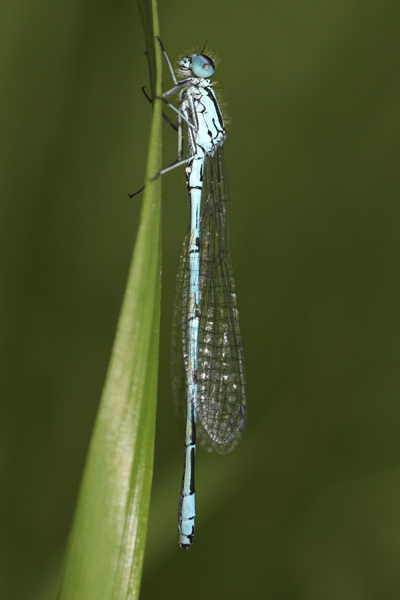
At the main ponds a pair of Canada Geese were being protective parents of their three goslings, hissing at any visitor who approached to closely. The Coots were in an grumpy mood chasing each other round the pond. Single Large Red Damselfly Pyrrhosoma nymphula and Blue-tailed Damselfly Ischnura elegans were seen in the vegetation edging the pond along with a few Wolf Spiders Pardosa sp. and Ptychopteridae Flies which resemble a miniature Crane-fly with spotted wings.

MNA Ness Gardens Spider1

Wolf Spider

Mayflies were dancing in the air over the ponds and Water Boatmen Notonecta glauca were doing backstrokes in the Wave Garden. A Buzzard circled and mewed overhead. A bloke mentioned that Crossbills had been seen in the pines in the Rock Garden – a wedding was occurring there though so I couldn’t check these out.  A colony of Mining Bees were digging holes in the sandy soil close to the waterfall and a Tawny Mining Bee Andrena fulva was also seen.

The sun had brought out the Butterflies with Small White Pieris rapae, Orange Tip Anthocharis cardamines, Peacock Inachis io, Speckled Wood Pararge aegeria – a pair of which I watched circling out 10m into the air in their mating dance and Meadow Brown Maniola jurtina. A Parent Bug Elasmucha grisea was a nice find – named for the female’s habit of standing guard over her eggs and nymphs to protect them from parasites.

MNA Ness Gardens Parent Bug1

Parent Bug

Various Flies were seen including a couple of Scorpion Flies Panorpa communis, a Dance Fly Empis tessellata – although Empid Flies are usually predatory on other Flies this one was taking nectar, Green Bottle Lucilla caesar and a mating pair of Yellow Dung Flies Scathophaga stercoraria.

MNA Ness Gardens Dance Fly1

Dance Fly

MNA Ness Gardens Mating Dung Flies1

Yellow Dung Flies

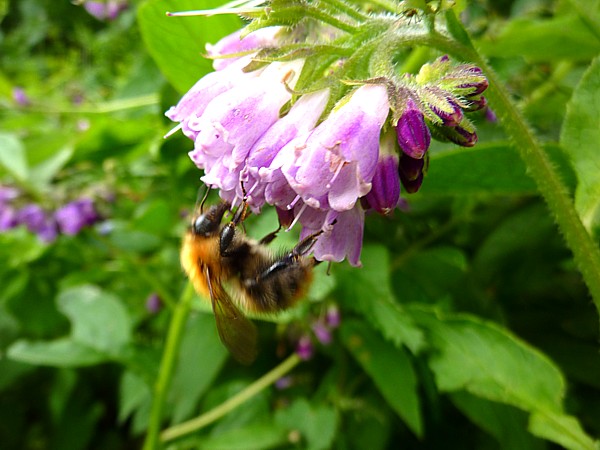
Various Bees were buzzing around collecting nectar, favouring flowers such as Common Comfrey Symphytum officinale including Honey Bees Apis mellifera and Common Carder Bee Bombus pascuorum. Plenty of Hoverflies with Heliophilus pendulus and Eristalis species being prevalent, including the Bumblebee Mimic Hoverfly Eristalis intricarius which often has a white tail and always has a yellow scutellum.

MNA Ness Gardens Hoverfly1

Heliophilus pendulus

MNA Ness Gardens Hoverfly2

Eristalis intricarius

Whilst walking through a meadow area a bright scarlet red coloured Beetle flew in and landed on the stem of Ribwort Plantain. It was Pyrochroa serraticornis, a member of the Pyrochroidae Family whose adults and larvae are often predatory. It is similar in appearance to the Cardinal Beetle Pyrochroa coccinea but having a scarlet coloured head instead of the Cardinal’s black one.

MNA Ness Gardens Beetle1

Pyrochroa serraticornis

In the meadow I also found a female Green Dock Beetle Gastrophysa viridula and a couple of Spiders – Common Stretch Spider Tetragnatha extensa and a rather fine Nursery Web Spider Pisaura mirabilis.

MNA Ness Gardens Spider3

Common Stretch Spider

MNA Ness Gardens Spider2

Nursery Web Spider

Lots of Crane-flies including Tipula vernalis – one of the identification features is the light line that runs down the back of the abdomen, which is unusual because most other British species have a dark line.

MNA Ness Gardens Cranefly1

Tipula vernalis

I also found a Common Earwig Forficula auricularia which was hiding in the leaves of a Nettle.

MNA Ness Gardens Earwig1

Common Earwig

All in all a great day with fantastic plants and insects!

A wide photographic selection of birds, marine life, insects, mammals, orchids & wildflowers, fungi, tribal people, travel, ethnography, fossils, rocks & minerals etc. is available on my Alamy webpage

If you are interested in the wildlife of the North-west of England and would like to join the  walks and coach trips run by the Merseyside Naturalists’ Association, see the main MNA website for details of our programme and how to join us.


Posted in MNA reports | Comments Off on Ness Gardens 25th May 2013

Canal 3, Old Roan to Maghull, 19th May 2013

It was an overcast and mild day, with hardly any wind, so the canal was calm and flat, and all the early wayside flowers were coming out.

20 Canal 3 towpath

We met at Central Station at 10am, took the Ormskirk train at 10.10 and arrived at Old Roan at 10.28. The station has been adopted by the Old Roan Residents Association (pedant alert – no apostrophe) and we admired the flower tub by the entrance.

20 Canal 3 Old Roan flower tub

Then down Wally’s steps to the canal. I diverted southwards a few yards to look again at the row of unidentified tall trees on the far side. There’s a picture of them with no leaves in my blog post of 14th April. They are probably hybrid Black Poplars because they have that “ace-of-spades” leaf shape, but when I looked at them on 6th May the leaves were coming out an amazing pinky-bronze colour. That gives them an outside chance of being the rarer Balsam Poplar, but I have never noticed any characteristic sickly-sweet smell.

20 Canal 3 pink foliage

The day was full of wildflowers and baby birds.  The Hawthorn (May) is still not quite out. We saw just one spray of early blossom but most are still buds about to burst.

20 Canal 3 May buds

We identified Cow parsley, White Dead-nettle, Red Dead-nettle, non-native Bluebells, Garlic Mustard (= Jack-by-the Hedge), Herb Robert, escaped Oil-seed Rape, Cuckoo flower (= Lady’s Smock), Green Alkanet, Ramsons, Bird’s Foot Trefoil, Buttercups, Common Vetch, Forget-me-not (probably Wood Forget-me-not), Red Campion, Comfrey and of course, Daisies and Dandelions.

20 Canal 3 Cow Parsley

Cow Parsley

20 Canal 3 Garlic mustard

Garlic Mustard

20 Canal 3 red campion

Red Campion

20 Canal 3 Cuckooo flower

Cuckoo Flower on water’s edge

The water birds are all breeding too. We spotted a Moorhen’s nest in the nearside reeds with six eggs, and a Coot’s nest with some young birds around it. Baby Coots are quite possibly the ugliest  little birds there are, nothing like cute fluffy ducklings!

20 Canal 3 Moorhen nest


20 Canal 3 ugly cootling

One nest on the far side had three young Coots plus one dead chick, sprawled in the water, half on and half off the nest. Another pair of Coots had nested on a piece of floating debris which had come to rest next to the towpath, where the parents were disturbed by every passer-by and had to swim out to the middle of the water, calling anxiously. Bill got out his collapsible walking stick and we pushed it off into mid stream.

20 Canal 3 Launching the nest

Other birds seen today were Mallards, Goldfinches, Magpies, several Herons flying ahead of us, a Kestrel and a Blackbird catching a worm.  From the Blue Anchor Bridge carrying Melling Road there was an excellent view over Aintree racecourse, and a bit further on we passed the racecourse’s famous Canal Turn.

20 Canal 3 racecourse

We had lunch near Handcock’s Swing Bridge, and soon afterwards we crossed the River Alt, which heads northwards from here to Hightown.

20 Canal 3 river Alt

Near Melling Church we saw a single white butterfly. Then we walked into a swarm of St Mark’s Flies, which were blundering about with dangling legs. They are named for St Mark’s Day on 25th April, and fly for about a week, although they don’t seem to keep to the ecclesiastical calendar. In 2010 the MNA saw them at Leasowe on 5th May, so they seem to be about two weeks late this year. Along the same stretch a fisherman told us he might catch Tench, Bream, Perch, Rudd, Carp, Pike or Eels, but they are hard to catch at this time of the year because they are all spawning and not taking bait. That’s an impressive list of clean-water fish.

20 Canal 3 Melling church

Melling Stone Bridge is one of the original 18th century canal bridges, and has a excellent set of rope marks, made by the friction of tow ropes on the sandstone for over 100 years.  It looks like it was repaired at least once, then worn down again.

20 Canal 3 rope marks

As well as the young coot we saw dead by its nest when we started out, we saw three other dead black and white birds floating in the canal at intervals during the day, which may also have been young Coots. They can’t have died of Pike predation because they would have been pulled down and eaten. Some poison?  Or vandalism? This last one is well-feathered, so looks like an adult bird.

20 Canal 3 corpse

We got to Maghull in time for the 2.30 train back to Liverpool, having walked three and a half miles, which is pretty good for us!

Posted in Sunday Group | Comments Off on Canal 3, Old Roan to Maghull, 19th May 2013

MNA Coach Trip Cannock Chase 18th May 2013

MNA Cannock Chase1 

Our last MNA coach trip to Cannock Chase was back in July 2009 so members were eager to return. A Garden Warbler and Willow Warbler burst into song from the car park bushes, heralding our arrival. We had a quick nose around the small visitor centre where a couple of display cases exhibited a taxidermist’s treasure trove of local wildlife including Nightjar, Black Grouse, Fallow Deer, Weasel, Red Fox, Adder, Common Lizard etc.

MNA Cannock Weasel

Scary Weasel

Outside of the visitor centre John Clegg identified an evergreen shrub as Pieris ‘Forest Flame’. A member of the heather family Ericaceae, the young foliage is bright red, becoming pink, cream and finally green.

MNA Cannock Forest Flame1

Forest Flame

We set off on the blue trail across the heathland. Whitethroat burst into their scratchy song, Willow Warblers uttered their descending notes and a couple of Tree Pipits performed their parachuting aerial display flight. A flock of eleven Crossbills were gathered in a Silver Birch tree busy munching on the late catkins. A new tick for a number of members we cautiously approached closer having fine views of the blood red coloured males and more brownish looking females, the crossed mandibles on their silver beaks also visible. They eventually flew off to another stand of Silver Birches uttering a twittering flight call slightly deeper in tone than that of a Linnet. Cuckoos were calling and we found one perched in a tree below us giving great views – later two were seen in flight.

The heathland was covered in the usual heather and also the low growing scrub with pinkish flowers Bilberry Vaccinium myrtillus which is also known as Whortleberry, Blaeberry and Whimberry depending on which part of the UK you reside. Another scrub with evergreen leaves and pinkish white flowers was identified as Cowberry Vaccinium vitis-idaea.

MNA Cannock Bilberry

Bilberry

MNA Cannock Black Slug1

Black Slug

Quite a few Black Slugs Arion ater, one of the brown –form variety were sliming their trails amongst the bushes. Plenty of evidence of Squirrels being around with nibbled pine cones found on tree stumps and other favourite feeding posts.

MNA Cannock Squirrel Cones

Nibbled Pine Cones

We ate lunch on the edge of woodland where some Alepo Pines Pinus halepensis were beginning to develop new cones. A Green Woodpecker yaffled away which was to be a feature of the rest of the day with approximately eight being heard – a couple of members eventually managed to see one but many didn’t and thought the Green Woodpeckers were mocking us with their laughing call. We entered the woodland – birdlife included Blue Tits, Coal Tits, a few Goldcrests, Chaffinch, Blackcaps, a lone Chiffchaff, Robin and a Wren carrying nesting material. A few Hoverflies were around including Eristalis sp. and they were particularly attracted to the flowering Bay Laurels Laurus nobilis which also attracted a Speckled Wood Pararge aegeria and Small White Pieris rapae.

MNA Cannock Laurel

Bay Laurel Flowers

MNA Cannock Hoverfly

Hoverfly Eristalis sp.

I took a rather poor photo of a Heather Beetle Lochmaea suturalis – in the Leaf Beetle family Chrysomelidae they are only 6 millimetres long and have a tendency to drop into cover if disturbed.

MNA Cannock Heather Beetle

Heather Beetle

I also noted a few Common Wasps Vespula vulgaris and Nomada Wasps. A couple of Goat Willows Salix caprea were covered in the spiky pistillate (female) flowers, their bark looked as though it had been painted orange due to the carotene containing algae Trentepohlia aurea  and Pixie-cup Lichens Cladonia sp. were also present. The botanists identified a bush of Highclere Holly Ilex x altaclerensis = Ilex aquifolium x perado which originated in the gardens of Highclere Castle, Hampshire, home of the Earls of Carnavon.

MNA Cannock Wood Sorrel

Wood Sorrel

There was an impressive green carpet of Wood-sorrel leaves Oxalis acetosella with their delicate white flowers dotted around and we also noted Thyme-leaved Speedwell Veronica serpyllifolia. The mycologists found some Fungi with Birch Polypore Piptoporus betulinus, Hoof Fungi Fomes fomentarius, Bleeding Broadleaf Crust Stereum rugosum and the distinctive pink berry-like blobs of the Slime Mould Lycogala terrestre.

MNA Cannock Slime Mould

Lycogala terrestre

We descended back out onto the heathland where we quickly caught up with another of our target species for the day Green Hairstreak Callophrys rubi, this petite butterfly took off as you walked through the Bilberry scrub but quickly settled, producing a flurry of clicking cameras.

MNA Cannock Green Hairstreak1ac

MNA Cannock Green Hairstreak2

Green Hairstreak

A couple of Peacock butterflies Inachis io were resting out of the wind in a shallow ditch with outstretched wings and a number of brown camouflage heathland Moths flitted around. A couple of male Stonechats were perched amongst the heather and yet more Cuckoos, Green Woodpeckers and Tree Pipits called. One young Oak sapling had a cluster of Oak Marble Galls caused by the Gall Wasp Andricus kollari and on overturning a large fallen tree trunk we found a small Black Millipede Tachypodoiulus niger curled up in a spiral and an unidentified Slug.

All too quickly we were back in the car park where we were to be given a final show from another flock of around ten Crossbills feeding on the cones in a Pine tree. A pair of Swallows was nesting in the ladies toilets 🙂

A wide photographic selection of birds, marine life, insects, mammals, orchids & wildflowers, fungi, tribal people, travel, ethnography, fossils, rocks & minerals etc. is available on my Alamy webpage

If you are interested in the wildlife of the North-west of England and would like to join the  walks and coach trips run by the Merseyside Naturalists’ Association, see the main MNA website for details of our programme and how to join us.


Posted in MNA reports | Comments Off on MNA Coach Trip Cannock Chase 18th May 2013

Hale Village, 12th May 2013

It was a cool, cloudy morning with a promise of rain from midday. We took the 82A from Liverpool ONE bus station at 10.17, arriving at Hale Village at 11am. Hale is famous for the 16th century giant, John Middleton (1578-1623), known as the Childe of Hale, who was reputed to have been 9 foot 3 inches tall.

19 Hale pub

There is a new statue commemorating him, replacing the old wood carving. It seems they have made it oversized, because it’s about 11 feet tall. It’s too well-proportioned to be convincing as well, just an enlarged version of an ordinary-shaped man.

19 Hale statue

His cottage is marked with a plaque.

19 Hale cottage
John reckoned the two little windows on the gable end are where his feet used to stick out when he was in bed!

19 Hale foot windows

His grave is in the churchyard, with the inscription
HERE LYETH THE BODIE OF JOHN MIDDLETON NINE FEET THREE BORNE  1578 DYEDE 1623

19 Hale grave

My great-grandfather was fascinated by the legend, and in the 1920s wrote a long doggerel poem about the Childe, full of mock-Jacobean words. It begins
Now I’ll tell you a norrible tale
About the man called Childe of Hale
He was a very famous wight,
John Middleton he hight
Who grew right up to nine foot three.
I should not like to be so tall,
For see how far I’d have to fall.

But my great grandfather, who lived in smoky Everton and who had been a chimney sweep for most of his life, certainly appreciated the clean country air at Hale, and ended his poem thus.
I hope that I may be forgiven,
But Hale must be all right to live in.
‘Tis open land and near the Sea,
As like to Eden as may be,
With lots of grass and flowers and trees.
Enough, I hope, of bread and cheese
(Good, eaten in a healthy breeze).
Here people need not fear they’ll choke,
Not even if their chimneys smoke.
No wonder they’re a long lived folk.

From the back of the churchyard we saw a male Pheasant, a Magpie and a Wood Pigeon. Down Church Road we noted a Blackbird and a Greenfinch perched together on a TV aerial and House Sparrows in a hedge. The gardens had pink cherry blossom and a golden Maple shrub.

19 Hale cherry blossom


19 Hale golden maple

Swallows skimmed over the fields, and Rooks and Carrion Crows foraged busily in the ploughsoil, perhaps eating the farmer’s seeds. The path down to the lighthouse ran between a great expanse of oil-seed rape in full bloom, which was a dazzling sunshine yellow on a dull day. There weren’t many spring flowers out. Apart from the masses of Dandelions, some Red Dead-Nettle, and the early Cow Parsley, I saw only one Garlic Mustard (Jack-by-the-Hedge) in flower. The Hawthorn (May) blossom isn’t out yet either, and there don’t seem to be very many buds on the bushes.

19 Hale lighthouse

As we approached Hale Head the cloud thickened and the brisk breeze gusting off the river carried spots of rain. John’s plan to lunch on the rocks below the lighthouse had to be abandoned.  Seeking shelter, we followed the cliff path westward, disturbing a Meadow Pipit on the edge, and spotting a Reed Bunting diving down into the sea of yellowness on our right. We eventually settled into a small copse of Beech trees.

19 Hale copse

There must have been at least one Oak, though, because we found several of last year’s fallen Oak Marble Galls, each about the size of a Malteser. They are caused by the Gall Wasp Andricus kollari, whose egg distorts the Oak leaf buds. On the picture below you can see the small hole where the young wasp emerged.

19 Hale gall

We headed back towards the village and into the woods around Hale Hall. They don’t seem to be ancient woodlands. There were a few clumps of Bluebells, but they seemed to be mixed patches of blue, pink and white Spanish bluebells, probably planted in the last few decades. The ground cover was almost all made up of tiny heart-shaped leaves, possibly one of the Violets, but I didn’t see any of it in flower. In the park, on the way back to the village in the steady drizzle, we saw a Song Thrush poking about on the lawns and there were also some fresh molehills. We were back in the village in time for the 82A back to Liverpool at about 2pm.

I have been reading the Eat Weeds website which has inspired me to gather the one flower shoot of Garlic Mustard that I saw, plus two or three leaves and flowers from a small patch of Ramsons in the woods. I plan some garlicky scrambled eggs!

Posted in Sunday Group | Comments Off on Hale Village, 12th May 2013

Carr Mill, Saturday 11th May 2013

Report from John Clegg

On a wet and windy morning seven members started our walk by looking over the large expanse of water at the back of the Waterside pub.  Large numbers of Swallows and House Martins flew low over the water and we saw a group of about 20 more Swallows roosting out of the weather in one small tree on the bank. Out over the water two pairs of Great Crested Grebes were still doing their courtship display, very late in the year.

The woodland had carpets of white Ramsons (wild garlic) and of Bluebells, and in the wetter places there were yellow Marsh Marigolds.

Our lunch stop was, as usual, on the bridge, where we could see a nesting Great Crested Grebe. The Kingfisher wasn’t seen today because the water was far too rough for it to see any fish.

20130511 Swan on nest
Below the bridge a Mute Swan was on her nest. When she moved off we could see her seven very large eggs. Later in the walk we met one of the water bailiffs who told us that the cob, her mate, had been seriously injured by a dog while protecting the nest. He was rescued and taken to a veterinary hospital but was too badly hurt and had to be put down. This was about four weeks ago, he said. The pen (the female) had laid about three eggs before he was killed and continued to lay (presumably infertile) eggs afterwards. The incubation period of the Mute Swan is 35 to 37 days, so there is still hope for the fertile ones.

20130511 Swan eggs
The water bailiff also told us that six Mink have been trapped in the area this year.

Bird species seen (27): Mallard, Great Crested Grebe, Coot, Black-headed Gull, Blue Tit, Swallow, Lesser Black-backed Gull, Chaffinch, Blackbird, Goldfinch, Wood Pigeon, House Martin, Robin, Mute Swan, Canada Goose, Magpie, Linnet, Great Tit, Pied Wagtail, Grey Wagtail, Moorhen, Great Spotted Woodpecker, Dunnock, House Sparrow, Carrion Crow, Chiffchaff, Kestrel.

Posted in MNA reports | Comments Off on Carr Mill, Saturday 11th May 2013

Birkenhead Riverside, 5th May 2013

What a glorious day it was! We walked the new footpath from Seacombe to Woodside, through Birkenhead docks. It’s the most recent addition to the Wirral Circular Trail, opened up last September after a 12-year campaign by a Wirral resident.

18 Birkenhead view from ferry

We met at the Pier Head and took the 10 o’clock ferry to Seacombe. Our best bird of the day was almost the first one we saw. A dull-looking wader on a rock next to the river. It’s a Spotted Redshank!  The few I’ve seen before have been quite dark glossy birds, and they are all supposed to have migrated back to their northern breeding areas by May, but this must be a pale non-breeding adult.

18 Birkenhead spotted redshank

Other birds included a Pied Wagtail on the rocks, Canada Geese and Cormorants along the river, Great Crested Grebes in the docks, Swallows skimming the water, Linnets amongst the Dandelions on Tower Wharf and Greenfinches and Goldfinches in the trees.

18 Birkenhead goldfinches

On the overgrown setts on the dock edges were lots of clean empty mussel shells. Have the gulls been dropping them to get at the meat inside?

18 Birkenhead mussel shells

The trees are perfect just now. The shapes of the trees and the branches are still visible but the fresh young leaves are coming out in various distinctive shades of green. Here’s a selection – a young Whitebeam tree and its new leaves, fresh Beech leaves and Hawthorn buds.
18 Birkenhead whitebeam


18 Birkenhead whitebeam leaves


18 Birkenhead beech leaves


18 Birkenhead Hawthorn buds

Near Edgerton Wharf we spotted a Bumble bee trying to find a burrow in a grassy bank. Whipping out my FSC bee identification card (bought yesterday at South Stack RSPB) I think it’s a Garden Bumble Bee.

18 Birkenhead garden bumblebee

Later we also saw a smaller bee on the footpath, which was crawling along, hugging the deepest shade and looking sick. It was probably a Tawny Mining Bee. The butterflies were loving the sunshine, of course. None of them stayed still long enough to be photographed, but we saw a Large White (probably a male with a yellowish tint), a Red Admiral, several Small Tortoiseshells dancing together and a small white one which was moving too fast to ID.

Flowers included some fresh Ragwort near North Alfred Dock and a ring of Daisies at Edgerton Wharf.
18 Birkenhead ragwort


18 Birkenhead daisy ring

The route has an interesting mix of the old and new. One of the docks held a derelict vessel, and there is still some old winding machinery set into the pavement, marked as made in 1860 by the Dagliesh St Helens Foundry. The chain is still around the wheel but now there’s a tree growing out of it.  But the same corner now has the Liverpool John Moores University Astrophysics Research Unit.

18 Birkenhead sinking ship


18 Birkenhead winding machinery

Near Woodside we passed the old one-o’clock-gun.

18 Birkenhead one oclock gun


Once it provided a time signal to shipping on the Mersey and was fired electrically from Bidston Observatory. It started on 21 September 1867. Firing was suspended during the Second World War, but then the tradition carried on until 18 July 1969. The website of the Proudman Observatory at Bidston says the original canon was a relic of the Crimean War. In 1933 the War Office provided a new cannon, a 32 pounder from Woolwich Arsenal, and after WWII it was replaced by a third gun, a six pounder naval anti-aircraft Hotchkiss gun. One of the earlier canons is now said to be at the Maritime Museum, but I don’t know if this one still on the plinth is the Crimean gun, the 32-pounder or just a replica.

We had our lunch just before Woodside Ferry, admiring the magnificent views over to Liverpool Waterfront.

18 Birkenhead view with ferry

After lunch we continued southwards to Monk’s Ferry and Norton Priory.

18 Birkenhead Norton Priory

Norton Priory is the oldest standing building on Merseyside, founded in about 1150. The monks from here operated the first Mersey Ferry. It’s now a Scheduled Ancient Monument, and they’ve been spending Lottery money, repairing and rendering the former interior walls, opening a new entrance onto Church Street with a disabled lift, and providing new public toilets.

The cemetery contains the vault of the Laird family, starting with John Laird, the first Member of Parliament for Birkenhead, who lived 1805-1874, and also his ship-building descendants. We were also touched by a gravestone mentioning “Hannah and Mary Beresford (sisters) the faithful and much-valued servants of the Rev Canon Knox, vicar of Birkenhead, Hannah for 35 years and Mary for 51 years.”

We returned to Liverpool via Hamilton Square. There was no Peregrine on the station tower, but the blossom trees in the square were in full bloom.

18 Birkenhead Hamilton blossom

Posted in Sunday Group | Comments Off on Birkenhead Riverside, 5th May 2013

MNA 75th Anniversary Coach Trip 4th May 2013

Today was our special event to celebrate the 75th anniversary of the MNA. A packed coach explored sites in north Wales and Anglesey led by the guides Alan Davies and Ruth Miller, noted for their global bird trek “The Biggest Twitch.” We met the pair at the RSPB reserve at Conwy and took a short walk through the reedbed where Greenfinches called their nasal wheezy notes from a tree, a Wren burst into song from deep in scrub, a Chiffchaff was calling from some willows and both Reed and Sedge Warblers burst into song  from the reeds – the Reed Warbler repeating the same phrase never stopping for breath whereas the Sedge Warbler song is more stuttering as it stops and changes phrases. A few spring flowers were blooming with Alexanders Smyrnium olusatrum, Lesser Celandine Ficaria verna, Bluebell Hyacinthoides non-scripta, Lady’s Smock a.k.a. Cuckoo Flower Cardamine pratensis, garden cultivars of Narcissus and a bank-side covered in Cowslips Primula veris. An unusual fungi find was a desiccated Stinkhorn Phallus impudicus.

MNA Conwy Cowslips

Cowslips

We reached Tal-y-Fan hide giving good views over both the pools. Lapwings were nesting – their chicks are a favourite on the menu of the local Herring and Lesser Black Backed Gulls. Great Crested Grebe, Grey Heron, Shelduck, Canada Goose, Mute Swan, Gadwall, Mallard, Tufted Duck, Red-breasted Merganser female and Coot were all viewed. A Buzzard was circling on the far side of the marsh. Swallows, Sand and House Martins were skimming over the reedbeds and ponds and a handful of Swifts zoomed through on their scythe-shaped wings.

Barbara spotted this communal House Sparrow nesting box made from an old wooden barrel

MNA Conwy Sparrow Housev2

House Sparrow nesting box Photo by Barbara

We drove along the coast heading towards Anglesey, the landscape splodged in yellow from the masses of Gorse bushes Ulex europaeus in flower. Bit of birding en route with three Greylag Geese performing a synchronised fly past, a couple of hovering Kestrels and a Sparrowhawk just as we crossed over the Britannia Bridge onto Anglesey.

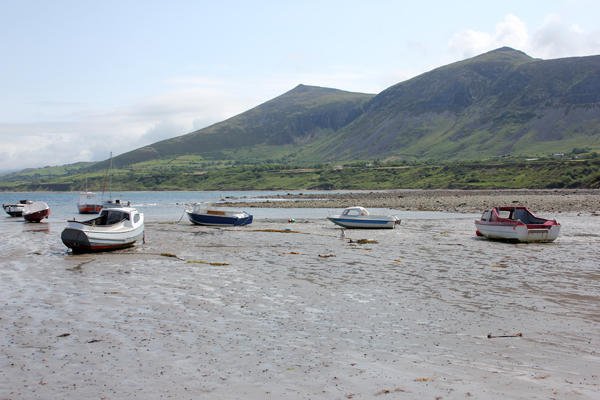
MNA Beddmanarch Bay Shoreline1

 Beddmanarch Bay

MNA Penrhos Members1v2

MNA Members Photo by Barbara

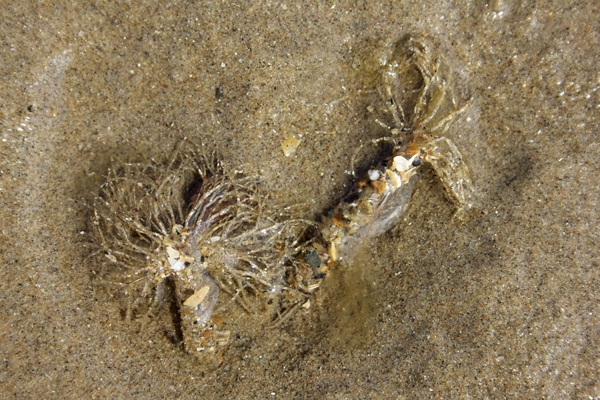
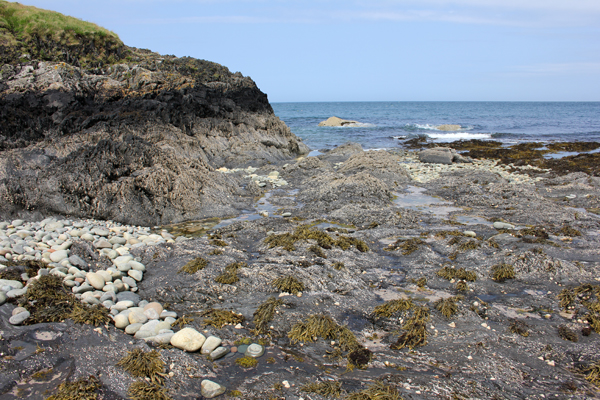
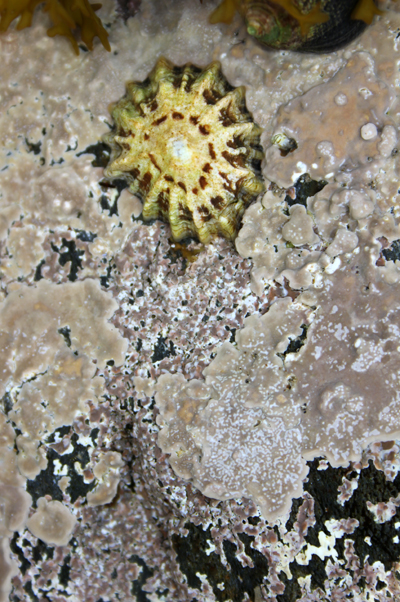
We stopped for lunch at Arfordirol Penrhos CP, BeddmanarchBay. The tide was out so only distant views of Shelduck, Oystercatcher, Curlew and Black-tailed Godwit on the water’s edge. I had a quick root around in the seaweed and rocks on the edge of the mudflats – molluscs included Common Limpet Patella vulgata, Common Periwinkle Littorina littorea, Flat Periwinkle Littorina obtustata, Grey Top Shell Gibbula cinerea, and Dog Whelk Nucella lapillus. Polychaetes included the pyramid mud casts of Blow Lugworm Arenicola marina and groups of Sand Mason Worms Lanice conchilega with their sand covered feeding tentacles.

MNA Penrhos Sand Mason Worm1

Sand Mason Worm

Common seaweeds were noted with Channelled Wrack Pelvetia canaliculata, Bladder Wrack Fucus vesiculosus and Spiral Wrack Fucus spiralis. Plants on the shoreline included the fleshy leaves of Sea Kale Crambe maritima and some flowering English Scurvy-grass Cochlearia anglica. The small pond held Moorhen, Mallards – a couple of dubious parentage plus scavenging Black-headed and Herring Gulls.

MNA Holyhead Harbour

Holyhead Fishing Harbour

Negotiating a small side road in Holyhead brought us to the old fishing harbour. Star bird was the Black Guillemot in summer plumage. Anglesey is the southerly limit for this species and it nests in holes in the harbour wall – a BTO guy could be seen on a ladder checking the nest sites. On a concrete structure off from the harbour wall Cormorants were joined by a Shag and a couple of Common Guillemots were bobbing around on the sea. A Raven croaked overhead and landed on the roof of a dilapidated building where it was joined by its mate – possibly nesting there.

MNA South Stack Lighthouse

South Stack Lighthouse

A group of Jackdaws were wandering around a field and Meadow Pipits and Wheatears were perched on top of the stone walls as we approached South Stack RSPB Reserve. Blustery conditions prevailed so there was quick donning of jackets and woolly hats. We climbed down the stone steps and watched a male Stonechat flitting around the gorse. Peering over to look at the cliffs the lack of the usual lines of nesting auks was very apparent. This delayed arrival of spring must have kept the Common Guillemots and Razorbills out at sea.

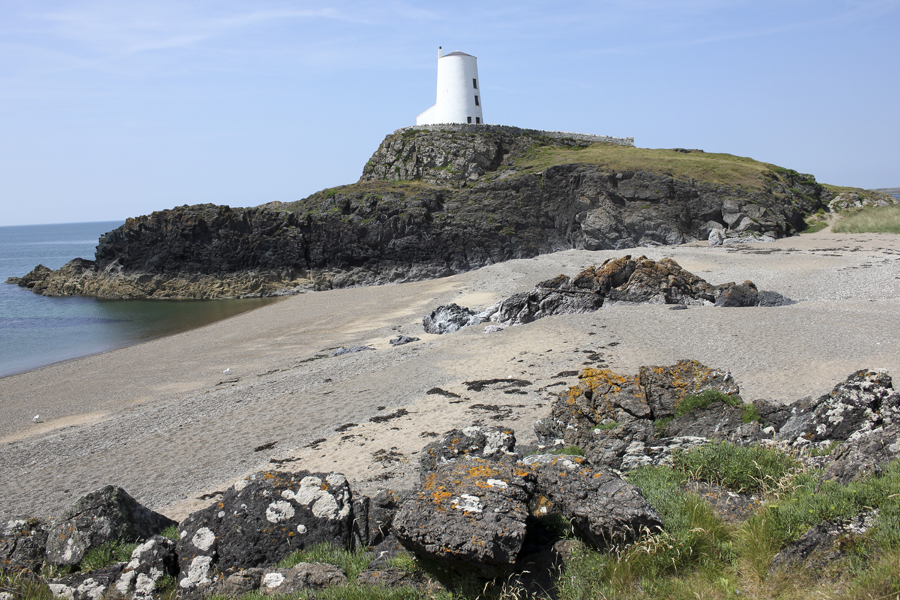
MNA Ellins Tower1

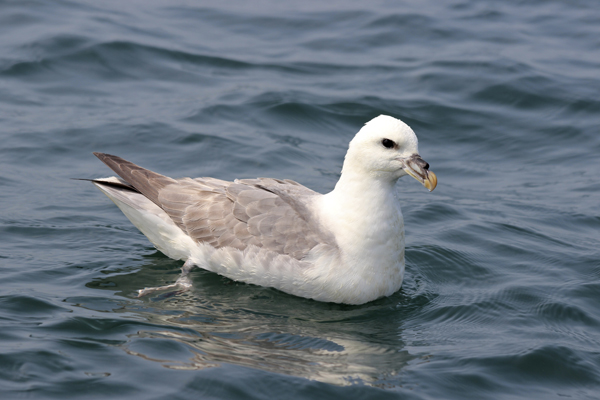
There was still plenty of commotion though with nesting Herring Gulls, the odd pair of Lesser Black Backed Gulls, Kittewakes with their all black wing tips, Fulmars gliding by on stiff wings to land with their partners, a pair of Puffins bobbing around on the water in the bay in front of Lighthouse Island, Chough riding the wind with dangling red legs calling their name as they glided by, a couple of croaky Raven flying around the cliffs and a couple of Rock Pipits hopping around the rocks. Out at sea the odd Razorbill, Common Guillemot and a couple of distant young Gannets flew by, an adult Gannet was bobbing on the sea and small groups of Manx Shearwaters flew past the lighthouse occasionally flipping over to expose their white underbellies. Chris Butterworth heard the cry of a Peregrine.

MNA Elliens Tower Painting2

Marine Life Mural In Ellin’s Tower

A good variety of plants with flowering English Scurvy-grass Cochlearia anglica, Spring Squill Scilla verna, Sea Campion Silene uniflora, Thrift a.k.a. Sea Pink Armeria maritinum, Coltsfoot Tussilago farfara and Bluebell Hyacinthoides non-scripta. Chris Derri also saw Red Campion Silene dioica and an Oxlip Primula elatior in a nearby garden and had a good sighting on an Emperor Moth Saturnia pavonia.

MNA Spring Squill

Spring Squill

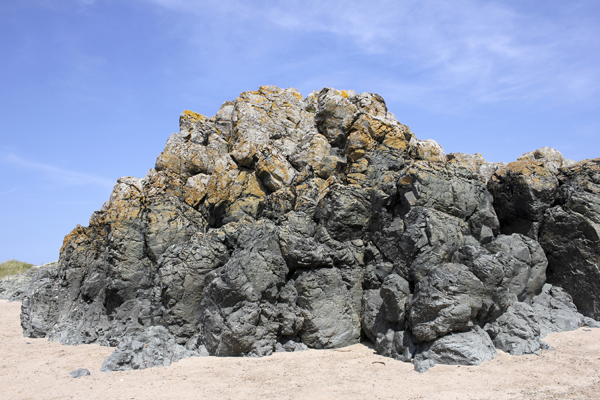
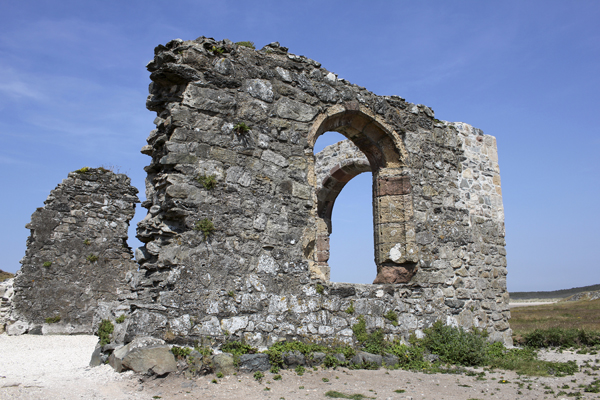
On a previous visit I walked down to the bottom of the steps where you can cross to Lighthouse Island. Here there were great views of the cliffs which display some of the most magnificent exposures of folded rocks in Britain. These date back nearly 600 million years to the Precambrian. The layering of different materials making up the rocks is clearly visible. The sandstone and mudstone layers have acted differently as they’ve been folded: sandstone contains coarser materials and keeps its shape whereas the mudstone is more fluid and has been squashed into the gaps in-between.

Exif_JPEG_PICTURE

We’d seen most of what we’d expect here so the group members were rounded up for the short drive to our last stop of the day – the lake beside the RAF base at Valley in Anglesey. A helicopter circled overhead as we scanned the lake noting Great Crested Grebe, a few Greylag Goose, Gadwall flying around, a small group of Pochard, Tufted Duck, a female Goldeneye, two Red-breasted Mergansers and Lesser Black Backed Gulls. A Willow Warbler, Wren and House Sparrow were in the bushes at the edge of the lake.

We boarded the coach again dropping off our guides back at Conwy RSPB reserve and thanking them for our mini twitch around their local sites.

A wide photographic selection of birds, marine life, insects, mammals, orchids & wildflowers, fungi, tribal people, travel, ethnography, fossils, rocks & minerals etc. is available on my Alamy webpage

If you are interested in the wildlife of the North-west of England and would like to join the  walks and coach trips run by the Merseyside Naturalists’ Association, see the main MNA website for details of our programme and how to join us.

Posted in MNA reports | Comments Off on MNA 75th Anniversary Coach Trip 4th May 2013

Out and About – April pictures from Ken Lewis

Ken says:  Spring is busy time for me but I thought our members would like to see some of the images I have taken this April.

Great Crested Grebe 1

Great Crested Grebe 2

Great Crested Grebes at Carr Mill Dam.

Wheatear

Wheatear, taken at the Sychnan Pass near Conway. There were five Males all in the same area. I also saw my first Cuckoo of the year.

Whinchat

There were lots of Whinchats at Dolgarrog near the Conway Valley, and also a Stonechat.

Stonechat

Interested in the wildlife of the North-west of England? If you would like to join the walks and coach trips run by the Merseyside Naturalists’ Association, see the main MNA website for details of our programme and how to join us.
Posted in MNA reports | Comments Off on Out and About – April pictures from Ken Lewis

Lydiate, 28th April 2013

Blossom is starting to burst out everywhere, especially on all the splendid Magnolias we admired from the bus on the way to Lydiate. It still isn’t really warm, but dry and overcast, with a freshening breeze, very clear views from Liverpool over to the Wirral and the Welsh hills, and the threat of rain later. We took the 300 bus from Sir Thomas Street at 10.20 and got to Our Lady’s RC Church at Lydiate at 11.10.

17 Lydiate narrow boat

There is a small rookery in the churchyard, and the calls of the Rooks followed us down Hall Lane. Outside one of the houses there is a sumptuous Aubretia along the garden wall, which we have admired in previous years.

17 Lydiate Aubretia


In the sheep field on the right there was a big dew pond with Shelducks in it and Jackdaws on the edge. Swallows were flying over the field, Goldfinches and House Sparrows twittered and we spotted a pair of Linnets on the fence. Both Red Dead-nettle and White Dead-nettle were flowering in the hedgerow.

17 Lydiate white dead nettle

17 Lydiate red dead nettle


We took the footpath south alongside the racing gallop for the horses in training. Blackbird, Greenfinch, Magpie, Wood pigeon and a rabbit. We crossed the racecourse by two stiles, observing the sign warning of horses passing at speed! The trees held a Jay and a Crow, so we saw all the corvids so far except a Raven. Three Mallards flew over, looking like Hilda Ogden’s wall ornaments. Lunch was at Lydiate Hill Bridge, which carries just the footpath over the canal beneath, not a road. It’s hump-backed and narrow, crusted with old lichen, and if it’s the same age as the canal probably dates back to 1775. It’s Grade II listed, anyway. This picture, taken in late summer from the canal bank, is by “Irate” from Wikimedia Commons.

17 Lydiate Hill Bridge Wikimedia

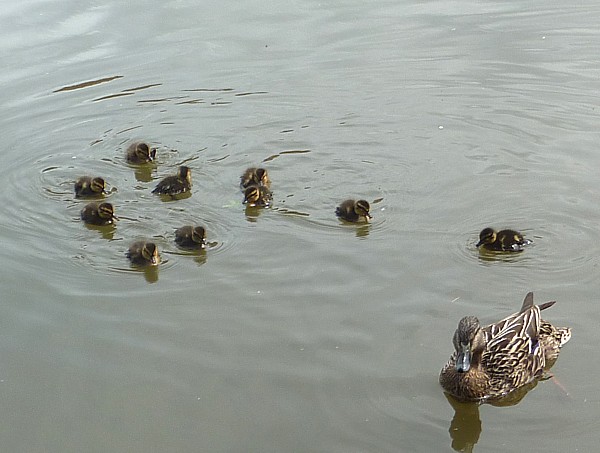
There were Moorhens and Mallards on the water and a Willow Warbler in the shrubs on the bank. We set off along the canal northwards, waving to lots of narrow boats. The Pride of Sefton went past, a boat we have cruised on in the past. There were Daisies, Dandelions and Forget-me-nots on the verge.

17 Lydiate forgetmenot

Just past Jackson’s Bridge some fishermen said they mostly get Roach and Perch. The flat fields had Canada Geese, an Oyster Catcher and a small mixed flock of Herring Gulls and Lesser Black-backed gulls apparently sitting on the ground.  A field was being harrowed while another had a crop already growing – a cereal crop in neat rows.

17 Lydiate cereal field

The wind was now gusty with spots of rain and it was very overcast.  We left the canal at Rimmer’s Swing Bridge and headed west along Green’s Lane, back towards the main road. The house on the corner with a large garden pond had a rather fine floating duck house (£540 each, according to Amazon! ) and an elegant ornamental Heron.

17 Lydiate duck house


We noticed Collared Doves on a wire and Lapwings in field, but we were walking straight into the teeth of a strong wind and a persistent drizzle. We were very happy to get to Lydiate Hall farm opposite Our Lady’s church, and into the Hayloft tea shop for some shelter and the loo. They keep a large duck pond, dozens of tame Mallards, some Guinea Fowl and a lot of  Peacocks. One displayed obligingly for us.
17 Lydiate peacock front

He did a twirl, revealing that he looks just as amazing from behind!

17 Lydiate peacock back

After a quick shop for duck eggs and mushrooms at the farm shop we caught the 300 bus at 2.20 back to Liverpool.
Posted in Sunday Group | Comments Off on Lydiate, 28th April 2013