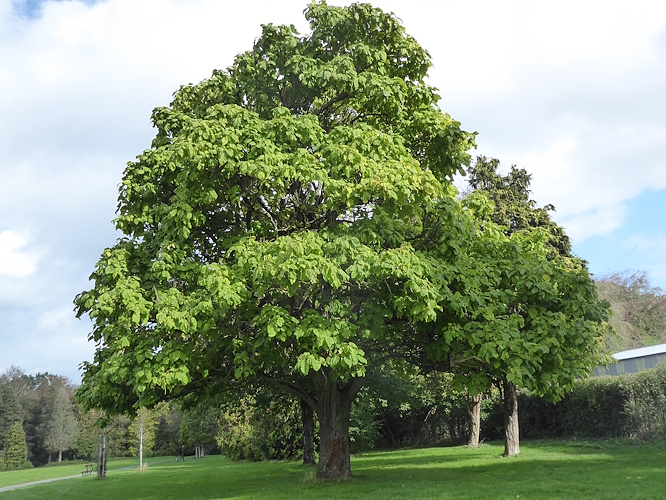
There is no Sunday walk this weekend, but I took the chance of a fine Saturday to go to Arrowe Park to look at some of the interesting trees marked on their new tree map. At the southern end of the bowling greens is a tree marked number 5 on the tree trail. I have previously assumed this to be a young Indian Bean tree Catalpa bignonioides, but the map calls it a Manchurian Catalpa, Catalpa bungei, a tree from China not North America. It looks very similar to the more common Indian Bean, but it is distinguished by its pink flowers. The website Trees and Shrubs Online says “The large pink to rosy-purple flowers and elegantly tapering leaves make it a tree of great distinction, accounting for its widespread cultivation in China, particularly in temple grounds.” This is one we really have to come back to in late May or early June, when it ought to be flowering. I spotted some long hanging “beans” on it, so it is old enough to have flowered this spring.
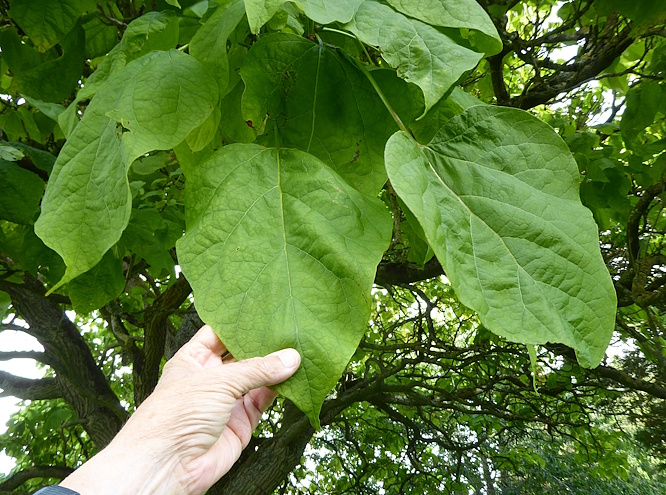
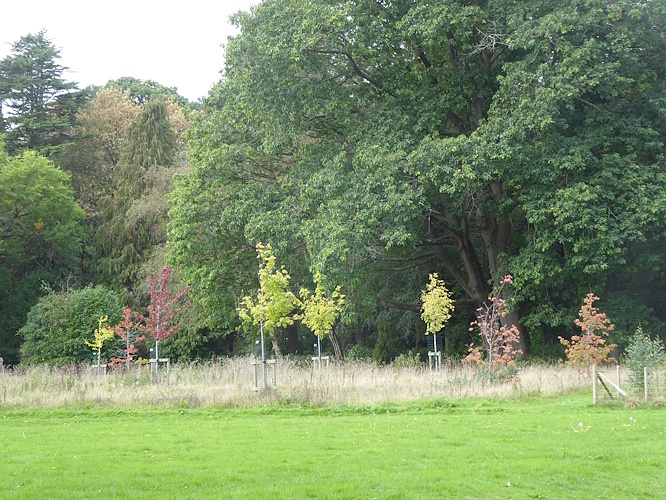
Most of the others I wanted to look at are in the plot which used to be tennis courts. There seems to be a nursery of young trees there, many of which are notable. One is another Catalpa, a hybrid with the formal name C. x erubescens (no. 13). It may be too young to bloom yet, but the flower clusters are said to be particularly large. Another one to come back to.
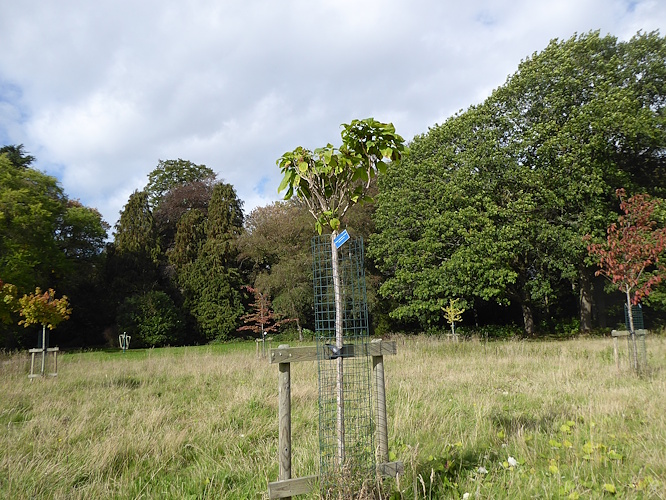
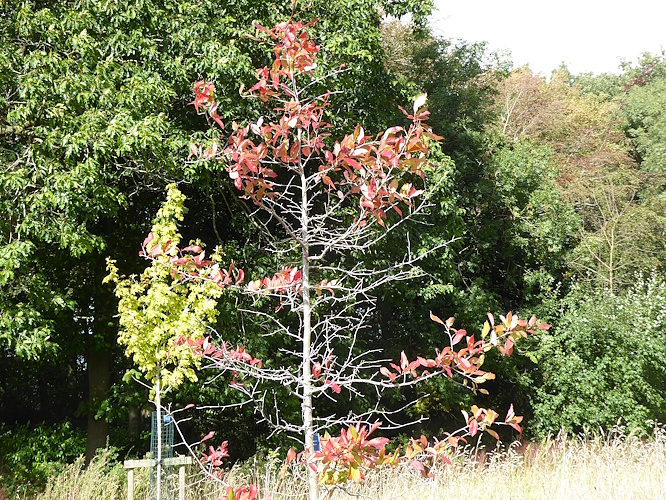
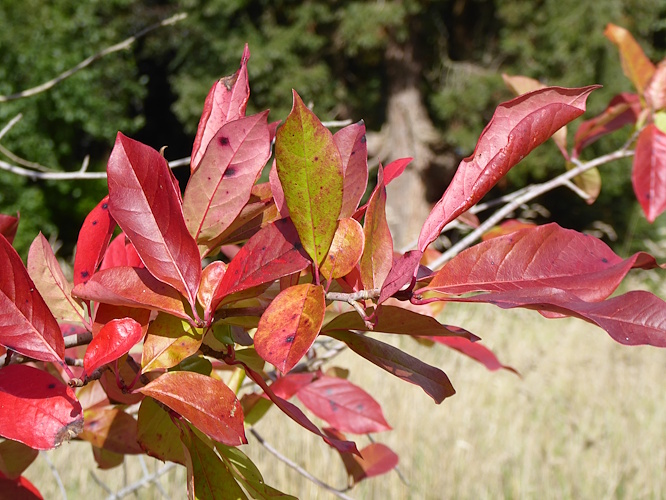
The tree I was really here for was the Black Tupelo Nyssa sylvatica (no.18). It’s a small tree, and quite uncommon, with plain lanceolate leaves, but its outstanding feature is its rich red autumn colour. The young tree in Arrowe Park seems to have lost a lot of foliage in this summer’s drought, but the leaves that remain are as red as can be. (This makes three “lifers” for me in one day!)
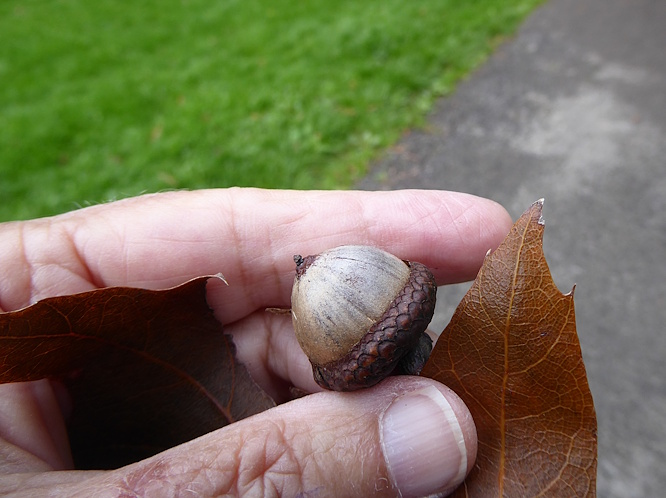
Before I left I looked at a tree that isn’t on the tree map. I have tentatively identified it on previous visits as a Pin Oak and this time I am sure. The leaves have little bristles on the edge, and the acorns are flat-bottomed, stripy, and have scaly cups.