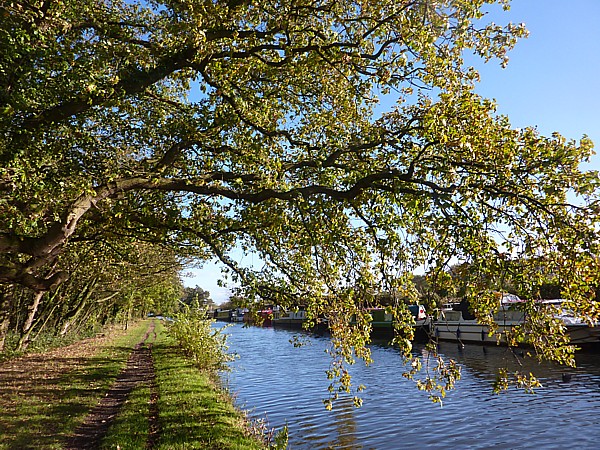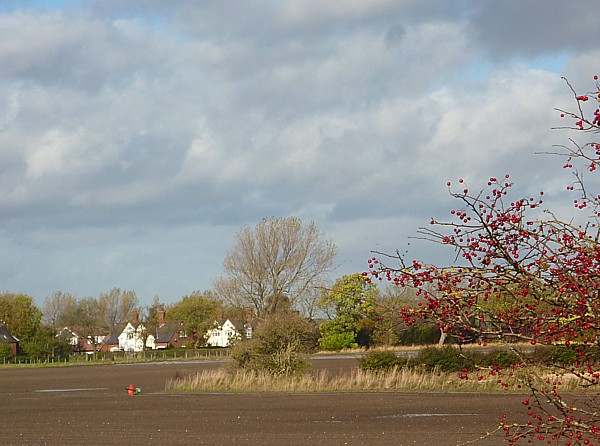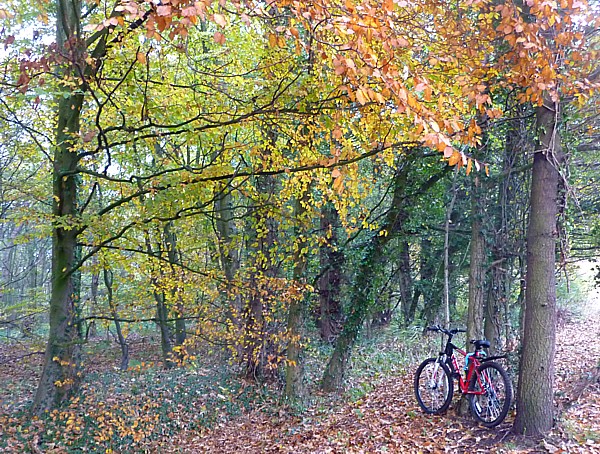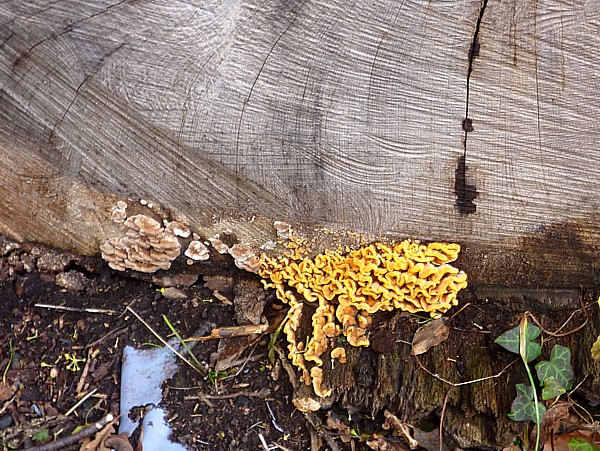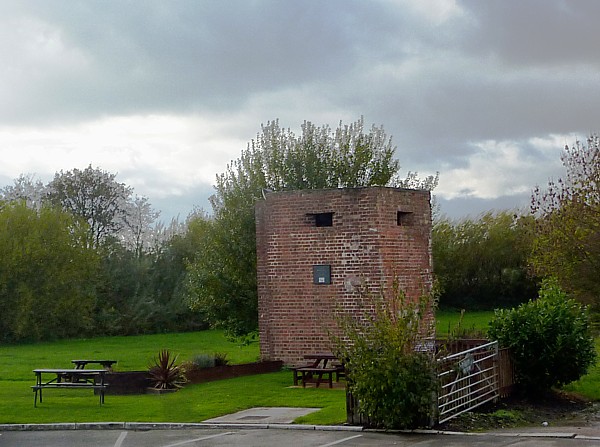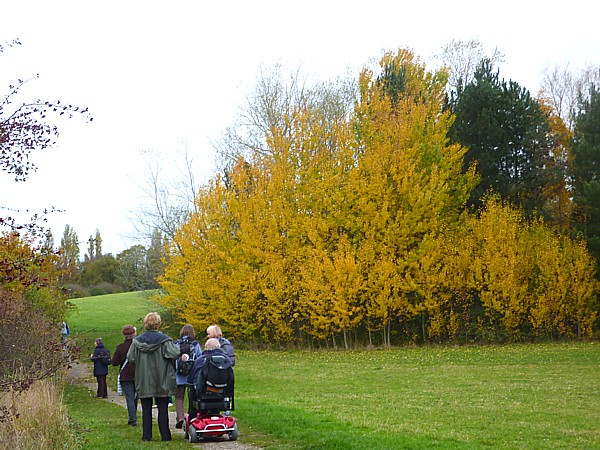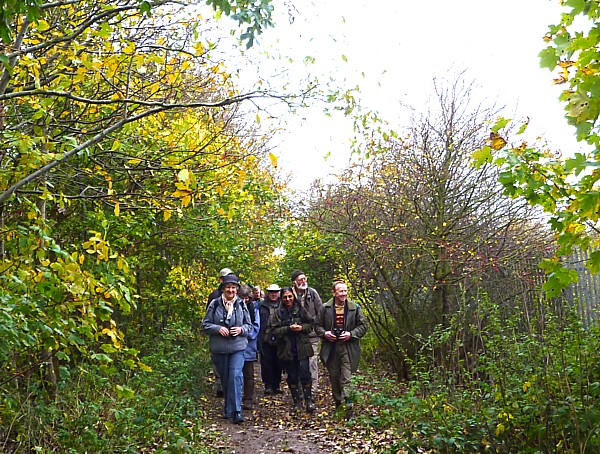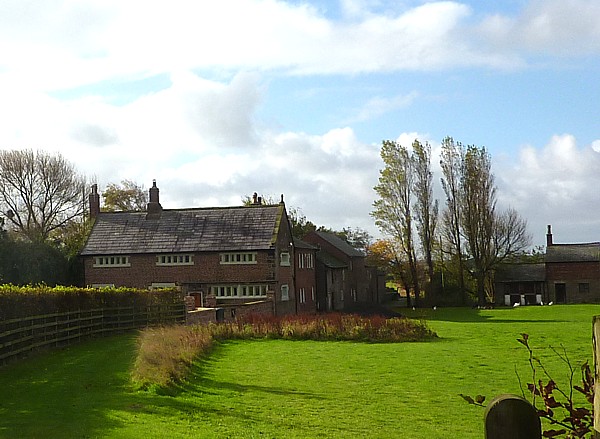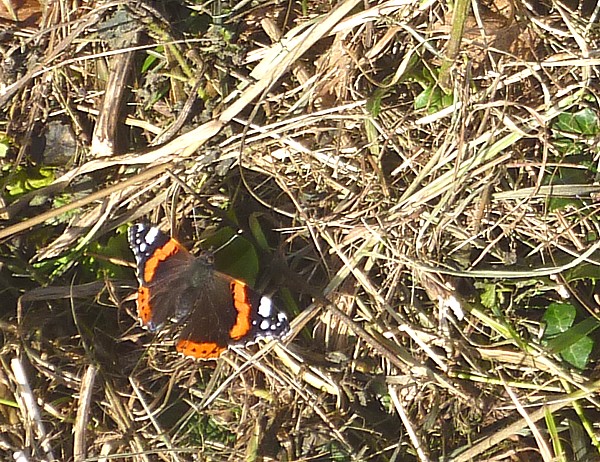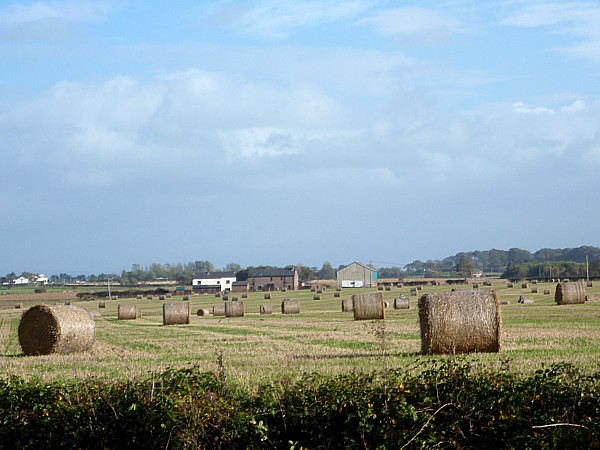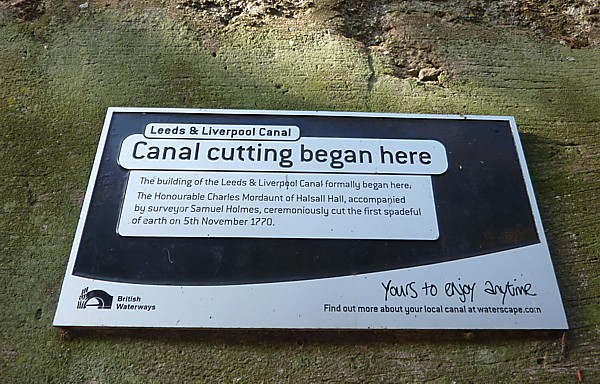
MNA Coach Trip Carsington Water 13th October 2013

 The final MNA coach trip of 2013 took us through the Derbyshire spa town of Buxton before climbing in a series of sharp bends onto the flat moorland of Goyt’s Moss along the A537 passing the ‘Cat and Fiddle’ the second highest inn in England, arriving just before lunch at Severn Trent Water’s Reservoir  – Carsingston Water.

MNA Carsington Silver Y1

Silver Y

We quickly donned waterproofs against the inclement weather and wandered to the wildlife centre – a heated hide giving great views through a large glass window across the reservoir and surrounding fields and spit. As we re-fuelled on sandwiches and hot drinks we noted the wildfowl – Tufties, Wigeon, Coot, Teal, Mallard, a few Great Crested Grebes, a distant Pochard and a scattering of Lapwing. A flock of 14+ Tree Sparrows flew into a bush just outside the hide window and occasionally flew onto the feeders. A few members caught a glimpse of a Weasel Mustela nivalis darting along a culvert in front of the hide. By its large size we surmised that it was a male. A Moth was fluttering on the hide window. Harry Standaloft managed to catch it in a specimen jar and DaveH identified it as a Silver Y Autographa gamma – this silver-grey coloured Moth with characteristic white y-shaped mark on the forewing is one of the UK’s commonest migrant moths. A female Common Earwig Forficula auricularia was sheltering from the rain on the hide wall – males and females can be distinguished by their tail pincers, which are more curved in males than females.

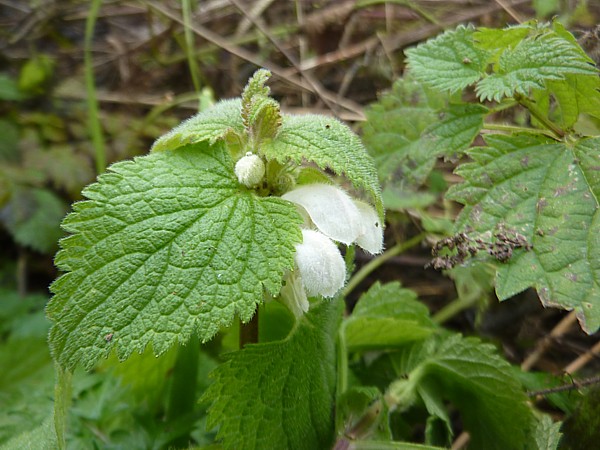
We took the well marked trail used by walkers and cyclists that runs around the reservoir stopping to examine a few Strawberry Snails Trichia striolata that can sometimes be found on Common Nettles Urtica dioica – some of which also had Galls at the base of the leaves caused by the Gall Midge Dasineura urticae.  We also noted Galls on Meadowsweet Filipendula ulmaria leaves caused by the Gall Midge Dasineura ulmaria. We stood to watch a few Gadwall and Pochard along with more Wigeon in Shiningford Creek before the path continued through woodland around to Land End Bird Hide. A Chiffchaff was calling – quite possibly having decided to overwinter here, other woodland birds including Great Tit, Coal Tit, Long-tailed Tit, Chaffinch and a small half dozen flock of Siskin. A few Plants were still in flower including Red Campion Silene dioica, Redshank Persicaria maculosa, Tufted Vetch Vicia cracca, Nipplewort Lapsana communis and Common Ragwort Senecio jacobaea. There were also plenty of shiny berries with fruiting Blackberry Rubus fruticosa, Bullace Prunus domestica subsp. insititia, Hawthorn Crataegus monogyna, Dogwood Cornus sanguine, Common Ivy Hedera helix, Elder Sambucus nigra, Guelder-rose Viburnum opulus and Black Bryony Tamus communis.

MNA Carsington Haw Berries1

Haws

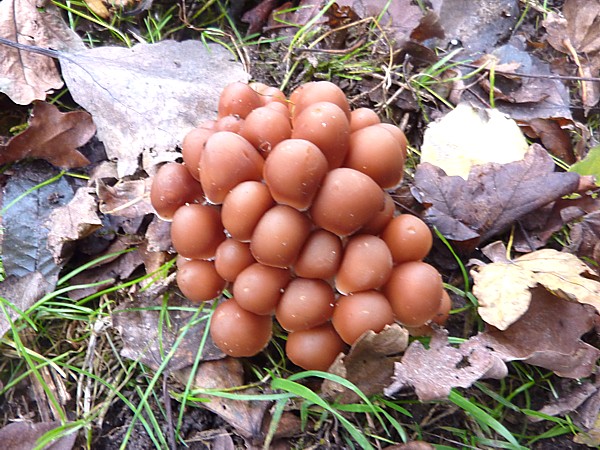
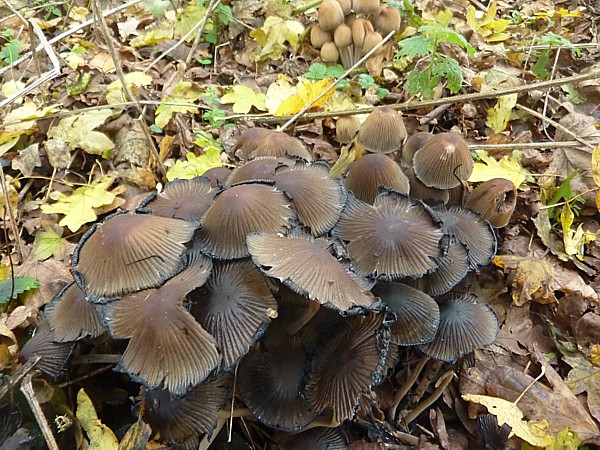
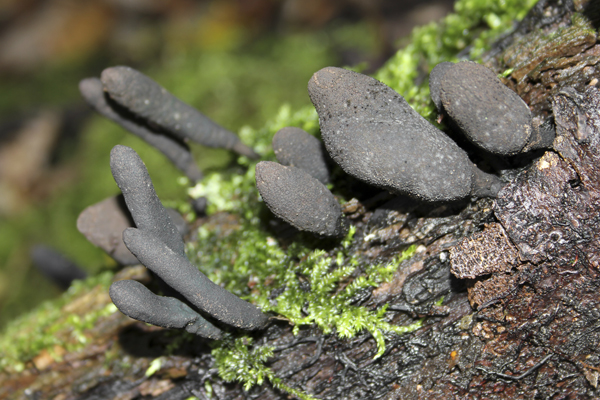
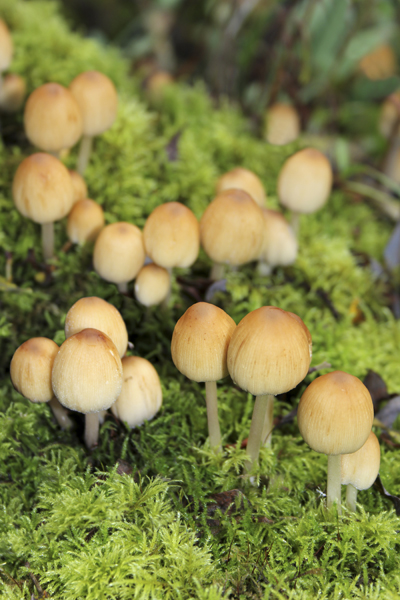
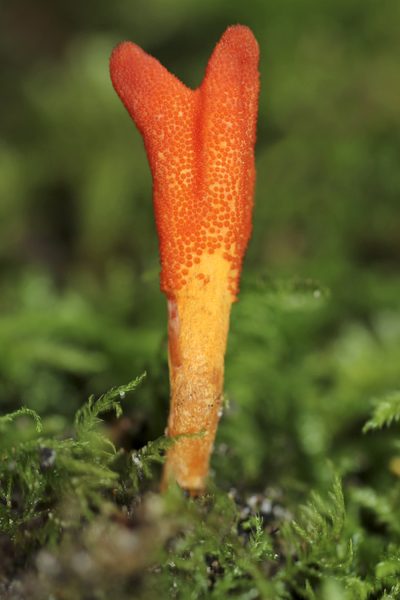
Ron Crosby was an excellent Fungi spotter so we were soon adding to the day’s list. There were a number of common Fungi species including Candlesnuff Fungus Xylaria hypoxylon also known as Stags Horn Fungus due to its appearance which was growing on rotting stumps of broadleaved trees. There was a line of Jelly Ear Auricularia auricula-judae lobes that looked uncannily like human ears hanging down from the branch of a mature Holly Ilex aquifolium – unfortunately out of reach for my camera lens – I did find a few smaller specimens growing on their more usual substrate of Elder Sambucus nigra. Fairies Bonnet’s Coprinus disseminatus a gregarious little Fungi forming dense masses swarming over rotting tree stumps and roots that hints at its other common name Trooping Crumble Cap.

MNA Carsington Fairies Bonnets1

Fairies Bonnets

MNA Carsington Jellyspot2

Common Jellyspot

MNA Carsington Sulphur Tuft1

Sulphur Tuft

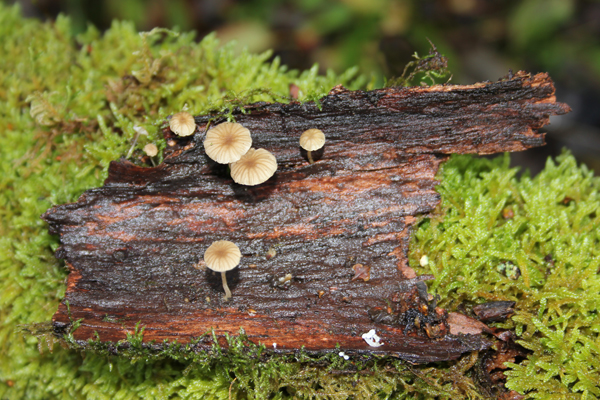
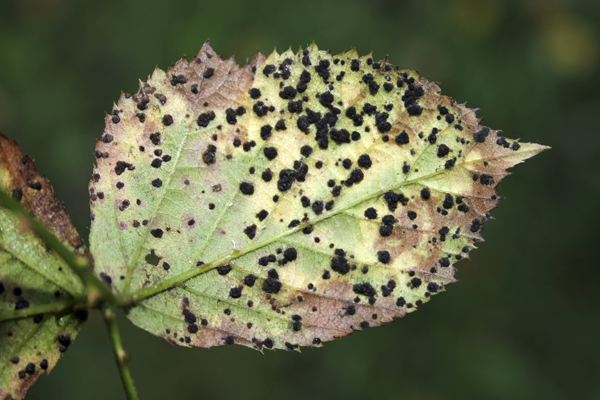
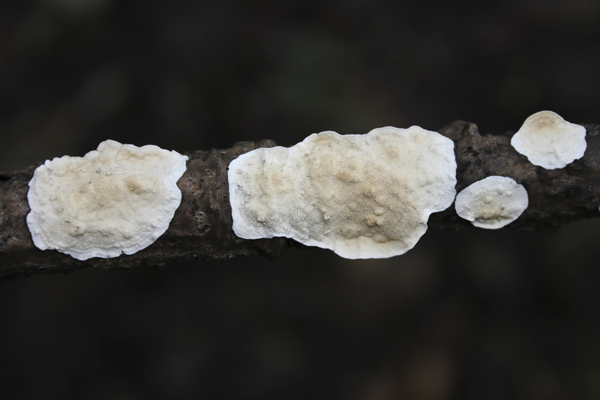
Glistening Inkcap Coprinus micaceus, Common Jellyspot Dacrymyces stillatus, Velvet Shank Flammulina velutipes, Bleeding Broadleaf Crust Stereum rugosum, Hairy Stereum Stereum hirsutum, Many-zoned Polypore Trametes versicolor, Blushing Bracket Daedaleopsis confragosa, Artist’s Bracket Ganoderma sp. Sulphur Tuft Hypholoma fasciculare, King Alfred’s Cakes Daldinia concentrica, Coral Spot Nectria cinnabarina, Dock Rust Puccinia phragmitis on Broad-leaved Dock Rumex obtusifolius leaves, some rather fine Oysterling Crepidotus sp.

MNA Carsington Blushing Bracket1

Blushing Bracket

MNA Carsington Crepidotus2

Oysterling

MNA Carsington Ganoderma1

Ganoderma sp.

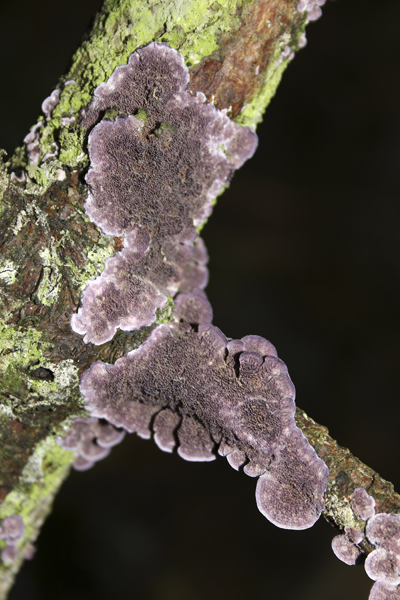
The best find was on a stump of Willow Salix sp. as we approached Sheepwash Hide – Silverleaf Fungus Chondrostereum purpureum – the common name is taken from the progressive silvering of leaves on affected branches – the fruiting body that is a fairly vivid violet colour develops undulating fruiting brackets with a pale zoned edge – a few patches were developing whitish hairs on the fruiting body surface.

MNA Carsington Silver Leaf1

MNA Carsington Silver Leaf2

Silverleaf Fungus

From Sheepwash Hide more Wildfowl with more Wigeon, Tufties, Coot, Mute Swans and a Grey Heron standing motionless out on the far bank. Fishing was good with both Great-crested Grebes and a Cormorant observed fighting to swallow large Fish – possibly Trout that they had caught. Fifteen Cormorants were hanging out with the good selection of Gulls resting on a spit – fifty or so Lesser Black-Backed Gulls, a lone Herring Gull, a few Common Gulls, dozen Black-headed Gulls and a Great Black-backed Gull in flight. Chris Butterworth saw a Dunlin fly in and briefly wander around. Other members also had good sightings from Sheepwash Hide – Alexander & co had watched a flighty flock of seven Red-breasted Mergansers and a couple of female Shoveler, John Clegg & co saw a flash of blue as a Kingfisher zoomed by, elsewhere DaveH watched a couple of male and a female Goldeneye from the dam. As we walked through Sheepwash car park we noticed some animal tracks carved onto a flat stone then found a great selection of wildlife expertly carved onto stone slabs surrounding the car park including a Bat, Rabbit, Stoat, Kingfishers, Nuthatch, Fox, Owl, Wren etc. We also found a grey coloured Moth camouflaged against the stone background that was later identified as a November Moth Epirrita dilutata.  We wandered back to the coach noting some early male catkins on Hazel Corylus avellana these will not normally open until next January or February.

MNA Carsington Grey Moth1

November Moth

MNA Carsington Bird Carving1

Nuthatch Carving

MNA Carsington Kingfisher Carving1

Kingfishers Carving

A wide photographic selection of birds, marine life, insects, mammals, orchids & wildflowers, fungi, tribal people, travel, ethnography, fossils, rocks & minerals etc. is available on my Alamy webpage

If you are interested in the wildlife of the North-west of England and would like to join the  walks and coach trips run by the Merseyside Naturalists’ Association, see the main MNA website for details of our programme and how to join us.

Posted in MNA reports | Comments Off on MNA Coach Trip Carsington Water 13th October 2013

Moving North?

Report from Tony Carter.
On Saturday 28th September, I led a fungal foray for the public at Ainsdale Sand Dunes Nature Reserve on behalf of Natural England.  We found about forty species, mostly the more common varieties such as Amanita muscaria (Fly Agaric) , Paxillus involutus (Brown Rollrim), Lactarius tabidus (Birch Milkcap) and Pholiota squarrosa (Shaggy Scalycap). These are species a foray leader hopes for when assisting a group of novices.

Amanita muscaria Childwall 1106

Amanita muscaria (Fly Agaric) Childwall 2006

Paxillus involutus Ains 9 08
Paxillus involutus (Brown Rollrim) Ainsdale 2008

Lactarius tabidus Ainsdale 0707
Lactarius tabidus (Birch Milkcap) Ainsdale 2007

Pholiota squarrosa Icehouse Plantation 1111
Pholiota squarrosa (Shaggy Scalycap) Icehouse Plantation, Hale 2011

However, one specimen, found by the gate leading into the paddock, was new to me. Pure white and woolly, it was densely covered in a powdery substance that came off easily when handled. I identified it to the group as a probable Cystoderma (Powdercap), which seemed logical at the time. Later microscopic observation and further research showed that it was a Dapperling, Cystolepiota pulverulenta. I had never seen one before. It is the first record for Ainsdale and VC59.  Ainsdale rarely fails to surprise.

Cystolepiota pulverulenta


Cystolepiota pulverulenta (Dapperling)
(Photograph courtesy of Mr. Peter Ross. Hand courtesy of Tony Carter!)

According to the British Checklist, this species is normally found in southern counties such as Oxfordshire, Somerset and Devon. Is this another species moving north with a warming climate?


Posted in MNA reports | Comments Off on Moving North?

Eastham, 29th September 2013

Another sunny day, which may be the last fine day before the autumn starts in earnest. We went to Eastham Village to see the old Yew tree there, which is probably the oldest tree on Merseyside.

35 Eastham old yew

Believed to be about 1600 years old, it may once have stood beside the earliest wattle-and-daub church and may have germinated soon after the Romans abandoned the north west of England in 383 AD. When the manor of Eastham changed hands in 1152,  the villagers asked the new owners to “have a care of ye olde yew”, which was then about 750 years old. It is a female tree and still fruiting vigorously.

35 Eastham yew berries

Eastham churchyard has many other fine old trees, and one notable younger one. A plaque notes that this small Yew was planted on 21st June 1887 to mark Queen Victoria’s Golden Jubilee. It appears to be a Golden Yew, which is appropriate, and it’s now 126 years old.

35 Eastham jubilee yew

Despite being momentarily distracted by a Sparrowhawk overhead, we were delighted to find a Horse Chestnut tree full of ripe conkers in the park off Ferry Road. They were falling all around us and we started to behave like kids, picking up the best and brightest of them and stuffing our pockets!

35 Eastham conker

It’s a very good year for all tree seeds and nuts. As well as the conkers, there were ripe brown acorns falling in Eastham churchyard, and as we walked past the Golf Club we crunched over Beech mast on the pavement.

35 Eastham beech mast

Unusually, the Beech nuts have formed this year, instead of being merely empty brown skins. We are having a “mast year”. The word “mast” comes from the Old English word “mæst”, meaning the nuts of forest trees that have accumulated on the ground, especially those used as food for fattening domestic pigs. Mast years are thought to be caused by a good spring and an abundance of pollinating insects, although it may just be a strategy by the trees to ensure some of their seeds survive. See this article in the Telegraph (from after the paragraph about strawberries, when it starts to say more about nature and less about farming and gardening.)

We lunched in Eastham Country Park then went to check the bird feeders at the back of the Visitors’ Centre. They were unusually quiet, with just Chaffinch, Great Tit,  Blue Tit and Dunnock. Perhaps it has something to do with the current abundance of natural food. Then we hunted down the “Great Oak” on the far side of the car park. At first we thought it might be this one, but it’s far too young – this one is about 250 years old and in its prime.

35 Eastham prime oak


The Great Oak is a few yards away. It’s the biggest Oak on the Wirral. In the early 1990s its girth was 17 ft (5m), and we measured it at 17 cm more than that, so it’s still growing. A bore test has shown it is over 500 years old, so it was young in the early years of the Tudors. It has lost a big lower branch recently and seems to be nearing the end of its days.
35 Eastham Great Oak


Nearby is this collection of wood sculptures, a Teddy Bear’s Picnic.

35 Eastham picnic

At the junction of the paths on the north side of the Leverhulme sports field is the ruin of what was once Wirral’s largest tree, a Beech which was 80 ft high (24 m) at the end of the 20th century, but is now a great dead stump with fallen branches all around. It’s being left to rot to enrich the woods.

35 Eastham Beech stump


Public transport route: Bus no.1 (Chester) from Sir Thomas Street at 10.03. Returned on same bus at 2.15 from Christ the King RC Church, Bromborough, on New Chester Road.

Posted in Sunday Group | Comments Off on Eastham, 29th September 2013

Blundellsands Park, 22nd September 2013

The mini-heatwave continues! It was overcast but remarkably warm for late September. We took the train to Blundellsands and Crosby station and followed The Serpentine around to the park gates.

34 Crosby park gates

Blundellsands key park is one of the few members-only parks left in the UK. None of us are members (the waiting list is three years) and so we weren’t able to go into the park itself, but the pedestrian access next to the main gates allowed us to walk along Park Drive, which forms the western boundary. The park is a Site of Biological Importance, containing an area of the old mobile dunes. Species recorded there include Red Squirrel, Red Fox, Weasel, Rabbit, Hedgehog, Wood Mouse, Pygmy Shrew, Frog, Slow Worm and Common Lizard.  From outside the railings our best “spots” were a Comma butterfly amongst the bees and wasps on flowering Ivy, and five Magpies in a treetop. “Five for silver ….” Sounds hopeful!

34 Crosby Magpies

At the junction of The Serpentine and Burbo Bank Road North is St Nicholas’s Fountain, put up in 1881 by Joseph Gardner, a wealthy local timber merchant, because he was plagued by fishermen and “cockle-mollies” from the beach, asking for water.

34 Crosby Nicholas fountain


Between the railway line and the sea, the old development is now a conservation area. It was built by Nicholas Blundell in around 1865, and here is the ornate gateway to his own house, Treleaven, on Blundellsands Road West.

34 Crosby Treleaven gateway

After lunch we walked south along the prom to Waterloo. A Kestrel was hovering over the fenced-off area where Marram Grass is being planted to help stabilise the dunes, and Sea Holly was sprouting everywhere.

34 Crosby Sea Holly

This picture of the beach shows a ship coming in on the high tide, some old Christmas trees being used to to stabilise the dunes, Burbo Bank wind farm on the horizon and an Iron Man and two admirers on the right.

34 Crosby beach and Christmas trees

On the Boating Lake were four Mute Swans and two cygnets. One pair of adult swans were performing courtship displays, so this warm weather has fooled them into thinking it’s spring already. Other birds were Black-headed Gulls, Mallards, Tufties and Coots, and there was the usual mixed flock of Herring Gulls and Lesser Black-backed Gulls on the grass. I have twitched Little Gulls and Grey Phalarope here before, but today there weren’t even any late Swallows.

Posted in Sunday Group | Comments Off on Blundellsands Park, 22nd September 2013

Formby Nature Reserve, 22nd September 2013

Report by Tony Carter:
On Sunday 22nd September 2013, I joined a colleague who was leading a public foray for The National Trust at Formby Nature Reserve. I normally cover the area between the Pinfold and Fishermans Paths so I had not previously looked for fungi in this part of the coast. We eventually identified 64 species of fungus. I was surprised that, although the habitat in both areas is the same, there was a marked difference in the predominance of some species.  Geastrum triplex (Collared Earthstar) fruits in hundreds at Ainsdale. I have never recorded Geastrum fimbriatum (Sessile Earthstar), yet at Formby we found dozens of G. fimbriatum but only one triplex.

Geastrum sessile Formby 0913

We also recorded lots of large Chroogomphus rutilus (Copper Pin), an occasional find at Ainsdale.

Auriscalpium vulgare (Earpick Fungus), that grows from buried pine cones, is one that we struggle to find at Ainsdale. Our inexperienced public found them with ease. But there was no sign of any Strobilurus tenacellus (Pinecone Cap), a common species at Ainsdale.

Auriscalpium vulgare Formby 0913

Auriscalpium vulgare (Earpick Fungus)

Later in the day we had a look at the outer sand dunes, not an ecosystem we look at very often. We found four species within ten minutes, all associated with Ammophila (Marram Grass). The star was a Melanoleuca (Cavalier) that I eventually identified as Melanoleuca cinereifolia. The one we found was a very light brown. There is a lighter coloured variation named maritima, now incorporated into cinereifolia. The spores, microscopic features and substrate are right and no other species fits.

Melanoleuca cinereifolia a

Posted in MNA reports | Comments Off on Formby Nature Reserve, 22nd September 2013

Burton Mere Wetlands Reserve

An alternative view from Tony Carter.
The warden of the Reserve asked if I would lead a fungus foray for the public. As the MNA had fixed the 21st for a programmed visit and I had never been to the site, it seemed to be a good opportunity to acquaint myself with the area and see if it was suitable to hold such an event.  So, while other members were being delighted by Hobbies and Marsh Harriers, I was wandering around a small and dry woodland, looking for fungi.

I only found twenty-four species in two hours. Most of them were wood-decaying fungi, such as Fistulina hepatica (Beefsteak Fungus) on a fallen oak tree. There were very few mycorrhizal fungi, those that grow in association with plants, which one would expect in a healthy wood. Also missing were many of the most common fungi, essential for a public foray.

Fistulina hepatica Burton Mere 0913

One  good find was a group of Gymnopilus junonius (Spectacular Rustgill) under another oak. In the USA, it is known as Laughing Jim.

Gymnopilus juninius Burton Mere 0913

Happily, I got back to the viewing area in time to see a Purple Sandpiper so my visit was not totally disappointing.

Posted in MNA reports | Comments Off on Burton Mere Wetlands Reserve

Burton Mere Wetlands RSPB, 21st September 2013

33 Burton view

Seven members met at Sir Thomas Street for the 487 bus at 9.15. Due to the withdrawal of the number 24 from West Kirby, we had to go to Ness Gardens and walk from there. Three hardy walkers set off for the even longer way around by Inner Marsh Farm but the rest of us walked by Burton Wood, Burton churchyard and Puddington Lane. It was a sunny day, and surprisingly warm.  By the roadside we came across a poor trembling Rabbit with half-closed eyes. It bore no sign of damage, but it must surely have been hit by a car.

33 Burton bunny distressed

We met seven other members in the car park. While the rest of us were greeting, Jim and John went into the main hide overlooking the Scrape and saw the only Kingfisher of the day, although there were to be several other good birds for the rest of us later. The Scrape produced Canada Geese, Mute Swans, one Black Swan, Greylag Geese, Mallards, Coots, Shovellers and Teal. Two Buzzards were circling above and Swallows were still about. On the feeder outside there were Chaffinches and Goldfinches.

33 Burton centre

On the way to the other hide for lunch there were good displays of late flowers, including Perennial Sow Thistle, Fleabane and Hemp Agrimony.

33 Burton Hemp Agrimony

Hemp Agrimony

33 Burton Sow Thistle
Perennial Sow Thistle with a Carder Bee

From the second hide we saw only a Kestrel hovering and a Carrion Crow. There was some intent muttering and staring through telescopes at a brown mark on a distant bush. Was it an Owl?  No, just a natural feature. On the way back, however, a flock of Lapwings went up. We searched the skies and were rewarded with a pair of Hobbies. Then a Marsh Harrier flew low over the reeds and a Snipe went very fast in the opposite direction.

The sun brought out many butterflies, including a Red Admiral, lots of Large Whites, a Comma and a Speckled Wood. There was a Common Darter dragonfly on the railing. One Alder leaf had a strange deformity, looking like a gall, but when we turned the leaf over we saw that the swelling was empty, just a swollen shape next to the midrib.

33 Burton Alder deformity


Another Alder tree had unusually big glossy leaves and larger-than-usual cones. Was it a different species or is this just natural variation?

33 Burton Alder large

All around the reserve there were open-fronted bird boxes on the ground, each with a laminated picture inside, which was some sort of treasure trail for children. Lots of wood sculpture, too. There were wooden bluebells by the entrance, a wooden woodlouse by the woodpile, badgers going in and out of tunnels in the woods and a woodpecker on the side of a tree.

33 Burton woodpecker sculpture

Amongst the many genuine bird boxes up in the trees was a bat box, accompanied by yet more wood sculptures, this time of fruit bats. Interesting for the kids, but whether the real bats would fnd them encouraging is another matter!  The best piece of art was a Heron sculpture by Paul Bearman, commissioned with funds donated by the National Exhibition of Wildlife Art.

33 Burton Heron sculpture


Back in the main hide over the Scrape, the Warden’s telescope was on a Curlew Sandpiper, which we were all able to have a good look at. Some then went to the hide called the Blockhouse and saw Little Grebe, Snipe again, Marsh Harrier again and a Reed Bunting.  Then back through the woods to Ness Gardens. This morning’s distressed Rabbit had now become Corpse of the Day, lying dead in the gutter with its paws in the air.

33 Burton bunny deceased

Posted in MNA reports | Comments Off on Burton Mere Wetlands RSPB, 21st September 2013

Pickerings Pasture, 8th September 2013

(Report from John Clegg). Five Sunday Group members visited this area of mixed woodland, open pasture and the River Mersey. The tide was out and on one of the sandbanks was a large flock of Black-tailed Godwit, which suddenly took flight. We could pick out a large female Peregrine Falcon twisting and turning in the air while giving chase. She didn’t make a kill.
There were also Lapwings, Canada Geese and Redshanks on the sandbanks.
A new pop-up café is open on Sundays, with very low prices, and when it’s operating the toilets are open, which is a useful thing to know!
At the bird hide we noticed that the Black-tailed Godwits had moved on to the field by the pond, as the tide had now come in. They were accompanied by 500-600 Canada Geese. A Heron was with some Teal in the pond.
From the bus on the way home we saw a Little Egret in one of the flooded fields.


Posted in Sunday Group | Comments Off on Pickerings Pasture, 8th September 2013

MNA Coach Trip Fairburn Ings 1st September 2013

Seventeen MNA members joined the penultimate coach trip of the year to Fairburn Ings RSPB Reserve near Castleford in West Yorkshire. After a slight detour we arrived in time for lunch and sat on the picnic tables overlooking the feeders. A multitude of Tree Sparrows were joined by Greenfinch, Goldfinch, a male Bullfinch, Great Tit, Collared Dove and later on a Willow Tit.

The small wildflower gardens in front and to the side of the visitor centre were a bit past their best but held Ribbed Melilot Melilotus officinalis, Upright Hedge-parsley Torilis japonica, Wild Carrot Daucus carota, Viper’s-bugloss Echium vulgare, Wild Marjoram Origanum vulgare, Lady’s Bedstraw Galium verum, Evening-primrose Oenothera sp.Common Knapweed Centaurea nigra, Chicory Cichorium intybus and Mugwort Artemisia vulgaris.

MNA Fairburn Ings Chicory1

Chicory

In the small reedbed beside the pond-dipping platform a number of Himalayan Balsam Impatiens glandulifera leaves had a dozen or so Common Amber Snails Succinea putris.

The group split up with a number of us following the Lin Dike trail along the River Aire where we noted Cormorant, Little Egret – a few gracefully hanging in the air like dancing Cranes, Grey Heron, Mallard, Common Sandpiper, Green Sandpiper and Common Tern. With blustery and overcast conditions it wasn’t an ideal day for insects but I did note Common Blue Damselfly Enallagma cyathigerum, Blue-tailed Damselfly Ischnura elegans, Brown Hawker Aeshna grandis, Common Darter Sympetrum striolatum, Scorpion Fly Panorpa communis, Hoverfly Syrphus ribesii, Hoverfly Eristalis sp. Common Wasp Vespula vlugaris and Red-tailed Bumblebee Bombus lapidarius. Butterflies included Green-veined White Pieris napi, a rather faded Small Copper Lycaena phlaeas and Meadow Brown Maniola jurtina.

MNA Fairburn Ings Syrphus ribesii

Hoverfly Syrphus ribesii

Of particular note were the large numbers of Galls affecting a variety of Plant species. The most noticeable were the half dozen Bedugar a.k.a. Robin’s Pincushion Gall on Dog Rose Rosa canina caused by Cynipid Wasp Diplolepis rosae.

MNA Fairburn Ings Robins Pincushion Gall1

Robins Pincushion Gall

There was also Smooth Pea Galls on Dog Rose Rosa canina leaves caused by Cynipid Wasp Diplolepis nervosa.

MNA Dog Rose Smooth Pea Gall1

Dog Rose Smooth Pea Galls

Some fine examples of Red Galls on Crack Willow Salix fragilis leaves caused by the Sawfly Pontania proxima.

MNA Willow Leaf Gall1

Willow Leaf Galls

Galls on Alder Alnus glutinosa leaves caused by the Gall Mite Acalitus brevitarsus a.k.a. Eriophyes brevitarsus – the leaf is made to grow clusters of hairs, called an erineum, among which the mites live.  In this species, the hairs have several near-horizontal branches at the tip, so that each group of hairs is like a forest with a closed canopy. 

MNA Alder Leaf Gall Mite1

Alder Leaf Galls

There were also Galls on Meadowsweet Filipendula ulmaria leaves caused by the Gall Midge Dasineura ulmaria.

MNA Fairburn Ings Meadowsweet Gall1

Meadowsweet Leaf Galls

Autumn fruits and berries covered the hedgerows and trees with Bramble Rubus fruticosus, Japanese Rose Rosa rugosa, Dog-rose Rosa canina, Blackthorn a.k.a. Sloe Prunus spinosa, Wild Plum Prunus domestica, Crab Apple Malus sylvestris, Rowan Sorbus aucuparia, Elder Sambucus nigra and Guelder-rose Viburnum opulus. A few members nibbled on some of the edible fruits along their walk.

MNA Fairburn Ings Redshank1

Redshank

Plants included Common Nettle Urtica dioica, Red Campion Silene dioica, Common Bistort Persicaria bistorta, Redshank Persicaria maculosa, Common Sorrel Rumex acetosa, Meadowsweet Filipendula ulmaria, Common Bird’s-foot-trefoil Lotus corniculatus, Tufted Vetch Vicia cracca, Purple-loosestrife Lythrum salicaria, Dyer’s Greenweed Genista tinctoria, Giant Hogweed Heracleum mantegazzianum, Common Centaury Centaurium erythraea, Hedge Bindweed Calystegia sepium, Marsh Woundwort Stachys palustris, White Dead-nettle Lamium album, Selfheal Prunella vulgaris, Water Mint Mentha aquatica, Red Bartsia Odontites vernus, Wild Teasel Dipsacus fullonum, Greater Burdock Arctium lappa, Marsh Thistle Cirsium palustre, Michaelmas Daisy Aster sp. Tansy Tanacetum vulgare, Yarrow Achillea millefolium and Lords-and-Ladies Arum maculatum. A few fungi were noted Brown Birch Bolete Leccinum scabrum and Field Mushroom Agaricus campestris.

We eventually arrived at the Lin Dike Hide overlooking Spoonbill Flash. Mute Swan, Shelduck, Gadwall, Teal, Mallard, Northern Shoveler, Moorhen, Coot, Northern Lapwing, Dunlin 3, Ruff 3 , Curlew – heard, Pied Wagtail, Carrion Crow, Starling and a splendid female Marsh Harrier.

The trail then took us out onto Newton Lane and back towards the visitor centre scanning new Flash, The Moat and Phalarope Pool en route for Wildfowl and noting Greylag and Canada Geese, well grown Mute Swan cygnets, another 35 Gadwall and House Martins along with the odd Sand Martin hovering up insects for their forthcoming migration.

We arrived again at the visitor centre where caught up with other members sightings which included a Carrion Crow attacking a Sparrowhawk and a female Southern Hawker Aeshna cyanaea. An enjoyable day with a group total of over forty bird species.

A wide photographic selection of birds, marine life, insects, mammals, orchids & wildflowers, fungi, tribal people, travel, ethnography, fossils, rocks & minerals etc. is available on my Alamy webpage

If you are interested in the wildlife of the North-west of England and would like to join the  walks and coach trips run by the Merseyside Naturalists’ Association, see the main MNA website for details of our programme and how to join us.

Posted in MNA reports | Comments Off on MNA Coach Trip Fairburn Ings 1st September 2013

Ghana August 2013

MNA Ghana Elephant1

African Bush Elephant Loxodonta africana

I’ve recently returned from a two week jaunt around Ghana in West Africa. There were many cultural highlights such as Bolgatanga – Lobi Villages and the distinctive local architecture and painted houses in the Wa region, Kumasi -with the vibrant colours of the largest market in West Africa and Gold Coast Castles -the impressive 18th Century castle of Elmina, a UNESCO World Heritage Site. We did manage to pack in lots of wildlife viewing as well visiting the lush rainforest and canopy walkway of Kakum N.P. an exciting foot safari in Mole N.P. to view Elephants, Boabeng-Fiema Monkey Sanctuary and the sacred Crocodile ponds at Paga.

MNA Ghana Warthog1

Warthog Phacochoerus africanus

MNA Ghana Baboon1

Olive Baboon Papio anubis

MNA Ghana Mona Monkey1

Campbell’s Mona Monkey Cercopithecus campbelli

MNA Ghana Crocodile1

Nile Crocodile Crocodylus niloticus

MNA Ghana Grasscutter1

‘Grasscutter’ the favourite Ghanaian Bushmeat – Greater Cane Rat Thryonomys swinderianus

MNA Ghana Bug2

Bug

MNA Ghana Bug3

Bug

MNA Ghana Butterfly1

Butterfly – White-barred Acraea Acraea encedon

MNA Ghana Dragonfly1

Dragonfly -Violet Dropwing male Trithemis annulata

MNA Ghana Dragonfly3

Dragonfly – Black Percher female Diplacodes lefebvrii

MNA Ghana Dragonfly4

Dragonfly – St. Lucia Widow male Palpopleura lucia

MNA Ghana Dragonfly6

Dragonfly – Portia Widow female Palpopleura portia

MNA Ghana Dragonfly5

Dragonfly – Northern Banded Groundling male Brachythemis impartita

MNA Ghana Grasshopper1

Grasshopper

MNA Ghana Grasshopper3

Grasshopper

MNA Ghana Lizard1

Red-headed Rock Agama Male Agama agama 

MNA Ghana Skink1

Five-lined Mabuya a.k.a. Rainbow Skink Trachylepis quinquetaeniata

MNA Ghana Millipede1

Ghana Red Banded Millipede Pelmatojulus excisus

MNA Ghana Lake Fish1

Fish caught from Lake Bosumtwi including the endemic Cichlid Hemichromis frempongi and the near-endemic cichlid Tilapia busumana

MNA Ghana Hermit Crab1

Dead Hermit Crab

A wide photographic selection of birds, marine life, insects, mammals, orchids & wildflowers, fungi, tribal people, travel, ethnography, fossils, rocks & minerals etc. is available on my Alamy webpage

If you are interested in the wildlife of the North-west of England and would like to join the  walks and coach trips run by the Merseyside Naturalists’ Association, see the main MNA website for details of our programme and how to join us.

Posted in MNA reports | Comments Off on Ghana August 2013