Victoria Park, Widnes 17th October 2010

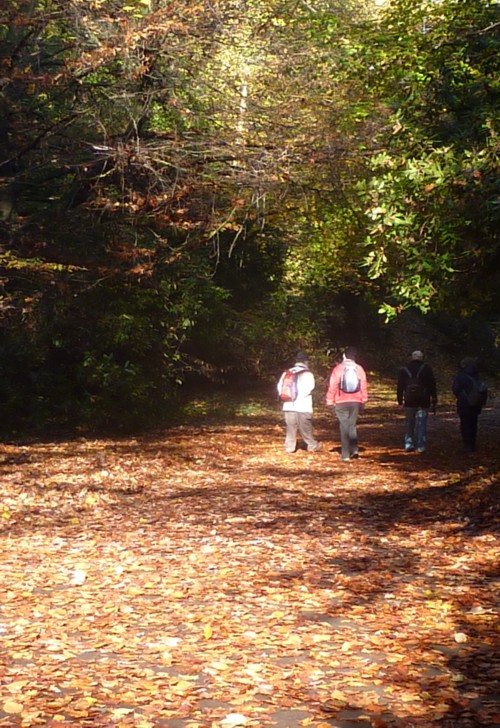
We met at Lime Street station for the 10.26 train to Widnes, then walked just a few yards along Birchfield Road to the park. It was a perfect autumn day, with a clear sky and crispy leaves underfoot. 

 widnes-swans.jpg

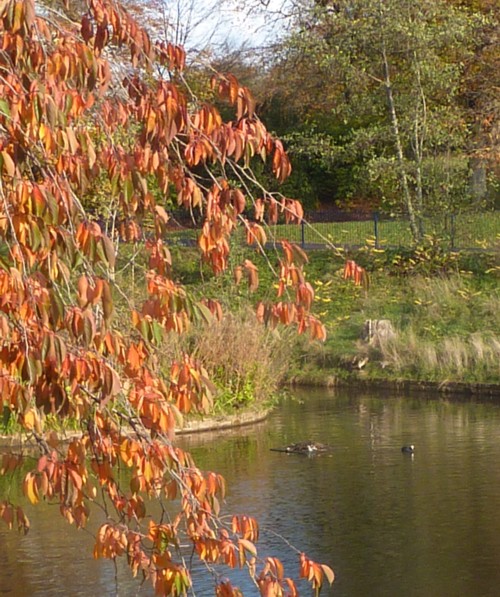
The pond was full of Mallards and Canada Geese, well-trained to bread, with some Black-headed gulls, one Moorhen and about 14 Mute Swans. None appeared to be this year’s cygnets (they were fully white) but they all looked like females, lacking the prominent black forehead knob of the mature cob. They may have been second-autumn juveniles.
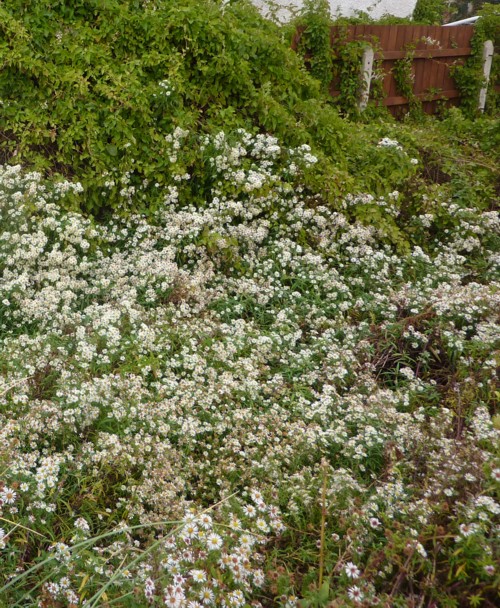
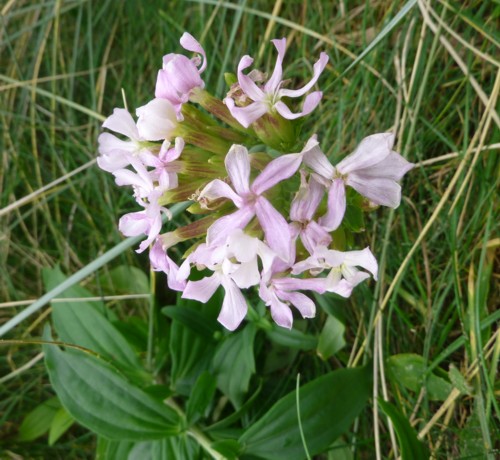
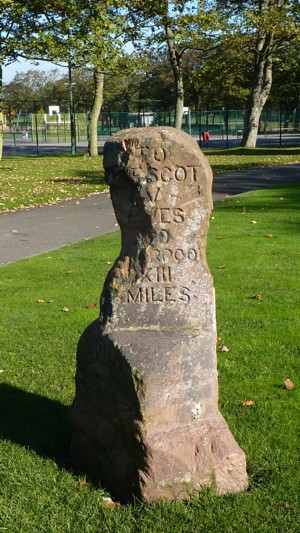
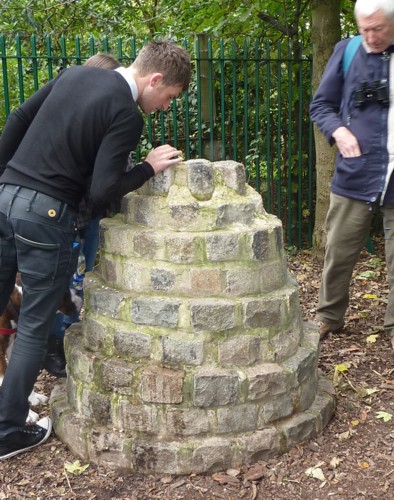
The park was full of visitor-friendly features – a bandstand, a café, exercise machines, a BMX park and a climbing wall. The glasshouses had bedding plants for sale, two caged iguanas and a rather disappointing butterfly house. Near the Gladstone Memorial Fountain was an old milestone showing damage from a Zeppelin bombing raid in 1918.

 zeppelin-milestone.jpg

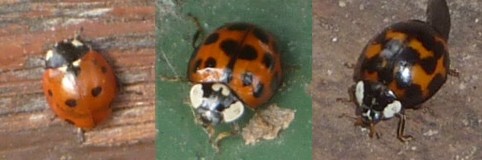
The wooded area on the west side of the park is the “nature” area, where we saw Long-tailed Tits, Great Tits, a squirrel and a Collared Dove in the trees. The wardens have put up bird and bat boxes and made a “Bug Hotel”. It must have been working because we saw what we thought at the time were three different Ladybirds in the area. The first one is the native 7-spot ladybird, but the other two are probably both Harlequins, which are very variable.

three-ladybirds.jpg

Something we have never seen before is a bat hibernaculum. The adjacent signage said there are Common Pipistrelles, Soprano Pipistelles and Daubenton’s in the area, who may spend the winter in their newly-built home.

bat-hibernaculum.jpg

On the way back across the field we saw a Magpie and three Pied Wagtails on the grass. We caught the 2.15 train back to Lime Street, arriving just before 3pm. 

Posted in Sunday Group | Leave a comment

Canal cruise 10th October 2010

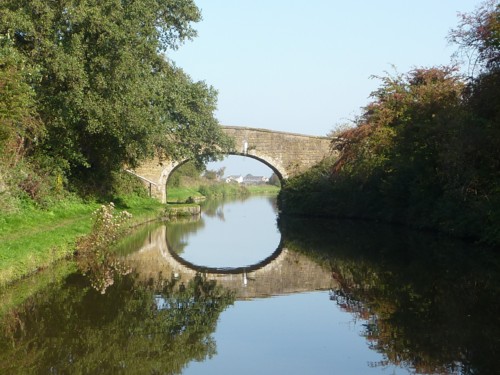
What a contrast to last week! We had a glorious sunny boat trip on the canal from Haskayne to Burscough on the barge “Pride of Sefton”.
Twelve of us met at 10.10 am on 10/10/10 (which had to be a good omen) for the 300 bus from Sir Thomas Street to the King’s Arms at Haskayne. We were escorted aboard, then setted down in the bow to drift happily northwards watching the wildlife. There were the usual Mallards, Coots, Moorhens and Black-headed gulls, and we saw two Herons on the banks, one of which flew ahead in short stretches, only to be disturbed again by our progress. Yellowhammers, Robins, Blackbirds and Goldfinches flitted across the canal, a Buzzard flew high in the blue sky, Crows flocked into an isolated tree and a Kingfisher disappeared into the reeds somewhere past Heaton’s Bridge.

p1000318.JPG

For long stretches we meandered along with the canal to ourselves, passing only a very few walkers and fishermen and hardly any other narrowboats. The leaves on the trees had not yet started to turn, but the hedges were red with Hawthorn and Rowan berries, rose hips and apples. We spotted one white butterfly and several dark ones: one at least was a Red Admiral.
We turned near Burscough, right in the middle of a fishing competition, and had a chance to take a second look at three garden Peacocks (the birds not the butterflies); one was the white or leucistic variety. The skipper took us further south on the return journey, where we saw a most unexpected brood of seven Mallard ducklings, only a day or two old. Not only were their parents breeding very late (or early), they had a very mixed ancestry. Two ducklings were very dark brown, two were lighter brown, two were butter-blonde while the seventh was fawny-grey with dark flecks.  We disembarked at the Scarisbrick Arms at Downholland Cross at 4pm and caught the 300 bus back to Liverpool, due back in the City Centre at 5.15.

Posted in Sunday Group | 1 Comment

Eastham CP 9th October 2010

Had a trip over to Eastham CP on the Wirral on 9th October 2010. In between being nearly savaged by an old woman’s Dalmatians and listening to the dulcet tones of people screeching at their kids / dogs (delete as appropriate) I found quite a few interesting fungi and slime moulds.

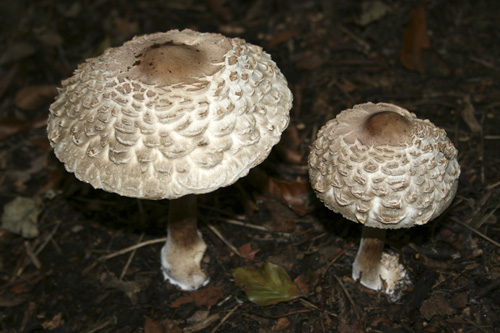
Half a dozen Shaggy Parasol Mushrooms Macrolepiota rhacodes were at various stages of development. This large species is quite common and can be recognised by its scaly-looking cap and smooth unmarked stem. It is edible but must be cooked to remove toxins.

mna-eastham-parasol-fungi3.jpg

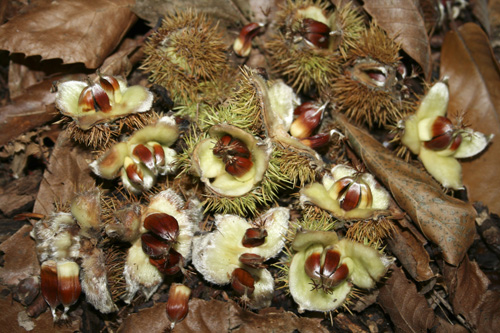
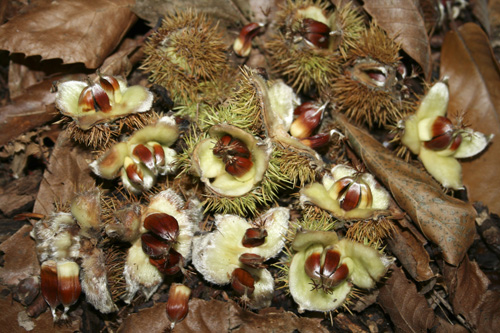
Masses of Sweet Chestnuts Castanea sativa littered the woodland floor which the ever present Grey Squirrels were busily collecting.

mna-eastham-sweet-chestnut1.jpg

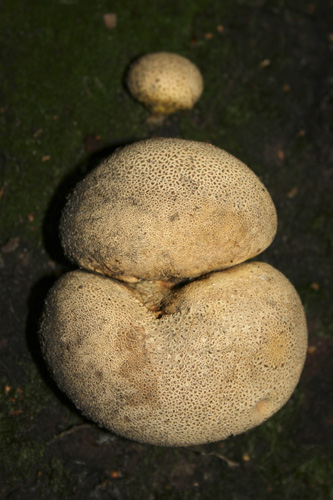
 A whopper Common Earthball Scleroderma citrinum with hard scaly skin was growing on the soil at the base of a Beech tree.

mna-eastham-common-earthball1.jpg

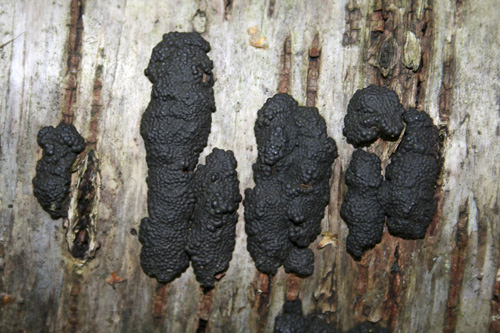
The elongated hard black clusters of Birch Woodwart Hypoxylon multiforme were growing on a dead branch.

mna-eastham-birch-woodwart1.jpg

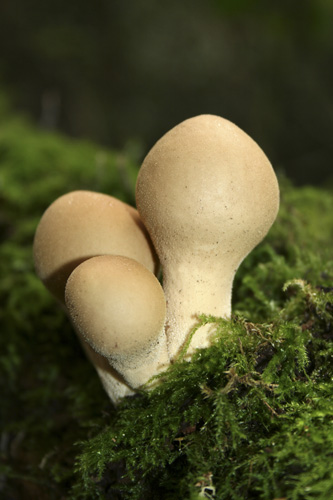
 A few Stump Puffballs Lycoperdon pyriforme were growing on a mossy fallen log. Their latin name ‘pyriforme’ means pear-shaped and they have a much smoother appearance than the more usual Common Puffball Lycoperdon perlatum.

mna-eastham-stump-puffball1.jpg

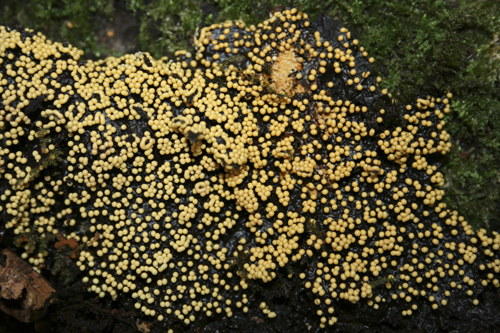
On the inside of a damp well rotted tree trunk I found a large colony of immature sporocarps of the Slime Mould Trichia varia

 mna-eastham-yellow-dot-slime-mould1.jpg

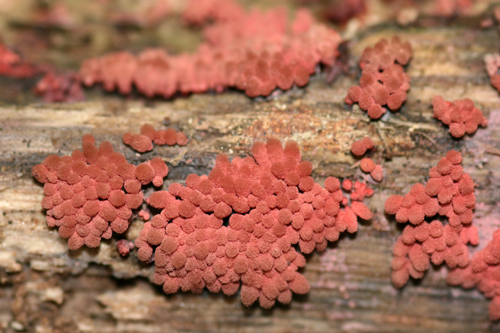
The second slime mould of the day was the salmon-pink spore mass of Arcyria incarnata. On close examination the capillitium have a mesh-like appearance. 

mna-eastham-pink-slime-mould1.jpg

Posted in MNA reports | Leave a comment

Dibbinsdale Fungi 4th October 2010

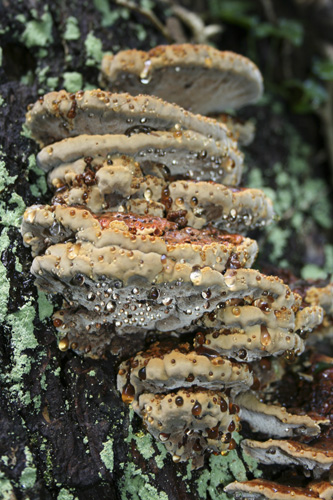
I took monday afternoon off work on 4th October 2010 and headed over to Dibbinsdale LNR on the Wirral. The pounding rain of sunday meant squlechy conditions underfoot but rewards of new fungi finds for the season. A dead deciduous tree beside a stream had numerous tiers of a bracket fungi that was oozing a reddish coloured resin. These are probably Alder Bracket Inonotus radiatus

mna-dibbinsdale-bracket-fungi2.jpg

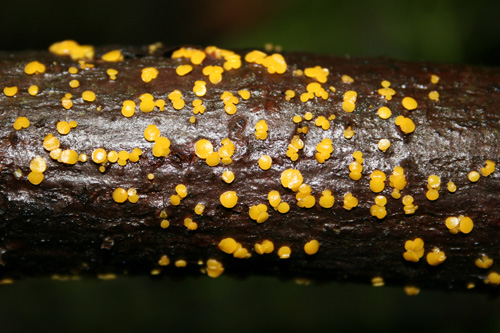
One dead beech branch was covered in the tiny 3mm saucer-shaped fruit bodies of Lemon Disco Bisporella citrina

mna-dibbinsdale-lemon-disco1.jpg

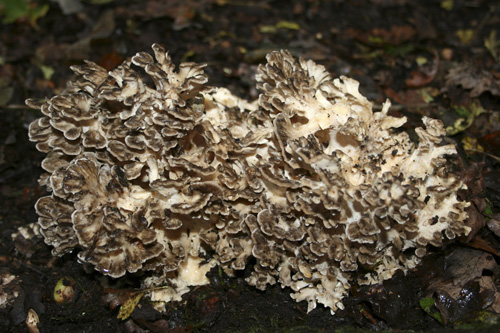
At the base of an oak tree were a couple of large clusters of rosettes belonging to the polypore Hen-of-the-Woods Grifola frondosa. This fungi will often reappear beneath the same tree in subsequent years.

mna-dibbinsdale-hen-of-the-woods1.jpg

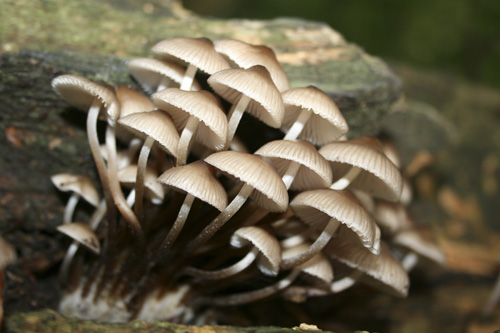
A fallen beech log held a group of Trooping Crumble Caps Coprinus disseminatus. These gregarious fungi are relatively common and have delicately pleated caps which gave rise to their old fashioned name of Fairy Bonnets.

mna-dibbinsdale-bonnet-fungi1.jpg

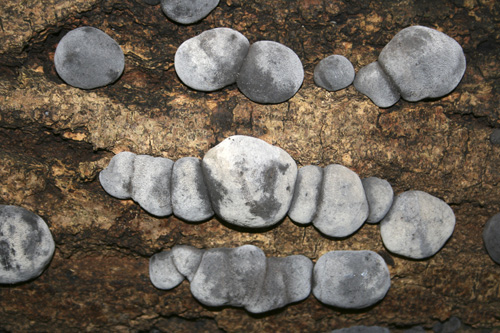
A good collection of King Alfred’s Cakes Daldinia concentrica were on a fallen tree trunk. These fresh grey growths will darken to the more usually observed black cramps balls.

mna-fresh-king-alfreds-cakes1.jpg

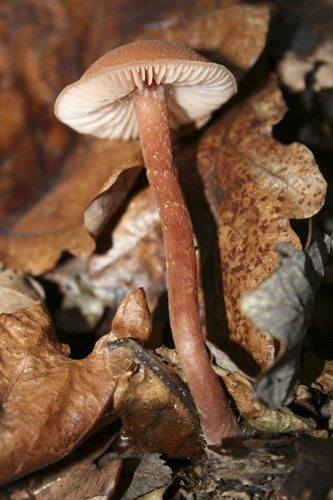
In the leaf litter under Oak trees were a few Laccaria laccata commonly known as The Deciever. They can be quite variable in colour especially when weathered but their broad gills and fibrous stem are useful ID characteristics.

mna-dibbinsdale-the-deciever1.jpg

Posted in MNA reports | Leave a comment

West Kirby, 3rd October 2010

What a horrible wet day it was! We were supposed to be going to Hilbre Island for the Open Day, but it was just too wet. We stood at the Dee Lane slipway at West Kirby and looked glumly over the sands to the rain-sodden islands, and our resolve failed.
The day went wrong right from the start. Not only was it raining heavily when we met at Central Station (all kitted out in our best wellies) for the West Kirby train at 10.05, but we had to change to a Rail Replacement bus at Birkenhead North. We didn’t get to the Dee Lane slipway until 11.20, and found that even the Friends of Hilbre had decided not risk the hour-long trek over the sands.  So we walked along the Marine Lake, which has been drained for repairs to the embankment, and looked at the Black-headed gulls and Herring gulls in the mud and shallow pools. Six Herons were hunched out in the middle.
We had our lunch in the shelters, then walked in lighter rain through Coronation Gardens to Ashton Park. The gullys around the bowling greens were overflowing like mini-moats onto the sacred turf. We spotted a poster about Hoylake local food fair on Sunday 31st October and decided to go there at the end of the month instead of to Waterloo. We are always alert to the possibilities of the odd free sample!
Ashton Park lake had the usual Mallards, Coots, Moorhens, Canada Geese, Greylag Geese, two juvenile Herring Gulls and the resident Muscovy Duck. No Tufted Ducks today. On the island were three very black ducks with green glossy highlights on their sides. They were probably “deviant” Mallards, but in the other colour direction to the pale ones who have interbred with domestic ducks. There was one Grey Squirrel in the trees. As we crossed the bridge over the Wirral Way into the higher park the rain stopped and the sun made a valiant attempt to shine through the clouds.  We were greeted by a Robin in the hedge, some Collared Doves and Wood Pigeons, and a Crow with white flecks in his tail and back. Three Shaggy Ink-caps were coming up in the rose beds.  We were back at the station for the bus at 2.15, and at Central Station by 3pm.

Posted in Sunday Group | 1 Comment

Watch out, there’s an optics thief about!

At the MNA indoor meeting this afternoon Jimmy told me he had nearly had his camera and tripod stolen from a hide at Martin Mere. A young woman appeared to be attempting to pick it up while Jimmy’s back was turned. He reported it, and was told that one of the wardens there had recently had a telescope stolen.

So beware! The atmosphere in bird hides is usually very trusting, but you should be a bit more careful at the moment. 

Posted in MNA reports | 1 Comment

Martin Mere 25th Sept 2010

Headed up to Martin Mere on 25th September 2010. Large numbers of Pink-footed Geese present in the fields as I took the train from Southport to New Lane station. Estimates of Pinkie numbers on the reserve are currently around 10,000! Plenty of raptor activity with a couple of Sprawks, Buzzards, Marsh Harrier and Peregrine. Wader highlights were a couple of Curlew Sands amongst the Dunlin. The reserve was packed with visitors due to the ‘Animal Magic’ event. Corio Raptor Care were one of the exhibitors. Their centre is dedicated to the rehabilitation of sick, injured and mistreated birds of prey and they had brought along a selection of Owls from a diminutive White-faced Scops Owl to a huge Eagle Owl. They kindly allowed me behind the roped off area to photograph one of my favourites – a Tawny Owl Strix aluco

mna-martin-mere-tawny-owl4.jpg

mna-martin-mere-tawny-owl3.jpg

Around the captive wildfowl area were numerous Common Darters Sympetrum striolatum basking in the sun on the wooden handrails. 

mna-martin-mere-common-darter2.jpg

A Comma Polygonia c-album was enjoying some lavender in the Wildlife Garden close to the Beaver enclosure.

mna-martin-mere-comma1.jpg

Couldn’t forget to mention some fungi! A few tall Shaggy Ink Caps Coprinus comatus under the pines beside Raines Hide and a group of Common Earthballs Scleroderma citrinum under trees beside the car park that had erupted releasing their spores.

mna-martin-mere-earthball1.jpg

When the crowds became too much I took a slow amble back to New Lane station via the recently opened Reedbed Walk that winds its way behind the ponds at the back of the Harrier Hide. A couple of viewing platforms give great views across the reedbed and will be a fantastic place from where to watch the Pinkies coming in to roost on an evening.

mna-martin-mere-reedbed-walk3.jpg

A bumper crop of berries adorning the bushes beside the path including Sloes, Guelder Rose, Hawthorn and Spindle. More Common Darters buzzing in front of me before landing on the path, a few Migrant Hawkers that didn’t settle and a lone Small Tortoiseshell Aglais urticae feeding on the Creeping Thistles. With a northerly breeze picking up it won’t be long before the Whoopers are back…

mna-martin-mere-small-tortoiseshell1.jpg

Posted in MNA reports | Leave a comment

Sefton Park, 26th September 2010

We got the 82 from Liverpool ONE bus station, got off at the stop before Aigburth Vale and we were at Sefton Park lake by 10.30. It was a cool day, but sunny and bright. Following the upheavals and renovations of the last year or two it was good to see the park getting back to normal. At the south end of the lake there were lots of Black-headed gulls and Canada Geese, a few Mallard, one each of Moorhen and Coot and nine adult Mute Swans with three full-grown cygnets. The cygnets were bred in the park this year, but their mother was killed by a dog during the summer and they are now in the sole care of their father. Further up the lake we saw a Coot sitting on a nest on a floating raft, but when it moved off we could see that there were no eggs. There was a young Common Gull on a post at the boating barrier. Rats are common on the banks, coming boldly into the open, and we also saw Crows, Jackdaws, Magpies and a Grey Squirrel.
The newly-built café at the southern end of the lake is open but the new Ranger Station and restaurant on the site of the old café will not be complete until next week. Near the new wild flower bank by the Palm House we saw Wood Pigeons, a Blackbird and a Jay, a Speckled Wood, three Red Admirals and a Comma.
We joined Ranger John’s walk after lunch then some of us went back to the Palm House for an afternoon concert by the Liverpool Ladies Barbershop Singers. Very civilised! Soon after 2.30 the last of us left for buses home.

Posted in Sunday Group | Leave a comment

Dibbinsdale Fungi again…

Took the afternoon off work on 22nd Sept 2010 to check on any new fungi additions at Dibbinsdale. Persistence or obsession 😉 is paying off and there were some more great finds.  A few Stump Puffballs Lycoperdon pyriforme, Smoky Bracket Bjerkandera adusta, Amethyst Deceiver Laccaria amethystea, Black Bulgar Bulgaria inquinans, the slime moulds Tubifera ferruginosa and Fuligo septica as well as the following…

Dryad’s Saddle Polyporus squamosus

Its name is derived from tree nymphs in Greek Mythology called dryads who could sit on the fungi riding it like a saddle. A week ago this polypore was only just beginning to sprout from the fallen tree trunk.

 mna-dibbinsdale-dryads-saddle2.jpg

Upright Coral Ramaria stricta

This beautiful delicately branched fungi was growing on the woodland floor. It has become more widespread in recent years and can be found growing on woodchip mulches.

 mna-dibbinsdale-ramaria-stricta1.jpg mna-dibbinsdale-ramaria-stricta2.jpg

Jelly Ear Auricularia auricula-judae

Formerly Jew’s Ear, quite a number seem to have appeared during the last week, this particular one being quite large and wrinkled.

mna-dibbinsdale-jelly-ear1.jpg

Shaggy Ink Cap Coprinus comatus

Also known as Lawyer’s Wig, the gills beneath the cap will mature and secrete a black liquid containing pores – hence the ‘Ink Cap’ name.

mna-dibbinsdale-shaggy-inkcap1.jpg

Posted in MNA reports | 1 Comment

Freshfield Fungi Finds

I headed along to Freshfield on the 18th September 2010 and had a route around the small wood beside the dune heath before crossing the railway and continuing down the Old Fishermans Path. A few smurf house fungi around, most of the Fly Agarics Amanita muscaria had lost their spots from the rain but I managed to find a cute newly emerged one and another hiding amongst a tangle of brambles that were quite fresh and spotty.

mna-freshfield-fly-agaric1.jpg

mna-freshfield-fly-agaric3.jpg

A few Pestle Puffballs Handkea excipuliformis with a long stalk dotted around the leaf litter

mna-freshfield-puffball1.jpg

Good numbers of Brown Birch Bolete Leccinum scabrum which can look similar to Penny Buns Boletus edulis but have dark squamules on the stem.

mna-freshfield-brown-birch-bolete1.jpg

On a pine stump was yet another Slime Mould, the orange coloured Tubifera ferruginosa. The individual sporangia or spore bearing structures are all tightly packed together.

mna-freshfield-tubifera-ferruginosa1.jpg

Posted in MNA reports | 1 Comment