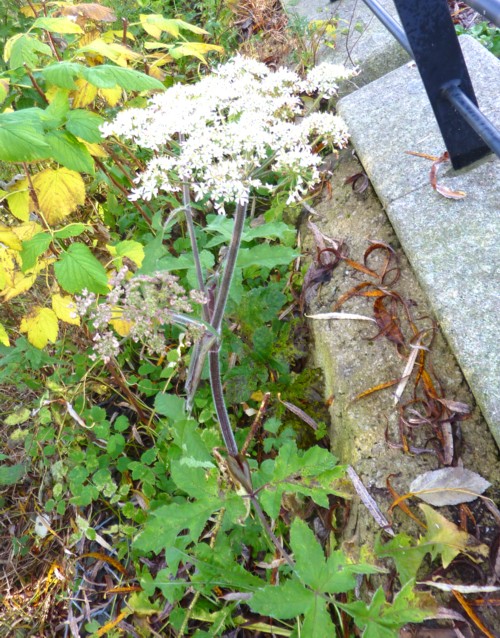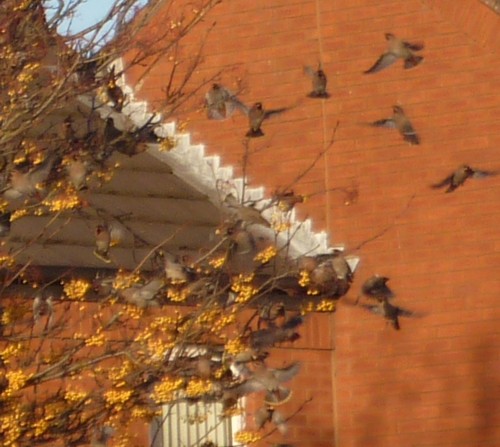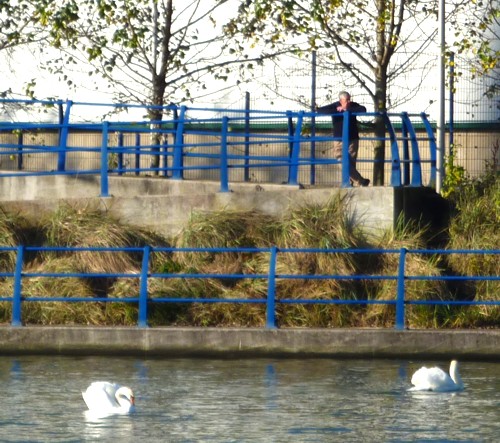
Ainsdale Sand Dunes Reserve, Sunday 28th October 2012.

From Tony Carter:  The North West Fungus Group held a foray at Ainsdale Sand Dunes Reserve. Despite the heavy showers and wind sixteen Group members turned out and we were very pleased to be joined by David Bryant.

We spent the whole day, mostly in the woodland, as we were unable to progress very far on to the dunes because of the strength of the wind.

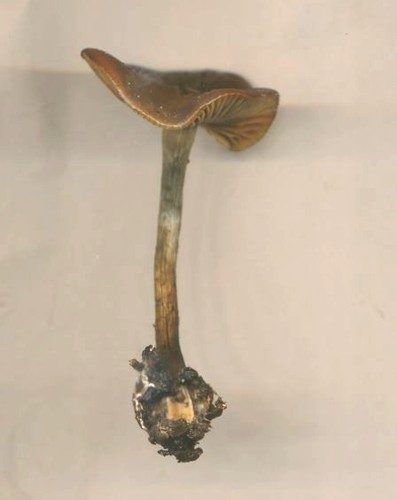
Peter Gahan, the Reserve Manager, was very keen that we should find him a Tulostoma melanocyclum (Scaly Stalkball) as he had never seen one and he hopes to make it a flagship species for the site. These are hard to spot in the sand as they look like rabbit droppings, which are numerous on the dunes. One of the group eventually found one when she accidently dug it up thinking it was a small puffball. There were a couple more, so we marked the spot for Peter to examine later.

tulostoma-melanocyclum-ainsdale-nr.jpg

Tulostoma melanocyclum (Scaly Stalkball)

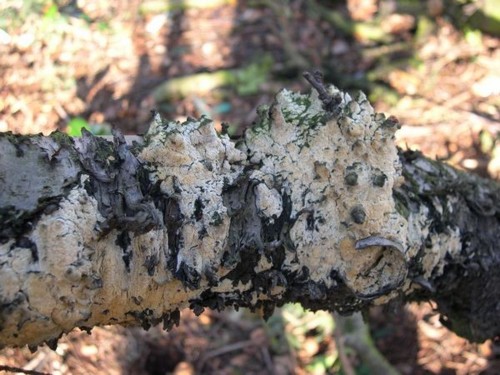
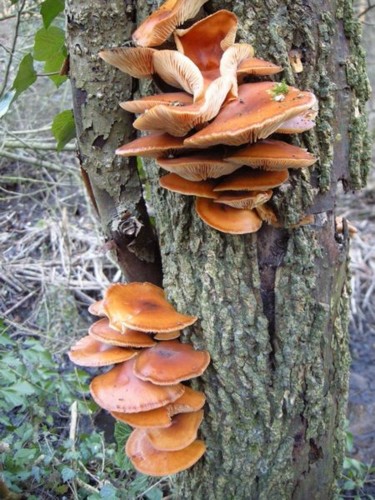
Not everything can be identified in the field and quite a lot had to be taken home for more detailed research. We eventually identified 108 species. Thirteen species had not previously been recorded for the Reserve. This might be because we had some very experienced mycologists with us. Also we were unable to follow our usual route because of the weather, so we explored parts of the Reserve we had not been to before. It was so wet, it was impossible to get the camera out most of the time, but in a dry spell I photographed this impressive Pleurotus ostreatus, the Oyster Mushroom.

 pleurotus-ostreatus-ainsdale-1012.jpg

Pleurotus ostreatus, the Oyster Mushroom

One of our most experienced members identified Panaeolus reticulatus, one of the Mottlegills. This may be a first for the UK although it is recognised in Europe.

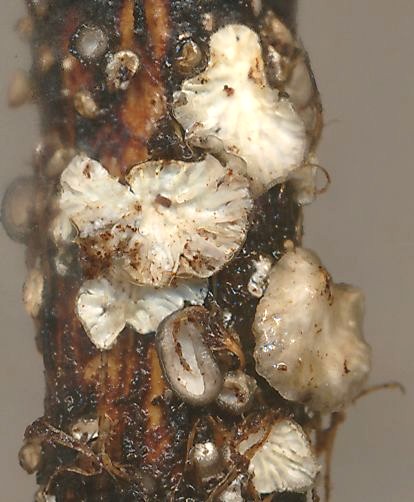
Another lucky find was of a rare species, Mycenella margaritispora, a very tiny Bonnet fungus. The reason for its rarity is probably because it is only 4mm in size. The finder went to pick another fungus only to find this one attached to a piece of vegetation in his hand.

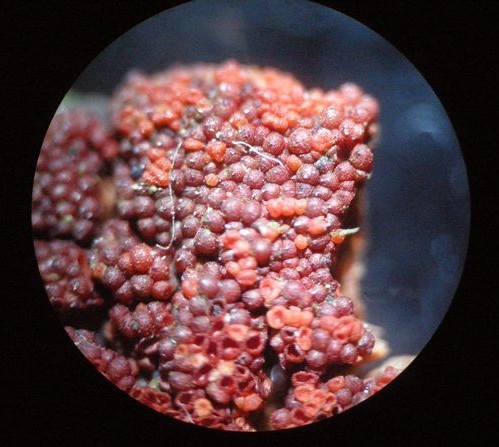
mycenella-margaritispora-x-20.jpg

Mycenella margaritispora, a very tiny Bonnet fungus

Another fact of note is that the Elaphocordyceps ophioglossoides (Snaketongue Truffleclub), that I mentioned in my last report from Ainsdale, has increased in number from my last visit in September. Because it grows from an underground truffle, people want to see them, which means they have to be dug up. Because the existence of this species at Ainsdale is fragile, we resisted the temptation. Hopefully they will continue to increase.

Posted in MNA reports | 1 Comment

Fossils, rocks and pubs part II, 28th October 2012

It was a dispiritingly damp and drizzly day, but we all made it to William Brown Street, despite the clock change. This was our second “fossil” walk following the guidance in the booklet published in 2001 by the The Liverpool Geological Society called “Rock around Liverpool”. Today’s plan was to look at the old flagstones around the Museum and Art Gallery.

The old flags (“made of a fine mica-rich sandstone, probably the Haslingdon flags of Upper Carboniferous age”) show ripples and flutes – “ovoid hollows cut by currents in thin muddy partings in the sandstone which are then filled by the overlying bed of sand”. Here’s one from the junction of Byrom Street.

32-rocks-ripples.jpg

There are said to be “protruberances caused by a ragworm-like animal” outside the doorway of the International Library. We didn’t find them, but they are probably obscured by the hoardings protecting the refurbishment. We did spot what looks suspiciously like pairs of fossil worm burrows on the pavement on the west side of St John’s Gardens (opposite the tunnel entrance), in line with the first half-turret north of the steps and eight courses of flags in from the pavement edge. The paired holes are about three inches apart.

32-rocks-burrows.jpg

There is also said to be a horizontal burrow of a marine worm “near the side door of St George’s Hall and adjacent to the mid-bollard between the door and the lamp standard”. We couldn’t find that, despite identifying what we thought was the right spot, but there is one suspiciously new-looking flag there, so maybe the fossil burrow has been removed. Five flags east of the the parking circle are several flags showing “an elongate rounded hollow representing the remains of a Carboniferous Coal Measure tree root known as Stigmaria.”

32-rocks-tree-root.jpg

The bollards around the Wellington Column are made of a “nodular limestone from North Wales.” They include cross-sections of large Productus shells, the same as the ones in the steps of the Victoria Monument (see 16th September). There is also one splendid radially-symmetric creature which looks like a coral, in about the sixth bollard from the steps, south of the fountain.

32-rocks-coral.jpg

We took a break from the rain in the Walker Art Gallery. As part of the Liverpool Biennial art event, the artist Patrick Murphy has placed some brightly coloured pigeons on the outside of the building. The blurb says “Here they are welcome, colourful visitors. However, the installation also evokes questions about … feelings of being accepted or marginalised. The pigeons can be seen to represent any group that struggles to find a natural home.”

32-rocks-pigeons.jpg

The base of the William Rathbone statue in St John’s Gardens is of limestone, and shows “fine sections of crinoid jointed stalks”. I take that to mean round cross-sections. There are also more Productus shells and some wonderful tower shells. The vertical one on the second picture below is about 2½ inches long.

32-rocks-fossils.jpg

32-rocks-tower-shell.jpg

Then we went on our pub crawl, starting at Dr Duncan’s with its magnificent tiled ceiling, followed by the Grade II listed Crown on Lime Street with a wonderful plastered ceiling. Then the great Gin Palace on the Adelphi corner, the Vines (also known as the Big House): this is Grade II* listed (a higher classification than just Grade II), and the staff let us in to see the decaying splendour of the little-used ballroom.  The Central Commercial Hotel opposite Central Station is a riot of glittering cut-glass mirrors, and is also Grade II.
The manager of the Beehive at the bottom of Mount Pleasant confided to us that the bar was where “the Cameo murder was planned” in 1950. The Roscoe Head on the corner of Roscoe Street and Hardman Street is one of only seven pubs in Britain to have been included in all editions of CAMRA’s Good Beer Guide. The Philharmonic was very quiet, and I achived a lifetime ambition of sneaking a glimpse of the marble urinals in the Gents! Some of the less worldly-wise members of the group had to have it explained to them why the two lounges are called Brahms and Lizt (very little to do with classical music!).

At the The Cracke, John Lennon’s pub, we sat in the tiny back room called the War Office, and then we made our final call of the day at Peter Kavanaghs on Egerton Street. This is also Grade II listed, and has an eclectic mix of interesting old junk hanging from the ceiling: gas masks, chamber pots, old radios and toy prams. The snugs contain wall paintings of scenes from Hogarth and The Pickwick Papers. Earlier on, Olive had found a very damp tenner in the street, so finally, at our ninth pub, it was drinks all round!

Posted in Sunday Group | 1 Comment

Croxteth Hall Park 21st October 2012

It was very damp and misty at the Muirhead Avenue / Oak Lane entrance to Croxteth Park.

31-croxteth-misty-gates.jpg

50+ Jackdaws were calling over the woods and there were Black-headed Gulls and Common Gulls feeding on the dewy grass. All the other birds were lying low, except for Magpies and Feral Pigeons. On a grass verge near the Hall we noticed what appeared to be a failed Sparrowhawk kill. The remains looked like Wood Pigeon wing feathers, but there was no down and no corpse! Did it survive?

31-croxteth-sparrowhawk-attack.jpg

There was a lovely crop of small bracket fungi on an old log. Possibly young Turkey tail Trametes versicolor.

31-croxteth-small-bracket.jpg

We looked at the special tree on the lawn, the Lucombe Oak, but the star of the day was a bronze beech tree nearby. The Lime leaves were also turning golden yellow.

31-croxteth-beech.jpg

31-croxteth-yellow-leaves.jpg

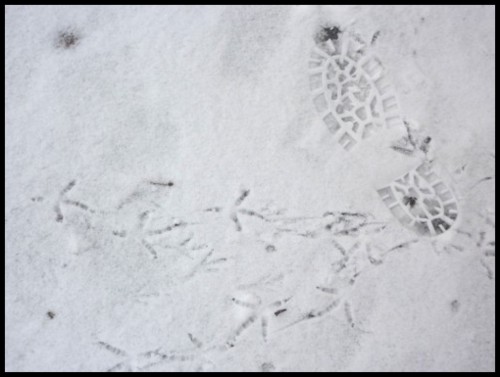
There were Moorhen on the verge of the pond, and a few Mallards scooping up the duckweed. The fishing lake had a working fountain, but it was probably there to oxygenate the water, because the water was covered with green scum. There were no Mallards on it but we could see tracks where they had been. A Jay flew over as the sun tried to come out.  In the woods a Himalayan Balsam was still in flower. The shop had a competition to guess the weight of a pumpkin, and outside a man was giving donkey rides.

31-croxteth-pumpkin.jpg

31-croxteth-donkey-rides.jpg

Posted in Sunday Group | 1 Comment

Carr Mill Dam 20th October 2012

(Report by John Clegg) 12 members attended the walk around this large lake and woodland. The first birds seen were three Jays, the first of many. Several Great Crested Grebes were on the lake. At Otter Swift Farm the hedges were once again full of House Sparows. Walking down to the bridge for lunch 1000+ Pink-footed Geese flew overhead.

After lunch the peace of the area came to an end with Power Boat Racing on the lake.

Birds seen: Jay, Black-headed Gull, Wood Pigeon, Canada Goose, Coot, Mallard, Great Crested Grebe, Lesser Black-backed Gull, Blue Tit, Heron, Carrion Crow, Magpie, Great Spotted Woodpecker, Jackdaw, Blackbird, Robin, Dunnock, Song Thrush, Starling, Wren, Collared Dove, Pied Wagtail, Greenfinch, House Sparrow, Goldfinch, Linnet, Common Gull, Pink-footed Geese, Sparrowhawk, Great Tit, Grey Wagtail, Long-tailed Tit, Buzzard. Total 33 species.

Posted in MNA reports | 1 Comment

Hoylake, 14th October 2012

It was a beautiful sunny day, with golden leaves falling and a Wood Pigeon and a Blackbird working through the red berries on my own Cotoneaster as I started out.  A lovely day for the Liverpool Marathon. We met at Central Station, newly refurbished at ground level and on the Wirral Line platforms, but not yet open for the Northern Line. After a rail replacement bus from Birkenhead North we strolled down The Kings Gap to the beach, where we met Chris Butterworth on his way to his WEBS count (Wirral Estuary Bird Survey).

30-hoylake-prom.jpg

The tide was half way out, and there were thousands of birds on the shore, all arranged in bands parallel to the shoreline. A few dozen Shelduck were on the water with several hundred Knot and Lesser Black-backed Gulls at the edge and a few Dunlin and two or three Curlews amongst them. Some Bar-tailed Godwits were in the shallows, then a layer of Oyster Catchers, then mixed Herring Gulls, Common Gulls and Black-headed Gulls on the sand.  Amongst the clumps of Spartina grass on the beach some BHGs were holding individual pools and pattering around in them. Over a thousand Oyster Catchers took off, low over the water, heading north-east towards New Brighton. The wind generators on the horizon were still, the sea was sparkling and there was a rainbow off towards Hilbre Island.

30-hoylake-beach-and-birds.jpg

Most of the dog-walkers were close in by the promenade, but as we watched a lady with an energetic dog was closing in on the birds. Luckily she didn’t quite allow her dog near enough to make the birds take flight, but the nearer ones were watching it closely and shifting uneasily. What are some people thinking of!

After a quick visit to the Hoylake Lifeboat Station we had our lunch in the little park off Meols Parade. It’s quite a suntrap there, out of the breeze. House Sparrows were lined up on top of a hedge, watching us curiously and a Robin came down onto the circular Bowling Green, whch was full of worm casts. There was a big bumble bee on the purple flowers of a plant like a Sedum, and we saw a dark butterfly heading out into the Estuary.

30-hoylake-sparrows.jpg

On the little beach by the old Lifeboat Station (now a Museum) a Carrion Crow was poking about in the seaweed. It picked up something round and white, like a pickled onion, and flew off. It was immediately mobbed by two Herring Gulls, hoping to claim its booty, but it managed to hold on to it and got away.

The museum had an amusing poster outside giving the bathing regulations for 1897. “Every male person above the age of 12 years shall while bathing wear suitable drawers or other decent or sufficient garments … Every female person above the age of 8 years shall while bathing wear a suitable gown or other decent and sufficient garments … as to prevent indecent exposure of the person.”  Sea bathing was also strictly segregated, with women in their demure gowns restricted to about 200 yards of beachfront near The Kings Gap, then a no-bathing-area 200 yards wide before men in “suitable drawers” were permitted to get into the water.

Posted in Sunday Group | 1 Comment

Gilroy Pool and Langfields 13th October 2012.

(Report by John Clegg). Twelve members came out. The morning was bright but it turned very wet in the afternoon and the fields were very soggy and covered with standing water.

Birds seen: Collared Dove, Magpie, Carrion Crow, Kestrel, Dunnock, Pied Wagtail, Black-headed Gull, Moorhen, Skylark, Meadow Pipit, Peregrines (male and female), Mallard, Wood Pigeon, Starling, Heron, Song Thrush, Wren, Lapwing, Blackbird, Black-tailed Godwit, Shoveller, Jay, Goldfinch, Blue Tit, Common Gull, Mistle Thrush, Robin, Canada Goose. In addition, Chris Butterworth saw a Yellow-browed Warbler. Total 29 species.

Posted in MNA reports | 1 Comment

Wirral Bus and Tram Show, 7th October 2012

(Report and pictures by John Clegg) 

29-woodside-tram-john.jpg

Owing to flooding on Sefton Meadows we had to change our plans. We took the 11am ferry to Woodside to the Wirral Bus and Tram show. At Woodside we boarded a Liverpool Corporation tram for the short ride to the Transport Museum. After looking around we got onto an old Wirral bus for a trip to Port Sunlight Village and back. The we returned to Woodside on a Wallasey Bull Nose open-end tram.

29-wallasey-tram-john.jpg

Posted in Sunday Group | 1 Comment

MNA Meeting Bootle Cricket Club 6th October 2012

mna-rockcliffe-raptors2.jpg

Steve with Rocky the Eagle Owl

Steve and Marg Dewsnap from Rockcliffe Raptors, Flintshire, North Wales brought in a selection of European Raptors and Owls from their private collection. These included a Barn Owl Tyto alba called Ko’ko, Tawny Owl Strix aluco called Tally, Long Eared Owl Asio otus called Otis, European Eagle Owl Bubo bubo called Rocky, European Kestrel Falco tinnunculus called Emma, Peregrine Falcon Falco peregrines called Flint and Common Buzzard Buteo buteo called  Ziggy.

mna-rockcliffe-raptors-emma1a.jpg

Emma the Kestrel

mna-rockcliffe-raptors-le-owl2.jpg

Otis the Long-eared Owl

Steve proceeded to give a really informative talk about the birds and observations from his ten years of keeping birds of prey.

Notable facts included:-

Owls have an acute sense of hearing that helps them locate and capture prey. The facial disc acts as a reflector, channelling sounds into the ears.

Owl’s eyes are large in order to see in low light conditions. Owls cannot move their eyes as they are not actually eye balls but elongated tubes. They are held in place by in the skull called Sclerotic rings. The Owl makes up for this by being able to turn its head up to 270 degrees left or right from the forward facing position.

The eye is lubricated by the nictitating membrane, a third concealed eyelid that sweeps horizontally across the eye like a windscreen wiper.

mna-rockcliffe-raptors-eagle-owl1.jpg

Rocky the Eagle Owl

Owls coat their pellets in saliva when regurgitating them – this prevents heartburn and acid damage to the throat. Barn Owls saliva is black. If you feed the European Eagle Owl and the Barn Owl on the same diet of white rats the Eagle Owl’s pellet is white whereas the Barn Owl’s is coated in black.

The leading edges of an owl’s primary feathers have comb-like serrations. These decrease turbulence and thus the noise of air as it flows over the wing allowing them to fly silently.

Barn Owls have a serrated structure that runs along the inner talon edge of the third digit called a “pectinate claw”. This is generally thought to aid in preening.

mna-rockcliffe-raptors-barn-owl3.jpg

mna-rockcliffe-raptors-barn-owl1.jpg

Ko’ko the Barn Owl

It is a misnomer that during the characteristic courtship duet between Tawny Owls the male calls ‘twit’ and the female ‘twoo.’ Shortly after moving to their Flintshire base Tally the male Tawny Owl began calling during the evenings which attracted wild Tawny Owls to the garden. Steve noted that one evening Tally would call ‘twit’ and the wild Tawny ‘twoo’ but the next evening the calling sequence would be reversed with Tally calling ‘twoo’ and the wild Tawny ‘twit’. Jemima Parry-Jones MBE – the British authority on birds of prey and director of the International Centre Birds Prey Wildlife Conservation has also noted this fact!

mna-rockcliffe-raptors-tawny-owl1.jpg

Tally the Tawny Owl

Posted in MNA reports | 1 Comment

Hale Woods 6th October 2012

From Tony Carter

On Saturday, 6th October, the sun shone. So I went for a walk around the woods at Hale: Hale Hall Wood and The Icehouse Plantation.

The primary reason was to check on a fungus, Rhodotus palmatus (Wrinkled Peach). I found this a couple of years ago and was asked to send specimens to Kew Herbarium. So far, it is the most northerly British record.

mna-tc-rhodotus-palmatus-4.jpg

Wrinkled Peach

It grows on a felled tree that straddles the footpath to the river. Due to the wet weather, the path has become impassable. The fungus has been undisturbed and has increased in size and number.

Its favourite substrate is Elm but, here it has grown on Ash, along with a good collection of Daldinia concentrica (Cramp Balls), one of which had been infected with an uncommon parasite, Nectria inventa.

Beside the old Icehouse now covered in vegetation, I came across a felled Oak tree with pruned branches stacked beside it. Someone had tried to burn the branches which were blackened and charred.

However, growing on these branches was another Daldinia: Daldinia fissa.

This is extremely unusual as this fungus normally grows on burnt Gorse. There is only one other British record for it growing on Oak.

mna-tc-hale-woods1.jpg

Daldinia fissa

I reported my finding to Kew Herbarium and they have asked me to send specimens to them.

These two woods are small but very old. To be asked to send specimens of two fungi from such a small area makes this a very special site.

Posted in MNA reports | 1 Comment

Lyme Park NT Reserve 29th September 2012

mna-lyme-park-red-deer1.jpg

Mike Barrow kindly drove Chris Derri, DaveH and I to the National Trust Reserve at Lyme Park. We parked at the railway station at Disley and wandered along the Gritstone Trail across farmland and through a small copse containing a few autumnally energetic Grey Squirrels. We heard the distance bellows of the Red Deer that were herded together below the old hunting tower on the hill called ‘The Cage’ within the reserve.

mna-lyme-park-the-cage1.jpg

The Cage

Conditions were extremely blustery with clouds racing across the sky and occasional sun peaking through but apart from a small drizzle shower the rain stayed off. A couple of Jays flew by squawking and a Buzzard was being mobbed by some Carrion Crows. We started clocking up the fungi with a Coprinus sp. on a rotting log along with the elephant trunk-like podentia of the Lichen Cladonia coniocrea and the pixie-cup Lichen Cladonia fimbriata. Lumpy Bracket Trametes gibbosa was found on the end of a fallen Beech in the parkland before we entered a deciduous wood with Sulphur Tuft Hypholoma fasciculare, Southern Bracket Ganoderma australe, Candlesnuff Fungus Xylaria hypoxylon, Crystal Brain Exidia nucleata, The Deceiver Laccaria laccata, dried out Black Witches Butter Exidia glandulosa, Many-zoned Polypore Trametes versicolor, Jelly Ear Auricularia auricula-judae, Hairy Stereum Stereum hirsutum, Bleeding Broadleaf Crust Stereum rugosum, Dead Moll’s Fingers Xylaria longipes, Eyelash Fungi Scutellinia scutellata, Fairy Bonnets Coprinus disseminatus and Sycamore Tar Spot Rhytisma acerinum. A few Galls were found on the Oak Trees with Marble Galls caused by the Gall Wasp Andricus kollari and Common Spangle Galls caused by the Gall Wasp Neuroterus quercusbaccarum  A Kingfisher was seen by the stream in the wood and on the small pond beside the café were a motley gang of Mallards, Coot and Black-headed Gulls.

mna-lyme-park-red-deer2.jpg

After a quick drink form our flasks we walked up towards ‘The Cage’ to try and locate the Red Deer. Meadow Pipits were battling with the wind and a few Swallows were zooming low across the grassland re-fuelling before their migration. We soon found the Red Deer and slowly stalked up close to them.

mna-lyme-park-red-deer5.jpg

Only one of the sizeable stags performed some real bellowing with a couple of younger stags engaged in some half-hearted sparring, antlers locked together. Most seasonal events this year have been topsy-turvy and it seems like the rut is also running late. When the main stag shepherded his harem of hinds into the woodland and the three remaining young stags decided to give up on their strutting and posturing we started hunting for fungi again.

mna-fighting-stags1.jpg 

Lyme Park is an excellent spot for Waxcaps. They are a tricky group of fungi and we could only identify Blackening Waxcap Hygrocybe conica, Snowy Waxcap Hygrocybe virginea and Meadow Waxcap Hygrocybe pratensis with any certainty but plenty of other varieties were seen. Fungi finds underneath a couple of Beech Trees in the main parkland area included Beechwood Sickener Russula nobilis, Common Puffball Lycoperdon perlatum, Bay Polypore Polyporus badius and masses of small Amethyst Deceiver Laccaria amethystea.

mna-lyme-park-bay-polypore1.jpg

Bay Polypore

After tea’n’coffee in the café and some stealthy eating of our butties it was round to the Fallow Deer Sanctuary situated behind the main house. A melting pot of Fallow Deer colours were present ranging from almost pure white to a really dark looking stag with large impressive antlers. The hinds were feeding on the coarse grass and a few stags were resting with only their heads and antlers visible over the top of the tussocky grass. No sign of the rut yet. We broke the ’stay to the path’ rules and climbed across a small ditch to gain better views of the stags – one getting to its feet and watching us intently making sure we weren’t a threat before sitting back down again.

mna-lyme-park-fallow-deer1.jpg

mna-lyme-park-fallow-deer2.jpg

Fallow Deer stag

mna-lyme-park-amethyst-deciever1.jpg

Amethyst Deciever

We entered the deciduous woodland behind the Fallow Deer Sanctuary finding yet more fungi with some large Amethyst Deceiver Laccaria amethystea, Common Jellyspot Dacrymyces stillatus, Small Stagshorn Calocera cornea, Pale Stagshorn Calocera pallidospathulata, Yellow Stagshorn Calocera viscosa, Birch Polypore Piptoporus betulinus, Glistening Inkcap Coprinus micaceus, Velvet Shank Flammulina velutipes, more Sulphur Tuft Hypholoma fasciculare, Chicken of the Woods Laetiporus sulphurous and Beech Jellydisc Neobulgaria pura.

mna-lyme-park-beech-jellydisc1.jpg

Beech Jellydisc

I had seen Beech Jellydisc var. foliacea at Mere Sands Wood in late July 2012 and include a photo of these rather cool jelly brains for comparison.

mna-mere-sands-jelly-fungus2.jpg

Beech Jellydisc var. foliacea

Walking along another path through predominantly pine woodland we added Ochre Brittlegill Russula ochroleuca and Fly Agaric Amanita muscaria to our list with some immature Common Puffballs Lycoperdon perlatum growing on a mossy log.

mna-lyme-park-puffballs1.jpg

Common Puffballs

We spied a couple of Ravens through gaps in the pine trees as they croaked overhead. Insects hadn’t featured so far during the day but we found an unidentified umbellifer that had attracted a few Hoverflies Heliophilus pendulus and Eristalis sp. Rather knackered but after a fantastic day we re-traced our steps and followed the main road out through Lyme Park to return to the car.

Posted in MNA reports | 1 Comment