Lake Vyrnwy 9th March 2013

mna-misty-vyrnwy1.jpg

It was a dismal misty, drizzly and cold day for the joint MNA / Liverpool RSPB visit to Lake Vyrnwy.  A good turnout nonetheless with twenty people arriving in shared cars and a minibus driven by Chris Tynan. Our destination was a valley where today’s leader Terry Williams often visits at this time of year to watch displaying Goshawks, with Buzzards, Ravens, Red Kite and Hen Harrier often putting in an appearance as well. 

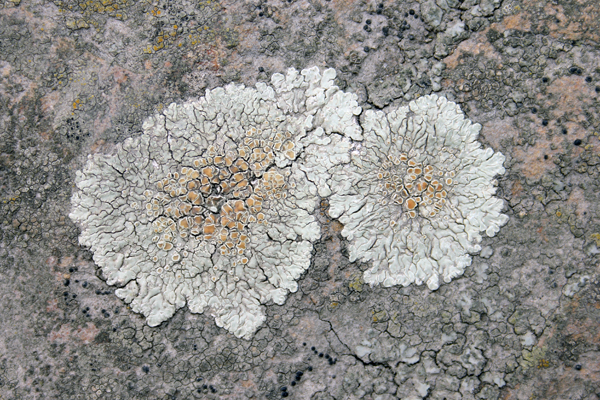
We walked along a forest track which climbed steadily upwards via a couple of switchbacks to a spot overlooking the valley. The abundance of lichens growing on the tree branches showed the clear air quality found here. There must have been recent storms with trees blown over and lichen-laden branches scattered around. This allowed identification of a few of the lichen species with Usnea florida – the apothecium show branched eyelash cilia, Usnea fragilescens – a fruticose, pendulous lichen resembling fine hair, Evernia prunastri – a foliose strap lichen with veining present on the top surface of the lobes, Hypogymnia physodes -with foliose thallus, smooth grey lobes above black beneath.

mna-vyrnwy-lichen1.jpg

Evernia prunastri and an Usnea sp.

mna-vyrnwy-usnea-florida1.jpg

Usnea florida 

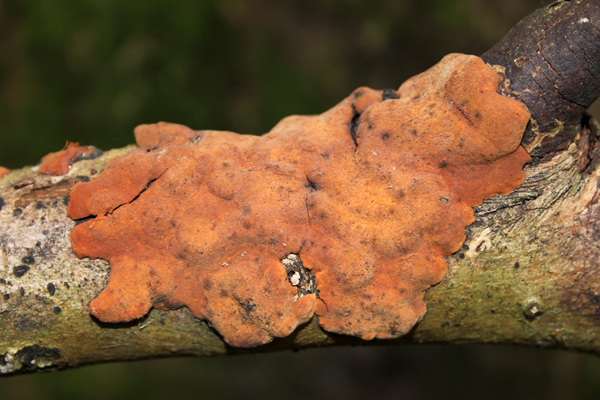
The walk up the forest trail was eerily quiet, the usual bird song and defining of breeding territories that is heard at this time of year was extremely noticeable by its absence. A Mistle Thrush, Wren and Robin gave occasional song with calling Goldcrest, Blue Tit and Coal Tit heard by some. On the top we peered through the mist for any sign of life. Two Ravens flew over one bird being chased from the other bird’s territory. Another pair of Ravens then from the neighbouring territory flew up from the forest across the valley just to make sure that the intruder was completely evicted from their patch.I had a mooch around photographing a few of the rust coloured rock encrusting lichen Rhizocarpon oderi, the lichen Cladonia bellidiflora with tall unbranched non-fruiting podetia whose surface is clothed in densely layered squamules, various mosses including Star Moss Polytrichum commune and Common Tamarisk Moss Thuidium tamariscinum and Bracken spores.

mna-vyrnwy-rhizocarpon-lichen1.jpg

Rhizocarpon oderi

mna-vyrnwy-moss1.jpg

Star Moss and Common Tamarisk Moss

mna-vyrnwy-bracken1.jpg

Bracken Spores

Three clumps of Common Frog Rana temporaria spawn in a large but shallow puddle – doomed to desiccate and a dead Pygmy Shrew Sorex minutus.
mna-vyrnwy-frogspawn.jpg

Frogspawn

mna-vyrnwy-dead-pygmy-shrew1.jpg

Dead Pygmy Shrew 🙁

Earlier I had become separated from Mike Barrow, Chris Derri and the two Daves they eventually found the group having seen a Goshawk from near a farmhouse on another forest track. Richard Surman also had Goshawk views from here. While the others remained at the look-out point for a while, the five of us decided to walk back down the track and along to the main RSPB reserve. We walked along a forest track beside the lake for a while noting Common Jellyspot Dacrymyces stillatus the leaves of Wood-sorrel Oxalis acetosella and Oak Artichoke Galls caused by the Gall Wasp Andricus fecundator before continuing along the road, the only birdlife seen on the lake being Mallard and a lone Cormorant. The minibus shot by us as we approached the Victorian pumphouse with its green copper roof the only colour in the misty monochrome landscape.

mna-spooky-vyrnwy.jpg

After crossing the dam noting the green coloured Map Lichen Rhizocarpon geographicum on the dam wall we met up again with the others in the hide overlooking the feeders. Three Crossbills had been seen by some as they descended the forest track. Plenty of activity on the feeders with twenty odd Chaffinches some suffering from clubfoot, a couple of Bramblings skulking underneath some branches occasionally popping out to allow comparison to the Chaffs, a Blue Tit, a few Coal Tits, a lone Marsh Tit, half a dozen Siskin and Pheasants on the ground below hovering up any spilt seed.
Posted in MNA reports | 1 Comment

Birkenhead Park, 3rd March 2013

Still cold, but it was sunny most of the day. We spent the day ambling around both the upper and lower parks, still looking very fine after their restoration in June 2007.

09-birk-park-boathouse.jpg

The usual park birds were on the lake, noisy Canada Geese, Mallard, Coot, Moorhen and Mute Swans. We noted two odd-looking black Mallard drakes, who are probably survivors of the group we saw during our last visit on 13th November  2011, when there were five young black ducks and one white one, all swimming together like a brood of brothers and sisters. These two blacks drakes seem to be the same ones, coming up to two years old.

09-birk-park-black-ducks.jpg

We stopped to look at a Yew tree covered in small “blobs”. Yew are “dioecious” meaning that they have separate male and female trees. These are the male “flowers”, the parts that produce the pollen.

09-birk-park-yew-male.jpg

Another tree nearby bore the female flowers, also small, but fewer of them.

09-birk-park-yew-female.jpg

Woodland birds included Magpie, Wood Pigeon, Blackbird, Long-tailed tits and a friendly Robin.

09-birk-park-robin.jpg

Between the upper and lower parks is a splendid Victorian postbox, one of the Penfold type dating from about 1870.

09-birk-park-postbox.jpg

Posted in Sunday Group | Leave a comment

Sefton Meadows Photos

Photos taken by Chris Derri on the MNA Sefton Meadows walk

mna-chrisd-little-owl.jpg

Little Owl

 mna-chrisd-buzzard.jpg

Buzzard

mna-chrisd-curlew.jpg

Curlew

Posted in MNA reports | Leave a comment

Sefton Meadows, 2nd March 2013

It was a beautifully clear and sunny day, not too cold, with some early signs of spring. For those who met a Waterloo, the day got off to a very good start, with Fieldfares spotted from the 133 bus on the north side of Long Lane in Thornton. We met the others at Lunt Village, and two more people joined us later in the day, making a total of 17 members.

08-sefton-view.jpg

As we walked through the plantation of young Willow and Alder there were Siskins and Goldfinch twittering, and feeding on the small seeds of the Alders.

08-sefton-alder-cones.jpg

It was a day full of interesting sounds.  We heard a Water Rail, but nobody saw it. There was a bird scarer banging somewhere, and possibly some pigeon shooting going on. Further off we could occasionally hear the sounds from the firing range at Altcar. Skylarks were singing all along the River Alt embankments and Curlews were calling. A pair of Buzzards soared together in clear blue sky, and we flushed two partridges, probably Grey Partridges, although they whirred away before anyone had a chance to see them properly.  Chris Derri picked out two different kinds of leaf miner burrows in Bramble leaves. The two curly tracks, getting bigger as they wander through the leaf, were made by the larva of the moth Stigmella aurella.

08-sefton-mine-wandering.jpg

Chris thinks the concentric circular track in the other leaf was also made by a moth, but he’ll have to look that one up. [Added later – Chris thinks it’s either a fungal rust called Violet bramble rust Phragmidium violaceum or possibly Phragmidium bulboum.]

08-sefton-mine-circular.jpg

He also found another leaf mine caused by a fly on holly Phytomyza illicis.

Part of the area around Lunt is being remodelled as a flood storage area and will become a new nature reserve, managed by the Lancashire Wildlife Trust. Some of the pools are already in use by Shelduck, Mallards and Gulls.

08-sefton-reserve-sign.jpg

During lunch by the pumping station we spotted a big bird in the distance, initially guessed as a Heron, but it was a Bittern, flying towards us then turning north and going down somewhere near Ince Woods. Further on, a flock of Lapwings and Golden Plovers went up. We couldn’t see any reason for the disturbance, other than a microlight going over, but David Bryant, who had joined us from further north, said he had seen a Hen Harrier in that area. Later part of the group found a Little Owl by the old farm buildings.

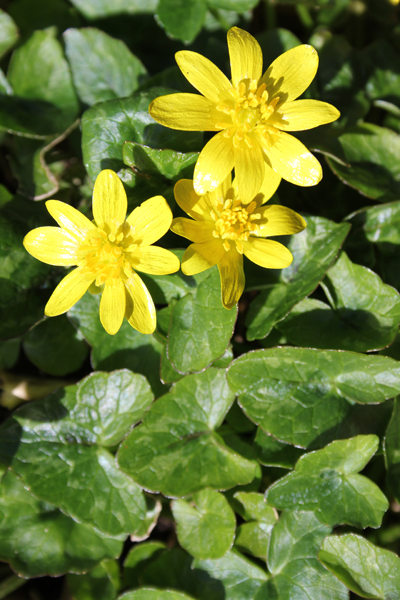
There were no keen botanists with us today, but we did note the pussy willow catkins, the Celandines by St Helen’s Holy Well and the spiky seeds of Burdock.

08-sefton-burdock.jpg

Bird list (31): Wood Pigeon, Magpie, Fieldfare, Carrion Crow, Pied Wagtail, Blue Tit, Great Tit, Linnet, Reed Bunting, Chaffinch, Buzzard, Siskin, Goldfinch, Water Rail (heard only), Kestrel, Long-tailed Tit, Black-headed Gull, Skylark, Shelduck, Mallard, Common Gull, (Grey?) Partridge, Lapwing, Golden Plover, Curlew, Canada Geese, Teal, Bittern, Stock Dove, Hen Harrier (seen by DB only from another path), Little Owl.

Posted in MNA reports | Leave a comment

Anfield Cemetery & Stanley Park, 24th February 2013

There was a bitingly cold north wind today, as we took the 19A bus from Queen Square to Walton Lane/Bodmin Road and crossed into Anfield Cemetery. There weren’t many birds, just Carrion Crows, Magpies and a flock of Black-headed Gulls, but there was a Grey Squirrel who sat low in a tree and nibbled on a peanut.

07-stanley-squirrel.jpg

We are always interested in War Graves, and there are several notable ones in Anfield Cemetery. There is a mass grave of 554 Liverpool citizens who were killed in the May Blitz in 1941. Three Belgian Merchant Seamen were also killed that week and their gravestones are near the side of a path, probably cared for by the Belgian Government.

07-stanley-belgian-graves.jpg

The most interesting memorials record the burial somewhere in the cemetery of two early recipients of the Victoria Cross. The one on the left is for Patrick Mylott who was honoured for his bravery in Lucknow during the Indian Rebellion (Mutiny) of 1857 while the other is for Joseph Prosser for his valour at Sevastopol in 1855 during the Crimean War.

07-stanley-vc-graves.jpg

Then on into Stanley Park. On the lake were the usual Mallards, Canada Geese and Moorhens, and one star bird, a male Mandarin Duck, mixed in with the Mallards crowding for bread.

07-stanley-duck-group.jpg

There was also a flock of Black-headed gulls. I counted 50, and 5 had their black heads, 10%. This is up from 2% last week at Greenbank Park. Several Magpies were bathing in the shallows, there were Blackbirds and a Dunnock on the bank and four Pochards – three males and a female – at the south end.

07-stanley-lake-view.jpg

07-stanley-pochard.jpg

The sun came out while we ate our lunches in a sheltered spot near the pavilion, but it was soon cold again with a hint of sleet in the air. We walked back along the lake, trying to spot the Mandarin again, and also looking for the female which was said to have been with him a week or so ago. We eventually found the male roosting next to a Mallard on the edge of the island. A young family came by to feed the ducks and I pointed out the unusual one and said I hoped the bread they were throwing would make it stir itself and come to be photographed. With that, the young father took out a whole piece of thick-sliced white bread and flung it like a frisbee at the Mandarin. Luckily it landed in the water, not on the poor bird’s head. A flock of BHGs immediately dived on the bounty, screaming and splashing. The fuss roused the Mandarin as planned, but it just sat on the edge of the island, preening. We never did see the female, and wonder if she is hidden away somewhere, nesting, or if she didn’t stick around.

07-stanley-mandarin.jpg

Posted in Sunday Group | 1 Comment

Greenbank and Sefton Parks, 17th February 2013

It was a bright and sunny day, but deceptively cold. We took the 86 bus to the Brookhouse pub and walked down Gorsebank Road to Greenbank Park.

06-greenbank-view.jpg

The lake was full of the usual birds of urban parks. Mallards of course, a Coot on a nest, a Moorhen, plenty of Canada Geese paired up and trumpeting at each other and at least a hundred Black-headed Gulls, with about one in fifty showing their black heads fully grown out. These are the older ones, apparently. There was a Herring Gull, a pair of Lesser Black-backed Gulls, one Mute Swan, a Cormorant (which was a surprise) and a Grey Squirrel (which wasn’t). In the ornamental garden the first daffodils were out and the trees held a Blue Tit, a Carrion Crow and some Magpies.

Then we walked to Sefton Park down Greenbank Road North and Ibbotson’s Lane. A coach stopped at the corner of Penny Lane. Tourists? Yes, they all got out and photographed each other, two by two, next to the Penny Lane street sign.

We were very cold by then so we had lunch out of the wind in the Palm House. Lots of lovely tropical flowers were out. There were splendid blue orchids, something with a flower looking like a scarlet firework an inch and a half across, and one whose name sign we found, the Shrimp Plant Beloperone guttata.

06-orchid.jpg

06-firework-flower.jpg

06-shrimp-plant.jpg

Around the park there were various signs of spring. The yellow Crocuses were out, the Witch Hazel had just finished flowering and the Alder trees were covered in catkins.

06-crocuses.jpg

06-witch-hazel.jpg

06-alder-catkins.jpg

Another Coot was nesting on the lake. Two Mute Swans were sleeping on the island – were these the nesting pair? There has been an amazing increase in the Little Grebe population off the end of the island. At the end of August we though there were five, possibly a pair with three juveniles, but today we thought we saw ten or eleven. We stopped to talk to a photographer, and he said he thought he’d counted sixteen.

Posted in Sunday Group | Leave a comment

Holyhead pictures

Chris Derri has sent me some pictures from our coach trip to Holyhead and Beddmanarch bay on 9th February. First, two shots of a Black Guillemot in winter plumage.

black-guillemot-1.jpg

black-guillemot-2.jpg

A Ringed Plover

ringed-plover.jpg

Two pictures of a Shag

shag-on-water.jpg

shag-flying.jpg

A trio of Red-breasted Mergansers and a close-up of the nearest male.

red-breasted-mergansers.jpg

red-breasted-merganser-male.jpg

Posted in MNA reports | Leave a comment

Burscough Reed Beds, Saturday 16th February 2013

(Report by John Clegg)
A total of 20 members arrived at Burscough Bridge Interchange, by bus, train or car, for our walk on a mild sunny morning. As we left the station a group of Jackdaws flew over, the first of many birds seen. The morning was spent walking over farm fields, where we had close views of over 300 Pink-footed Geese, a single Raven and some Siskins.  We had lunch at Martin Mere then walked around the reed beds outside the reserve, seeing many ducks and geese. On a row of fence posts were three Peregrine Falcons. A large female and two smaller ones who might have been last year’s young. A buzzard was close by.
A total of 52 bird species were seen.
Jackdaw, Black-headed Gull, Magpie, Goldfinch, Carrion Crow, Raven, Pink-footed Geese, Greenfinch, Dunnock, Wood Pigeon, Skylark, Lapwing, Whooper Swan, Fieldfare, Redwing, Moorhen, Shelduck, Tree Sparrow, Robin, Collared Dove, Chaffinch, Great Tit, Nuthatch, Siskin, Blackbird, Treecreeper, Coot, Mallard, Greylag Goose, Pheasant, Pochard, Tufted Duck, Goldeneye, Teal, Wigeon, Mute Swan, Canada Geese, Shoveler, Peregrine, Long-tailed Tit, Cormorant, Grey Heron, Buzzard, House Sparrow, Wren, Linnet, Blue Tit, Barn Owl, Redpoll, Pied Wagtail, Greater Black-backed Gull, Great Spotted Woodpecker.

Posted in MNA reports | Leave a comment

Burscough Reedbed Photos

Photos taken by Chris Derri on the MNA Burscough Reedbed walk

mna-chrisd-cows.jpg

English Longhorn Cattle

mna-chrisd-barn-owl.jpg

Barn Owl

mna-chrisd-pinkies.jpg

Pinkies

mna-chrisd-siskin.jpg

Siskin

mna-chrisd-whoopers.jpg

Whooper Swans

mna-chrisd-mute-swan.jpg

Mute Swan

Posted in MNA reports | Leave a comment

Liverpool Museum 10th February 2013

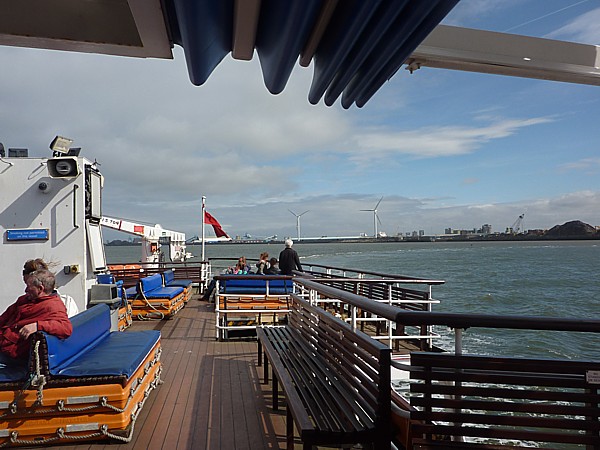
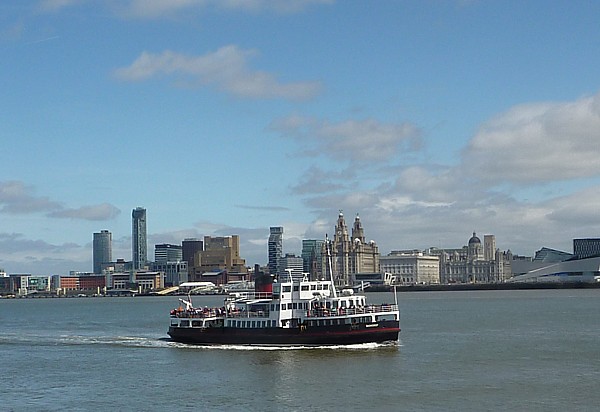
It was a very bleak and wet day so we decided to go to the Museum of Liverpool. We did get some bird watching and fresh air, though. As well as taking a trip on the Mersey Ferry for lunch, we spotted five Cormorants in Canning Half-Tide Dock. Two of them had quite a lot of white on their heads and necks, perhaps more than the normal adult courship plumage, and we wondered if they were from the continental sub-species marrocanus.  One of the Superlambananas outside the Museum was painted with marine life – is this supposed to be a Common Gull? It has yellow legs, a dark eye and no red spot on its bill.

05-museum-common-gull.jpg

Highlights of the Museum were replicas of the carvings from the Calder Stones, casts of early human footprints from Formby shore, dated to 4000 to 6000 years ago,

05-museum-formby-footprint.jpg

… an imagined diorama of the earliest scousers, camping in a woodland clearing in the Woolton area

05-museum-hunter-gatherer-diorama.jpg

… a complete coal fired chip fryer from a chippy in Rice Lane, with hand-painted tiles and copper edging, used from 1925 to 1982, and the model of the Lutyens RC cathedral which was never built.

05-museum-cathedral-model.jpg

Posted in Sunday Group | 1 Comment