Anfield Cemetery & Stanley Park, 24th February 2013

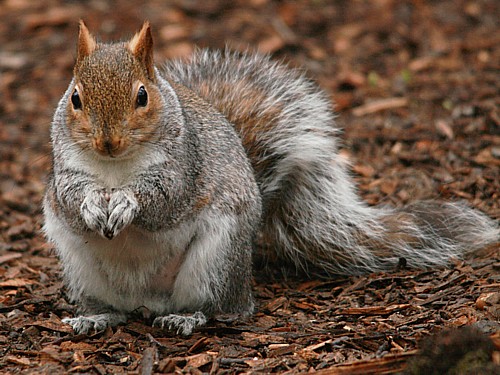
There was a bitingly cold north wind today, as we took the 19A bus from Queen Square to Walton Lane/Bodmin Road and crossed into Anfield Cemetery. There weren’t many birds, just Carrion Crows, Magpies and a flock of Black-headed Gulls, but there was a Grey Squirrel who sat low in a tree and nibbled on a peanut.

07-stanley-squirrel.jpg

We are always interested in War Graves, and there are several notable ones in Anfield Cemetery. There is a mass grave of 554 Liverpool citizens who were killed in the May Blitz in 1941. Three Belgian Merchant Seamen were also killed that week and their gravestones are near the side of a path, probably cared for by the Belgian Government.

07-stanley-belgian-graves.jpg

The most interesting memorials record the burial somewhere in the cemetery of two early recipients of the Victoria Cross. The one on the left is for Patrick Mylott who was honoured for his bravery in Lucknow during the Indian Rebellion (Mutiny) of 1857 while the other is for Joseph Prosser for his valour at Sevastopol in 1855 during the Crimean War.

07-stanley-vc-graves.jpg

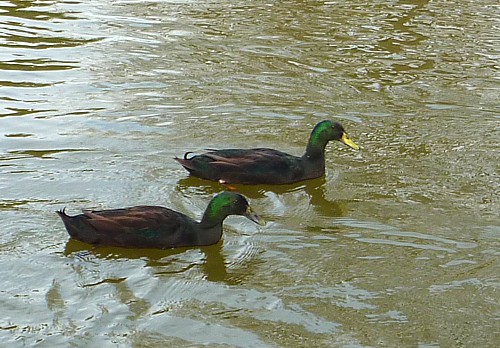
Then on into Stanley Park. On the lake were the usual Mallards, Canada Geese and Moorhens, and one star bird, a male Mandarin Duck, mixed in with the Mallards crowding for bread.

07-stanley-duck-group.jpg

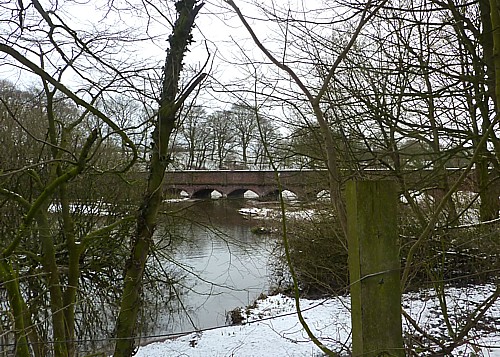
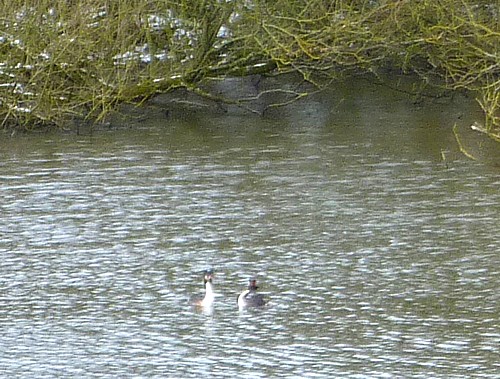
There was also a flock of Black-headed gulls. I counted 50, and 5 had their black heads, 10%. This is up from 2% last week at Greenbank Park. Several Magpies were bathing in the shallows, there were Blackbirds and a Dunnock on the bank and four Pochards – three males and a female – at the south end.

07-stanley-lake-view.jpg

07-stanley-pochard.jpg

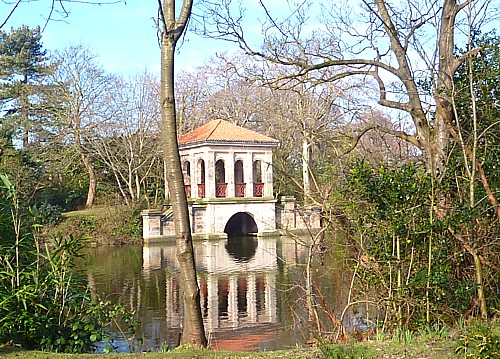
The sun came out while we ate our lunches in a sheltered spot near the pavilion, but it was soon cold again with a hint of sleet in the air. We walked back along the lake, trying to spot the Mandarin again, and also looking for the female which was said to have been with him a week or so ago. We eventually found the male roosting next to a Mallard on the edge of the island. A young family came by to feed the ducks and I pointed out the unusual one and said I hoped the bread they were throwing would make it stir itself and come to be photographed. With that, the young father took out a whole piece of thick-sliced white bread and flung it like a frisbee at the Mandarin. Luckily it landed in the water, not on the poor bird’s head. A flock of BHGs immediately dived on the bounty, screaming and splashing. The fuss roused the Mandarin as planned, but it just sat on the edge of the island, preening. We never did see the female, and wonder if she is hidden away somewhere, nesting, or if she didn’t stick around.

07-stanley-mandarin.jpg

Posted in Sunday Group | 1 Comment

Greenbank and Sefton Parks, 17th February 2013

It was a bright and sunny day, but deceptively cold. We took the 86 bus to the Brookhouse pub and walked down Gorsebank Road to Greenbank Park.

06-greenbank-view.jpg

The lake was full of the usual birds of urban parks. Mallards of course, a Coot on a nest, a Moorhen, plenty of Canada Geese paired up and trumpeting at each other and at least a hundred Black-headed Gulls, with about one in fifty showing their black heads fully grown out. These are the older ones, apparently. There was a Herring Gull, a pair of Lesser Black-backed Gulls, one Mute Swan, a Cormorant (which was a surprise) and a Grey Squirrel (which wasn’t). In the ornamental garden the first daffodils were out and the trees held a Blue Tit, a Carrion Crow and some Magpies.

Then we walked to Sefton Park down Greenbank Road North and Ibbotson’s Lane. A coach stopped at the corner of Penny Lane. Tourists? Yes, they all got out and photographed each other, two by two, next to the Penny Lane street sign.

We were very cold by then so we had lunch out of the wind in the Palm House. Lots of lovely tropical flowers were out. There were splendid blue orchids, something with a flower looking like a scarlet firework an inch and a half across, and one whose name sign we found, the Shrimp Plant Beloperone guttata.

06-orchid.jpg

06-firework-flower.jpg

06-shrimp-plant.jpg

Around the park there were various signs of spring. The yellow Crocuses were out, the Witch Hazel had just finished flowering and the Alder trees were covered in catkins.

06-crocuses.jpg

06-witch-hazel.jpg

06-alder-catkins.jpg

Another Coot was nesting on the lake. Two Mute Swans were sleeping on the island – were these the nesting pair? There has been an amazing increase in the Little Grebe population off the end of the island. At the end of August we though there were five, possibly a pair with three juveniles, but today we thought we saw ten or eleven. We stopped to talk to a photographer, and he said he thought he’d counted sixteen.

Posted in Sunday Group | Leave a comment

Holyhead pictures

Chris Derri has sent me some pictures from our coach trip to Holyhead and Beddmanarch bay on 9th February. First, two shots of a Black Guillemot in winter plumage.

black-guillemot-1.jpg

black-guillemot-2.jpg

A Ringed Plover

ringed-plover.jpg

Two pictures of a Shag

shag-on-water.jpg

shag-flying.jpg

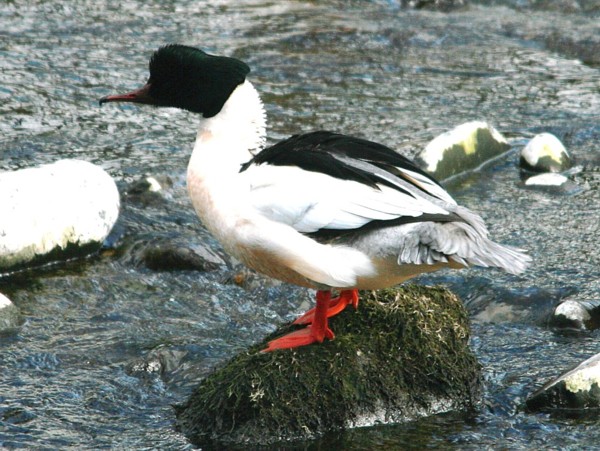
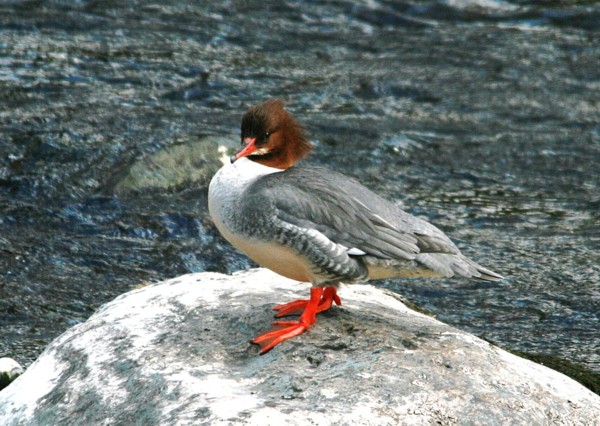
A trio of Red-breasted Mergansers and a close-up of the nearest male.

red-breasted-mergansers.jpg

red-breasted-merganser-male.jpg

Posted in MNA reports | Leave a comment

Burscough Reed Beds, Saturday 16th February 2013

(Report by John Clegg)
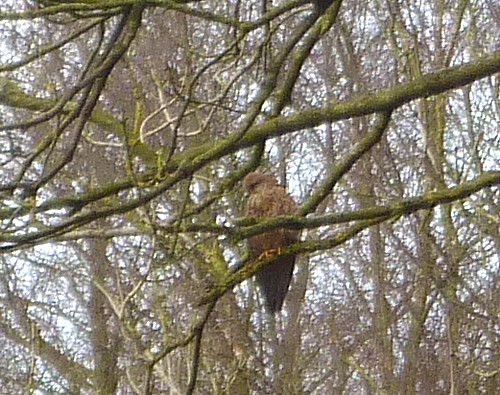
A total of 20 members arrived at Burscough Bridge Interchange, by bus, train or car, for our walk on a mild sunny morning. As we left the station a group of Jackdaws flew over, the first of many birds seen. The morning was spent walking over farm fields, where we had close views of over 300 Pink-footed Geese, a single Raven and some Siskins.  We had lunch at Martin Mere then walked around the reed beds outside the reserve, seeing many ducks and geese. On a row of fence posts were three Peregrine Falcons. A large female and two smaller ones who might have been last year’s young. A buzzard was close by.
A total of 52 bird species were seen.
Jackdaw, Black-headed Gull, Magpie, Goldfinch, Carrion Crow, Raven, Pink-footed Geese, Greenfinch, Dunnock, Wood Pigeon, Skylark, Lapwing, Whooper Swan, Fieldfare, Redwing, Moorhen, Shelduck, Tree Sparrow, Robin, Collared Dove, Chaffinch, Great Tit, Nuthatch, Siskin, Blackbird, Treecreeper, Coot, Mallard, Greylag Goose, Pheasant, Pochard, Tufted Duck, Goldeneye, Teal, Wigeon, Mute Swan, Canada Geese, Shoveler, Peregrine, Long-tailed Tit, Cormorant, Grey Heron, Buzzard, House Sparrow, Wren, Linnet, Blue Tit, Barn Owl, Redpoll, Pied Wagtail, Greater Black-backed Gull, Great Spotted Woodpecker.

Posted in MNA reports | Leave a comment

Burscough Reedbed Photos

Photos taken by Chris Derri on the MNA Burscough Reedbed walk

mna-chrisd-cows.jpg

English Longhorn Cattle

mna-chrisd-barn-owl.jpg

Barn Owl

mna-chrisd-pinkies.jpg

Pinkies

mna-chrisd-siskin.jpg

Siskin

mna-chrisd-whoopers.jpg

Whooper Swans

mna-chrisd-mute-swan.jpg

Mute Swan

Posted in MNA reports | Leave a comment

Liverpool Museum 10th February 2013

It was a very bleak and wet day so we decided to go to the Museum of Liverpool. We did get some bird watching and fresh air, though. As well as taking a trip on the Mersey Ferry for lunch, we spotted five Cormorants in Canning Half-Tide Dock. Two of them had quite a lot of white on their heads and necks, perhaps more than the normal adult courship plumage, and we wondered if they were from the continental sub-species marrocanus.  One of the Superlambananas outside the Museum was painted with marine life – is this supposed to be a Common Gull? It has yellow legs, a dark eye and no red spot on its bill.
05-museum-common-gull.jpg

Highlights of the Museum were replicas of the carvings from the Calder Stones, casts of early human footprints from Formby shore, dated to 4000 to 6000 years ago,

05-museum-formby-footprint.jpg

… an imagined diorama of the earliest scousers, camping in a woodland clearing in the Woolton area

05-museum-hunter-gatherer-diorama.jpg

… a complete coal fired chip fryer from a chippy in Rice Lane, with hand-painted tiles and copper edging, used from 1925 to 1982, and the model of the Lutyens RC cathedral which was never built.

05-museum-cathedral-model.jpg

Posted in Sunday Group | 1 Comment

Just an ordinary day in the lab…

mna-rough-tailed-bowfoot-gecko3.jpg

Well not quite
I was working on some oil-well drill cuttings from Kurdistan. Lifted the penultimate sample bag from one of the boxes when out pops a gecko! These boxes have been in a storage garage on the Wirral for the past week – no idea how long they took to clear customs.
It sat for a while on the bench but became restless so I tranferred it to a glass sample jar, dripped in a few drops of water from a pipette for it to drink and found a few tiny dead flies on the lab window – heh heh. Had a quick photo session – put some sand in the bottom of a shallow tray and it posed nicely before I returned it to its jar.
mna-rough-tailed-bowfoot-gecko2.jpg

After the rather frustrating RSPCA call system – no appropriate buttons to press for exotic reptiles in your lab! I finally got through to a human and the little fella was collected at lunchtime.

Had a quick google and it looks like a Rough-tailed Bowfoot Gecko Cyrtopodion scabrum a small, nocturnal ground gecko, with exceptionally long, angular toes.

mna-rough-tailed-bowfoot-gecko1.jpg

Posted in MNA reports | Leave a comment

MNA Coach Trip Anglesey 9th Feb 2013

mna-breakwater-cp1.jpg

The first MNA Coach trip of 2013 saw us returning to a familiar venue at Holyhead Harbour and the nearby Breakwater CP. It was a misty and drizzly day but we soon got down to some birding with Starlings and a Pied Wagtail on the grassed area beside the shore and a Song Thrush perched low down in a bush. A dark coloured Grebe diving amongst the boats in the harbour had us puzzling its identity. Elsewhere in the harbour we found a Cormorant, a few Shag, Little Grebe, a Black Guillemot already in summer plumage, a male Red-breasted Merganser with his entourage of four females who were observed performing synchronized diving – diving in unison then popping back up together.Chris Derri did some sea-watching and was rewarded with sightings of a few distant Common Scoter, a Red-throated Diver, Common Guillemot and Razorbill. 

I had a good root around the seaweed on the harbour shore. There were three different Wrack species and a few long strands of Sea Belt Kelp Laminaria saccharina.  There was Spiral Wrack Fucus spiralis, Knotted Wrack Ascophyllum nodosum which has long strap like fronds with large egg-shaped air bladders at regular intervals. A number of fronds bore tufts of the small reddish-brown filamentous epiphytic algae Polysiphonia lanosa.

mna-egg-wrack1.jpg

Egg Wrack with red algae Polysiphonia lanosa

Fronds of Toothed Wrack Fucus serratus were covered in the Tubeworm Spirorbis spirorbis. These are often overlooked due to their small size. Their smooth, white spiral tubes, which coil to the left (sinistral) are only 3-4 mm diameter.

mna-spirorbis.jpg

Spirorbis spirorbis

A few thin encrusting patches of an orange coloured Sponge species Pseudosuberites sulphureus clung to the rocks.

mna-orange-sponge.jpg

Plenty of Common Periwinkles Littorina littorea and a bright yellow Flat Periwinkle Littorina obtusata shell. Harry and Les found a Sea Slater Ligia oceanica, this littoral woodlouse is an inch in length. 

On the harbour wall we watched a few Rock Pipits flying up to catch flies – which were about despite the weather. On some rocks we watched an Oyk, a Ringed Plover, a sentinel Shag with tufy hairdo. Limestone blocks on the harbour wall gave an interesting diversion as they were packed with fossils including numerous brachiopods, solitary and colonial corals and a lone gastropod. 

mna-fossil-gastropod.jpg

Fossil Gastropod

We walked past the dramatic cliffs which are composed of Holyhead quartzite, a massive white quartzose sand deposit with some relict sedimentary features but now fused by metamorphism into a crystalline rock. There was plenty of Sea Ivory Ramalina siliquosa growing on the stone walls, this distinctive Lichen has grey tufted strap-like projections attached to the rock. Agrey Heron took off from the shore and a Curlew flew overhead.A shrill cry of ‘chee-ow’ quickly had binoculars scanning for the source – Red-billed Chough. This beautiful bird sometimes called the sea crow has glossy black plumage, a red bill and legs. A couple of Chough were located feeding on a grassed field along with Oyks and a Redshank.We stopped to admire the mosaics at the Breakwater CP visitor centre before walking back along the lane towards the harbour.

mna-breakwater-mural1.jpg

The lane edge had plenty of Winter Heliotrope Petasites fragrans which is one of the Aster family. This European herb has vanilla-scented white-pink flowers, hence the latin name fragrans. Its large green, leathery leaves were not dissimilar to those of Butterbur Petasites hybridus. 

mna-winter-helio2.jpg

Winter Heliotrope

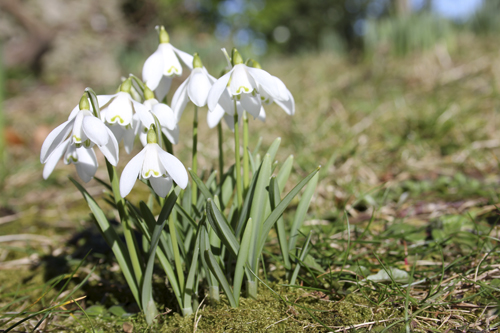
Our usual Brent Geese were missing when we arrived at Parc Arfordirol Penrhos CP, Beddmanarch Bay. The tide was out so we scanned the mudflats through the mist for any sign of life. Shelduck looked monochrome in the gloom, Curlews were probing in the goo with their long down-curved beaks, a Bar-tailed Godwit with upturned bill also probed and Grey Plover had a quick burst of energy darting around before standing motionless again. A few Red-breasted Mergansers were around along with a couple of Great-crested Grebes and a lone Slavonian Grebe. The small pond held Coot, Moorhen, Mallards and a few Black-headed Gulls.The feeders held Chaffinches, a Greenfinch, Blue Tit, Great Tit, a Robin trying to grab hold of the feeder with Dunnock and Blackbird more sensibly feeding below. Goldcrests calling away from the pine trees proved elusive. Snowdrops were peeking up through the muddy ground and a bright burst of colour was a couple of blobs of Yellow Brain Fungus Tremella mesenterica.

mna-penrhos-yellow-brain1.jpg

Yellow Brain Fungus

Posted in MNA reports | Leave a comment

Southport, 3rd February 2013

It was warmer today, but with a squally north wind. At Southport we headed straight down to the Marine Lake, and had a good day for birds, with several notes of leg rings to report. On and around the lake we saw Black-headed Gulls, Herring Gulls, Moorhen, Mallards, Coots, Mute Swans and two Canada Geese.

04-southport-marine-lake.jpg

At lunchtime we headed out of the wind and settled on the benches outside Southport Bowling Club’s pavilion. There were Wood Pigeons and Blackbirds on the lawns and a Greenfinch twittering and whistling at the top of a bare tree. They usually make wheezy calls, but is this their spring song? We also admired a rather splendid dovecot.

04-southport-dovecot.jpg

We rounded the southern end of the Marine Lake, and headed northwards into the raw gusty wind. Cormorant, Common Gull, Little Grebe, a second Mute Swan with a Darvic ring and a Goldfinch. Then back onto the Promenade, overlooking the Spartina grass colonising the beach. In amongst the tufts were Shelduck and about a dozen Pink-footed Geese.

04-southport-spartina-beach.jpg

From the inland part of the pier there’s a good view over the Pitch-and-Putt course, where we saw Jackdaws, several dozen Oystercatchers, a few Greylag Geese and a Curlew. A party of cyclists was riding along the Promenade, one on a very old bike with a carbide lamp. He told me what it was, and I thought he said it was a “Jersey Peterson” of 1905. It’s the one in the foreground of this picture, ridden by the man in the coonskin cap.

04-southport-old-bike.jpg

On the way back on the train we saw a large flock of Lapwings rising over the school playing fields north-east of Hall Road Station.

These are the five ringed birds we saw, all reported on 6th February to the Euring website:
Two Black-headed Gulls with blue Darvic rings on their left legs: 2C42 and 2C43
Two Mute Swans with blue Darvic rings on the right leg: SDC and NXD. I had a reply from Wes Halton of the North West Swan Study. SDC was a male cygnet ringed at St Annes on the 21 August 2005, and has been seen at Southport many times since then. He is now seven years old. NXD was a female cygnet ringed at St Annes on the 2 Sept 2003 and is now nine years old.
A Coot with the following color rings: right leg pink (or orange) over a BTO ring, left leg light blue over purple.
I will add the reports on their movements as they come in.

Posted in Sunday Group | 1 Comment

Sri Lanka Jan 2013

Just returned from hols on the tropical island of Sri Lanka. Although mainly a cultural tour visiting ancient painted cave temples, numerous gigantic Buddha statues, the dramatic sky fortress of Sigiriya, tea plantations and deserted ruined cities, I managed to see a great variety of wildlife along the way 🙂

Negombo Fish Market was a lively place with fishing boats landing their catch on the beach, rows of fish drying in the sun, fresh fish for sale such as Swordfish and Red Snapper plus prawns and a few different species of crabs

mna-negombo-fish-market1.jpg

mna-negombo-fish-market3.jpg 

Blue Swimming Crab Portunus pelagicus

Good selection of mammals with Toque Macaque Macaca sinica, Tufted Gray Langur Semnopithecus priam thersites, Purple-faced Leaf Monkey Trachypithecus vetulus, Grizzled Giant Squirrel Ratufa macroura and the ever present chimpmunks – Three-Striped Palm Squirrel Funambulus palmarum

mna-sri-lanka-macaque1.jpg

Toque Macaque enjoying the spicy food

mna-sri-lanka-langur1.jpg

An ‘ever so serious looking’ Tufted Gray Langur

mna-sri-lanka-butterfly2.jpg 

Chestnut-streaked Sailor Neptis jumbah

mna-sri-lanka-moth1.jpg

Indian Wasp Moth Amata passalis – female laying egg

mna-sri-lanka-spider1.jpg

Signature Spider Argiope sp.

mna-sri-lanka-cricket1.jpg

Cricket

mna-sri-lanka-red-black-millipede1.jpg

Red & Black Millipede

A great selection of Dragonflies and Damselflies were seen including Asian Skimmer Orthetrum glaucum, Crimson-tailed Marsh Hawk Orthetrum pruinosum, Indigo Dropwing Trithemis festiva, Asian Groundling a.k.a. Ditch Jewel Brachythemis contaminate,Pied Parasol Neurothemis tullia, Common Bluetail Ischnura senegalensis, Painted Waxtail Ceriagrion cerinorubellum, Yellow Waxtail Ceriagrion coromandelianum and Marsh Dancer Onychargia atrocyana

mna-sri-lanka-dragonfly4.jpg

Crimson-tailed Marsh Hawk Orthetrum pruinosum

mna-sri-lanka-damselfly2.jpg

Marsh Dancer Onychargia atrocyana 

 mna-sri-lanka-turtles1.jpg

Baby Turtles at The Kosgoda Turtle Hatchery

mna-sri-lanka-turtles2.jpg

Left – Olive Ridley Sea Turtle Lepidochelys olivacea, Right – Green Sea Turtle Chelonia mydas

mna-sri-lanka-lizard1.jpg

Lizard

mna-sri-lanka-monitor-lizard3.jpg

Water Monitor Varanus salvator

mna-sri-lanka-frog1.jpg

An endemic Scrub Frog Philatus rus

mna-sri-lanka-toad1.jpg

Yala Toad a.k.a. Atukorale’s Dwarf Toad Bufo atukoralei

Posted in MNA reports | Leave a comment