Out and About – April pictures from Ken Lewis

Ken says:  Spring is busy time for me but I thought our members would like to see some of the images I have taken this April.

Great Crested Grebe 1

Great Crested Grebe 2

Great Crested Grebes at Carr Mill Dam.

Wheatear

Wheatear, taken at the Sychnan Pass near Conway. There were five Males all in the same area. I also saw my first Cuckoo of the year.

Whinchat

There were lots of Whinchats at Dolgarrog near the Conway Valley, and also a Stonechat.

Stonechat

Interested in the wildlife of the North-west of England? If you would like to join the walks and coach trips run by the Merseyside Naturalists’ Association, see the main MNA website for details of our programme and how to join us.
Posted in MNA reports | Comments Off on Out and About – April pictures from Ken Lewis

Lydiate, 28th April 2013

Blossom is starting to burst out everywhere, especially on all the splendid Magnolias we admired from the bus on the way to Lydiate. It still isn’t really warm, but dry and overcast, with a freshening breeze, very clear views from Liverpool over to the Wirral and the Welsh hills, and the threat of rain later. We took the 300 bus from Sir Thomas Street at 10.20 and got to Our Lady’s RC Church at Lydiate at 11.10.

17 Lydiate narrow boat

There is a small rookery in the churchyard, and the calls of the Rooks followed us down Hall Lane. Outside one of the houses there is a sumptuous Aubretia along the garden wall, which we have admired in previous years.

17 Lydiate Aubretia


In the sheep field on the right there was a big dew pond with Shelducks in it and Jackdaws on the edge. Swallows were flying over the field, Goldfinches and House Sparrows twittered and we spotted a pair of Linnets on the fence. Both Red Dead-nettle and White Dead-nettle were flowering in the hedgerow.

17 Lydiate white dead nettle

17 Lydiate red dead nettle


We took the footpath south alongside the racing gallop for the horses in training. Blackbird, Greenfinch, Magpie, Wood pigeon and a rabbit. We crossed the racecourse by two stiles, observing the sign warning of horses passing at speed! The trees held a Jay and a Crow, so we saw all the corvids so far except a Raven. Three Mallards flew over, looking like Hilda Ogden’s wall ornaments. Lunch was at Lydiate Hill Bridge, which carries just the footpath over the canal beneath, not a road. It’s hump-backed and narrow, crusted with old lichen, and if it’s the same age as the canal probably dates back to 1775. It’s Grade II listed, anyway. This picture, taken in late summer from the canal bank, is by “Irate” from Wikimedia Commons.

17 Lydiate Hill Bridge Wikimedia

There were Moorhens and Mallards on the water and a Willow Warbler in the shrubs on the bank. We set off along the canal northwards, waving to lots of narrow boats. The Pride of Sefton went past, a boat we have cruised on in the past. There were Daisies, Dandelions and Forget-me-nots on the verge.

17 Lydiate forgetmenot

Just past Jackson’s Bridge some fishermen said they mostly get Roach and Perch. The flat fields had Canada Geese, an Oyster Catcher and a small mixed flock of Herring Gulls and Lesser Black-backed gulls apparently sitting on the ground.  A field was being harrowed while another had a crop already growing – a cereal crop in neat rows.

17 Lydiate cereal field

The wind was now gusty with spots of rain and it was very overcast.  We left the canal at Rimmer’s Swing Bridge and headed west along Green’s Lane, back towards the main road. The house on the corner with a large garden pond had a rather fine floating duck house (£540 each, according to Amazon! ) and an elegant ornamental Heron.

17 Lydiate duck house


We noticed Collared Doves on a wire and Lapwings in field, but we were walking straight into the teeth of a strong wind and a persistent drizzle. We were very happy to get to Lydiate Hall farm opposite Our Lady’s church, and into the Hayloft tea shop for some shelter and the loo. They keep a large duck pond, dozens of tame Mallards, some Guinea Fowl and a lot of  Peacocks. One displayed obligingly for us.

17 Lydiate peacock front

He did a twirl, revealing that he looks just as amazing from behind!

17 Lydiate peacock back

After a quick shop for duck eggs and mushrooms at the farm shop we caught the 300 bus at 2.20 back to Liverpool.

Posted in Sunday Group | Comments Off on Lydiate, 28th April 2013

Croxteth Hall, 21st April 2013

This was a joint MNA / Sunday Group walk.  On a cloudy day with a forecast of rain, two MNA members joined the Sunday Group at Queen Square, with the rest of the MNA expected to be on the 18 bus from Liverpool ONE bus station. However, it was completely empty when it pulled in at Queen Square. Happily, three other MNA members joined us at Croxteth Hall.

16 Croxteth hall

The trees were still bare, although some early cherry blossom is beginning to show and the Magnolia is just breaking into bloom.

16 Croxteth magnolia

Birds were quite sparse, including Magpies, Mallards, Moorhens (but no Coots), Wood Pigeons, Robins, Great Tits, a Blackbird, a Jackdaw. A big tree near the lake had several Nuthatches and we spotted a distant Sparrowhawk.

Near the Hall a great old tree stump attracted our attention.

16 Croxteth stump

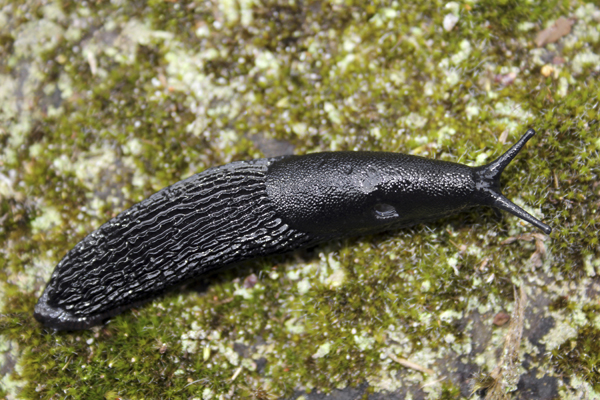
Growing over and around it were Bramble, Dandelion and Lesser Celandine, with Nettle, Red Campion, Wood Avens and Bluebell still to flower. Chris Felton rooted under some fallen bark and found woodlice and a small slug about 10 mm long. It was the Dusky Slug, Arion subfuscus.

16 Croxteth slug


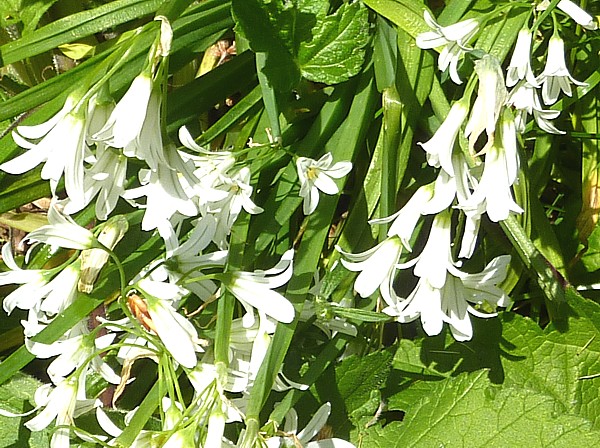
It soon began to drizzle, but we carried on, noting more plants trying to catch up on the Spring. Primroses were out, the Wild Garlic was just coming into bud and the Water Lilies were emerging from the lake. Dog’s Mercury, that indicator of ancient woodland, was near to flowering, the lawns were scattered with Daisies, and the Dandelions were popping out everywhere.

16 Croxteth wild garlic


16 Croxteth lake and lilies


Sheltering from the rain, we ate lunch in the covered bay at the corner of the Hall. On the lawn in front of the walled garden were some delicate and dainty Snakeshead Fritillaries.

16 Croxteth fritillary


A huge old log was showing a fine crop of Trametes gibbosa, the Lumpy Bracket.

16 Croxteth lumpy bracket

About 1.30 the rain stopped and a weak sun tried to break through. A Bumble Bee flew low over the undergrowth but we couldn’t identify it. Near the model railway was a clump of unusual flowers which Margaret identified as Summer Snowflake.

16 Croxteth perhaps three c leek


Our last fungus was the slime mould Enteridium lycoperdon, the False Puffball, looking like a dollop of rice pudding about six inches (15 cm) across. Apparently the Mexicans call it “caca de luna” or “Moon’s poo” Nice!

16 Croxteth moon poo

Thanks to Chris Felton for his encyclopaedic knowledge of plants, invertebrates and fungi.

Posted in Sunday Group | Comments Off on Croxteth Hall, 21st April 2013

Ainsdale Spring Fungi Foray, Sunday 14th April 2013

Report from Tony Carter.

A welcome change in the weather. Bright and warm with a few light showers, if a little breezy, for the NWFG fungi foray.

Happily, the recent flooding of the land round the pond has subsided, so we were able to gain access to most of that area. There we were met by hundreds of Common Toads engaged in a mating frenzy, presumably triggered by the change in temperature. A Grey Heron was totally unfazed by our presence as he watched and waited for a meal to swim by. Comma and Peacock butterflies were spotted round the water’s edge.

The change in weather had come too late for us to find the larger spring fungi which will probably pop up in the next few weeks, having been delayed by the cold then very dry spell. A lot of dead wood had been brought down by the snow and wind and this was subject to careful examination. One pile of logs revealed a bleary eyed Great Crested Newt, not quite ready to hit the water

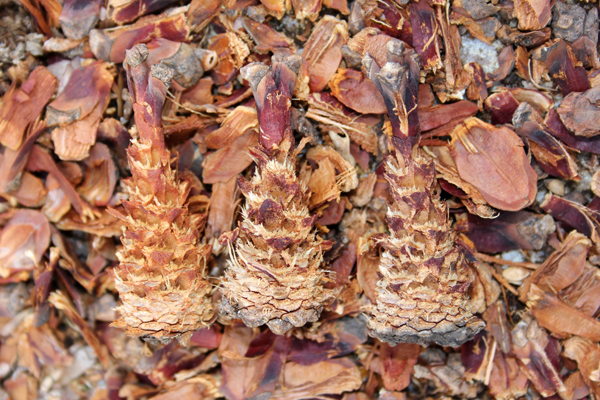
Despite much searching, most of the fungi found were the usual species for the time of year. Only two with gills and a stem. Tubaria furfuracea (Scurfy Twiglet) and Strobilurus tenacellus (Pinecone Cap), a typical find on buried cones. (This picture of the latter is of a specimen found at Allerton Golf Club last December).

01 Strobilurus tenacellus


The rest of our finds were of brackets, such as Trametes versicolor (Turkeytail) or tiny disc fungi and crusts that tend to live in the warmth and dampness under logs and fallen branches.

02 Trametes versicolor


We kept to the woods as it was a bit fresh out on the dunes. We did make an excellent find under some hawthorn trees. A tiny cup fungus Monilinia johnsonii is to be found on overwintered and mummified berries. It is uncommon but that could be because it is very small. Two of our party spent some minutes on hands and knees searching through the leaves and undergrowth before they uncovered a good collection of this species.

03 Monilinia johnsonii

Interestingly, the fungus first develops on the hawthorn as a leaf blight, then infects the flower which in turn causes the mummification of the berry. The berry falls. The fungus grows. The cycle starts again.

The total of species found and identified came to forty which is not bad for this time of year.

Posted in MNA reports | Comments Off on Ainsdale Spring Fungi Foray, Sunday 14th April 2013

Canal 2, Seaforth to Old Roan, 14th April 2013

Spring has definitely arrived. I enter in evidence ducklings, mating coots and mating toads. Hooray!

15 Canal 2 avenue

We took the X2 bus to Bridge Road, Seaforth and headed for Old Roan. It was an overcast and windy day, with one rain shower in mid-morning, but much warmer at last.  We saw the normal denizens of the canal – the Moorhens, Coots, Mallards and Canada Geese, but also Herring Gulls, which were calling overhead. In the hedgerows we heard a Chiffchaff, Blackbirds were trilling sweetly and House Sparrows tweeted. We also saw Wood Pigeon, Crow, Robin, Magpie and Collared Dove. Very few trees were in leaf, with only the Hawthorn showing definite green. There aren’t many flowers yet either, just Coltsfoot, Lesser Celandine and a few Dandelions, with clumps of Bluebells coming through, not yet in flower. On the far side of the canal there were outbreaks of daffodils and narcissus, looking like someone had chucked a few handfuls of bulbs over their back fence.

15 Canal 2 daffs

One interesting tree was a Common Larch, with male and female flowers showing. The female flower is a lovely upright red burst, less than an inch tall, while the male flowers are the brown down-pointing globules.

15 Canal 2 Larch flower

On the grassy edges we noticed lots of holes or burrows. The one on the left in this picture was about 1½ to 2 inches in diameter (4-5 cm) and at least 14 inches (35 cm) deep, sloping steeply downwards towards the water. Could they have been made by Water Voles?

15 Canal 2 burrow

Further on was a ruined artwork, a pile of steel stars with plants etched on them  Oddly, there was a trunkless white elephant perched on top. It seems it was once a sculpture called “Carrying Star”, put up in 2007, and the star panels were originally mounted on a framework. It  referred to the historical planting of “star grass” (Marram grass) on the dunes by the Lords of the Manor of Sefton in the 18th century. People used to collect it secretly to thatch roofs and make furniture. Peasants caught stealing the Lord’s grass (accused of “carrying star”) faced harsh punishments.  A passer-by told us there used to be a sign about it, but it has been vandalised. And as for the elephant, he was added to the stack of stars by the person who lived in the adjoining house. He dropped it in the process, and the trunk broke off.

15 Canal 2 stars

On the path was a pair of mating toads (“in amplexus”) with the smaller male gripping the back of the larger female. They were on their way from the undergrowth to the canal to mate but the male had grabbed the female well before she got to the water. Further along there was a different pair which retreated back to the hedge and further again still was a solitary male, dead in the middle of the path, perhaps run over by a bike.

15 Canal 2 Toads

The first ducklings of the year were a brood of just three tiny ones, pottering about with both parents near Cookson’s Bridge pub.

15 Canal 2 ducklings

The mortality of baby Mallards must be very high on the canal. A fisherman just before the Swift’s Lane bridge told us he’d had a 3lb Pike that morning, about two feet long, and he’d previously caught one of 13lb in that same spot. He proudly showed me a picture of it on his smartphone. They must feast on all the ducklings in the spring.

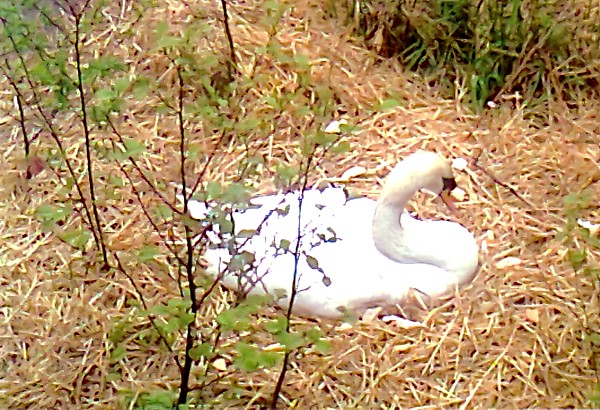
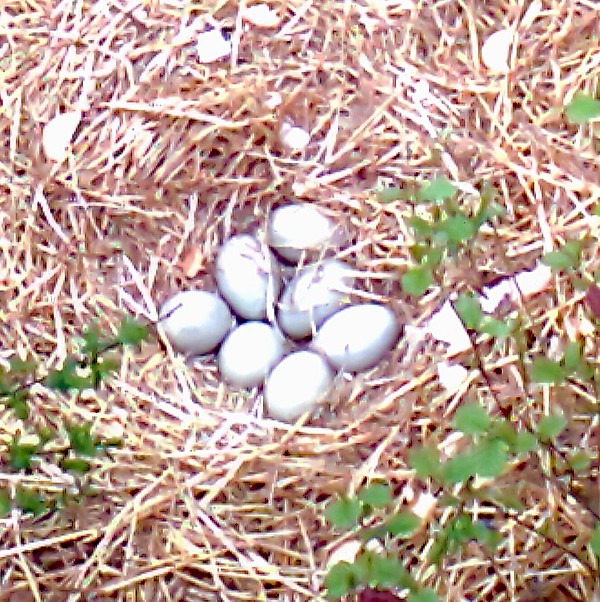
The sun came out after lunch and we saw our first Bumble Bee this year. Past Fleetwood’s Bridge was a male Mute Swan, which we checked for leg rings (none). A lady on the towpath said he’s a very good natured lad, used to being fed, and has been known to poke her with his beak when he wants bread. His mate was on a nest a bit further on, near the Swing Bridge, sharing the bank with a dumped mattress.

15 Canal 2 Swan nest

Just before Old Roan was another milestone showing Liverpool 8, Leeds 119¼ .

15 Canal 2 milestone

If you are interested in the wildlife of the North-west of England and would like to join the walks and coach trips run by the Merseyside Naturalists’ Association, see the main MNA website  for details of our programme and how to join us.
Posted in Sunday Group | Comments Off on Canal 2, Seaforth to Old Roan, 14th April 2013

Pennington Flash 13th April 2013

MNA Glory Of The Snow

Boisser’s Glory Of The Snow

A dozen MNA members met at Lime St, catching the train to Newton-le-Willows then the 34 Arriva bus to Pennington Flash. A colourful show of spring flowers greeted us at the entrance to the Country Park with cultivars of Striped Squill Puschkinia libanotica, Boisser’s Glory Of The Snow Chionodoxa luciliae and Blue Anemone Anemone apennina and further along Lesser Celandine Ranunculus ficaria.

Keeping up with the many recent taxonomic name changes is always challenging. Luckily Pat Lockwood has let us know that Lesser Celandine is now Ficaria verna and Glory of the Snow is now Scilla luciliae. Thanks Pat!

MNA Striped Squill

Striped Squill

MNA Lesser Celandine

Lesser Celandine

Plenty of birdsong from the resident Blackbirds, Wrens and Robins along with the newly arrived migrants – Blackcap, Chiffchaff and Willow Warbler. Around at the main car park beside the flash I noted the blue darvic leg ring numbers on a handful of the 22 Mute Swans that were vying for bread handouts from the visitors. Sightings of AU6, AX6, CD6, HZ4, LJ4, XB4 and XZ6 will be forwarded to Wes Halton of the North West Swan Study.

We met up with those members travelling by car, doing the small circuit around the hides before lunch. From Horrock’s Hide a dozen Cormorants were standing together in watchful sentinel pose at the back of the spit, a few Lapwing were displaying and a group of Magpies were hanging around – up to no good no doubt. Black-headed Gulls were joined by a dozen Lesser Black-backed Gulls and lone Common and Greater Black-backed Gull. From New Hide we watched a few Gadwall, Coot, Moorhen, Shelduck and a female Goosander. From Teal Hide we noted another female Goosander, Teal, Shoveler, Grey Herons, more displaying Lapwings and Sid Duff spotted a couple of Oystercatchers hiding at the back of one of the shingle islands. A small party of Long-tailed Tits flew by the hide window and Red Admiral and Small Tortoiseshell Butterflies flitted around.

(Added by Barbara 26th April 2013, Chris Derri’s pictures of Gadwall in flight, Tufted Duck, LBB and BHG, and a female Teal.  Corrected 25th May on Chris Derri’s advice. It isn’t a Teal, it’s a female Pintail. )

01 Gadwall in flight

03 Tufted duck

04 LBB & BHG

05 Teal

A Kestrel was noted near to Ramsdales Flash and there was plenty of frogspawn in the shallow reedy area of a pond before we reached Bunting Hide. The usual flurry of activity here with plenty of Bullfinch, Greenfinch, Chaffinch, Blue Tits, Great Tits, Robin, Dunnock, Reed Bunting, Stock Dove and a Grey Squirrel digging a hole to hide a nut it had taken from one of the feeding tables. Eileen Houghton had later seen a couple of Common Toads Bufo bufo in plexus and well camouflaged on the ground.

(Added by Barbara 26th April 2013, Chris Derri’s picture of a pair of mating toads.)

02 Common toad

We ate lunch on the picnic tables whilst watching over a dozen Swallows along with a couple of Sand and House Martins sweeping overhead as they moved through. We caught up with Mike Barrow and Chris Derri who had spent the morning on the far side of the reserve ticking Cetti’s Warbler, female Pintail and Tree Pipit overhead. They had watched a colony of Mining Bees and had captured a klepto-parasitic Bee that was disturbing the colony in a tube for later identification.

[Added by Barbara 26th April 2013, Chris Derri’s pictures of an Early Mining Bee Andrena heamorrhoa and the “Cuckoo bee” which he has identified as Nomada flava)

08 Andrena haemorrhoa

07 Nomada flava

Only a few common fungi species were noted many past their best – Jelly Ear Auricularia auricula-judae, Turkeytail Trametes versicolor, Lumpy Bracket Trametes gibbosa, Candlesnuff Xylaria hypoxylon, Hairy Curtain Crust Stereum hirsutum and Birch Woodwart Hypoxylon multiforme. Best find was some bright orange cushion like fungi Rusty Porecrust Phellinus ferruginosus on a fallen tree branch.

MNA Orange Cushion Fungi

We wandered along to Ramsdale’s Hide where a couple of Redshank were standing on the islands and a pair of Jays flew by. We had a better view of the wildfowl from the viewing handrails further round the path – Goldeneye were mixed in with the Tufted Duck and there were plenty of Great Crested Grebes with a couple of birds indulging in their spring courtship routine with much head shaking and mirror posturing. Another female Goosander completed a circle before landing on the flash. Clumps of Coltsfoot Tussilago farfara were sprouting up everywhere on the rough field near Ramsdale’s, it is unusual because the heart-shaped leaves appear after the flowers. A female Sparrowhawk circled overhead, Skylarks took to the air singing their hearts out, small migratory parties of Meadow Pipits flew through and a Black-tailed Godwit flew over and landed on the spit. Alder trees along the flash shore had long male catkins and small red female flowers – that age to produce the familiar alder cones later in the year.

MNA Squamarina Lichen

Squamarina cartilaginea

As I was noting the small patches of lichen – Xanthoria parietina and Squamarina cartilaginea on the blocks of limestone rock dotted around John Clegg asked is that an Osprey? A few members fixed our binoculars onto the Osprey as it was flying away from us. A flock of Redwing flew along the canal as we returned to the woodland. As we walked past New Hide a Raven croaked overhead whilst being harassed by a Carrion Crow. A final look from Bunting Hide was rewarded with views of a fine male Brambling munching seeds from one of the logs. The rain came down as we walked back towards the bus stop – Chris Butterworth pointed out a patch of Sweet Violets Viola odorata that I had earlier missed. The flowers had a sickly sweet fragrance and the sepals were blunt in appearance. A rather wet and bedraggled party returned to Liverpool with a good list of sightings.

MNA Sweet Violet

Sweet Violet

(Added by Barbara 26th April 2013, Chris Derri’s picture of a Butterbur just breaking into flower.)

06 Butterbur

A wide photographic selection of birds, marine life, insects, mammals, orchids & wildflowers, fungi, tribal people, travel, ethnography, fossils, rocks & minerals etc. is available on my Alamy webpage

If you are interested in the wildlife of the North-west of England and would like to join the  walks and coach trips run by the Merseyside Naturalists’ Association, see the main MNA website for details of our programme and how to join us.
Posted in MNA reports | Comments Off on Pennington Flash 13th April 2013

Goldeneye – love is in the air!

Goldeneye are one of our well known ducks with individuals from Northern Europe visiting the UK to overwinter. They first nested in Scotland in the early 1970’s and thanks to the Speyside nest-box programme they have been attracted to nest in specially designed boxes put up on trees close to water.

MNA Goldeneye3

If you’re lucky you may witness their spectacular courtship display in the Spring before the birds return to their breeding areas. Typically the bottle green headed males males swim around the chocolate headed female, while she remains motionless in a prone posture.

MNA Goldeneye8

They then stretch their heads forward along the water before throwing their heads rapidly back so that they rested on their rumps, bills pointing skywards, while uttering a grating two-noted call.

MNA Goldeneye7

MNA Goldeneye2

They swing their orange feet forward, sending up a small shower of water in front of them. If one of the males has been successful in enticing the female he climbs on her back biting the back of her neck feathers and mates. It always looks as though she is half drowned in the process and she often has a quick splash about afterwards to rearrange her tousled feathers.

MNA Goldeneye17

MNA Goldeneye4

A wide photographic selection of birds, marine life, insects, mammals, orchids & wildflowers, fungi, tribal people, travel, ethnography, fossils, rocks & minerals etc. is available on my Alamy webpage

If you are interested in the wildlife of the North-west of England and would like to join the  walks and coach trips run by the Merseyside Naturalists’ Association, see the main MNA website for details of our programme and how to join us.
Posted in MNA reports | Comments Off on Goldeneye – love is in the air!

Thornton Hough, 7th April 2013

The winter may be over, but spring still hasn’t properly arrived. It was cool today, with a weak sun, but at least not the freezing weather that we’ve had for so long. We took the 487 bus from Sir Thomas Street to the lovely village of Thornton Hough, where scarecrows are everywhere.

14 Thornton H scarecrow

The trees are still almost completely bare but in the gardens on the way we enjoyed the sight of daffodils, Forsythia and some early blossom trees. Another “spot” from the bus was the first of many Hares in the ploughed field on the corner of Clatterbridge Road and Thornton Common Road. We walked out of the village and left the road at Croft Bank Cottages. As we turned into the fields Vee saw a molehill move! We stopped and stared at it for a bit, but there was no more heaving activity. But the young moles must be on the move now the ground has thawed. We did note the clumps of late snowdrops, which are just going over.

14 Thornton H snowdrops

Birds included Crows and Jackdaws in the fields, a Yellowhammer in a hedge, a Skylark singing, a Mallard flying, a bright male Kestrel hovering. In the hedges there were Greenfinches, House Sparrows, a Song Thrush, a pair of Robins and a Dunnock. It would have been idyllic but for the pong of fertiliser all day. Somebody had been muck-spreading!  It smelled rather “darker” than the usual dung, with (we joked) hints of caramel and bay-leaf. John hazarded that it might have been chicken manure. We stopped for lunch at a path junction where there was a piece of rusting farm machinery. An olde mucke-spreader? No, it was an ancient rusty seed sower.

14 Thornton H seed spreader

In the rough grass on that corner there were lots of little burrow openings, each between ¾ inch (2 cm) and 1½ inches (4 cm) wide, leading to shallow burrows in the topmost soil layer. The long grass was neatly cut off around the mouths of the holes, but surprisingly, none seemed to go in further than about three or four inches (9 cm). We had lots of fun probing them with twigs, but they were all “blind”. I am guessing they were made by Bank Voles, but have no idea why there were so many that didn’t go anywhere. Just daytime hideouts?  [Edit 15th April 2013.  Chris Butterworth has suggested they were made by Field Voles, and what we saw were the ends of longer burrows made under snow, which have now melted away. Sounds highly likely.]

14 Thornton H burrow

The Lever Causeway is an old carriage drive leading to a former home of Lord Leverhulme. We crossed it several times during the day. It was a beautiful grey-green tunnel, looking like something David Hockney would paint.

14 Thornton H tunnel

Then we spotted four Hares in a stubble field. They were running about after each other, and we saw two of them boxing. They put on a really good show for us and we were entranced. (You should be able to spot three of them in the picture below, but I know they are a long way off! Two are near each other on the right, looking at a third one further left.)

14 Thornton H hares

On a Dandelion we saw what looked like a wasp or a honey bee. I think it must have been one of the same Colletes bees the MNA saw yesterday.

14 Thornton H bee

A single Lapwing was stalking about in a ploughed field, perhaps guarding a nest. As we came out of the fields near Brimstage we saw a Red-legged Partridge heading for the cover of a hedge. The steps of the old stile there have been worn by centuries of feet. You can see where the fence used to go, across the middle.

14 Thornton H stile

The last time we were at Brimstage was 1st May 2011. We saw hares that day too, and Swallows nesting under the archway. It’s too early for them yet, especially in view of the cold weather. The late spring is causing some odd sights. On a field at the back of Brimstage Courtyard we spotted a Fieldfare in its summer plumage. It isn’t supposed to change until it gets back to its breeding area in Northern Europe. The lengthening days have made it moult but it’s been too cold for it to fly back north. There was another winter visitor too, a Redwing. Then back over the fields to Thornton Hough.  At the Talbot Avenue corner there were even more hares, and we stopped again to watch their antics. They delayed us so long that we missed the hourly bus for Liverpool by a mere four minutes. So we waited for the 87 for Eastham, enjoying the Rooks cawing in the trees. The bus took us to Spital station where we just caught the train for Liverpool.

Posted in Sunday Group | Comments Off on Thornton Hough, 7th April 2013

Wirral Way, Hooton to Heswall, 6th April 2013

This was the first of our series of Wirral Circular walks, intended eventually to cover the whole distance from Hooton to Seacombe.

13 Wirral Way signpost

It was Grand National Day and at Moorfields I noticed groups of men in suits, and young women wearing extraordinary hats, all off to Aintree and all clearly unfamiliar with public transport. It was a clear sunny day with light wind, just starting to warm up after the long freeze. Eighteen members and visitors met at Hooton station and set off along the Wirral Way.

13 Wirral Way setting out

Our first flowers were Coltsfoot by the wayside, and our best birds of the day were amongst the first we saw – two female Redpolls feeding on the dead seed heads of Rose Bay Willow Herb by the side of the path. A Chiffchaff was calling high in a tree and darting out from its perch to catch flies. Expert opinion was that it was probably a newly-arrived bird because it was so vocal and active, showing off and establishing a territory.

01 Chiffchaff


Chiffchaff by Chris Derri

House sparrows chirruped in the hedge and we spotted a two-apartment nest box high up on the gable end of a warehouse.

13 Wirral Way sparrow box

03 Chaffinch bathing


Chaffinch bathing – Chris Derri

04 Rook


Rook – Chris Derri

06 Robin


Robin – Chris Derri

Chris Derri found the track of a Holly leaf miner. I was most impressed when he looked it up on his smartphone and told me it was made by the grub of a fly called Phytomyza ilicis. It is “common across northern parts of the world, and can be found in woodlands, hedgerows, parks and gardens, wherever holly grows.”

13 Wirral Way holly mine

We lunched at Hadlow Road Station. There were lots of people out – cyclists, family parties, a group of young people clutching laminated maps and a party of air cadets. It had turned into such a nice day that some people were wearing short-sleeved T-shirts.

13 Wirral Way Hadlow

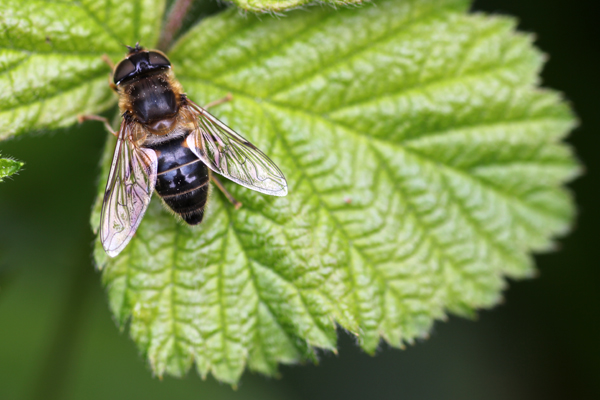
So warm, in fact, that we saw our first butterfly of the year – a Small Tortoiseshell flying high in a Pussy Willow, accompanied by an unidentified hoverfly. It’s about time. The extended cold weather has made some things about a month late.  Chris Derri also spotted a Comma sunning itself.

05 Comma


Comma by Chris Derri

High in the sky a Sparrowhawk was mobbing a Buzzard. On a patch of Lesser Celandine flowers there were what looked like some foraging bees or wasps, but which were said to be of the genus Colletes. Wikipedia says “The genus Colletes (or plasterer bees) is a very large group of ground-nesting bees within the family Colletidae, with over 450 species worldwide.  They build cells in underground nests that are lined with a polyester secretion, earning them the nickname polyester bees.”

13 Wirral Way Colletes bee

I looked them up on the website of the UK Bees, Wasps and Ants Recording Society (BWARS) and I think they might have been Colletes cunicularius. They say it is the only British Colletes to fly in the spring (early April to the end of May, rarely mid-June), it is known to forage for pollen on Ranunculaceae, the family to which Lesser Celandine belongs and it is known to be present on the Wirral. It has an unusual distribution, “being confined to a number of extensive coastal sand dune systems in north-west England and north-west and south Wales.”

We delighted in the sight of a tiny Goldcrest scurrying about in a bare tree.

02 Goldcrest


Goldcrest – Chris Derri

Then Chris Butterworth found a minute ladybird, only about 4mm long. He took it home to ID and confirmed that it was a 24-spot ladybird Subcoccinella 24-punctata, said to be found “in grassland and marshy places where it feeds on plants. It is common in southern England, becoming less so northwards.”

13 Wirral Way ladybird

Exif_JPEG_PICTURE


Ichneumon wasp – Chris Derri

Exif_JPEG_PICTURE


Carder bee – Chris Derri

We passed a tree covered in small dark-red flowers, not as showy as cherry or apple blossom. At first we though they might be the female flowers of Alder, but they can’t have been, because Alder has its male catkins on the same tree, and this tree didn’t. These flowers seem bigger than the female flowers of Alder, too. Anyone know what they are? (Added 24th April – identified by Pat Lockwood as the Wych Elm, Ulmus glabra. Thanks, Pat.)

13 Wirral Way red tree flowers

In the cutting the sandstone walls showed a text-book example of “convoluted folding” of the sandstone and a formation that John tried to persuade me was a fossil dinosaur. (It isn’t really! But imagine a side view with an upward curling tail at the right and the head at the left).

13 Wirral Way dinosaur-ish

13 Wirral Way convoluted folding

We emerged from the Wirral Way at Neston at about a quarter to three and caught the 487 bus back to Liverpool at 1512.  Some of us had even caught the sun!

Bird species list (32). Blackbird, Jackdaw, Heron, Great Tit, Blue Tit, Chiffchaff, Redpoll, Wood Pigeon, Chaffinch, Goldfinch, Carrion Crow, Magpie, Kestrel, Song Thrush, Wren, Robin, Dunnock, House Sparrow, Long-tailed Tit, Greenfinch, Buzzard, Coot, Redwing, Mallard, Moorhen, Starling, Rook, Pied Wagtail, Sparrowhawk, Jay, Goldcrest, Stock Dove.

Edited 15th April 2013 to add pictures by Chris Derri

If you are interested in the wildlife of the North-west of England and would like to join the walks and coach trips run by the Merseyside Naturalists’ Association, see the main MNA website for details of our programme and how to join us.
Posted in MNA reports | Comments Off on Wirral Way, Hooton to Heswall, 6th April 2013

Pictures from February and March

This weekend Chris Derri gave me some more of his recent pictures to post.  First off, a splendid Kestrel photographed at Carsington Water on 17th February.
001 Kestrel

002 Kestrel

Here are some Waxwings taken in Prescot on 23rd February.

003 Waxwings

004 Waxwings

On 24th February he spotted a Heron at Glasson Dock on the Lune estuary.

005 Heron

006 Heron

At Sizergh Castle on 13th March he photographed a Dipper, a Grey Wagtail, a pair of Goosanders, a Redwing and a Red Kite. Here’s the Dipper.

008 Dipper

007 Dipper

009 Dipper

And here’s the Grey Wagtail.

011 Grey Wagtail

010 Grey Wagtail

The male Goosander has a dark green head while the female has a red one.

013 Goosander male

012 Goosander male

014 Goosander female

Here’s the Redwing with its very pronounced white eye-stripe.

015 Redwing

And lastly, here’s the Red Kite. It’s the one described in Sabena’s post of the visit, with wing tags – left wing orange and right wing red. Its tail is looking quite raggedy.

016 Red Kite

017 Red Kite

018 Red Kite

Posted in MNA reports | Comments Off on Pictures from February and March