MNA Coach Trip Fairburn Ings 1st September 2013

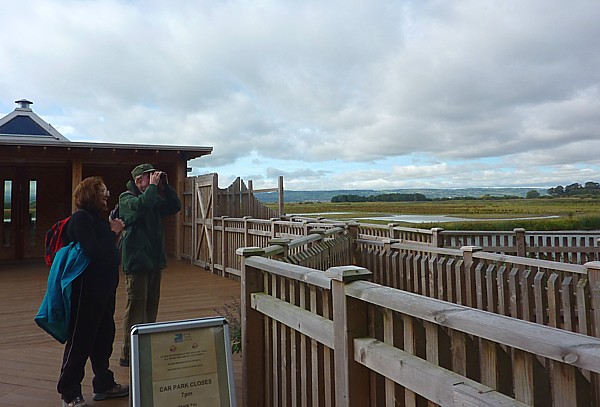
Seventeen MNA members joined the penultimate coach trip of the year to Fairburn Ings RSPB Reserve near Castleford in West Yorkshire. After a slight detour we arrived in time for lunch and sat on the picnic tables overlooking the feeders. A multitude of Tree Sparrows were joined by Greenfinch, Goldfinch, a male Bullfinch, Great Tit, Collared Dove and later on a Willow Tit.

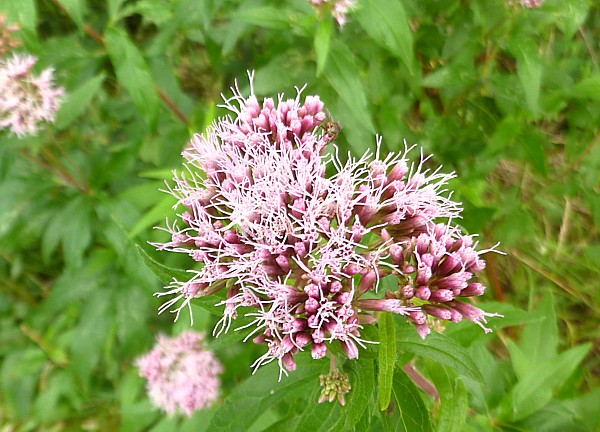
The small wildflower gardens in front and to the side of the visitor centre were a bit past their best but held Ribbed Melilot Melilotus officinalis, Upright Hedge-parsley Torilis japonica, Wild Carrot Daucus carota, Viper’s-bugloss Echium vulgare, Wild Marjoram Origanum vulgare, Lady’s Bedstraw Galium verum, Evening-primrose Oenothera sp.Common Knapweed Centaurea nigra, Chicory Cichorium intybus and Mugwort Artemisia vulgaris.
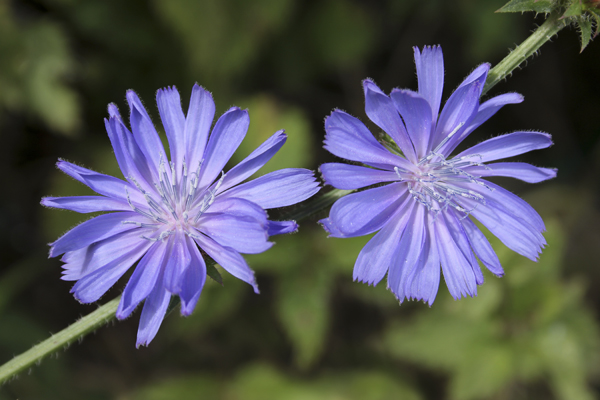
MNA Fairburn Ings Chicory1

Chicory

In the small reedbed beside the pond-dipping platform a number of Himalayan Balsam Impatiens glandulifera leaves had a dozen or so Common Amber Snails Succinea putris.

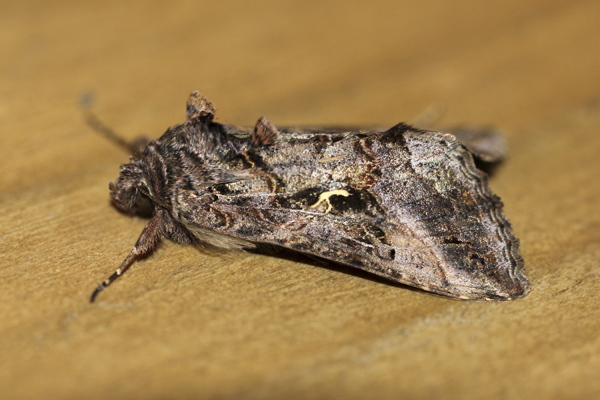
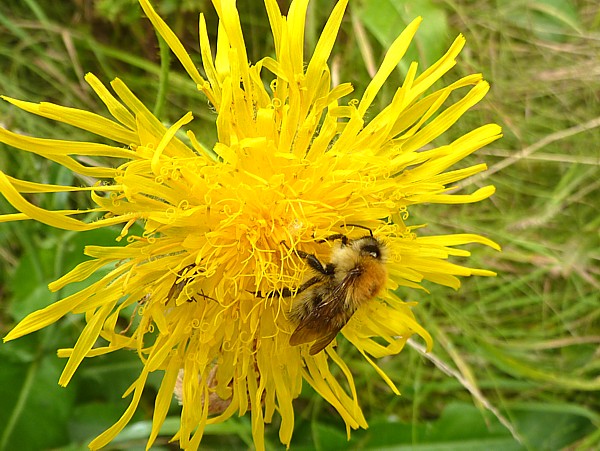
The group split up with a number of us following the Lin Dike trail along the River Aire where we noted Cormorant, Little Egret – a few gracefully hanging in the air like dancing Cranes, Grey Heron, Mallard, Common Sandpiper, Green Sandpiper and Common Tern. With blustery and overcast conditions it wasn’t an ideal day for insects but I did note Common Blue Damselfly Enallagma cyathigerum, Blue-tailed Damselfly Ischnura elegans, Brown Hawker Aeshna grandis, Common Darter Sympetrum striolatum, Scorpion Fly Panorpa communis, Hoverfly Syrphus ribesii, Hoverfly Eristalis sp. Common Wasp Vespula vlugaris and Red-tailed Bumblebee Bombus lapidarius. Butterflies included Green-veined White Pieris napi, a rather faded Small Copper Lycaena phlaeas and Meadow Brown Maniola jurtina.
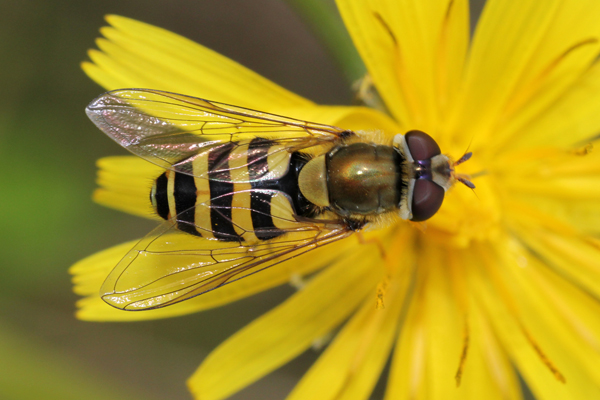
MNA Fairburn Ings Syrphus ribesii

Hoverfly Syrphus ribesii

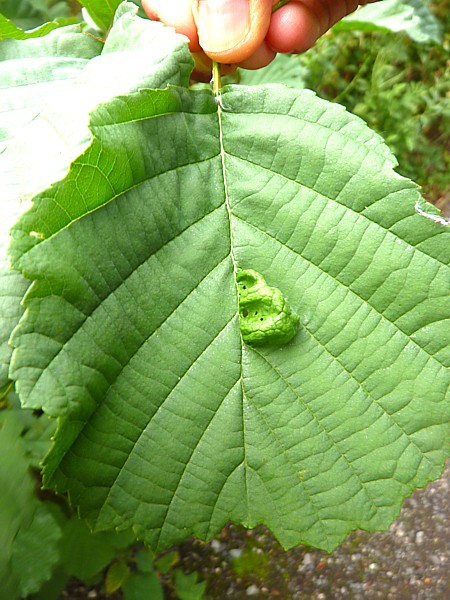
Of particular note were the large numbers of Galls affecting a variety of Plant species. The most noticeable were the half dozen Bedugar a.k.a. Robin’s Pincushion Gall on Dog Rose Rosa canina caused by Cynipid Wasp Diplolepis rosae.
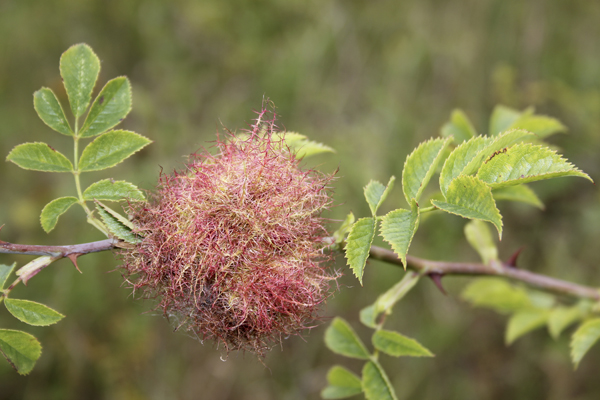
MNA Fairburn Ings Robins Pincushion Gall1

Robins Pincushion Gall

There was also Smooth Pea Galls on Dog Rose Rosa canina leaves caused by Cynipid Wasp Diplolepis nervosa.
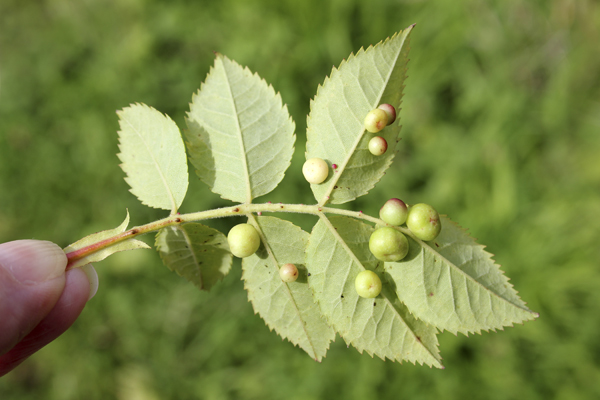
MNA Dog Rose Smooth Pea Gall1

Dog Rose Smooth Pea Galls

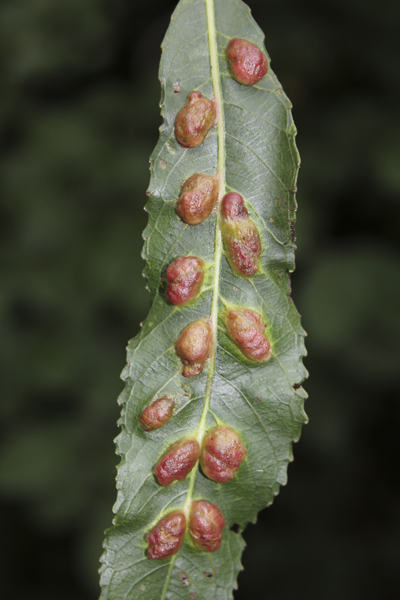
Some fine examples of Red Galls on Crack Willow Salix fragilis leaves caused by the Sawfly Pontania proxima.
MNA Willow Leaf Gall1

Willow Leaf Galls

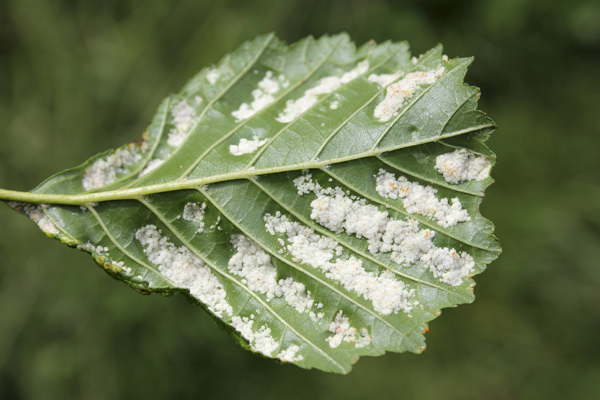
Galls on Alder Alnus glutinosa leaves caused by the Gall Mite Acalitus brevitarsus a.k.a. Eriophyes brevitarsus – the leaf is made to grow clusters of hairs, called an erineum, among which the mites live.  In this species, the hairs have several near-horizontal branches at the tip, so that each group of hairs is like a forest with a closed canopy. 
MNA Alder Leaf Gall Mite1

Alder Leaf Galls

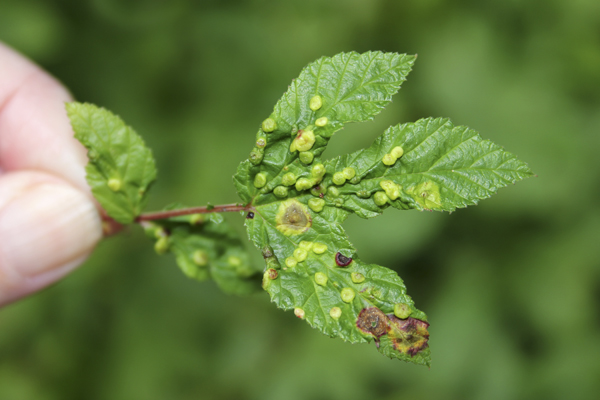
There were also Galls on Meadowsweet Filipendula ulmaria leaves caused by the Gall Midge Dasineura ulmaria.
MNA Fairburn Ings Meadowsweet Gall1

Meadowsweet Leaf Galls

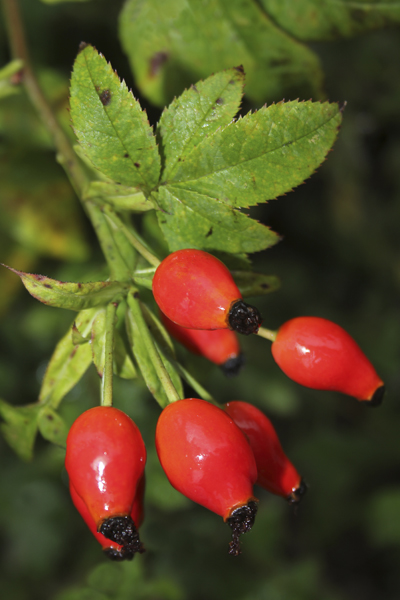
Autumn fruits and berries covered the hedgerows and trees with Bramble Rubus fruticosus, Japanese Rose Rosa rugosa, Dog-rose Rosa canina, Blackthorn a.k.a. Sloe Prunus spinosa, Wild Plum Prunus domestica, Crab Apple Malus sylvestris, Rowan Sorbus aucuparia, Elder Sambucus nigra and Guelder-rose Viburnum opulus. A few members nibbled on some of the edible fruits along their walk.
MNA Fairburn Ings Redshank1

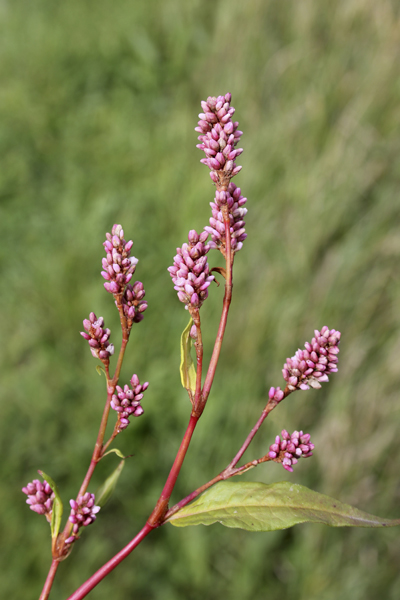
Redshank

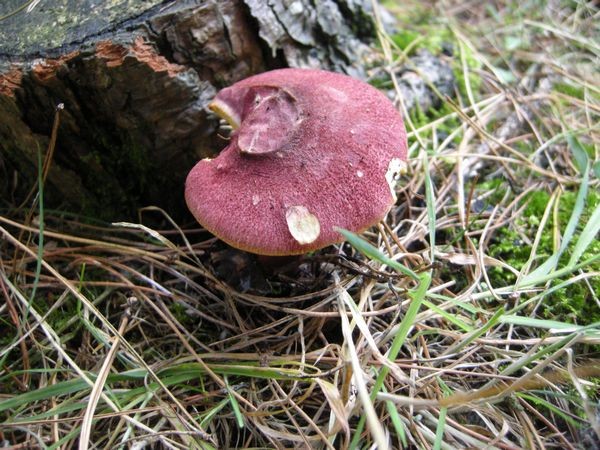
Plants included Common Nettle Urtica dioica, Red Campion Silene dioica, Common Bistort Persicaria bistorta, Redshank Persicaria maculosa, Common Sorrel Rumex acetosa, Meadowsweet Filipendula ulmaria, Common Bird’s-foot-trefoil Lotus corniculatus, Tufted Vetch Vicia cracca, Purple-loosestrife Lythrum salicaria, Dyer’s Greenweed Genista tinctoria, Giant Hogweed Heracleum mantegazzianum, Common Centaury Centaurium erythraea, Hedge Bindweed Calystegia sepium, Marsh Woundwort Stachys palustris, White Dead-nettle Lamium album, Selfheal Prunella vulgaris, Water Mint Mentha aquatica, Red Bartsia Odontites vernus, Wild Teasel Dipsacus fullonum, Greater Burdock Arctium lappa, Marsh Thistle Cirsium palustre, Michaelmas Daisy Aster sp. Tansy Tanacetum vulgare, Yarrow Achillea millefolium and Lords-and-Ladies Arum maculatum. A few fungi were noted Brown Birch Bolete Leccinum scabrum and Field Mushroom Agaricus campestris.

We eventually arrived at the Lin Dike Hide overlooking Spoonbill Flash. Mute Swan, Shelduck, Gadwall, Teal, Mallard, Northern Shoveler, Moorhen, Coot, Northern Lapwing, Dunlin 3, Ruff 3 , Curlew – heard, Pied Wagtail, Carrion Crow, Starling and a splendid female Marsh Harrier.

The trail then took us out onto Newton Lane and back towards the visitor centre scanning new Flash, The Moat and Phalarope Pool en route for Wildfowl and noting Greylag and Canada Geese, well grown Mute Swan cygnets, another 35 Gadwall and House Martins along with the odd Sand Martin hovering up insects for their forthcoming migration.

We arrived again at the visitor centre where caught up with other members sightings which included a Carrion Crow attacking a Sparrowhawk and a female Southern Hawker Aeshna cyanaea. An enjoyable day with a group total of over forty bird species.

A wide photographic selection of birds, marine life, insects, mammals, orchids & wildflowers, fungi, tribal people, travel, ethnography, fossils, rocks & minerals etc. is available on my Alamy webpage

If you are interested in the wildlife of the North-west of England and would like to join the  walks and coach trips run by the Merseyside Naturalists’ Association, see the main MNA website for details of our programme and how to join us.
Posted in MNA reports | Comments Off on MNA Coach Trip Fairburn Ings 1st September 2013

Ghana August 2013

MNA Ghana Elephant1

African Bush Elephant Loxodonta africana

I’ve recently returned from a two week jaunt around Ghana in West Africa. There were many cultural highlights such as Bolgatanga – Lobi Villages and the distinctive local architecture and painted houses in the Wa region, Kumasi -with the vibrant colours of the largest market in West Africa and Gold Coast Castles -the impressive 18th Century castle of Elmina, a UNESCO World Heritage Site. We did manage to pack in lots of wildlife viewing as well visiting the lush rainforest and canopy walkway of Kakum N.P. an exciting foot safari in Mole N.P. to view Elephants, Boabeng-Fiema Monkey Sanctuary and the sacred Crocodile ponds at Paga.

MNA Ghana Warthog1

Warthog Phacochoerus africanus

MNA Ghana Baboon1

Olive Baboon Papio anubis

MNA Ghana Mona Monkey1

Campbell’s Mona Monkey Cercopithecus campbelli

MNA Ghana Crocodile1

Nile Crocodile Crocodylus niloticus

MNA Ghana Grasscutter1

‘Grasscutter’ the favourite Ghanaian Bushmeat – Greater Cane Rat Thryonomys swinderianus

MNA Ghana Bug2

Bug

MNA Ghana Bug3

Bug

MNA Ghana Butterfly1

Butterfly – White-barred Acraea Acraea encedon

MNA Ghana Dragonfly1

Dragonfly -Violet Dropwing male Trithemis annulata

MNA Ghana Dragonfly3

Dragonfly – Black Percher female Diplacodes lefebvrii

MNA Ghana Dragonfly4

Dragonfly – St. Lucia Widow male Palpopleura lucia

MNA Ghana Dragonfly6

Dragonfly – Portia Widow female Palpopleura portia

MNA Ghana Dragonfly5

Dragonfly – Northern Banded Groundling male Brachythemis impartita

MNA Ghana Grasshopper1

Grasshopper

MNA Ghana Grasshopper3

Grasshopper

MNA Ghana Lizard1

Red-headed Rock Agama Male Agama agama 

MNA Ghana Skink1

Five-lined Mabuya a.k.a. Rainbow Skink Trachylepis quinquetaeniata

MNA Ghana Millipede1

Ghana Red Banded Millipede Pelmatojulus excisus

MNA Ghana Lake Fish1

Fish caught from Lake Bosumtwi including the endemic Cichlid Hemichromis frempongi and the near-endemic cichlid Tilapia busumana

MNA Ghana Hermit Crab1

Dead Hermit Crab

A wide photographic selection of birds, marine life, insects, mammals, orchids & wildflowers, fungi, tribal people, travel, ethnography, fossils, rocks & minerals etc. is available on my Alamy webpage

If you are interested in the wildlife of the North-west of England and would like to join the  walks and coach trips run by the Merseyside Naturalists’ Association, see the main MNA website for details of our programme and how to join us.
Posted in MNA reports | Comments Off on Ghana August 2013

Speke Garston Coastal Reserve, 25th August 2013

We met at Liverpool ONE bus station and took the 80A bus to Blackburne Street / Banks Way, on the edge of the Liverpool International Business Park. A path leads into the Speke Garston Coastal Reserve, an area of reeds and wild flowers along the estuary, with views over the mud flats and sandbanks to Stanlow.

32 Speke view

Along the path down to the riverside we saw a Common Blue, then four white butterflies all clustered together in a thicket of Vetch. We realised that two of them were caught in a spider’s web and were struggling to escape. The other two had been attracted to their frantic fluttering. We got a stick and poked around them until they came free. One sat on the leaves, exhausted, but the other flew off. John complained that we’d done some poor spider out of its dinner!  On this picture of the two trapped butterflies you can see that one was a Green-veined White, but the other was struggling too hard to be identified.

32 Speke butterflies

Birds on the mudflats included Herring Gulls, Greater and Lesser Black-backed Gulls, Black-headed Gulls, Curlews, Heron and Shelduck. As a plane came over, about 50 Goldfinches flew up from the dry grass, wildflowers and thistles. The blackberries are ripening well.

31 Speke blackberries

The sun came out as we approached the BM warehouse on the curve of Garston Shore Road. There is a little linear park, following the line of a small stream and leading to the old airport building.

31 Speke airport vista

The damp depressions had various collections of wildflowers, probably deliberately sown, because we spotted Yellow Rattle in amongst them. Reed mace, Purple Loostrife, Meadow Sweet, Great Willow Herb, Bird’s Foot Trefoil, Vetch, Red Clover, Corn Marigold.

32 Speke wildflower gully

We had our lunch there, then we walked back along the path through the “burial mounds” to where there is a pair of “amphitheatres” each with four radial mounds with a detached lump in the middle. Now I look at it on the aerial photo I realise they are meant to be propellors!  They are at the top centre of the picture.

32 Speke aerial view

The new roads around there are part of the Business Park and are lined with mysterious white hi-tech factory buildings. The roads are all named after British aeoplanes – Dakota, De Haviland and so on. Hurricane Drive has a long pond at the north end of the central reservation and several fishermen were on the banks. One told me it had been stocked with Roach and Carp.

32 Speke pond

The planting along the roadside is wonderful, mostly of native shrubs like Hawthorn, Hazel and Crab Apple, interspersed with various cultivars of Dog Rose.

32 Speke dog rose

We ended up at Dobbies Garden Centre, where the loos are remarkable for their inventive porcelain. Here is one of the wash basins in the ladies, and the men said the facilities in the Gents were just as entertaining.

32 Speke botanical basin


Posted in Sunday Group | Comments Off on Speke Garston Coastal Reserve, 25th August 2013

Orrell Water Park, 18th August 2013

It was a cloudy and blustery day, but sunshine was expected. Our first bird of the day was a young Herring Gull in Queen Square Bus Station, probably not long out of its nest. It was calling and begging to an adult perched on top of one of the bus shelters, but when the adult flew off, the chick stood amongst all the passers-by, looking lost and calling for its Mum.

31 Orrell HG chick

It’s a long journey to Orrell Water Park, starting with the number 10 bus at 10.20, then changing at St Helens Bus Station to the 352. We didn’t get there until nearly noon, but the place is worth an occasional visit.

31 Orrell view

The Park was set up in the 1980s, when three ponds were dug. The largest is a commercial fishing lake, stocked with Carp, Bream, Perch, Roach, Tench and Gudgeon, and costing the fishermen £5 a ticket. The rest is a Local Nature Reserve called Greenslate Water Meadows. The sign claims it has thirteen species of dragonflies and damsel flies (but we didn’t see any), water voles, four amphibians and nineteen species of butterfly. The notice board also had a Mink Warning sign. They are widespread around Wigan and numbers were found to be rising in 2012. People are urged to report any sightings to the website of Leigh Ornithological Society.

31 Orrell large white
Large White butterfly

There weren’t many birds on the lake, although a family of Coots had five well-grown chicks. A few Mallards were loafing around. There were plenty of signs of autumn, though. The Rowan berries have turned red in the last week and the blackberries are ripening. Amongst the ornamental shrubs were many cultivated varieties of Dog Rose, some with very alarming-looking fruits.

31 Orrell rose hips

Many of the paths are lined with Himalayan Balsam. I know it’s supposed to be a bad thing, but at this time of year it’s full of insects. Here’s a Red-tailed Bumble Bee which has crawled right to the bottom of a flower to get at the nectar.

31 Orrell bumble bee in HB

The Friends of Greenslate Water Meadows (who charmingly call themselves FROG) provide a bird feeding area. Visitors included Long-tailed Tits, Blue Tits, Greenfinches, Chaffinches, a Robin and some Siskins. We were more interested in the marauding Grey Squrrel who was raiding a peanut cage on the left of the bird table, and hanging upside down at its leisure to nibble each stolen nut.

31 Orrell hanging squirrel

Flowers included this lovely Purple Loostrife.

31 Orrell purple loostrife


On the way out we spotted a Speckled Wood on a Guelder Rose with ripening berries.

31 Orrell speckled wood

Getting home takes longer than usual, too. The 2.35 bus got us back to Liverpool via St Helens after 4.30.

Posted in Sunday Group | Comments Off on Orrell Water Park, 18th August 2013

Formby Squirrel Reserve, Saturday 17th August 2013

(Report from John Clegg)  A dull morning and a very bad weather forecast may have caused the very poor turnout for this meeting, with only two members attending. However, the rain stayed off and we were rewarded with a number of very close views of Red Squirrels at the feeding stations and running around in the trees. One of the Squirrels was almost black.

A number of Tit flocks were seen, including Blue- Great- and Coal Tits. Other birds included Jay, Carrion Crow, Goldfinch, Wood Pigeon, Lesser Black-backed Gull, Magpie and, on returning to the warden’s hut, Chaffinch and Dunnock.

One Gatekeeper butterfly was seen near the end of the walk, just before the rain arrived.

Posted in MNA reports | Comments Off on Formby Squirrel Reserve, Saturday 17th August 2013

Bidston, 11th August 2013

On a cloudy day with a threat of showers we took the 437 West Kirby bus to Bidston, arriving at  Upton Road / Boundary Road by 10.30, then setting off along the footpath called King George’s Way, which climbs through a small woodland.

30 Bidston woods

Frustratingly, in a clearing we could hear a bird of prey although we couldn’t see it, but when we broke out into the open gorse and sandstone, there it was, a Buzzard right over our heads.
There has been some strategic clearing of the taller trees, so that there are splendid viewpoints. Once, there must have been views in all directions. The trig point is marked with angles and distances to an enormous number of other high points, including Snaefell on the Isle of Man, 83 miles away. At one spot you can see the Liverpool waterfront in one direction and Anglesey the other way, but the gap in the trees isn’t quite wide enough to see two lighthouses at the same time, Leasowe and Point of Air.
30 Bidston view

After taking shelter under some trees from a heavy shower we passed the Observatory, went around the hill and came back up to the Windmill.

30 Bidston windmill

There were still plenty of butterflies about. We saw a Speckled Wood, a Peacock, a Gatekeeper and a Small Copper.

30 Bidston gatekeeper
Gatekeeper

Several areas of Gorse had been burnt, but new growth was shooting out from below ground.

30 Bidston burnt gorse

30 Bidston gorse regrowing

We went into Tam O’Shanter urban farm for lunch, where we bumped into our old friend Bob Hughes, who has an allotment nearby and who was taking two huge turnips and a cabbage to the farm.  He said he’d seen 20 species of butterfly on his allotment this year, most recently including Purple Hairstreak and White-letter Hairstreak.  After lunch he walked with us through Flaybrick Cemetery, pointing out some trees of note. A small Giant Redwood, a Red Oak and a Gingko.

30 Bidston red oak
Red Oak

30 Bidston Gingko
Ginkgo

There are two magnificent Cut-leaved Beeches flanking the entrance. Bob told us a car had been burnt out under one of them, and where the tree was damaged it is re-growing with normal Beech leaves. So what makes the tree revert to “normal” leaves? A virus infection which was somehow cleared by the burning? Or did it mess up the genetics in just that area?

30 Bidston cut leaved beech


[Added 16th August: Collins Field Guide to the Trees of Britain by Alan Mitchell has the answer. It says “Where branches are cut or damaged, ordinary entire leaves will appear, with leaves of intermediate shapes, because the plant is a chimera with inner tissues of ordinary Beech overlaid by tissues of the Cut-leaf form. ]

Then we walked along to Birkenhead Park and admired the juxtaposition of clumps of Copper Beech and Weeping Willow in the parkland.

30 Bidston parkland

The Wirral Flower Show was in full swing, and we browsed the competition entries. Here is a wonderful plate of soft fruit, looking like a perfection of autumn bounty. Surprisingly, it only won second prize.  The winner was a plate of plums which didn’t look as pretty but must have tasted wonderful!

30 Bidston summer fruit


Posted in Sunday Group | Comments Off on Bidston, 11th August 2013

Delamere, 3rd August 2013

Five MNA members met at James Street, we were joined by three more at Chester station, and when we arrived at the Delamere Visitors’ Centre car park, eight members of the Liverpool Botanical Society (LBS) were waiting for us. They do their programme later than we do, and they had chosen it as a joint meeting.  It was a sunny day, not too hot and with a gentle breeze, and the enormous dragonfly wood carving in the car park added to the promise of many dragonflies today.

29 Delemere wood carving

But it was butterflies that caught our attention first, with a Large Whites and a Gatekeeper near the start, then a Holly Blue, which flew from some nettles to the path. A Ranger’s 4WD vehicle came by just then and we stopped it until we had shooed the Holly Blue out of its way.

29 Delamere Holly Blue

Near the Black Lake there was a large patch of Burdock, which was alive with butterflies. Several Peacocks and Whites, a Comma, two Brimstone and a Green-veined White.

29 Delamere Brimstone
Brimstone

There was a colony of mining bees of the genus Andrena on a south-facing sandy bank.

29 Delemere mining bees

We stopped near some mixed pine and deciduous trees to listen to the birdsong. We heard Blackcap, Chaffinch and Nuthatch, then a small flock of Crossbills going over. Delamere is a good spot for them. Other birds spotted during the day included Blue Tit, Long-tailed Tit, Coal Tit, Treecreeper, three Jays, and a House Martin. Near the Black Lake some of us spotted Crossbills on the far side, and at Blakemere there were Canada Geese, Black-headed Gulls, Lapwings and a Moorhen.

29 Delemere Black Lake

The Black Lake is a glacial kettlehole, with a warning sign that it is 5m (15 feet) deep. Much of the surface is covered by a floating mat of vegetation. We lunched there, watching the dragonflies and damselflies. There were mating pairs of Black Darters, with black males and orange females, ovipositing near the edge of the rushes.  Emperor Dragonfly, Brown Hawker, Migrant Hawker and some saw a Southern Hawker earlier, over a stream by the side of the path. Damselflies included Common Blue, Blue-tailed and Emerald, pictured below.

29 Delemere Emerald damselfly

Joyce Jarvis of the LBS was investigating the undersides of the leaves of a Pedunculate Oak on the lakeside. She found several spiky white objects which she first thought were galls. Then she noticed each one was accompanied by a tiny beige spider. The spiders seemed to be obsessed with the spiky objects, and we guessed that they must have been their egg-cases. The picture below shows the only spider we found with two treasures, all the others had just one. The spider is 2-3 mm across while the larger of the two objects is 4-5 mm to the tip of the topmost spike.

29 Delemere spider and treasures


[Added 17th August.  It appears to be a comb-footed spider with the Latin name Theridion pallens. Here are some pictures from the Encyclopaedia of Life (EOL) and here is the entry for the genus Theridion at the National Biodiversity Network (NBN).]

Blossoming Spear Thistle had a lovely Marmalade Hoverfly.

29 Delemere marmalade hoverfly

The botanists also enjoyed their day, and noted Wild Raspberry, Skull-cap (Scutellaria), Enchanter’s Nightshade and Broad-leafed Helleborine.

29 Delamere Enchanters Nightshade
Enchanter’s Nightshade

People were enjoying other outdoor pursuits in the Forest. We watched people using the nets and zipwires at the GoApe centre, but were dismayed to discover it was £30 a go! Others were zooming along the paths on Segways.

29 Delamere Segways

We didn’t get back to the station in time for the 3.30 train, but that meant we had time for an ice cream before the next one at 4.30.

29 Delamere station

Readers interested in the wildlife of the North-west of England and who would like to join the walks and coach trips run by the Merseyside Naturalists’ Association, should see the main MNA website for details of our programme and how to join us.
 

Posted in MNA reports | Comments Off on Delamere, 3rd August 2013

New Brighton, 28th July 2013

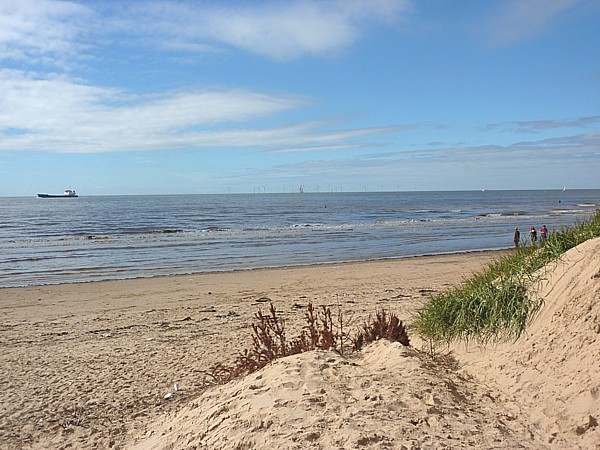
Another warm day, but overcast and humid, with the threat of thundery showers.  We took the 433 bus from Sir Thomas Street, and arrived in New Brighton at 10.45.
28 New Brighton Marine Lake

There was very little wildlife interest today. Around the Marine Lake there were lots of young Herring Gulls and plenty of pigeons enjoying the sunshine. As we walked west along the Prom (King’s Parade) we saw Herring, Black-headed and Lesser Black-backed gulls on the sand, and some House Martins coming down for mud from the sides of gullys. Were they building for a late brood? Further along there were dozens of Oystercatchers foraging, and later we saw two Terns over the river, probably Common Terns.  But we enjoyed the finely detailed model ships being put throught their paces by the Wallasey Model Boat Society at the Boating lake, and the 7 meter tall Pierrot sculpture on the roundabout near King’s Parade Gardens.

28 New Brighton Pierrot

Lunch was on the seats against the prom wall. A brisk breeze heralded a short shower, but it was soon over.  The walkway here is always scattered with broken cockleshells. The clever Carrion Crows drop the cockles here to break them open, but we have never seen a gull doing it. Howard found a discarded fishing weight with a hook and strong spikes, which he gathered up and binned.

28 New Brighton fishing tackle

There was an open-top red bus giving free rides back along the prom from the Lifeguard Station to the Floral Pavilion. Outside the theatre the Co-op has put up its touring street gallery of photographs, showing examples of co-operation in their business and the natural world, which celebrated the UN International Year of Cooperatives.

28 New Brighton coop gallery

Then we loitered on the railings, watching the container ship MSC Sandra, bearing about 1000 containers, come in on the tide. Three tugs were manoevering her into Gladstone Dock.

28 New Brighton MSC Sandra

There was another brief shower as we headed for the 433 back to Liverpool at 2.15.

Posted in Sunday Group | Comments Off on New Brighton, 28th July 2013

Canal 5, Lydiate to Downholland, 21st July 2013

It was an overcast day, noticeably cooler, with a brisk breeze. Only a short leg today, not much more than a mile, which would have been very welcome if it had been as hot as it was earlier in the week. The 300 bus dropped us at Our Lady’s Church at Lydiate and we walked along Hall Lane again, to Jackson’s Bridge and the canal, enjoying the sight of a young Swallow begging for food from a telegraph wire. House Sparrows were chirping, Starlings were congregating on TV aerials, but the House Martin’s nests at Barn Hey looked deserted. The sheep in the field to the south of Hall Lane were surrounded by a circle of chopped turnips – I imagine the grass has stopped growing in the prolonged dry spell and the growing lambs need extra food.

27 Canal 5 flowers

The canal edge was full of Greater Willow Herb and Meadow Sweet, although the path itself looked like it had been treated with herbicide. Here’s a Small Tortoiseshell on the dead grass, which may not be doing it any good! There was a dead fish in the water nearby.

27 Canal 5 small tortoiseshell

27 Canal 5 dead fish
Just north of Jackson’s Bridge the canal crosses a small stream, which is the boundary between Merseyside (Sefton) and West Lancashire. It rises near Skelmersdale as the Bickerstaffe Brook, is called Sudell Brook where the canal crosses it and it’s Lydiate Brook further west, eventually flowing into the Alt.

We lunched on the canal bank near Rimmer’s Bridge. Two Black-headed gulls kept circling, appearing to hover over a spot on the canal edge, then flying back around again. Were they hoping for food from us? Was there something in the water they were interested in? We couldn’t see anything.  Away on the other side we thought we had spotted two huge birds of prey, but they turned out to be two tethered black canvas kites, soaring over a farmer’s crops, presumably as bird scarers.

27 Canal 5 black kites

There were very few Mallards about, and we saw only one each of Coot and Moorhen all day. Perhaps they were all sheltering in the shade of the reeds. But near Rimmer’s Bridge a mother duck was out and about with seven well-grown ducklings.

27 Canal 5 bridge and ducklings

The fields of wheat and oats were ripening on either side of the canal, and a Kestrel hovered overhead. Further along we noted another dead fish, about a foot long. Its head was down, so it was hard to tell what it was, but it could even have been a Pike. In a tree on the bank on our side there was prolonged loud scratchy birdsong coming from a thick tree. We were right under it, no more than a few feet away from the source of the song, but the bird itself was completely invisible. A Whitethroat? I though they put themselves on show when they were singing.  On the other side, a different loud raspy song was coming from the reeds. That was definitely a Reed Warbler.

Near Downholland Bridge there is another relic of WWII, a fortified barn, now used only by Swallows.

27 Canal 5 fortified barn

Alongside the barn, partly hidden in a tree, was an extraordinary “sculpture”. A wooden carving of a pair of male hips, wearing old fashioned thigh-length underpants, and clearly in an uncovered state of excitement. What joker has put THAT there? There was time for a swift drink and a comfort stop in the Scarisbrick Arms before we caught the 2.21 bus home.

Posted in Sunday Group | Comments Off on Canal 5, Lydiate to Downholland, 21st July 2013

Carr Mill Dam, Sunday 14th July 2013

From Tony Carter

On Sunday 14th I led a small group on a fungi foray at Carr Mill. Not the best time for fungi but we chose this site because the ditches running alongside the paths are usually flooded during the winter.  It proved to be a good choice because the ground was still damp and boggy despite the recent blistering heat.

Most of the fungi we found were tiny specimens under wet logs and branches, for the specialists rather than of general interest. We did find some larger fungi such as Russula parazurea (Powdery Brittlegill), Polyporus tuberaster (Tuberous Polypore) and Conocybe rugosa (Conecap) but not many.

The most interesting finds were of Mycoacia uda, an uncommon, toothed crust fungus and Eutypella scoparia, a Woodwart with spiny outgrowths.

Carr Mill Mycoacia

Mycoacia uda

Carr Mill Eutypella scoparia
Eutypella scoparia

We found a total forty three species which is very good for this time of year.

Last month a small fungus was found on an old piece of bamboo cane at Allerton Allotments. It was sent to Kew Herbarium who identified it as Astrosphaeriella stellata, an Asian fungus which is new to the United Kingdom. Not much to look at but beauty is in the eye of the beholder.

Carr Mill Astrosphaeriella stellata
Astrosphaeriella stellata

Posted in MNA reports | Comments Off on Carr Mill Dam, Sunday 14th July 2013