Wigan Flashes 5th March 2011

Thirteen MNA members met at Wigan Pier before heading along the Leeds – Liverpool canal. A Robin was perched on a metal fence paying us no attention whatsoever as we walked past it. We were dismayed to see a large amount of rubbish both in the water and along the canal banks. A male Bullfinch softly ‘pheuuing’caught my attention along with a few Great Tits and a Long-tailed Tit. On Pearson’s Flash were the usual gathering of Coot, Tufties 60+, Goldeneye I counted 9 males and 14 females but they were regularly diving so I may have missed a couple, a few Teal hiding out on the reed edge and a sign of Spring on the way with a pair of Great Crested Grebes indulging in their courtship display with symmetrical head waggling. A few Buff-tailed Bumble Bee Bombus terrestris queens were flying low to the ground. The young fertilised queens survive the Winter hibernating in a hole or under moss.

Scotsman’s Flash was quiet with one of the Coots practising his threat posture ready for seeing off rivals in the mating season, a few Canada Geese, large flock of Black-headed Gulls 120+ some of which were already in summer plumage with their chocolate heads, a few Herring and Lesser Black Backed Gulls and an obliging Common Gull that perched on a buoy allowing some of the newer members to check out its identification features. We wandered down through the reedbed at the south west end of Scotsman’s Flash and into the woodland. Good selection of Tits with Blue, Great, Coal and Willow. Goldfinch were twittering away and a male Siskin was hiding at the back of one of the feeders at the feeding station. We continued round to our usual picnic spot at Ochre Flash, clearly ‘the place to be’ for the local delinquents with a tent, various flysheets, beer cans, discarded pieces of pizza and other rubbish strewn about.  

mna-wigan-flashes-debris.jpg

A pair of Mute Swans –  the resident male is fitted with a blue darvic ring FAL, another pair of Great Crested Grebes and a few Teal were keeping to the reed edge. A flock of Fieldfare 22+ were silhouetted in a tree at the back of the flash and a Grey Heron flew in shortly before we continued.

We stopped to overlook the top pool at Bryn Marsh where a couple of pairs of Gadwall were mooching. A Kestrel was hovering over the marsh later landing on one of the electricity pylons and a few of us latched onto a distant Buzzard. A lady walking her Jack Russell was kindly doing a bird seed drop on top of the fence posts. We stopped and watched as the track became alive with small birds taking advantage of the food. A Willow Tit gave great views allowing us to see the pale wing patch along with a Prune (Dunnock to the uninitiated ;), Blackbird, Chaffinch, a Jay plus numerous Blue and Great Tits. At the bottom end of Bryn Flash we watched more Gadwall and Great Crested Grebes plus some Pochard, 3 males and 1 female. We found the newly emerged yellow flower spikes of Coltsfoot Tussilago farfara that has been used historically as a medicinal plant to treat lung ailments.

Fungi finds were disappointing, only Turkey Tail, Birch Polypore and some rather past-it Velvet Shank. I did find a nice collection of Pixie-cup Lichen Cladonia fimbriata on top of a fence post.

mna-wigan-pixie-cup-lichen1.jpg

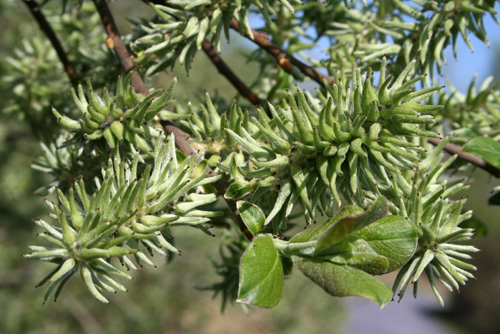
We crossed over the stone bridge and everyone checked out the erupting catkins. Fluffy Goat Willow catkins were joined by Alder – allowing us to distinguish between the small rounded female and long male catkins and last year’s female woody cones. Further along at Pearson’s Flash we made a grim discovery; a Mute Swan cygnet was lying dead on the bank. It was un-ringed and had no obvious sign of injury. Quite touchingly a few other cygnets including blue darvic YF4 and an adult Swan were floating on the water close to the dead bird obviously concerned that it wasn’t moving. Nearby on the bank was a dead Black-headed Gull, again appearing uninjured and un-ringed. Dave Bryant later called the warden Mark Champion who was aware of the dead Swan which is to be sent for tests. Some MNA members are already aware of the Mute Swan deaths at Southport Marine Lake, apparently Swans from Pennington Flash and Three Sisters are also being taken into the RSPCA facility at Stapeley Grange for treatment of the mystery infection.

mna-wigan-dead-swan2.jpg

mna-wigan-dead-bhg1.jpg

We continued into the wood where we checked out the orange rust coloured filamentous terrestrial alga Trentepohlia aurea that was covering a number of tree trunks. The typical green chlorophyll colour is masked by large amounts of carotenoid pigments.

mna-trentepohlia.jpg

Also examined the Dog Lichen, a species I have previously had confirmed as Peltigera hymenina – it is very common and some had the raised, curled, digitate lobe tips i.e. red-brown “fruiting” structures, or apothecia present.

mna-wigan-peltigera1.jpg

We were all too quickly back to civilisation…

Posted in MNA reports | 1 Comment

“Liverpool Discovers” 6th Mar 2011

We walked around Liverpool City Centre today, following the “Liverpool Discovers” public art project trail.  As there was no nature or wildlife content at all, that’s all I’ll be saying!

Posted in Sunday Group | 1 Comment

Beddmanarch Bay, Anglesey 1/3/2011

Calm weather with blue skies were forecast and so I took the train to Holyhead and made my way to Penrhos Coastal Park which is close to the causeway carrying the railway and A55. The tide was out, the remaining water was like glass, the light was excellent after so much gloom and it was quite warm. The immediate centre of attraction were the numerous Pale-bellied Brent Geese scattered along the tide line – 96 of them. Busy feeding amongst them were good numbers of Shelduck, Oystercatchers, Redshank and Curlew with the occasional Grey Plover. Downstream towards the headland of Gorsedd-y-penrhyn were the usual pair of Slavonian Grebes – cruising about and then busy diving – all at very close range. Nearby was male Red-breasted Merganser.
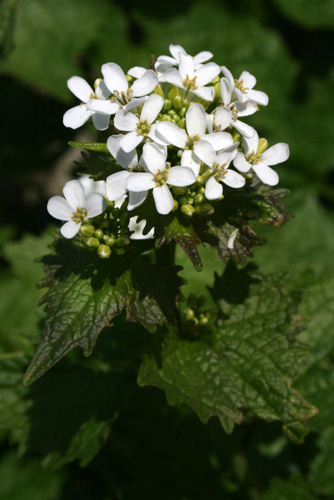
In the wooded area a Coal Tit and Dunnock were singing as were several Chaffinches, Greenfinches and Great Tits. Strolling along the paths I came across flowering Fumitory, Lesser Celandine, Winter Heliotrope and a great sheet of white Violets, something I haven’t seen previously. It was so warm that a Buff-tailed Bumble was very active, later to be accompanied by a Peacock butterfly.

Posted in MNA reports | 1 Comment

Two Parks 27th February 2011

The bad news this morning was that the Liverpool Ranger Service will soon be cutting its staff down to just two Rangers. Richie Baker has already retired and Ranger Ronnie’s last day was 28th February. We decided to support them by attending two Ranger Walks – “Tree Identification” in Newsham Park in the morning and “Great Victorians” in Sefton Park in the afternoon.

We took the number 12 bus at 10.18 to Newsham Park and met Ranger Paul opposite the Police Station at 11am. The rain showers didn’t last long, but it was overcast with a cold wind.  However, the daffodils were nearly out and the beds of white and purple crocuses were splendid. The turnout for the walk was fairly poor – just the eight of us and two others. Paul showed us how to use bark and buds to identify Beech, Hawthorn, Willow, Cherry, Lime, Horse Chestnut, Ash and Silver Birch.
newsham-park-willow.jpg
We just caught a 168 bus at five past twelve, and we were at the Aviary in Sefton Park to eat our lunches at the exceptionally late hour of 1pm !

sefton-park-old-aviary.jpg

No, that’s not us – THIS is us.

sefton-park-lunch.jpg

Happily the sun was starting to come out, and some of the early shrubs were in bloom. This is probably Viburnum x bodnantense.

sefton-park-viburnum.jpg

The Feral Pigeons were courting energetically and a Grey Squirrel peeped at us from the shrubbery.

sefton-park-squirrel.jpg

It was a far better turnout for the afternoon walk, with about 30 people altogether.  Ranger Paul walked us around the Eros Fountain, (the Shaftsbury Memorial Fountain), the Bandstand, the statue of William Rathbone, the Palm House, the Peter Pan statue and the Obelisk. A fine picture gallery of the park and its monuments can be seen on the Allerton Oak / merseySights webpage.
We were particularly impressed with the avenue of crocuses along the North-West Avenue to the Obelisk.

sefton-park-crocus-walk.jpg

I  have e-mailed Liverpool Council expressing the Sunday Group’s disappointment that they are cutting down the Ranger Service so savagely.

rangers-paul-and-ronnie.jpg

Rangers Paul and Ronnie

Posted in Sunday Group | 1 Comment

Owl Pellet

I dissected the Owl Pellet that I found and showed to a few MNA members on our coach trip to Carsington Water. The pellet matched the description of a Barn Owl pellet in the RSPB leaflet “Owl Pellets – How To Study Their Contents” http://www.rspb.org.uk/Images/Owlpellets_tcm9-133500.pdf

“They can be quite large (30-70mm long), smooth and rounded. They are characteristically black in appearance (regardless of the colour of the prey it has eaten) often with a varnish-like gloss when fresh. They are very solid pellets, with the material highly compressed.”

I soaked the pellet in a Petri Dish of warm water and gently teased the pellet apart using forceps. I immediately found three skulls and a multitude of other bones. I rinsed the bones in another petri dish of water before laying them on tissue to dry. After finally prising all the bones free I washed the fur and dried this in a laboratory oven at 50 °C. The bones still looked rather dirty so to clean them further I soaked them in a 13% Sodium Hypochlorite solution (essentially Bleach) for 30min before rinsing again a couple of times in water. 

mna-owl-pellet-bones1.jpg

The bones were all from Voles and using information on Vole teeth structure from the RSPB leaflet I was able to distinguish them to be Field Voles (a.k.a. Short-tailed Voles) Microtus agrestis then rearrange the bones to show a typical Vole skeleton.

mna-owl-pellet-skeleton1.jpg

Posted in MNA reports | 3 Comments

Parkgate High Tide 20th February 2011

Today was the highest tide of the year at Parkgate – 10.2 meters. The Sunday Group took the 487 from Victoria Street at 10.30 and arrived about 11.30. High Tide was due at about 12.30 and the water was high, filling the channels in the marsh but not lapping at the sea wall. Birdwatchers and naturalists from all over the North West had turned out in force and the RSPB had a tent. The quayside and parking area were busier than I have ever seen them, and we bumped into several MNA members during the day. The local coastguard even sent their “Mud Rescue” vehicle !

parkgate-rspb-tent.jpg

parkgate-rspb-board.jpg

It was overcast, with gusts of bitterly cold wind in exposed places. We had good views of a Heron and a Little Egret close in, lots of Pink-footed Geese coming up, Mallards, a Cormorant, a couple of Greater Black-backed Gulls, Canada Geese, Carrion Crows and Skylarks. In the trees by the car park a Dunnock was singing. Then a Short-eared Owl flew past quite close, occasionally turning and hovering briefly as it scanned the marshes for small prey. Terry Williams was one of the people with telescopes at the sea wall and told us he had seen several Peregrines and also a Greater Black-backed Gull drowning a Water Rail then eating it !

After lunch, as the crowds began to thin, we walked north towards the Golf Course. Here the water WAS up to the sea wall and crows were poking about on the dryer islands, hoping to find an easy meal. 

parkgate-high-water.jpg

We saw several little beasties swimming desperately, hiding on the wall and climbing onto bits of wood. One was probably a vole, which hid before we could get a good look at it, but we saw a tiny Harvest Mouse which took refuge on an old log.  Sorry this is a bit blurred, but it’s the best my camera can do !

parkgate-harvest-mouse.jpg

It was bitterly cold across the Golf Course, when we turned back to Parkgate it was more sheltered along the Wirral Way. Catkins of Pussy Willow and Hazel were out, and we saw a Great Spotted Woodpecker in a tree.  After a cuppa in the café we got the 3.30 bus back to Liverpool.

Posted in Sunday Group | 2 Comments

Carsington Water 19th Feb 2011

The first MNA coach trip of 2011 brought a return to snowy wintery conditions as we headed through the Derbyshire countryside to the Severn Trent Water Reservoir – Carsington Water.

mna-carsington-water-winter1.jpg

A feeding station close to the coach was packed with over thirty hungry Tree Sparrows and a few Bullfinch. The group wandered along to the wildlife centre, a glass window hide giving great views across the reservoir and surrounding fields and spit. As we tucked into sandwiches and flasks of hot drinks we watched the gathered wildfowl of Tufties, Wigeon, Teal, Coot, Mallard and Great crested Grebe. Approaching 300 Lapwing were resting on the spit frequently taking off and wheeling around. Other waders included a few Oyks and a Redshank; a few Pied Wagtails were flitting along the water’s edge. A large gathering of 120+ Fieldfare were feeding in one field joined by a Mistle Thrush and a few Woodpigeons. The feeders had yet more Tree Sparrows, Chaffinches and the odd Dunnock and Great Tit.

Dave B mentioned that he had seen the Yellow Brain Fungus Tremella mesenterica close to the centre so I changed lens, zipped up my waterproofs and returned to photograph it.

mna-carsington-yellow-jelly-fungi1.jpg

A well marked trail used by walkers and cyclists runs around the reservoir and information posts are located at various stages along the route.

mna-carsington-info1.jpg

I found a pellet beside a fence post along the trail. I pointed it out to some other group members and we all assume it to be from an owl. I brought the pellet back with me and will dissect it in due course.

mna-buzzard-pellet1.jpg

Despite the wintery conditions there were a few signs of spring with a mass of male Hazel catkins Corylus avellana and the bright red female flowers.

mna-hazel-catkins1.jpg

A few interesting lichen with the bushy clumps of a strap lichen Evernia prunastri more commonly called Oak Moss and the elephant trunk-like podentia of Cladonia coniocrea.

mna-carsington-evernia-prunastri1.jpg

mna-elephant-trunk-cladonia1.jpg

Scanning the reservoir through the mist we had our first distant views of one of the Great Northern Divers that had been on the reservoir all winter. We hot hoofed along to Lane End bird hide and parked our bums. After a few minutes we re-located the bird, its heavy horizontally held beak, steep crown and flat forehead clearly visible, even in the mist! As the bird slipped under the water without even a splash we timed a number of its dives which ranged from between 1min 5sec and 1min 12sec. We soon spotted another Diver further out on the water.

Some rather cute black and white spotty sheep that some people commented more resembled goats were found to be Jacobs Sheep. A number of the group that had reached the bird hides at Sheepwash added Goldeneye and Pintail to the wildfowl list. A few of us checked out the fungi with Velvet Shank Flammulina velutipes,  Hairy Stereum Stereum hirsutum, Phlebia tremellosa, Bleeding Broadleaf Crust Stereum rugosum. Also:-

Many-zoned Polypore Trametes versicolor 

mna-carsington-trametes1.jpg

Oysterling Crepidotus sp.

mna-carsington-crepidotus1.jpg

After listening to a melodious Song Thrush singing its heart out from the top of a tree and watching masses of Great Tits, the odd Bullfinch and a Reed Bunting at one of the feeding stations it was all too quickly time to head back to the coach.

Posted in MNA reports | 1 Comment

West Kirby 13th February 2011

On a cold, drizzly and windy morning we took the 1035 train to West Kirkby and walked with rain in our faces to one of the shelters opposite the Marine Lake, and admired the view to Hilbre, the Point of Air and the Great Orme. Gulls were screaming overhead (Herring and Black-backed) and there were 40+ Shelduck on the mud banks. Two Pied Wagtails flew past. As the bad weather receded towards Chester several teams of yachts emerged to manouever around buoys, including three blue ones with hulls marked New York Yacht Club – they came a long way!

west-kirkby-yacht.jpg

After lunch we walked along the beach about half way to Red Rocks and turned back along the upper path beside the golf course. 30+ Linnets flew overhead and three Skylarks were singing.Signs of spring on the Wirral Way – snowdrops and crocuses both out. A Dunnock was singing from a high perch and we saw several Goldfinches and a Robin.

crocus-and-snowdrops-wirral-way.jpg

On Ashton Park lake we saw Canada Geese, Greylag Geese, Mallard, Coots (no leg rings), one Moorhen and three Tufted Ducks. There was a sign on the railings urging visitors not to feed bread to the birds because it is thought to cause the deformity called Angel Wing. Despite this the visitors continued with the time-honoured practice. In an attempt to reduce the use of bread, the Park café sells special duck food at 20p per bag, but we didn’t see any in use.

angel-wing-sign.jpg


bread-to-duck-ashton-park.jpg
duck-food-sign.jpg

We returned to Liverpool on the 3.00 train from West Kirby.

Posted in Sunday Group | 1 Comment

Martin Mere WWT 12th Feb 2011

With a fine sunny day forecast I decided to head up to Martin Mere WWT for a spot of Whooper Swan ring reading. Wandering along to the mere from New Lane station a few Corn Buntings were performing their jangly-keys song and skeins of Pink-footed Geese were flying overhead in ‘V’ formation and noisily honking away to each other. I had a quick wander around the captive area to begin with photographing the Hawaiian Geese that were enjoying a nice snooze in the sunshine and a Patagonian Crested Duck slurping water as though it was de-hydrated in the height of summer. A few nice specimens of fungi were dotted around on various trees.

mna-smoky-bracket1.jpg

Smoky Bracket Bjerkandera adusta with dense overlapping tiers that are quite leathery or rubbery.

mna-velvet-shank1.jpg

Velvet Shank Flammulina velutipes a common fungi on broad-leaved trees during the winter months.

mna-silver-leaf-fungi2.jpg

Silver Leaf Fungus Chondrostereum purpureum a common parasite on fruit trees especially Prunus sp. forming small dark purple brackets with a white edge. 

Out on the main reserve plenty of Buzzards were around, a Peregrine and a distant Marsh Harrier. Although I didn’t see it myself a female redhead Smew had been reported from Harrier Hide. Plenty of ducks amongst the Whoopers out on the Mere with Pintail pairs and a few feisty scrapping females plus plenty of cute Wigeon whistling ‘wheeoo’.

mna-pintail6.jpg

One of the annual Whooper Swan catches had been held a couple of days ago with 73 Swans captured. Although some birds were re-captures i.e. those who had already been fitted with rings, the remaining Swans were fitted with the new Red Darvic rings as the WWT have run out of alpha-numeric code combinations for the Yellow Darvics.

mna-whooper-reddarvic1.jpg

The Whoopers looked glorious in the sunshine with their white plumage contrasting against the dark blue of the water.

mna-whooper24.jpg

mna-whooper28.jpg

When it came to feeding time at 3pm at Raines Hide the Whoopers were much warier than normal swimming far out from the edge of the Mere when the warden walked along pushing the wheelbarrow full of grain. Gradually they walked out of the water in front of the hide allowing me to read a few more rings codes before I had to head off for my returning train.

mna-whooper25.jpg

Posted in MNA reports | 1 Comment

Coots with colour-rings

John Clegg spotted some colour-ringed coots at Southport Marine Lake on Saturday 5th February 2011 and asked me to look them up and report them.

cornish-coot.jpg

They are part of a project by the Loghan Hurst Ringing Group which is studying the movements of coots, mainly in Merseyside, Greater Manchester, Lancashire and the Lake District.  It started in September 2009 and over 500 birds have been ringed at Southport alone.
The ringing pattern is
Right leg – 1 colour ring above a BTO metal ring
Left leg – two colour rings, one above the other (and you should note which colour is above the other).
The colours in use are white, black, red, yellow, orange, dark blue, light blue, green and purple.

Of the six ringed birds John saw, two appear to have lost a ring and so were unidentifiable. The third and fourth were ringed at Southport Marine Lake last November and December and seem to have stayed there. The fifth was an adult, ringed at Southport last November, and who made a trip to Martin Mere and back in January. The sixth was ringed as a juvenile at Southport at Christmas 2009, and may have spent last summer at Stanley Park, Blackpool (sighted there in February 2010, back at Southport in November 2010).

The picture above is the star bird of the study, who was photographed in Cornwall on 28th December 2010 just 26 days after being ringed at Southport Marine Lake!

If you see a colour-ringed coot report it at the Euring site or directly to the co-ordinator Kane Brides at kanebrides (at) gmail.com
More information is on Kane’s blog. It’s worth a look.


Posted in MNA reports | 1 Comment