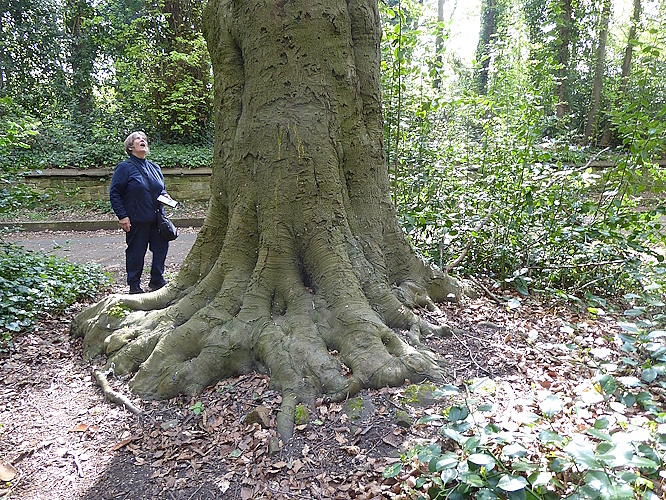
We were joined at St Michael’s by several MNA members, some with phone apps at the ready to identify plants and birdsong. Inspired by a recent talk at Calderstones on veteran and ancient trees, we went looking for a veteran Beech tree shown on their map, in the woods near the station. This must be it.
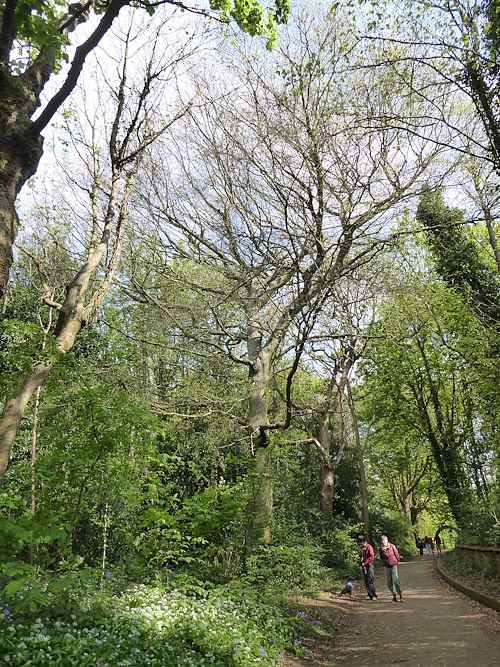
The floor of the woods had large patches of Wild Garlic. On the edge of the big glade we spotted Lady’s Mantle and several native trees and shrubs like Guelder Rose, Aspen, Hawthorn in blossom, and something with very big white blossom, perhaps some kind of Pear? Butterflies included Small White, Orange Tips and Speckled Wood. There was a big spread of Winter Heliotrope near the dried-up stream bed.
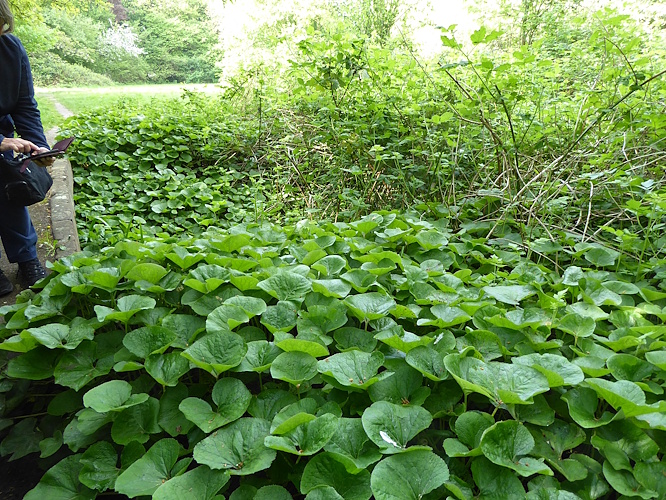
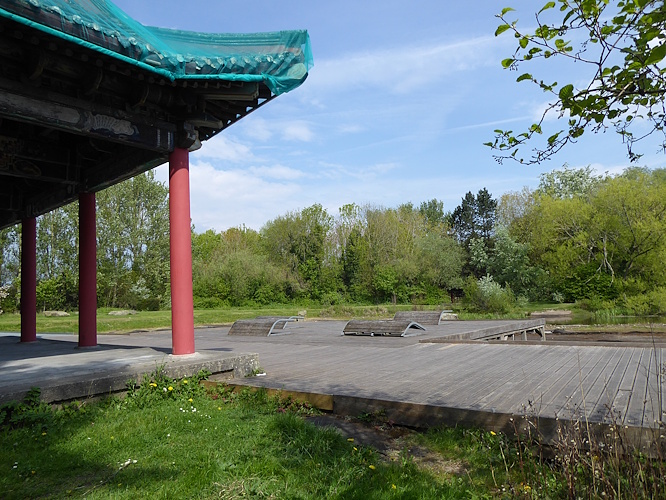
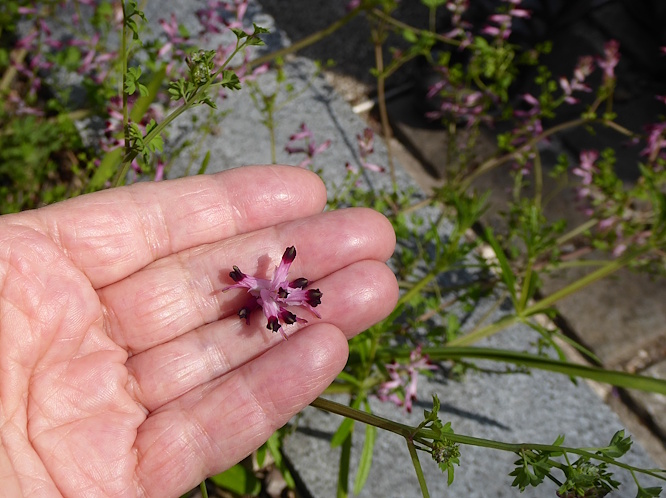
We crossed Riverside Drive to the park. In a flowerbed near the gate was a straggly plant which the Plantlife app suggested was Common Ramping Fumitory. What a good name!
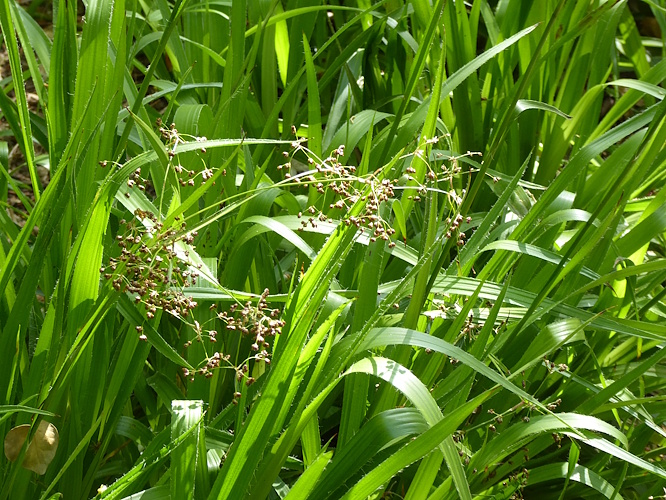
The Cow Parsley was nearly out and Herb Robert was everywhere. A shady path near the main lake was edged with Pendulous Sedge and another similar plant identified as Greater Woodrush.
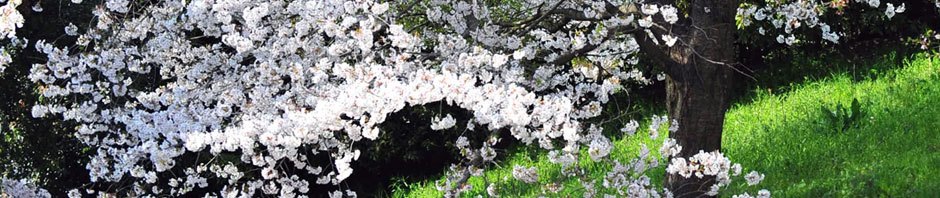
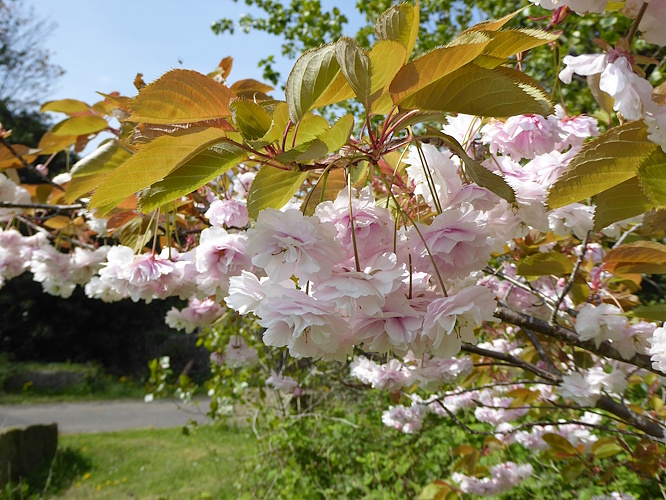
Birds in the park included Wood Pigeon, Crow, Robin, Blackbird and a pair of Song Thrushes creeping through the undergrowth. We heard Chiffchaff and Goldcrest. There was a Moorhen on the lake and a couple of Great Tits on a bridge. Along the banks of the half-empty main pond were Water Mint, Grey Poplar and a few tall plants of Wild Lettuce. There were several examples of a very lovely ornamental Cherry, with pendulous clusters of pale pink, double blossom. It’s late in the cherry season, so it was probably one of two, either ‘Shirofugen’ if the leaves are purple-red, or ‘Longipes’ if the leaves are green. The leaves still look reddish, so probably the former.
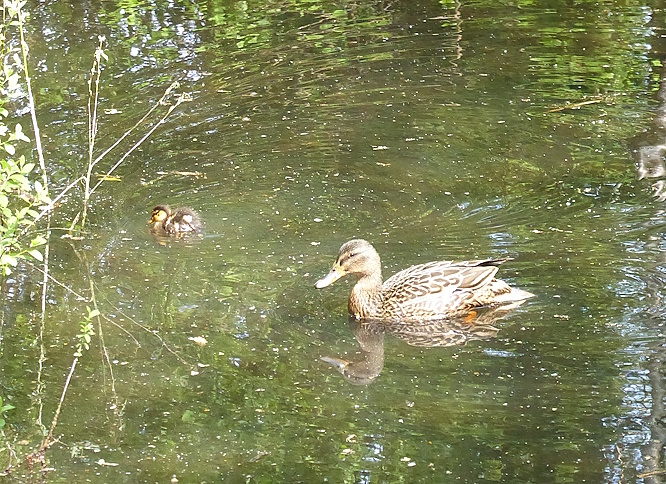
Around the inner ponds and bridges we noted five drake Mallards loitering without females, while another secluded pool had a female with a single tiny duckling. Mallards usually have larger broods than that, and we suspect some of the resident Rats had predated her eggs.
After lunch we headed down to the river and northwards towards the Britannia Inn. Low tide was due in about an hour, so the sea wall was exposed.
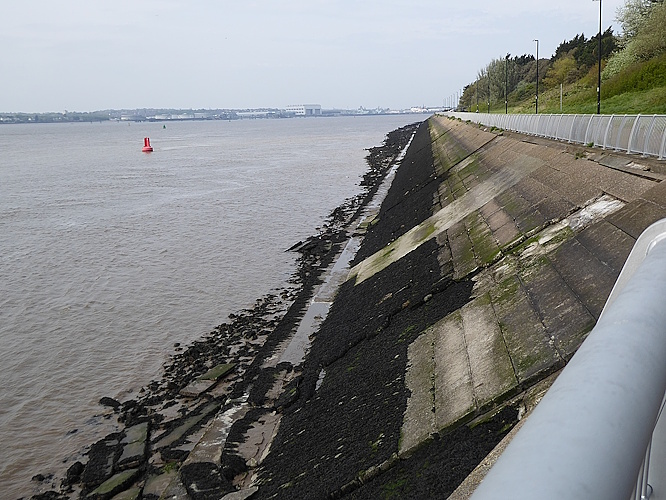
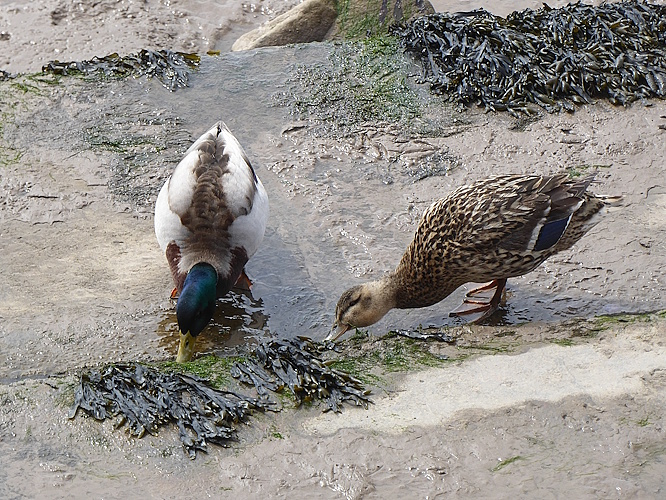
We heard a single Ring-necked Parakeet screeching. Herring Gulls were picking through the seaweed and a single Shelduck flew upriver, low and fast. No waders, though. Two Mallards were apparently eating or drinking on the low walkway below the railings. I think they were drinking at a freshwater seep, but why did they have to go down there? There is plenty of fresh water in the nearby Festival Gardens.
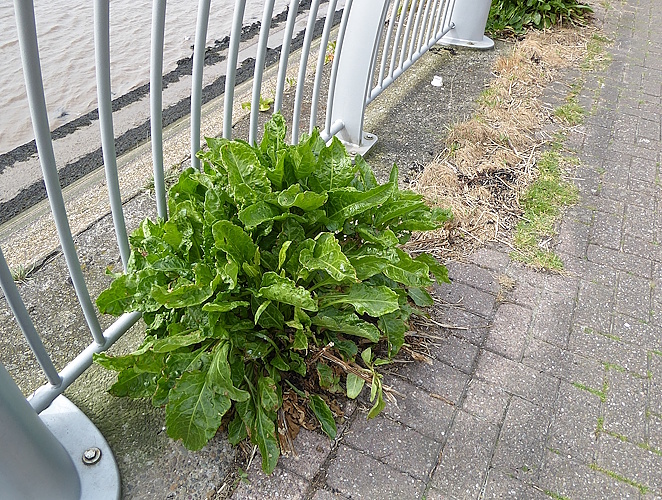
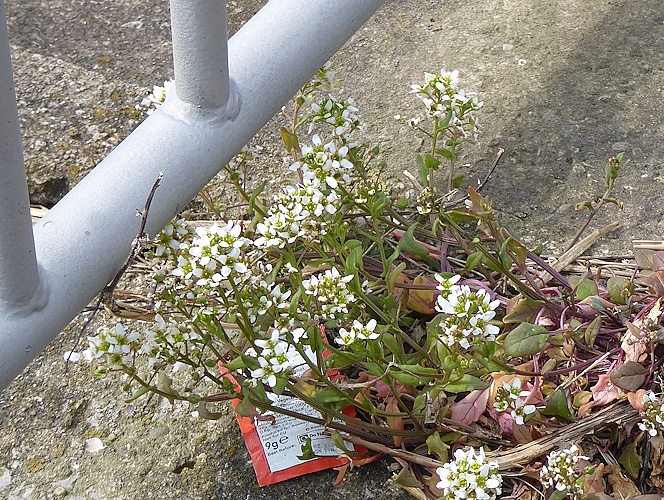
Along the edge of the promenade were big clumps of Sea Beet and also a smaller plant with white flowers which I think was one of the several species of Scurvygrass.
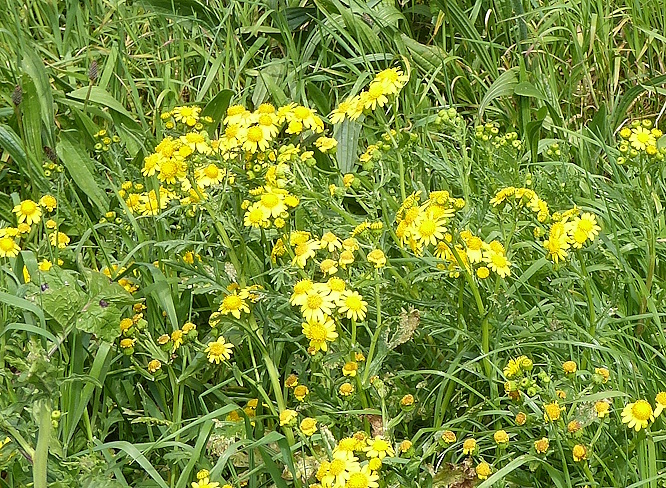
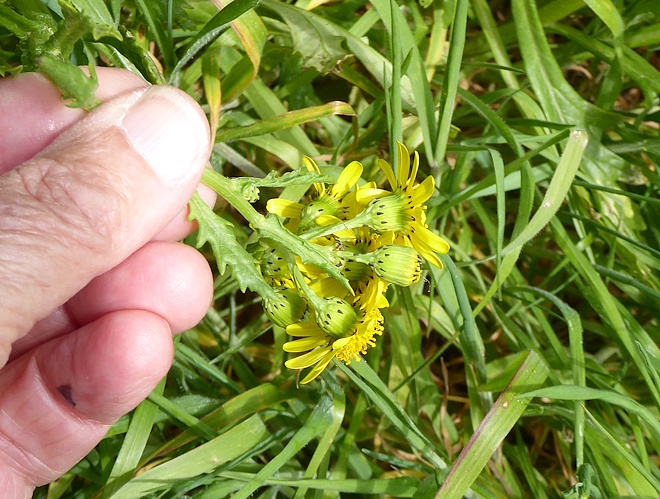
Near the Inn, on a part of the bank sheltered by trees, was a clump of Ragwort which looked slightly chunkier than usual. I had a look, turned the flowers over, and found it was Oxford Ragwort Senecio squalidus. You can tell because the bracts below the flower have black tips, not just at the base of the petals (Common Ragwort has those), but also lower down the flower head and at the top of the stem.
Public transport details: Train from Liverpool Central at 10.13, arriving St Michael’s station at 10.20. Returned from Riverside Drive / Britannia Inn on the 500 airport bus at 1.25, arriving Liverpool One bus station at 1.38.
Next week we plan to walk part of the Wirral Way from Hooton to Hadlow Road and back. Meet at Central Station at 10 am.