MNA Coach Trip Leighton Moss 23rd Oct 2011

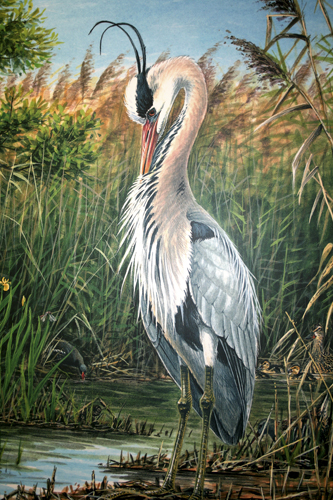
mna-leighton-moss-heron-illustration1.jpg

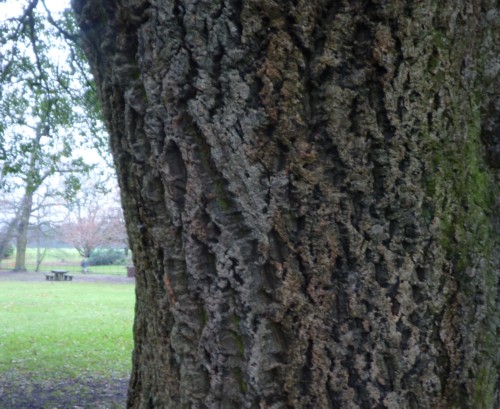
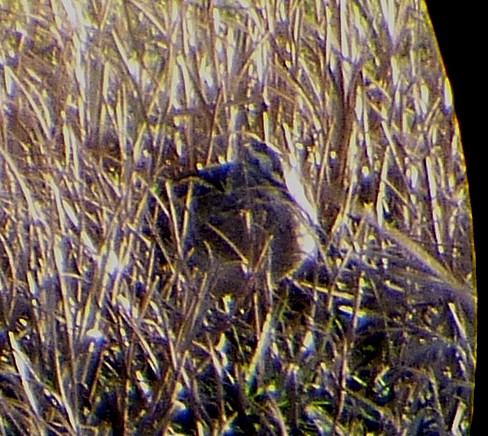
The final MNA coach trip of 2011 with some members making their own journey to our destination, the RSPB Reserve at Leighton Moss. A quick nose around the feeders brought the usual Chaffinches, Greenfinches, a female Bullfinch, Blue, Great and Coal Tits, a Nuthatch, Pheasants feeding on the ground below. A spot of lunch in Lillian’s Hide with gazzilions of Coot, Shoveler, Tufted Duck, Pochard, Wigeon, Gadwall and Mute Swans on the water. A Marsh Harrier was floating over the reeds, one of three birds seen during the day and a Bittern took to the air briefly before landing back in the reedbed. Walking along the causeway towards Public Hide a Cetti’s Warbler gave an outburst of song and Bearded Tits were pinging in the reedbed. A few patient members watched the Beardies coming down to the grit trays placed in a small clearing in the reeds. A nice selection of Lichens adorned the trees along the causeway with Oakmoss Lichen Evernia prunastri very much in evidence.
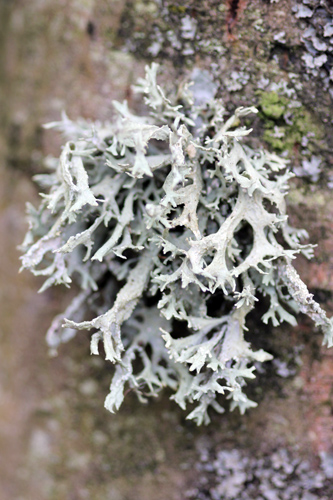
mna-leighton-moss-lichen.jpg

Oakmoss Lichen

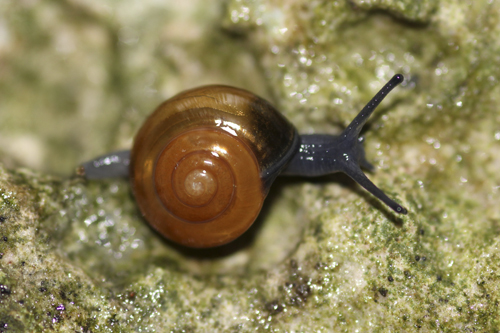
The Deer Rut is underway and the bellowing Red Deer stags could be heard as we walked along. From Public Hide more Coot, Great Crested Grebes, Cormorants, four Greenshank on an island along with a Snipe. A few of us then headed to Trowbarrow Quarry along the path adjacent to the golf course which cuts through limestone walls. A handful of Glossy Glass Snails Oxychilus helveticus were feeding on the algae on the limestone. These molluscs are similar to Garlic Snails in appearance but have characteristic black around their aperture.

mna-glossy-glass-snail1.jpg

Glossy Glass Snail

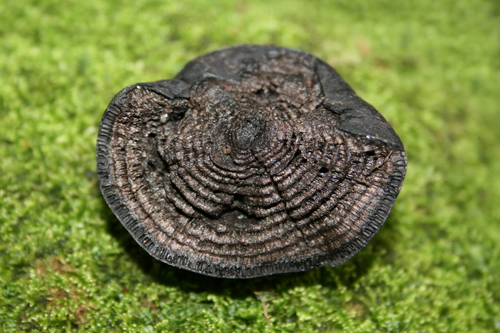
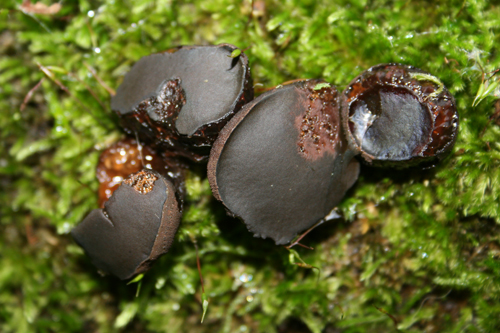
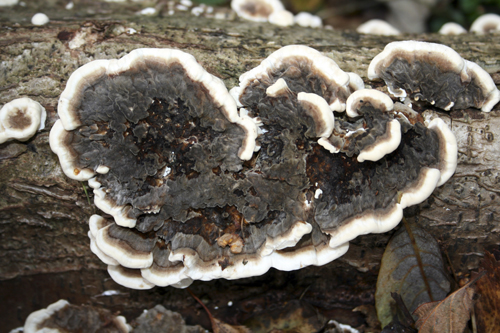
A few slightly larger snails also flattened in appearance with a belly button like hole on the underside were identified as Strawberry Snails Trichia striolata. Jays were squawking away, a few ‘pheeuing’ Bullfinch and some Coal Tits in the tops off the Yew Trees. A Roe Deer ran through the trees briefly stopping to look around before heading into the wood. We found a few fungi species including Oysterling Crepidotus sp. and Cramp Balls Daldinia concentrica, Black Bulgar a.k.a. Bachelor’s Buttons Bulgaria inquinans, Blushing Bracket Daedaleopsis confragosa Smoky Bracket Bjerkandera adusta and Coral Spot Nectria cinnabarina.

mna-cramp-ball-section1.jpg

Cross-section through a Cramp Ball

mna-black-bulgar1.jpg

Black Bulgar

mna-trowbarrow-fungi1.jpg

Smoky Bracket

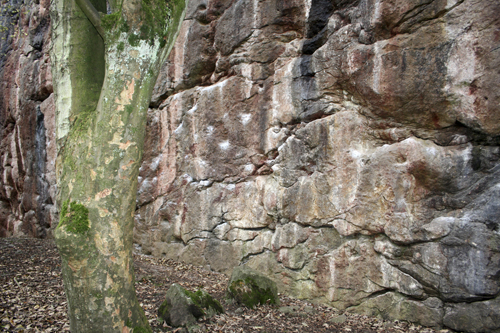
Trowbarrow if famous for its vertically bedded Urswick Limestone and is a popular place for climbers. We found an interesting cliff face on the opposite side of the quarry from where the rock-climbers usually tackle. This reddened karstified bedding plane had a number of elliptical depressions. 

mna-trowbarrow-rock-face1.jpg

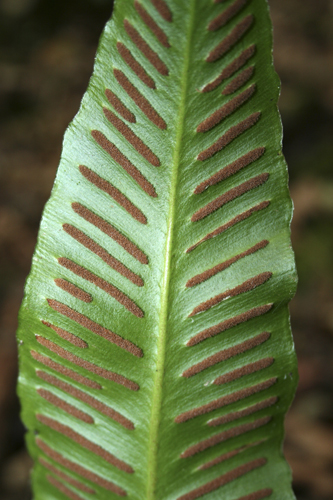
A Buzzard was mewing overhead and a Raven and Jackdaws briefly joined it. Photographed the sporangia on a Hart’s Tongue Fern Asplenium scolopendrium.

mna-trowbarrow-hartstongue-fern1.jpg

Heading back into the reserve we caught up with the sightings of other members. They had found some interesting fungi species with Blackfoot Polypore Polyporus leptocephalus, Tawny Funnel Cap Lepista flaccida, Lemon Disco Bisporella citrina and some nail galls possibly Lime Nail Galls Eriophyes tiliae. As we were driving home at the end of our visit we could see roosting Little Egrets in an island tree.

Posted in MNA reports | 1 Comment

Halewood Park 16th October 2011

On a cool sunny morning we took the 78 bus from Liverpool ONE to the junction of Rose Brow and Gateacre Brow and walked down to the Loop Line and south to Halewood Triangle Country Park.

halewood-path.jpg

There were Magpies, Greenfinches, Great Tits, Long-tailed Tits and Blackbirds in the trees and we also saw a Grey Squirrel. We had lunch at Ducky Pond, which was pretty, but surprisingly had no Mallards at all.  Some of the Yellow Iris was blooming unseasonably.

halewood-ducky-pond.jpg

halewood-iris.jpg

Halewood Triangle Country Park is full of strange wayside sculpture of various kinds, and here is one of the least objectionable of them – a toad on a toadstool.

halewood-toad.jpg


Posted in Sunday Group | 1 Comment

Carr Mill Dam 15th October 2011

(John Clegg’s report) The walk started off at the Waterside pub with the large group of Canada Geese. From the bank we had a good view of a Kingfisher going over the overflow of the dam, with a second seen over the lake.

As we walked around the lake a flock of 30 Fieldfares flew over – the first of the winter. At our lunch stop on the bridge we saw a large number of Drown Flies on the Ivy. At Otterswift Farm there were two species of Hawthorn in the hedge – Common and Midland. On the lake we saw nine Great Crested Grebes in a group and five Heron flew over together. Total bird species seen was 33, including a couple of late Swallows.

On a dead Wood Pigeon there were several Green Bottle Flies. We saw a good number of Red Admirals and one Speckled Wood. Some of the group also saw a 19-spot Ladybird.

Posted in MNA reports | 1 Comment

Freshfield Fungal Foray 15th Oct 2011

Joined the Liverpool Botanical Society Fungal Foray around Freshfield Dune Heath and along the Old Fisherman’s Path.

Notables during the walk included:-

Jelly Rot Phlebia tremellosa – a pale rubbery bracket on tree stumps. On close examination the upper side of the tiers are covered in hairs and the lower side appeared buff apricot almost porous in appearance.

mna-freshfield-jellyrot2.jpg 

Jellyrot Fungi showing underside below

mna-freshfield-jellyrot1.jpg 

Earth Fan Thelophora terrestris – this brown fungi with fan-shaped lobes frequents heathland adjacent to conifers, favouring sandy soils.

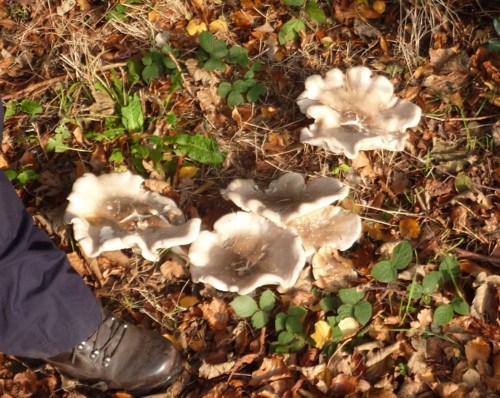
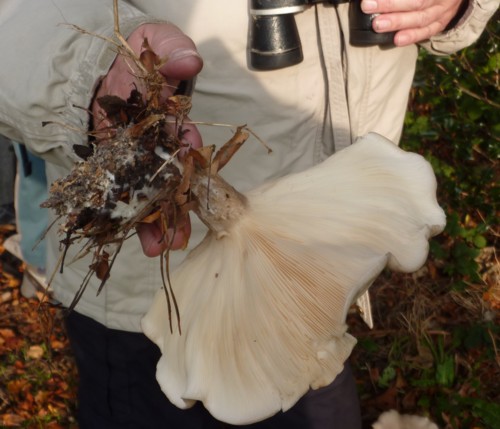
Clouded Funnel Clitocybe nebularis – this quite large agaric with funnel shaped cap and white decurrent gills was present in troops.

mna-freshfield-clouded-agaric1.jpg

Clouded Agaric

Egghead Mottlegill Panaeolus semiovatus – a new one for me this fungus lived up to its name with the appearance of an egg on top of a tall stem with ring or veil present. A small troop of these were distinctively growing from piles of dung!

mna-freshfield-egghead-mottlegill1.jpg

Egghead Mottlegill

mna-freshfield-dung-fungi1.jpg

Another species of dung Fungi

Green Elfcup Chlorociboria aeruginascens – although none of the tiny saucer-shaped cups were present a piece of bright turquoise green dyed piece of rotten wood was found.

mna-freshfield-green-elf-cup1.jpg

Plums & Custard Tricholomopsis rutilans – this favourite of mine found on rotting conifer stumps has plum coloured fibrils on a custard yellow cap. Its gills are the brightest coloured egg-yellow.

Birch Brown Boletes Leccinum scabrum – a lone specimen with brown cap and dark scaly stem.

Orange Birch Bolete Leccinum versipelle – a young specimen with distinctive orange cap and dark scaly stem.

The Deceiver Laccaria laccata – living up to its name we were initially deceived by quite different looking specimens, reddish-brown in colour the younger specimens were quite small with convex caps that became flattened then depressed with a wavy margin in older specimens.

Russula sp. – not present in the usual numbers only the odd specimen was found including a fresh specimen growing on a bed of moss.

mna-freshfield-russula1.jpg Russula sp.

Common (Collared) Earth Star Geastrum triplex – only two specimens found, missing from their usual area underneath the pines at the bottom of Fisherman’s Path.   

mna-freshfield-earthstar1.jpg

Earthstar

Reindeer Lichen Cladonia portentosa growing on the sandy banks below the pines on the old Fisherman’s Path    

mna-freshfield-cladonia3.jpg

Cladonia portentosa

A Common Darter Sympetrum striolatum joined us for lunch and few plant species were still in flower to keep the botanists engrossed. I was impressed with the spores on the Common Polypody Fern Polypodium vulgare

mna-freshfield-polypody1.jpg

Polypody spores

Posted in MNA reports | 1 Comment

Speke and Garston Coastal Reserve 9th October 2011

On the day of the Liverpool Marathon we avoided the disruption of public transport in the city centre and took the 80A bus to Speke Road / Banks Road and walked down to the coastal reserve.

speke-sign.jpg

It was a warm but overcast day, with gusty breezes off the river. There were Skylarks and a Kestrel overhead, and on the shore a Curlew, a Crow, some Teal, Mallards, Black-headed Gulls and an Oystercatcher.  When the sun came out we saw a butterfly, which was probably a Red Admiral.

We ate our lunches amongst the deserted hi-tech offices around Dakota Drive and Hurricane Court, then made our way along the landscaped verges of Estuary Business Park. Goldfinches and Jackdaws were about in fairly large numbers and the ponds were full of water lillies and Arrowhead. The ornamental trees were full of fruit and late flowers – crab apples, Alexandra roses, acorns. It would be heaven for squirrels, but they don’t seem to have found this bountiful new food source yet.

speke-crab-apples.jpg

Then into the new Dobbies garden centre for a pleasant half hour of browsing amongst the shrubs, bedding plants and (expensive) bird tables.  A display of vividly coloured heathers caught my eye, and I was relieved (if somewhat bemused) to see that they were artificially dyed and would eventually revert to a more natural state. What’s the point?

speke-heathers.jpg

speke-heathers-sign.jpg

Posted in Sunday Group | 1 Comment

Pride of Sefton Canal Trip 2nd October 2011

The 300 bus from Sir Thomas Street dropped us at Haskayne at 11.15 and we made our way to the canalside and boarded the Pride of Sefton barge for a trip on the canal. It had been a gloriously warm and sunny week but the weather had changed: it was still warm but had turned cloudy with spots of rain, preventing us from sitting out on the bow at our leisure.

pride-bridge-shop.jpg

We chugged slowly north as far as Rufford Marina then turned back south. There were no particularly interesting birds, and certainly not the Kingfisher we had been hoping for. There were plenty of Mallards and Coots on the canal, Moorhens on the verges, Magpies, Blackbirds, a Robin and a Mistle Thrush in the hedges, a big flock of Black-headed Gulls came up off a stubble field and a pair of Mute Swans had three well-grown cygnets. There were Lapwings flying above, a group of Red Admirals feeding on some Ivy, and one very cheeky young Mallard which hung about when we moored for a while, hoping for a share of our lunch.

pride-mooching-duck.jpg

Of more interest were the other boats moored along the towpath, some very brightly painted, others apparently needing serious attention!

pride-thor.jpg

pride-sinking-boat.jpg

As we passed Haskayne going southwards we were joined by the Pride of Sefton 2.

pride-at-swing-bridge.jpg

pride-at-turn.jpg

We continued in convoy under the swing bridge and turned together south of Downholland Cross, returning to Haskayne in time for the bus back to Liverpool.

Posted in Sunday Group | 1 Comment

Crosby Parks 25th September 2011

The 53 bus dropped us at Alexandra Park in Crosby just before 11. We had a short poke around the small park, admiring a totem pole on one of the lawns and the restored “Green Lady” fountain. The lady is now silver! The only birds we saw were a Blackbird and two Wood Pigeons.

In Coronation Park we read the sign on the huge stone – a glacial erratic – and took its picture.

crosby-stone.jpg

crosby-sign.jpg

They had a small greenhouse tucked away behind the Clubhouse, made with recycled plastic bottles, not glass. It might work, but it would be breezy!

crosby-greenhouse.jpg

We were in St Luke’s cemetery in time for lunch, then looked at all the wildlife-friendly features installed around the edge. They have a new bug hotel.

crosby-bug-hotel.jpg

Amongst the gravestones we found a group of medium-sized toadstools with a point at the top centre. Some were orange, some redder and one was completely black. I think they were Hygrocybe conica, Blackening Waxcap.

crosby-waxcap.jpg

Several of the gravestones in St Luke’s are noteworthy. One records a lady who was a code-breaker at Bletchley Park and another is that rarity, a CWGC stone to a woman, Private Muriel Marion Sawyer of the ATS, who died when she was 20.

A movement caught our eye on the roof of the church extension. A Wood Pigeon had tried to land there, thinking it was made of rough overlapping slates, but it was much smoother than it looked. The pigeon scrabbled for a foothold then slid rather ungracefully down into the gutter, where it sat, trying to regain its composure. An alert Magpie flew in immediately and perched on the gutter, eyeing the Wood Pigeon. Was it an injured bird which would make a meal? It pecked at the pigeon, which rapidly gathered its wits and flew off.

On the way out we saw one of the huge Garden Spiders that are common at this time of year. It was in an ivy and honeysuckle hedge, hanging vertically in its web.

crosby-spider.jpg

Posted in Sunday Group | 1 Comment

Neumann’s Flash 24th Sept 2011

A dozen MNA members turned out for our visit to Neumann’s and Ashton’s Flash near Northwich. We took one of the well marked trails on a circular path around Neumann’s stopping off at the hides en route. Great numbers of Lapwing at around 400 birds and a lone European Golden Plover joined them. On one of the Flash spits a couple of Dunlin were busy feeding and a Snipe was unusually out in the open on with a couple of others adopting their more usual habit of skulking in the reeds. The motley crew of Gulls was joined by a snoozing Yellow-legged Gull. Waterbirds included Cormorants, Grey Herons, Mallards, Teal including one displaying male, Shoveler, Moorhen and a lone Wigeon.  A Sparrowhawk flew over and later we had a Buzzard. A couple of feeding Tit flocks flew over the path in front of us containing Long-tailed and Great Tits. Lingering Summer migrants included a couple of Chiffchaff, a Willow Warbler and a few Swallows zooming past. A group of four Jay provided entertainment around the completely dry Hadyn’s Pool in the Anderton Nature Park and later we had good views of a female Great Spotted Woodpecker on the top of a tree.Usually seen in the Spring, there were large numbers of Alder Leaf Beetles Agelastica alni on one tree and a few others seen during the walk.

mna-alder-beetle1.jpg

Alder Leaf Beetles

A few interesting finds along the wooden fencing with two Harlequin Ladybirds Harmonia axyridis and four larvae, two Orange Ladybirds Halyzia 16-guttata and one larvae, a Green Shieldbug Palomena prasina and nymph and a few Blue Bottles Calliphora vomitoria.

mna-harlequin-larvae1.jpg

Harlequin Ladybird larvae

mna-orange-ladybird1.jpg

Orange Ladybird

 mna-sheildbug1.jpg

Green Shieldbug

mna-bluebottle.jpg

Bluebottle

Hoverflies included a few Eristalis species, Syrphus ribesii and Sphaerophoria scripta.

mna-sept-hoverfly1.jpg

Hoverfly Syrphus ribesii

 mna-sept-hoverfly2.jpg

Hoverfly Sphaerophoria scripta
 

Flowering plants included Common Toadflax Linaria vulgaris, Hedge Woundwort Stachys sylvatica, Himalayan Balsalm Impatiens glandulifera, Hemp Agrimony Eupatorium cannabinum, Common Ragwort Senecio jacobaea, Bush Vetch Vicia sepium, Tansy Tanacetum vulgare, Wild Parsnip Pastinaca sativa, Great Bindweed Calystegia silvatica and Perforate St John’s Wort Hypericum perforatum.

mna-great-bindweed.jpg

Great Bindweed

With the Fungi season underway we were pleased to find Many-zoned Polypore Trametes versicolor, numerous layers of Lumpy Bracket Trametes gibbosa on a few dead trees, Hairy Stereum Stereum hirsutum, Beech Woodwart Hypoxylon fragiforme and alone Fly Agaric Amanita muscaria. Rumaging around in a young Birch wood provided some more interesting finds with large numbers of Birch Webcap Cortinarius triumphans and four mouse-eaten specimens of Orange Birch Bolete Leccinum versipelle.

mna-orange-birch-webcap.jpg

Birch Webcap

More evidence of Autumn with fruiting Black Bryony Tamus communis, Guelder Rose Viburnum opulus, Elderberry Sambucus nigra, Hawthorn Crataegus monogyna, Blackthorn Prunus spinosa, Spindle Tree Euonymus europaeus

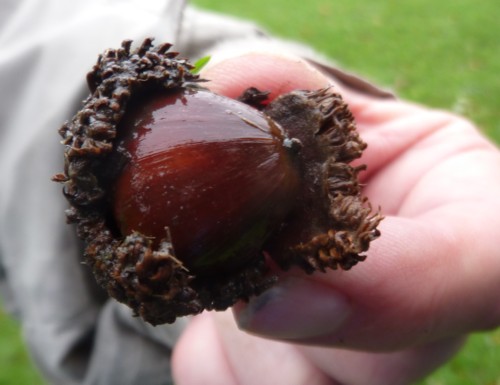
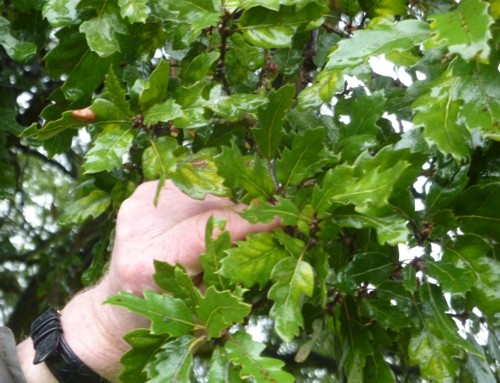
A number of the Penduculate Oaks Quercus robur had galls: Marble Gall caused by the Gall Wasp Andricus kollari, a few Silk Button Galls caused by the Gall Wasp Neuroterus numismalis and numerous Common Spangle Galls caused by the Gall Wasp Neuroterus quercusbaccarum. Also found a couple of Turkey Oaks Quercus cerris with pointy ended short-stalked acorns in bristly cups.

mna-marble-gall1.jpg

Marble Galls

mna-spangle-galls.jpg

Common Spangle Galls

All too soon we had to head home…

Posted in MNA reports | 1 Comment

Heritage Open Day 11th September 2011

No nature notes this week. Because it was Heritage Open Day we went to St Anthony’s RC Church Scotland Road, Deane Road Jewish Cemetery and Walton Church Tower and Old Grammar School. But you might all like to see a picture of the crypt of St Anthony’s – quite spooky!

st-anthonys-crypt.JPG

Posted in Sunday Group | 1 Comment

MNA Coach Trip Old Moor RSPB Reserve 10th Sept 2011

Nearly a full coach for the MNA visit to Old Moor RSPB Reserve located in the DearneValley close to Barnsley, Yorkshire.The feeding station adjacent to the visitor centre was doing good business with Greenfinches, Chaffinches, a female Bullfinch feeding her two offspring, Blue and Great Tits, Robins and a Wren. A small pond held a number of Pond Skaters Gerris lacustris, a couple of aquatic Snails and a beautiful pink Water Lily.

mna-old-moor-pond-skater1.jpg

Pond Skater

mna-old-moor-pink-water-lily1.jpg

Pink Water Lily

There were also White Water Lilies Nymphaea odorata, Branched Bur-reed Sparganium erectum, Bulrushes Typha latifolia, Purple Loosestrife Lythrum salicaria and Water Mint Mentha aquatica growing in some of the newly created dragonfly ponds.A trail led to a number of hides overlooking shallow ponds with muddy wader scrapes and islands scattered around. This excellent habitat provided us with good views of a number of duck species mostly still in eclipse plumage with Wigeon, Gadwall, Tufties, Shoveler, Teal, Mallard, Moorhen and Coot. Plenty of Little Grebes, I counted nine along with two Great-crested Grebes. Waders included Lapwings, Dunlin – some with the remnants of their black summer bellies, a Curlew Sandpiper seen by a few members, three Greenshank,  two Black-tailed Godwits, a dozen or so Ruff and a few Green Sandpipers joining the ten Common Sandpipers. The islands held small birds feeding on insects or seeds in the grass with a female Wheatear, Linnets, Meadow Pipits, Goldfinches and Pied Wagtails. A number of Swallows were flying around busy re-fuelling on insects for their journey south.

The strong winds kept the Insects and Butterflies to a minimum but a few Dragonflies braved the blustery conditions with Common Darters Sympetrum striolatum, Brown Hawker Aeshna grandis and Migrant Hawker Aeshna mixta.

 mna-old-moor-common-darter1.jpg

Female Common Darter

mna-old-moor-common-darter2.jpg

Male Common Darter

Bushes laden with berries included Hawthorns Crataegus monogyna, Dog Rose Rosa canina, Japanese Rose Rosa rugosa, Sea Buckthorn Hippophae rhamnoides, Sloes on Blackthorn Prunus spinosa and Guelder Rose Viburnum opulus. I found a number of Robin’s Pincushion Galls a.k.a. Bedeguar Gall caused by a Gall Wasp Diplolepis rosae which lays its eggs in either the leaves or stem of the Dog Rose.

mna-robins-pincushion-gall1.jpg

Robin’s Pincushion Gall

Artwork was varied on the reserve with a bird-themed play area for the kids, a small herb garden decorated with some amusing wildlife illustrations, aquatic creatures beside a pond-dipping pool and a number of wood carvings.

mna-old-moor-art1.jpg

Wildlife illustration in the herb garden

I took quite a shine to a kids toy Rat hand puppet in the RSPB gift shop, John Clegg posed with it on his hand.

mna-clegg-and-rat.jpg

Posted in MNA reports | 1 Comment