Croxteth Park, 11th December 2011

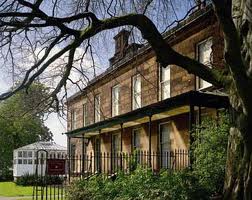
It was a seriously wet day, bucketing down almost the whole time we were out. We got to West Derby Village at about 10.30, met Margaret and Howard, then trudged up the long drive to Croxteth Hall.croxteth-hall.jpg

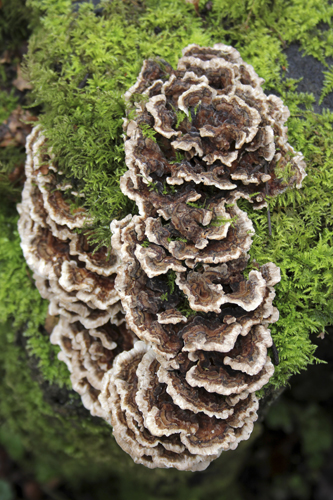
Near the small resident herd of Highland Cattle, one sick Birch tree had eight bracket fungi growing from it, and there may have been more around the other side.

croxteth-birch-and-fungi.jpg

We saw quite a variety of the usual woodland birds – Chaffinch, Blue Tit, Blackbird, Wood Pigeon, Long-tailed Tits, Robins, and some Great Tits on the ground below a Beech tree, apparently feeding on beech mast. Not seen that before. There was a Grey Squirrel and a Jay flying through the trees. On the wet fields were Black-headed Gulls, Herring Gulls, one Lesser Black-backed Gull, several Carrion Crows, Jackdaws and Magpies. The lake held only Mallards and Moorhen.

There was a dead mouse in a shallow puddle on the edge of a tarmacked path. We fished it out and measured it. Head and body length 7cm, tail length 8-9cm, fur looked grey – so it  must have been a House Mouse Mus musculus.  What was it doing dying out in the rain? No obvious injuries, so had it been dropped by a bird of prey?

croxteth-mouse.jpg

On the lawn opposite the Hall we spied a tree that looked like an Oak, but which still had all its leaves.  Was it a Holm Oak? But the leaves weren’t right. It had corky bark and bristly acorn cups.

croxteth-lucombe-oak.jpg

croxteth-acorn.jpg

croxteth-oak-foliage.jpg

croxteth-oak-bark.jpg

On the following day Margaret found it in a Croxteth “tree trail” leaflet. It’s a Lucombe Oak, Quercus x hispanica ‘Lucombeana’, a hybrid between Holm Oak and Turkey Oak, which occurs naturally in the Mediterranean but ornamental ones in the UK are mostly clones of the one first cultivated in Exeter by William Lucombe in about 1762.

Posted in Sunday Group | 1 Comment

Chester, 4th December 2011

Our usual pre-Christmas trip to Chester was on a cold and windy day, with occasional squally showers, but at least it wasn’t snowy and icy like last year.

chester-canal-path.jpg

We walked along the canal, seeing just Moorhens and Mallards, then spotted a pair of Mute Swans on the bank at the canal junction, near the Telford Warehouse. The male hissed at us as we read his green Darvic ring – C502, which means he was ringed in Cheshire in 1999 and is twelve years old.  (Added later: No it was a female, ringed 29 July 1999 at Cholmondeston Locks near Nantwich.  Seen September 1999 at Barbridge, Nantwich and in November and December 1999 at Westport Lake, Stoke. Last sighted in April and November 2000 at Barlaston, Stoke. I wonder where she had been in the eleven years since then.)

We went into Water Tower Gardens for our sandwiches and a hazy sun tried to come out, but there was still a sharp wind.  Just Pigeons, Black-headed Gulls and a Magpie. Interesting maze, though.chester-park-and-maze.jpg

There is a new Riverside Promenade walking and cycling path along the Dee, but the only extra birds were some Teal. Mindful of our sighting of a Mink two years ago, we spotted some tracks the silty riverbank, but whether they were Mink, Fox, cat or small dog we couldn’t say.

chester-tracks.jpg

The middle of the Racecourse had several hundred BHGs interspersed with crows, and we were intrigued to see a cage and net by the fence. Soon an RSPCA man appeared. He had received a report of a fox with a broken leg near the 5½ furlong marker, and had been searching, but the injured fox was not found.

In town, heading for the Christmas Market, we came across the Greyhound Rescue street collection team, and they are as suitable a Christmas picture as any. Happy Christmas to all!

chester-christmas-greyhounds.jpg

Posted in Sunday Group | 1 Comment

Marshside, 27th November 2011

On a bright, sunny, but very windy day we took the train to Southport and the 44 bus to Elswick Road, near Marshside. It was a very high tide, and the sea was up over the marsh, blown in no doubt by the onshore winds. Several Black-headed Gulls were trying to fly out to sea, beating their wings strongly but making no headway at all.

marshside-hide-view.jpg

marshside-wigeon.jpg

From the Sandgrounders hide were Wigeon, Pink-footed Geese, Jackdaws and Black-headed Gulls, with some Lesser Black-backed Gulls amongst them. Also Moorhens, Mallards, Pintail, Shoveller, two Curlew, a Cormorant that had just caught a fish, a Ruff, and a Snipe in the sedge near the hide. I tried a photo of the Snipe through the telescope, which is a bit strange, but recognisable.

marshside-snipe.jpg

Two Herons and a Little Egret flew over. There were tales of a Great White Egret in the area, and the warden said it had been seen at Crossens that morning. Some of the birdwatchers with telescopes were claiming some White-fronted Geese in amongst the Pinkies on the far side, but they were too far to pick out with binoculars. I left some MNA leaflets in the rack.

Nel’s hide was very busy, but we added Redshank, Starlings and Lapwings to our list. On the way back to the bus we saw Ragwort still in flower. Near the Fernley Observatory the usual House Sparrows were flitting about, and from the train we saw a Buzzard on a fencepost.

marshside-fernley-observatory.jpg

Posted in Sunday Group | 1 Comment

Birkenhead Park 13th November 2011

We started at Hamilton Square and after checking the station tower for Peregrine Falcons (none there today) went up to the Cenotaph for the Remembrance Day service. First year for a while that we didn’t need our umbrellas !

birkenhead-service.jpg

We lunched in bright sunshine outside Birkenhead Park Visitors’ Centre then checked the lakes for birds.

birkenhead-boathouse.jpg

Mallards, Black-headed Gulls, Canada Geese, Moorhens and Coots. No surprises there. Two Muscovy Ducks were dozing beneath a weeping willow and there was a group of six ducks, one a white domestic variety and five completely black. The security guard / litter collector / ranger said he thought part of their ancestry was Indian Runner, a domestic variety that occasionally flocks with Canada Geese.

birkenhead-muscovies.jpg

birkenhead-ducks.jpg

On the ground we saw Pigeons, Carrion Crows, Magpies, numerous Grey Squirrels and a Jay. It didn’t really feel like November, far too warm. A group of Quince bushes were in flower, so they are confused too.

birkenhead-quince.jpg

In the Upper Park, we spotted a clump of enormous fungi on a bank near holly bushes. There were three groups of four or five each, close together on the eastern side of Park Meadow (area 12 on the park maps). They were about 10 inches across, concave, with wavy edges, white to brown, cream straight gills which were decurrent (attached to the stem) and there was no ring on the stem. They smelled delicious, just like eating mushrooms. Margaret Parry looked them up on Monday and thinks they may have been Clitocybe gigantea, also known as Leucopaxillus giganteum, the Giant Clitocybe. Not as edible as they smelled, apparently, even if not positively poisonous.

birkenhead-fungi-group.jpg

birkenhead-fungi-underside.jpg

Posted in Sunday Group | 1 Comment

Hightown 6th November 2011

A very good day for birds today! Even from the train we saw Pink-footed Geese and Curlew between Hall Road and Hightown. It was a gorgeous clear day, not a cloud in the sky. On the way down to the Alt Estuary there were Collared Doves, Crows and Starlings, and a Heron flew overhead. A Sparrowhawk was sitting in the pines near the gate to the firing range and a female Kestrel was quartering the reeds. The tide was very low, and there weren’t many birds near the river mouth, just Black-headed Gulls, although a Buzzard was flying about. Later, over the dunes, we saw a pair of Kestrels flying together, perhaps thinking it was spring.

hightown-estuary.jpg

After lunch we followed the roadway made through the dunes by the lorries carrying sand and rocks up from Crosby to bolster the coastal defences.

hightown-rocks.jpg

On the estuary there were plenty of Shelduck, Mallards, Curlew, Redshank  and could it be …? Yes! A Spoonbill ! It was standing on one leg with its head tucked in but we occasionally got a look at its distinctive bill.

hightown-and-spoonbill.jpg

hightown-spoonbill.jpg

Abour 100 Lapwings flew overhead while we were on our way down to the Coastguard Station, where we stopped to admire the cheeky Starlings in the car park.

hightown-starling.jpg

Posted in Sunday Group | 1 Comment

Otterspool, 30th October 2011

Despite the change of clocks, we all turned up at Liverpool ONE for the 82A to Riverside Drive. We had hoped the Festival Park would be open, but still no news of it. All we could do was look through the gate!

otterspool-park.jpg

We strolled southwards on the prom in the warm sunshine, talking to the fishermen. One said they hoped for small Whiting or Codling, or perhaps a Ray. Two had made decent catches, both of Cod. “You get some nice fish coming out now”, said another.

otterspool-fish-1.jpg

otterspool-fish-2.jpg

Not many birds today. Black-headed Gulls, Cormorants, a Magpieand some Crows. We thought we saw a butterfly, perhaps a Peacock, during our lunch stop. At the Sitting Bull we turned north again.

otterspool-sitting-bull.jpg

There is a new Otters Café, which will be splendid when its lake and grounds are complete. Next to it they appear to be building a maze, a play fort and an adventure ropes course.

otterspool-otters-cafe.jpg

otterspool-ropes-course.jpg

Through the woodland path up to Aigburth Vale we saw Chaffinch, Wood Pigeon, a Robin and a Grey Squirrel. Some of the ornamental trees were in autumn colours and the three wonderful Cut-leaved Beeches covered the path with bronze leaves.

otterspool-red-tree.jpg

otterspool-beech-path.jpg

Posted in Sunday Group | 1 Comment

MNA Coach Trip Leighton Moss 23rd Oct 2011

mna-leighton-moss-heron-illustration1.jpg

The final MNA coach trip of 2011 with some members making their own journey to our destination, the RSPB Reserve at Leighton Moss. A quick nose around the feeders brought the usual Chaffinches, Greenfinches, a female Bullfinch, Blue, Great and Coal Tits, a Nuthatch, Pheasants feeding on the ground below. A spot of lunch in Lillian’s Hide with gazzilions of Coot, Shoveler, Tufted Duck, Pochard, Wigeon, Gadwall and Mute Swans on the water. A Marsh Harrier was floating over the reeds, one of three birds seen during the day and a Bittern took to the air briefly before landing back in the reedbed. Walking along the causeway towards Public Hide a Cetti’s Warbler gave an outburst of song and Bearded Tits were pinging in the reedbed. A few patient members watched the Beardies coming down to the grit trays placed in a small clearing in the reeds. A nice selection of Lichens adorned the trees along the causeway with Oakmoss Lichen Evernia prunastri very much in evidence.

mna-leighton-moss-lichen.jpg

Oakmoss Lichen

The Deer Rut is underway and the bellowing Red Deer stags could be heard as we walked along. From Public Hide more Coot, Great Crested Grebes, Cormorants, four Greenshank on an island along with a Snipe. A few of us then headed to Trowbarrow Quarry along the path adjacent to the golf course which cuts through limestone walls. A handful of Glossy Glass Snails Oxychilus helveticus were feeding on the algae on the limestone. These molluscs are similar to Garlic Snails in appearance but have characteristic black around their aperture.

mna-glossy-glass-snail1.jpg

Glossy Glass Snail

A few slightly larger snails also flattened in appearance with a belly button like hole on the underside were identified as Strawberry Snails Trichia striolata. Jays were squawking away, a few ‘pheeuing’ Bullfinch and some Coal Tits in the tops off the Yew Trees. A Roe Deer ran through the trees briefly stopping to look around before heading into the wood. We found a few fungi species including Oysterling Crepidotus sp. and Cramp Balls Daldinia concentrica, Black Bulgar a.k.a. Bachelor’s Buttons Bulgaria inquinans, Blushing Bracket Daedaleopsis confragosa Smoky Bracket Bjerkandera adusta and Coral Spot Nectria cinnabarina.

mna-cramp-ball-section1.jpg

Cross-section through a Cramp Ball

mna-black-bulgar1.jpg

Black Bulgar

mna-trowbarrow-fungi1.jpg

Smoky Bracket

Trowbarrow if famous for its vertically bedded Urswick Limestone and is a popular place for climbers. We found an interesting cliff face on the opposite side of the quarry from where the rock-climbers usually tackle. This reddened karstified bedding plane had a number of elliptical depressions. 

mna-trowbarrow-rock-face1.jpg

A Buzzard was mewing overhead and a Raven and Jackdaws briefly joined it. Photographed the sporangia on a Hart’s Tongue Fern Asplenium scolopendrium.

mna-trowbarrow-hartstongue-fern1.jpg

Heading back into the reserve we caught up with the sightings of other members. They had found some interesting fungi species with Blackfoot Polypore Polyporus leptocephalus, Tawny Funnel Cap Lepista flaccida, Lemon Disco Bisporella citrina and some nail galls possibly Lime Nail Galls Eriophyes tiliae. As we were driving home at the end of our visit we could see roosting Little Egrets in an island tree.

Posted in MNA reports | 1 Comment

Halewood Park 16th October 2011

On a cool sunny morning we took the 78 bus from Liverpool ONE to the junction of Rose Brow and Gateacre Brow and walked down to the Loop Line and south to Halewood Triangle Country Park.

halewood-path.jpg

There were Magpies, Greenfinches, Great Tits, Long-tailed Tits and Blackbirds in the trees and we also saw a Grey Squirrel. We had lunch at Ducky Pond, which was pretty, but surprisingly had no Mallards at all.  Some of the Yellow Iris was blooming unseasonably.

halewood-ducky-pond.jpg

halewood-iris.jpg

Halewood Triangle Country Park is full of strange wayside sculpture of various kinds, and here is one of the least objectionable of them – a toad on a toadstool.

halewood-toad.jpg


Posted in Sunday Group | 1 Comment

Carr Mill Dam 15th October 2011

(John Clegg’s report) The walk started off at the Waterside pub with the large group of Canada Geese. From the bank we had a good view of a Kingfisher going over the overflow of the dam, with a second seen over the lake.

As we walked around the lake a flock of 30 Fieldfares flew over – the first of the winter. At our lunch stop on the bridge we saw a large number of Drown Flies on the Ivy. At Otterswift Farm there were two species of Hawthorn in the hedge – Common and Midland. On the lake we saw nine Great Crested Grebes in a group and five Heron flew over together. Total bird species seen was 33, including a couple of late Swallows.

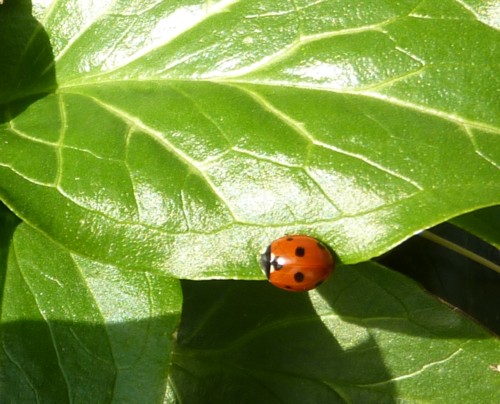
On a dead Wood Pigeon there were several Green Bottle Flies. We saw a good number of Red Admirals and one Speckled Wood. Some of the group also saw a 19-spot Ladybird.

Posted in MNA reports | 1 Comment

Freshfield Fungal Foray 15th Oct 2011

Joined the Liverpool Botanical Society Fungal Foray around Freshfield Dune Heath and along the Old Fisherman’s Path.

Notables during the walk included:-

Jelly Rot Phlebia tremellosa – a pale rubbery bracket on tree stumps. On close examination the upper side of the tiers are covered in hairs and the lower side appeared buff apricot almost porous in appearance.

mna-freshfield-jellyrot2.jpg 

Jellyrot Fungi showing underside below

mna-freshfield-jellyrot1.jpg 

Earth Fan Thelophora terrestris – this brown fungi with fan-shaped lobes frequents heathland adjacent to conifers, favouring sandy soils.

Clouded Funnel Clitocybe nebularis – this quite large agaric with funnel shaped cap and white decurrent gills was present in troops.

mna-freshfield-clouded-agaric1.jpg

Clouded Agaric

Egghead Mottlegill Panaeolus semiovatus – a new one for me this fungus lived up to its name with the appearance of an egg on top of a tall stem with ring or veil present. A small troop of these were distinctively growing from piles of dung!

mna-freshfield-egghead-mottlegill1.jpg

Egghead Mottlegill

mna-freshfield-dung-fungi1.jpg

Another species of dung Fungi

Green Elfcup Chlorociboria aeruginascens – although none of the tiny saucer-shaped cups were present a piece of bright turquoise green dyed piece of rotten wood was found.

mna-freshfield-green-elf-cup1.jpg

Plums & Custard Tricholomopsis rutilans – this favourite of mine found on rotting conifer stumps has plum coloured fibrils on a custard yellow cap. Its gills are the brightest coloured egg-yellow.

Birch Brown Boletes Leccinum scabrum – a lone specimen with brown cap and dark scaly stem.

Orange Birch Bolete Leccinum versipelle – a young specimen with distinctive orange cap and dark scaly stem.

The Deceiver Laccaria laccata – living up to its name we were initially deceived by quite different looking specimens, reddish-brown in colour the younger specimens were quite small with convex caps that became flattened then depressed with a wavy margin in older specimens.

Russula sp. – not present in the usual numbers only the odd specimen was found including a fresh specimen growing on a bed of moss.

mna-freshfield-russula1.jpg Russula sp.

Common (Collared) Earth Star Geastrum triplex – only two specimens found, missing from their usual area underneath the pines at the bottom of Fisherman’s Path.   

mna-freshfield-earthstar1.jpg

Earthstar

Reindeer Lichen Cladonia portentosa growing on the sandy banks below the pines on the old Fisherman’s Path    

mna-freshfield-cladonia3.jpg

Cladonia portentosa

A Common Darter Sympetrum striolatum joined us for lunch and few plant species were still in flower to keep the botanists engrossed. I was impressed with the spores on the Common Polypody Fern Polypodium vulgare

mna-freshfield-polypody1.jpg

Polypody spores

Posted in MNA reports | 1 Comment