Lydiate, 15th April 2012

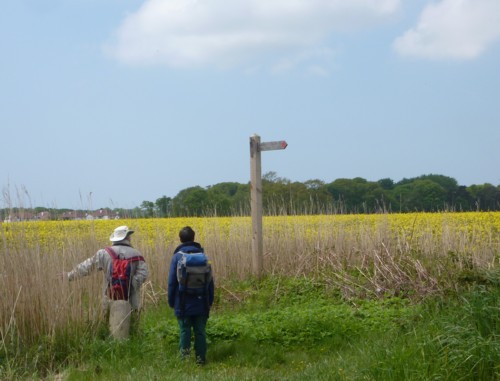
(Report by John Clegg) After getting off the 300 bus the walk started in Hall Lane, with Rooks flying around the church. We crossed the Racing Stables, where there were Lapwings on the gallops and we had lunch on the bridge over the Leeds-Liverpool canal. Swallows flew above the water and there was a Buzzard overhead.

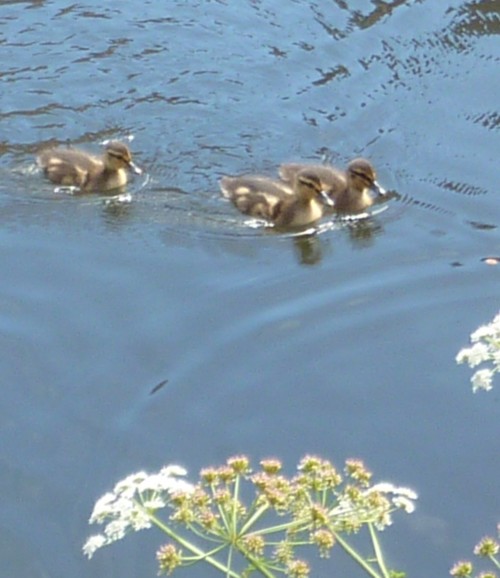
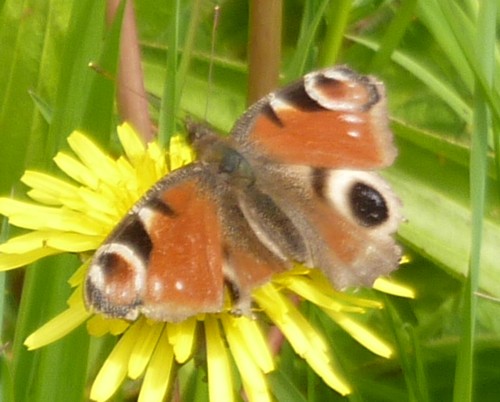
After lunch we walked along the canal towpath to Jackson’s Bridge then returned to Hall Lane. At the farm shop on the other side of the road we saw a mother Mallard with 10 one-day-old ducklings, and six Peacocks were displaying on the field.

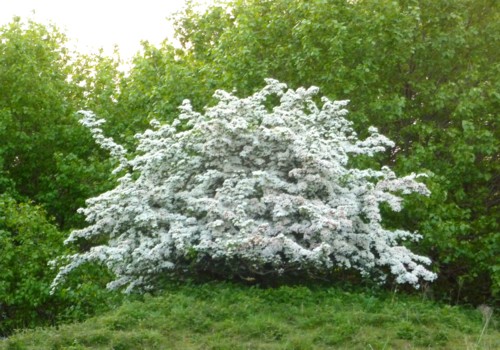
From the bus stop outside the church we saw a Raven fly over, and the churchyard had good numbers of both blue and white English Bluebells together with the yellow flowers of Lesser Celandine.  A total of 26 bird species seen.

Posted in Sunday Group | 1 Comment

Landican Cemetery and Arrowe Country Park 1st April 2012

The motor cyclists were gathering for the Egg Run in William Brown Street this morning, many of them dressed as chickens and bunnies. And since it was April Fool’s Day, the morning radio had been talking about donkey rustling for Palm Sunday services. Scorning these distractions we set off on the 72 bus for Landican.

09-landican-cemetery-view.jpg

After last week’s heatwave there was a cool breeze, although it was still warm in the sunshine. We took the path from Woodchurch Road along the side of the Cemetery, seeing a Dunnock, Blue Tits and Great Tits, Long-tailed Tits and some Wood Pigeons. In the cemetery we heard a Chiffchaff and saw a Blackbird, a Chaffinch, several Carrion Crows and a couple of Magpies. Pairs of Buzzards were courting overhead, a Jay glided through the trees, the Irish Yews were stately and elegant and the Blackthorn was starting to bloom.

09-landican-blackthorn.jpg

We kept our eyes peeled for Hares, since this is the place where Chris Packham was filmed creeping amongst the gravestones. But no Hares today, there were too many people about.

09-landican-birch-and-daffs.jpg

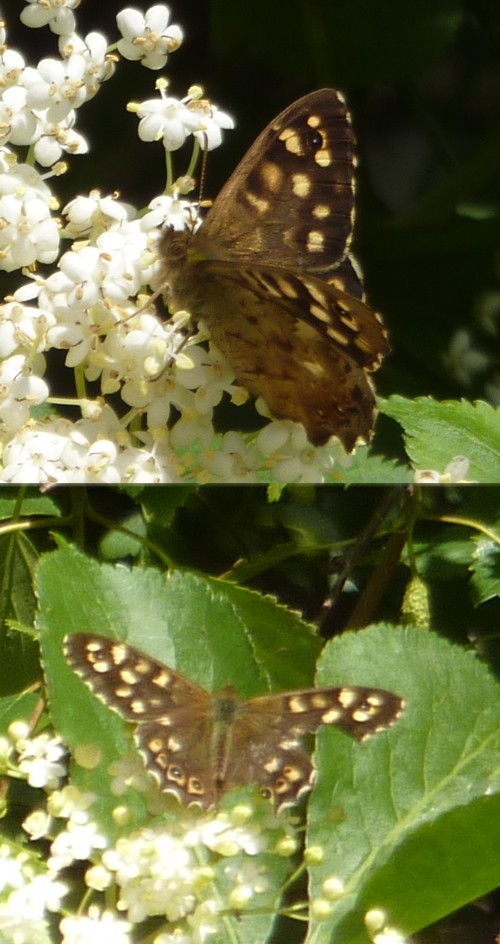
In Arrowe Country Park there was a Pied Wagtail on the bowling green where we had lunch, a Nuthatch and Greenfinches calling, a Robin, more Buzzards overhead, and two butterflies: a Small Tortoiseshell and our first Speckled Wood of the year.  In the shrubbery we saw a Coal Tit apparently harass a Chaffinch from its chosen perch, and our best bird of the day, a Goldcrest flitting through a Cherry Laurel bush.

Following the sound of engines, we found the British Model Flying Association at the far side of the big field, putting their craft through their paces. One of them had a model helicopter which he could make loop-the-loop, fly upside down, fly on its side – amazing!

09-landican-model-planes.jpg

Posted in Sunday Group | Leave a comment

Sugar Brook Park 25th March 2012

This was one of John’s mystery destinations, and it turned out to be a small park on the north side of the East Lancashire Road, between Lower Lane and Stonebridge Lane, near to the sewage works and opposite the Showcase Cinema. Someone, perhaps the North-West Development Agency, has landscaped the area around Sugar Brook, made paths, planted small trees and shrubs, and set up a fishing lake. We strolled around it in the warm sunshine and I asked a young fisherman what he caught. He said he’d had three Carp, his mate had had one and his cousin had had another.

08-sugar-brook-view.jpg

There were Mallards and Coots on the water, and Marsh Marigolds in the drainage ditches. Forsythia was blooming wonderfully, Coltsfoot was in flower, 7-spot Ladybirds were out basking, a Honey Bee with full pollen sacs foraged among the Broom, and a Peacock butterfly fluttered past. Two Cormorants flew towards Prescot, a Heron came up and headed for Croxteth Park and a dog flushed two very unexpected Grey Partridges from a small stand of trees. All along the path edges Field Horsetails were shooting up, and in several places they had started to break through the tarmac.

08-sugar-brook-horsetails.jpg

08-sugar-brook-tarmac.jpg

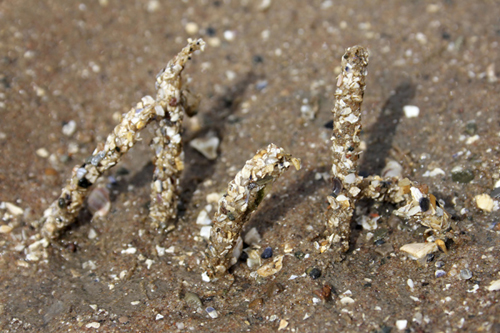
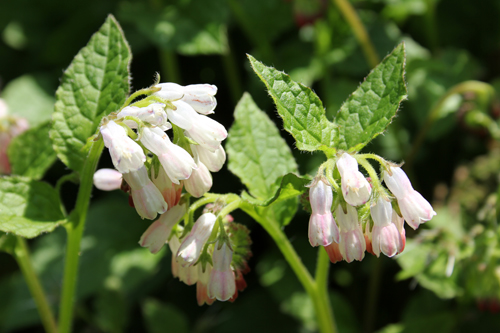
In a stagnant backwater right next to a path, two Mute Swans have built a nest and were sitting on three eggs. Neither had Darvic rings but the Cob had an unreadable BTO ring. They seemed to be in a very accessible and vulnerable position, so perhaps they are a young pair who don’t know any better, but there was evidence that the locals held them in some affection. A father was showing them to his little daughter and the water around them held whole slices of bread and a complete but very soggy bagel.
08-sugar-brook-swans.jpg

We ate lunch sitting on crash barriers, with the dull roar of the East Lancs on our right and the sweet songs of Chiffchaffs, a Dunnock and Goldfinches to our left.

08-sugar-brook-walking.jpg

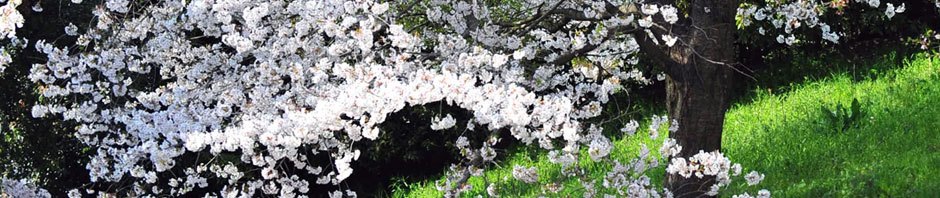
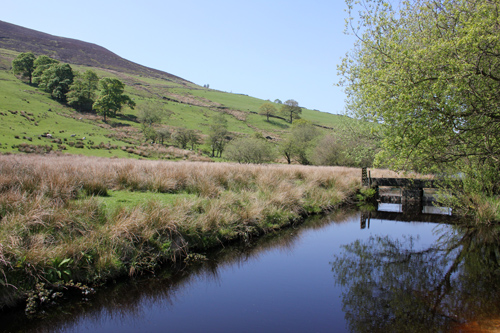
After lunch we walked down to West Derby Cemetery to look for some gravestones, and admired three wonderful pink flowering Cherry trees.
08-sugar-brook-cherry-trees.jpg

Posted in Sunday Group | 1 Comment

Orrell Water Park 24th March 2012

Report from John Clegg

orrell-wp-view.jpg

A sunny, warm morning saw ten MNA members meet at Orrell Water Park for our walk.

We started with a pair of Great Crested Grebes dancing on the largest of the lakes, with good numbers of Coots, Black-headed Gulls and Canada Geese. At the feeding station a male Sparrowhawk  was seen to put up the feeding birds, including Blue, Great and Long-tailed Tits, Chaffinch, Bullfinch, Blackbird and Robin.

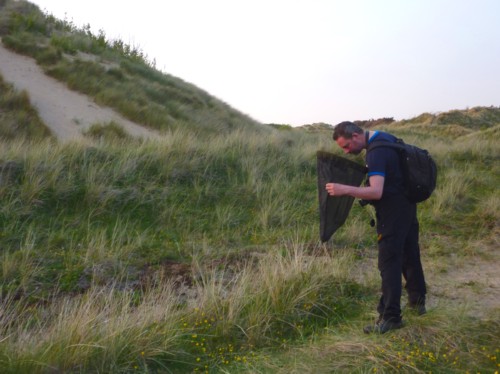
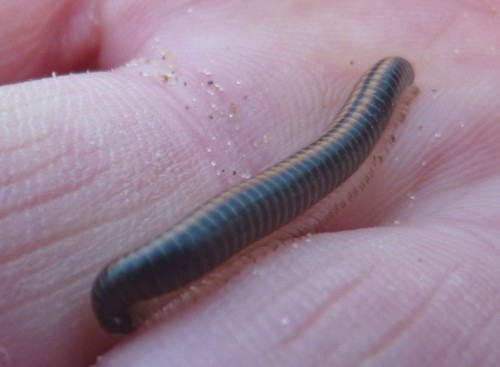
On the bank of a stream over 100 Miner Bees were seen , including Early, Tawny and Andrena Mining Bees. On the Holly hedge we saw a number of Holly Leaf Miner beetles and a Snake Millipede.

The sunny day brought out lots of butterfiles: Large White, Green-veined White, Comma, Small Tortoiseshell, Red Admiral and Peacock were all seen.  In the wood were carpets of White Wood Anemone and yellow Primrose.

A total of 21 bird species were seen on the day.

Posted in MNA reports | 1 Comment

MNA Coach Trip Shropshire Meres 18th March 2012

mna-white-goose1.jpg 

Farmyard Goose

A regular venue for MNA coach trips, Ellesmere is always a popular favourite. We arrived to scattered clouds, sunshine and a gaggle of rather vocal farmyard Geese, Greylags and Canadas all begging for food from the day-trippers. The geese looked non too impressed with Barbara’s swan and geese pellets!

mna-greylag.jpg

Vocal Greylag Goose

mna-barbara-feeding-geese.jpg

Barbara And The Geese

We had a quick nose in the visitor centre at the cameras fixed on the Grey Heron nesting Heronry on the island in the mere. A couple of Mute Swans had blue darvic rings on their legs with numbers 7FID and 7FIP. These birds have been ringed by Tony Cross of the Red Kite Trust and a record of these sightings were forwarded to him. As we slowly ambled around the mere Buzzards were mewing overhead, Tufted Duck and Goldeneye were diving out at the back and Great Crested Grebes were proudly sporting their spring headdress.

mna-chris-derri-buzzard1.jpg

Buzzard courtesy of Chris Derri

We stopped to look at a large Wellingtonia tree. Its fibrous looking trunk had a number of small indents with streaks of droppings beneath. Treecreepers snuggle into these holes to roost, their mottled back camouflaged against the trunk. Holes at various sides of the trunk are favoured depending on the wind direction.  As we entered the woodland we heard the distinctive tui-tui-tui call of a Nuthatch that was going to feature throughout the day.

mna-chris-derri-nuthatch1.jpg

Nuthatch courtesy of Chris Derri

Spring was evidently here with Chaffinches ‘pinking’, Great Tits calling ‘teacher teacher’, Wrens giving the occasional blast of song from the undergrowth accompanied by Robins, Dunnocks, Blackbirds, a few Song Thrushes, Blue Tits, the odd Coal Tit and Goldcrest. John Clegg had a lucky sighting of a Lesser Spotted Woodpecker flying across the path. A Raven joined the usual corvids exclaiming ‘prunk prunk’ as it flew overhead. We were glad when we watched a couple of upended Swans through our binoculars to find that they were Whoopers. A couple of members remarked that they seem to be able to hold their breath longer than Mute Swans.

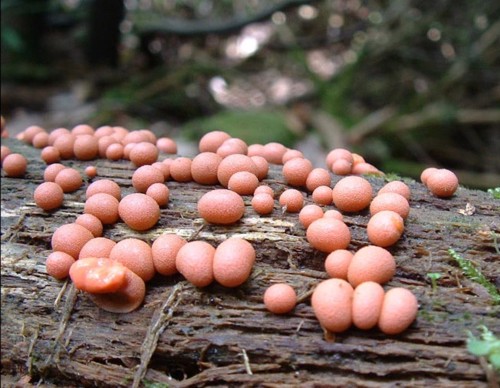
A few Spring flowers with Coltsfoot Tussilago farfara, Lesser Celandine Ranunculus ficaria, Snowdrops and Daffodils. Fungi included Southern Bracket Ganoderma adspersum, Hairy Stereum Stereum hirsutum, Turkeytail Trametes versicolor, Velvet Shank Flammulina velutipes, Jelly Ear Auricularia auricula-judae, Coral Spot Fungus Nectria cinnabarina, Slime Mould Enteridium lycoperdon and some rather gross looking Dog Vomit Slime Mold Fuligo septica splattered over Smoky Bracket Bjerkandera adjusta.

mna-dog-vomit.jpg

The aptly named Dog Vomit Slime Mould

Various metal figures etc had been stuck onto some glacial erratic boulders beside the path. Modern art that had many scratching their heads!After lunch a small group of five of us walked through the small Shropshire Wildlife Trust Plantation Wood Reserve and down to the Shropshire Union Canal. 

Walked along the towpath of the Shropshire Union Canal hearing a few more Nuthatch, Wrens bursting into song and a calling Chiffchaff. Two Red Legged Partidge ran across an arable field at the far side of the canal and a number of Mallard pairs sat on the edge of the towpath some dropping into the water as we walked by. Wood Anemones were in flower along the canal. It was a flat calm Blakemere with a pair of Great Crested Grebes joining the two Cormorants on the water.

mna-blakemere.jpg

Blakemere Reflections

A few Greylags and Canada Geese were next to a pair of Mallards mooching in vegetation at the edge of Blakemere. A bare tree held a further eighteen Cormorants with one individual having particularly iridescent green plumage. Another Cormorant was holding its wings outstretched although it is still not fully understood why Cormorants exhibit this behaviour. Drying their wings, cooling off due to the heat generated by digesting a fish, keeping space between birds to allow for rapid take off have all been suggested. We continued along towards Coelmere where the Star birds were the flotilla of Goosanders – mostly females looking stunning in the sunlight.

mna-chris-derri-goosander1.jpg

Male Goosander courtesy of Chris Derri

Notices around the lake about the invasive Killer Shrimp. We passed the Coelmere Sailing Club building a nice with herringbone chimney pot and came across a Hawthorn tree parasitized by Mistletoe.

mna-chris-derri-mistletoe1.jpg

Mistletoe courtesy of Chris Derri

As we walked up Wood Lane from Coelmere we passed a number of quaint thatched cottages. Wood Lane Quarry could be seen as we peaked through the thick holly hedge. There is a large Sand Martin colony here in the summer. Lesser Celandine and Red Dead Nettles grew along the lane edge. A Sparrowhawk flew from a tree and glided across a rolling glacial drumlin field. We nosed through the slits in a wickerwork viewing screen at the ponds of Shropshire Wildlife Trusts Wood Lane Nature Reserve. Over twenty six Lapwings along with a couple of Curlew and Oyks and a lone Common Sandpiper comprised the waders. Gadwall and Teal joined the usual Coot and Moorhen for the ducks.We continued our walk along Wood Lane passing a vocal Coal Tit and surprising a couple of Rabbits that bolted into their burrows under the Holly hedge. We crossed the main road and onto a small track leading to Whitemere where there was a few Coot and Great Crested Grebes on the water. A Red Fox was foraging along the edge on the Mere on the far side and a Buzzard was sat in a tree. We continued back along the main road to Ellesmere with aching knees but with some great sightings!

Posted in MNA reports | 1 Comment

Parkgate 11th March 2012

07-parkgate-picture.jpg

With the promise of a high tide, we took the 487 to Parkgate, and as we travelled through suburban Wirral we admired the early-flowering pink and white cherry trees, Forsythias, masses of daffodils, and a few Magnolias just about to bloom.

The RSPB was there with its van and tent, and the telescope brigade were lined up along the walls of the Old Baths, but the tide wasn’t particularly high, even along the quay northwards, despite being billed as 9.7 meters.

07-parkgate-rspb-van.jpg

07-parkgate-telescope-line.jpg

In the pools out in the marsh we saw three Little Egrets, some Oystercatchers, two Pintails, Canada Geese, some Teal, a Wigeon, lots of Mallards, lots of gulls, a pair of Mute Swans and a female Red-breasted Merganser.  Where the road turns into the car park there were several fresh Molehills.

We crossed the golf course and headed back along the Wirral Way. Skylarks were singing, a Kestrel hunted over the Gorse, and we saw a Long-tailed Tit, a Robin, a Wren, a Chaffinch, a Jay and a Grey Squrrel. Several kinds of catkins were out, but the trees were otherwise bare, except for the Hawthorn, which was showing fresh green leaves.

07-parkgate-pussy-willow.jpg

07-parkgate-hawthorn-leaves.jpg

Back at the car park, I asked the RSPB staff how the day had gone, and they reported sightings of Hen Harrier, Peregrine and Merlin. We didn’t see those. They also said there had been a Spoonbill out on the marsh. Just as we were waiting by the bus stop for the 3.30 bus home, there it was with its back to us, not showing its distinctive bill, but clearly bigger than the Little Egret which landed beside it.

Posted in Sunday Group | 1 Comment

Mere Sands Wood 3rd March 2012

mna-mere-sands-coot-painting1.jpg

It was a great turn-out with over twenty MNA members for our visit to the Wildlife Trust Reserve at Mere Sands Wood. Commendably many arrived using public transport or shared cars. Buzzards circled over the wood, a female Kestrel perched in a small tree and Chris Butterworth caught a glimpse of an Osprey as it flew over the tree line. From Cyril Gibbons hide overlooking Mere End Lake a pair of Great-crested Grebes were in the throes of their mating dance with much head shaking and graceful mirrored movements. A gang of male Tufties mooched about the far end of the lake and a pair of Goldeneye were diving for food. Later John Clegg and co watched a Kingfisher.

mna-mere-sands-gnarled-tree1.jpg

As we walked through the woodland birdlife included Blue and Great Tits, Chaffinches, Blackbirds, Treecreeper and Great Spotted Woodpecker whilst Robins, Dunnocks and Wrens were in full voice. The feeders around the visitor centre were busy with Tree Sparrows, good numbers of Reed Buntings, Collared Doves, a Nuthatch plus more Chaffinches and Tits.

 mna-chris-derri-reed-bunting.jpg

Female Reed Bunting Courtesy of Chris Derri

Snowdrops were in flower and there was a splash of yellow with Narcissus.

mna-mere-sands-narcissus1.jpg

Narcissus Flowers

From Lancaster Hide we watched a Water Rail as it walked around the edge of the reeds and listened as a pair of Little Grebes were whinnying away. Gadwall, Teal, Shelduck and Canada Goose were added to the list.

mna-chris-derri-water-rail2.jpg

 mna-chris-derri-water-rail1.jpg

Water Rail photos courtesy of Chris Derri

From Ainscough and Redwing Hide more views of wintering Wildfowl with Shovelers and a few female Ruddy Ducks who had escaped the cull.

mna-mere-sands-reeds1.jpg

Around at Rufford Hide there were not one but two Bitterns! One played hide and seek in the narrow line of reeds opposite the hide. Patient watchers eventually caught glimpses when the bird silently stalked through the reeds or stood, head held high, fluffing out its neck feathers. The second Bittern in the reeds to the right hand end of the hide was slightly more obliging and we watched as its head and dagger bill protruded from the reeds. A number of visitors with extremely large camera lens remained pointed in its direction when the sun caught its streaked buff brown plumage. A juvenile Grey Heron also caught visitors’ attention at it stood on a plank of wood intently staring at the water then stabbing and catching a number of small fish. Three female Goosanders with chocolate brown heads floated by on the water. These ‘sawbill’ ducks have a serrated edge to their bills that help them to firmly catch fish.

Fungi was on the most part a bit past its best but we still noted Oyster Mushroom Pleurotus ostreatus, Southern Bracket Ganoderma adspersum, Jelly Ear Auricularia auricula-judae, Birch Polypore Piptoporus betulinus, Turkeytail Trametes versicolor, Lumpy Bracket Trametes gibbosa, Smoky Bracket Bjerkandera adusta and Common Puffball Lycoperdon perlatum.

mna-mere-sands-wood-turkeytail2.jpg

Turkeytail

Peering under rotting wood Chris Butterworth had some interesting finds with a Land Planarian Microplana terrestris this native terrestrial flatworm feeds on earthworms and some snail species such as Arion hortensis and Discus rotundatus. A small 6mm snail with glossy, flattened shell gave away its identity with its characteristic garlic odour – Garlic Snail Oxychilus alliarius. There were also a couple of Ground Beetles Nebria sp. the egg case from a Wolf Spider and a spherical Potters Wasp nest clinging to the ceiling of Rufford Hide.

mna-mere-sands-wood-potters-wasp-nest1.jpg

Pottters Wasp Nest

A fantastic local meeting where we were rewarded with some real wildlife treats!

Posted in MNA reports | 1 Comment

Sudley House, 4th March 2012

It wasn’t a wildlife day today. We went to see HMS Liverpool at the Pier Head, then took the bus down to Sudley House in Mossley Hill to look at the Costume Exhibition.  Despite the sunshine, it was cold with an icy wind. But the crocuses in the garden were splendid, and we saw a Nuthatch.

06-sudley-house.jpg

Posted in Sunday Group | 1 Comment

Hunting the SEO, 26th Feb 2012

Following reports of several Short-eared Owls seen hunting over Sefton Meadows in recent weeks, we thought we’d try our luck, but didn’t have any success. Perhaps we left too early for them, perhaps it was the noise of the microlight humming overhead, or the roaring of the three trail bikes and an off-road jeep, or even the farmer’s recent machine diggings all over the area.

05-sefton-meadows-hunting-seo.jpg

But there was plenty of other wildlife about. It was a still day, mostly cloudy, but the sun came out occasionally and the temperature was over 10 degrees. Everything seemed to be waking up for Spring. The first Hawthorn leaves were unfurling, Snowdrops, Crocuses and early Daffodils were blooming, I saw my first Celandines, and one lonely Dandelion in flower on a grass verge. Many 7-spot Ladybirds were basking in the sunshine on Ivy and Arum leaves, warming up after their hibernation.

05-sefton-meadows-ladybirds-on-arum.jpg

Birds seen included Robin, Blackbirds, House Sparrows, Blue Tits, Great Tits, Long-tailed Tits, Wood Pigeons, Starlings, Greenfinches, Magpies, two Carrion Crows mobbing a Buzzard, a Pheasant,  a pair of Reed Buntings near one of the drainage ditches, two Herons flying overhead, and a Fieldfare on a telegraph wire near Sefton Church. We heard Skylarks singing overhead and a Chaffinch in a hedge.

05-sefton-meadows-fields-and-church.jpg

By the side of the path was the kill site of a bird of prey, perhaps of a Sparrowhawk. The plucked feathers were beautiful, and were probably the barred flank feathers of a Red-legged Partridge.

05-sefton-meadows-rlp-feather.jpg

There were masses of Snowdrops amongst the gravestones in Sefton churchyard, and on the bank near the River Alt were two molehills, which have been reported to the MNA’s Dave Hardy as a Mole sighting.

Posted in Sunday Group | 1 Comment

Hesketh Park Southport, 19th February 2012

It was a brilliantly sunny day, but still cold at 6 degrees.

04-hesketh-park-fountain-and-lake.jpg

The park lake had the usual Mallards, Coots, Moorhens, Mute Swans and Canada Geese, but also some Greylag Geese and a solitary Tufted Duck. Hundreds of Black-headed Gulls wheeled overhead.

04-hesketh-park-greylag.jpg

Snowdrops and Crocuses were all out, with one or two very early Daffodils, and the buds were swelling on many of the trees. On a hill was an old observatory, now apparently closed up, but a sign on a bench memorialised Herbert H H Watson (1924-2005) “who loved this observatory and restored the telescope in his youth”.

04-hesketh-park-observatory.jpg

Near the garden for the blind and disabled there were Blue Tits, Great Tits and Long-tailed Tits,  a Robin, a Nuthatch calling and a Tree Creeper, who gave us an excellent close view.

By the floral clock a stone quoted some lines by the poet Andrew Marvell (1621-1678) from “The Garden”

How well the skillful gard’ner drew
Of flowers and herbs this dial new;
Where from above the milder sun
Does through a fragrant zodiac run;
And, as it works, th’industrious bee
Computes its time as well as we.
How could such sweet and wholesome hours
Be reckoned but with herbs and flowers!”

04-hesketh-park-floral-clock.jpg

Posted in Sunday Group | 1 Comment