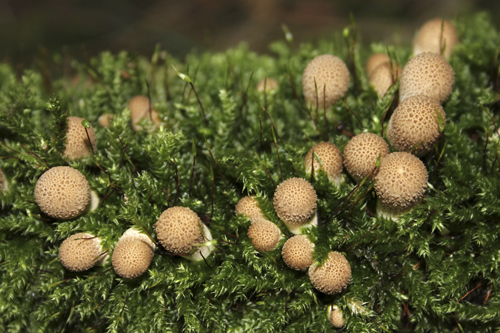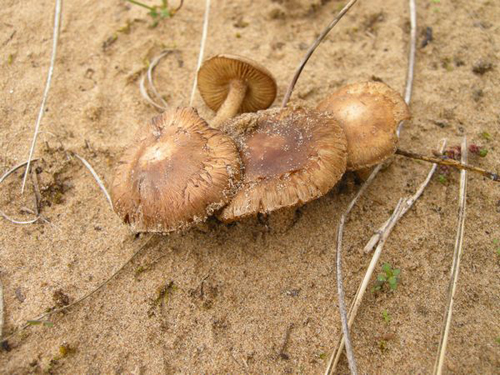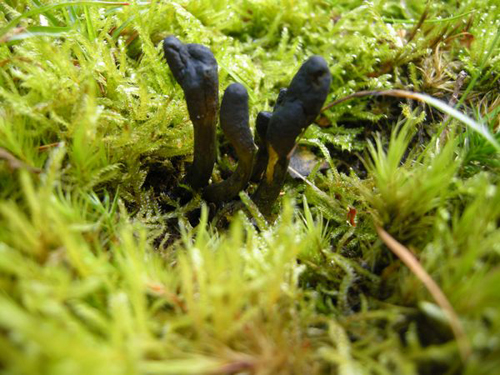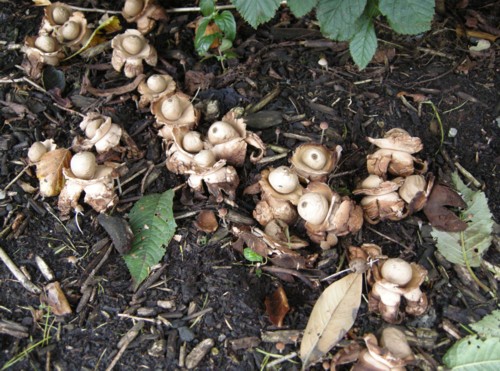
Freshfield Dune Heath and Ainsdale Woods, 8th Sept 2012

Tony Carter has sent a species list from our fungal foray at the weekend.

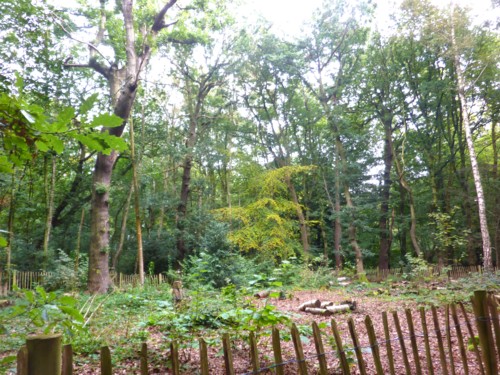
 AINSDALE WOODS

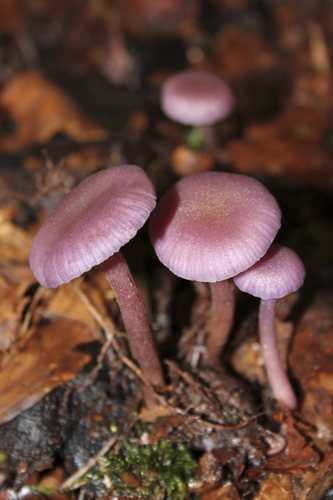
Chroogomphus rutilus                       Copper Spike  (See photo below)

croogomphus-rutilus.jpg

Lycoperdon pratense                          Meadow Puffball
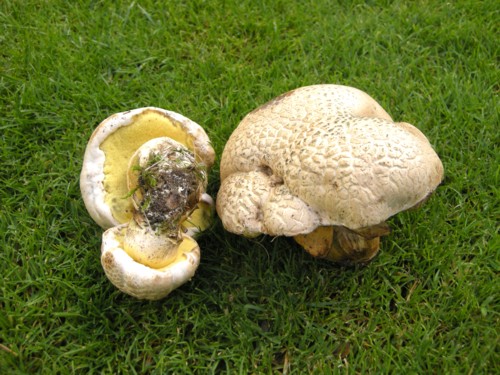
Suillus granulatus                                Weeping Bolete  (See photo below)

suillus-granulatus.jpg

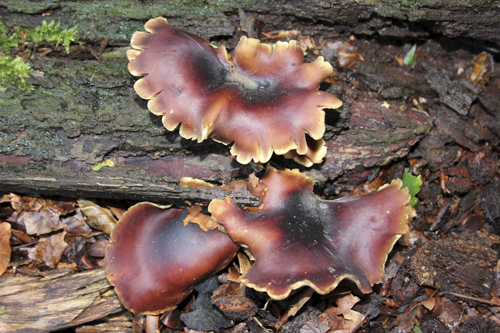
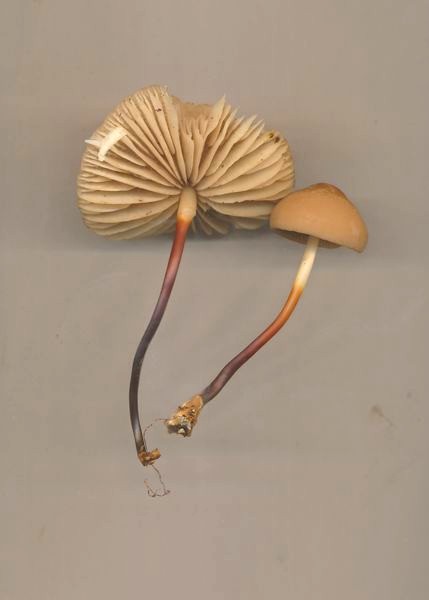
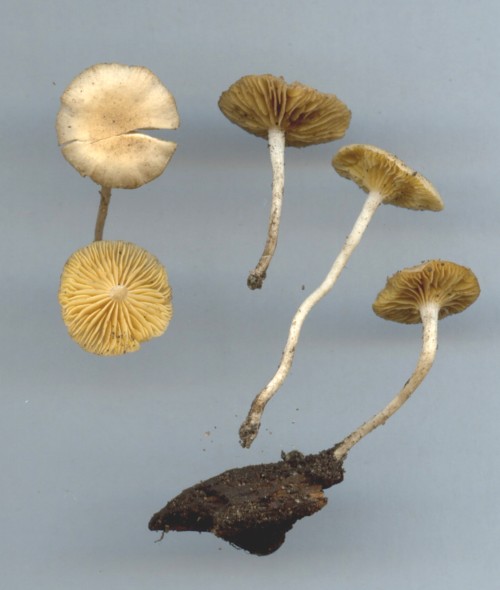
Panellus stipticus                                Bitter Oysterling (See photo below)
**First record for Ainsdale**

panellus-stipticus.jpg

Amanita citrina                                    False Deathcap
Russula xerampelina                        Crab Brittlegill
Piptoporus betulinus                          Birch Polypore

FRESHFIELD
Amanita muscaria                               Fly Agaric
Amanita rubescens var. rubescens
   Blusher
Boletus edulis
                                      Penny Bun
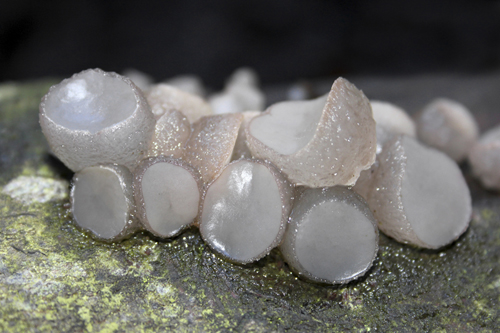
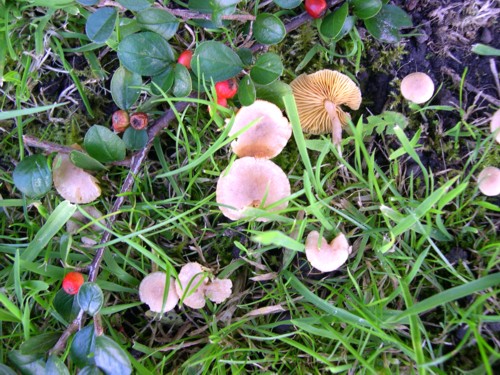
Cheilymenia granulata
                        (See photo below)

cheilmenya-granulata.jpg

Erysiphe alphitoides                            Powdery Oak Mildew
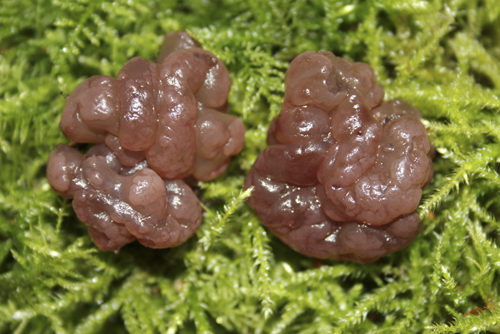
Fuligo septica

Laccaria laccata
                                  Deceiver
Lactarius tabidus
                                 Birch Milkcap
Leccinum scabrum
                             Brown Birch Bolete
Leccinum versipelle
                            Orange Birch Bolete
Mollisia cinerea
                                   Common Grey Disco
Orbilia xanthostigma
                           (See photo below)

orbilia-xanthostigma.jpg

Paxillus involutus
                                Brown Rollrim
Puccinia obscura                                Rust on Lazula  (See photo below)

puccinia-obscura.jpg

Phragmidium violaceum                    Blackberry Rust
Russula ochroleuca                           
Ochre Brittlegill
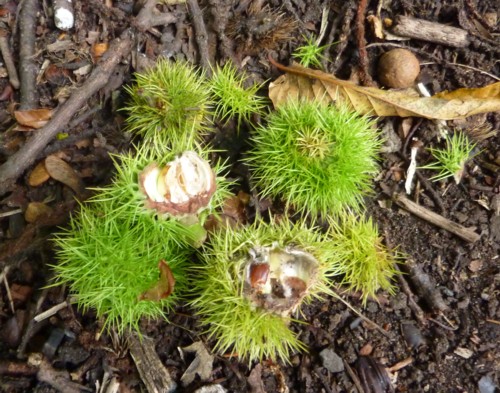
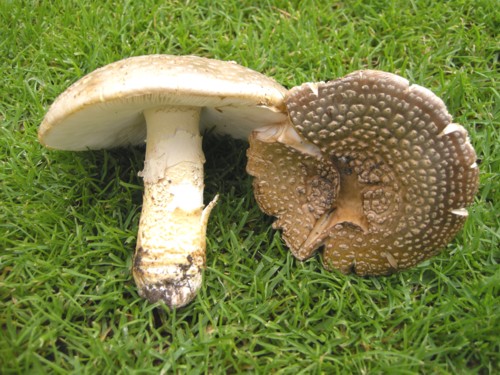
Scleroderma citrinum                          Common Earthball
Scleroderma verrucosum                   Scaly Earthball

Trichaptum abietinum
Lycoperdon pratense                          Meadow Puffball
Rhytisma acerrinum                           Tar Spot
Sawadaea bicornis                              Powdery Sycamore Mildew
Tremella mesenterica                         Yellow Brain
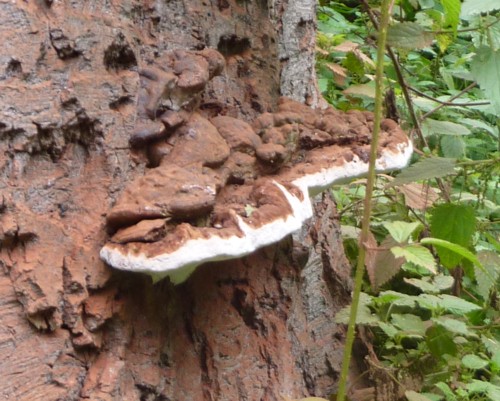
Ganoderma australe                           Southern Bracket

Posted in MNA reports | 1 Comment

Churchtown, 9th September 2012

To get to Churchtown, take the train to Southport then the 49 Crossens bus from Lord Street to Churchtown village, in the parish of North Meols. This Meols is pronounced “Meals”, whereas the one on the Wirral is “Mells”. It was a bright and sunny day, but just a little cooler than yesterday’s scorcher at Freshfield Dune Heath.

26-churchtown-old-forge.jpg

Many of the thatched cottages have amusing straw birds on their rooflines.

26-churchtown-thatch-ducks.jpg

26-churchtown-thatch-pheasant.jpg

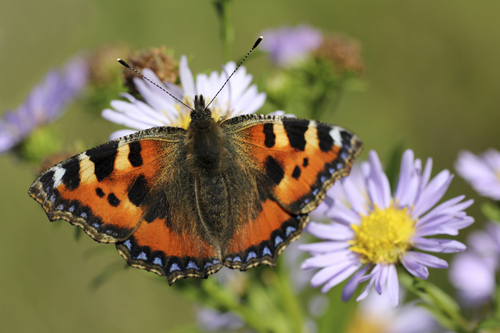
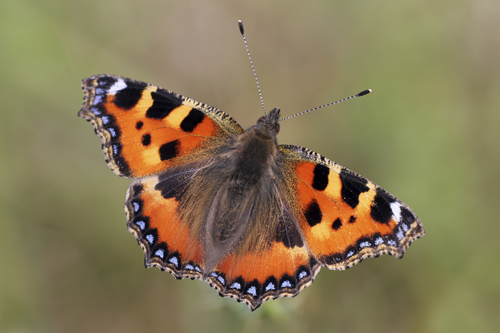
In North Meols Civic Garden there were about half a dozen Small Tortoiseshells on the Valerian by the church wall, and in the Botanic Gardens there were yet more of them on the Verbena in the ornamental beds. No Peacocks or Red Admirals, though.

26-churchtown-small-tortoiseshell.jpg

26-churchtown-botanic-gardens.jpg

The bicycle stands in the Botanic Park are shaped like penny-farthing bikes, and we saw the best wood sculpture we’ve seen for a long while – a dragon curled around a log.

26-churchtown-penny-farthing.jpg

26-churchtown-dragon.jpg

There were Mallards and Black-headed Gulls on the lake, and a Mute Swan pair with five big grey cygnets. A passer-by told us the pair had been just as successful with last year’s brood, and that the RSPCA (she thought) come in the autumn and take the young ones away. No sign of leg rings on any of them.

In the Aviary were several ornamental pheasants: a Golden Pheasant sulking in a corner, a Lady Amherst Pheasant, and a Silver Pheasant. They also had Peacocks, a Cockatoo and a Grey Parrot.

26-churchtown-golden-pheasant.jpg

26-churchtown-lady-amherst.jpg

As it was Heritage Open Day, St Cuthbert’s church was open. Near the path was a wonderful old gravestone bearing a skull and crossbones and the words “Death, how terrible thy approach.” No dates on it, but it’s probably from the eighteenth century.

26-churchtown-skull-gravestone.jpg

Of particular interest to us inside the church was the memorial on the wall next to the pulpit, to Thomas Fleetwood, the man who drained Martin Mere.

26-churchtown-fleetwood-memorial.jpg

The memorial  inscription is in Latin, but there is a helpful translation on a sign below it.
Thomas Fleetwood of Bank, Esquire, born of Staffordshire stock and of excellent lineage, a man truly honourable, refined and pleasant, and a favourite in this district, wished to have his bones laid here to rest. Having carried a drain to the sea hard by, he converted the immense Martin Mere into firm, dry land, a task which his forebears dared not attempt and posterity will scarcely believe. At no small expense and thinking of the public well-being rather than his own, he also erected a handsome bridge not far hence over an estuary. At length these labours done, he lay down and fell asleep, all too soon, on April 22nd 1717, at the age of 56. In sorrow, Letitia Fleetwood placed this memorial to her beloved husband.

Posted in Sunday Group | 1 Comment

Coronation Park, Ormskirk, 2nd September 2012

We had planned to go to Burscough, but the 12A bus we were expecting at Ormskirk failed to appear, so we went to the park instead.

25-ormskirk-flowerbed.jpg

The weather started out overcast and sultry, drizzled a little as we arrived at the park, but brightened up later.  While we ate our lunches in Coronation Park we were joined by a cheeky Black-headed Gull, who squawked and begged. It wasn’t a juvenile from this year, but John spotted that it had pink legs, not bright red ones, so it was probably a year-old bird.
25-ormskirk-bhg.jpg

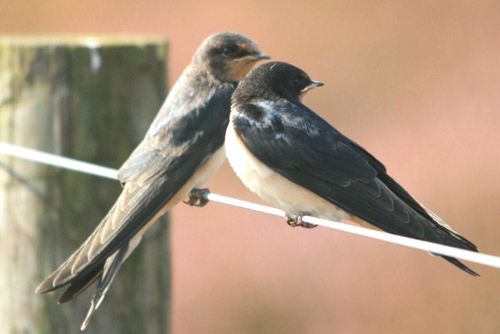
There were very few birds in the park – a few Wood Pigeons, some young Swallows over the field and lots of twittering Starlings, but nothing else apart from the ducks on the lake. They have a sign up about not throwing them unsuitable food, and it seems to have worked. When Bill dug out his final stash of duck pellets, they all loved it.

25-ormskirk-duck-feeding-sign.jpg

There were the usual Mallards. Two were completely white. Some of the drakes have finished their moult and have come into their full winter / breeding plumage. There was one young Moorhen, couple of young Coots and one Canada Goose. Not a great park for birdlife.

25-ormskirk-white-duck.jpg

After we had tried out the exercise equipment and noticed that the Brambles had ripening berries and a second crop of flower buds, we went to the church, which famously has both a tower and spire.

25-ormskirk-church.jpg

On the way back to the bus we noticed that the street benches have a tower and a spire as well!  Full marks to that designer.

25-ormskirk-bench.jpg

Posted in Sunday Group | 1 Comment

More Blacktoft Sands pics

Some more pics from our coach trip to Blacktoft Sands RSPB Reserve – courtesy Of Chris Derri

mna-cd-konik-pony.jpg

Konik Pony

mna-cd-grey-heron.jpg

Grey Heron

mna-cd-greenshank.jpg

Greenshank with fish

mna-cd-green-sand.jpg

Green Sandpipers

mna-cd-lt-tit.jpg

Long-tailed Tit

Posted in MNA reports | 1 Comment

MNA Coach Trip Blacktoft Sands RSPB Reserve 1st September 2012

mna-blacktoft.jpg

Nineteen MNA members joined the Coach trip across the Pennines to Blacktoft Sands RSPB Reserve on the Humber Estuary nr Goole in East Yorkshire. The reserve has a large tidal reedbed and saline lagoons and this provided good views of some migratory waders including Ruff, Spotted Redshank, Greenshank, Green Sandpiper and Snipe. Little Grebes were still feeding young and there were Gadwall, Mallard, Teal and Moorhen mooching around. The Marsh Harriers put on a good show and some members also viewed Peregrine and Hobby. One member was lucky enough to see a Bittern fly deep into the reeds on one of the small islands. Those infamous reedbed skulkers Water Rail and Bearded Tit were also viewed by a few members.

It was great to see the four Konik ponies – they are part of a very ambitious and serious trial to see how these ponies can be used to manage the grassland, fenland, scrub and pools to make them better for birds and other wildlife.

Most of the flowers now past their best but still flowering were Teasel Dipsacus fullonum, Marsh Thistle Cirsium palustre, Perennial Sow Thistle Sonchus arvensis, Greater Burdock Arctium lappa, Water Mint Mentha aquatica and Wild Angelica Angelica sylvestris.

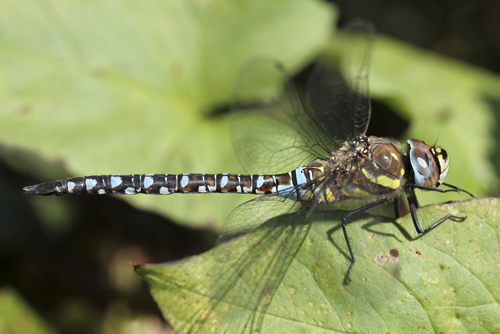
A few Butterflies battling with the wind Peacock Inachis io, Small White Pieris rapae and a few Silver Y Moths Autographa gamma hunkering down. A number of Migrant Hawkers Aeshna mixta were zooming past the hide windows and I managed to find one resting that posed for a pic.

mna-migrant-hawker1.jpg

Migrant Hawker

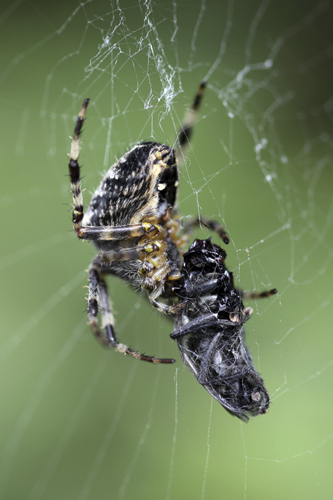
mna-blacktoft-garden-spider1.jpg 

Garden Spider

Plenty of Spiders around with Garden Spider Araneus diadematus, Autumn Spider Metellina segmentata a few different species of Wolf Spider and a female Harvestman Mitopus morio.

mna-blacktoft-pardosa-spider1.jpg

Wolf Spider

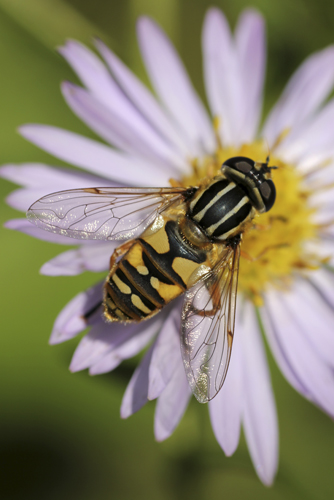
A number of the more common species of Hoverflies were noted Helophilus pendulus, Tapered Drone Fly Eristalis pertinax and Marmalade Hoverfly Episyrphus balteatus.

mna-blacktoft-dronefly1.jpg

Tapered Drone Fly

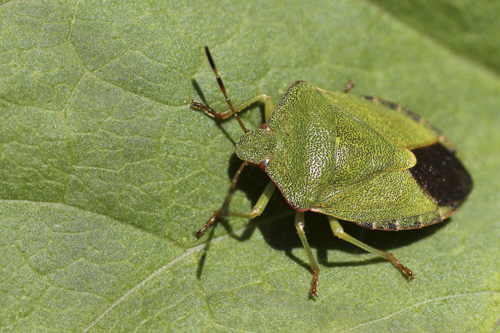
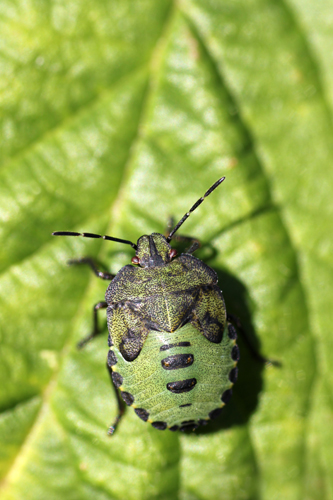
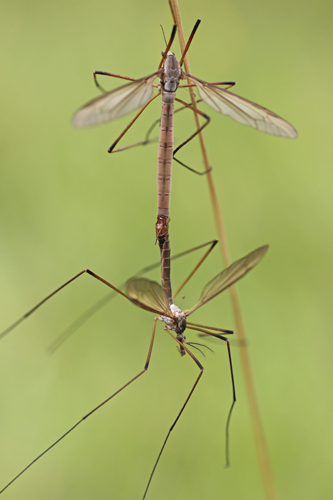
The umbellifers attracted a variety of insects including Turnip Sawfly Athalia rosae, Flesh Fly Sarcophaga sp. Muscid Fly Graphomya maculata, Tachinid Fly Eriothrix rufomaculata, Green Bottle Lucilia sp. Ichneumon Wasp Gasteruption jaculator, Ichneumon Wasp Pimpla rufipes, Common Wasp Vespula vulgaris, German Wasp Vespula germanica and Sand Wasp Ectemnius continuus. Other insects included a Green Shield Bug nymph Palomena prasina, a Marsh Damsel Bug Nabis limbatus, a few Chironomid Midges and the Crane Fly Tipula oleracea.

 mna-blacktoft-chironomid-midge1.jpg

Chironomid Midge

Galls included Blister Galls on Crack Willow Leaves Salix fragilis caused by the Sawfly Pontania proxima. A huge Common Frog Rana temporaria with fantastic markings sitting on the path was a nice find to end our day.

mna-common-frog1.jpg

Common Frog

Posted in MNA reports | 1 Comment

Bats in the Park, 23 Aug 2012

Eleven members and former members turned up at the south end of Sefton Park at 8pm. It was a perfect evening for bats – dry, warm and still. Three of us had bat detectors, so we set them to different frequencies and stolled along the west side of the lake and up to the café, detecting nothing. We spotted the Little Grebes, though, which was a first for some of the group. On the way back south we made detour up the stream to the east, where we heard the call of a Tawny Owl and Terry spotted a probable Daubenton’s bat over the narrow waterway.

The clickings from the detectors grew more frequent on the east side of the lake, some very fast, like the rude noise called a “raspberry”. Dave Hardy though those were Pipistrelles, but we didn’t see them. After some people had left, the remaining five or six of us saw and detected several more probable Daubenton’s bats over the lake, flying low and fast through a patch of pale reflected light from the sky. The clicks from the detectors were all around us now, and we turned to the lakeside trees and lit up the trunk of a pine with our torches. At least two bats were flying around at head height, clicking in the 45-50 kHz range. After a quick consultation of the FSC guide, we thought these might have been Natterer’s bats.

No Noctule bats were seen or detected, although they have been seen in Sefton Park in previous years.

A few nice pictures of British bats and their habitats are here:

Posted in MNA reports | 1 Comment

Garston Shore, 19th August 2012

24-garston-view-with-teasels.jpg

It was an overcast, muggy day, with a few spots of rain. We took the 80A bus to Banks Road / Garston Park and made our way through the Speke and Garston Coastal Reserve down to the shore path. On the mud were lots of Knot, some Redshanks, Oystercatchers, Lesser Black-backed Gulls, a few Curlews, Lapwings, a small horde of Ringed Plovers (perhaps 50-100) and one Greater Black-backed Gull. A small party of young Swallows flew south and some Goldfinches passed through. One Cormorant was sitting on a tall pole, silhouetted against the grey river. (Tracey Emin was paid megabucks for a sculpture just like this!)

24-garston-cormorant.jpg

We walked southwards along the shore path between wild edges of Bracken, Reeds, Bindweed, Nettle and Rose Bay Willowherb. There are very few Cinnabar Moth caterpillars on the Ragwort this year, so it’s blooming beautifully. Spear Thistle, Wild Mint, Common Bistort, Teasels, and Yarrow with some pinkish flowers caused (according to my book) by cross-pollination from garden cultivars.

24-garston-spear-thistle.jpg

Spear Thistle

24-garston-wild-mint.jpg

Wild Mint

24-garston-common-bistort.jpg

Common Bistort

24-garston-pink-yarrow.jpg

(Pinkish) Yarrow

The only butterflies we saw were one each of Gatekeeper and Meadow Brown.

24-garston-golden-mound.jpg

In a small park near the B & M warehouse there is a path leading back to the old airport building. When they landscaped it the men with the diggers had fun making rows of mounds on either side of the path, and now it looks like a processional way lined with the burial mounds of ancient kings. Some flowers prefer the drier conditions on top, so some of the mounds are capped with gold. At the back end there is an area like an amphitheatre with four mounds arranged like a star.

24-garston-four-mounds.jpg

We tried to get into Speke Hall by the back way but the gates were welded shut. Someone has decided that all visitors will come in through the turnstiles!  It was drizzling then, so we headed back to town. On the way back we admired the rows of mature trees along Brodie Avenue which were just starting to turn red with autumn. Were they planted after City Engineer Brodie died in 1934 or are they younger than that? There were once tram tracks down the middle of Brodie Avenue so perhaps the trees weren’t planted until the tram tracks were taken up (in the 1950s?).

Posted in Sunday Group | 1 Comment

Little Crosby, 12th August 2012

From Hall Road station we walked along Hall Road East, admiring the houses and gardens. The Rowan berries are red now and the blackberries are ripening. At the junction of Manor Road a narrow path leads through nettles and brambles into the fields around Little Crosby.  It was cooler, overcast and breezy, but we expected it to be sunny later.

23-little-crosby-willow-ditch.jpg

23-little-crosby-blackberries.jpg

We took the left-hand path towards Sniggery Wood, crossed the footbridge over the ditch and entered the wood. It’s quite narrow, with light coming in on either side, but silent and without much wildlife. There were some bird boxes up, and I saw a Robin earlier in the week, but nothing today. The wood is apparently the haunt of groups of anti-social lads who camp and drink. We emerged onto the path to return to Dibb Lane, and spoke to a dog walker who said there is a regular Barn Owl over the fields and that he had seen Weasels playing on Ackers Lane.

23-little-crosby-flax.jpg

On the south-west side of the path was a meadow with sparse wheat and wildflowers, including a lovely blue one which may have been Perennial Flax. The field of Oil-seed Rape had recently been harvested, while the potato field to the south was in flower. The only birds were two Lapwings and a Wood Pigeon. The rain started then, and just as we got to Little Crosby Village there was a heavy downpour, so we dived into the Wellbarn and through an open door into the office of a small aromatherapy business called Carribean Essentials.

We had a damp lunch in the churchyard then walked up Delph Road where there are two big buddleias. Earlier in the week I’d seen a Peacock and a Comma, but there was only a Green-veined white today. On the lawn at the back of The Courtyard restaurant  we saw a Blackbird and a Robin.

23-little-crosby-garden.jpg

Then the sun came out as we made our way back along Dibb Lane. The long hedge was full of Wild Roses and ripening Rose Hips. About a dozen white butterflies and a Meadow Brown emerged into the sunshine. The young Swallows were out too. Along the path leading to Sniggery Wood a Magpie was stalking slowly, hunting for something. Then a Moorhen passed us in heavy flight, long legs dangling, heading for splashdown in the ditch.

23-little-crosby-wild-roses.jpg

23-little-crosby-white-butterfly.jpg

At home, the first Peacock of the year was feeding on my own Buddleia.

Posted in Sunday Group | 2 Comments

Haskayne, 11th August 2012

Report from John Clegg

Six members travelled out by bus from Liverpool and were joined at Haskayne by a further five.  On a sunny and warm day the walk started off with a Buzzard flying high, with a large number of Swallows over the fields. Yellowhammer were singing in the fields and we finally saw one at the lunch stop among the wildflower meadow of Haskayne Cutting LNR.  There was an abundance of butterflies there, too.

After lunch Sid found he had been sitting on a nest of Yellow Meadow Ants!  Just as the group was leaving the cutting Chris Butterworth spotted a female Southern Hawker laying eggs into a small pool.

We continued along the Leeds-Liverpool canal, where there was a large number of young Mallard. A high point was a good close view of a Banded Demoiselle.

Seen on the day:
Birds (25 species). Wood Pigeon, Swallow, House Martin, Carrion Crow, House Sparrow, Kestrel, Robin, Greenfinch, Lesser Black-backed Gull, Dunnock, Yellowhammer, Heron, Chaffinch, Goldfinch, Buzzard, Collared Dove, Starling, Mallard, Coot, Moorhen, Mute Swan, Magpie, Blackbird, Black-headed Gull and Hobby.
Butterflies (15 species). Large White, Green-veined White, Speckled Wood, Peacock, Meadow Brown, Gatekeeper, Comma, Painted Lady, Ringlet, Small Skipper, Holly Blue, Common Blue, Small Tortoiseshell, Small White and Small Copper.
Dragonflies and Damselflies (5 species). Banded Demoiselle, Common Blue Damselfly, Common Red Darter, Brown Hawker and Southern Hawker.

Posted in MNA reports | 1 Comment

Sefton Park, 5th August 2012

22-sefton-park-flowers-and-cottage.jpg

It was a very hot and sunny day, with the threat of thundery showers, but we missed one downpour whilst we were on the bus. The park lake had only pigeons at the south end, but there were lots of Black-headed Gulls and Coots at the top. I counted five Coot nests, some of them still with youngsters, since Coots nest all through the summer. One Mallard had four very late ducklings. There was a Mute Swan and a well-grown cygnet on the island, some Canada Geese, a Moorhen and just one Little Grebe. I got rid of the last of the duck and swan food to the BHGs, who dived for it enthusiastically, and the very last crumbs went onto the bird table by the Palm House.  Near the bandstand in the upper lake, a very young Heron posed picturesquely on the bank.

22-sefton-park-view-with-heron.jpg

The terrapins were probably all removed when the lake was drained a few years ago, but the rats are still flourishing. One was creeping out of a crevice under a rock to snaffle turnip peelings left by someone. Did they think the birds would eat it?

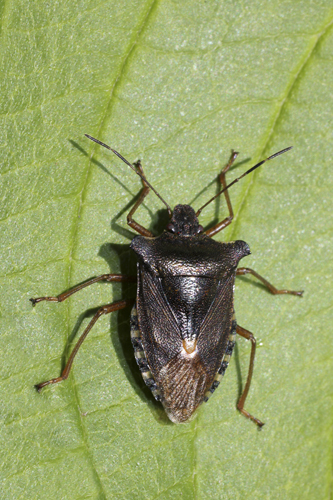
The gardeners are allowing much of the grass to grow long and the lake banks are full of natural wild flowers. This may be why we saw more insects than usual. There were two species of butterfly, a Green-veined White and a Ringlet, plus a Brown Hawker dragonfly and a damsel fly, possibly a Blue-tail. Clouds of midges or gnats were circling over the water. On the railing I spotted a splendid brown Shield Bug with an orange and brown edging. I think it was Pentatoma rufipes, a common and widespread species which usually lives in trees. It was hopefully climbing up each semi-circular rail top, only to find itself guided down again.

22-sefton-park-shield-bug.jpg

At the Eros statue we were reminded of the flights of fancy of the former Park Ranger, Ritchie Baker, who always asserted that it was “Eros’s younger brother”

22-sefton-park-eros-younger-brother.jpg

The wildflower bank by the Palm House was looking past its best, and the only creatures were the little animals on the Peter Pan statue – mice, frogs, and a lizard. But we nodded to the statues of the secular saints of natural history, Darwin and Linnaeus.

22-sefton-park-linnaeus.jpg

A brief thunderstorm overtook us in the Dell, and as we sheltered under the trees we spotted the Moorhens and Squirrels doing the same under the Rhododendrons.

Posted in Sunday Group | 1 Comment