Ainsdale NNR Fungal Foray 29th Sept 2012

From Tony Carter

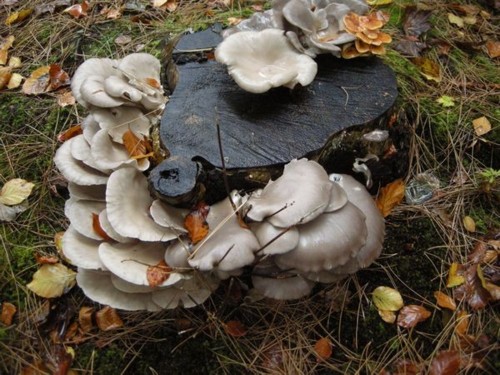
On Saturday, 29th, I led a short foray at Ainsdale Sand Dunes Reserve for the public, on behalf of Peter Gahan, the Reserve Manager. Fortunately, the sun shone.

We managed to identify over thirty of the more common species. 

I also came across a couple of more unusual species. 

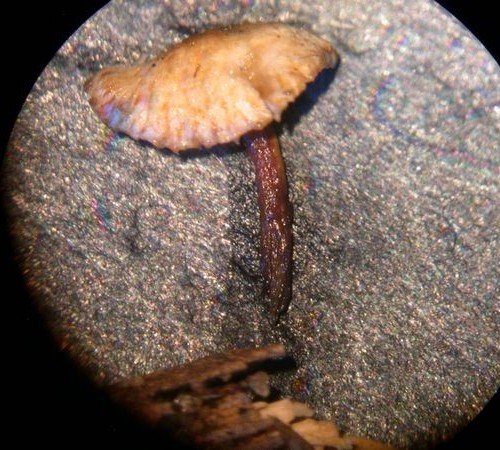
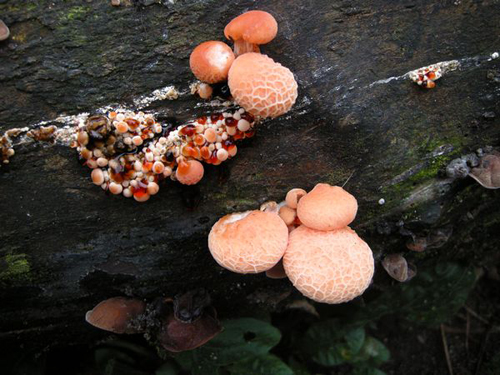
The first was Inocybe serotina, a sand dune specialist. It is rarely reported but this may be because it is usually buried deep into the substrate and not many people foray on sand dunes.

mna_inocybe-serotina-ainsdale-0912.jpg  

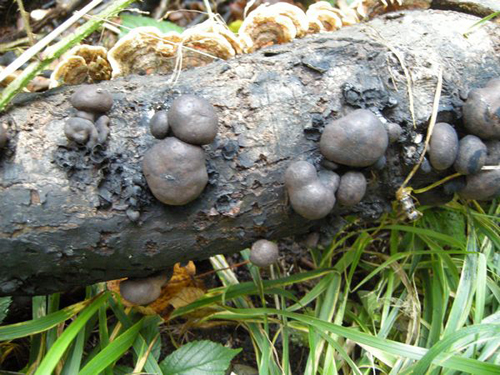
The second was Cordyceps ophioglossoides (Snaketonge Truffleclub). Related to the species that grow on moth pupae, this is a parasite of an Elaphomyces (False Truffle). The particular area once hosted lots of these but they disappeared about three years ago. It was nice to see it had returned. It is possible to dig the truffle up, it is not edible, but we left it for future discovery.

mna_cordyceps-ophioglossoides-ainsdlae-0912.jpg

Posted in MNA reports | 1 Comment

After the Monsoon

From Tony Carter

I avoided the monsoon rains yesterday to take a look at the shrubbery in Calderstones Park, Liverpool. It runs from the Harthill Road end, where the model railway is, towards the main path leading to the Hall. There are hundreds of Geastrum triplex (Collared Earthstar) at the moment. It looks like an invasion. They can also be found, in smaller numbers, in most of the beds, being attracted by the woodchip.

geastrum-triplex-calderstones-0912.jpg

Another excellent find was of Marasmius cohaerens, a species usually associated with south-east England.

marasmius-cohaerens-calderstones-0912.jpg

The picture above is taken on my scanner. It produces a better result than my camera as nothing moves. Cover your subject with a box to keep external light out. Try it. Most of the pictures in books about fungi are taken this way.

Posted in MNA reports | 1 Comment

Eastham, 23rd September 2012

On a cool, overcast, autumnal morning we took the no. 1 Chester bus to New Chester Road opposite Christ the King church, then headed down the footpath into Eastham Woods. We didn’t see any ground fungi but the recent winds had blown down some ripening sweet chestnuts.

28-eastham-sweet-chestnut.jpg

On an old tree were some plump brown and white bracket fungi whose copious spores were dropping down to make the tree bark look red and rusty. Later identified as the perennial Artist’s Fungus, Ganoderma applanatum. Apparently the white underside can be scratched with a sharp point to leave brown marks and thus create pictures.

28-eastham-artists-fungus.jpg

A pile of old logs had a crop of white bracket fungi sprouting from the cut ends. Since they were mostly white they were probably not the common Turkey Tail, and may have been Beech Bracket Pseudotrametes gibbosa.

28-eastham-beech-bracket.jpg

Much of the wood is devoid of ground cover, but there is one place where they are trying to rectify that. There is a fenced-off area called “Bill’s Glade”, the place where the chainsaw sculptor Bill Welch used to work, before his death in 2008. Groups of volunteers have cut down the tallest trees to let sunlight reach the ground and planted Hazel, Rowan, Yew, Dogwood, Bramble, Holly, ferns, Foxgloves and other woodland wildflowers. It will be interesting to watch it develop.

28-eastham-bills-glade.jpg

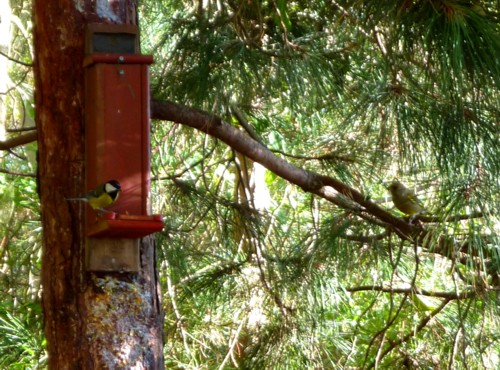
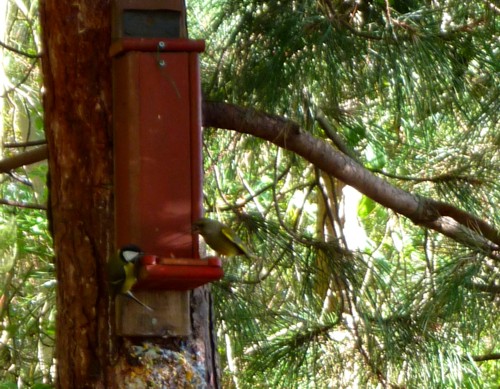
At the bird feeding area at the back of the Visitors’ Centre we saw Blue Tits, Great Tits, a Coal Tit, Chaffinches, Dunnock, and two Nuthatches coming in from opposite directions, who didn’t want to be friends – one left the feeder as soon as the other arrived. A Grey Squirrel sat on a convenient tree stump and carefully studied the biggest feeder, but eventually decided he couldn’t get past the baffle.

28-eastham-shore.jpg

Down by Eastham Ferry, we got the brunt of the blustery east wind and we regretted not bringing woolly hats and gloves. There was a great view over to Liverpool city centre, though. The tide was well out, exposing the big sandbank in the middle of the river. On it were a murder of crows, lots of Black-headed Gulls and a Heron fishing in the shallows. Two more Herons flew low over the water, beating their way upriver. Along the fences were several bushes of wild clematis, gone to seed, known as Old Man’s Beard or Traveller’s Joy.

28-eastham-old-mans-beard.jpg

As we made our way back to the bus we saw a Buzzard hanging motionless on the wind. There was one late Swallow over the playing fields and some BHGs on the grass, with one or two Common Gulls. Then a mixed flock of Pied Wagtails, Goldfinches and Meadow Pipits dropped in and started hunting through the turf.

Posted in Sunday Group | 1 Comment

Pennington Flash 22nd September 2012

mna-pennington-flash1.jpg

Four MNA members met at Lime St to catch the train to Newton-le-Willows and the 34 bus to Pennington Flash. We were running late and unlikely to meet those members arriving by car by 11am so Barbara phoned the leader Alexander to inform him only to find that he had forgotten he was leading the walk and was in
Belfast! Barbara hot hoofed it round to meet the six others and DaveB, Eileen and I had a pleasant amble round the trail the squawking of Jays noting our arrival. Blue skies overhead and a crisp freshness in the air – great conditions. Tufted Duck, Pochard, Coot and Great Crested Grebe joined the Black-headed Gulls and a Common Gull on the main lake. A sheltered sunny spot held plenty of Hoverflies Helophilus pendulus, Eristalis tenax, Eristalis pertinax, Eristalis abusivus, Syrphus ribesii, Episyrphus balteatus, Leucozona glaucia basking in the sunshine or feeding on the garden escapee Mile a Minute Vine Fallopia baldschuanica along with Blue Bottle Calliphora vomitoria and Flesh Fly Sarcophaga sp.

mna-pennington-flash-marmalade-hoverfly1.jpg

Marmalade Hoverfly Episyrphus balteatus

The much criticised invasive species Himalayan Balsalm Impatiens glandulifera was also a mass of activity with many insects including Honey Bee Apis mellifera, Buff-tailed Bumble Bee Bombus terrestris, Common Carder Bee Bombus pascuorum and Common Wasp Vespula vulgaris crawling into the bell-flowers and emerging covered in pollen giving them a white-washed appearance.

mna-pennington-flash-himalayan-balsalm1.jpg

Himalayan Balsalm

mna-pennington-flash-pollen-wasp1.jpg

Pollen-covered Common Wasp

A Migrant Hawker Aesha mixta rested on vegetation and posed for a few pics. This was to be the most numerous Dragonfly of the day with around eight individuals seen patrolling their patch around the edge of the reserve’s ponds along with three Brown Hawkers Aeshna grandis and a male Common Darter Sympetrum striolatum. 

mna-pennington-flash-migrant-hawker1.jpg

Migrant Hawker

An adult Common Green Shieldbug Palomena prasina and a Red-legged Shieldbug Pentatoma rufipes were also seen.

mna-pennington-flash-red-legged-sheildbug1.jpg

Red-legged Sheildbug

mna-pennington-flash-green-sheildbug1.jpg

Green Sheildbug adult

The usual gaggle of Mute Swans, Mallards, Coot, Canada Geese and a Muscovy Duck all vied for the visitors attention and food hand-outs. From Horrock’s Hide there were cutey Snipe – around fourteen birds hiding out in the vegetation beside the spit along with Lapwings, Grey Heron and sentinel Cormorants on the wooden posts in the water. Barbara’s group had great view of a Kingfisher from here as it flew across and landed on a post before being chased off by a Black-headed Gull before returning again to a post.  From New Hide a Sparrowhawk shot across, the dozen Gadwall mooching on the water didn’t even react. We took the detour loop away from the motorway of dog-walkers down to Ramsdale’s Hide.

mna-pennington-flash-green-shieldbug-nymph1.jpg

Green Sheildbug nymph

I nosed outside in the vegetation finding another adult and a nymph Common Green Shieldbug Palomena prasina, Nettle Tap Moth Anthophila fabriciana, Black-lipped Banded Snail Cepea nemoralis, a couple of Harlequin Ladybirds Harmonia axyridis f. succinea and another unidentified pale orange form of Harlequin that barely had any spots, a lone Peacock Inachis io and a couple of Small Tortoiseshell Aglais urticae feeding on a clump of Michaelmas Daisy Aster sp. DaveB had earlier seen a rather faded Holly Blue Celastrina argiolus and Barbara’s group noted four Red Admirals Vanessa atalanta feeding on a Buddleia.

mna-pennington-flash-heliophilus-pendulus1.jpg

Hoverfly Heliophilus pendulus

mna-pennington-flash-small-tortoiseshell1.jpg

Small Tortoiseshell

We arrived at the canal bank and watched a group of girls lead their ponies down the zig-zag track through a patch of flowering wildflowers. Most wildflower meadows finished flowering over a month ago so this recently sown area was a real treat with Corncockle Agrostemma githago, Cornflower a.k.a. Bachelor’s Button Centaurea cyanus, Corn Marigold Chrysanthemum segetum and Ox-eye Daisy Leucanthemum vulgare attracting yet more Hoverflies.

mna-pennington-flash-wildflowers.jpg

 Wildflowers

mna-pennington-flash-cornflower1jpg.jpg

Cornflower

We continued along the woodland track finding a number of the Alder trees held sun-basking Alder Leaf Beetles Agelastica alni the record was ten Beetles on one leaf and a few Speckled Wood Pararge aegeria.

mna-pennington-flash-alder-leaf-beetle1.jpg

Alder Leaf Beetles

mna-pennington-flash-speckled-wood1.jpg

Speckled Wood

Teal Hide gave good views of Shoveler plus the usual Mallards and Coot.Bunting Hide came up trumps, the feeders attracting a couple of male and a juvenile Bullfinch, plenty of Chaffinch, a family group of eight Greenfinch, Blue Tits, Great Tits, a few Coal Tits, two Willow Tits, two Nuthatch, one of this years juvenile Robins, Blackbird, three Stock Dove, five Mallards, eight Magpies and a couple of Grey Squirrels. We watched as a Greenfinch performed the splits with feet on adjacent feeders, an enormous Magpie clinging to a fat-ball feeder and a lithe Grey Squirrel squeeze through the corner bars of a caged feeder to munch on the bird seeds within – the black sunflower seeds seemed to be its fave. We hoped it didn’t eat too much rendering it unable to squeeze back out through the bars. A Great-spotted Woodpecker called and flew across as we left the hide before we returned the bustle of the car-park. We finally caught up with Barbara and exchanged sightings before it was time for our return home.

Posted in MNA reports | 1 Comment

Fossils, rocks and pubs, 16th September 2012

It was warm, bright and clear first thing, and although heavy rain had been forecast it didn’t really come down until about 2 o’clock when we were nearly at Sandhills on our way home.

Liverpool Geological Society published a little booklet in 2001 called “Rock around Liverpool”, which we used as our guide to rock and fossil hunting. The Queen Victoria Monument has sandstone steps at the bottom, then carboniferous grey limestone. Many of the limestone steps, especially opposite the Courthouse, show large fossil Brachiopod shells, a species of Productus. There is a pound coin for scale on the picture below.

27-liverpool-brachiopods.jpg

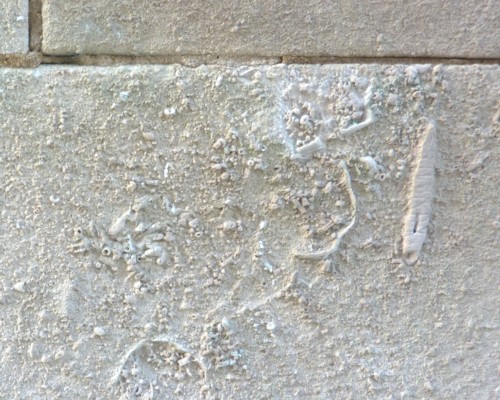
The upper part of the monument is Portland Roach stone, a shelly oolitic limestone coming from the uppermost part of the Portland Stone Formation of the Upper Jurassic Period on the Isle of Portland in Dorset. It contains several casts or moulds of the turreted shell known to the quarrymen as the “Portland screw” (Aptyxiella portlanica). The biggest is about an inch long. They are on the wall behind the figure of the men holding a ship.

27-liverpool-portland-screws.jpg

The doorstep of no. 47 Castle Street should be made of Rapakivi granite, the oldest building stone in Liverpool, quarried in Finland and said to be 1.5 billion years old. Alas, the step has been re-tiled. But there is more of it at the bottom of the former Allied Irish Bank on the corner of Dale Stret and Exchange Street East (now Venmure).

27-liverpool-rapakivi-granite.jpg

On Castle Street, outside the NatWest Bank is a stone in the parking bay called the “Sanctuary Stone”, about a foot across. It’s historically significant as a marker of one of the boundaries of the old Liverpool Market. “Rock around Liverpool” says. “Remarkably it is of a coarsely fragmental rock, a volcanic agglomerate, derived from Ordovician Borrowdale from the Lake District. Probably got to Liverpool as a glacial erratic.”

27-liverpool-sanctuary-stone.jpg

We also admired some of the historic monuments and buildings on our route. The former Adelphi Bank on Castle Street (now Café Nero), as well as having “a base of red granite, surmounted by alternate tiers of red Triassic sandstone and white oolitic limestone” has remarkable bronze doors depicting four pairs of friends or brothers from ancient writings, David and Jonathan (from the Bible), Achilles and Patroclus (from the Iliad), Roland and Oliver (from the Song of Roland) and Castor and Pollux (the twins who sailed with Jason and the Argonauts).

27-liverpool-adelphi-doors.jpg

The Nelson monument on Exchange Flags includes an allegorical skeleton representing Death, reaching out from under the victory flags to clutch at Nelson’s heart. (This photo by Torl Portl at Flickr http://www.flickr.com/photos/torlporl/2741342356/)

27-liverpool-nelsons-death.jpg

We looked at some great old pubs, too. Thomas Rigby’s on Dale Street is one of two claiming to be Liverpool’s oldest, supposedly founded in 1726. The staff let us in for a look around before opening time, and we went in the Nelson Room, where the great man is said to have had an assignation with Lady Hamilton. The front door and the gargolyles are fantastic.

27-liverpool-rigby-door.jpg

27-liverpool-rigby-gargoyles.jpg

The other claimant to be the oldest pub is just around the corner in Hackins Hey, Ye Hole in Ye Wall.

27-liverpool-hole-in-wall.jpg

Opposite the pub is a very curious piece of ironwork, bearing the name of William Bennett. There was a man of that name who was a civil engineer from about 1790 to 1825, and one of his early projects was surveying an extension to the Manchester, Bolton and Bury Canal to join the Leeds Liverpool Canal, then being proposed. Is this sign connected to his work?

27-liverpool-william-bennet-ironwork.jpg

Our last pub was the Lion Tavern on the corner of Moorfields and Tithebarn Street. One of the rooms has a glass cupola with a giant lamp.

27-liverpool-lion-cupola.jpg

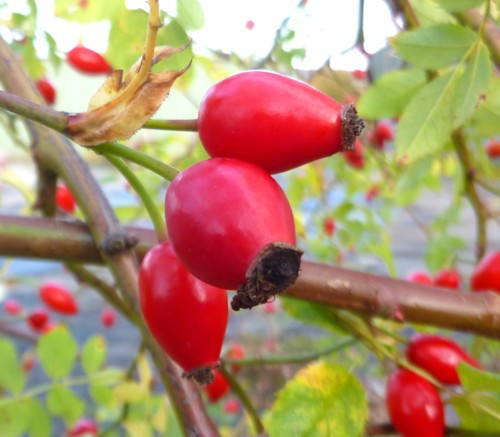
After lunch we walked along Great Howard Street, joined the canal at Stanley Locks and walked to Sandhills. Apart from the usual urban pigeons, the only birds were some Mallards, a Coot, two Canada Geese and a Mute Swan with no apparent leg rings. But the autumn bounty is coming out along the canal verge – rose hips, hawthorn berries and the shiny red fruit of Viburnum, looking like bunches of redcurrants.

27-liverpool-viburnum.jpg

Posted in Sunday Group | 1 Comment

Dibbinsdale 15th September 2012

I joined fourteen members of the Liverpool Botanical Society walk around Dibbinsdale NR. It was billed as a fungal foray but there seems to be a distinct lack of fungi at the moment only a few common species were found – Coral Spot Fungus Nectria cinnabarina, Sycamore Tar Spot Fungus Rhytisma acerinum, King Alfred’s Cakes Daldinia concentrica, Black Witches Butter Exidia glandulosa, Dead Man’s Finger’s Xylaria polymorpha, Turkeytail Trametes versicolor, Southern Bracket Ganoderma australe, Jelly Ear Auricularia auricula-judae, Hairy Stereum Stereum hirsutum and Smoky Bracket Bjerkandera adusta. 

mna-dibbinsdale-cramp-ball1.jpg

King Alfred’s Cake

Compare this with a few years ago when Dibbinsdale was a mass of interesting fungi finds with Orange Peel Fungus Aleuria aurantia, Funeral Bell Galerina marginata and Upright Coral Ramaria stricta.  see Blog Archive Sept & Oct 2010

The Botanists were kept busy identifying the plant, fern and tree species we encountered during our walk. Some of the plants were still in flower such as Common Fleabane Pulicaria dysenterica, Common Ragwort Senecio jacobaea, Tufted Vetch Vicia cracca, Himalayan Balsalm Impatiens glandulifera, Thyme-leaved Speedwell Veronica serpyllifolia,Brooklime Veronica beccabunga, Lesser Stitchwort Stellaria graminea, Self-heal Prunella vulgaris, Round-leaved Mint Mentha suaveolens, Yellow Loosestrife Lysimachia vulgaris, Hedge Bindweed Calystegia sepium, Hedge Woundwort Stachys sylvatica, Wild Angelica Angelica sylvestris, Hogweed Heracleum sphondylium and Greater Celandine Chelidonium majus whereas others had gone to seed – Enchanter’s Nightshade Circaea lutetiana, Herb Bennet a.k.a Wood Avens Geum urbanum, Sanicle Sanicula europaea, Common Sorrel Rumex acetosa, Great Willowherb Epilobium hirsutum, Purple Loosestrife Lythrum salicaria, Ribwort Plantain Plantago lanceolata, Greater Plantain Plantago major and Teasel Dipsacus fullonum. 

Interesting Ferns included Hart’s-tongue Fern Phyllitis scolopendrium and Broad-leaved Buckler Fern Dryopteris dilatata. The leaves of one of the Horse Chestnut Trees were beginning to turn red – it is predicted to be a great year for autumnal colours! Other Trees of note included Small-leaved Lime Tilia cordata and European Hornbeam Carpinus betulus with its distinctive seeds.

mna-dibbinsdale-hornbeam-seeds1.jpg

Hornbeam Seeds

A few Galls were found on the Oak Trees – Oak Knopper Gall caused by the Gall Wasp Andricus quercuscalicis and Oak Marble Gall caused by the Gall Wasp Andricus kollari and a Bedeguar a.k.a. Robin’s Pincushion Gall on Dog Rose Rosa canina caused by the Gall Wasp Diplolepis rosae. 

mna-dibbinsdale-marble-gall1.jpg

Oak Marble Gall

Birdlife included Buzzard, Nuthatch, Jay, Coal Tits and Bullfinches. There were plenty of Insects and Invertebrates to keep me snapping – Butterflies included Small White Pieris rapae, Small Tortoiseshell Aglais urticae, Red Admiral Vanessa atalanta, Comma Polygonia c-album and Speckled Wood Pararge aegeria.

mna-dibbinsdale-small-tortoiseshell1.jpg

Small Tortoiseshell

A couple of Micromoth species enjoying the Common Ragwort Senecio jacobaea – Nettle-tap Anthophila fabriciana (a common species sometimes found in large numbers around Nettles Urtica dioica, the larval foodplant) and the Apple Leaf Skeletonizer Choreutis pariana (so-called because of the larva’s habit of eating away the parenchyma from the upper surface of leaves of the foodplant Malvus sp. resulting in a skeleton leaf appearance)

mna-ragwort-moth1.jpg  mna-ragwort-moth2.jpg

Nettle-tap (l), Apple Leaf Skeletonizer (r)

Garden Spiders Araneus diadematus were busy again with many capturing prey in their webs – also a few Autumn Spiders Metellina segmentata and a Nursery Web Spider Pisaura mirabilis.

mna-dibbinsdale-garden-spider-prey1.jpg

Garden Spider enjoying lunch

mna-dibbinsdale-green-grasshopper1.jpg

Common Green Grasshopper

Other finds included adult and nymph Green Shield Bug Palomena prasina, Ichneumon Wasp Pimpla rufipes, a pair of mating Craneflies Tipula paludosa and Common Green Grasshopper Omocestus viridulus.

mna-dibbinsdale-mating-craneflies1.jpg

Mating Craneflies

Posted in MNA reports | 1 Comment

After the foray

From Tony Carter, 12th September 2012
After the foray at Freshfield on Sunday, 9th, I travelled back to Liverpool South Parkway, where I had left my car. Driving into Long Lane dual carriageway at Garston, I noticed some fungi on the central reservation. On Tuesday, dodging the showers, I went back to see what they were. I was very surprised to find, under an Oak, a number of Boletus radicans (Rooting Bolete), a species I had never seen before.

boletus-radicans-0912.jpg

Beside them were a couple of Amanita franchetii, a species I found for the first time last year on another central reservation in Allerton.

amanita-franchetii-2-liverpool-19-0912.jpg

The literature describes both these species as being common in southern England but unusual for the north. I am not certain where the ‘Liverpool Riviera’ lies for the purposes of fungal geography. These species may have been here for years without being noticed but having regard to recent finds of other southern species here and in Manchester, it does suggest that our north west climate is becoming more attractive to such fungi.

Posted in MNA reports | 1 Comment

Seeing Red

From Tony Carter, 9th September 2012
A fungus that I always look for in hedgerows is Tubaria dispersa (previously T. auctocthona). This attractive little species is found under Hawthorn and grows out of the buried, mummified berries. I look for older, overgrown hawthorn trees where the ground underneath is bare of undergrowth. Whether this is because the fungus likes this or because I can see them more easily, I can only speculate.  When it fruits it usually does so in good numbers. If you dig carefully, you can often extract the specimen complete with the host berry.

tubaria-dispersa-allotment.jpg

There is an old hawthorn hedge surrounding my allotment site, where this fungus grows every year but only under one of the trees. One side of the allotments backs on to the gardens of private houses. One householder had grown a cotoneaster, which was tumbling over the boundary fence. Last week, I was surprised to see some small fungi growing under the bush. I was even more surprised to discover they were Tubaria dispersa. They were nowhere near their usual site under the hawthorn. I therefore consulted my Checklist and discovered that Cotoneaster is an alternative host for this fungus.

It clearly likes red.

tubaria-dispersa2-allotment.jpg

Tubaria dispersa with cotoneaster

Posted in MNA reports | 1 Comment

More Freshfield pics

Some more photos from our Freshfield meeting on 8th September 2012 courtesy of Chris Derri

mna-cd-tree-bumblebee.jpg

Tree Bumblebee

mna-cd-swallow.jpg

 Recently Fledged Swallows

mna-cd-common-darters.jpg

Mating Common Darters

mna-cd-ruddy-darter.jpg

 Ruddy Darter male

mna-cd-garden-spider.jpg

Garden Spider With Prey 

mna-cd-spitfire.jpg

Spitfire

Posted in MNA reports | 1 Comment

Fungal Foray 8th September 2012

mna-freshfield-fly-agaric1.jpg

Fly Agaric

A great turnout with twenty MNA members including some new faces joining our Fungal Foray around Freshfield Dune Heath and the Formby Pinewoods. Member Tony Carter provided invaluable expertise with fungi identification during the day. The weather was sunny and dry as we walked along toward the small wood adjacent to the dune heath – not your ideal fungal foray conditions but various species were quickly found! Sycamore Tar Spot Rhytisma acerinum and Red Pustule Galls caused by the Mite Aceria macrorhynchus a.k.a. Eriophyes macrorhynchus were on Sycamore leaves Acer pseudoplatanus. As we bravely entered the tangled undergrowth of the wood we added Artist’s Bracket Ganoderma sp. Brown Rollrim Paxillus involutus, Ochre Brittlegill Russula ochroleuca, Fly Agaric Amanita muscaria, a rather slug-attacked Blusher Amanita rubescens, Orange Birch Bolete Leccinum versipelle and Brown Birch Bolete Leccinum scabrum. We eventually reached the more open area in the wood where we found Birch Milkcap Lactarius tabidus, Green Elfcup Chlorociboria aeruginascens, The Deceiver Laccaria laccata, Penny Bun Boletus edulis, Split Porecrust Schizopora paradoxa, Turkeytail Trametes versicolor and Scaly Earthball Scleroderma verrucosum.

mna-scaly-earthball1.jpg

Scaly Earthball

A cute young Common Frog Rana temporaria posed on a log before hopping into the leaf litter and there was evidence of Red Squirrels being around with nibbled pine cones.

mna-freshfield-frog1.jpg

Common Frog

mna-squirrel-chewed-pine-cones1.jpg

Nibbled Pine Cones

We ate lunch as a Jay squawked above us then headed out into the sunshine of the heath. A Tree Bumblebee Bombus hypnorum caused excitement and clicking of cameras as it fed on the Ling Calluna vulgaris. It was first recorded in England in 2001 at a site in Hampshire and has rapidly spread North since.

mna-tree-bumblebee.jpg

Tree Bumblebee

Butterflies, Spiders and Dragonflies took centre stage for a while as Peacock Inachis io and Small Tortoiseshell Aglais urticae joined the numerous Hoverflies on the Ragwort Senecio jacobaea. Small Copper Lycaena phlaeas and Common Blue Polyommatus icarus led photographers a merry dance as they failed to settle. Spider’s webs covered the Gorse bushes with a few Autumn Spiders Metellina segmentata and numerous Garden Spiders Araneus diadematus taking advantage of the Hoverfly food supply.

mna-autumn-spider1.jpg

Autumn Spider

mna-garden-spider-with-prey1.jpg

Garden Spider With Hoverfly Prey

Good numbers of Common Darter Sympetrum striolatum were joined by the svelte of waist Ruddy Darters Sympetrum sanguineum and a few Migrant Hawkers Aeshna mixta.

mna-freshfield-ruddy-darter1.jpg

Ruddy Darter male

The Penduculate Oak Trees Quercus robur on the Dune Heath were taking their usual hammering with Oak Marble Galls caused by the Gall Wasp Andricus kollari, Oak Artichoke Gall caused by the Gall Wasp Andricus fecundator, Oak Common Spangle Gall caused by the Gall Wasp Neuroterus quercusbaccarum, a number of Leaf Miners caused by Micro-moths – a larvae was at home in one of the leaf-mines and Oak Powdery Mildew Erysiphe alphitoides. A few more Fungi species with Meadow Puffball Vascellum pratense and some micro-fungi – Common Grey Disco Mollisia cinerea and Orbillia xanthostigma and Cheilymenia granulata on cow dung. Swallows posed as they gathered on the fence wires gearing themselves up for their forthcoming migration – this year’s youngsters looking drabber in appearance to the adults. Various vintage aeroplanes from taking off from Woodvale en route to the Southport Airshow also put on a good show for us as they performed aerial displays and looped the loop overhead – the MNA delivers!

mna-loop-the-loop1.jpg

We crossed the railway track and golf course and into the pinewoods where a few Speckled Wood Pararge aegeria flitted around in the dappled sunlight. A number of Russulas were found including Bloody Brittlegill Russula sanguinea with its bright red cap and pink coloured stem and Crab Brittlegill Russula xerampelina which has a characteristic odour of shellfish. Three life stages of the False Deathcap Amanita citrina were seen together and Weeping Bolete Suillus granulatus, a Pine Spike-cap Chroogomphus rutilus and Bitter Oysterling Panellus stipticus were also noted.

mna-pine-spikecap1.jpg

Pine Spike-cap

mna-bitter-oysterling1.jpg

Bitter Oysterling

A few spikes of Green-flowered Helleborine Epipactis phyllanthes had gone to seed and more Galls with Stem Galls on Narrow-leaved a.k.a. Leafy Hawkweed Hieracium umbellatum caused by the Gall Wasp Aulacidea hieracii and Bedeguar a.k.a. Robin’s Pincushion Gall on Dog Rose Rosa canina caused by the Gall Wasp Diplolepis rosae.

 mna-hawkweed-gall1.jpg

Stem Gall On Leafy Hawkweed

mna-robins-pincushion-gall1.jpg

Robins Pincushion Gall

A Buzzard circled overhead and a Great-spotted Woodpecker called as we wandered back out of the pinewoods after a fungi and wildlife packed day.

Posted in MNA reports | 1 Comment