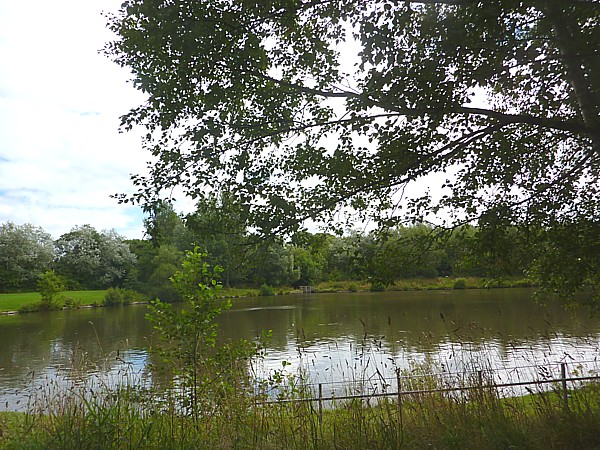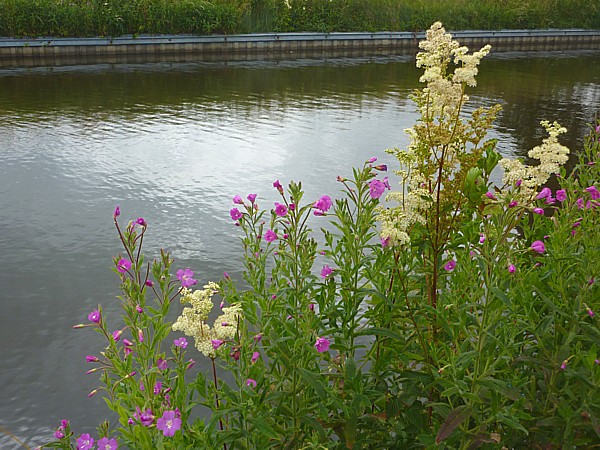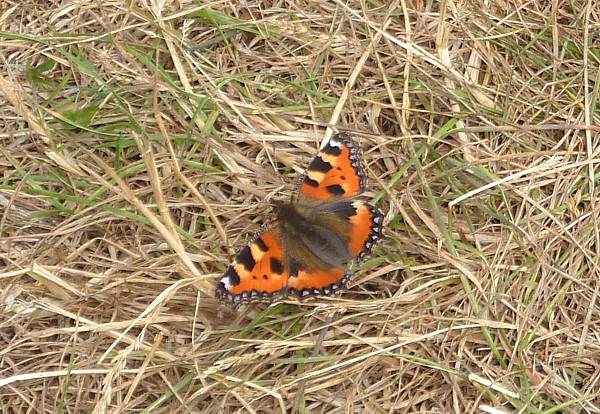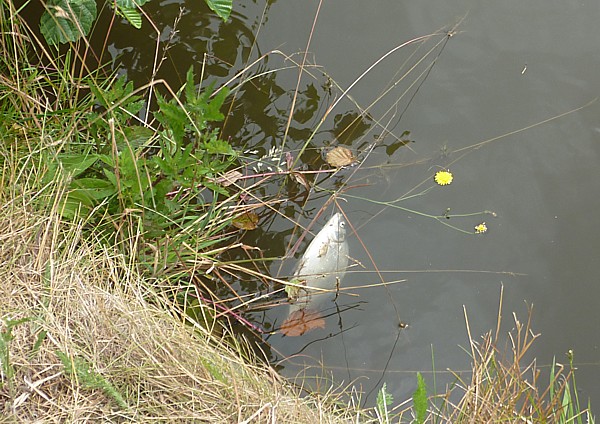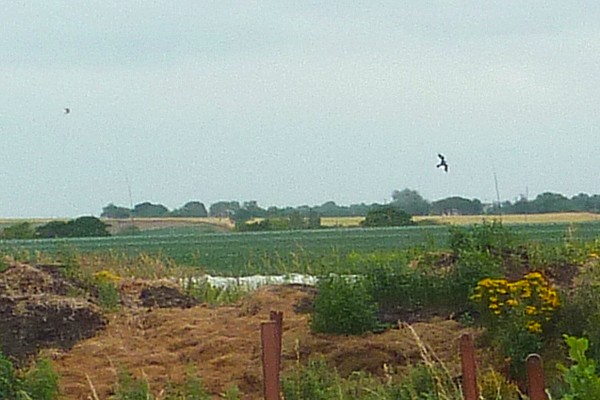
Whitegate Way 13th July 2013

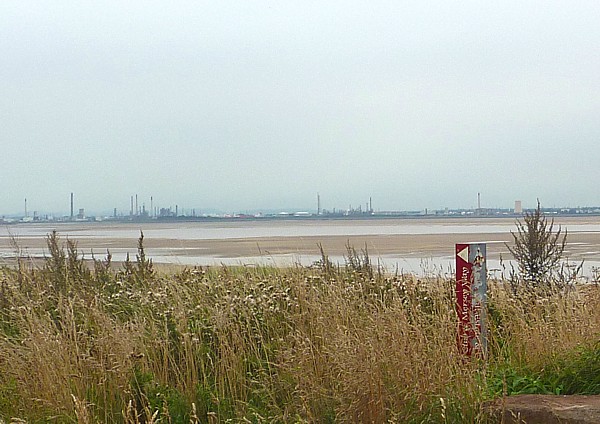
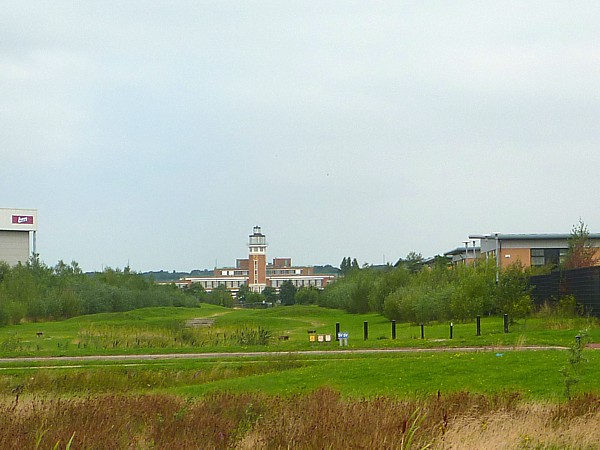
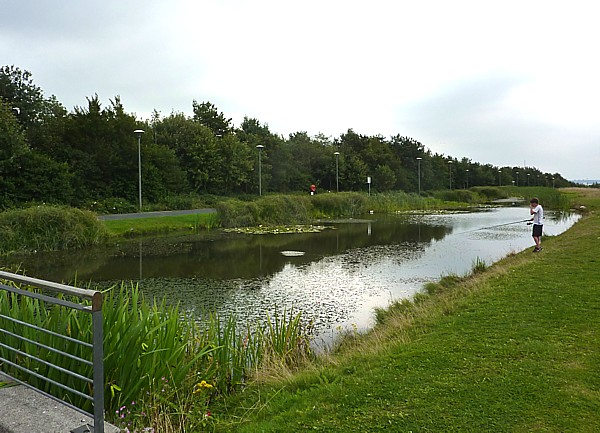
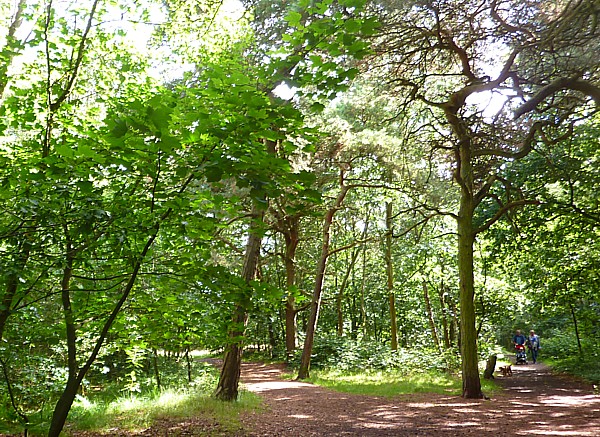
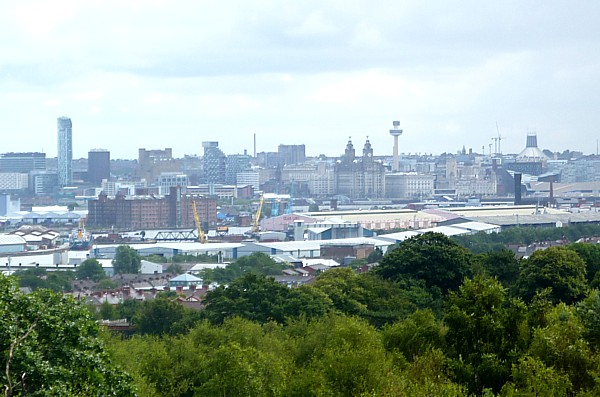
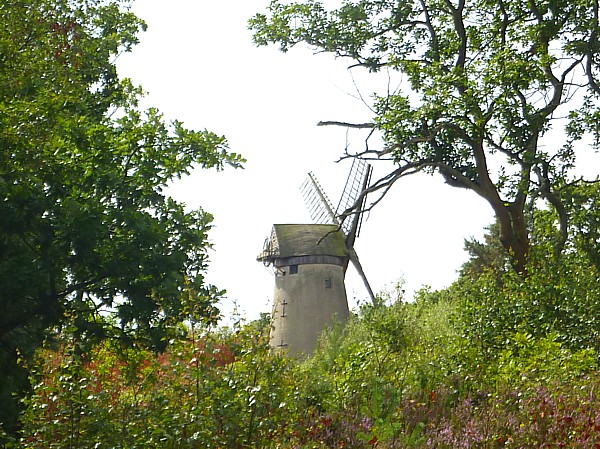
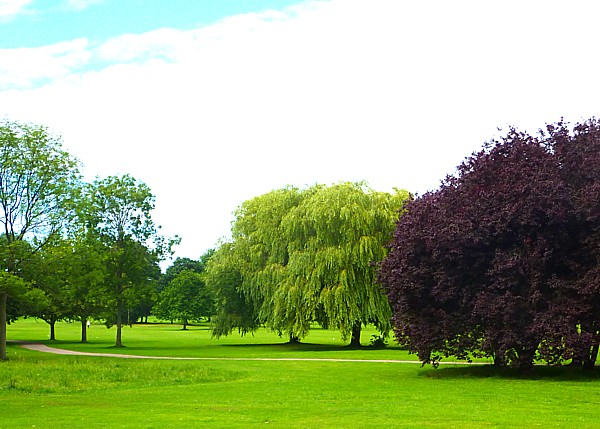
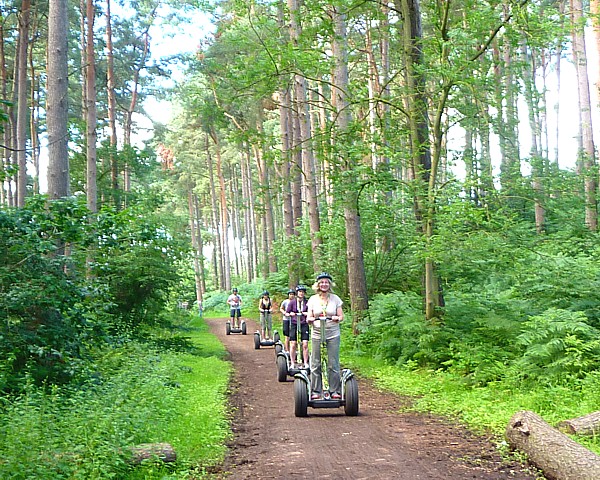
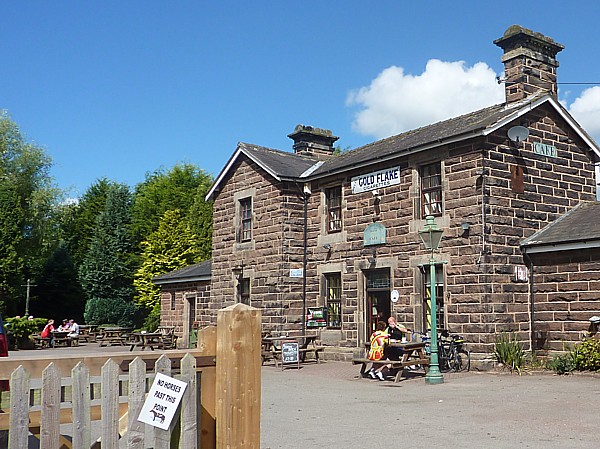
(Report from John Clegg).  On the hottest day of the year so far, nine menbers joined the tailback of traffic that took 30 minutes to cross the Runcorn Bridge. Whitegate Way is an old railway line, opened on 1st June 1870, to transport salt from the mines along the west bank of the River Weaver to the main Chester-Manchester line at Cuddington.  The line closed in 1966 and is now a shared-use path.

From the car park at the old Whitegate Station the group walked eastwards towards Winsford. As the day was very hot, most of the birds took to cover, so we didn’t see many.  Those we did see were mostly warblers, although we did hear a Green Woodpecker in two places.

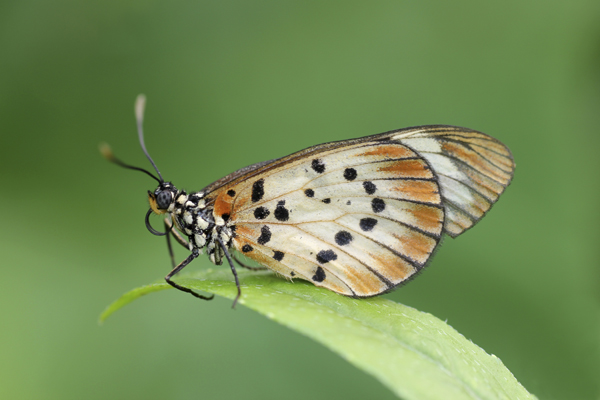
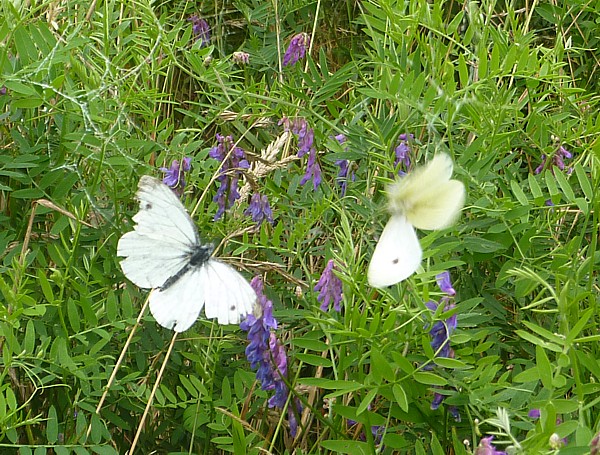
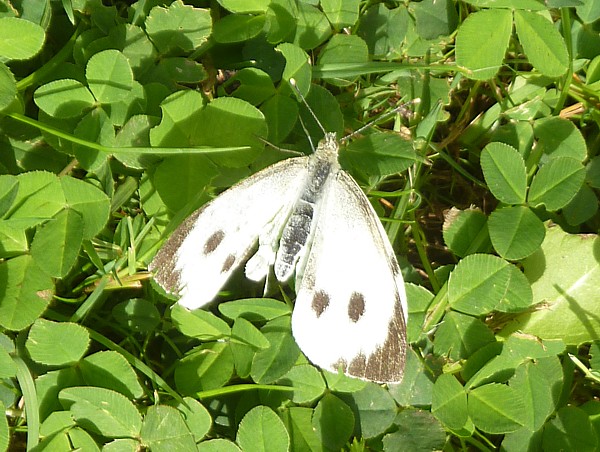
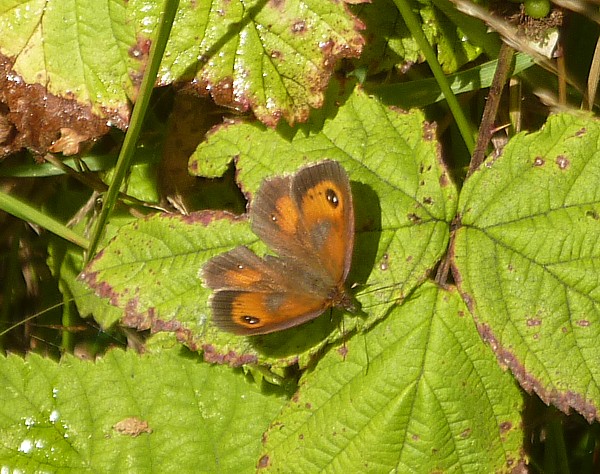
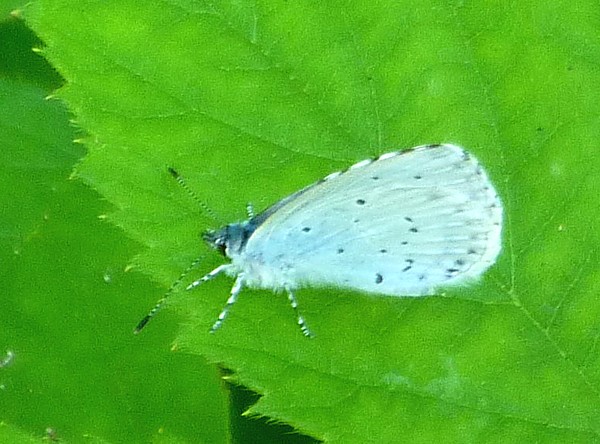
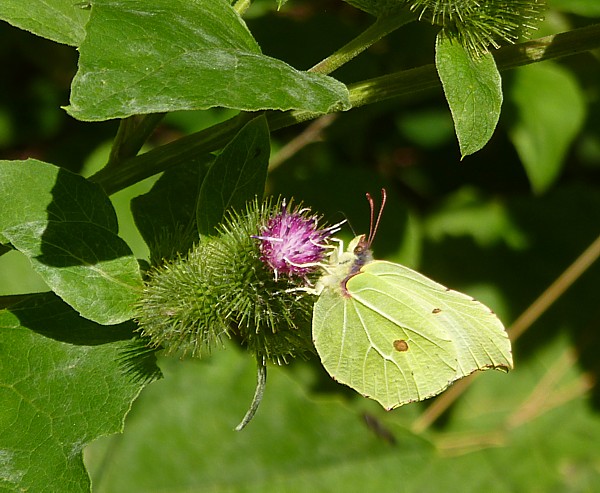
In the bright sunshine many butterflies came out, including Comma, Meadow Brown, Large and Small Whites and two sightings of Brimstones.

The only drawback was the large number of cyclists using the path as a race track, with no consideration for walkers. None of them had bells to warn when they were coming up behind, and one cyclist just missed runing into our group.

Posted in MNA reports | Comments Off on Whitegate Way 13th July 2013

Shark-tagging 10th July 2013

MNA Tuskar Dogfish1

Small-spotted Catshark (a.k.a. Lesser Spotted Dogfish) Scyliorhinus canicula

MNA Tuskar Mackerel1

Atlantic Mackerel Scomber scombrus

Fantastic day Shark-tagging with the Liverpool Bay Marine Life Trust – unfortunately we didn’t catch any of the Shark species we were hoping to tag (Tope, Common or Starry Smooth Hound) but had lots more besides…
MNA Tuskar Thornback Ray1

Thornback Ray Raja clavata

MNA Grey Gurnard1

Grey Gurnard Eutrigla gurnardus

MNA Lesser Weever Fish1

 Lesser Weever Fish Echiichthys vipera

MNA Nursehound1

Bull Huss (a.k.a. Nursehound, Greater Spotted Dogfish) Scyliorhinus stellaris

 MNA Red Gurnard1

Red Gurnard Aspitrigla cuculus

MNA Red Gurnard2 

MNA Tuskar Fulmar1

Northern Fulmar

Cetacean’s seen included Harbour Porpoise Phocoena phocoena and Bottle-nosed Dolphin Tursiops truncatus. Also great birding with Storm Petrel, Manx Shearwater, Gannet, a Bonxie, Fulmar, Puffin, Guillemot, Med Gull etc. Full report in this years forthcoming MNA newsletter 🙂

Posted in MNA reports | Comments Off on Shark-tagging 10th July 2013

MNA Coach Trip Lathkill Dale 6th July 2013

MNA Lathkill Dale1

As in previous years today’s MNA coach trip to Lathkill Dale was again blessed with hot and sunny weather. Lathkill Dale is one of the country’s finest limestone valleys and is one of five such valleys in the WhitePeak area that make up the Derbyshire Dales National Nature Reserve.

MNA Lathkill Dale Dog Rose1

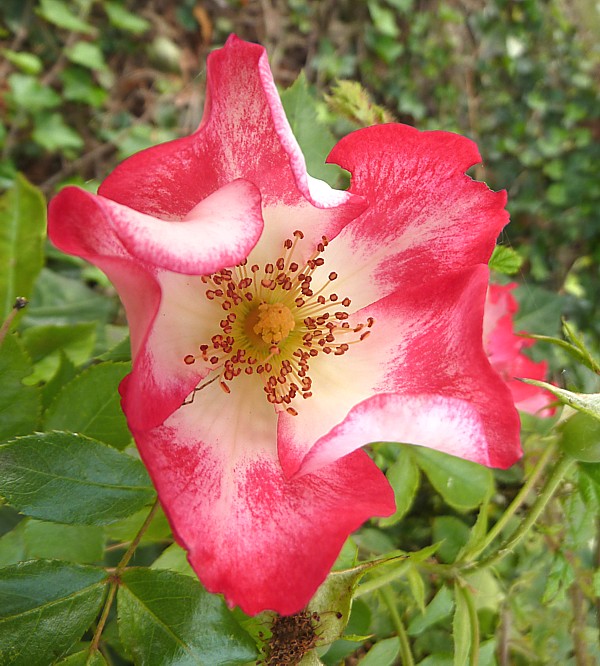
Dog Rose

A large climbing Dog-rose Rosa canina covered a fence beside the entrance gate to the meadow area at the beginning of the walk was covered in Meadow Buttercup Ranunculus acris along with Lady’s Smock a.k.a. Cuckooflower Cardamine pratensis, Salad Burnet Sanguisorba minor, Bird’s-foot Trefoil Lotus corniculatus, Tufted Vetch Vicia cracca, Common Vetch Vicia sativa, Fairy Flax Linum catharticum, Common Milkwort Polygala vulgaris, Meadow Crane’s-bill Geranium pratense, Dove’s-foot Crane’s-bill Geranium molle, Herb Robert Geranium robertianum, Cow Parsley Anthriscus sylvestris, Pignut Conopodium majus, Hogweed Heracleum sphondylium, Field Forget-me-not Myosotis arvensis, Wood Sage Teucrium scorodonia, Greater Plantain Plantago major, Hoary Plantain Plantago media, Ribwort Plantain Plantago lanceolata.

MNA Lathkill Dale Hoary Plantain1

Hoary Plantain

Heath Speedwell Veronica officinalis, Germander Speedwell Veronica chamaedrys, Crosswort Cruciata laevipes, Welted Thistle Carduus crispus, Spear Thistle Cirsium vulgare, Creeping Thistle Cirsium arvense, Greater Knapweed Centaurea scabiosa, Common Knapweed Centaurea nigra, Nipplewort Lapsana communis, Common Cat’s-ear Hypochaeris radicata, Goat’s-beard Tragopogon pratensis, Prickly Sow-thistle Sonchus asper, Beaked Hawk’s-beard Crepis vesicaria, Mouse-ear Hawkweed Pilosella officinarum, Yarrow Achillea millefolium, Oxeye Daisy Leucanthemum vulgare, Pineappleweed Matricaria discoidea, Common Ragwort Senecio jacobaea, Early-purple Orchid Orchis mascula and there was Nettle Rust Puccinia urticata on Stinging Nettle Urtica dioica.

MNA Lathkill Dale Meadow Cranesbill1

Meadow Crane’s-bill

A few Common Green Grasshoppers Omocestus viridulus were stridulating away and numerous Chimney Sweep Moths Odezia atrata were flying around along with a few Snout Moths Hypena proboscidalis and ‘Grass’ Moths.

A whole range of Ferns were identified including Common Polypody Polypodium vulgare, Black Spleenwort Asplenium adiantum-nigrum, Maidenhair Spleenwort Asplenium trichomanes, Wall-rue Asplenium ruta-muraria, Brittle Bladder-fern Cystopteris fragilis and Male-fern Dryopteris filix-mas.

MNA Lathkill Dale Stretch Spider1

Common Stretch Spider

An unidentified Spider was wandering about its web, a Zebra Spider Salticus scenicus was on a stone wall and a Common Stretch Spider Tetragnatha extensa was in camouflage mode on a grass head. We noted our first Large Red Damselflies Pyrrhosoma nymphula and Common Blue Damselflies Enallagma cyathigerum attracted by the small pond hidden from immediate view behind a stone wall.

A few stunning male Redstarts were calling, Wrens in song, Barn Swallows and Swifts zooming overhead, Rooks and Jackdaws flying over

Entering the wooded area there was Herb Bennet aka Wood Avens Geum urbanum and some large clumps of Water Avens Geum rivale that were being visited by the Hoverfly Rhingia campestri plus Lords and Ladies Arum maculatum. A lone Common Spotted-orchid Dactylorhiza fuchsia was hiding amid some ferns.

MNA Lathkill Dale Common Spotted Orchid1

Common Spotted Orchid

I noted a few insects with a few Common Red Soldier Beetle Rhagonycha fulva, a lone Soldier Beetle Cantharis rustica, three Orchid Beetles Dascillus cervinus, a handful of Scorpion Flies Panorpa communis and a Nettle-tap Moth Anthophila fabriciana. There wasn’t the usual profusion of Hoverflies on the umbellifers with only a single Volucella pellucens. Ash Leaflet Roll Gall on Ash Fraxinus excelsior leaves caused by the plant louse Psyllopsis fraxini was noted.

MNA Lathkill Dale Orchid Beetle1

Orchid Beetle

MNA Lathkill Dale2

We were now in the dramatic setting of the central gorge with limestone cliffs on either side. A fenced off area was to protect the mass of Jacob’s Ladder plants. A few plants were situated outside the fence area which allowed for photos.

MNA Lathkill Dale Jacobs Ladder1

Jacob’s Ladder

MNA Lathkill Dale Biting Stonecrop1

Biting Stonecrop

Rocky boulders were covered in Biting Stonecrop Sedum acre, Wild Thyme Thymus polytrichus, Harebell Campanula rotundifolia, Lady’s Bedstraw Galium verum, Limestone Bedstraw Galium sterneri and some orange patches of Lichen.

MNA Lathkill Dale Lichen1

Lichen

The botanists noted a multitude of other flora including Greater Stitchwort Stellaria holostea, Red Campion Silene dioica, Large Bitter-cress Cardamine amara, Hairy Rock-cress Arabis hirsuta, Orpine Sedum telephium, Dropwort Filipendula vulgaris, Meadowsweet Filipendula ulmaria, Silverweed Potentilla anserina, Tormentil Potentilla erecta, Black Medick Medicago lupulina, Red Clover Trifolium pratense, Great Willowherb Epilobium hirsutum, Broad-leaved Willowherb Epilobium montanum, Eyebright Euphrasia officinalis, Cleavers Galium aparine, Common Valerian Valeriana officinalis, Small Scabious Scabiosa columbaria.

MNA Lathkill Dale Common Blue1

Common Blue

We were encouraged to see the variety and numbers of Butterflies on the wing noting Small Skipper Thymelicus sylvestris, Dingy Skipper Erynnis tages, Brimstone Gonepteryx rhamni, Orange Tip Anthocharis cardamines, Common Blue Polyommatus icarus, Small Tortoiseshell Aglais urticae, Red Admiral Vanessa atalanta, Peacock Inachis io, Pearl-bordered Fritillary Boloria euphrosyne, Dark Green Fritillary Argynnis aglaja, Speckled Wood Pararge aegeria, Meadow Brown Maniola jurtina, Small Heath Coenonympha pamphilus and a couple of Brown Plume Moths Emmelina monodactyla.

Ravens flew over the gorge croaking and an adult Peregrine circled overhead. Those members that reached the River now a mere trickle added Mallard and Grey Wagtail to the list.

Returning to the start of the walk an Emperor Dragonfly Anax imperator was on the small pond behind the stone wall and at a large fenced off pond four male and two female Broad-bodied Chasers Libellula depressa were in high-speed aerial combat mode. Plenty of Large Red Damselfly Pyrrhosoma nymphula, Common Blue Damselfly Enallagma cyathigerum and Blue-tailed Damselfly Ischnura elegans with a few mating pairs.

MNA Lathkill Dale Common Blue Damselfly1

Common Blue Damselfly

A wide photographic selection of birds, marine life, insects, mammals, orchids & wildflowers, fungi, tribal people, travel, ethnography, fossils, rocks & minerals etc. is available on my Alamy webpage

If you are interested in the wildlife of the North-west of England and would like to join the  walks and coach trips run by the Merseyside Naturalists’ Association, see the main MNA website for details of our programme and how to join us.
Posted in MNA reports | Comments Off on MNA Coach Trip Lathkill Dale 6th July 2013

Llyn Peninsula, Wales 4th July 2013

MNA Trefor Boats

Escaping from work for the day Richard Surman kindly drove Dave Bryant and I to the Llyn Peninsula in Gwynedd, North Wales. Our first stop was the small fishing village of Trefor. The tide was out leaving the fishing boats resting on the wet sand beside the harbour wall.

MNA Trefor Yellow Poppy

Yellow-horned Poppy

Typical maritime plant species growing amongst the shingle edge of the harbour and on the path included Yellow Horned-poppy Glaucium flavum, Spear-leaved Orache Atriplex prostrate, Thrift Armeria maritima, Common Mallow Malva sylvestris, Kidney Vetch Anthyllis vulneraria, Hemlock Water-dropwort Oenanthe crocata, Sea Carrot Daucus carota, Common Centaury Centaurium erythraea, Carline Thistle Carlina vulgaris, Yarrow Achillea millefolium and also three spikes of Common Spotted-orchid Dactylorhiza fuchsia.

A small meadow area held a few Butterflies with Common Blue Polyommatus icarus and Meadow Brown Maniola jurtina along with half a dozen Six-spot Burnet Zygaena filipendulae including a mating pair.

MNA Trefor Burnet Moths

Six-spot Burnet Moths

A gathering of Herring with a few Great Black Backed Gulls was on the beach and a few close Gannets flew by on the sea. Blackcap and Chiffchaff were singing and Greenfinch uttering their wheezy call from bushes on the path, a Rock Pipit was noted, Jackdaws were chacking and House Martins circling over the village.

MNA Trefor Rocky Shore

MNA Trefor Gutweed

Gutweed

A Grey Seal Halichoerus grypus watched us from the sea as we mooched around the beach and rock pools finding Common Shore Crab Carcinus maenas, Grey Topshell Gibbula cineraria, Common Periwinkle Littorina littorea, Flat Periwinkle Littorina obtusata, Common Limpet Patella vulgata, Black-footed Limpet Patella depressa, Channel Wrack Pelvetia canaliculata, Sea Belt Kelp Laminaria saccharina, Gutweed Enteromorpha intestinalis, Red Algae Corallina officinalis and an Encrusting Algae Lithothamnia sp.

MNA Trefor Rockpool2

Black-footed Limpet on Bed Of Lithothamnia

MNA Trefor Rockpool1

Common Shore Crab with Grey Turban Shell – left and Common Periwinkle -right

Our next stop on the Llyn Peninsula was at Pistyll, close to Nefyn. We wandered down to St Beuno’s Church – the original church was established here by St Beuno in the sixth century with the present building completed around the twelfth century and was popular with pilgrims as a stop-off on their way to Ynys Enlli – Bardsey Island. The floor of the church was strewn with rushes and sweet smelling wild herbs and pots held Red Valerian Centranthus ruber.      

MNA Pistyll Church1             

MNA Pistyll Church2

St Beuno’s Church

We ate lunch in the graveyard with stridulating Common Green Grasshoppers Omocestus viridulus in the grass, a few Meadow Browns Maniola jurtina and a lone Ringlet Aphantopus hyperantus proving camera shy. A few Goldfinches were twittering in the trees, a Buzzard was circling and House Martins were zooming around.

We wandered along the Wales Coast Path, crossed through a field of sheep and exited a gate before descending down the steep cliff path to the beach below passing a wind-sculpted Hawthorn bush Crataegus monogyna and watching a few Pied Wagtails in the stream.

MNA Pistyll Hawthorn

The shingle beach comprised of some quite large pebbles at the top that were graded down to smaller pebbles close to the waterline – these were slightly easier to walk along – only just!

MNA Pistyll Bird Rock1

We stumbled along the beach towards Birds’ Rock ‘Craig yr Adar’ – the majority of the cliff adjacent to the beach was composed of Boulder Clay and there had been a few large landslips.  Even larger boulders as stepping stones as we approached Birds’ Rock – Herring Gulls and Great Black Backs took off from the beach and the Cormorants on the main rock headed to the water.

MNA Pistyll Bird Rock2

It was a bit too dangerous to clamber over the rock to view the main seabird cliffs round the corner so we had to be content watching the continual passage of Razorbills and Guillemots to and from the cliffs through our bins. A mooch around the rock-pools revealed a scattering of Beadlet Anemones Actinia equina and similar species to those at Trefor: Grey Topshell Gibbula cineraria, Common Periwinkle Littorina littorea, Common Limpet Patella vulgata etc.

MNA Pistyll Rock Pool

Rockpool

MNA Pistyll Anemones

Beadlet Anemone

As we headed back along the beach we found a huge specimen of Furbellows Saccorhiza polyschides with undulating wings on the bottom of the stipe and a bobbly looking that attaches the Kelp to boulders in the sea.holdfast . There was also Sea Belt Laminaria saccharina this Kelp has a distinctive frilly undulating margin along the long fronds.

MNA Pistyll Kelp1

DaveB with Furbellows

MNA Pistyll Kelp2

Sea Belt

We climbed back up the cliff and again followed the Coast Path passing some rather confident sheep with their grown lambs that we had to shoo out from nestling in the field gates in order to pass through.

MNA Pistyll Lamb

Cute Lamb

A Peregrine cried from its perch on a scree slope and a few Ravens croaked overhead. The stone wall that meandered its way adjacent to the path provided a vantage perch for the numerous Wheatears numbering over thirty individuals – it was encouraging to see that many of these were juvenile birds. There were also a good number of Stonechats, Whinchats and Linnets perched on the walls and Meadow Pipits were still indulging in their parachute display flights. We watched a male Dor Beetle Geotrupes sp. hopelessly chasing after a female – pausing only briefly to examine a pile of cow dung. A smaller than usual Small Heath Coenonympha pamphilus was noted along with a mini Common Red Soldier Beetle Rhagonycha fulva. A good find of a Bird Pellet – shimmering blue-black from the numerous Beetle elytra (the hardened outer wings) it contained.  Little Owls regurgitate pellets containing obvious Beetle elytra but this pellet was too large to be theirs measuring 4.5cm x 1.5cm.

MNA Pistyll Pellet

Bird Pellet

Three Choughs flew over uttering their distinctive call – DaveB went off-roading and observed a pair – one of which was colour ringed – feeding a loudly begging youngster and also saw a sun basking Common Lizard Lacerta vivipara.

A few plants of note along the walk: Red Campion Silene dioica, Tormentil Potentilla erecta, Herb-Robert Geranium robertianum, Skullcap Scutellaria galericulata, Wood Sage Teucrium scorodonia, Selfheal Prunella vulgaris, Foxglove Digitalis purpurea, Thyme-leaved Speedwell Veronica serpyllifolia and Sheep’s bit Scabious Jasione montana.

MNA Pistyll Walk

We re-traced our steps back along the Coast Path watching a flock of ten Mistle Thrushes taking flight from some Hawthorn bushes, two Choughs feeding on one of the Yellow Meadow Ant Hills Lasius flavus and as a finale four Magpies – unusual in these parts in a field beside the car and five distant Chough tumbling in the air.

A hedgehog slowly ambling across the road close to DaveB’s house was a nice end to the day.  The hog is known to one of DaveB’s neighbours and will even curl up with her cat.

MNA Bootle Hedgehog1

MNA Bootle Hedgehog2

Hedgehog

A wide photographic selection of birds, marine life, insects, mammals, orchids & wildflowers, fungi, tribal people, travel, ethnography, fossils, rocks & minerals etc. is available on my Alamy webpage

If you are interested in the wildlife of the North-west of England and would like to join the  walks and coach trips run by the Merseyside Naturalists’ Association, see the main MNA website for details of our programme and how to join us.
Posted in MNA reports | Comments Off on Llyn Peninsula, Wales 4th July 2013

Woolston Eyes Open Day, 30th June 2013

We were at the limit of the distance our bus passes could reasonably take us today. We caught the 7A at 9.55 from Queen Square to Warrington Bus Station, then straight onto the number 3 at 11.15, which took us to Weir Road, the nearest spot to the reserve. By the time we had crossed the Mersey and made our way to the reserve entrance it was time for lunch! Then we joined one of the organised parties leaving at 10-minute intervals for a guided tour.

We were rewarded for our long journey by good sightings of Black-necked Grebes, Ruddy Ducks, a Great Crested Grebe with a fish and a Little Ringed Plover. We also heard Blackcap, Whitethroat and Sedge Warbler. The sun came out and it was a beautiful day.
25 Woolston view

The Elder, Honeysuckle and Bramble flowers were out. One Bramble flower had an odd little insect on it, too small to be a ladybird I think, but I have no idea what it was.

25 Woolston bramble


25 Woolston honeysuckle

On a corner was a carefully-cultivated patch of the rare Greater Quaking Grass.

25 Woolston quaking grass

There were several planned meadows. The “yellow” meadow contained flowers which will give seed for birds in the autumn. The “blue” meadow had flowers attractive to insects, including Phacelia or Scorpionweed (Phacelia tanacetifolia) said to be irresistible to bees and hoverflies.

25 Woolston Phacelia

The “wildflower” meadow was full of Yellow Rattle, which is parasitic on grass, and which gives the wildflowers a growing advantage.

25 Woolston yellow rattle


We were told that there were three badger setts on the island, all founded naturally in the last decade. The badgers had made a path through one of the meadows, showing where they make their way to a pond for a nocturnal drink.

At the display by the bird ringers, volunteer ringer Kieren Foster showed us a Whitethroat, then let it fly off.

25 Woolston whitethroat

There was a display of moths caught the previous night, including a pink and green Emperor Hawk Moth (in a box) and the famous Peppered Moth, whose change from mostly light to mostly dark during the Victorian age is a classic example of evolution at work. This is one of the “light” forms, which are now more common since the introduction of cleaner air standards.

25 Woolston peppered


25 Woolston emperor


We didn’t emerge until too late to make it to the 3.15 bus, so we stopped in Warrington town centre to see the pub (now called the Marquis of Granby) where Royalist commanders (allegedly) stayed in 1642 during the Civil War, and also the black and white house whose plaque claimed that Oliver Cromwell had “lodged by this cottage” in 1648. 25 Woolston Cromwell house

We caught the 4.15 bus which returned to Liverpool about 5.30, very late for us.

Posted in Sunday Group | Comments Off on Woolston Eyes Open Day, 30th June 2013

MNA Coach Trip Hutton Roof 23rd June 2013

MNA Hutton Roof

Today the MNA coach trip visited another new venue Hutton Roof which has some of the best areas of limestone pavement in Britain We initially planned to visit this Cumbria Wildlife Trust Reserve last summer but a coach breakdown made us abandon our plans. Despite the appalling weather today we were determined to reach our destination!

MNA Hutton Roof Purple Saxifrage

Fairy Foxglove

We parked close to a limestone quarry where large patches of  Fairy Foxglove Erinus alpinus were in full bloom all along the quarry face and we also noticed some low-growing Juniper Juniperus communis and Meadow Vetchling Lathyrus pratensis. In the woodland area beside the quarry we noted Welsh Poppy Meconopsis cambrica, Red Campion Silene dioica, Wood Avens a.k.a. Herb Bennet Geum urbanum, Lady’s Mantle Alchemilla sp. Herb-Robert Geranium robertianum and Hedge Woundwort Stachys sylvatica.

We ate lunch at the bottom of the quarry sitting on limestone blocks arranged in a spiralling ammonite effect. I had a mooch around finding a mass of Dark-lipped Banded Snails Cepaea nemoralis and a few Garden Snails Cornu aspersum in the damp vegetation.

MNA Hutton Roof Banded Snail1

Dark-lipped Banded Snail

A few Wild Strawberries Fragaria vesca featured as member’s lunchtime dessert but they avoided the green Star Jelly Nostoc commune growing amongst the Strawberry plants – it is a colonial species of cyanobacterium. We noted Mouse-ear-Hawkweed Pilosella officinarum and another member of the Hawksbeard family with a large flower and square-ended leaves.

MNA Hutton Roof Green Slime1

Star Jelly

We headed through the woodland on the slippery track beside and sometimes through the limestone pavement taking care to avoid the many Black Slugs Arion ater out and about. We stopped to look for some of the scarce plants growing in the grykes of the pavement including Hart’s Tongue Fern Asplenium scolopendrium, Maidenhair Spleenwort Asplenium trichomanes, Wall-rue Asplenium ruta-muraria, Broad Buckler-fern Dryopteris dilatata and Limestone Fern Gymnocarpium robertianum. The damp was getting to Olives brain! She thought that some of the limestone on the path resembled Queen Victoria 🙂

MNA Hutton Roof Queen Vic

Queen Vic

Only a few insects braving the weather – Scorpion Fly Panorpa communis, Snipe Fly Rhagio sp. and a Green Lacewing Chrysopa perla.

MNA Hutton Roof Green Lacewing1

Green Lacewing

The plants growing on the Yellow Meadow Ant Lasius flavus hills included Wild Thyme Thymus polytrichus along with Heath Bedstraw Galium saxatile, Bird’s-foot Trefoil Lotus corniculatus and Black Medick Medicago lupulina. We continued through a more wooded area – very little in the way of bird song with only a few parties of Great Tits and Long-tailed Tits and singing Garden Warbler and Willow Warbler. Fungi on log piles and tree stumps included Beech Woodwart Hypoxylon fragiforme, Turkeytail Trametes versicolor, Lumpy Bracket Trametes gibbosa, Coprinus sp. an unidentified purple coloured fungi and the Slime Mould Lycogala terrestre.

MNA Hutton Woodwart1

Beech Woodwart

More botanical interest with Male-fern Dryopteris filix-mas, Elm Ulnus sp. Common Rock-rose Helianthemum nummularium, Spring Cinquefoil Potentilla tabernaemontani, Broad-leaved Willowherb Epilobium montanum, Common Milkwort Polygala vulgaris, Wood Speedwell Veronica montana, Crosswort Cruciata laevipes and Greater Burdock Arctium lappa.

We exited a gate before walking a short distance along the edge of a moss-coved stone-wall on which Wood-sorrel Oxalis acetosella was growing with some fine Bugle Ajuga reptans on the lane edge. We re-entered the reserve and climbed the track where I found some Dog Lichen Peltigera sp. growing on a tree stump.

MNA Hutton Roof Peltigera1

Peltigera sp.

Some squelchy dog poo had a Red-breasted Carrion Beetle Oiceoptoma thoracium and the friendly cattle that we walked by had produced some dollops of dung on which was growing the tiny orange discs of the micro-fungi Cheilymenia granulata.

We arrived back to the quarry and decided to head along to Leighton Moss RSPB Reserve for the last hour. I had a quick nose at the bird feeders being visited by juvenile Great and Coal Tits along with Chaffinches, Robin and Dunnock.

MNA Leighton Moss Damselfly1

Common Blue Damselfly

MNA Leighton Moss Flower Beetle1

Donacia vulgaris

I then had a mooch around the vegetation close to Lillian’s Hide to see what insects were hiding and in the short time managed to find Common Blue Damselfly Enallagma cyathigerum, Leaf Beetle Donacia vulgaris, Nettle-tap Moth Anthophila fabriciana and what I initially thought to be a Long-horned Moth but I later identified as the Long-horned Caddisfly Mystacides longicornis.

MNA Leighton Moss Nettle Tap1

Nettle-tap

MNA Leighton Moss Caddisfly1

Long-horned Caddisfly

A Bird Cherry Tree Prunus padus was taking a battering with some leaves having a covering of larval tents of the Bird Cherry Ermine Moth Yponomeuta evonymella and other leaves with the pink Nail Galls caused by the Gall Mite Phyllocoptes eupadi. Some Ash Fraxinus excelsior leaves had Leaflet Roll Gall caused by the Plant Louse Psyllopsis fraxini. Fungi included Dock Rust Puccinia phragmitis on Broad-leaved Dock Rumex obtusifolius leaves.

MNA Leighton Moss Cherry Ermine1

Bird Cherry Ermine Moth larval tent

The two Daves headed down to the causeway where a dozen Common Spotted-orchids Dactylorhiza fuchsii were growing along the bank. From Public Hide they watched a female Marsh Harrier carrying nest material and a juvenile playing in the air climbing high then dropping down. On the water a Great Crested Grebe had a line of chicks in tow. The Yellow Flag Iris Iris pseudacorus growing in front of the hide had a number of Common Amber Snails Succinea putris of various sizes crawling up the stems.

We boarded the coach and drove along the minor road running beside the coastal marsh where a dozen or so Little Egrets were stalking around and Swifts were scything the air.           

A wide photographic selection of birds, marine life, insects, mammals, orchids & wildflowers, fungi, tribal people, travel, ethnography, fossils, rocks & minerals etc. is available on my Alamy webpage

If you are interested in the wildlife of the North-west of England and would like to join the  walks and coach trips run by the Merseyside Naturalists’ Association, see the main MNA website for details of our programme and how to join us. 
 

Posted in MNA reports | Comments Off on MNA Coach Trip Hutton Roof 23rd June 2013

Canal 4, Maghull to Lydiate, 16th June 2013

The train from Central Station dropped us at Maghull at 10.30, and we resumed our northward progress at the footbridge we had reached a few weeks ago. It was warm and overcast, but the sun broke out later in the day.

24 Canal 4 bridge reflection

Last time we had been bemused by the idea of a WWII blockhouse guarding the Maghull railway bridge, but now I’ve read up on it, it seems that the Army viewed the Lancashire coast and plains as a possible site for an amphibious and airborne  landing, so the canal was fortified as a “stop line”. See Canal at War.  Just before Maghull Hall Swing Bridge there is a another of the WWII defences – a brick pill box under a weeping willow.

24 Canal 4 Pill box

The canal was full of Mallards, Coots and Moorhens. The Mallard drakes were already starting their summer moult while the mother ducks were busy with large broods of ducklings of various ages. Their survival rate seems to be excellent, so are all the Pikes here fished out?

24 Canal 4 ducklings

Much of the pleasure of the day was admiring the gardens on the other side of the canal and the surprising things some people put in them. As well as the expected garden furniture and bowers, one had an enclosure for two enormous pet rabbits, while someone else had a gorilla peeping out of their hedge!

24 Canal 4 Gorilla

We lunched at the Methodist Swing Bridge over Green Lane, which was blown up by the IRA in 1939, causing barge traffic to be blocked for a while. See Towpath Treks for some pictures.

After Lollies Bridge, near the Scotch Piper pub, the bank of the towpath is full of comfrey, which is a magnet for bees of all sorts. This one is probably the Common Carder Bee.

24 Canal 4 Comfrey

There was also a tall Hogweed in early bloom. Sheena’s book says it was given that name because the blossom smells like pigs. We bent it down for a sniff, and yes, it stinks of the pigsty.

24 Canal 4 Hogweed

As the sun came out we spotted a lonely Red-eared Terrapin sunbathing on a floating log. They aren’t native, but thousands of them were introduced into Britain as pets in the early 1990s, during the “Ninja Turtles” craze.  Although it is illegal to release them into the wild, many parents surreptitiously disposed of their children’s terrapins once their entertainment value had worn off. They weren’t supposed to survive hard winters, but this one has definitely survived the one we’ve just had.

24 Canal 4 terrapin

They are thought to pose little threat as an alien species because Britain isn’t supposed to be warm enough for their eggs to hatch – they need 25°C (about 75-80 °F) for 60 days. We should be so lucky!  See this discussion.   However, in January 2010 The Independent ran an article suggesting some baby terrapins are hatching in London.

Other flowers seen today included Fox-and-Cubs and Foxgloves, both on the edge of the canal.

24 Canal 4 fox-and-cubs

Fox-and-cubs

We turned off the canal at Jackson’s Bridge, after the 15-mile marker, and headed down Hall Lane to the main road. Ten days ago I spotted two House Martin nests at the building called Barn Hey. One was occupied, with parents bringing food. The house owner thinks those chicks had fledged, and a single bird was bringing food to the other nest, perhaps the male feeding a female sitting on a second clutch.  Further along, the young sheep were clustered in the shade of a tree, looking curiously at passers-by.

24 Canal 4 sheep


Posted in Sunday Group | Comments Off on Canal 4, Maghull to Lydiate, 16th June 2013

Choke disease fungus

From Tony Carter

On Friday 14th June, I accepted an invitation to join Professor Tom Bultman of Hope College, Michigan at Court Hey Park.  He has been studying the fungi of the Epichloe family. This fungus causes Choke Disease in grasses. The fungus forms a sterilising ‘collar’ round the stem of the grass where the immature flowers are, and reduces flowering and seed production.  This has commercial consequences, particularly in the United States, where the fungus did not exist until it was introduced on infected seed from Europe in 1996. Professor Bultman is a leading expert in this subject.

My photograph shows the young white collars that form early in the cycle. Later, as the spores develop, they will turn yellow or orange. They remind me then of a small bullrush and they are also much easier to find. I shall try to take some photos later in the year. You can see lots of images on Google.

20130613 Infected grass
Infected grass

It had been thought that there was only one species, Epichloe typhina but DNA testing has shown that the fungus is often host specific. You have to be able to identify the grass in order to identify the fungus.

Professor Bultman was collecting samples from various grasses to take back for laboratory testing. We did manage to find some, in scattered patches but some distance apart. The reason may be because of its interesting reproduction method. The fungus has to cross-pollinate in order to reproduce. The fungus attracts a fly of the genus Botanophila. The fly feeds on the young ‘male and female’ fungal fruit bodies, ingesting the pollinating substances. It then deposits the mixture on another fungus when it lays its eggs. This pollinates that fungus enabling it to produce spores and also provide food for the fly larvae.

20130613 Botanophila egg
Botanophilia egg

The spores are ejected into the air to infect another plant. The larvae hatch and the process starts again. Interestingly, in order to benefit from the efforts of the fly, the fungus has to sacrifice some of its spore production to feed the larvae. Clever stuff.

Posted in MNA reports | Comments Off on Choke disease fungus

Acrefair, Wales 10th June 2013

 MNA Acrefair Walk1

The two Dave’s, Ron Crosby, Chris Butterworth and I headed over to Acrefair near Wrexham, Wales for the day. After alighting in the village we walked up Chapel Street through a small housing estate and continued along a country-lane called Bowers Road. Oxford Ragwort Senecio squalidus was growing on the side of a stone wall, a garden held Greater Periwinkle Vinca major and there was a field full of Common Comfrey Symphytum officinale. Fairies Bonnets Coprinus disseminatus were growing from a log beside the small stream that runs alongside Bowers Road and further up the lane was a most impressive Chicken Of The Woods Laetiporus sulphurous.

MNA Acrefair Chicken Of The Woods1

Chicken Of The Woods

Bird-life was quiet with only Chiffchaff, Willow Warbler, Blue and Great Tit. We then heard the characteristic chattering of Greater Spotted Woodpecker chicks coming from the trees and tried to spot their nest hole. On a field a newly hatched Lapwing chick was being protected from a scavenging Carrion Crow by its attentive parents.

The lane edges were covered in a variety of plants including Meadow Buttercup Ranunculus acris, Hop Humulus lupulus, Greater Stitchwort Stellaria holostea, Red Campion Silene dioica,  Common Sorrel Rumex acetosella,  Broad-leaved Dock Rumex obtusifolius,  Garlic Mustard a.k.a. Jack-by-the-Hedge Alliaria petiolata,  Wild Strawberry Fragaria vesca, Wood Avens Geum urbanum, Tufted Vetch Vicia cracca, Dog’s Mercury Mercurialis perennis, Herb-Robert Geranium robertianum, Cow Parsley Anthriscus sylvestris, Yellow Archangel Lamiastrum galeobdolon, Ribwort Plantain Plantago lanceolata, Wood Speedwell Veronica montana, Cleavers Galium aparine, Crosswort Cruciata laevipes, Winter Heliotrope Petasites fragrans leaves, Spanish Bluebell Hyacinthoides hispanica, Ramsons Allium ursinum and Black Bryony Tamus communis.

We crossed a wooden stile and walked through a herd of Sheep, who immediately charged off with the intrusion, and reached the Bottom Reservoir where a female Mallard was swimming with a line of duckling in tow. Bugle Ajuga reptans, Water Mint Mentha aquatica and Parsley Water-dropwort Oenanthe lachenalii were growing at the water’s edge. We lunched in a meadow overlooking the Bottom Reservoir surrounded by Heath Bedstraw Galium saxatile, Cat’s-ear Hypochaeris radicata and Mouse-ear-hawkweed Pilosella officinarum and heard the call of a Nuthatch.

MNA Acrefair Snipe Fly1

Climbing across a wooden stile and walking across another meadow we noticed a large number of Snipe Flies Rhagio scolopacea – there must have been a recent hatch, also a few Hoverflies Heliophilus pendulus, Eristalis pertinax and Syrphus ribesii. The Broad-leaved Dock Rumex obtusifolius leaves were infected with Dock Rust Puccinia phragmitis and one leaf had a juvenile slug sliming across it.

MNA Acrefair Slug1

A muck heap beside a farm had some Inkcaps Coprinus sp. growing on it and beside the enclosing stone-wall was Round-leaved Crane’s-bill Geranium rotundifolium and Germander Speedwell Veronica chamaedrys with Common Dog-violet Viola riviniana and Salad Burnet Sanguisorba minor further along. We walked up the track beside Trefechan Brook to the Upper Reservoir where a bloke was fishing and Canada Geese were willing their crèche of 22 goslings down the bank towards the Reservoir. Large White Pieris brassicae, Orange Tip Anthocharis cardamines were on the wing and a few good insects in the vegetation: Wasp Nomada sp. Soldier Beetle Cantharis nigricans, Garden Chafer Phyllopertha horticola and Two-banded Longhorn Beetle Rhagium bifasciatum. Like other Longhorn beetles, Rhagium bifasciatum lays its eggs in dead wood, often using coniferous trees, where they bore deep, broad tunnels until they are ready to pupate after about two years.

MNA Acrefair Summer Chafer1

Garden Chafer

The track continued through the coniferous Tyddyn-uchaf Wood where Opposite-leaved Golden-saxifrage Chrysosplenium oppositifolium was growing in a shady patch and we found two different Weevil species on Alder – one a metallic bronze colour possibly Phyllobius glaucus an arboreal species favouring Alder, the other a metallic green colour similar to the Phyllobius and Polydrusus Weevils usually seen on nettles.

MNA Acrefair Weevil1

Weevil Phyllobius glaucus

We exited the Tyddyn-uchaf Wood onto a patch of rough grazing land with scattered Hawthorn bushes and Apple trees and watched as a Buzzard circled and Raven croaked overhead. DaveB thought this would be a great spot for Redstart and as if by magic a stunning male flew from a nearby hawthorn and posed on top of a fencepost.

We passed a ruined building and were immediately out on the moors dodging the Tormentil Potentilla erecta growing on the track. We watched a male Kestrel hovering who flew off after being harassed by three Meadow Pipits. We could hear the calls of Red Grouse on the moor which appeared well managed for this species with swathes of Bilberry Vaccinium myrtillus running at intervals through the Heather. Common Cottongrass Eriophorum angustifolium and Mosses grew in the more boggy areas.

MNA Acrefair Moss1

Moss with sporophytes  – the spore containing capsule on the end of a stalk

A male Black Grouse flew up from the edge of the track as we climbed higher. A few Reed Buntings were perched up, Cuckoos and Curlews calling and a Small Heath Coenonympha pamphilus was flying around.

MNA Acrefair Cuckooflower1

Cuckooflower

ChrisB was knackered and decided to retrace his steps. After a bit of deliberation the rest of us also decided we didn’t have enough time to continue across the moor and down the Eglwyseg into Llangollen so also headed back to the ruined building and returned towards Acrefair. Beside a stone wall we found the orange Nettle Rust Fungi Puccinia urticata causing swelling, distortion and discoloration of stems and leaves of Stinging Nettle Urtica dioica.

MNA Acrefair Nettle Rust1

Nettle Rust

A boggy area held some fine Cuckooflower Cardamine pratensis and Green Alkanet Pentaglottis sempervirens was growing in profusion in a sunny spot beside another farm. As we continued down the lane we noted yet more plants with Lords-and-Ladies Arum maculatum and some late-flowering Primrose Primula vulgaris. I found some Red Pustule Galls on Field Maple Acer campestre leaves caused by the Gall Mite Aceria myriadeum. These are similar in appearance to the Red Pustule Galls on Sycamore Acer pseudoplatanus leaves caused by the Gall Mite Aceria macrorhyncha which we also noted. Some Sycamore leaves were also affected by Felt Galls caused by the Gall Mite Aceria pseudoplatani.  

MNA Acrefair Field Maple Gall1

Field Maple Galls

We were amused as a Red-legged Partridge ran Roadrunner style through a herd of Sheep. All too soon we were passing the still raucous Great Spotted Woodpecker chicks in their nest hole and were back in Acrefair.

A wide photographic selection of birds, marine life, insects, mammals, orchids & wildflowers, fungi, tribal people, travel, ethnography, fossils, rocks & minerals etc. is available on my Alamy webpage

If you are interested in the wildlife of the North-west of England and would like to join the  walks and coach trips run by the Merseyside Naturalists’ Association, see the main MNA website for details of our programme and how to join us.
Posted in MNA reports | Comments Off on Acrefair, Wales 10th June 2013

Neston Quayside, 9th June 2013

With another hot and sunny day in prospect we met at Sir Thomas Street for the 487 Parkgate bus at 10.30. We got off at Neston near Sainsbury’s, walked through the churchyard, down Church Lane, across the Wirral Way, and came to the footpath which ran to the Old Quay through buttercup meadows.
23 Neston buttercup field

There was a grand view over to Moel Famau.
23 Neston Moel Famau

Chiffchaffs and Chaffinches were calling. We noted Swallows, Wood Pigeons, Jackdaws and Carrion Crows. There was a Buzzard on telegraph pole, threatened by a Magpie and then by a Jay. It flew off but soon returned. A knowledgeable passer-by said there are two regular buzzards over that field, and also mentioned Water Pipits that pass through the nearby sewage works in spring.

23 Neston buzzard

Goldfinches were twittering in the willows and a young Blackbird sat low on a fallen branch, gaping in the heat. We lunched at Old Quay, watching various butterflies in the warm sunshine – Small Tortoiseshell, Small White and a very ragged Peacock. Little Egrets and Herons flew over the marsh.

23 Neston Egret over marsh

Then we turned southwards along the footpath towards Burton. A dungheap near a field of horses had a crop of large fungi, looking like Shaggy Ink Caps, although they weren’t very shaggy.

23 Neston fungi

The path borders were full of wild flowers. Green Alkanet, Red Campion, Speedwell, Flag Iris, Bird’s Foot Trefoil, Horse Radish in flower, White Campion, Dog Rose, Periwinkle, Yarrow, Meadow Cranesbill, and a smaller member of the same family which I think was Hedgerow Cranesbill. It’s found in North Wales but not Lancashire or Merseyside. I suppose the Neston / Burton area might be at the northern end of its range.

23 Neston Dog rose

Dog Rose

23 Neston iris

Flag Iris

23 Neston hedgerow cranesbill

Hedgerow Cranesbill

A garden near the Harp Inn had Red Valerian and also a pink tree that was probably a Tamarisk. A pool in the marshes near the Firing Range held Shelduck, Canada Geese and another Little Egret. Beyond them were grazing sheep. Were they carrying out conservation grazing or is a local farmer raising expensive salt marsh lamb?  Outside the gates of Denhall Fishery were two very surprising stone lions, looking over to Flintshire.

23 Neston lion

Before Burton we turned uphill towards Ness Gardens. On the verge near the entrance we found an orchid. They are very variable, but this is probably in the Early Marsh Orchid group.

23 Neston orchid


Most of us had an ice cream (mine was mango and passion fruit) and then we sat in the sun waiting for the 488 bus at 2.30 back to Liverpool.

Posted in Sunday Group | Comments Off on Neston Quayside, 9th June 2013