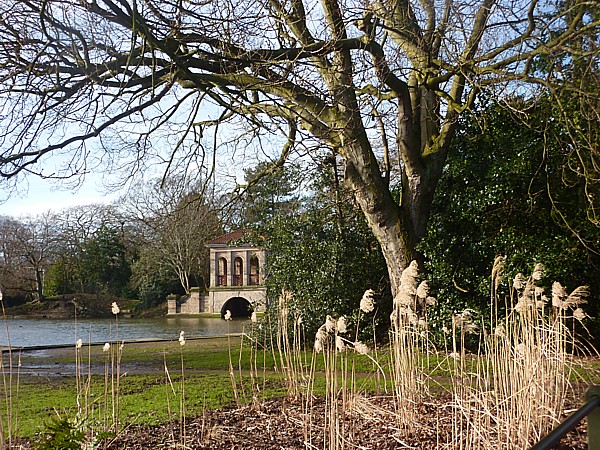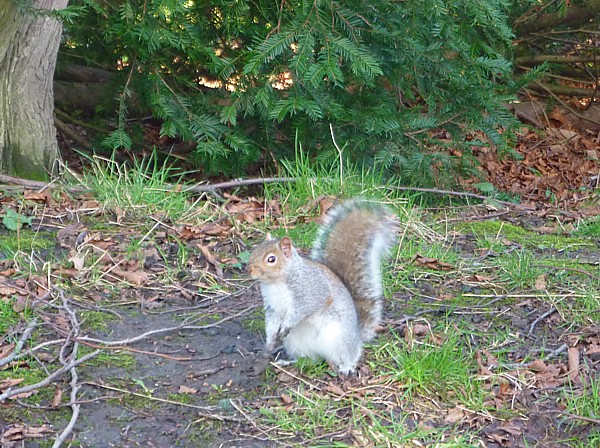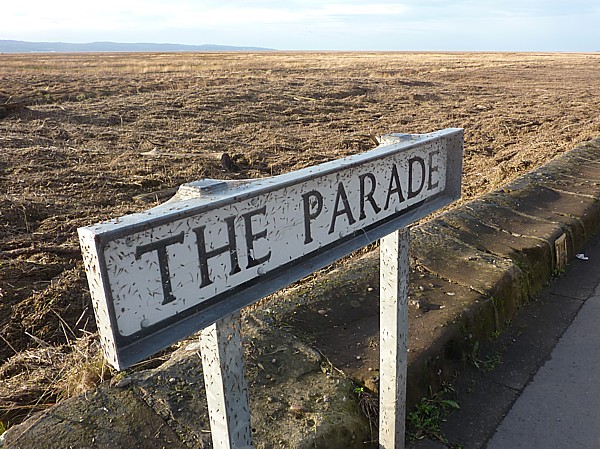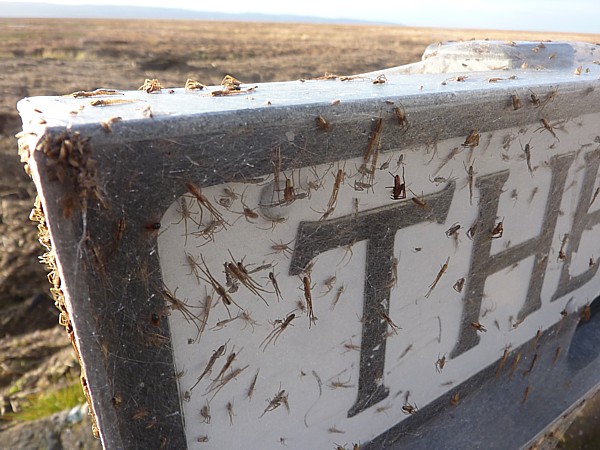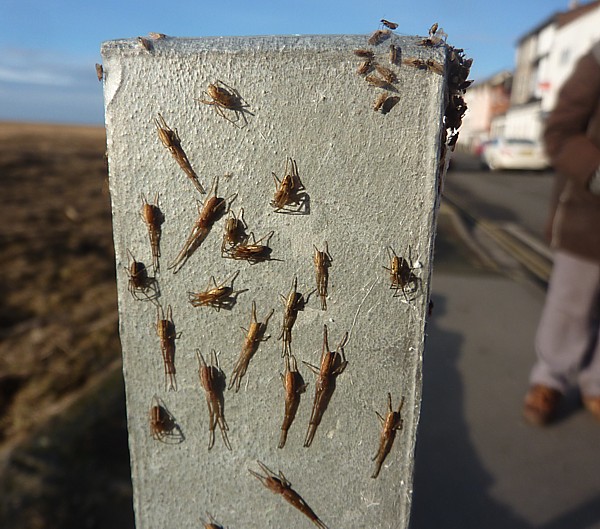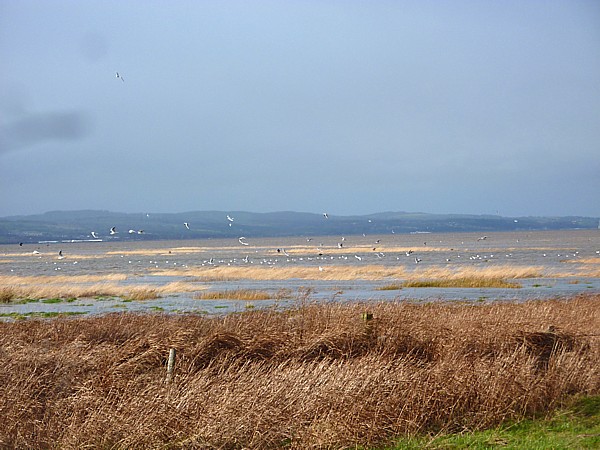
Sefton Meadows, 24th November 2013

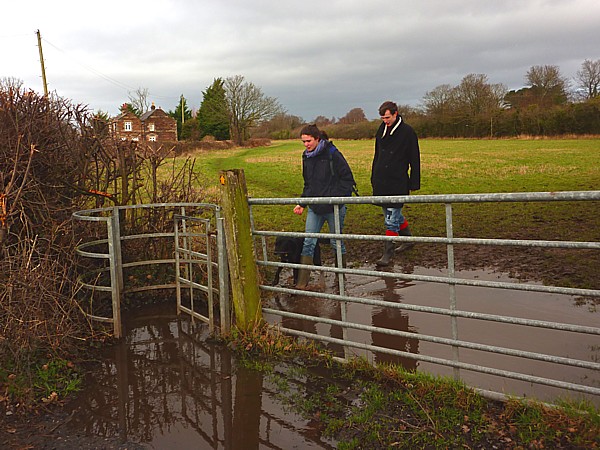
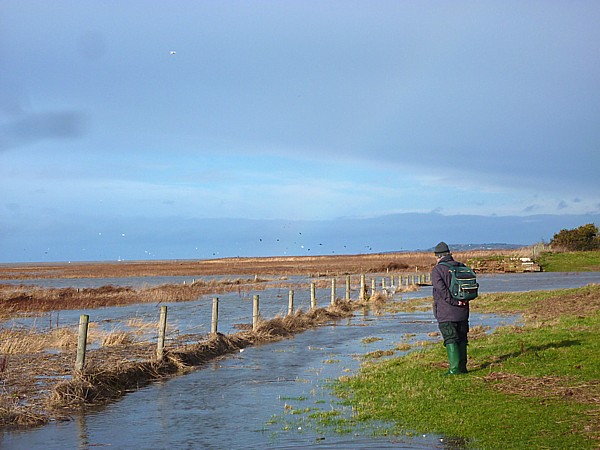
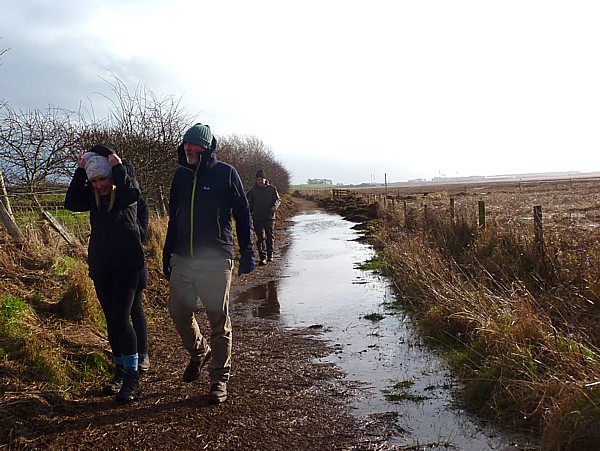
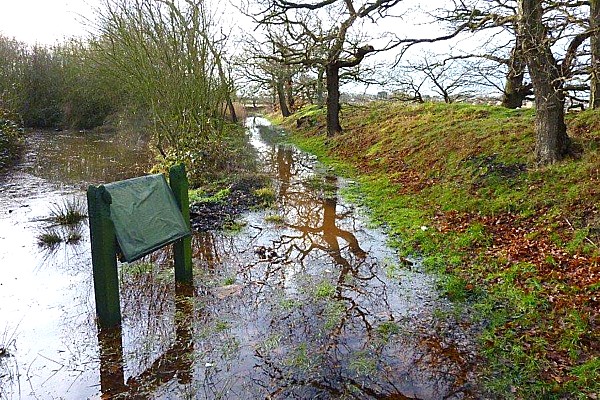
It’s starting to get wintry now. There was hail and frost in the week, and there are drifts of autumn leaves underfoot. But today was mild, overcast and dry. We took the 130 bus to the junction of the Northern Perimeter Road and Chapel Lane, crossed over by the pedestrian crossing, went up Chapel Lane then turned left over the fields. It may be the last time we can take this walk, because the planned Thornton Relief Road will be going right through it. The fields are already sprouting red posts to mark the line of the road.

42 Sefton red posts

Running west from Switch Island, it will cross Brickwall Lane, pass north of Thornton Garden of Rest, and come out at a new roundabout near Back Lane, with a spur to join Moor Lane. It will be called the A5758 Broom’s Cross Road, named after a mediaeval cross base located near the junction of Holgate Lane and Back Lane. The old cross is Grade II listed and won’t be affected by the new road. There is more about the road on the Sefton Council website.

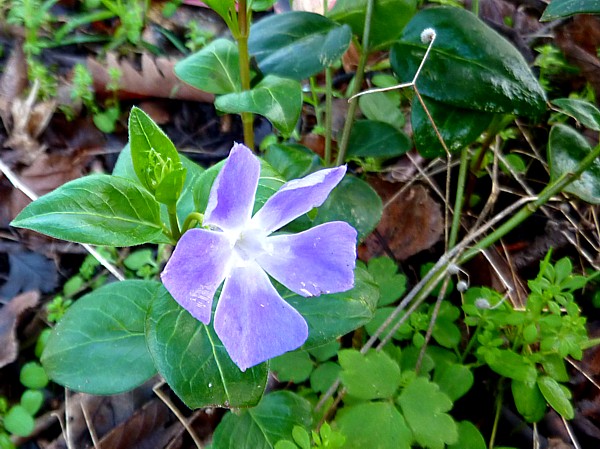
In the hedges we spotted Goldfinch, Chaffinch, Robin, Magpies. Two buzzards were soaring on thermals over some trees and a pair of Skylarks took to the air, but they don’t sing their famous song in the winter. A Kestrel was hovering and a female Bullfinch was seen disappearing into a copse. We waited to see if the male came along, but sadly he didn’t.  A stubble field contained a large flock of Curlews. We counted, and there were 43 of them. John has never seen so many together before. Along the waysides were lots of White Dead-Nettle, flowering abundantly and looking very fresh. I thought that was odd, and wondered if they were confused by the late summer into thinking it was spring already, but apparently they are known to flower as late as December.

42 Sefton white dead nettle

We crossed Brickwall Lane and walked up to Sefton Church, past the road of new houses, now called Mill Weir Gardens. It was just a muddy building site last time we passed. As Sefton Church clock chimed 12 we were lunching at the back of the Churchyard, amongst the falling autumn leaves.  And very pretty leaves they were too – multiple shades of yellow and orange, probably some kind of Maple.

42 Sefton yellow leaves

After a comfort stop in the Punchbowl we went along Lunt Road and turned right into Sefton Meadows. One very low-lying field had attracted some Carrion Crows and a flock of over 100 gulls, either Herring or Common, they were too far away to tell. Why were they in that field but not in the others?  It wasn’t to eat the farmer’s seed because the field was flushed with new green growth of some crop. Was it perhaps that that particular field was low, damp and wormy?  While we puzzled over that, a skein of 100 or more Pink-footed Geese passed overhead.

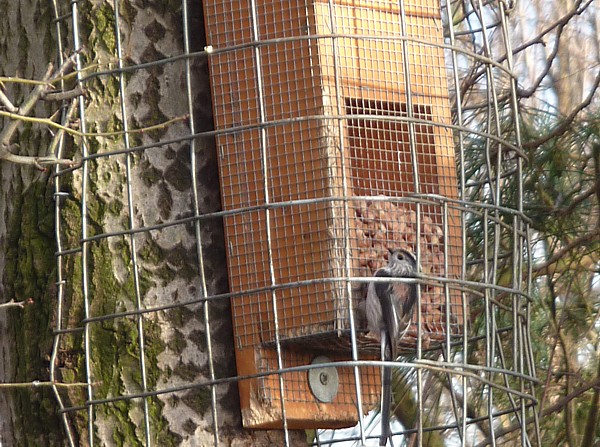
As we returned along the hedges, there were Long-tailed Tits passing through and a young male Kestrel at the top of a tree. Along Lunt Road is a wonderful Beech hedge, at its best when the leaves turn bronze.

42 Sefton beech hedge

At the corner of Sefton Churchyard we noticed three very white trees, probably the extra-white Himalayan Birches, and they are in a great eye-catching spot.

42 Sefton Himalayan birch


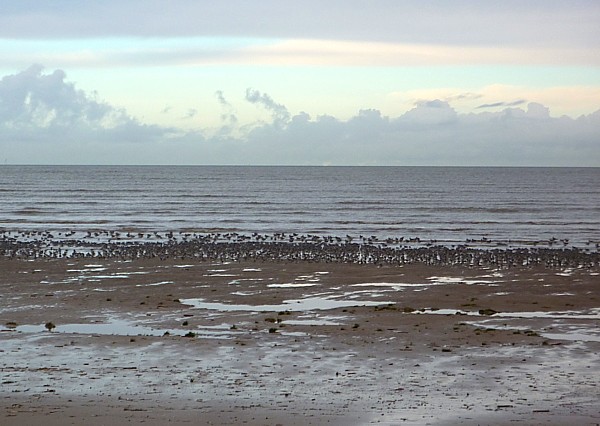
Some of our best birds were seen as we made our way down Brickwall Lane back to the bus. Over the wall in fields to our left, as well as a Collared Dove, we noted a minor wildlife drama; a Buzzard was on the ground with a kill, and was being harrassed by two Carrion Crows, which eventually drove it off. And finally, nine Grey Partridges feeding quite close to the wall and more Curlews, pictured (distantly) below.

42 Sefton Curlews

Public Transport details: 130 bus from Queen Square at 10.19, arriving Chapel Lane on Northern Perimeter Road at 10.55. Returned from Northern Perimeter Road / Higher End Park on the 55 bus at 2.40.

Posted in Sunday Group | Comments Off on Sefton Meadows, 24th November 2013

Mersey Estuary Marine Life

Earlier in the week a group of 1st year Marine Biology Students at Liverpool University had a practical in the lab looking at the morphology of marine organisms. The crew from the Uni’s Research Boat RV Marisa caught a number of species from the Mersey Estuary using beam-trawling and line fishing for the students to dissect. I quickly nipped into the lab with my camera before their scalpels got to work on the specimens.

MNA Marine Biology Prac Plaice1


Plaice Pleuronectes platessa
One of the commonest flatfish and an important commercial species. Plaice are easily recognized by their brown upperparts with numerous orange or red spots. Plaice are right-eyed (if the fish is visualised swimming upright, then both the eyes are on the right side of the body). Plaice usually spawn between January to March, each female producing up to half a million eggs!
 
MNA Marine Biology Prac Dab1

Dab Limanda limanda

The Dab is another common but small flatfish, again both eyes are on the right side of the body. The basic colour is brown with darker blotches. A good distinguishing feature is the lateral line which is strongly arched into a semi-circular curve over the pectoral fin. MNA Marine Biology Prac Dogfish1 

MNA Marine Biology Prac Dogfish2

Lesser Spotted Dogfish (a.k.a. Small-spotted Catshark) Scyliorhinus canicula

This small shark has a slender body and blunt head with rounded snout. There are five pairs gill slits, the last two of which overlap the pectoral fins. The upper side is greyish-brown with darker spots and the skin is like sandpaper to the touch. Their egg sacs known as ‘Mermaid’s Purses’ are occasionally seen washed up on the beach.

MNA Marine Biology Prac Whiting2

Whiting Merlangius merlangus

Good numbers of Whiting were caught – these are a cod-like fish with an elongated body with a small head and a pointed snout. It has a distinctive black blotch near the base of each pectoral fin and a brown lateral line.

MNA Marine Biology Prac Crab1

Common Shore Crab Carcinus maenas

The students had cut away a portion of the dorsal surface of the Common Shore Crab’s carapace exposing the internal anatomy. The most obvious feature being the gills in the branchial chamber.

A wide photographic selection of birds, marine life, insects, mammals, orchids & wildflowers, fungi, tribal people, travel, ethnography, fossils, rocks & minerals etc. is available on my Alamy webpage

Posted in MNA reports | Comments Off on Mersey Estuary Marine Life

Canal 7, Halsall to Heaton’s Bridge

This was our longest run on the 300 bus, and we didn’t get to Halsall until well after 11. It was a damp and misty day, but calm and mild. As we walked down Summerwood Lane from Halsall Church towards the canal, about two dozen Pink-footed Geese passed overhead, flying south east. There were House Sparrows in a hedge, Pied Wagtails on the roofs and Jackdaws calling from the trees. At the Halsall Navvy sculpture we turned north for another two or three miles of the canal. There weren’t many birds on the water, just a couple of Moorhens, a few Black-headed Gulls, the odd Mallard and only one Coot all day. Where do they all go?

41 Canal 7 towpath

After the 19-mile milepost we spotted some gas guns in a farmer’s field, which bang every half an hour or so to scare the birds. They must work because there was only one Carrion Crow in the newly sown field, and a distant bang from some woods sent up a large flock of Wood Pigeons.

41 Canal 7 fields and gas gun

We lunched by Weaver’s Bridge, one of the few places on the canal locally with plenty of seating. There are no less than FOUR wooden benches there,  which makes a change from having to sit on the parapets of bridges!  The 20 mile milepost is alongside the fence around Scarisbrick Marina. We were tempted to visit the Marina Café, not only for a comfort stop, but also to scoff some of their lovely cake.

At Scarisbrick Bridge the canal turns from north to east and runs along the edge of three woods. The golden yellows of some of the trees were magnificent. It isn’t fenced off, but there are many prominently-placed signs saying the woods are private. I think they belong to the old Scarisbrick Hall estate.   The Hall is by Pugin and is Grade I listed, but sadly not open to the public. It now houses an independent school.

41 Canal 7 Woods with bike

This section of the canal towpath has two rare objects, a half-mile marker and one for the quarter. The half mile marker is next to the narrows at Such Hey Wood while the quarter marker is opposite the sign for Scarisbrick moorings. Soon after that we noted a large cut tree trunk with an outcrop of a yellow wiggly fungus which I guess was Yellow Brain Fungus Tremella mesenterica (but I’m prepared to be corrected). (Added later: my guess was wrong, as I half suspected. It’s Hairy Curtain Crust. Thanks Sabena.)

41 Canal 7 brain fungus

Near Heaton’s Bridge we noted a Dunnock under fence, some Redwings passing overhead and by the bridge itself, a flight of seven Mute Swans. In the grounds of Heaton’s Bridge Inn is a WWII watchtower / blockhouse, which we had time to look at before the 375 bus to Ormskirk at 2.45.

41 Canal 7 blockhouse

The next canal walk, taking us to Burscough Bridge, will be the last of the series, because we can’t get much further on (free!) public transport.

Public Transport details: 300 bus from Sir Thomas Street at 10.20 arriving Halsall Church at 11.19. This is the first bus on Sundays, and it’s an hourly service. From Heaton’s Bridge we took the hourly 375 at 2.45 from outside the garage into Ormskirk, and then the 3.20 train from Ormskirk to Liverpool.

Posted in Sunday Group | Comments Off on Canal 7, Halsall to Heaton’s Bridge

Pickerings Pasture, 16th November 2013

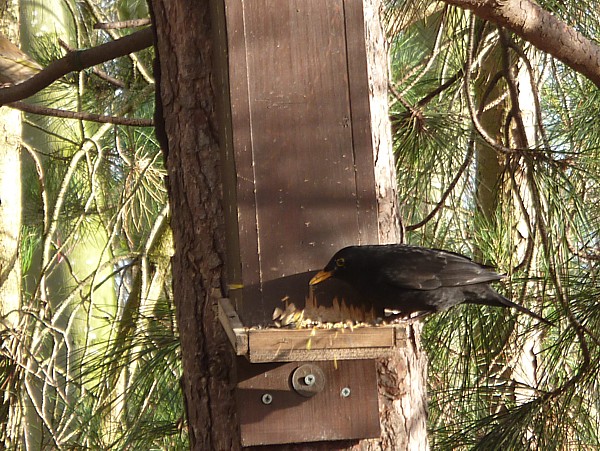
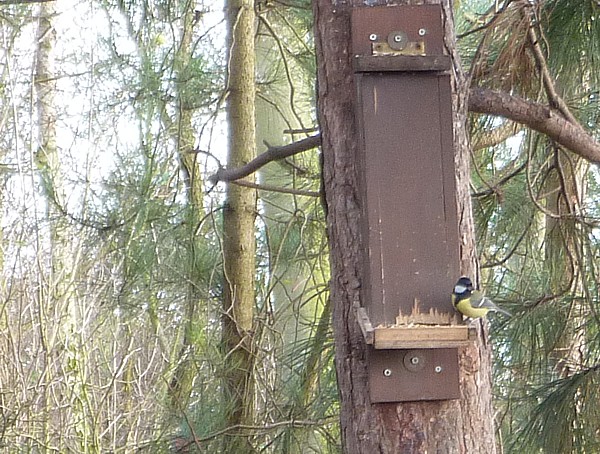
Seven MNA members took the bus from Liverpool, but we were joined by many more MNA and RSPB members at the car park, making 25 of us altogether. It was a fine, sunny and mild day, so perhaps that was why there was such a good turnout. Those of us who had walked down Mersey View Road had already added Long-tailed Tits to our day’s list, and on the feeders near the Visitors’ Centre we added House Sparrows, Blue Tit,  Great Tit, Chaffinch and Greenfinch.

40 Pasture Sparrows

The tide was fully in, so there were only Black-headed Gulls on the water. A Magpie flew over and a telescope showed two dozen Shelduck on the far side of river, plus Carrion Crows and more BHGs. We walked southwards noting Wood Pigeons in the tall trees and some Lapwings over the  water.

At the south-west hide we added Blackbird, Heron, Lapwings, Dunlin, Redshank, Cormorants, a Greater Black-backed Gull and Canada Geese in the distant field. On the way back by the upper path we heard the call of a Great Spotted Woodpecker, which was later seen overhead in its dipping flight. There isn’t much autumn red in the trees, but the golden yellows have showed magnificently in the last few days.

40 Pasture autumn gold

We had lunch back in the car park, where some people left us. As the tide started to go out the sandbanks started to show through in the river.  There was a Curlew on one, while Terry saw a distant Peregrine around an industrial tower on the Cheshire side. The only invertebrate noted was a Hawthorn Shield Bug which shared John Clegg and Chris Butterworth’s lunch table!  Then we walked north eastward by the woodland path.

40 Pasture Woodland path

There were lots of fungi below the trees. The huge numbers of white ones looking very like edible mushrooms were hailed as “free food” by some until Chris B identified them as Yellow Staining Mushrooms Agaricus xanthodermus. They are mostly poisonous, although oddly, some people are said to be able to eat them without ill-effects. A small stump flush with the grass had a little brown cluster of Honey Fungus, each toadstool about half an inch across, and there were also many clumps of Glistening Ink Cap Coprinellus micaceus.

40 Pasture Honey fungusHoney Fungus

40 Pasture Glistening Ink cap
Glistening Ink Cap

The best bird in the woodland was a Goldcrest, seen briefly flitting around in the branches. We walked as far as the new bridge, then onto the riverside path to return to the car park. The tide was going out fast and we spotted Teal, Gadwall, Mallard and a flock of Golden Plover on a far sandbank. Surprisingly, no Oystercatchers or Godwits were seen today.

Corpse of the Day was a large decomposing headless creature on the verge, under a stand of Viper’s Bugloss. It was too heavily boned to be a fox. There were long claws on the back legs so was it a badger? Then Terry inspected the front legs and found dew-claws, so it was an ordinary dog, perhaps a Staffy who had been in an illegal fight, lost, and been dumped.

40 Pasture The corpse

Those of us using public transport spotted Goldfinches on the way back to the bus, and if birding from the bus counts, there were Tufted Duck in the ponds in Estuary Business Park.

Public transport details: Liverpool ONE bus station for the 82A at 10.06. Arrived Mersey View Road just after 11 am. Return bus at 2.35, arriving back at Liverpool ONE at 3.28.

If you are interested in the wildlife of the North-west of England and would like to join the walks and coach trips run by the Merseyside Naturalists’ Association, see the main MNA website for details of our programme and how to join us.
Posted in MNA reports | Comments Off on Pickerings Pasture, 16th November 2013

Birkenhead and New Brighton, 10th November 2013

It was Remembrance Sunday, so we chose the service at Hamilton Square. We have found Liverpool to be too crowded, we arrive too late at Southport for a good spec and the Bootle service isn’t our favourite, so Birkenhead is the best for us. In contrast to many previous Remembrance days, this one was clear and sunny, although we still got cold, just standing around.

39 Wirral Remembrance

After a quick browse in the Wilfrid Owen Story and Gallery in Argyle Street
we had lunch in a sunny spot in Hamilton Square gardens, then took the train to New Brighton.

We were looking for Purple Sandpipers. Ten of them had been reported at New Brighton Marine Lake on Thursday (but not on Friday or Saturday). We scanned the rocks and breakwater all around the Fort Perch Rock area, but there were none to be found, just plenty of walkers with loose dogs, who could have scared them off days ago. Along the incoming tideline we spotted Sanderlings, Oystercatchers, Redshank, various gulls and some Cormorants. Half a dozen Jackdaws looked down on it all from the chimneys of the Fort.

39 Wirral Fort Perch Rock

Opposite the Tower Grounds is the “Black Pearl”, a large pirate ship made of driftwood, which the kids (and some bigger kids!) were all climbing on. It has a Jolly Roger and a Treasure Chest (filled with beach combings and pine cones) and miscreants can “walk the plank”. To the disgust of some passers-by, Wirral Council has posted an “at your own risk” notice on the railings. At least they haven’t banned the children from playing on it!  We had just missed the light, so this isn’t the best picture. I’m afraid.

39 Wirral Black Pearl

Public transport details: Train from Liverpool Central to Hamilton Square at 10.15, then the train from Hamilton Square to New Brighton at 12.55 arriving 1.13. Returned on the 433 bus from New Brighton, King’s Parade at 2.44 arriving Liverpool 3.13.

Posted in Sunday Group | Comments Off on Birkenhead and New Brighton, 10th November 2013

Chester, 3rd November 2013

38 Chester Groves and rainbow

After a windy night, which blew my rubbish bins around, it was a day of mixed sunshine, heavy showers and rainbows. The sun was shining as we walked down to the canal just below Chester Station and headed for the Telford warehouse. At Cow Lane Bridge there were Mallards and Black-headed Gulls crowding around for bread, and just beyond it there was an unusual ornamental Rowan tree with yellow berries.

38 Chester Yellow Rowan

Near Northgate Moorings we saw the last flowers of Himalayan Balsam, some Ivy in flower, attended by just a few small wasps, and this small clump of yellow flowers, which I can’t identify. The clump shape reminded me of Wood Sorrel, but the flowers were like Cowslips. Anyone any ideas? It’s probably not a native wildflower but a garden escape.  (Added later: Canary Creeper Tropaeolum peregrinum has been suggested, but neither the leaf shape, the flower shape or the growth habit seem to be the same.)(Added even later – thanks to Charles Russell who has nailed it. It’s Yellow Corydalis Pseudofumaria lutea (formerly Corydalis lutea), a shade-loving native of the Alps, found occasionally in the UK as a garden escape. It’s said to flower to the end of October, so the one I saw was only a bit late.)

38 Chester Yellow clump

At Northgate top lock, the narrow boat Black Eyed Susan was coming through and we loitered for a while to watch.

38 Chester narrow boat in lock

We lunched at the Telford warehouse. The regular pair of Mute Swans there didn’t come close enough for us to check their legs for rings. Then up onto the walls at the Water Tower, where we saw Mahonia in flower, a Grey Squirrel, and a view over the River Dee to the brilliant sunshine topping the Welsh hills. Over the Roodee racecourse we spotted a Raven and we also noticed that the Little Roodee café by the coach park has a “green” grass roof.

Opposite the University of Chester building there were some Teal on the river, and a Cormorant who had just caught a fish. We spotted a Mink here a few years ago, scuttling amongst the willow scrub on the muddy bank of the Dee, but there was no sign today.  A dead tree had caught on the weir, and sitting in it was a Greater Black-backed Gull, a juvenile (Common?) Gull and two Cormorants.

38 Chester birds on dead tree

Along the Groves were four Mute Swans, two adults and two big grey-brown cygnets. One adult wasn’t ringed but the other adult had a blue Darvic ring 7CXJ on its left leg, while the two cygnets had green rings, left leg, CDY4 and CDY5. I reported them to the Cheshire Swan Study Group  who have told me that the ringed adult was the male, now 10 or 11 years old and ringed at Buttery Farm, Kynnersley, Telford in April 2004. He has been sighted on the Dee at Chester many times since 2009. His cygnets are both male, and were ringed on the Dee on 30th September this year.

We weren’t back at the station in time for the 2pm train so while we waited we looked into the old stable yard behind the Queens Hotel. The gateway says “Carriages and Post Horses for Hire”.

38 Chester Stable yard gateway

Inside there are a few remaining old offices and stables from what was once the biggest stable complex in the North West of England. As well as the commercial horse-hiring associated with the hotel, the stables once housed the Cheshire Hunt.

38 Chester Stables and Haywain

Public transport details: Train from Liverpool Central to Chester at 10.15, arriving 11.00. Returned on the 2.30 train from Chester to Liverpool.

Posted in Sunday Group | Comments Off on Chester, 3rd November 2013

Fungal Foray Ainsdale 27th October 2013

The two Dave’s, Jim Hughes, Chris Butterworth and I joined members of the North-west Fungus Group for the Ken Jordan Memorial Fungal Foray at Ainsdale led by Tony Carter. In the undergrowth beside the Natural England Warden’s office we found a large but decayed Fly Agaric Amanita muscaria and a Blackfoot Polypore Polyporus leptocephalus (formerly P. badius).

MNA Ainsdale Tar Spot1

Sycamore Tar Spot

Sycamore Tar Spot Rhytisma acerinum covered the Sycamore Acer pseudoplatanus leaves and a long row of Dead Moll’s Fingers Xylaria longipes similar to Dead Man’s Fingers Xylaria polymorpha but with long distinguishable stipes was growing on its favourite substrate a fallen, moss covered branch of Sycamore. In the field that is occasionally grazed by sheep we found Shaggy Scalycap Pholiota squarrosa growing at the base of a tree.

MNA Ainsdale Dead Molls Fingers1 

Dead Moll’s Fingers  

We wandered to the area around the pond finding an impressive collection of Glistening Ink Cap Coprinus micaceus growing on a fallen log.

MNA Ainsdale Glistening Inkcap1

Glistening Inkcap

Two Mycena species are quite common in these woods – Nitrous Bonnet Mycena leptocephala which have greyish conical caps and fragile stems and a distinctive odour of bleach and two Milking Bonnets – White Milking Bonnet Mycena galopus var. candida and Black Milking Bonnet Mycena galopus var. nigra whose stems will ooze whitish latex if it is broken. We also found Yellowleg Bonnet Mycena epipterygia with a yellowish to yellow-green stem and Bark Bonnet Mycena speirea growing appropriately on a piece of bark.

MNA Ainsdale Bark Bonnet1

Bark Bonnet

MNA Ainsdale Scurfy Twiglet1

Scurfy Twiglet

A couple of Twiglets! – Hawthorn Twiglet Tubaria dispersa (formerly T. autochthona) which grows out of the buried, mummified berries of Hawthorn Crataegus monogyna and Scurfy Twiglet Tubaria furfuracea a rather nice cinnamon coloured cap and stipe growing on a twig. A few Jellies with Common Jellyspot Dacryomyces stillatus, Leafy Brain Tremella foliacea and Crystal Brain Exidia nucleata.

MNA Ainsdale Leafy Brain1

Leafy Brain

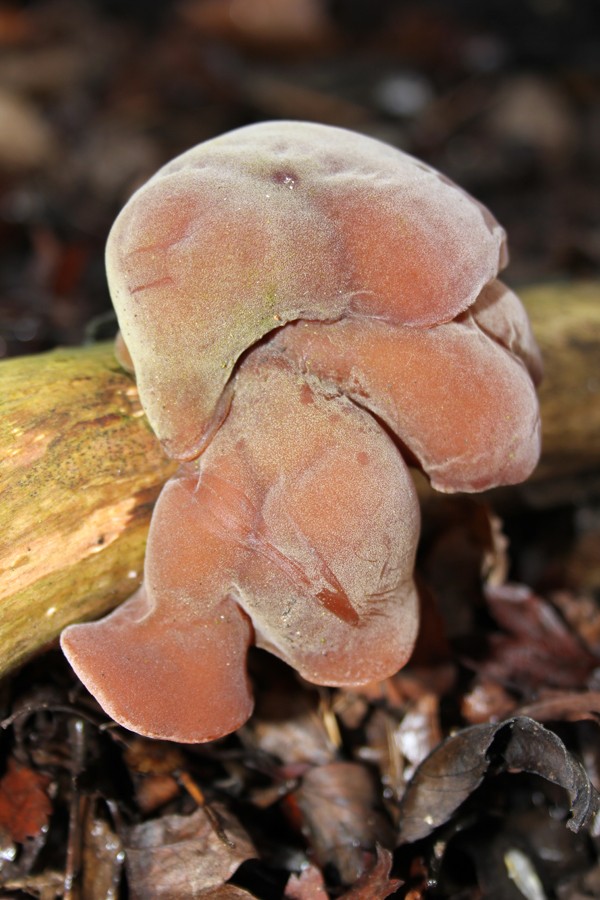
Wood Pinkgills Entoloma rhodopolium  were scattered around the leaf litter. Reddish purple blotches on the upperside of Bramble leaves Rubus fruticosus aggregate was caused by Violet Bramble Rust Phragmidium violaceum, beneath the leaves they appeared as mature dark spots. The species mounted up with Blushing Bracket Daedaleopsis confragosa, Jelly Ear Auricularia auricular-judae, Stag’s Horn Fungus Xylaria hypoxylon, Birch Polypore Piptoporus betulinus, Slippery Jack Suillus luteus, Silverleaf Fungus Chondrostereum purpureum, Coral Spot Nectria cinnabarina, Peeling Oysterling Crepidotus mollis, Yellowing Oysterling Crepidotus luteolus Sepia Webcap Cortinarius decipiens, Poisonpie Hebeloma mesophaeum and Collared Mosscap Rickenella swartzii.

MNA Ainsdale Bramble Rust1

Violet Bramble Rust

Next there was a treat with Scarlet Caterpillar Fungus Cordyceps militaris this red finger-like fungi is about 2cm tall and is a type of entomopathogenic fungi which parasitises the buried pupae of moths and butterflies. Also noted Slender Club Macrotyphula juncea whose thin 4-5cm beige fruitbodies project from the leaf litter or a buried twig.

MNA Ainsdale Scarlet Caterpillar1

Scarlet Caterpillar Fungus

After a spot of lunch and watching a Red Squirrel Sciurus vulgaris scurrying around in a nearby tree we headed towards the pine woods behind the Warden’s outbuildings briefly stopping to note Deer Shield Pluteus cervinus growing on the edge of the path and Blue Roundhead Stropharia caerulea growing on the small patch of grass outside the office.

MNA Ainsdale Netted Crust1

Netted Crust

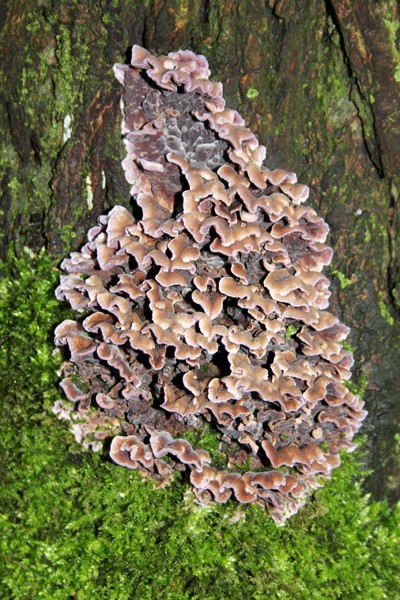
A few encrusting fungi with Netted Crust Byssomerulius corium and Elder Whitewash Hyphodontia sambuci and Purplepore Bracket Trichaptum abietinum – this purplish bracket is saprophytic, growing from dead conifer wood.

MNA Ainsdale Purplepore Bracket1

Purplepore Bracket

A motley collection of slug ravaged Russulas with Bloody Brittlegill Russula sanguinaria, Crab Brittlegill Russula xerampelina with its characteristic fishy odour Coral Brittlegill Russula velenovskyi, Variable Brittlegill Russula versicolor, Birch Brittlegill Russula betularum and Ochre Brittlegill Russula ochroleuca. Clouded Funnel Cap a.k.a. Clouded Agaric Clitocybe nebularis was growing in a large circle 20ft in diameter.

MNA Ainsdale Clouded Agaric1

Clouded Agaric

Meanwhile Spring Cavalier Melanoleuca cognata a large umbrella-shaped Fungus was noted growing in a line probably following a buried tree trunk – this species fruits twice, once in April and May and then again from August onwards until the frost begins. The small brown agaric called Conifercone Cap Baeospora myosura was found rooting on a buried pine cone. Also noted Oyster Mushroom Pleurotus ostreatus, Collared Earth Star Geastrum triplex, Common Rustgill Gymnopilus penetrans, Yellow Knight Tricholoma equestre and Pale Stagshorn Calocera pallidospathulata.

We briefly moved onto the dunes noting a collection of Earth Tongues Geoglossum sp. sticking out from the short dune grass – a sample was taken for microscopic examination as there are several similar species and later confirmed as Geoglossum cookeanum. Nearby was a Dune Waxcap Hygrocybe conicoides.

 MNA Ainsdale Earthtongue1

Earthtongue

Heading back into the woods to escape the wind we added to the day’s list with Common Puffball Lycoperdon perlatum, Grassland Puffball Lycoperdon lividum, a young specimen of Common Bird’s Nest Crucibulum laeve whose yellow “lid” still covered over the nest, Shield Dapperling Lepiota clypeolaria, Dapperling Lepiota erminia and the Slime Mould Tubifera ferruginosa whose fruiting body consists of a tight cluster of bright pink oblong shaped sporangia.

MNA Ainsdale Tubifera ferruginosa1

Slime Mould Tubifera ferruginosa

A great Fungi list for the day with some memorable species! Tony Carter let me know that 98 species were identified with six species new to the site recorded. None of them are unusual, just not previously identified. We spent a little more time in the conifer woods this time. He took a few specimens home to check the identification. He confirmed Flaming Scalycap Pholiota flammans on one specimen from the stem. It was a bit old and the cap had darkened and flattened. A fresh specimen would be quite spectacular.

tn_Pholiota flammans Ainsdale 1013

Flaming Scalycap Photo Tony Carter

Two small bonnets Rancid Bonnet Mycena olida and Mycena hiemalis on mossy trees. Small means tiny.

tn_Mycena hiemalis Ainsdale 1013

Mycena hiemalis Photo Tony Carter

tn_Omphalina pyxidata Ainsdale 1013

Cinnamon Navel Omphalina pyxidata   Photo Tony Carter

A wide photographic selection of birds, marine life, insects, mammals, orchids & wildflowers, fungi, tribal people, travel, ethnography, fossils, rocks & minerals etc. is available on my Alamy webpage

If you are interested in the wildlife of the North-west of England and would like to join the  walks and coach trips run by the Merseyside Naturalists’ Association, see the main MNA website for details of our programme and how to join us.
Posted in MNA reports | Comments Off on Fungal Foray Ainsdale 27th October 2013

Canal 6, Downholland to Halsall, 27th October 2013

It was a wet morning, and the south of England was gearing up for a big storm, but the weather forecast for the Haskayne area was for sunshine, and so it turned out to be. This historic stretch of the Leeds – Liverpool canal has the Halsall cutting, the first bridge to be built, and the place where the first sod was cut.

37 Canal 6 Canal view

We started at the Scarisbrick Arms at Downholland Cross and our attention was soon drawn to a gathering of cars beside a barn along the main road. It turned out to be a pumpkin sale.

37 Canal 6 pumpkin sale

The farmer must have been so busy selling pumpkins, that he didn’t notice his sheep had got into his kale crop.

37 Canal 6 Sheep in kale

Downholland Swing Bridge is now out of use, permanently open and overgrown.

37 Canal 6 Derelict swing bridge

Opposite is the historic Downholland Hall, which is Grade II listed. The lords of the manor are said to be documented back to the time of Edward the Confessor, although the present Hall dates only to 1729.

37 Canal 6 Downholland Hall

Despite the gusty breeze it turned out to be a lovely warm and bright day, and we saw several butterflies on the wing – a Small Tortoiseshell and two Red Admirals.

37 Canal 6 Red Admiral

The council workmen have recently been cutting back the nettles and brambles on the hedgerow side of the canal, leaving a wide verge. The cutting machine may have traumatised the common water birds. We saw only one Moorhen and one Coot between Downholland and Haskayne moorings, but when we got to the Ship Inn for our lunch stop we spotted over 50 Mallards skulking on the far bank, so sleepy that they didn’t even bother to come over to mooch for bread from us.
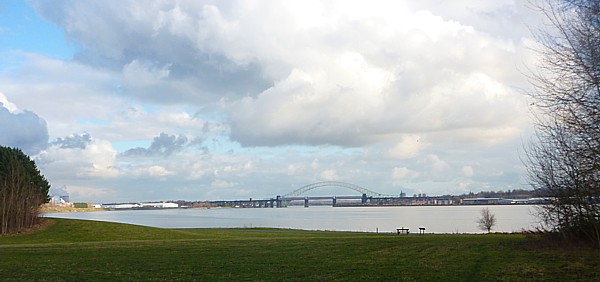
37 Canal 6 Rolls of hay

Despite the lovely weather, it was a pretty poor day for birds overall. Apart from the Crows and Gulls in the fields we saw just one Chaffinch at the start of the Halsall cutting.

Along the cutting itself is a sign marking an historic spot, where the Hon Charles Mordaunt of Halsall Hall ceremoniously turned the first spadeful of earth in November 1770, two hundred and forty-three years ago.

37 Canal 6 First sod sign

Just before the cutting is the first bridge built on the canal, Harker’s Bridge, number 23. It’s nearly a perfect canal bridge, with deep rope marks on the edge and a white stripe marking the centre of the channel, but it has a modern road going over it, so it doesn’t get top marks from me.

37 Canal 6 First bridge

My favourite is the next one, Halsall Hill Bridge, number 24. Not only is it a perfectly-formed old canal bridge, with rope marks and a centre stripe, but the stone blocks still bear the mason’s numbers and letters. In addition, the bridge carries only an old cobbled footpath over the canal, and it leads to the wonderfully-named Trundle Pie Lane. They don’t come much better that that!
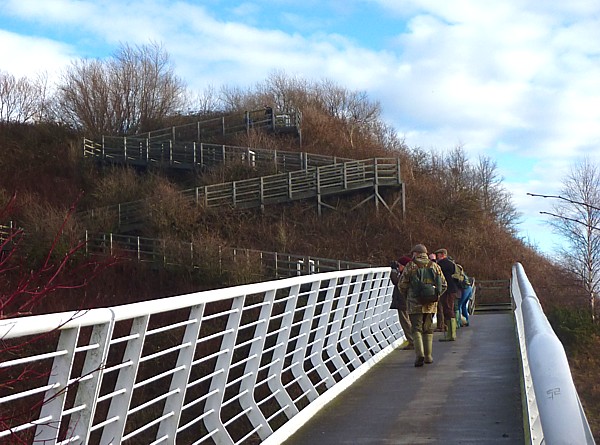
37 Canal 6 Builder's marks

We left the canal at the Saracen’s Head, where there is a signboard about the building of the canal and a sculpture of “The Halsall Navvy”, commemorating all the men who dug it out by hand.

37 Canal 6 Halsall Navvy


We walked down Summerwood Lane to the parish church of St Cuthbert, a Grade I listed building with a 14th century chancel and mediaeval gargoyles. The clock on the tower bears the Latin words Praeterunt imputantur, which I think means, ominously, “They pass by and are reckoned”. In the churchyard are many old gravestones and some fine trees. On the old font outside the main door was a Harlequin ladybird and on the railings we spotted a Green Shieldbug.

37 Canal 6 Harlequin

Public transport details: 300 bus from Sir Thomas Street at 10.21, arriving Downholland at 11.10. Return on the 300 bus from St Cuthbert’s church, Halsall, at 2.13. (Hourly bus on a Sunday)

Posted in Sunday Group | Comments Off on Canal 6, Downholland to Halsall, 27th October 2013

Southport, 20th October 2013

It’s still warm, with showers between the sunshine.

36 Southport gardens

They are refurbishing King’s Gardens with the help of Lottery money, so the café was surrounded with hoardings and many of the Victorian shelters are being dismantled.

36 Southport shelter dismantling

On  the lawns after a shower, a Common Gull was worm-charming by stamping its feet. This appears to work, as we saw it stop and grab several worms then go back to its dancing. There was nothing special on the lake, just Black-headed Gulls, 100+ Coots, a few Mute Swans, some Mallards and one Moorhen. One Coot was dead, floating in the lake. There was no sign of damage so had it lost a fight? Coots can be very belligerent as they get in the mating mood.

36 Southport dead coot

After lunch, as we rounded the corner near the Matalan store, one Mute Swan, obviously hungry, spotted us and came right up, hoping for bread. She had leg ring NXD blue right. We have seen her here before, in February this year, and reported her then to the North West Swan Study. Wes Halton told me she had been ringed at St Annes on the 2 Sept 2003. So she’s just over 10 years old and seems to have settled in Southport.

36 Southport Swan NXD

The tide was right in, so there were no shore birds to see. We walked to the end of the pier and looked at the old penny-in-the-slot machines. They will sell you 10 old pennies for a pound, but I bet they won’t buy old pennies back from you at the same rate!  Next time we go I must look out my bag of old pennies so we can all have a go at getting some of the trinkets!

36 Southport Starcatcher game


The town end of the pier overlooks the miniature golf area, and there are sometimes good birds there. We saw a Whimbrel there once. Today, however, there were just some Oyster Catchers, more Common Gulls and a Wood Pigeon.

Public transport details: Train from Central Station to Southport at 10.23, ariving 11.10. Returned on the 14.28.


Posted in Sunday Group | Comments Off on Southport, 20th October 2013

Clock Face Country Park

Report from Tony Carter:
On Monday, 14th October 2013 I went to Clock Face Country Park at the invitation of a colleague who works with Mersey Forest and played a part in the establishment of the park. He was interested to identify any of the fungi he had observed during his visits.

The notice board told me that the Park had been set up on the site of the old Clock Face Colliery in 1990, when it was planted out with a variety of trees to encourage wildlife. As it was such young woodland, I did not think we would find much, particularly as the dry weather seems to have discouraged fungi in more established woodland.  I was in for a surprise. Immediately upon arrival, under the gaze of a couple of circling buzzards, I found my first species in the car park, Lepista flaccida (Tawny Funnel).

Lepista flaccida
Lepista flaccida (Tawny Funnel)

A large area of open grassland was very productive. We found three varieties of Hygrocybe (Waxcaps), including Hygrocybe psittacina (Parrot Waxcap) together a number of smaller fungi of various species.

Hygrocybe psittacina


Hygrocybe psittacina (Parrot Waxcap)

The finds included the highly poisonous Clitocybe rivulosa, seen in the picture below growing with Clavulinopsis helvola (Yellow Club). It is commonly known as Fool’s Funnel and also False Champignon, as it regularly grows in rings with the edible Marasmius oreades (Fairy Ring Champignon). The Clitocybe contains muscarine, which will make you very sick, so is not one to pick by mistake.

Clitocybe rivulosa
Clitocybe rivulosa

The broadleaf woodland produced a selection of Boletes, Lactarius (Milkcaps) and Russulas (Brittlegills) while the coniferous sections supported Cortinarius (Webcaps) and Inocybe species (Fibrecaps). One pine stump sported a very fine Tricholompsis rutilans (Plums and Custard).

Tricholmpsis rutilans
Tricholompsis rutilans (Plums and Custard)

We collected and identified forty one species in just two hours despite the handicap of some severe rain showers.

What surprised us was the number of mycorrhizal fungi, those that grow in association with tree roots producing nutrients and stimulating growth.  It can take many years for such associations to develop. Modern practice is to inoculate plants with mycorrhizae, to establish and promote growth and this may well have been done to encourage tree population on an industrial site such as this.  How do they choose which varieties to inoculate?

Posted in MNA reports | Comments Off on Clock Face Country Park