Carr Mill Dam, 23rd March 2014

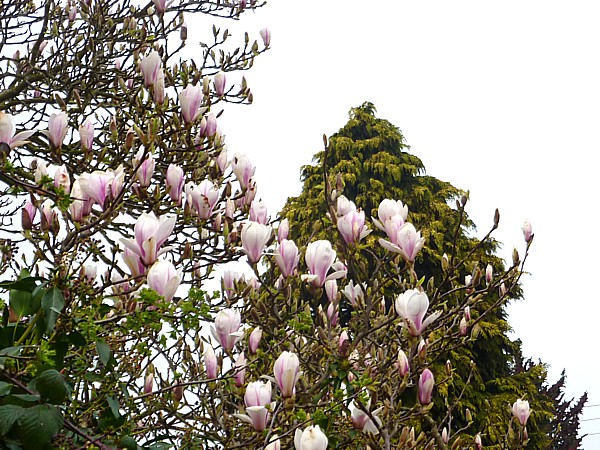
As we waited in Lime Street for the rail replacement bus there was a spatter of rain with strong northerly gusts, but from the bus (which was a plush, warm coach) it seemed like a lovely spring day in the sunshine. It was officially the first day of spring a few days ago, and there was a faint haze of green over all the wayside trees. In the gardens the ornamental trees and shrubs were flowering – Magnolia, Forsythia, Camellia and Cherry, some with very thick blossom indeed.  But at St Helens bus station we noticed small drifts of congealed hailstones at the bases of the shelters.

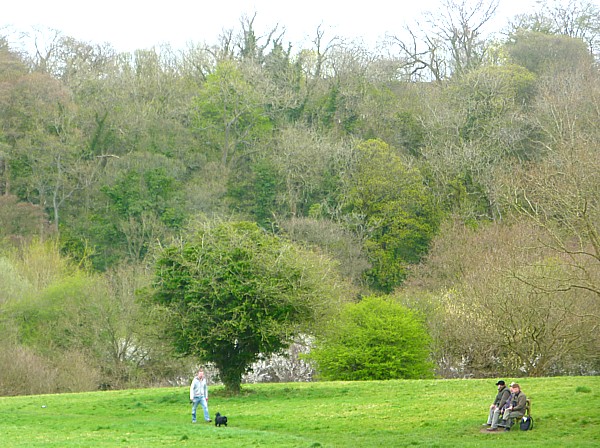
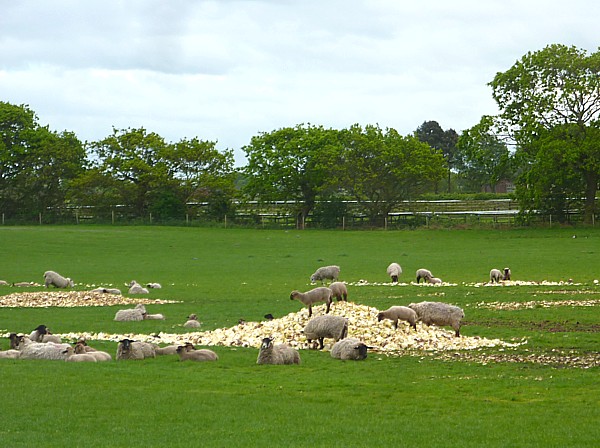
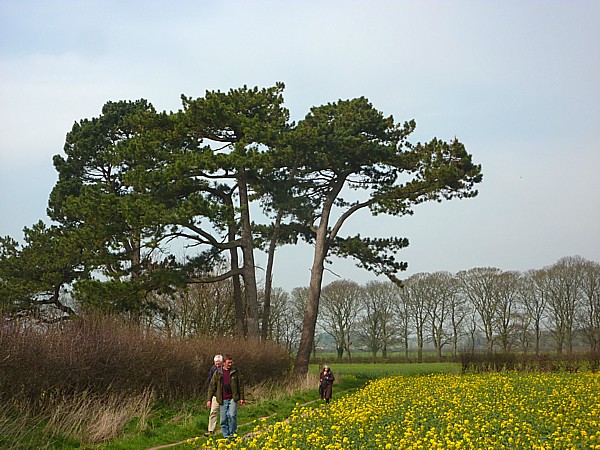
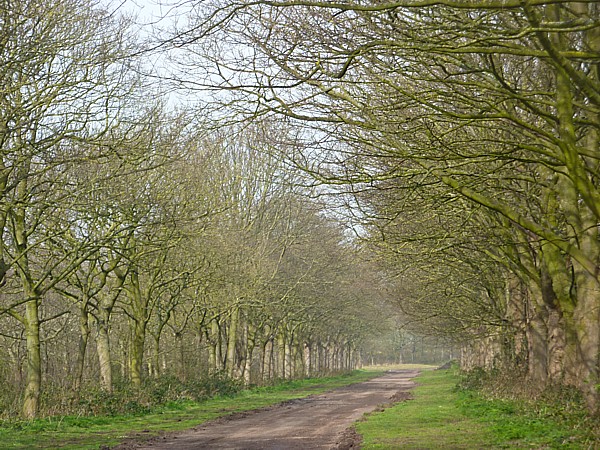
13 Carr Mill view

Around Carr Mill Dam it was very wintry, too. In the woods it still felt like February. Young oak and beech leaves were still clinging to the trees and fluttering in the strong gusty wind. On the lake Canada Geese were trumpeting, there were Mallards, Black-headed Gulls (about 25% with full black heads) and a couple of Lesser Black-backed Gulls. At the south end there were only two or three Great Crested Grebes, but the woodland paths were busy with birds. We heard Wren and Chaffinch singing, a Wood Pigeon flew by fast, and then something else, quick over the trees that might have been a Sparrowhawk. We saw Blackbird, Blue Tit, Great Tit, Dunnock, Robin and Goldfinches.

Nearer the bridge there was a huge gathering of Great Crested Grebes. We counted 42 altogether, and John said he had never seen so many together before. They weren’t dancing, but a few were facing each other and head-shaking.

13 Carr Mill grebes

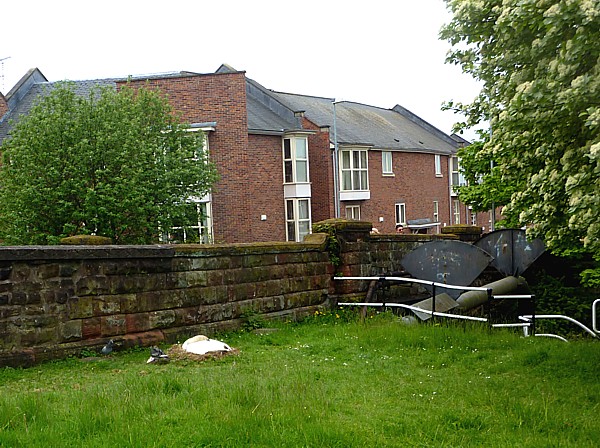
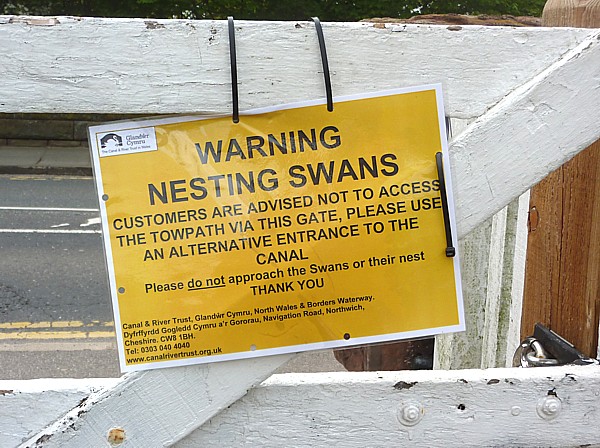
We lunched on the bridge. Below us were Coots and Moorhens, there was a Heron on the far bank and a pair of Mute Swans were nesting right beneath us, brooding three eggs. John thought he had heard a tale from a ranger that a dog had caught and injured one of the Carr Mill Swans a year or two ago, it had been taken to the RSPCA but had had to be put down. It looks like the survivor of the pair has found a new mate.

13 Carr Mill swans

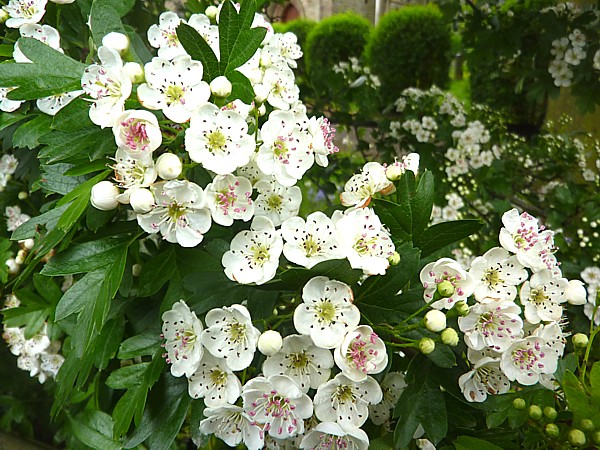
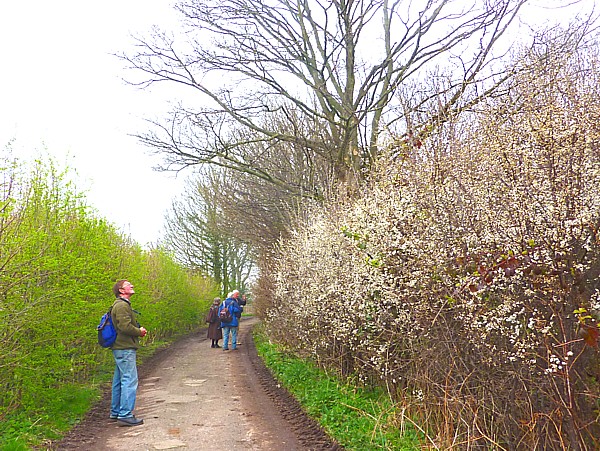
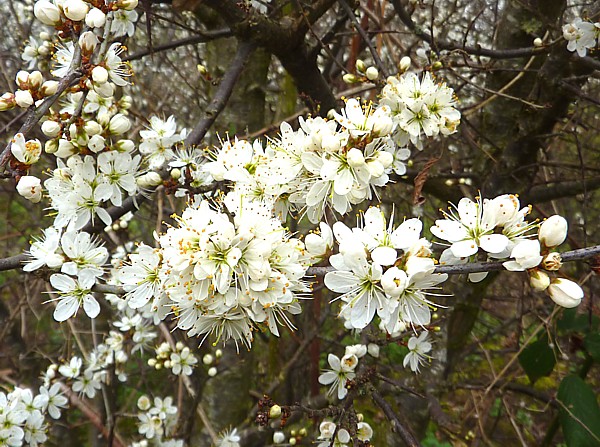
Around the farms and muddy field paths beyond Otter Swift Farm we admired the planted clumps of Daffodil varieties, the new Hawthorn leaves, and the Blackthorn just starting to blossom.

13 Carr Mill daffs

13 Carr Mill blackthorn

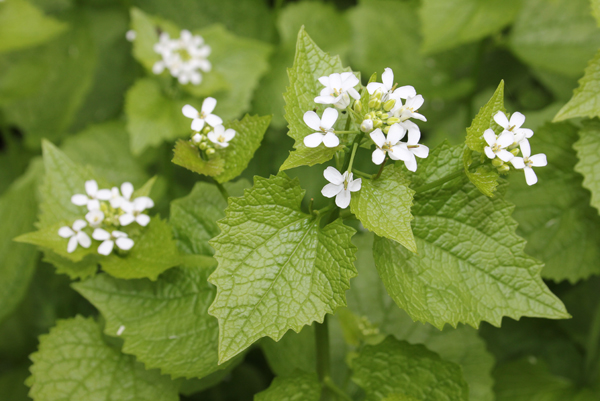
The Wild Garlic wasn’t in flower yet, but we saw a few flowers of Coltsfoot and some Pussy Willow breaking out.

13 Carr Mill pussy willow

Near one of the farms some curious domestic geese came to investigate us, and one (the gander?) hissed at us through the fence.

13 Carr Mill geese

13 Carr Mill hissing goose

Public transport details: Rail replacement bus from Lime Street at 10.18, arriving St Helens Station at 11.24. Then bus 352 from St Helens bus station towards Orrel and Wigan, alighting Carr Mill Road / Waterside pub at 11.45. Returned to Liverpool by the 352 bus at 2.51, and we just caught the number 10 bus at St Helens bus station at 3.00, arriving back in Liverpool city centre at 3.50.

Posted in Sunday Group | Comments Off on Carr Mill Dam, 23rd March 2014

Everton Park and Stanley Park, 16th March 2014

The weather wasn’t pleasant today, it was windy, overcast, damp and misty, with occasional spits of rain. We took the bus up to St George’s Church, Everton and went inside. This beautiful church was the first ever to be built on a cast iron frame, making the interior gorgeously light and delicate.

12 Everton St George

Then we strolled in Everton Park. On a clear day there are wonderful views, and it’s a walk really worth doing, but it was very murky and hazy today. There are several newly-erected signboards by the Friends of Everton Park on the theme “Walk into history across a spectacular ridge”. They point out the historical features of the area, like the old fire beacon, the Royalist encampment in the Civil War (from where Prince Rupert said Liverpool was “nought but a crow’s nest that a parcel of boys could take”), the Everton Toffee Shop and the old lock-up.

12 Everton lock-up

One signboard shows a panoramic view over the City, naming notable Liverpool and Wirral landmarks, the Welsh peaks beyond and the Great Orme.

12 Everton signboard view

Carefully placed against the skyline is a sculpture of Everton worthies. On the left, Molly Bushell, of the Everton Toffee Shop; in the middle, Kitty Wilkinson, “the Saint of the Slums” who founded Liverpool’s first public washhouse and baths; on the right a docker, “selected for his role as a vital labourer at the heart of Liverpool’s industrial revolution”.

12 Everton worthies

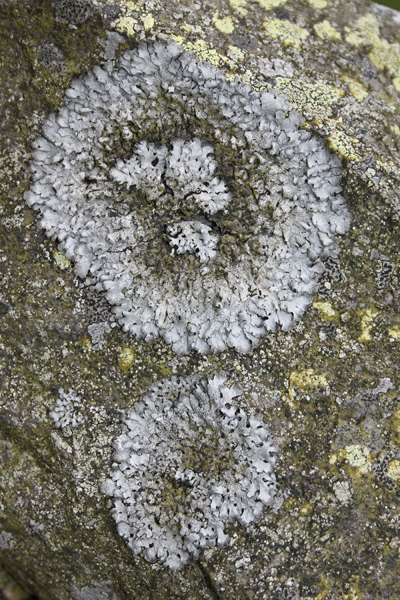
The wind was very strong, and some Herring Gulls were hovering in the updraft. The only other birds in evidence were Magpies on the grass. A few flowers were struggling through:  Shepherd’s Purse in rough corners, Daisies in the grass, closed-up Dandelions on a bank, and at the back of the colonnade there were the remains of a small wildflower meadow, with some straggly Corn Marigolds, Corn Daisies and Cornflowers still in bloom. Surprisingly, the tree trunks were rich with lichen, so all those fresh breezes must keep the air very clean !

12 Everton lichen

The sun tried to come out once, but otherwise it was a cold, raw day with a lazy wind (too lazy to go around you, just blows straight through you) and it was more like February. We were too cold and exposed to stay there so we took a short bus ride to Stanley Park and lunched outside the Isla Gladstone Conservatory.

12 Stanley Conservatory

Canada Geese, Mallards, Coots, Moorhens and a pair of Great Crested Grebes were on the lake. We looked for the Mandarin drake, which was last seen six weeks ago, but he wasn’t showing. There weren’t any Pochards either, but we noted a single pair of Tufted Duck. Two Coots were mating on their nest. A male Sparrowhawk flew across the lake and made all the Canada Geese scatter.

12 Stanley lake edge

Other birds included Wood Pigeons, Carrion Crow, Long-tailed Tits, Goldfinches, Blackbird, Black-headed Gulls, (20% now with black heads) and Common Gulls on the grass.

12 Stanley arches

Blooming in the shrubbery against bare twigs were the flame-coloured cups of Quince.

12 Stanley quince

Another fine display of colour was Darwin’s barberry (Berberis darwinii), a native of Southern Chile and Argentina, named after the famous Charles (and not after his grandfather Erasmus, the 18th century botanist and polymath, as I first surmised.)

12 Stanley darwin's barberry

Surrounding a gravel circle at the north west corner of the park are eight venerable London Planes, with another unidentified tree in the centre. It has a vaguely pagan and druidical feel to it.

12 Stanley Plane circle

John remembers that same circle of eight trees being there when he was a child, and says they were big old trees then. Are they as old as the park? It was opened in 1870 so that would make them 144 years old. This blog says that “the London Plane is one of the few trees in the world whose life span is unknown to botanists. The reason for that is that this particular kind of plant life has not been around for long enough for its natural life expectancy to be ascertained. No London Plane tree has ever died of old age. Those that have expired were killed by injuries or by diseases, or by both, not by Father Time. The very oldest ones are about 400 years extant.”

Public transport details: Bus 17 from Queen Square at 10.14, arriving St George’s Church at 10.23. Then bus 21 at 11.48 from Netherfield Road South to Walton Road, arriving 11.54. Returned to Liverpool on the 19 bus from Walton Lane at 2.10, arriving Queen Square at 2.25.

Posted in Sunday Group | Comments Off on Everton Park and Stanley Park, 16th March 2014

Eastham Country Park 15th March 2014

A grand total of 22 members of the MNA and Liverpool RSPB group joined our joint walk at Eastham Country Park led by Howard Mills. We had a quick look around the small visitor centre and watched the bird feeders that were doing brisk business with plenty of Blue, Great and Coal Tits, Chaffinches, Robins and a lone Great Spotted Woodpecker and Nuthatch. The small pond was home to a pair of mating Common Frogs Rana temporaria and masses of frogspawn. A Goldfinch was calling from the top of a tree outside the visitor centre as we started the main walk. A few Stock Doves posed in a tree in addition to the usual Woodpigeons. Blackbirds, Robins and Wrens were in song along with Nuthatch and Great Tit already noted.  There were plenty of Magpies around with one bird missing its tail feathers possibly after an attack by a Sparrowhawk. A Jay flew across the path.

Although conditions in the wood were very dry I found a few Fungi species with Honey Fungus Armillaria mellea rhizomorphs, Purple Jellydisc  Ascocoryne sarcoides, Jelly Ear Auricularia auricula-judae – a few dessicated specimens, Glistening Inkcap Coprinus micaceus, Artist’s Bracket Ganoderma applanatum – widespread in Eastham C.P. and included this nice trio.

MNA Eastham Ganoderma Trio1

Artist’s Bracket

Beech Woodwart Hypoxylon fragiforme – mature specimens with a black finely warted surface, Stump Puffball Lycoperdon pyriforme – a few spent fruiting bodies.

MNA Eastham Beech Woodwart Mature1

Beech Woodwart

MNA Eastham Mature Puffballs1

Stump Puffball

Lumpy Bracket Trametes gibbosa – even a few of the none mycologists commented on this common fungi seen mostly on fallen Beech trees Fagus sylvatica this semi-circular chunky white bracket has elongated pores on the underside and often has a greenish coating on its upper-side in older specimens due to algal growth, Turkeytail Trametes versicolor.        

Half a dozen Buff-tailed Bumblebee Bombus terrestris queens were on the wing. These are one of the first bumblebees to be seen in spring with only the queen hibernating through the winter. After re-fuelling with nectar she starts looking for a suitable site to build her nest – often using abandoned mouse burrows. We noted that the majority of the Holly bushes Ilex aquifolium were infected by the Holly Leaf Miner Phytomyza ilicis, a fly whose larvae burrow into leaves leaving characteristic pale trails or leaf mines. Sid Duff pointed out a very decayed tree stump that on closer inspection was riddled with wood boring insect holes.

MNA Eastham Beetle Holes1

Wood Boring Holes

Plenty of Daffodils Narcissus sp. cultivars in bloom and also flowering Gorse Ulex europaeus.

MNA Eastham Daffodils1

Daffodil

We ate lunch overlooking the River Mersey whilst waiting for the tide to recede. There was a lovely Dolphin memorial seat and some cute ceramic tiles of various marine creatures such as Starfish, Seahorses, Octopus and Fish behind the small Cafe.

MNA Eastham Dolphin Memorial1

MNA Eastham Marine Creature Tiles1

A few Redshank and a Curlew probed about the seaweed shoreline. We walked south along the front viewing an exposed sandbank in the distance. A dredger sailed back and forth along our line of sight as Alexander scoped the waders – Redshank, Godwits – too distant to decide whether they were Black-tailed or Bar-tailed, a few Cormorants, Mallard and Teal in the water plus a scattering of Black-headed and Herring Gulls.

We popped into view the feeders again adding Greenfinch to the list and noting how the hungry hordes had munched through half a feeder’s worth of seeds. We then continued around the north part of the C.P. seeing a friendly tree-rat or two – Grey Squirrel Sciurus carolinensis as well as plenty of Squirrelly evidence in the form of pine cones stripped of the scales starting at the base in order to reach the oily seeds at the base of each scale and droppings on a mossy tree branch.

MNA Eastham Squirrel Cones1

Squirrel nibbled Pine cones

MNA Eastham Squirrel Scat1

Squirrel Droppings 

Ron Crossley spotted a Lacquered Bracket Ganoderma lucidum and later I added Common Tarcrust Diatrype stigma and Rusty Porecrust Phellinus ferruginosus. 

MNA Eastham Rusty Porecrust1

Rusty Porecrust   

If you are interested in the wildlife of the north-west of England and would like to join the walks and coach trips run by the Merseyside Naturalists’ Association, see the main MNA website for details of our programme and how to join us.

A wide photographic selection of birds, marine life, insects, mammals, orchids & wildflowers, fungi, tribal people, travel, ethnography, fossils, rocks & minerals etc. is available on my Alamy webpage

Posted in MNA reports | Comments Off on Eastham Country Park 15th March 2014

Wirral Way, 9th March 2014

It was clear and sunny, and promised to be a warm spring-like day. We took the train to Hooton and turned onto the Wirral Way.

11 Wirral Way view

Along the first few hundred yards there are three young Yew trees by the side of the path, each about 8 or 10 feet tall. Were they planted when the Country Park was opened in 1973?  If so, they would now be 40 years old. However, commercial yew hedging is said to grow a foot a year, so maybe they are much younger than that.

11 Wirral Way young Yew

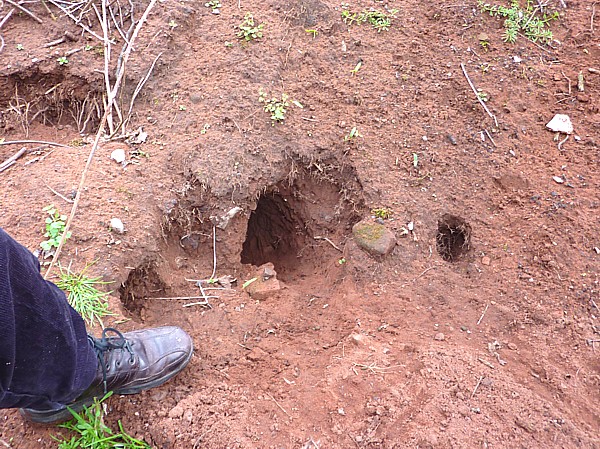
Our first birds were Wood Pigeons, then a Robin singing in the bushes, followed by a Goldfinch pecking about some roots.  We probed a hole in the bank, and found it to be at least 3 feet deep. It was too small for a fox and had no foxy smell. Could it have been a rabbit hole? There were lots of small scrapes in the area too, but no other definite burrows. A dead branch had a fine collection of bracket fungi with chestnut-brown tops, probably Artist’s Bracket Ganoderma applanatum. (Added later – no it isn’t, it’s Blushing Bracket, Daedalopsis confragosa. Thanks Sabena.)

11 Wirral Way Brackets

Overhead, a small group of Goldcrests flitted about in a tree and we paused to listen to a Chiffchaff, the first of the year. It was only singing a short song, perhaps three or four repeats, so maybe it had just arrived from Africa and was tuning up.  We also heard the call of a Great Spotted Woodpecker and some Jackdaws cawing from the woods. Long-tailed Tits passed through and we stopped to watch three Buzzards soaring high above. Our first Coltsfoot flowers were out, and an early Cow Parsley on the verge.

11 Wirral Way Coltsfoot

11 Wirral Way Cow Parsley

An early Bumble Bee – perhaps a Buff-tailed – was going in and out of a damp hole in the ground. She was probably an overwintering queen setting up her new nest. A Lapwing was flying and calling above a horse field, no doubt trying to impress a potential mate. A Jay flew up off the path and a male Blackbird foraged in some low branches. Another possible sign of a mammal was a well-defined run through the grass below a barbed-wire fence. Again, there was no fox smell, and no tufts of badger hair on the barbed wire. We weren’t doing well for mammals! But the birds just kept on coming – Blue Tits, Magpies, Greenfinch and a Dunnock. There was a rich song coming from the woods, a bird singing sets of three or four different calls. It was probably a Song Thrush but we didn’t see it.

11 Wirral Way Hadlow

We arrived a Hadlow Road Station for lunch soon after noon. By that time it was so warm that we had to peel off layers of jumpers to eat in our shirt sleeves. It turned out to be the hottest day of the year so far. A Kestrel swooped past, putting up half a dozen Wood Pigeons, then a Sparrowhawk came past on patrol. We spotted a butterfly going past the signal box, which turned out to be a Brimstone, tempted out of hibernation by the warmth.  In the flower bed in front of the ticket office, Lesser Celandines and Speedwells were blooming amongst the daffodils.

11 Wirral Way L Celandines

Three ladybirds were basking in the sun. The two red ones were the common 7-spot ladybirds, but we thought for a while that the black one might be the rarer Pine ladybird. But it was just a Harlequin.

11 Wirral Way 7 spot ladybird

11 Wirral Way Harlequin

After lunch we walked up to Willaston village. They have some very old buildings there, many of which are Grade II listed, meaning they are of national importance. The oldest was Ashtree Farmhouse, which is half-timbered and early 17th century. Willaston Old Hall has a stone over the door saying 1558 but it is believed to be 17th century. However the Old Red Lion on the green is dated to 1631.  On the green itself the great copper beech was a magnificent sight, surrounded by its circle of crocuses. It was planted on 5th May 1935 for George V’s silver jubilee, so is now nearly 80 years old.

11 Wirral Way copper beech

11 Wirral Way crocuses

We returned via Smithy Lane, spotting Collared Doves on a rooftop and House Sparrows in a beech hedge. A Great Tit was calling. One field of domestic geese had some impressive lines of molehills right across it.  A mammal sighting at last!

11 Wirral Way molehills

Along a narrow section of the path were three sites of Sparrowhawk kills, all within a few feet of each other. This could be the favourite feeding spot of the bird we saw earlier.

11 Wirral Way sparrowhawk kill site

Two Buzzards were flying low together, nearly touching, then separating, engaged in their mating dance. Our last bird of the day was a fleeting Bullfinch in some thin trees, seen when we were nearly back at Hooton.  We had lots of spring “firsts” today, so it’s definitely on its way.

Public transport details: Train from Lime Street to Hooton at 10.13, arriving at 10.40. Returned on the 14.29 train from Hooton.

Posted in Sunday Group | Comments Off on Wirral Way, 9th March 2014

Hoylake, 2nd March 2014

It was a dry, overcast, morning, with occasional fine drizzle and a forecast of heavier rain later. But we opted for an outdoor day and headed for Hoylake, where there was a high tide of 9.7m due at 11.24.

10 Hoylake sea and sky

Just outside Hoylake Station was a Pied Wagtail in the car park, and a planter with a sign saying “Incredible Edible Hoylake”. It was empty when we passed but in summer there are food crops to which the residents may help themselves.  The masses of civic daffodils were out, and the street sculpture is impressive, based around a punning use of “knots”. There is a poem called “Knots” by Elizabeth Davey, rope motifs on the bike stands and benches and there are two sculptures of linked birds by David A Annand, one on the pavement and one on the roundabout. All very clever and appropriate.

10 Hoylake knots

There was a Magpie on a lawn at The Kings Gap and we hoped to see great flocks of birds on the shore, but when we got there the water was already so high that the birds had flown. There were just gulls bobbing on the waves, Black-headed Gulls, Herring Gulls, Lesser Black-backed Gulls and a few Greater Black-backed Gulls further out. There were occasional fly-bys of small flocks of Oystercatchers, Curlew and Knot.

10 Hoylake Kings gap

We walked north east along North Parade, stopping to investigate a garden wall festooned with brightly-coloured fishing floats.

10 Hoylake floats

On the rocks behind the Lifeboat Station is the second children’s pirate ship, sister to the Black Pearl at New Brighton, called, appropriately enough, Grace Darling.

10 Hoylake Grace Darling

We ate lunch in Queen’s Park then walked back to The Kings Gap, where there was now enough beach for us to get along to Red Rocks.  We splashed along the wet, ripply beach, nearly paddling in places! There were “Mermaid’s Purses” (dogfish and small shark egg-cases) entangled in the seaweed.

10 Hoylake mermaid's purses

A Grey Wagtail flew in off the sea, perhaps from Hilbre, and started pecking about in the green algae on the sea wall. A few Redshanks were lingering in the remaining pools, against a backdrop of windsurfers and distant wind farms.

10 Hoylake redshanks and windsurfers

On Red Rocks we spotted a Rock Pipit, a Kestrel swooped past and we heard a Skylark. As we rounded Red Rocks its started to rain intermittently, and as we headed into the blustery wind along the marsh path to West Kirby there were Crows on the path, a Meadow Pipit on the edge of a pond and, in a brief dry spell, a Skylark was fluttering and singing high overhead.

As we neared West Kirby we could see the storm damage from the St Jude storm in late October 2013.  Some beachside lawns had great chunks eaten out of them, which have now been filled in with raw earth, and all the barriers made of concrete “planks” had been chewed up and thrown around, but the fences made of railway sleepers seem to have held.

Public transport details: Train from Lime Street to Hoylake at 10.33, arriving just after 11am. Returned on the 14.31 train from West Kirby.

Posted in Sunday Group | Comments Off on Hoylake, 2nd March 2014

Port Sunlight, 23rd February 2014

It was a day of dark, heavy clouds and a forecast of heavy rain later, but it was quite mild. We decided to go to Port Sunlight, where there are several places to shelter, just in case.

09 Sunlight view

We don’t usually visit the Dell at Port Sunlight, but it’s a nice spot in any weather. The gardeners have planted many artful groups of crocuses and snowdrops, each one carefully arranged, and no flower daring to be out of place.

09 Sunlight snowdrop and crocus bank
09 Sunlight crocus patches

We also noticed lots Daffodil shoots, but they weren’t blooming yet. It was quite a poor day for birds, just a Robin in the hedge by the station; lots of Jackdaws on roofs; a Mistle Thrush in the Dell; Wood Pigeons, Magpies and Crows on the banks and in the trees, and just one Herring Gull overhead.

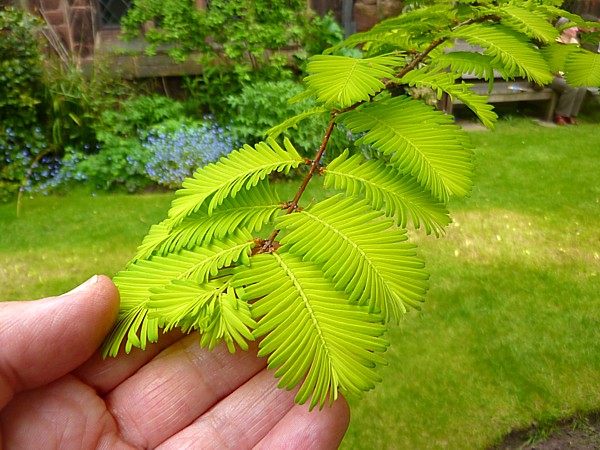
The Dell is a great spot for trees, though. By the side of the path north of the bridge there’s a Honey Locust (Gleditsia triacanthos), the tallest one in Cheshire at 40 ft (12m). It has clusters of long thorns on the trunk. Next to it is a Tulip Tree (Liriodendron tulipifera) also about 40 ft high, which is famous for the autumn colours of its foliage. There was also a very nice young Monkey Puzzle tree.

09 Sunlight monkey puzzle

We looked at the house visited by George V and Queen Mary in March 1914, admired the view from the Hillsborough Memorial balcony at the south end of the avenue, looked at the names and medals listed on the War Memorial and dropped into the Port Sunlight Museum shop.

09 Sunlight balcony

We also looked at two very interesting sundials today. The first was commissioned to mark the Millennium. There is a big-breasted Sphinx, apparently carrying a cross on her back. The bars are marked with the hours, and the shadow of one bar falls on another to mark the time. Below it, on the plinth, is a graph showing “The Equation of Time” from which you can read the minutes before and after the hours, calibrated at five-day intervals throught the year.

09 Sunlight sphinx sundial


In the centre of the avenue leading northwards to the Lady Lever Art Gallery is an even more complex one, called an “annalematic” sundial, in which the shadow-casting object is moved depending on the date. In this case the shadow is cast by the person wanting to know the time.  The little pathway leading into it has tiles marked with the names of months, so you stand on the one for February, in our case. The inner ellipse of white posts marks the hours in British Summer Time, while the outer ellipse of grey posts marks the time in winter.  Sadly, as there was no sun, we couldn’t try it out.

09 Sunlight annelamatic sundial

After lunch we went into the Art Gallery to see the exhibition “Turner: travels, light and landscape” including some rarely-shown early watercolours. But I was more interested in a painting I haven’t seen before, kept in the little alcove off the Main Hall. It appeals to the scientist in me, and is called The Forerunner, painted in 1920 by the artist Eleanor Fortescue-Brickdale.

09 Sunlight Forerunner


It shows an imagined moment in the late 1400s with Leonardo da Vinci demonstrating a small prototype of one of his flying machines to his patrons the Duke and Duchess of Milan, Ludovico Sforza and Beatrice d’ Este. Lurking on the left, looking darkly opposed to progress, is the monk Savonarola, who famously organised bonfires of secular books and art in Florence at around the same time.

Public Transport details: Train from Lime Street at 10.13, the Chester train, arriving Port Sunlight at 10.30. Returned from Bebington at 1.53, arriving Liverpool soon after 2pm.
Posted in Sunday Group | Comments Off on Port Sunlight, 23rd February 2014

Sefton Park 23rd February 2014

During the mid-week MNA walk around Sefton Park last week – see Barbara’s blog post below – Dave Bryant and Chris Felton noted some unusual galls on young Turkey Oaks Quercus cerris that they didn’t recognise. Turkey Oaks are known hosts to the Knopper Gall Wasp Andricus quercuscalicis, which in spring forms small galls within the catkins of the Turkey Oak. However, they weren’t these…

On returning home DaveB consulted “Britain’s Plant Galls: A Photographic Guide by Michael Chinery” and found the culprit – the Cynipid Gall Wasp Aphelonyx cerricola which was first noted in Berkshire, UK, on 30 September 1996. Since then they have been slowly spreading through-out South-east England. Chris F said that he would appreciate a photographic record. Despite non-ideal photographic conditions – being overcast, windy and raining I met up with DaveB at the cafe and we went out to find the Turkey Oaks. These galls are green and velvety in the summer, later becoming brown and woody as they were now. One particular tree was covered with the irregular shaped galls wrapped around the twigs and neighbouring galls appearing to fuse together.

MNA Sefton Park Turkey Oak Gall1

MNA Sefton Park Turkey Oak Gall3

MNA Sefton Park Turkey Oak Gall2

Turkey Oak galls

I’ve since found out that Steve McWilliam noted these galls in Calderstones Park 25th October 2013.

http://www.record-lrc.co.uk/forum/viewtopic.php?f=11&t=1161

The Turkey Oak acorn cups were also rather impressive looking quite hairy in appearance.

MNA Sefton Park Turkey Oak Cups1

Turkey Oak Acorn Cups

There were plenty of other interesting things of note around Sefton Park. Investigating an artificial cave we saw the lace-like diffuse webs around the entrance to holes and crevices inhabited by Lace Weaver Spiders Amaurobius similis. Lace Weaver Spiders produce a special kind of silk from its cribellum, which is a pair of sieve-like plates just in front of the spinerets. The silk is very characteristic, with a blueish colour when fresh and is teased out by a double-row of curved bristles on the metatarsus of the fourth (hind) leg called a calamistrum.

MNA Lacy Weaver Spider Web1

Lacy Weaver Spider Web

A scattering of Fungi with Jelly Ear Auricularia auricula-judae, Black Bulgar Bulgaria inquinans, Exidia plana, Southern Bracket Ganoderma australe, Lacquered Bracket Ganoderma lucidum, Root Rot Heterobasidion annosum, Peniophora quercina, Hairy Curtain Crust Stereum hirsutum, Bleeding Broadleaf Crust Stereum rugosum and Tukeytail Trametes versicolor.

MNA Sefton Park Black Bulgar1

Black Bulgar

MNA Sefton Park Root Rot1

Root Rot

On the lake were nine Mute Swans in total – 4adults including blue darvic ringed XA6 and XZ6 along with five cygnets including 4ABB, 4ADX and 4ADZ. Adult male XZ6 was displaying with much heart-shaped posing with one of the un-ringed cygnets!

Thirty bird species were noted: Little Grebe 14 birds squealing away, Great Crested Grebe a lone individual, Grey Heron one preening in the rain on an island and another flying, Mute Swan 9, Greater Canada Goose 75+, Mallard, Common Moorhen including 2 birds sitting on nests, Coot 12+, Black-headed Gull 85+, Common Gull 1, Feral Rock Pigeon 8+, Common Wood Pigeon 10+, Rose-ringed Parakeet at least three birds flying around squawking, Great Spotted Woodpecker two drumming, Pied Wagtail 2 feeding on the lake edge, Wren, Dunnock, Robin, Blackbird, Song Thrush 2 singing, Mistle Thrush 2 rattling away, Long-tailed Tit feeding party, Great Tit 6+ calling, Nuthatch 2 calling, Eurasian Jay squawking, Magpie 10+ scattered around the grassed areas, Carrion Crow, Starling flock 9 overhead, Chaffinch, Greenfinch wheezing it’s call. Also a few cheeky Grey Squirrels taking advantage of the scattered monkey nuts left by visitors.     

If you are interested in the wildlife of the north-west of England and would like to join the walks and coach trips run by the Merseyside Naturalists’ Association, see the main MNA website for details of our programme and how to join us.

A wide photographic selection of birds, marine life, insects, mammals, orchids & wildflowers, fungi, tribal people, travel, ethnography, fossils, rocks & minerals etc. is available on my Alamy webpage

Posted in MNA reports | Comments Off on Sefton Park 23rd February 2014

Sefton Park short walk, 19th February 2014

08 Sefton view

This series of short walks is an experiment this year, in response to some comments in the 2012/13 questionnaire that members would like half-day walks in parks. In the event, there were nine of us on the walk, seven regular members, one who hasn’t been out with us for a while, and a lady who isn’t a member but had heard about us from the man doing her gutters! (She was delighted to have found us and will be joining.)

It was a dry overcast day, and surprisingly warm – about 10°C, 50°F. Was there a touch of spring in the air? We met at the Lakeside café at the south end of the lake at 11 am. There was the usual scrum of birds coming to the children “feeding the ducks”. Canada Geese were parallel swimming and honking, so they think it’s spring.

08 Sefton Canadas

The Coots were fighting and splashing, so they are in the same mood. The Mallards were in their best plumage, and about 1 in 100 of the Black-headed Gulls were showing the first signs of their black heads. There were also Moorhens, Feral Pigeons, one Common Gull on the lake and Wood Pigeons on the banks. Seven Mute Swans were in attendance, four adults and three juveniles. John C recorded some Darvic rings. Juvenile, blue, right, 4ABB; juvenile, blue, right, 4ADZ; adult, blue, right, XZ6.  These have been reported to the North West Swan Study.
(Added 22nd February after hearing back from the study. They all seem to be young Sefton Park natives:
4ABB  was ringed as a cygnet at the park 2/9/2013  [now nearly a year old]
4ADZ – “details haven’t been sent to me yet, so must have been recently ringed, and probably at the park”
XZ6  was hatched 2012 and ringed 23/1/2013 at the park! [now two years old])

As we walked northwards we spotted the expected Little Grebes under the overhanging Rhododendrons near the north end of the main lake. Jim saw the most, claiming 14. They are doing well here. On the verges near the bandstand were Crows, Robins, Magpies, Long-tailed Tits, a Song Thrush,  a Grey Squirrel and a Buzzard circling overhead. Clusters of dark purple crocuses were out under the trees.

08 Sefton purple crocus

We stopped to admire a magnificent big bare tree on the Bandstand island. Is it a Beech? We’ll have to look at it again when the leaves come out.

08 Sefton big tree


Skulking in a quiet corner north of the bandstand was a Great Crested Grebe.

08 Sefton Great Crested

Near the Eros statue we noticed a lot of gulls circling high overhead. It’s a bit early for swarms of insects, so perhaps they had found a thermal. It was certainly getting quite warm, and the sun came out.  A flowering shrub on the corner was identified as Viburnum x bodnantense. It flowers through the winter, with fragrant blossom.

08 Sefton blossom

There was an old Goldfinch nest in it, and I noticed another of the same shrubs later on, and that had an old Goldfinch nest in it too. Obvously birds with good taste in homes!  Just as we were discussing the possible emergence of butterflies on such a warm day, we saw a Bumble Bee flying, although it was against the light and impossible to identify.  Nearby were more crocuses, yellow ones this time, and some Snowdrops.

08 Sefton yellow crocus
 

08 Sefton snowdrops


Some handsome trees dotted about the park fascinate me and I privately call them “explosion” trees. There is no main trunk, they just get to four or five feet then explode!

08 Sefton explosion tree

We looked at the twigs and buds, and they look like Beech, so it this a different variety, or is it the result of some sort of pollarding?

08 Sefton explosion twigs

On the big field beyond the Palm House there was a flock of about 50 Black-headed Gulls, and three had almost fully black heads, much more developed than I’ve noticed anywhere else. There were Jackdaws with them and another Common Gull. Someone said they’d seen a Herring Gull, too, but there weren’t many about.  In the Dell, John produced some birdseed and scattered it on the ground. A Dunnock came, a Great Tit, some Wood Pigeons, Crows and Blackbirds.

Around the corner, surrounding an old tree  stump, was a low plant with white tube or trumpet flowers, looking like Comfrey but white and low. Anyone know what it is?

08 Sefton mystery flower

John then produced mealworms and balanced some on a fence near the park bird feeders. Long-tailed Tits came, Blue Tits and a Great Tit. There was a Goldcrest flitting about in a tree above our heads and we also spotted a Nuthatch. There was a  Brown Rat on the ground, feeding off the scattered seed and nuts. A Great Spotted Woodpecker flew over. Then we heard the squawks of a Ring-necked Parakeet and traced it to some apples put out for them on the other side of the path. I’ve never seen one before so that’s a “lifer” for me!

08 Sefton parakeet

We wandered back to the Lakeside café for 1 pm and went our separate ways. I make that 27 birds and two mammals. Not bad for a walk in the park.  The only other “animal” of note was this one in the Palm House.

08 Sefton giraffe


If you are interested in the wildlife of the north-west of England and would like to join the walks and coach trips run by the Merseyside Naturalists’ Association, see the main MNA website for details of our programme and how to join us.

Posted in MNA reports | Comments Off on Sefton Park short walk, 19th February 2014

Hunting “Great” Birds at Southport, 16th February 2014

There had been a juvenile Great Northern Diver reported at the north end of Southport Marine Lake on Friday and Saturday, in addition to the two Great White Egrets regularly seen there, so we decided to go hunting! There were engineering works on Merseyrail, so we took the X2 bus instead, having great views from the top deck of the site of the new Thornton relief road. There are just long rows of sticks in the ground so far.

The bus took us to the roundabout at the north end of Lord Street, at the corner of Leicester Street, and we walked down to the prom.  It was a lovely sunny day, but the breeze was brisk and cold.

07 Southport yachts


A flotilla of small yachts were racing around buoys. They might have disturbed the Diver, which was nowhere to be seen, disappointingly. We saw the usual lake dwellers, Canada Geese, Mute Swans, Coots, Moorhens, Mallards, Herring Gulls, Black-headed Gulls, Lesser Black-backed Gulls, as well as a scattering of Magpies and Wood Pigeons. On the side of the north island, on or near a small jetty, there were three Herons and two Oyster Catchers.

07 Southport herons

We met two other birders with telescopes, who said they hadn’t seen any sign of the Great Northern Diver either. The Great White Egrets regularly roost on the north island, they said, but they fly off about 8 am and return about 4pm, so no chance of seeing them either. They did, however, point out a distant Guillemot at the north end of the lake and said they had seen a Kittiwake earlier, but it wasn’t around when we were looking. We sheltered from the biting wind to have our lunches in this shelter, which looks like someone has been after the lead on the roof!

07 Southport shelter


A large flock of Mute Swans gathered under the shelter, about 25 of them, including four juveniles. We noted five blue Darvic rings on the adults, which have all been reported to Wes Halton at the  North West Swan Study :   LT6, V61, TV4, SV6 and a damaged or dirty one which was probably II6. We haven’t seen any of these before.

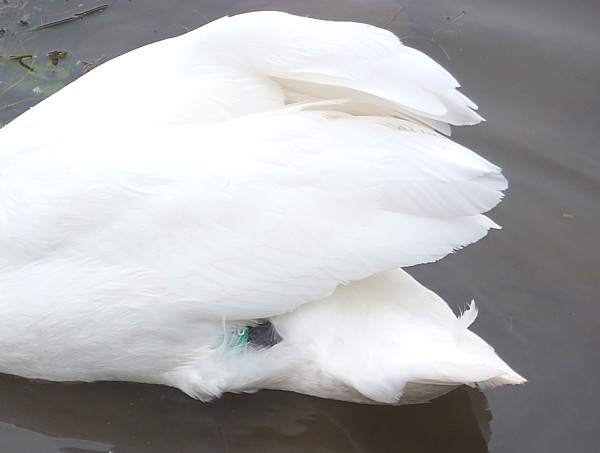
07 Southport swan leg ring

One of the juvenile swans seemed to have a green ring, but we couldn’t see the number on it. A green ring might suggest Cheshire, so he or she was far from home.

(Added 22nd February, after hearing back from Wes Halton:
LT6 was a male cygnet when ringed at Forton  on 2/9/12,  so is now 17 months old.
II6 was a 1st yr female when ringed at Stanley Park Blackpool on 2/2/2013 so is now nearly two years old.
V6I was a 1st yr female  when ringed at Stanley Park Blackpool on 23/2/2012 so is now nearly three years old.
TV4 was a 1st yr female when ringed at  Southport Marine Lake on  20/2/2012 so is now nearly three years old.
SV6 was a 1st yr female when ringed at  Millness, Milnthorpe on 20/5/13 so is now nearly two years old.
It looks like the whole lot of them were sub-adults, perhaps best referrred to as  a gang of teenagers.)

We also saw two Coots with rings only on their left legs. Kane Brides’s study of a few years ago marked Coots with coloured rings on both legs, including a metal BTO ring, but these two had just a pair of colours on the left . One was orange over red, and the other was black over yellow. I have asked Wes Halton if he knows anything about them.

As we headed back south we saw two Greylags, and noticed that some of the Black-headed Gulls have their dark heads just coming in. It’s fewer than one in 20 so far. We went south as far as the start of the Trans-Pennine Trail then headed back through Kings Gardens, looking at the progress of the major refurbishment funded by £5.5m National Lottery money. There was a Blue Tit in the park and some Cormorants on the jetty under the pier.

07 Southport cormorants


One lady was walking a pair of very pampered pooches in bright onesies!

07 Southport pooches

We admired the gathering of gleaming motor bikes by the start of the pier. There was a three-wheeler like the one Billy Connolly rode on Route 66, a lovely old BSA Sunbeam with a sidecar and several Harley Davidsons, one with a wild boar/”hog” ornament on the front fender.

07 Southport hog
Public Transport details: X2 bus at 10.15 from Queen Square, arriving Southport Lord Street at 11.35. Returned by the X2 bus at 2.30 from Lord Street Southport.

Posted in Sunday Group | Comments Off on Hunting “Great” Birds at Southport, 16th February 2014

More on Brockholes 9th February

Just to add to Sabena’s post below, here are the snowdrops she mentioned.

06 Brockholes snowdrops

And here is a Witch’s broom on a tree in the woods.

06 Brockholes witches broom

06 Brockholes witches broom detail


It’s a disease or deformity of a tree, where a dense mass of shoots grows from a single point. The causes are varied – infection, injury, parasites.  See this Wikipedia article.   Wikipedia adds that Witchs’ Brooms are of wide ecological importance. They generally tend to be inhabited by a wide variety of organisms apart from the causative organisms. Some of the invading organisms, such as some species of moths, are specific to particular types of witches’ brooms, relying on them for food and shelter for their larvae. Various larger animals may also nest in them.

Posted in MNA reports | Comments Off on More on Brockholes 9th February