Trans Pennine Trail 1, Southport to Hillside, 11th May 2014

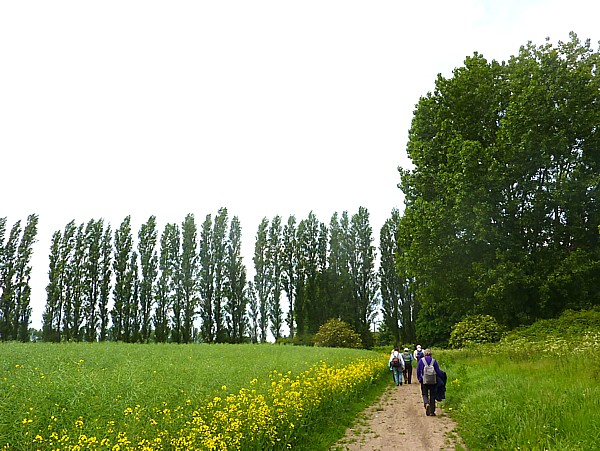
After our canal walk from Liverpool to Burscough Bridge in eight short sections last year, we plan something more ambitious. Over the next couple of years we will tackle the Trans Pennine Trail from Southport, perhaps as far as Widnes.

20 TPT1 the start

Our train arrived at Southport soon after 11 and we traced our way through Corporation Street, Wayfarer’s Arcade and Scarisbrick Avenue to the lower prom. There were Mallards, Mute Swans and Black-headed Gulls on the Marine Lake, and the new shelters were nearly finished, just waiting for the seats to be put in. On the platform of the Miniature Railway was a very pink shrub which puzzled us, but I think is a Tamarisk.

20 TPT1 Tamarisk

Past Pleasureland, Splash World and the volunteer Lifeboat Station until we arrived at the south end of the prom and the start of the Trail. It runs for 215 miles from Southport to Hornsea, but it’s also part of European route E8 which goes from Cork in Ireland, via the Dublin-Liverpool ferry and the Hull-Rotterdam ferry, ending at Istanbul, 2,920 miles altogether. There’s a thought for the start of a walk!

It was a very blowy day, so we huddled below the level of the prom to eat our lunches, then set off southwards. On a good day there are views of Lytham and Blackpool but we were heading into the wind so we kept our heads down. On the concrete of the path were several large woodlice, about 15 mm long, much bigger and shinier than the ones we see in our gardens. It’s a Common Shiny Woodlouse Oniscus asellus. Was it blown off the beach by the wind? The white patches are stores of calcium, apparently. (And thanks to Eric for providing his fingernail for scale!)

20 TPT shiny woodlouse

On the edge of the marsh we saw a pair of Shelduck, and a Skylark was singing, barely audible over the gusts. Then we began to see very many small centipedes or millipedes (up to 3 cm long) along the walkway, perhaps as many as one every couple of metres. Had they been blown in off the grass and marsh too? I later identified them as the Striped Millipede Ommatoiulus sabulosus which is common on coastal dunes and sandy areas, and has two distinctive ginger stripes along its back.

20 TPT1 centipede

Clumps of Sea Beet and Sea Holly were growing, and patches of wild rose, probably the Japanese Rose Rosa rugosa that conservationists are becoming concerned about.

20 TPT1 wild rose

The Weld Road roundabout has a piece of sculpture representing a shrimping cart and horse.

20 TPT1 shrimping cart

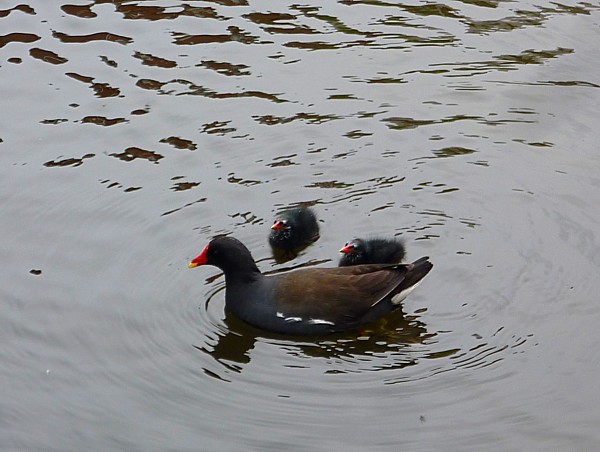
Along the busy coast road we spotted a dead female blackbird, probably hit by a car. If she had eggs or chicks, it’s bad news for them.

20 TPT1 blackbird

We left the coast road by the sign for the start of the Ainsdale and Birkdale Sandhills LNR, which we’ll come back to next time. Via Selworthy Road with its million-pound detached houses, the footpath ahead from Granville to Lancaster, then the footpath which skirts Royal Birkdale, we came out near Hillside Station, with it’s great old LMS sign. One and a half miles of the TPT today.

20 TPT1 Hillside station

Public transport details: Train from Liverpool Central at 10.23, arriving Southport 11.09. Returned from Hillside at 2.04.

Posted in Sunday Group | Comments Off on Trans Pennine Trail 1, Southport to Hillside, 11th May 2014

Lydiate, Saturday 10th May 2014

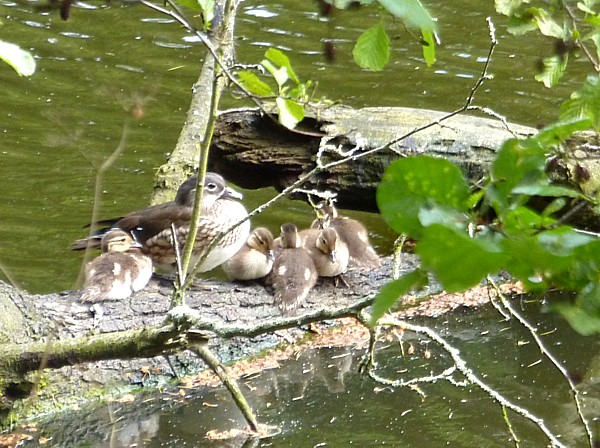
Just after a very heavy rain shower three MNA members met at Sir Thomas Street, and if the other two hadn’t turned up, I was planning to go home! Three more got on the bus, and at Our Lady’s RC Church Lydiate we met four or five RSBP members for our joint walk, including their Group Leader Chris Tynan. We paid a swift visit to the Hay Loft tea shop before setting out. They have a duck pond with Mallards and domestic geese, Peacocks and Guinea Fowl. A Buzzard was being mobbed overhead and there were Swifts over the farm shop.

The sheep in the field along Hall Lane always have interesting extra rations and today they were climbing over a huge mound of cabbages!

19 Lydiate sheep and cabbages


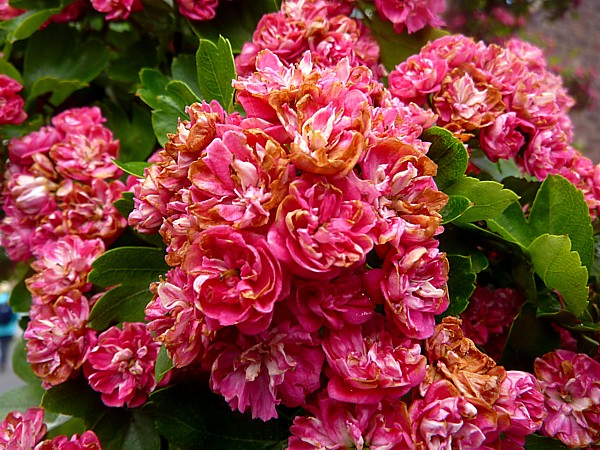
In the fields we saw Jackdaws, Magpies, Rooks, two Brown Hares under fence, Lapwings, Lesser Black-backed Gulls, several Pheasants, and Swallows flying over fields of young Barley. The hedges were just starting to burst out with Hawthorn blossom, the sweet-smelling Mayflowers.

19 Lydiate May blossom

There was supposed to be more rain, but although it was very blustery and overcast, we stayed dry all day. Just past the horse racing practice course we spotted a Crane Fly on the grass. I think it’s Tipula vernalis because of the distinctive wing pattern and the dark stripe along the abdomen. It’s the right time of year for it, too.

19 Lydiate Cranefly

Towards Lydiate Hill Bridge the path was powdered with fallen May petals. A Skylark was singing, a Pied Wagtail was poking about on molehills, and the sun came out! We added Great Tit, Crow and some Goldfinches twittering in a tree. On the canal we saw a Moorhen, two Yellowhammers, a Robin and a Dunnock. Near the canal cottages, formerly the Anchor Arms, we noted Great Spotted Woodpecker, Black-headed Gull, House Martin, Greenfinch, Song Thrush, Mistle Thrush. There were great drifts of Pink Campion on the verges, and Red Valerian on the waterside.

19 Lydiate red valerian


We lunched at Jackson’s Bridge, listening to a Blackbird and a Chaffinch singing. There was a Heron on the towpath and two Linnets in the deep ditch of Sudell’s Brook which marks the border of Sefton and West Lancs. There were St Mark’s Flies there, too. One field was blasted brown with weed killer. I’d have thought it would be a place to avoid, but the birds loved it being so open. An Oystercatcher appeared to be nesting, and possibly some Lapwings, too. Closer examination turned up two Wheatears and a Whinchat, which we got a scope on. At Rimmer’s Bridge a mother Mallard had seven ducklings.

19 Lydiate seven ducklings


I left the group there, because I had someone to meet off a train, but the rest of the group set out eastwards for another hour or two’s walk. Star of Bethlehem was coming out in Our Lady’s churchyard.

19 Lydiate Star of Bethlehem

Public transport details: 300 bus from Sir Thomas Street at 9.51, arriving Our Lady’s RC Church, Lydiate at about 10.45. Returns every 30 mins on Saturdays, or hourly on Sundays. Note that the timetable will change on 15th June, so check.

If you are interested in the wildlife of the north-west of England and would like to join the walks and coach trips run by the Merseyside Naturalists’ Association, see the main MNA website for details of our programme and how to join us.

Posted in MNA reports | Comments Off on Lydiate, Saturday 10th May 2014

Chester, 4th May 2014

Chester Cathedral was having an Open Day today (there is usually a fee for entry) so that was a good excuse for a trip to Chester.

18 Chester flowers on canal verge

We walked down the hill from the station and onto the canal. Our attention was immediately caught by a single tiny duckling. It was peeping desperately and its legs were going furiously. Clearly it was lost and panicking.

18 Chester lost duckling

Other Mallard mothers with older broods were seeing it off aggressively. We could see some other very tiny ducklings a long way off but our stray was going the wrong way! We thought of catching it, but it shied away from hands, so no chance of that. Then five other little balls of fluff of about the same age appeared from behind the narrowboats and it swam off with them, but there was still no mother duck in sight. The little ones weren’t going to last long without her, we thought. More bad bird parenting was evidenced by a lone Moorhen chick further along.

There was a lovely display of flowers along the edge of the canal. Lady’s Smock, a big mass of Cow Parsley and Bluebells, Buttercups, and one that looked like a Buttercup but wasn’t. Only four petals and long thin seed pods. Margaret identified it as Greater Celandine, which is a member of the poppy family, and not related to the Lesser Celandine at all.

18 Chester Greater Celandine


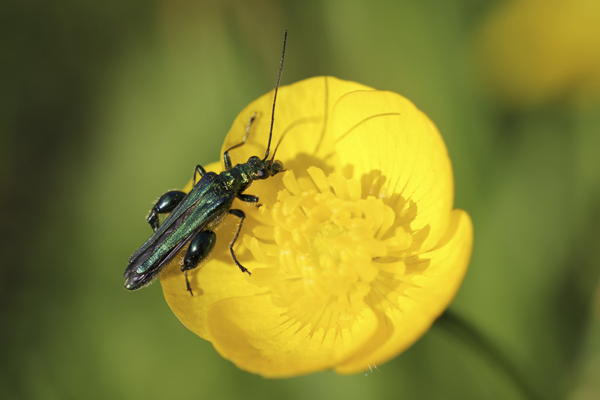
Sitting very still on a blade of grass was a small beetle, which looked black, but was iridescent blue and purple when the light was right. It was under half an inch long (10 mm) and had very long antennae. Does anyone want to propose an identification? Some kind of Leaf Beetle? [Added later – thanks to Tony Carter who thinks it’s an Alder Leaf Beetle. That looks good to me.]

18 Chester beetle


In the steep sandstone cutting before Northgate Lock we noted Hart’s Tongue fern on the damp wall, surrounded by the Common Liverwort. The little cups on the liverwort “leaves” (the thallus) contain tiny reproductive particles called gemmae.

18 Chester Harts tongue and Liverwort

The opposite wall had a profusion of life, with ivy, ferns, and young Sycamore trees clinging to the vertical rock face.

18 Chester canal wall

Where it was light and dry again there were clumps of the very pretty little Ivy-leaved Toadflax.

18 Chester Ivy leaved toadflax

We lunched in our usual spot opposite the Telford warehouse. A Mute Swan was nesting on the verge in a horribly unsuitable spot. She was by the wall next to South View Road, accessible to everyone walking by. The Canal and River Trust in Wales had put up warning signs, so I hope she isn’t bothered.

18 Chester Swan nest

18 Chester Swan warning sign

What was probably her mate was swimming about on the canal. He had green Darvic ring CS02. We may have seen him before. In December 2011 we noted “C502”, but didn’t report it. If his ring is C502 he’s 15, but if he’s CS02 he’s 8. I have reported both sightings and we shall see.  (Added later: David Cookson of the Cheshire Swan Study responded “Many thanks for the email and sightings. From my records it could be CS02. C502 is a female seen last in Chester Canal Basin in 2011 and CS02 female last seen in the same place in 2013.” Odd that, whichever individual it was, it was a female, so was it the male brooding the eggs?)

Then along the walls to Chester Cathedral. We looked at the windows and monuments, then went into the Cloister Garden, to look at the “Water of Life” sculpture by Stephen Broadbent.

18 Chester Water of Life

We were more interested in the plants, especially that red one behind the sculpture. Margaret suggested Chilean Fire Bush as a possibility, and she was right.

18 Chester Chilean Fire


In the far corner was a lovely young tree with (happily) a name tag. It was a golden Dawn Redwood Metasequoia glyptostroboides “Goldrush”.
18 Chester Dawn Redwood

18 Chester Dawn Redwood leaves


On the way back into the cloister I spotted a tiny window to Mallory and Irvine who were lost on Everest in 1924. The words Ascensiones in corde suo disposuit are from Psalm 84 and translate as “In his heart he has set the heights”.

18 Chester Mallory Irvine window


Public transport details: 10.15 train to Chester, arriving 10.55. Returned to Liverpool on the 2.30 train, arriving Liverpool just before 3pm.

Posted in Sunday Group | Comments Off on Chester, 4th May 2014

Cilcain, North Wales 3rd May 2014

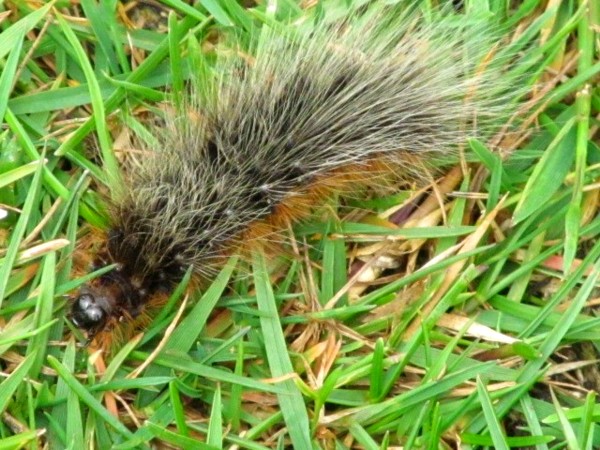
Richard Surman, DaveB and I headed out to Cilcain near Mold in Flinshire, North Wales for the day. We turned off the A494 onto a single track lane beside the entrance to Loggerheads CP and continued a few miles into the village noting a Jay and a couple of Grey Wagtails en route. Warbler birdsong greeted us with a Garden Warbler, Blackcap, Willow Warbler and Chiffchaff along with three vocal Ravens and chacking Jackdaws. After only a few yards I spotted a hairy black caterpillar with orange underside – a Garden Tiger Arctia caja.

MNA Cilcain Garden Tiger

Garden Tiger

The tree shaded lane edges held a mass of wildflowers with Wood Anemone Anemone nemorosa,Lesser Celandine Ranunculus ficaria, Greater Stitchwort Stellaria holostea, Garlic Mustard Alliaria petiolata, Dog’s Mercury Mercurialis perennis, Wood-sorrel Oxalis acetosella, Herb-Robert Geranium robertianum, White Dead-nettle Lamium album, Cleavers Galium aparine, Crosswort Cruciata laevipes, Greater Burdock Arctium lappa, Lords-and-Ladies Arum maculatum and English Bluebell Hyacinthoides non-scripta.

MNA Cilcain Wood Anemone

Wood Anemone

MNA Cilcain Garlic Mustard

Garlic Mustard

MNA Cilcain Bluebells

Bluebells

Long-tailed, Blue & Great Tit, Robin, Blackbird, Song Thrush, Chaffinch and Bullfinch were soon added to the list. As we were peering over the edge of a gate to the woodland below – an area where Redstarts have been noted in the past a lady invited us in – the track led down the slope to a small community garden where they grow veg. A hyperactive Spaniel was rushing to and fro as some of the volunteers wheel-barrowed compost from the heap. I found a few fungi with Jelly Ear Auricularia auricula-judae, Blushing Bracket Daedaleopsis confragosa and a lone King Alfred’s Cakes Daldinia concentrica. It had turned cloudy – a Green-veined White Pieris napi rested and fed on a Cuckooflower Cardamine pratensis with Common Dog-violet Viola riviniana – including a pinkish tinged form close by.

MNA Cilcain Green Veined White1

Green-veined White

We briefly watched a Spotted Flycatcher and a Willow Warbler posing as a Spotted Fly had us hallucinating for a while. A Redstart was teasing us with bursts of song from amongst the woodland, remaining unseen. We returned to the lane and continued past the first of the small fishing lakes.

MNA Cilcain Richard

Comments from Richard and DaveB that this is where they usually see Great Spotted Woodpecker and Nuthatch proved correct with them appearing on cue – the latter checking out a potentially suitable nest-hole. A Yellowhammer sung it’s ‘little bit of bread and no cheese’ song from the flowering European Gorse Ulex europaeus. Woodpigeon and Goldfinch were noted before we began slowly climbing past further fishing lakes up onto the moor.  Plenty of flowering Bilberry Vaccinium myrtillus looking slightly more ragged with brown-edged leaves compared to the fresh green growth we’d seen at White Coppice last weekend. Amazing to see yet more Wood-sorrel growing along the track in this exposed environment along with a few flowers of Tormentil Potentilla erecta and Common Eyebright Euphrasia officinalis. Opposite-leaved Golden-saxifrage Chrysosplenium oppositifolium was noted growing along the edge of a stream and in a large puddle was Round-leaved Crowfoot Ranunculus omiophyllus.

A Swallow whizzed overhead. A Cuckoo was persistently calling – the valley’s shape amplifying the volume, yet more Ravens were circling and calling their name and Pheasants were trying to outdo each other with their calls. A Tree Pipit was seen performing a more lack lustre parachute display flight down to a bush than the Meadow Pipits who sailed much higher and sang heartily as they descended to the moor. A few Whitethroats were singing their scratchy notes from a scattering of bushes on the moor – it was pondered why these males thought they would attract a mate in this exposed landscape than in more lush settings further down the valley? A few Willow Warblers also seemed to like this area as did a distant Whinchat and a scattering of Linnets.

MNA Cilcain Scenery1

We found a soft patch of ground to stop for lunch whilst listening to the Cuckoo. The stone walls and gate posts were covered in a huge variety of lichens with Map Lichen Rhizocarpon geographicum and R. reductum and R. oederi. Verrucaria nigrescens and countless others. One particularly noticeable variety, which is locally common on base-poor rocks in upland areas, was Ophioparma ventosa. It had abundant blood-red apothecia on a thick, warted, yellow-grey crusty thallus (f. ventosa) another form has a pale grey grey crusty thallus (f. subfestiva, lacking usnic acid). There was also Fuscidea kochiana which has an almost white thallus, cracked areolate; apothecia black, irregularly angular, set in the thallus and often occurs with Rhizocarpon geographicum.

MNA Cilcain Map Lichen

Map Lichen

MNA Cilcain Lichen1

Lichen Ophioparma ventosa f. ventosa

MNA Cilcain Lichen2

Fuscidea kochiana

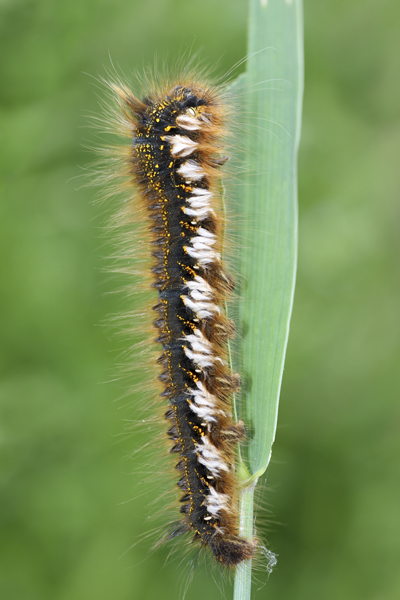
An Oak Eggar Lasiocampa quercus caterpillar camouflaged well with the lichen. A lone Mountain Bumblebee Bombus monticola with distinctive orange bottom flew by and a handful of Buff-tailed Bumblebees Bombus terrestris were noted.

MNA Cilcain Oak Eggar1

Oak Eggar Caterpillar

We continued round the other side of the valley watching a male and female Wheatear amongst the sheep and noting a singing Whinchat on the top of a mature Sycamore Tree. The Cuckoo was louder and closer now. Scanning the trees surrounding a bowl in the valley was rewarded when Richard spotted the slaty-blue male belting out its call from the tree edge with seemingly very little effort.

MNA Cilcain Scenery2

A Buzzard circled and a Curlew called out signalling our departure from the moor, returning to more wooded conditions and rosettes of the Lichen Parmelia saxatilis predominating on the stone walls.

MNA Cilcain Lichen3

Parmelia saxatilis

A Pied Wagtail was hunting for insects in a field which held a few Highland Cattle. A second Cuckoo called out from further down the valley, Chiffchaffs and Blackcaps sang away and there were snippets of song from a couple of other elusive Redstarts.  A few insects with dangly legged St. Mark’s Fly Bibio marci, Common Carder Bee Bombus pascuorum, Honey Bee Apis mellifera and Hoverfly Syrphus ribesii.Nettle Rust Puccinia urticata was noted on Stinging Nettle Urtica dioica and Dock Rust Puccinia phragmitis on Broad-leaved Dock Rumex obtusifolius.

A Magpie and a dozen or so Rooks from the Rookery of 40-45 nests were added to the list. As we continued back down through the village we added Mistle Thrush, Collared Dove, House Sparrow and saw a couple more Swallows. The high verges of the lane were bursting with more wildflowers – Buttercup Ranunculus sp.  Greater Celandine Chelidonium majus, Red Campion Silene dioica, Sheep’s Sorrel Rumex acetosella, Primrose Primula vulgaris, Cowslip Primula veris, Black Medick Medicago lupulina, Round-leaved Crane’s-bill Geranium rotundifolium, Greater Periwinkle Vinca major, Green Alkanet Pentaglottis sempervirens, Wood Forget-me-not Myosotis sylvatica, Ground-ivy Glechoma hederacea, Red Valerian Centranthus ruber, Spanish Bluebell Hyacinthoides hispanica and Ramsons Allium ursinum.

MNA Cilcain Greater Periwinkle

Greater Periwinkle

A Dunnock hopped around the churchyard of St Mary’s – the interior was stunning with the wooden arched roof of the south nave decorated with angels, shields and grotesques.

MNA Cilcain Angel1

Angel

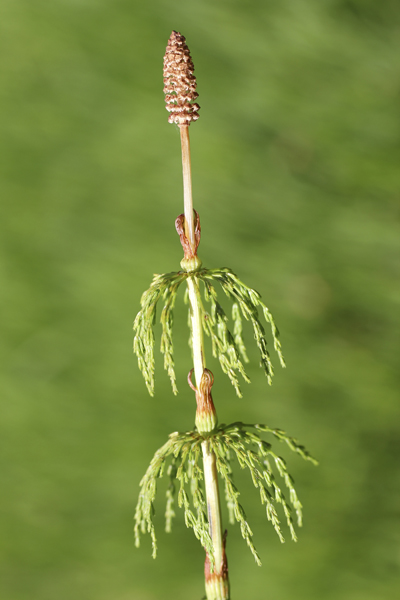
The pond besides the Cilcain waste water treatment building held Marsh-marigold Calthapalustris and masses of Marsh Horsetail Equisetum palustre.

Our leisurely 6hr circular walk had flown by, some good lists for the day and all within an hour’s drive of Liverpool!

Posted in MNA reports | Comments Off on Cilcain, North Wales 3rd May 2014

MNA Coach Trip White Coppice 27th April 2014

Nineteen MNA members joined our first coach trip of 2014 to White Coppice near Chorley in Lancashire. It has been 7 years since we last visited this location on an abysmally wet day. Thankfully today’s similar wet forecast didn’t materialise and we all had an enjoyable outing.  We parked at the small town of Brinscall before walking up Well Lane noting Garlic Mustard a.k.a. Jack-by-the-Hedge Alliaria petiolata, Lady’s Mantle Alchemilla sp. Wood Forget-me-not Myosotis sylvatica and Spanish Bluebells Hyacinthoides hispanica. A Grey Squirrel Sciurus carolinensis was bounding along a tree branch and a road-kill flattened Common Toad Bufo bufo was the first corpse of the year. A number of Cranelies were sat on Nettle Leaves that I later identified as female Tipula vittata with distinctively patterned wings and dark stripes along the sides of the abdomen.

MNA White Coppice Cranefly Tipula vittata1

Cranefly Tipula vittata 

Birdsong continued as we took the path into Hodgkinson Wood with migrant Willow Warblers, Chiffchaffs, Blackcaps, a Garden Warbler and Cuckoo along with a drumming Great Spotted Woodpecker and a Jay. Moss enveloped the stone walls which held masses of Wood-sorrel Oxalis acetosella and there was also plenty of flowering Bilberry Vaccinium myrtillus and Opposite-leaved Golden-saxifrage Chrysosplenium oppositifolium. In a clearing John Clegg pointed out a sun- basking Peacock Inachis io and I also noted a Tawny Mining Bee Andrena fulva and a White-tailed Bumble Bee Bombus lucorum.

MNA White Coppice Bilberry1

Bilberry

A moss-covered old ruined building had an abandoned bird’s nest. A few of the 8 or so cold eggs were examined and thought to be that of a Robin. A precarious slippery mud path led down the hill. A number of members commented on the orange coating to many of the tree trunks. This is not a Lichen as many suspected but an algae Trentepohlia sp. – the orange pigment haematochrome (β-carotene) hides the green of the chlorophyll. There were a few Fungi finds with masses of Birch Polypore Piptoporus betulinus, a few desiccated Jelly Ear Auricularia auricula-judae, Blushing Bracket Daedaleopsis confragosa, Common Tarcrust Diatrype stigma, Small Stagshorn Calocera cornea and Common Grey Disco Mollisia cinerea. In a boggy area beside the Black Brook at the foot of the hill I found a couple of Common Frogs Rana temporaria one of which posed.

MNA White Coppice Frog1

Common Frog

Emerging from the woodland out onto the moorland a Nuthatch was seen entering a hole in a lone tree with another spiralling around the tree’s branches. Examining the trunk of another tree we noted masses of grey coloured Lichen species including Evernia prunastri, Parmelia sulcata and an Usnea sp. The tree’s branches were covered in Polypody Polypodium vulgare. We took a rocky path across the heathland, adjacent trees having suffered storm damage with one Ash appearing to have been struck by lightning. A couple of Tree Pipits looking more monochrome than the Meadow Pipits were seen and a flock of a dozen or so twittering birds were identified as Linnets.

MNA White Coppice Scenery

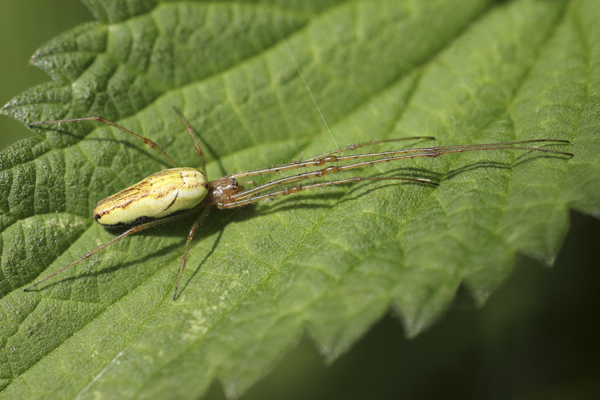
We stopped for lunch at the cricket pitch which was very picturesque with a few olde-worlde cottages at one edge and a large wood pavilion. Pied Wagtails joined Blackbirds and Song Thrushes chasing insects across the turf and a Curlew called from the moors. I had a nose around a Nettle patch adjacent to a stone wall finding a small Stretch Spider Tetragnatha sp. and a male Orange Tip Anthocharis cardamines.

After lunch some of the group joined David Bryant for further exploration of the moor whilst the remainder joined John Clegg for a stroll beside the brook again towards Brinscall. Plenty of flowering Marsh-marigold Caltha palustris in the damp areas and distinctive looking Sedge that was later identified as Common Sedge Carex nigra.

MNA White Coppice Black Sedge1

Common Sedge

The leaves of Broad-leaved Dock Rumex obtusifolius were covered in Green Dock Beetles Gastrophysa viridula and the leaf undersides held groups of the oval yellow eggs.

MNA White Coppice Dock Beetle Eggs

Green Dock Beetle Eggs

A pair of rusty red horned cattle kept us amused whilst underneath a Birch tree behind them a Rabbit was feeding and nearby male Pheasants were in fine form calling then fluffing out their feathers in display. We watched as a farmer was training his sheep dogs to round up a sow and her piglets at the far end of a field and closer at hand an old breed boar and his two sows were snuffling and routing around in the mud of their enclosure.

At the small fishing lake there were Mallards, a few Muscovy Ducks, Moorhen along with Black-headed and Lesser Black Backed Gulls. Cuckooflower a.k.a. Lady’s Smock Cardamine pratensis was in flower along with Yellow Archangel Lamiastrum galeobdolon.

MNA White Coppice Cuckooflower1

Cuckoo Flower

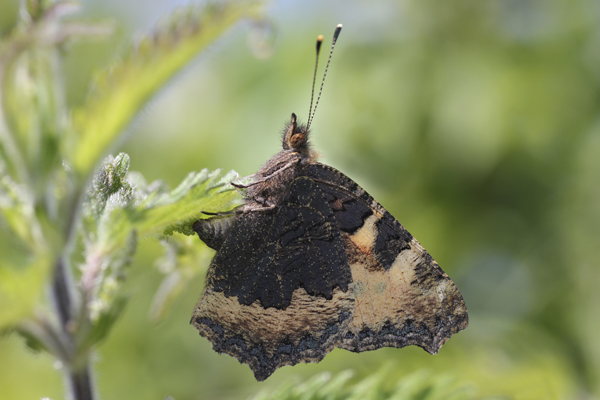
I investigated a small patch of meadow which held Green-veined White Pieris napi, Orange Tip Anthocharis cardamines Small Tortoiseshell Aglais urticae and another Peacock Inachis io. A few insects with a good find of a Bee Fly Bombylius major along with two common Hoverflies – Heliophilus pendulus and the Dronefly Eristalis tenax. Unfortunately the strong breeze was a killer for any macro photography but I did manage to snap a bit of cannibalism with a small male? dark coloured Wolf Spider Pardosa sp. with its jaws tucking into a larger female?

MNA White Coppice Wolf Spider1

Yum 🙂

If you are interested in the wildlife of the north-west of England and would like to join the walks and coach trips run by the Merseyside Naturalists’ Association, see the main MNA website for details of our programme and how to join us.

A wide photographic selection of birds, marine life, insects, mammals, orchids & wildflowers, fungi, tribal people, travel, ethnography, fossils, rocks & minerals etc. is available on my Alamy webpage
Posted in MNA reports | Comments Off on MNA Coach Trip White Coppice 27th April 2014

Liverpool Waterfront, 20th April 2014, Easter Sunday

We met at the Pump House at Albert Dock on a cool, cloudy morning.

17 Waterfront view

We were joined by MNA member Chris F, who took us to see some Rue-leaved Saxifrage on the edge of Canning Graving Dock, where the ship De Wadden is berthed. It’s opposite the GWR warehouse, and near the back of the Museum of Liverpool. The plant flowers in April and May and is said to prefer limestone pavement or any similar rocky surface.
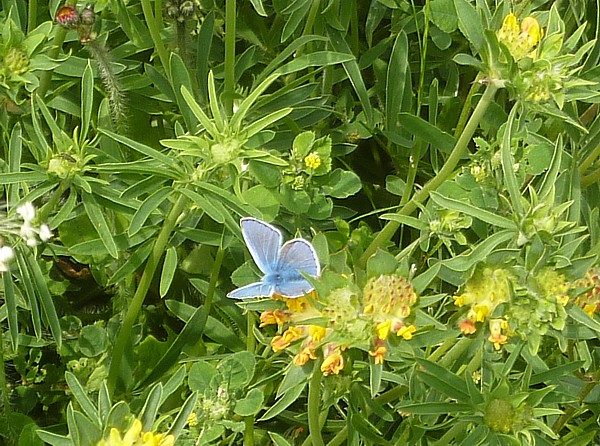
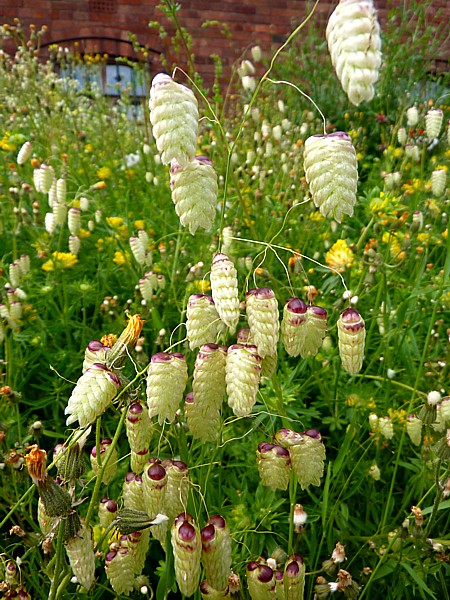
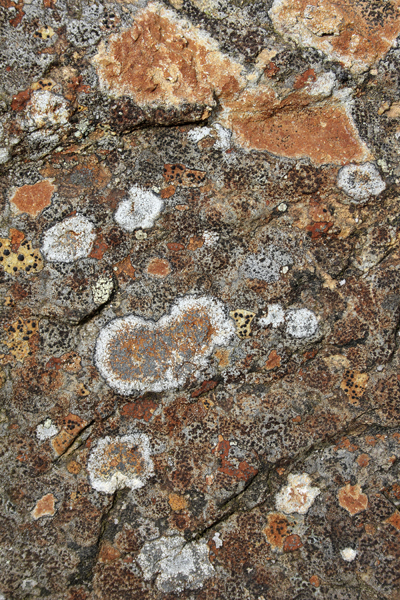
17 Waterfront rue-leaved saxifrage

Amongst the dock buildings we saw a Blackbird, one Canada Goose and several Herring Gulls. There is a fossil shop in Albert Dock called Nature’s Treasures, selling Trilobites, Ammonites and so on. This group of Orthoceras was going for £35.

17 waterfront orthoceras


We went around to the new little park between Hotel Formule 1 and the back of the John Lewis car park. It commemorates the old church of St Thomas, built 1750 and closed 1905. It’s the place where Joseph Williamson of the Tunnels was buried but the actual spot is now lost.

17 Waterfront St Thomas park

Outside the YHA, Garlic Mustard  and White Dead-nettles were flowering, and we saw a Blue Tit, a Robin, and a Blackbird carrying worms. A solitary Lesser Black-backed Gull was having a bath in the King’s Dock.  The tide was nearly full so there was just a bit of muddy shore left by the Customs and Excise building, showing a few gulls, a Cormorant and some distant Oystercatchers. We stopped by the Liverpool Watersports Centre to watch someone practising their Wakeboarding.

17 Waterfront wakeboarding

By the yacht moorings where we had our lunch it was still grey, chilly and overcast. There were Goldfinches in a tree and some House Sparrows chirping in the shrubbery. Chris F pointed out the abundant clumps of Danish Scurvy-grass.

17 Waterfront scurvy grass

Further south about 20 fishermen were having a competition. One of them told me they caught Whiting, Codling, Plaice, Dabs and sometimes Rays. He showed me two Whiting he had just caught. Another fisherman had his bait laid out on a newspaper – Lugworms and chopped squid.

17 Waterfront whiting

17 Waterfront bait

Under a bollard were several tufts of Thale Cress, and on the edge of the dock was a cushion of Spring Beauty, with its stem leaves fused to look like a round leaf surrounding the flowers.

17 Waterfront Thale Cress

17 Waterfront Spring Beauty

There was a bright display of Dandelions near the Chung Ku restaurant, and some Green Alkanet flowering.

17 Waterfront Alkanet and Dandelion


Near the turn for the Britannia pub, nine Turnstones flew in and perched on the dock edge. They were soon joined by a larger group, all chirping and calling. We counted 32 altogether, and they were very confiding, sitting contentedly on the edge of the dock within a few feet of us.

17 Waterfront turnstones

17 Waterfront turnstone

South of the pub, on the greener part of the prom, we heard a Song Thrush calling from the shrubbery. Magpies were foraging about and a fresh-looking Small Tortoiseshell flitted by. The first Field Buttercups were in flower.

17 Waterfront buttercup

We turned into the Festival Gardens, which is managed to be a blend between a formal park and a wildlife area. An Orange Tip butterfly flew by, and at the pond we saw Coot, Mallard, Moorhen, Great Tit and Wood Pigeon. Chris F picked a fluffy head of Reed Mace and took it apart until he found the tiny Reed Mace Bug inside. A Robin was feeding its mate and we heard both a Chaffinch and another Song Thrush. Swallows flew over the water and the Marsh Marigolds bloomed magnificently.

17 Waterfront marsh marigolds

On the main lake there were two Mute Swans. We could see one was wearing a coloured ring on its tucked-up leg, but would it put it down so we could see the code?  We lured it to and fro with bits of Hot Cross Bun from Olive’s lunchbox, and eventually it unshipped its leg and we saw a green Darvik ring, code CFH8. It’s been reported. (Added 22nd April. Cheshire Swan Study say CFH8 is a female of unknown age, ringed at Spike Island in Widnes on 11th February this year. Ours was the first re-sighting.)

17 Waterfront hidden ring

Then we broke up, some to the train and some to the bus.

A final note: While I was waiting at the bus stop on my way this morning I saw a dead Grey Squirrel, the victim of a collision with a car, lying bloodied in the road near the junction of Liverpool Road and Endbutt Lane.

Public transport details: We started the walk in the City Centre without getting any buses. Returned to Liverpool on the 82A bus outside the Festival Gardens at 2.59. Some got the bus the other way from the bus stop opposite, while others walked up to St Michael’s Station.

Posted in Sunday Group | Comments Off on Liverpool Waterfront, 20th April 2014, Easter Sunday

NWFG Fungal Foray Freshfield, Sunday 13th April 2014

Report from Tony Carter:  The North West Fungus Group started their spring foray at Freshfield Station. Moving through the mixed woodland a few spring-loving gilled fungi were seen, Clitocybe fragrans (Fragrant Funnel) and the always-present Strobilurus tenacellus (Pinecone Cap) on buried cones. An impressive Exidia glanduosa (Witches Butter) was also seen.

Clitocybe fragrans
Clitocybe fragrans (Fragrant Funnel)

Strobilurus tenacellus


Strobilurus tenacellus (Pinecone Cap)

Exidia glandulosa Freshfield 0414
Exidia glanduosa (Witches Butter)

Most of the finds were of ascomycetes, which shoot their spores from a tube or ascus. Mainly tiny discs and blobs on fallen wood and litter, they are difficult to identify because many are host- specific so it is vital to know the identity of the plant material. Not easy in mixed woodland.

A large stand of old Ulex (Gorse) supported Tremella mesenterica (Yellow Brain), that usually grows in association with the genus of Peniophora, a corticiod (or crust) fungi. Both the pink Peniophora incarnate (Rosy Crust) and the grey P. incarnata were present. Also smaller ascomycetes of which we have been able to identify Proliferodiscus pulveraceus and Orbilia xanthostigma.

Tremella mesenterica Freshfield
Tremella mesenterica (Yellow Brain)

Proliferodiscus pulveraceus

Orbilia xanthostigma

On the dune heathland were numerous Panaeolus cinctulus (Banded Mottlegill) whose existence would be encouraged by the presence of cows. Also Entoloma sericeum (Silky Pinkgill).

Crossing Formby Golf Course on Fishermans’ Path, some more spring species appeared. A large patch of Entoloma clypeatum (Shield Pinkgill) and, close by, some Conocybe aporos (Conecap).

Entoloma clypeatum Formby Golf Club 0414
Entoloma clypeatum (Shield Pinkgill)

Conocybe aporos Formby Golf Club 0414
Conocybe aporos (Conecap)

Reaching the pine woods, we searched through an area that had been clear-felled last year.  The bits and pieces produced some interesting finds. The uncommon resupinate fungus, Gloeoprus taxicola  specialises in colonising fallen conifer branches. The ascomycete, Hyaloscypha leuconica had taken over a fallen cone.

We also turned up some myxomycetes (Slime Moulds) from their warm chambers under piles of logs. Arcyria denudata and Ceratiomyxa fruticulosa being particularly attractive.

Arcyria denudata2 Scutchers Acre 0611
Arcyria denudata

Ceratiomyxa fruticulosa Ainsdale 0414
Ceratiomyxa fruticulosa

Moving along Old Fishermans’ Path we came across Psathyrella spadiceogrisea (Spring Brittlestem). A most interesting find was made while searching through old leaves under Cratageus (Hawthorn) bushes, of Xylaria oxycanthae, a Candlesnuff fungus that grows from buried haws. A new species for the site and to all present.  Probably always there, we have never looked for it before.

Xylaria oxycanthae- Freshfield April 14
Xylaria oxycanthae

Having reached the dunes we turned for home. It was then we made our best find of the day. A rare Inocybe ochroalba (a Fibrecap) for which there are only 23 previous British records. Unfortunately there is no photo because it was not appreciated how rare it was until it was dissected for microscopic examination.

So far, over sixty species have been confirmed but, having regard to the problems of identifying the ascomycetes, it will be some weeks before the list is finalised.

Note that the pictures of the ascomycetes and myxomycetes are x40 taken under the microscope and that the picture of the Xylaria was taken by the finder, S. Pinnington.

Posted in MNA reports | Comments Off on NWFG Fungal Foray Freshfield, Sunday 13th April 2014

Dibbinsdale, 13th April 2014

We were joined by two MNA members today, Ron and Jim, who had been planning to visit Dibbinsdale at the height of the Wood Anemone season.

16 Dibbinsdale carpet

Dibbinsdale is a Site of Special Scientific Interest (SSSI) because it’s an ancient woodland. Wikipedia says it is thought to have formed part of the boundary in the 10th and 11th centuries between the Norse colony in Wirral, to the north and west, and Anglo-Saxon Mercia to the east and south.

We were greeted by a Robin at Bromborough Rake station, closely followed by a Great Tit and a Long-tailed Tit. As we started down the path into the woods we could hear a Great Spotted Woodpecker drumming. John used a stone and a fallen tree to reply, and the bird came to look at us from high in a tree. There was another one answering the drumming from a few hundred yards away.

16 Dibbinsdale anemones

The carpets of Wood Anemones were a magnificent sight. They had Lesser Celandine amongst them, and the Bluebells were just starting to come out. They are mostly slim, and they droop to one side, suggesting that they are only lightly contaminated by Spanish Bluebells, and much purer-looking than the big bold ones in my garden!  We also noted some clumps of Dog’s Mercury, which is another indicator of ancient woodland.

16 Dibbinsdale mercury

The sun wasn’t out yet, and there were a few spots of rain, but they didn’t come to much. Two Jays flew low in the woods and a Carrion Crow passed by. A Buzzard was overhead, circling and mewing. A Mistle Thrush sang, we saw Blue Tits, and there was a single Mallard down on the river Dibbin. A clump of Marsh Marigolds added a bright splash by the edge of a ditch. An Early Bumble Bee was foraging low in the undergrowth. Margaret spotted a big patch of the little flower called Town Hall Clock under a Birch tree. The flower head has “faces” on all four sides and one on the top. It loves damp, gloomy places, and is said to be common, although we rarely see it.

16 Dibbinsdale clock

The sun came out briefly just before lunch, but not for long. We stopped to watch a Song Thrush in a gap though the trees, singing in various triplets. During our lunch stop John saw a Green Woodpecker fly over, but most of us missed it. We were looking out over the open field to the wood which was just starting to flush with green.

16 Dibbinsdale trees awakening

Two Dunnocks were sitting on the path and more Jays through the branches. In a damp spot there was a clump of Opposite-leaved Golden Saxifrage.

16 Dibbinsdale saxifrage

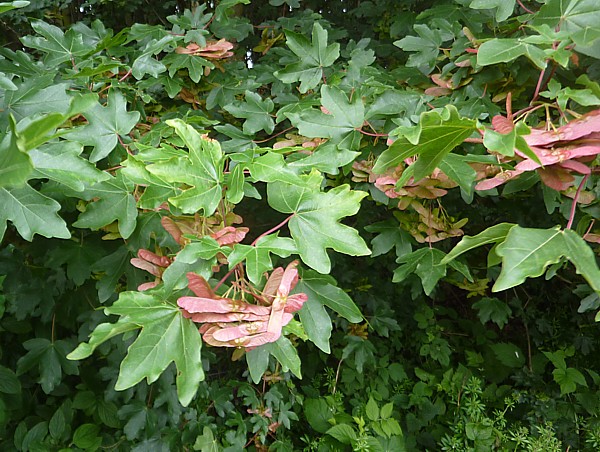
Some trees in the woods bore clusters of lime green flowers. The leaves looked like a Sycamore, but the genuine Sycamore leaves were much further out. It was some sort of Maple.

16 Dibbinsdale maple flowers

At the top of the steps we saw a Nuthatch, a Buff-tailed Bumble Bee searching for a nest hole and a Chiffchaff, which flew out giving us a rare good view. A Blackbird was softly repeating its alarm call in a high hedge. Sometimes that means there’s an owl about, but we couldn’t see anything. Finally, the sun came out properly, and on a sunny bank there were Daisies, Speedwell and Dandelions, several Ladybirds warming up, a Carder Bee,  a Peacock butterfly and another Bumble Bee, probably a Buff-tailed this time. I also took a picture of this insect, the size of a big wasp, but it’s probably some sort of fly. (Added later: Sabena tells me “it’s a species of hoverfly called a Tapered Drone Fly Eristalis pertinax. Similar to  E. tenax, this species has a more tapering abdomen in the male and it also has pale front legs that you can see in your photo. “)

16 Dibbinsdale fly

Bats hibernate in the boarded-up tunnel from October to April, and there is a sign warning that they are protected. On the other side of the brook was our first Garlic Mustard and at the other end of the tunnel there was more Marsh Marigold, reflected prettily in the water.

16 Dibbinsdale marsh marigold

Cuckoo flower was blooming on several logs in the pools. Does it grow like that naturally or has it been planted?  It and Garlic Mustard are the food plants of the Orange-Tip Butterfly, so we started keeping a lookout for one.

16 Dibbinsdale cuckoo flower

Confusingly, a Nuthatch was going up a tree like a Treecreeper.  By another prominent tree on the edge of the steep valley we could hear a pecking noise. We stopped and listened and it definitely seemed to be coming from the other side of the tree, almost in arm’s reach. Was it a Great Spotted Woodpecker pecking for food, or attacking a tree hole or nest box? There was another nest box visible nearby which had definitely been “got at”.

Woodslee Pond had a Moorhen on a nest, made where some tree branches dipped into the water. I don’t think I’ve seen a Moorhen’s nest before, just Coots. There were also some artificial floating islands, and a Mallard was sitting on eggs on one of them, which kept on rotating in the breeze. She at least had a constantly-changing view!

16 Dibbinsdale floating mallard

The Ranger Station had a sign up about Water Voles, saying they have a small population, although there used to be many more. The problem is habitat fragmentation caused by both flooding and drought. They are working on wetland restoration, and use local conservation students to do annual surveys. We left some MNA leaflets there, and admired their stuffed Hedgehog, the display of “replicated taxidermy” butterflies and a wall full of children’s paintings of wildlife.

16 Dibbinsdale stuffed hedgehog

16 Dibbinsdale rep tax butterflies

16 Dibbinsdale owl painting


Their walled garden had a large patch of Cowslips.

16 Dibbinsdale cowslips

Near St Patrick’s Well  Wild Garlic was just budding, a Wood Sorrel was in flower and there was a patch of white Bluebells. At the back of the well Herb Robert was clinging to the vertical wet wall, above masses of Liverwort. Then Ron called – he’d seen an Orange Tip sunning itself on a leaf. It was probably newly emerged from its pupa and was a stunner.

16 Dibbinsdale orange tip

Then we walked up to Spital station, admiring the flowers and shrubs in the sunny gardens.

Public transport details: Chester train from Central Station at 10.15, arriving Bromborough Rake at 10.35. Returned on the train from Spital at 3.07, arriving back in Liverpool at 3.30.

Posted in Sunday Group | Comments Off on Dibbinsdale, 13th April 2014

Thornton Hough, 30th March 2014

15 Thornton pinesToday was much warmer, although it was overcast and hazy as we set out. From Thornton Hough we walked via Crofts Bank Cottages through field footpaths to Brimstage, then back a different way over half a dozen stiles. Most of the fields were planted with oilseed rape, with some not flowering yet and some just coming out.
15 Thornton rape flower

The sides of the paths were bright with Lesser Celandine, whose flowers opened fully when the sun eventually came out. The number of petals on the flowers is very variable, and we counted between 8 and 14.

15 Thornton Lesser Celandine

Along the edges of the crops a pretty little Speedwell was growing, probably Common Field Speedwell. Also spotted were Red Dead-nettle and the orange seed clusters of Iris.
15 Thornton speedwell
Common Field Speedwell

15 Thornton iris seeds
Iris seed-heads

Rooks were cawing from the rookery by Thornton Hough church, a Buzzard flew low over a field, Chaffinches and a Song Thrush were singing. We saw a Wren, Blue Tits, a Heron, a few Tree Sparrows, a Dunnock and about three dozen Fieldfares in a far tree. Skylarks were pouring their hearts out overhead and John heard a Yellowhammer along a hedge.  A Magnolia tree was just starting to flower in a farm garden.

15 Thornton magnolia

Along a path near our lunch spot there was Hawthorn on the left, the new foliage showing bright green, but no flowers yet. By contrast, on the other side was a Blackthorn, all flowers and no leaves. There was a Honeybee on one of the flowers and a Chiffchaff was calling overhead.

15 Thornton Blackthorn lane

15 Thornton Blackthorn

Out of the back of the trees flew a Great Spotted Woodpecker, and we heard the creaky call of a Pheasant. By the side of the path here is a great mound of bare red earth, higher than our heads, with beehives on the top. In the flanks were holes of various sizes. Some might have been rabbit holes, but one was bigger, possibly made by a Badger.

15 Thornton animal holes

On the earth below was a single pawprint. Badger? We couldn’t see any claw marks, so it probably wasn’t a dog.

15 Thornton pawprint

We had lunch perched on two huge tractor tyres. A Blackbird and some Long-tailed Tits passed by us and a Chiffchaff was calling long and persistently. There were Carrion Crows investigating a muckpile. By now it was really hot and sunny, and we had to remove some layers.

15 Thornton tree-lined lane

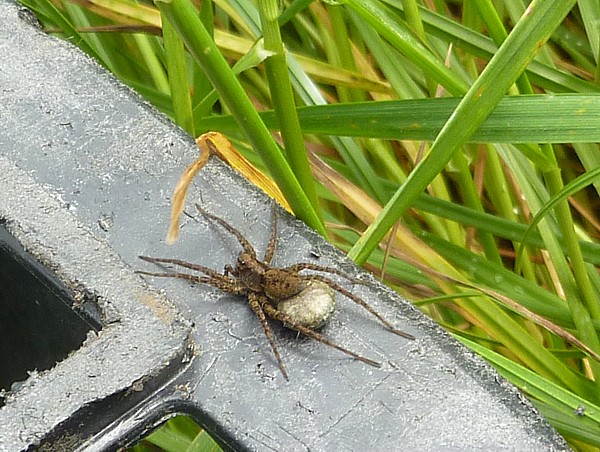
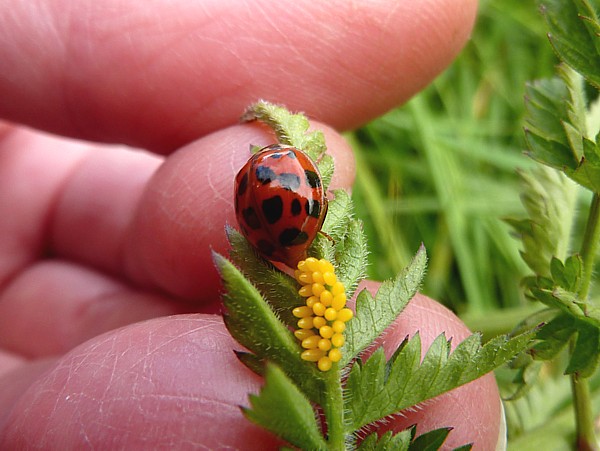
On the way again, we noticed that Small Tortoiseshell butterflies were about, and there were parties of Linnets flying in front of bare trees. A bird was going wheep, wheep, wheep, which puzzled us for a while, but as usual with an odd bird call, it turned out to be a Great Tit. When it changed to teacher, teacher we recognised it, and then we saw it.  Half a dozen Wolf Spiders were basking by a field margin, but they all scurried away before I could take a picture of them. Towards Brimstage we heard a Greenfinch and there was a Pied Wagtail on the roof. Disappointingly, there were no Brown Hares today in their usual fields, but we were compensated by the most interesting sighting of the day – a great cluster of 7-spot Ladybirds, perhaps 40 or 50 of them, on cut branches of lichen-encrusted trees. A few pairs were mating, but most were torpid and basking in the sun.

15 Thornton ladybird cluster

15 Thornton ladybirds mating

Close by Brimstage we noted a Nuthatch, and there were Jackdaws on the roofs. It was too early in the year for Swallows to be nesting under the archway. Around the back someone had put out a basket of free-range eggs for sale on the “honesty” system. All the eggs were gone and there was money in the pot.

15 Thornton eggs

The bridleway leading back to Thornton Hough is damp and shady, with a water-filled ditch on the right.  Near the base of a big old Ivy-covered Beech there was a huge bracket fungus. It was about a foot across, nine inches deep and very dark. Despite it’s blackness I think it might be a very old Artist’s Bracket, Ganoderma applanatum. Plantlife says it’s often found near the base or on the stumps of old Beech Trees, which would fit.

15 Thornton bracket on beech


A small moth was fluttering in the water of the ditch, trapped and drowning, so we fished it out with a stick. David B said he thought it was a Noctuid Moth, but as there are 35,000 known species, there’s no chance of me identfying it. All I can say is that it was a plain pale brown moth.

15 Thornton noctuid moth

There were lots of people walking dogs. One man seemed to have about twelve of them with him! Maybe that’s why we saw no Brown Hares today. David B reckoned that we’d heard five different Chiffchaffs singing along our route, one from a pine tree, which is unusual. Near Thornton Hough there are two big Eucalyptus trees, one on each side of the path.

15 Thornton eucalyptus


In the farmyard we came across a Peacock butterfly sunning itself.

15 Thornton Peacock

Over the barn roof there was a glimpse of the huge mature Chilean Pine (Monkey Puzzle), next to the Rookery in the tall trees around the church.

15 Thornton trees over barn roof

Then we sat in the sunshine outside St George’s United Reformed Church, waiting for the bus.

Public transport details: Bus 487 at 10.30 from Sir Thomas Street, arriving Thornton Hough 11.10. Returned on the 488 bus from Thornton Hough at 2.46, arriving back in Liverpool at 3.25.

Posted in Sunday Group | Comments Off on Thornton Hough, 30th March 2014

Stanley Park & Anfield Cemetery, short walk, 26th March 2014

This was the second of our experimental short walks, and attracted nine members and a visitor.  We met at the Leaf Globe behind the Isla Gladstone Conservatory, on a warm sunny morning.

14 Stanley leaf globe

All the ornamental shrubs were blooming, including Forsythia and Pieris “Flame of the Forest”, and the cherry blossom was out.

14 Stanley forsythia

14 Stanley Flame of Forest

14 Stanley cherry blossom

The recently-restored formal walk with flower beds was looking its best, and beyond it were some of the half a million daffodils planted in 1991 as part of the Marie Curie Field of Hope project.

14 Stanley beds and daffs

Park birds were Blue Tit, Wood Pigeon, Chaffinch, Carrion Crow, Magpies, a Wren calling, Robin and Blackbird.  On the lake were Canada Geese, Moorhen, Coot, Mallards, some Cormorants on the island, a Great Crested Grebe, Lesser Black-backed Gulls, a pair of Tufted ducks, but no Pochards and no sign of the Mandarin Drake, who hasn’t been seen for six weeks or more. There used to be a female Mandarin too, but she disappeared a year or more ago.

14 Stanley Canadas

While we were in the gravelled circle of  eight very old London Planes, we looked at the central tree, which John was told was something special by a Ranger, but he can’t remember what it was. It seems to have a flat-topped habit, like some ornamental cherry trees. From the look of the breaking buds Chris Felton thought it might be some kind of Poplar. In a depression in the bark of one of the eight old London Planes Chris F identified the web of a lace-webbed spider Amaurobius similis, which he described as a hunter which bites a crane fly on the leg, waits for the poison to take effect, then wraps and eats it.

14 Stanley web

We crossed the road to Anfield Cemetery, and spotted a Sparrowhawk circling above. There were also two Jays on the grass, a Mistle Thrush, 11 or 12 Magpies having a meeting and a Buzzard overhead. Grey squirrels were scampering about. Several Buff-tailed Bumble Bee queens Bombus terrestris were flying low and investigating holes at the bases of  fallen gravestones.  A fallen Hawthorn tree had clumps of lichen on it, identified by Chris F as Xanthoria polycarpa.

14 Stanley lichen

We also had a browse about some interesting monuments and gravestones. One referred to the deceased as the “Vicar of the Parish of Bevington, Liverpool”, but none of us had heard of such a place. I think it was St Alban (Bevington) C of E on Limekiln Lane, Vauxhall, founded 1846 and closed 1941. We also looked at the mass grave of 554 Liverpool citizens who were killed in the May Blitz in 1941. Three Belgian Merchant Seamen were also killed that week and their gravestones are near the side of a path, probably cared for by the Belgian Government.

14 Stanley Belgians

There are also memorials which record the burial somewhere in the cemetery of two early recipients of the Victoria Cross. The one on the left is for Patrick Mylott  who was honoured for his bravery in Lucknow during the Indian Rebellion (Mutiny) of 1857 while the other is for Joseph Prosser for his valour at Sevastopol in 1855 during the Crimean War.

14 Stanley VC memorials

While some of us were looking at those, Chris grubbed about in the soil and came up with a rather splendid keeled slug Limax maculatus. Originally from Black Sea area and the Crimea, the species was probably introduced to Ireland, where it is now common, and it is spreading rapidly in Britain. For instance, the first Worcestershire report was in 2000.

14 Stanley slug

Final tally: 20 bird species, one mammal and several interesting plants and invertebrates.  The walk broke up at just after 1 pm, with many members expressing pleasure and surprise at how attractive the park and cemetery were and how much there was to see.

14 Stanley group with cherry blossom

People who are are interested in the wildlife of the north-west of England and would like to join the walks and coach trips run by the Merseyside Naturalists’ Association, should see the main MNA website for details of our programme and how to join us.

Posted in MNA reports | Comments Off on Stanley Park & Anfield Cemetery, short walk, 26th March 2014