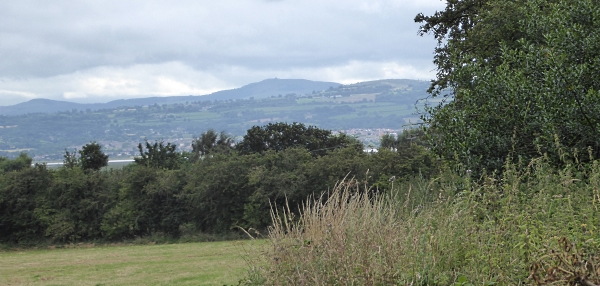
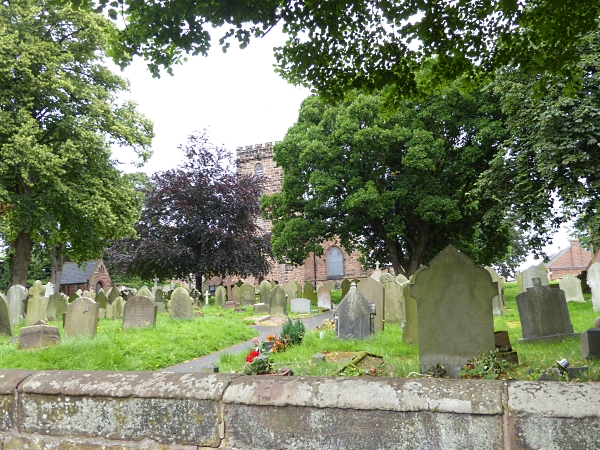
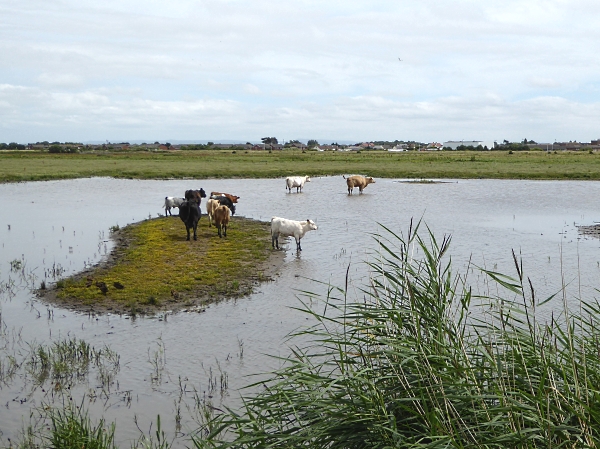
Burscough Heritage Weekend, 19th June 2016

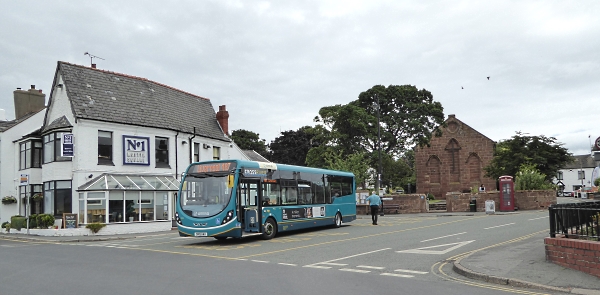
There is no regular bus service from Ormskirk to Burscough Bridge any more, but during Heritage Weekend Merseyside Transport Trust operated a free vintage bus service. It was fun to ride on an old Liverpool double-decker, with a conductor issuing tickets.

23 Burscough bus

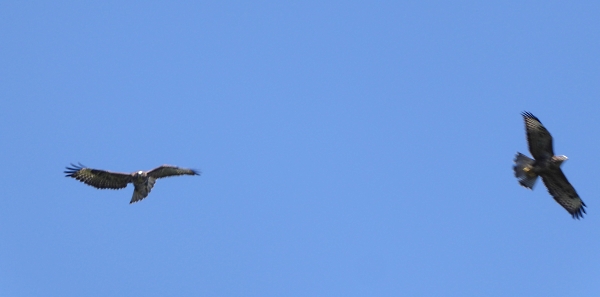
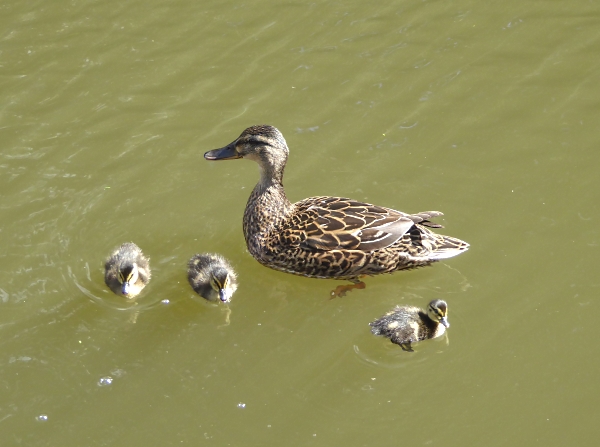
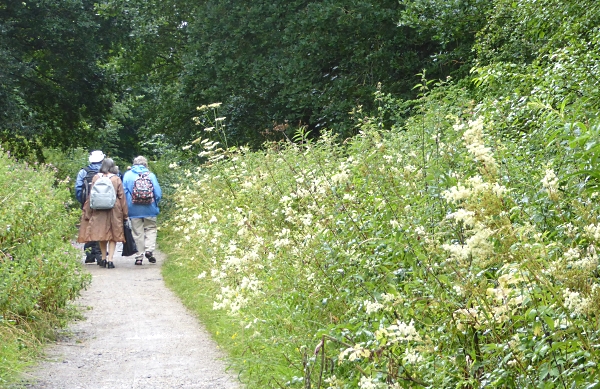
At Burscough Wharf there were Morris Dancers, traditional craftsmen and a display of old tractors. Many narrow boats had gathered on the canal, mostly the same ones as we saw at the Eldonian Village last weekend. We walked south on the canal towards the Rufford canal junction, then up the Rufford Branch to Runnel Brow Bridge, back along School Lane, and came out in Burscough Bridge at the Hop Vine pub. There wasn’t much wildlife today. All the Mallards had fled the activity at the Festival, although we saw some later. We heard a Chiffchaff, many Jackdaws, and spotted a hovering Kestrel. Corpse of the day was this chick in a gutter under a bridge, which was probably a baby Feral Pigeon, a squab.

23 Burscough squab

Near Runnel Brow Bridge we noted a 7-spot Ladybird on some nettles, and also this insect. It’s horribly out of focus, sorry, but Sabena has been able to  identify it for me as Plant Bug (Family: Miridae) Grypocoris stysi, which is often found in woodlands on umbellifers and nettles.

23 Burscough insect

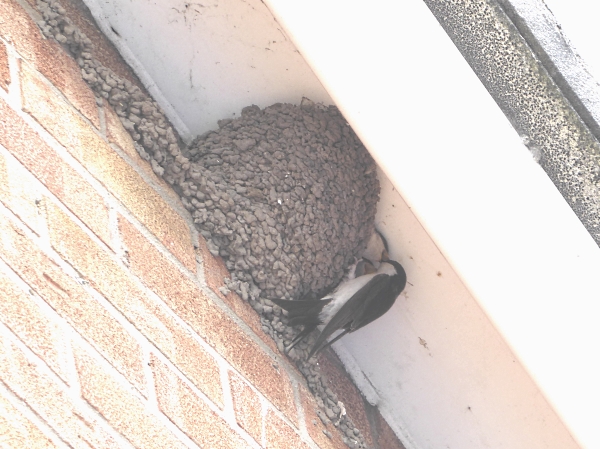
A house and barn on School Lane, dated 1794 and 1795, had several bird boxes high on the wall. One seemed to have lots of big flies around it, but binoculars revealed they were White-tailed Bumble Bees, who must have had a nest. We got the Vintage Bus back to Ormskirk, which  just  missed a train so we had to wait almost half an hour for the next one..

Public transport details: Train from Central to Ormskirk at 10.10, arriving 10.40. Returned on the 2.20 train, arriving Central 2.50.


Posted in Sunday Group | Comments Off on Burscough Heritage Weekend, 19th June 2016

Inland Waterways Festival, 12th June 2016

22 Eldonian narrowboats

The Inland Waterways Festival, celebrating the 200th anniversary of the Leeds-Liverpool Canal, was at the Eldonian Village. We didn’t go straight there, though. We started at the Pier Head, noting the Cunard Building festooned with giant tulips to celebrate 100 years since its opening. Then we gazed on the cruise ship Disney Magic, with its sun decks, its water slides around the funnel, and the cartoon character Pluto re-painting the ship name.

22 Eldonian Pluto painter

Then we walked along the dock road (Waterloo Road), up Oil Street and along Great Howard Street to the gap in the wall opposite the tobacco warehouse, leading into Stanley Locks.  Roadside flowers on the way included Foxgloves, Bramble, Gallant Soldier, Poppies, Ragwort, Cow Parsley and lots of Buddleia not quite ready to flower. On the banks of the Stanley Locks were Elder, Dog Rose, masses of Bramble and Common Mallow.

22 Eldonian gallant soldier
Gallant Soldier

22 Eldonian Poppies
Poppies

22 Eldonian Dog Rose
Dog Rose

There was a huge gathering of  narrow boats on the canal and the banks were full of stalls and exhibitions. Not much wildlife, and all the Canada Geese which live here must have decamped for the duration. The only Mallards were these wooden ones on the roof of one of the boats.

22 Eldonian wooden mallards

There were some people in Victorian bargee’s costume, and their horse was modelling an amazing crocheted hat, historically correct, used for keeping the flies out of its ears and eyes, to save it having to shake its head too much while on narrow towpaths.

22 Eldonian horse hat

This morning I saw what must have been Sparrowhawk kill, right on the pavement alongside the main Liverpool Road in Crosby. It wasn’t a traffic accident, and there was no body!  I collected some feathers, and the consensus is that they are Wood Pigeon tail feathers.  The attacker must have been the female Sparrowhawk, possibly the same one who visited my garden last March, because the males are too small to take such big prey. Perhaps she has hungry well-grown chicks.

22 Eldonian WP feathers

Last Thursday, 9th June, I found an Elephant Hawk-moth in my garden, amongst the Cranesbill. It wasn’t moving, just hanging on the stems, perhaps warming up. When I disturbed it, it didn’t seem to be able to fly, so I put it back carefully. Could it have been newly-emerged?  It was gone later, anyway.

22 Eldonian Elephant Hawk-moth

Public transport details: Bus 30A from Queen Square at 10.08 to Liverpool ONE, arriving 10.16. Returned from Vauxhall Road / Blenheim Street on the 54 at 1.45, arriving Lord Street 1.55.

Posted in Sunday Group | Comments Off on Inland Waterways Festival, 12th June 2016

Seacombe to New Brighton, 5th June 2016

21 Seacombe river view

We started this very hot and sunny day with a quick tour around some City Centre trees which had foxed us in February, hoping to do better now we can see their leaves. The mystery tree in St John’s gardens, the only one on the perimeter which isn’t a London Plane (was there a mistake when the young trees were delivered?) definitely looked like Ash from the winter twigs, and from the way the branches scoop down, then up again, but the leaves aren’t the typical pinnate (multi-leaflets) shape. I think It must be a Single-leaved Ash. It’s the same species as Common Ash, Fraxinus excelsior, but the variety ‘Diversifolia’. It arises spontaneously occasionally. Mitchell calls it “A good trick question for students, puzzling at first sight”.

21 Seacombe Single-leaved Ash SJG

St John’s Gardens also has a small Palm tree, possibly a Date Palm, which was in copious (male?) flower.

21 Seacombe palm tree SJG

The big old ridged trunk at the corner of Trueman Street and Primrose Hill, is some kind of Poplar. The leaves were dark green and glossy, typically “Ace of Spades” in shape, and were light underneath but not downy. It matches either the Black Poplar or the more common Hybrid Black Poplar. The trunk is very ridged, and doesn’t quite match either description in Mitchell, but the Hybrids are said to be quite variable, so that’s probably what it is. Then we hurried down Tithebarn Street to St Nicholas churchyard for a quick look at the Judas Tree on the right of the gateway leading into the alley called Tower Gardens, right by Ma Boyles restaurant. And we were just in time for the 11 o’ clock ferry.

21 Seacombe Millennum trail

It was close to high tide, so the water was very high. Many fishermen were stationed along the railings. One said he had caught a Plaice, which he had released, while another said he’d caught Dabs and Flounders, which he put back, but he had some Mersey fish in his fridge at home which he planned to eat. Two Shelduck flew low upriver, and a few Swallows were about, but not the usual group of House Martins we expect along here. House Sparrows twittered in the garden hedges. Our best bird was a Common Tern, patrolling up and down, looking for fish.  The breakwater at Egremont held a group of Oystercatchers.

21 Seacombe Oyks on breakwater

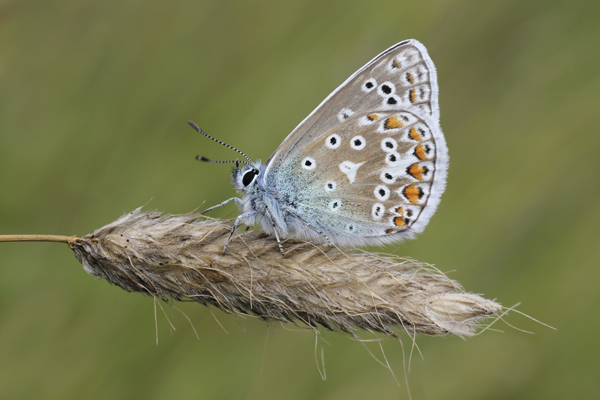
There were a few butterflies around. We definitely saw a Large White, and also a fast dark butterfly heading out across the Mersey. Was it a Painted Lady? It was too fast to be sure. In the hopes of more butterflies we took a little tour around Vale Park and were rewarded with a Holly Blue in a hedge. A Blackbird was sunning in the dusty shrubbery. There is reputed to be a Black Mulberry here, but we couldn’t find it. However, we admired the driftwood sculptures and a little pagoda on a tree stump, surrounded by frog ornaments.

21 Seacombe frog pagoda

Around the driftwood pirate ship, the Black Pearl, there were hordes of parents and kids, and it seems the Queen was also visiting!

21 Seacombe her maj

One recent addition is a lovely Mermaid.

21 Seacombe mermaid

Public transport details: 11am Mersey Ferry to Seacombe. Returned from New Brighton on the 433 bus from Marine Promenade / Kings Parade (outside Morrison’s) at 2.40, arriving Liverpool 3.10.


Posted in Sunday Group | Comments Off on Seacombe to New Brighton, 5th June 2016

Gwydyr Forest Park, Snowdonia 31st May 2016

MNA Gwydyr Forest Chapel2

Richard Surman, DaveB and I headed down the Conwy Valley to Llanwrst and crossed Pont Fawr, the narrow three-arch stone bridge before taking a steep road up to the Gwydir Forest Park Offices and the adjacent 17th-century Gwydir Uchaf Chapel. A few Indian Peafowls were wandering around.

MNA Gwydyr Peacock

Indian Peafowl

We decided we weren’t at the correct starting point for the walk so drove back down the hill and parked up on a small lay-by. Walking up a narrow lane with a surprising amount of traffic we began to get a feel for the plants and birds of this Forest that lies in the heart of Snowdonia National Park. A number of Garden Warblers bubbled away, a few more scratchy sounding Blackcaps, a Spotted Flycatcher darting after insects, Willow Warblers, Chiffchaffs, Coal Tits, Chaffinch, Wren, Robin, Song Thrush and Buzzard.

Plants included Broad Buckler-fern Dryopteris dilatata, Meadow Buttercup Ranunculus acris, Welsh Poppy Meconopsis cambrica, Greater Celandine Chelidonium majus, Greater Stitchwort Stellaria holostea, Red Campion Silene dioica, Broad-leaved Dock Rumex obtusifolius, Common Dog-violet Viola riviniana, Garlic Mustard (a.k.a. Jack-by-the-Hedge) Alliaria petiolata, Cuckooflower Cardamine pratensis, Bilberry Vaccinium myrtillus, Hairy Bitter-cress Cardamine hirsuta, Yellow Pimpernel Lysimachia nemorum, Navelwort a.k.a. Wall Pennywort Umbilicus rupestris, Tormentil Potentilla erecta, Wild Strawberry Fragaria vesca, Water Avens Geum rivale – growing in a very dry looking area, Wood Avens Geum urbanum, Common Bird’s-foot-trefoil Lotus corniculatus, Red Clover Trifolium pratense, Common Milkwort Polygala vulgaris in various colour from the usual bluey purple to cerise, Wood-sorrel Oxalis acetosella, Herb-Robert Geranium robertianum, Pignut Conopodium majus, Field Forget-me-not Myosotis arvensis, Wood Sage Teucrium scorodonia, Bugle Ajuga reptans, Ribwort Plantain Plantago lanceolata, Foxglove Digitalis purpurea, Germander Speedwell Veronica chamaedrys, Cleavers Galium aparine, Beaked Hawk’s-beard Crepis vesicaria, Bluebell Hyacinthoides non-scripta still in full flower and masses of Sharp-flowered Rush Juncus acutiflorus.

MNA Gwydyr Forest Hafna Mine1

Hafna Smelting Works

Between 1850 and 1919, lead and zinc mining dominated the area. The hillsides in Gwydir Forest Park are riddled with tunnels and hollowed out caverns where generations of miners toiled to extract lead and zinc ore. We came across the remains of Hafna smelt house and adjacent blowing house, built in the 1880s located behind a slime pit. Ore and fuel would have been mixed together and raked in the furnace, effectively roasting the ore. As the temperature was increased the molten metal would flow to the bottom of the furnace, from where it was tapped. Because of the toxic fumes from smelting the furnace chimney was set above and away from the mill.

MNA Gwydyr Forest Hafna Mine2

We stopped here for lunch watching a male Redstart, fine views of the aerial performance from a Tree Pipit, Grey and Pied Wagtails and Coal Tits as well as a number of Large Red Damselflies Pyrrhosoma nymphula from the slime pit and Small Copper Lycaena phlaeas and Small Heath Coenonympha pamphilus in the meadow grasses.

Further along we saw a Hoverfly Sericomyia lappona, Speckled Wood and a yellow coloured day-flying Moth called Speckled Yellow Pseudopanthera macularia. According to Butterfly Conservation the Speckled Yellow restricted in distribution in south and east Wales so a good sighting.

We reached the Cyffty Mine, operational until 1921, where the remains of a crusher house (used to process the lead ore) circular buddle pits (ponds) and a pump-shaft are preserved. On the path a piece of slate caught my attention with its cubic indentations in the surface (although some weird photo distortion effect makes them look plush to the surface!) – possibly caused by the lead ore mineral galena.

MNA Gwydyr Rock Crystals1

Nearby was Llyn Sarnau which means ‘lake of the old tracks’, this shallow lake was quite overgrown with Marsh Horsetail Equisetum palustre and also had a few patrolling female Four-spotted Chasers Libellula quadrimaculata.

MNA Gwydyr Forest Creigiau Gleision1

Creigiau Gleision

More spoils from mine workings were dotted around and we saw more Four-spotted Chaser Libellula quadrimaculata, a female Common Darter Sympetrum striolatum and a metallic Green Tiger Beetle Cicindela campestris. Great views across the forest of the three peaked mountain Creigiau Gleision the easternmost of the high Carneddau. As we continued wandering along the lanes we heard plenty more Redstarts, stood beneath a tree listening to the gutsy trilling song of a Wood Warbler, a Great-spotted Woodpecker, a calling Cuckoo and I had a Redpoll.

MNA Plant Tree

Saplings were planted in rows in a meadow area beside more established trees as part of a project by Plant! (the Welsh word for children) and Natural Resources Wales to grow a native broad-leaved sapling for every new baby born or adopted in Wales. We soon reached Llyn Geirionydd, a mile long lake on the northern edge of the Gwydyr Forest with conifers planted along the western side to soften the effects of the mine waste from the nearby Pandora Mine. A couple of Herring Gulls were loafing on a small rocky island and a Common Sandpiper was flying around, Calling before landing with much bobbing of its tail.

MNA Gwydyr Forest Lyn1

Llyn Geirionydd

More plants with a shady area still having flowering Lesser Celandine Ranunculus ficaria, and further on Woodruff Galium odoratum, Heath Bedstraw Galium saxatile, Opposite-leaved Golden-saxifrage Chrysosplenium oppositifoliumand Yellow Archangel Lamiastrum galeobdolon.

As we descended the land again back to the car Richard spotted a Dor Beetle Geotrupes stercorarius ambling across the road, Corpse of the Day was a Beautiful Demoiselle Calopteryx virgo whose abdomen had been run over and a few metres further on a Cockchafer Melolontha melolontha was looking a bit bashed on its elytra.

If you are interested in the wildlife of the north-west of England and would like to join the walks and coach trips run by the Merseyside Naturalists’ Association, see the main MNA website for details of our programme and how to join us.

Posted in MNA reports | Comments Off on Gwydyr Forest Park, Snowdonia 31st May 2016

Dibbinsdale 30th May 2016

Six Swifts were screaming overhead in blue skies as I wandered down The Rake towards the Reserve On the now infamous fallen tree trunk on the slope running down from Bromborough Rake Station were a large number of impressive plates of Dryad’s Saddle Polyporus squamosus and the inevitable King Alfred’s Cakes Daldinia concentrica, elsewhere in the Beechwood was a group of Sheathed Woodtuft Kuehneromyces mutabilis. Crossing the small bridge at the bottom on the slope there was a nice clump of Pink Purslane Claytonia sibirica on the edge of Dibbin Brook. On the edge of the pools were plenty of Yellow Flag Iris pseudacorus further along Cuckooflower Cardamine pratensis and a mother Coot was feeding her red bald headed youngster.

MNA Dibbinsdale Yellow Flag1

Yellow Flag

MNA Dibbinsdale Grasses1

Grasses: l-r Crested Dog’s-tail, Timothy, Sweet Vernal-grass

MNA Dibbinsdale Yellow Rattle1

Yellow-rattle

MNA Dibbinsdale Sheeps Sorrel1

Sheep’s Sorrel

Bodens Hay Meadow came up trumps with a fabulous selection of Grasses and Sedges including Crested Dog’s-tail Cynosurus cristatus, Sweet Vernal-grass Anthoxanthum odoratum, Timothy Phleum pratense and a good selection of Wild Flowers with Meadow Buttercup Ranunculus aeris, Lesser Stitchwort Stellaria graminea, Ragged-Robin Lychnis flos-cuculi, Red Campion Silene dioica, Sheep’s Sorrel Rumex acetosella, Common Vetch Vicia sativa, Ribwort Plantain Plantago lanceolata and Yellow-rattle Rhinanthus minor. These in turn had attracted plenty of Insects with Thick-legged Flower Beetles Oedemera nobilis being the most numerous favouring the Buttercups, also Soldier Beetle Cantharis nigricans 20+ I found a mating pair – the male having damaged elytra.

MNA Dibbinsdale Soldier Beetles

Mating Soldier Beetles

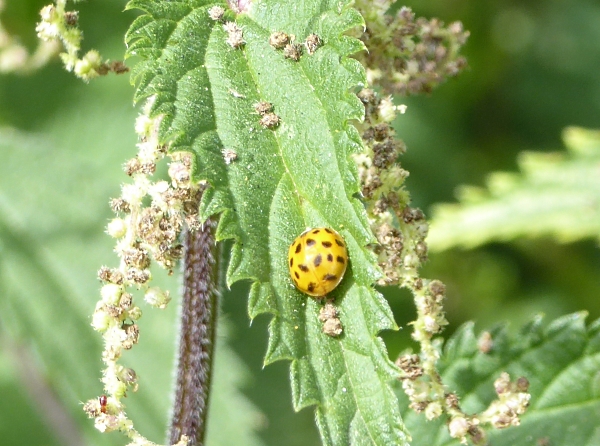
Black and Red Froghopper Cercopis vulnerata 12+, 22-spot Ladybird Psyllobora vigintiduopunctata 1, Scorpion Fly Panorpa communis 1m, 2f, Snipe Fly Rhagio sp. 3, Dance Fly Empis tessellata, Green Lacewing Chrysoperla sp. 5+, Green Dock Beetle Gastrophysa viridula 30+ larvae on Broad-leaved Dock Rumex obtusifolius, Common Malachite Beetle (a.k.a. Red-tipped Flower Beetle) Malachius bipustulatus 1, Click Beetle 1, Green Nettle Weevil Phyllobius pomaceus 6+ and Common Carder Bee Bombus pascuorum 2, Blue-tailed Damselfly Ischnura elegans adult and teneral and a lone Nettle-tap Anthophila fabriciana. Best find was a Golden-bloomed Grey Longhorn Beetle Agapanthia villoviridescens.

MNA Golden Bloomed Longhorn Beetle1

Golden-bloomed Grey Longhorn Beetle

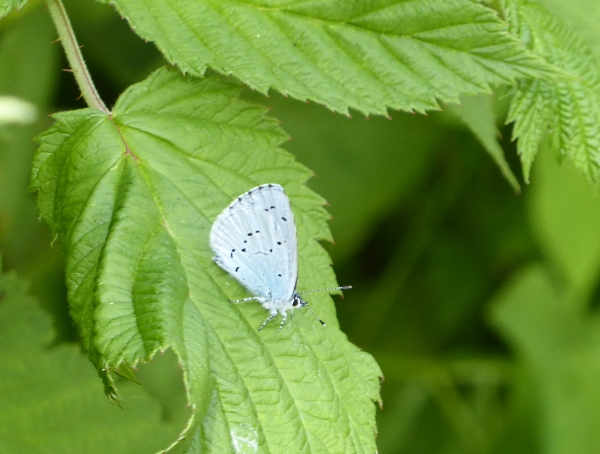
A Buzzard was mewing overhead as I entered the woodland. Although bird song was quieter than recent weeks Chiffchaff, Blackcap, Blackbird and Robin were still singing along with calling Nuthatch, Great Spotted Woodpecker and Bullfinch. More plants with Welsh Poppy Meconopsis cambrica, Herb Bennet a.k.a Wood Avens Geum urbanum, Germander Speedwell Veronica chamaedrys and still the lingering smell of Ramsons Allium ursium that had now gone to seed. Butterflies included a Large White Pieris brassicae, Speckled Wood Pararge aegeria and in a small patch of recently planted wildflower meadow close to the Rangers Office a Small Copper Lycaena phlaeas.

If you are interested in the wildlife of the north-west of England and would like to join the walks and coach trips run by the Merseyside Naturalists’ Association, see the main MNA website for details of our programme and how to join us.

Posted in MNA reports | Comments Off on Dibbinsdale 30th May 2016

Woolton Woods and Allerton Cemetery, 29th May 2016

20 Allerton azalea

We started at Woolton Village with a quick look at the much-protested-against building works, then crossed the field diagonally and entered Woolton Woods. The cool shade was very welcome on such a hot and sunny day.  Across Camp Hill with its views south westward to Speke Industrial Park and south Wirral, then across School Lane and into the Sunken Garden.

20 Allerton sunken garden

In amongst a carpet of buttercups there was a Holly Blue butterfly resting in the sunshine.

20 Allerton Blue in buttercups

Then we sneaked into Allerton Cemetery’s top corner via the footpath and a gap in the railings. Not many birds in evidence today, just a Blackbird and some Swallows, but while we ate our lunch we could see a Buzzard being mobbed by a Crow.

There are several notable or champion trees in Allerton cemetery. One I had never heard of is a Bauman’s Horse Chestnut, Aesculus hippocastanum ‘Baumannii. There are several of them, but the tallest, at 18m, is on the north side of the central road, east of the chapel.

20 Allerton Bauman's horse chestnut

It is a natural “sport” or mutation of the common Horse Chestnut, looking just the same, except the flowers are double. It is a sterile tree, so doesn’t develop any conkers and has to be propagated by cuttings.

20 Allerton Bauman's horse chestnut flower

The Lancashire county champion Highclere Holly is south of the north chapel, on the west side of the drive. It is Ilex x altaclerensis ‘Wilsonii’ and is 12m tall.

20 Allerton Highclere Holly

It’s a hybrid between Ilex aquifolium and Ilex perado, and ‘Wilsonii’ is a rare variety.  Its leaves are large, dark green and glossy, and almost entirely spineless except for the tip. It is a female variety and bears a profusion of flowers and large, vivid red berries in the autumn.

20 Allerton Highclere Holly foliage

In the groves with the curved paths around them, west of the chapels and north and south of the main road, are matched sets of four Monkey Puzzle trees, set quite close together. They must be part of the original 1909 architectural plantings.

20 Allerton Monkey Puzzle grove

Next to the northern quartet is a poor weedy Judas Tree Cercis siliquastrum.  It looks like a previously upright tree has fallen, then thrown up two new shoots. But it had its pink pea-flowers out, with some of last year’s pods still hanging on.

20 Allerton Judas Tree

20 Allerton Judas Tree flowers
Allerton Cemetery also has a Persian Ironwood Parrotia persica, which is the Lancashire county champion for girth at 118cm. It’s north of the central drive, near the junction of sections CH1A and CH1B, next to a tall Lime.

20 Allerton Persian Ironwood

20 Allerton Persian Ironwood foliage

We also looked at some “celebrity” graves. Ritchie the Ranger likes to point out a Blackler monument (which is the family of the famous department store) and another to an Owen Owens, but that isn’t the man from the shop – the dates are wrong. We also looked at the large ornate memorial to Wayne’s Rooney’s young sister-in-law Rosie, who died when she was 14. And of course, we had to look at Cilla.

20 Allerton Cilla

Other tree notes. In St John‘s Gardens the Dove Tree or Handkerchief Tree Davidia involucrata is out.

20 Allerton handkerchief flowers

It’s on the south side of the main circle next to St George’s Hall and has the memorial to the Burma Star Veteran’s Association at its base. On this picture, it’s the one on the left.

20 Allerton handkerchief tree

On the way to Woolton on the bus we met Joyce and David, also tree lovers, who were on their way to Calderstones, hoping to see the Foxglove Tree Paulownia tomentosa in flower.  Joyce tells me they were successful. It’s flowering now in the north west corner of the park, in the section immediately to the west of the Calderstones Road car park.  Here’s Joyce’s picture.

20 Allerton Paulownia flowers and buds

Public transport details: Bus 76 from Great Charlotte Street at 10.21, arriving 10.56 at High Street / Woolton Village. Returned from Liverpool South Parkway station at 14.09, arriving Liverpool Central at 14.25.

Posted in Sunday Group | Comments Off on Woolton Woods and Allerton Cemetery, 29th May 2016

Sefton Coast 24th May 2016

A much welcome burst of sunshine for the first part of DaveBs and my walk along the Sefton Coast starting on the Green Beach at Ainsdale and continuing in a meandering line along the saltmarsh, shoreline and dunes in a Southerly direction before ominous clouds rolled in as we approached Ainsdale .

MNA Birkdale Kidney Vetch1

Kidney Vetch

MNA Birkdale Sea Milkwort1

Sea-milkwort

Always a great area for honing your skills on maritime plants we were pointed in the direction of a few by a local naturalist we met and pondered over others with the assistance of the Collins Field Guide to Wildflowers. A varied list included: Marsh Horsetail Equisetum palustre, Polypody Polypodium vulgare, Meadow Buttercup Ranunculus acris, Sea-purslane Atriplex portulacoides, Sea Sandwort Honckenya peploides, Common Mouse-ear Cerastium fontanum, Sea Campion Silene uniflora, Red Campion Silene dioica, Thrift Armeria maritima, Creeping Willow Salix repens, Common Scurvygrass Cochlearia officinalis, Sea-milkwort Glaux maritima, Biting Stonecrop Sedum acre, Meadowsweet Filipendula ulmaria, Silverweed Potentilla anserine, Kidney Vetch Anthyllis vulneraria, Common Bird’s-foot Trefoil Lotus corniculatus, Bush Vetch Vicia sepium, Common Vetch Vicia sativa, Black Medick Medicago lupulina, Red Clover Trifolium pratense, Evening Primrose Oenothera sp. Common Milkwort Polygala vulgaris, Herb-Robert Geranium robertianum, Common Stork’s-bill Erodium cicutarium, Sea-holly Eryngium maritimum, Parsley Water-Dropwort Oenanthe lachenalii, Hemlock Water-Dropwort Oenanthe crocata, Wild Angelica Angelica sylvestris, Wild Parsnip Pastinaca sativa, leaves of Yellow-wort Blackstonia perfoliata, Field Forget-me-not Myosotis arvensis, Hound’s-tongue Cynoglossum officinale, Ribwort Plantain Plantago lanceolata, leaves of Great Mullein Verbascum thapsus, Germander Speedwell Veronica chamaedrys, Crosswort Cruciata laevipes, Hemp-agrimony Eupatorium cannabinum and Sea Arrowgrass Triglochin maritimum.

MNA Birkdale Sea Arrow Grass1

Sea Arrowgrass

MNA Birkdale Germander Speedwell1

Germander Speedwell

In one of the dune slacks dedicated to Natterjack Toads Bufo calamita there was a good number of wriggling tadpoles mainly confined to the edge of the pool. A couple of dessicated Common Frogs Rana temporaria were found later on in the dunes.

Swallows zipped around and Skylarks, Mepits and a good number of Reed Buntings were in fine voice in the dunes. We watched a couple of Sedgies non-stop in their grating repetitive song plus a Willow Warbler, Whitethroat and a few Wrens. A mob of Jackdaws took offence to a Carrion Crow in their patch.

MNA Birkdale Masked Crab Netting1

MNA Birkdale Masked Crab1

Masked Crab – such a fine Corpse of the Day you get it twice 😉

A bit of beachcombing produced finds of Hornwrack Flustra foliacea, Pod Razorshell Ensis siliqua, Rayed Trough Shell Mactra stultorum, Common Whelk Buccinium undatum, Prickly Cockle Acanthocardia echinata, Necklace Shell Euspira catena, Sea Wash Ball Egg Case of Common Whelk Buccinium undatum, Sea Potato Heart Urchin Echinocardium cordatum, Sand Mason Worm Tubes Lanice conchilega, Mermaid’s Purse of Thornback Ray Raja clavata, dead Common Shore Crab Carcinus maenas. I mentioned to Dave that I quite often find the remains of Masked Crabs Corystes cassivelaunus along this coastline and true to form we found a few skeletons that definitely made Corpse of the Day. I posed one on some old fishing net. Algae washed up on the shore were mostly Spiral Wrack Fucus spiralis with a few fronds of Knotted (Egg) Wrack Ascophyllum nodosum.

MNA Birkdale Heart Urchins1

Heart Urchin

On the shoreline there was hundreds of Dunlin with approx. equal numbers of Ringed Plover some of which allowed us to approach quite close, twenty of so Bar-tailed Godwits strode about the shallows and cackling Shelduck were around along with the usual Gulls and two Sandwich Terns.

MNA Birkdale Wader Footprints1

Wader footprints in the sand

Returning to the dunes in one of the slacks containing flowering Cuckooflower Cardamine pratensis and Yellow Flag Iris pseudacorus we watched a Little Egret stalking about, waggling one of its feet in the hope of disturbing any fish. We’d seen a few Butterflies with a couple of Large White Pieris brassicae, a Small Copper Lycaena phlaeas, and a Peacock Inachis io. Best sightings were of three Wall Lasiommata megera feeding on Dandelions but too flighty to catch on camera and around ten Small Heaths Coenonympha pamphilus. Two caterpillars of Yellow-tail Euproctis similis favoured the leaves of Alder Alnus glutinosa whereas another two favoured those of the invasive Japanese Rose Rosa rugosa.

MNA Birkdale Japanese Rose Flower1

Japanese Rose

MNA Birkdale Garden Tiger Caterpillar1

Woolly Bear

Two ‘Woolly Bears’ the caterpillars of the Garden Tiger Moth Arctia caja were on the path.

Other insects included Common Carder Bee Bombus pascuorum, a Northern Dune Tiger Beetle Cicindela hybrida, a Harlequin Ladybird Harmonia axyridis conspicua, a 2-spot Ladybird Adalia bipunctata, half a dozen Green Lacewings Chrysoperla sp. and a couple of Stretch Spiders Tetragnatha sp. Three female Four-spotted Chasers Libellula quadrimaculata were patrolling the dunes.

As we approached Ainsdale we notched up a few more plants with Sea Spurge Euphorbia paralias, Beaked Hawk’s-beard Crepis vesicaria, Early Marsh Orchid Dactylorhiza incarnata ssp. coccinea and Northern Marsh Orchid Dactylorhiza purpurella. Walking back up the Shore Road to Ainsdale station we then added English Stonecrop Sedum anglicum and Common Restharrow Ononis repens.

If you are interested in the wildlife of the north-west of England and would like to join the walks and coach trips run by the Merseyside Naturalists’ Association, see the main MNA website for details of our programme and how to join us.

Posted in MNA reports | Comments Off on Sefton Coast 24th May 2016

Port Sunlight River Park, 22nd May 2016

What a wash-out that was! We got absolutely soaked, and abandoned the walk after lunch.

19 River park city view

The day had started well, and we walked from the bus down Shore Drive, Bolton Road East and Dock Road North, admiring the young dark-red Norway Maples planted by the roadside. They might be “Goldsworth Purple” which Mitchell describes as “dark purplish red, remaining a heavy dark offensive purple all summer”, but I hope they are “Crimson King” whose leaves are said to be “a superior deep ruby-red, and red beneath.”

19 River Park maple purple variety

There were just a few spots of rain as we headed into the River Park. The planted trees were Rowan, Ash, Silver Birch, Oak, Alder, Hawthorn with its blossom going over and Norway Maple shedding hundreds of pairs of immature winged seeds. Flowers by the pathside included Red Campion, Green Alkanet, Buttercup, Ox-eye Daisy, Wood Avens and Three-cornered Garlic, which was also in evidence in a lot of the nearby gardens.

19 River park Three cornered garlic

Under the trees a carpet of Cow Parsley was coming out.

19 River Park Cow parsley

We had seen Starlings on the TV aerials and Greenfinches in the gardens, but it was now raining hard, and all the woodland birds in the River Park were hunkered down. The view over the lake into Liverpool was spectacular, despite the heavy cloud and rain, but on the lake there was just a single Shelduck upending and three pairs of Tufted Duck.  We trudged up to the top of the hill, but there was no sign of the sky lightening, so we trudged back down again. Near the picnic tables was a Field Maple with its wide-spread winged seeds.

19 River Park Field Maple

It seemed to go off a little and we ate our stand-up lunch, but it started to rain heavily again, so we headed off to the bus stop, thoroughly bedraggled. Of course, when we got back to Liverpool the sun came out!  Here’s a cheerful Laburnum from my garden.

19 River Park Laburnum

Public transport details: No 1 bus to Chester from Sir Thomas Street at 10.23, arriving New Chester Road / Shore Drive at 10.47. Returned on bus 1 from New Chester Road / Shore Drive at 12.45, arriving Liverpool at 1.15.

Posted in Sunday Group | Comments Off on Port Sunlight River Park, 22nd May 2016

MNA Coach Trip Stocks Reservoir 21st May 2016

A return MNA Coach Trip to Stocks Reservoir lying within the Forest of Bowland Area of Outstanding Natural Beauty. We passed through the picturesque village of Slaidburn before driving through the south-west edge of Gisburn Forest managed by the Forestry Commision and parking in School Lane Car Park. The heavens had opened and after passing round maps most members quickly walked and spread themselves in the two bird hides overlooking the reservoir. En route to the hides I noted Greater Stitchwort Stellaria holostea, Common Bugle Ajuga reptans, Water Avens Geum rivale and Bluebell Hyacinthoides non-scripta. Half a dozen Great Crested Grebes were joined by Greylags with goslings, Canada Geese, Lapwings, Oystercatcher, Little Ringed Plover, Common Sandpiper, Curlew, BHG and LBBGs with DaveB & co seeing a Sanderling flying by. Sand Martins, Swallows and a couple of House Martins were zipping around.

MNA Stocks Resrvoir Wood Horsetail

Wood Horsetail

MNA Stocks Reservoir curled Bracken

Curled Bracken

As the rain eased to a constant drizzle members began walking along the trail, Blackcap, Willow Warbler, Chiffchaff and a Garden warbler were heard along with Coal Tits, the odd Wren and Robin. The Norway Spruce Picea abies had fresh growth, the Bird Cherry Prunus padus was in flower, the young fronds of bracken were about to uncurl Bracken Pteridium aquilinum and a few feathery looking Wood Horsetail Equisetum sylvaticum were scattered around. Other plants included Cuckooflower Cardamine pratensis, Opposite-leaved Golden-saxifrage Chrysosplenium oppositifolium, Bush Vetch Vicia sepium, Wood-sorrel Oxalis acetosella, Germander Speedwell Veronica chamaedrys with Lynn Roper also noting Alpine Lady’s-mantle Alchemilla alpina. A small pool held twenty or so Common Frog Rana temporaria tadpoles.

MNA Stocks Reservoir Bird Cherry

Bird Cherry

Richard Surman saw a Kestrel near the dilapidated stone building that is all that remains of Birch Hill Farm, and as we wandered down the track through the forest edge a few buzzing Redpolls flew overhead. We wandered through a soggy meadow, a few tiny flowers of Heath Speedwell Veronica officinalis in evidence and over Lock Bridge crossing over Hasgill Beck before up onto the fell passing Swaledale Sheep their associated dung attracting Yellow Dung-fly Scatophaga stercoraria. Jackdaws and Carrion Crows along with BHGs were visible on the fell; Curlews were flying around calling their plaintive cry, a distant Buzzzard, Meadow Pipits and Skylarks singing and the odd Oystercatcher piping.

MNA Stocks Reservoir walking

Swarms of dangly legs St Mark’s Fly Bibio marci followed us as we climbed. In a patch of Common Nettles Urtica dioica was a lone Nettle-tap Moth Anthophila fabriciana and our driver pointed out the orange clusters of Nettle Rust Fungi Puccinia urticata. On the nearby stone wall were a few inch long black Caterpillars with a faint orange strip along their side. We admired a Tree which had a large knobbly and gnarled base, eventually deciding it was two conjoined Trees probably Ash Fraxinus excelsior that was only beginning to come into leaf and Hawthorn Crataegus monogyna.

MNA Stocks New House Farm

New House Farm ruins

We stopped at the atmospheric derelict house and barn of New House Farm before deciding which route to take. A few members headed back with the remainder continuing along the track before dropping down a wooded vale and again out onto farmland. A couple of Grey Wagtails flew overhead, perching on wires near a fast flowing stream, a couple of Snipe put on quite a show with their winnowing or drumming display flight – the sound produced by the vibration of the modified outer tail feathers. Calling Curlews, Lapwings and Oyks were joined further along the track by two calling Cuckoo and a chiswicking Pied Wagtail. Common Dog-violet Viola riviniana and Common Bird’s-foot-trefoil Lotus corniculatus were flowering in the swarthy verge. We could hear Redstart and it wasn’t long before we located a superb male perched on electricity wires.

MNA Stocks River Hodder

River Hodder

We descended a field and a fancy stone slab path led us down to a wooden footbridge crossing the River Hodder adding Blue Tit to the day’s tally before climbing up to the ruins of New House Farm again, a Raven croaking overhead. On entering the Forest again during the return walk back I had two rattling Mistle Thrushes. Corpse of the Day went to Harry Standaloft’s find of a dead Common Newt Triturus vulgaris that had a damaged tail.

MNA Stocks Reservoir Newt

Common Newt

John Clegg and co had watched a female Goosander with 10 ducklings – four were riding on their mothers back with a few of the others desperate to clamber on. They also noted a male Red-breasted Merganser. Close to the Coach eight or so Black and Red Froghoppers Cercopis vulnerata were sat amongst some shrubs.

MNA Stocks BR Froghopper

Black and Red Froghopper

If you are interested in the wildlife of the north-west of England and would like to join the walks and coach trips run by the Merseyside Naturalists’ Association, see the main MNA website for details of our programme and how to join us.
Posted in MNA reports | Comments Off on MNA Coach Trip Stocks Reservoir 21st May 2016

Mossley Hill, 15th May 2016

Near Mossley Hill Station, on the grassy central reservation between Templemore and Rathmore Avenues, which continue southwards as Brodie Avenue, is a group of trees called the Liverpool Thorn Collection. They are various rare relatives of the Hawthorn (Crataegus sp.) or Medlar (Mespilus sp.) and some are hybrids of the two. Five or six of them are listed on the Tree Register of Britain and Ireland (TROBI) as either County Champions of Lancashire for girth or height, or just as remarkable trees.  Here’s a map of roughly where the TROBI trees are.
18 Mossley thorn map

The first one we came to, marked number 3 on the map, was Crataegus x grignonensis, commonly known as the “Grignon Hawthorn”, which originated in France in 1873 and whose parentage is disputed. It had quite old and gnarly bark, and unlike Hawthorn, there were flowing sprouts coming straight out of the trunk. It is the county champion for girth at 99 cm, the five figure grid reference is  SJ3912387078 and it bore the identifying tag number 13819.

18 Mossley grignon tree

18 Mossley grignon flower

The next one, marked number 4 on the map, was a Common Medlar, Mespilus germanica. It was a handsome and well-shaped tree, with large single flowers and plain oval leaves. Its fruit has been cultivated since Roman times, although it is rarely harvested nowadays. It is unusual in being available in winter, and in being eaten when “bletted”, or allowed to soften and partially decay. It is the county champion for girth at 104 cm and the five figure grid reference is SJ3916986973. I didn’t notice a tree tag number.
18 Mossley medlar tree

18 Mossley medlar flower

The one marked number 5 on the map was X Crataemespilus grandiflora, which is a hybrid between two genera, Crataegus (the thorns) and Mespilus (the medlars).  It was another one with big single flowers and plain leaves. Although not a champion tree, TROBI lists it as “remarkable”.  The five figure grid reference is SJ3918886935 and it bore the tag number 13772.

18 Mossley grandiflora tree

18 Mossley grandiflora blossom

The next one, marked number 2 on the map was Crataegus chrysocarpa, a species of hawthorn that is native to much of the continental United States and Canada, where it is called Fireberry hawthorn or Goldenberry hawthorn, after the colour of the unripe fruit. We will have to come back in the autumn to look at that! The tree was recumbent (lying down) and had some coloured ribbons tied to its branches as if local people were using it as an old fashioned pagan wishing tree. It had clusters of small flowers like our Hawthorn, and very similarly-shaped leaves. This is also listed by TROBI as “remarkable”. The five figure grid reference is SJ3921886902, but I didn’t see a tree tag number.

18 Mossley chrysocarpa tree

18 Mossley chrysocarpa blossom

We had difficulty identifying the trees marked on the map as 1 and 6. Number 6 was another grandiflora, the same as number 5, so we weren’t too worried about that, but we’d have liked to find the other one, Crataegus azarolus, known as the Azerole or Mediterranean Medlar. One for the autumn, perhaps. We cut up Arranmore Road to Kylemore Avenue and found the gap in the wall opposite Pinemore Road, and walked up Holt Field, heading for Sudley Hall. There were Magpies and Crows on the open grass, and a Large White butterfly went past. Then we looked back and saw two Manna Ash (Fraxinus ornus) in flower at the edge of the field, so went back to look at them. They are between Pinemore and Carrickmore, and although they have the pinnate leaves and grey bark of the Common  Ash, they also have amazing fluffy white flowers, like Russian Vine.

18 Mossley manna ash trees

18 Mossley manna ash flowers

From the top of the field there are good views south to Frodsham. The Turkey Oak catkins are drying out but hanging on, while the Norway Maple is already showing its immature winged seeds. Near the entrance to Sudley House a Sweet Chestnut was just coming into leaf, which makes it one of the last. A Speckled Wood chased a Large White into the shrubbery near some bright red Rhododendrons.

18 Mossley rhododendron

We lunched in bright sunshine in the Rose Garden at the back of Sudley House then explored the trees in the grounds. A pair of venerable Beeches flanked the path around to the front.

18 Mossley Sudley and beech

There was a Tulip Tree on the east lawn next to a blooming Laburnum. The Tulip Tree is very tall, with a double trunk.  Its flower buds were hardly further developed since the ones we saw in Port Sunlight Dell two weeks ago. Still several weeks to go before it flowers.

18 Mossley tulip tree

Then we walked around to the old walled garden. There were Bat boxes in the trees, and Garlic Mustard / Jack by the Hedge at the side of the path. Swallows zoomed about over the lawn. Two Goldfinches were pecking about in the old Ivy stems, perhaps looking for insects for their chicks. There were some raised beds where local schoolchildren were growing vegetables – beans and rocket and strawberries – in the “Growing Sudley” project. As we were on the way out we spotted this tree, looking just like an old English Elm, which were all killed by Dutch Elm disease. Was it a rare survivor? No, sadly it was an atypical Sycamore, not bearing any flowers that we could see, with leaves that were subtly different. Perhaps it was just a very old tree.

18 Mossley not an elm

Public transport details: Bus 80A from Great Charlotte Street at 10.15, arriving Templemore Avenue/Rose Lane at 10.37. Returned on 80A from Rose Lane opposite Avonmore Avenue at 14.22, arriving Renshaw Street 14.45.


Posted in Sunday Group | Comments Off on Mossley Hill, 15th May 2016