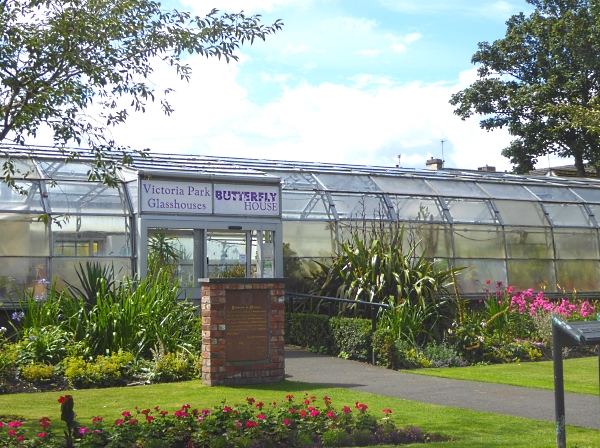
Port Sunlight and New Ferry Butterfly Park, 9th July 2017

We started with a quick look at the site of the explosion on Boundary Road in March this year, which injured 33 people and also destroyed a dance studio. The houses and shops around it are still fenced off and boarded up.

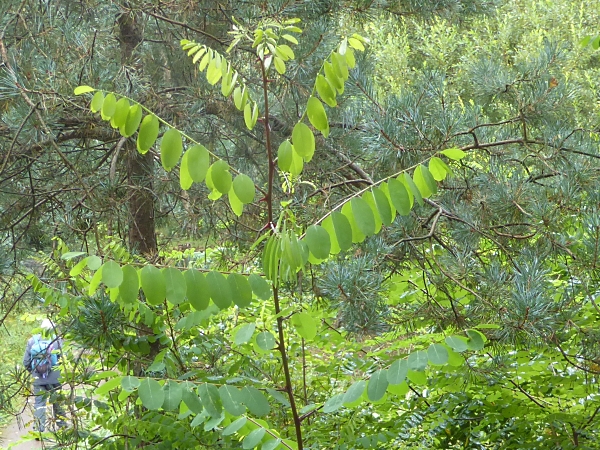
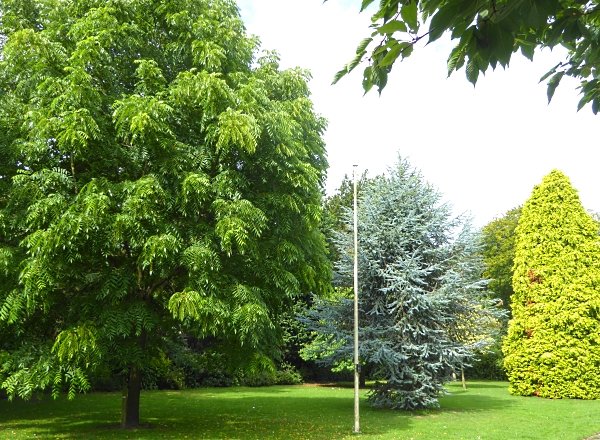
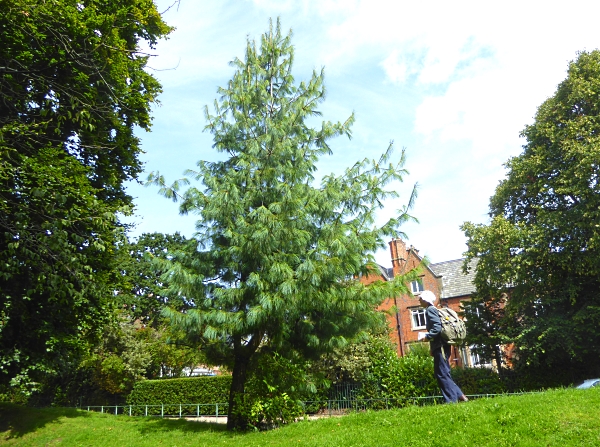
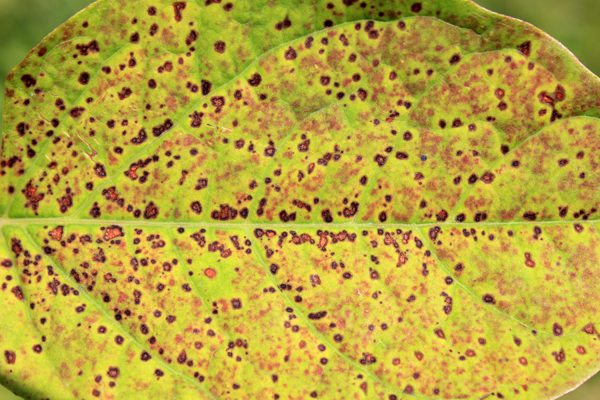
North of the Port Sunlight Museum there is an open field on which they have recently planted some interesting young trees, including a Sweet Gum Liquidambar styraciflua, a Tree of Heaven Ailanthus altissima and this one with yellow-green pinnate leaves which has us baffled. It looks the same as the one at Queen Square, in the corner next to the New Look shop. We guess it’s some new variety of Locust (Robinia) or Honey Locust (Gleditsia) but I can’t find it in any of my tree books.

They have a splendid “hanging basket tree” there, though!

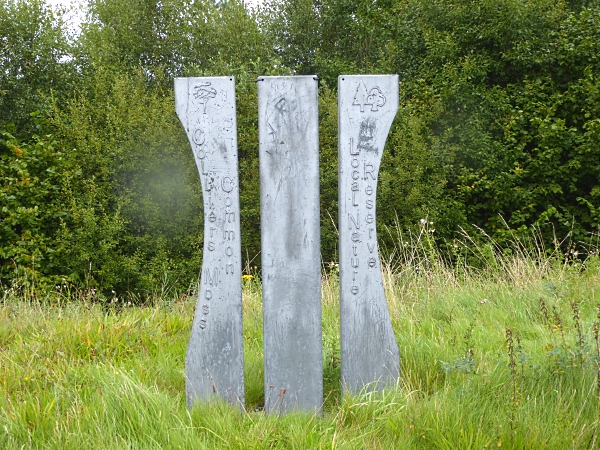
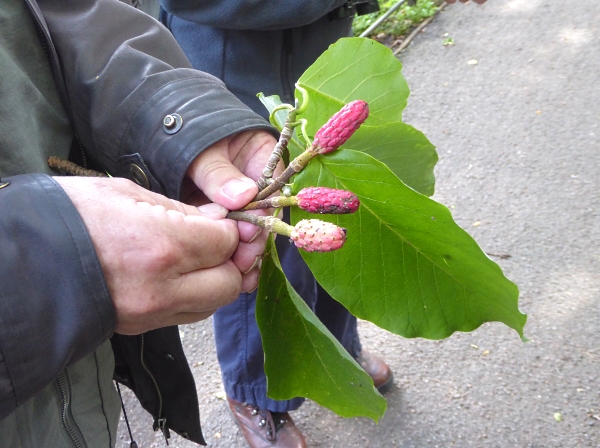
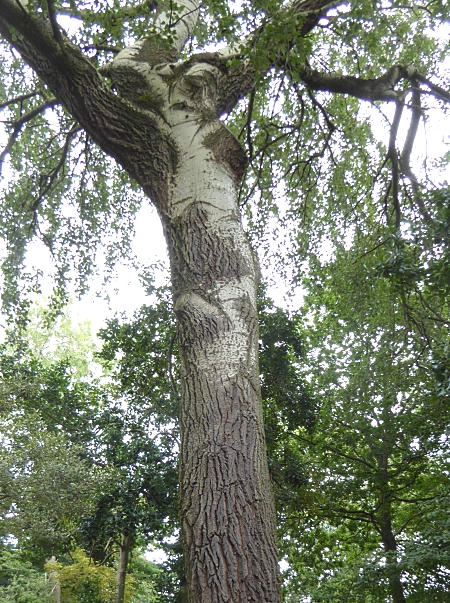
When the sun came out we spotted a very fast-moving Dragonfly over the fountain pond and we stopped to admire the annelematic sundial, where your own shadow forms the gnomon. (See top picture.)  At the back of the garden centre, behind the sheds for sale is their Indian Bean tree with its hanging pods. (Worth 25 tree points)

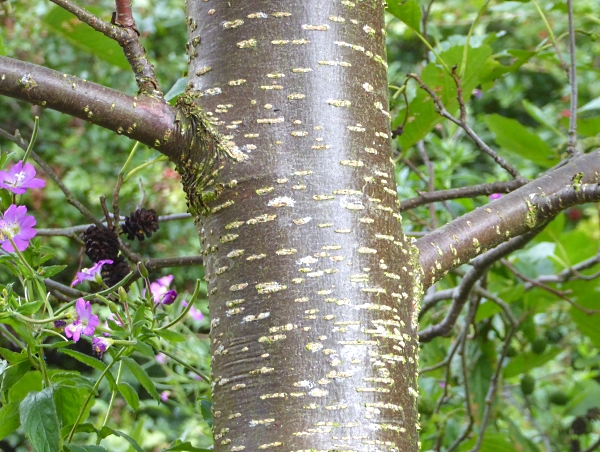
On either side of the garden centre doorway were two bamboo-ish plants in huge pots. To our surprise the name tag said they were Frangula alnus variety ‘Fine Line’. That’s Alder Buckthorn! They didn’t look anything like the wild Alder Buckthorn, because they were quite tall (fastigiate) with spotted bark and finely-cut leaves. I wonder if they would also act as a food plant for Brimstone butterflies?

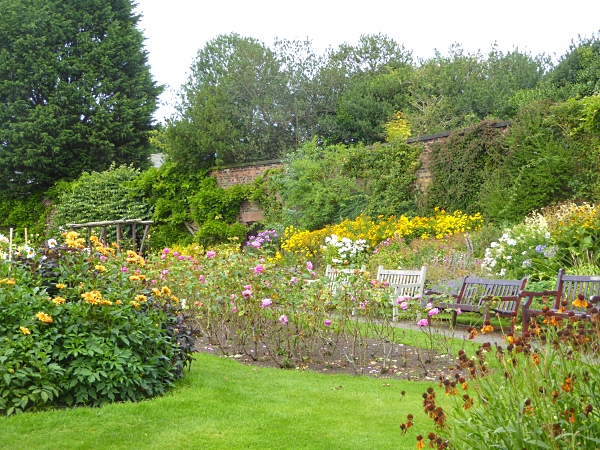
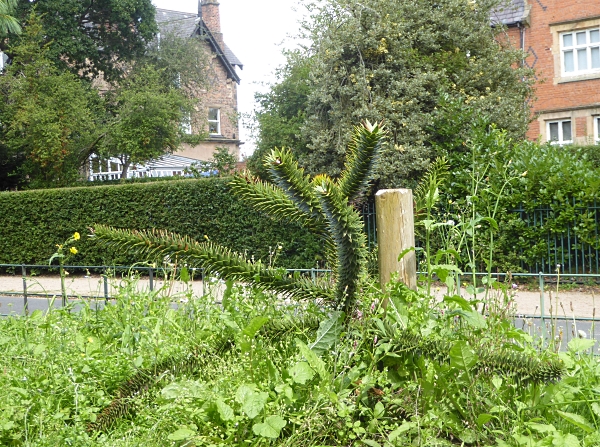
Port Sunlight was full of marvellous flower beds, and the bowling greens were mowed to perfection, but the roses in the Rose Garden were in dire need of dead-heading.  In the Dell where we ate our lunch, we renewed our acquaintance with some old favourite trees, the Honey Locust with the long thorns on the trunk, the young, rare Antarctic Beech Nothofagus antarctica, the Swamp Cypress and the two Tulip trees, one of which had a low-growing flower for us to inspect at close quarters.  Then we headed back north to the New Ferry Butterfly Park.

Several groups of kids were pond-dipping under the supervision of rangers from the Wirral and Cheshire Wildlife Trusts.

Their top find was a group of  three Smooth Newts in their tray and there were plenty more in the pond. They were smaller than I expected, about three or four inches long (10cm) including the tail.

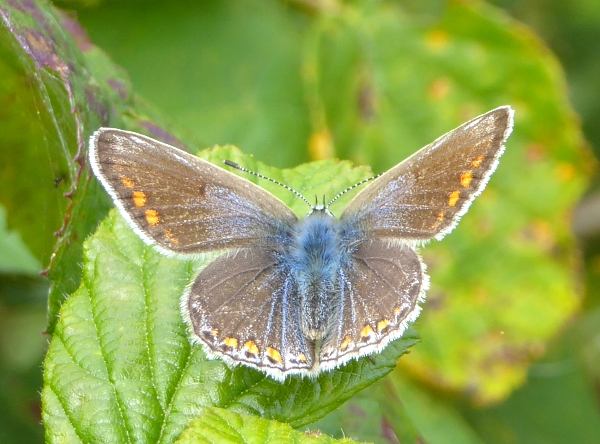
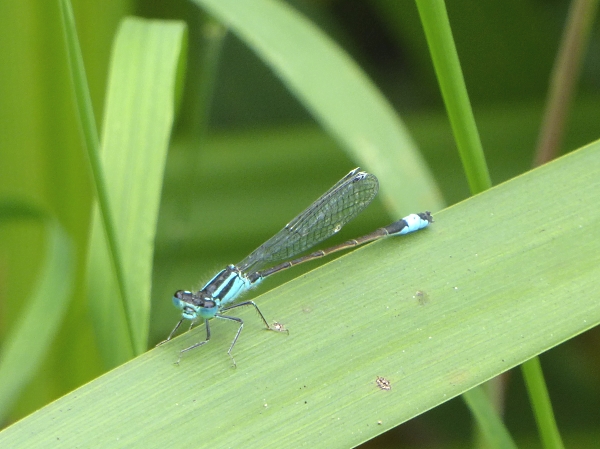
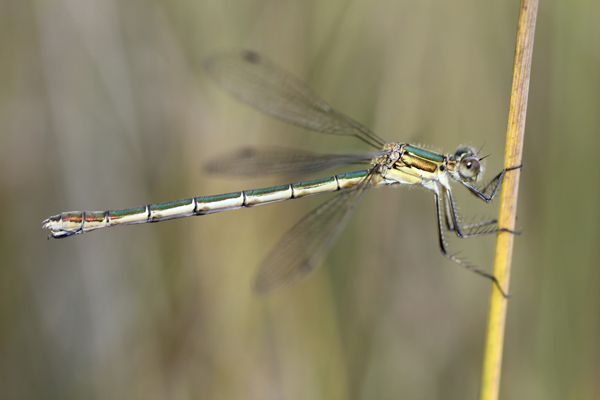
Both Common Blue and Blue-tailed Damselflies were flitting about. This is a Common Blue.

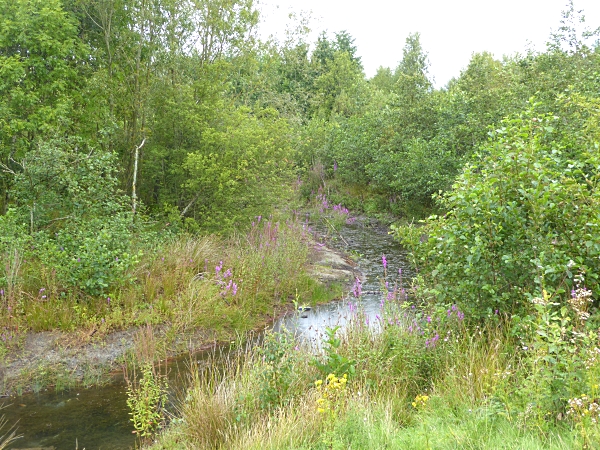
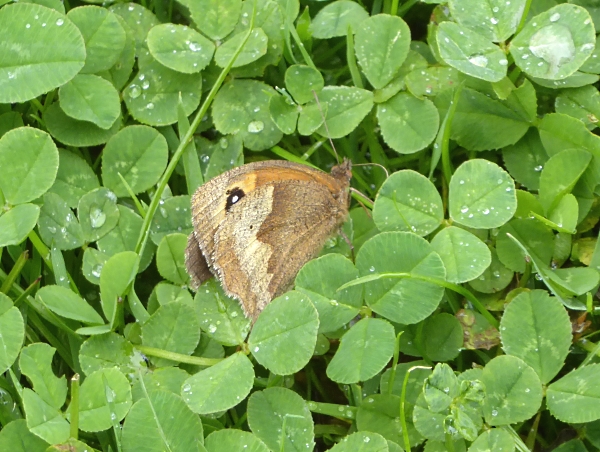
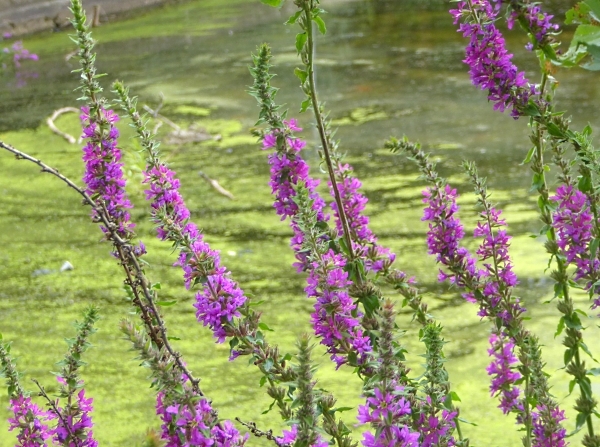
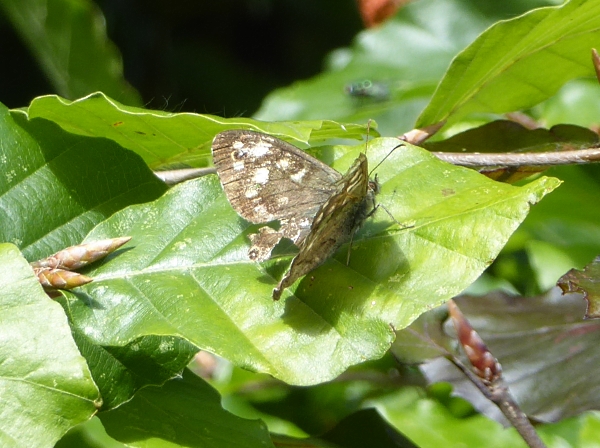
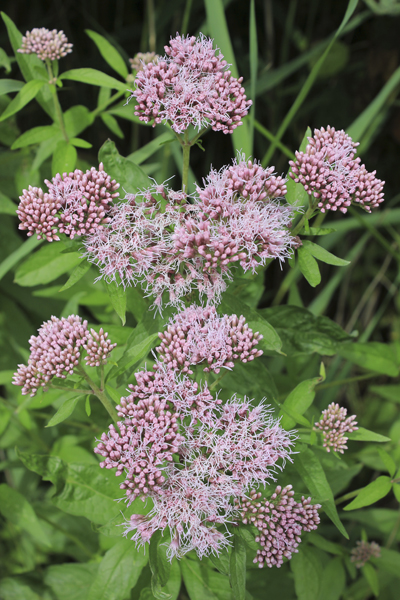
The  butterfly park has really come on since it was founded some years ago. We noted Comma, Green-veined White, Speckled Wood, Meadow Brown, Small Skipper and Gatekeeper. They have White-letter Hairstreaks here too, but we didn’t see any. The wild flowers were growing profusely, and we made great progress with our I-Spy list, including Wild Carrot, Tufted Vetch, Red Clover, Hemp Agrimony, Purple Loosestrife, Musk Mallow, Arrowhead leaves, Small Scabious, Wild Teasel, Scarlet Pimpernel. Some of the Selfheal was very tall, perhaps 12 inches (30cm) and we wondered if it was really Betony, but the leaves didn’t have scalloped margins, so it was Selfheal. There was one tall, mauve, cylindrical orchid in the long grass, and they also have Bee Orchids here, but they were all long gone. We should visit in June next year.


Small Scabious


Scarlet Pimpernel


Selfheal

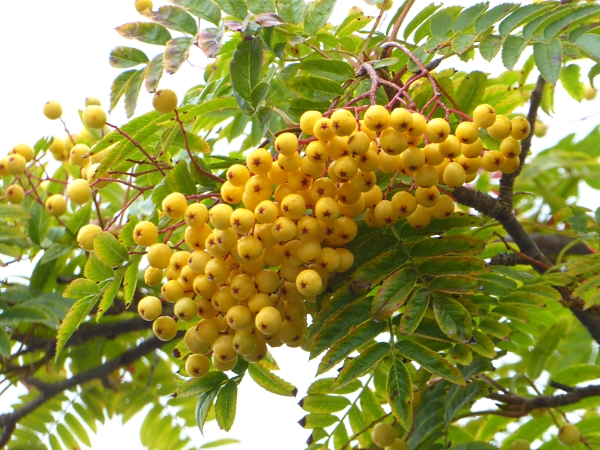
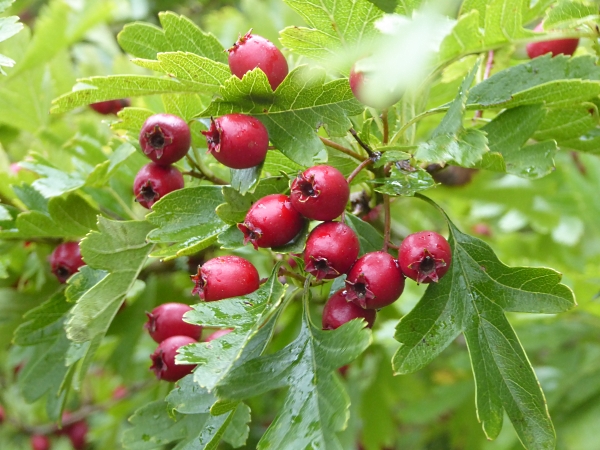
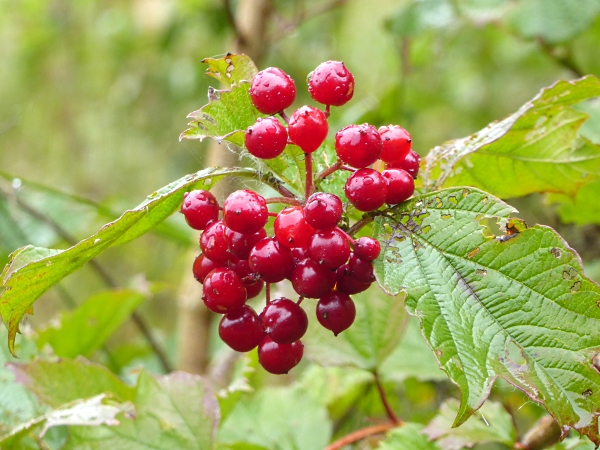
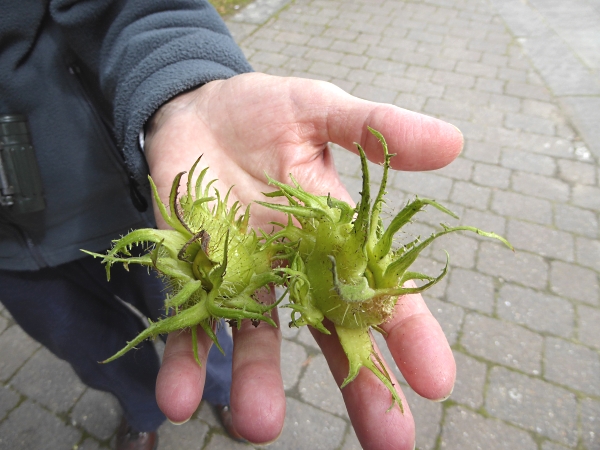
The only notable birds were the Swifts flying high overhead. They will be returning to Africa soon. Other signs of the end of summer were the first blackberries ripening at the tips of the shoots, red rose hips, berries of Guelder Rose turning, white immature Hazel nuts in the hedge, and a good display of bright red Rowan berries.

We were keen to find some of the last odds and bods from out tree list. We asked the ranger, rather jokingly, if she had any English Elm, and she mentioned the Exeter Elm at Flaybrick and said there’s a Huntington Elm near Brimstage and Thornton Hough. To our surprise she said some older English Elms, which should be all dead, are suckering. One patch is near Claremont farm by the Clatterbridge roundabout and the other is at the bottom end of Rivacre Valley by the visitors’ centre, near the motorway. We might try looking for them!  We also asked her about Wayfaring Tree, but she knew of none locally: they are all in the south of England on chalk. She took us to two of our targets, though, a Spindle Tree and a Common/Purging Buckthorn Rhamnus cathartica.


Spindle tree with immature four-lobed fruits


Purging or Common Buckthorn

It was our best day this year for flowers, so we are up to 770 points. Three new trees, now up to 1110, but we are stalled on birds, with no new ones for several weeks.

Public transport details: Train from Central towards Chester at 10.15, arriving Bebington 10.30. Returned from Bebington at 2.55, arriving Central 3.15.

Posted in MNA reports | Comments Off on Port Sunlight and New Ferry Butterfly Park, 9th July 2017

Dinas Dinlle, Caernarfon 3rd July 2017

Views from Dinas Dinlle beach towards Llŷn Peninsula

Whilst visiting family in North Wales for a few days I had a walk around Dinas Dinlle near Caernarfon which offers views towards the Llŷn Peninsula. The route headed past Caernarfon Airport and the Morfa Lodge Caravan Park before heading northwards along the saltmarsh inlet of Y Foryd towards Fort Belan. Returning south through the sand-dunes before walking along the beach back to Dinas Dinlle.

Plenty of notable Plants with Spear-leaved Orache Atriplex prostrata, Sea-purslane Atriplex portulacoides, Sea Campion Silene uniflora, Thrift Armeria maritima, Wild Pansy Viola tricolor, Scarlet Pimpernel Anagallis arvensis, Loganberry Rubus loganobaccus, Kidney Vetch Anthyllis vulneraria, Common Bird’s-foot-trefoil Lotus corniculatus, Meadow Vetchling Lathyrus pratensis, Common Restharrow Ononis repens, Hare’s-foot Clover Trifolium arvense, Sea Spurge Euphorbia paralias, Common Stork’s-bill Erodium cicutarium, Sea Carrot Daucus carota subsp. gummifer, Common Centaury Centaurium erythraea, Bittersweet Solanum dulcamara, Sea Bindweed Calystegia soldanella, Wild Thyme Thymus polytrichus, Sea Plantain Plantago maritima, Eyebright Euphrasia officinalis, Lady’s Bedstraw Galium verum, Carline Thistle Carlina vulgaris, Yarrow Achillea millefolium, Scentless Mayweed Tripleurospermum inodorum and Pyramidal Orchid Anacamptis pyramidalis.

Rabbit Skull

Corpse of the Day included a Rabbit Oryctolagus cuniculus skull in the dunes, the remains of a Lesser Spotted Dogfish Scyliorhinus caniculus on the beach and hundreds of dead Green Shore Crabs Carcinus maenus on the high tide line along the edge of the saltmarsh. A Compass Jellyfish Chrysaora hysoscella had become stranded with the tide.

Compass Jellyfish

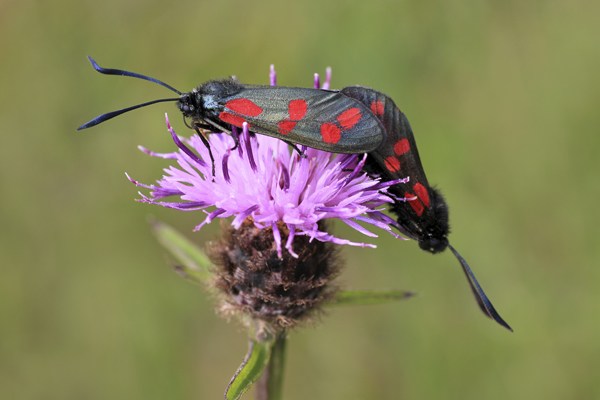
Only a few Butterflies and Moths with Small Skipper Thymelicus sylvestris, Small White Pieris rapae, fifty plus Cinnabar Moth Tyria jacobaeae caterpillars on the Oxford Ragwort Senecio squalidus and a dozen or so Six-spot Burnet Zygaena filipendulae.

Mating Burnet Moths

If you are interested in the wildlife of the north-west of England and would like to join the walks and coach trips run by the Merseyside Naturalists’ Association, see the main MNA website for details of our programme and how to join us.
Posted in MNA reports | Comments Off on Dinas Dinlle, Caernarfon 3rd July 2017

Calderstones Park, 2nd July 2017

We entered the park from Ballantrae Road, at the south-west entrance. Just inside were two multi-trunked trees that appeared to be dead. A few leaves remained on one, which showed they were some kind of Maple. One had a clump of Pink Purslane at its base.

We walked in a vaguely anti-clockwise / easterly direction across the open south-central area, tree- spotting as we went. This Sweet Chestnut was in bloom, showing the long male catkins at the top and the smaller female flowers in the centre, which will become the nuts.

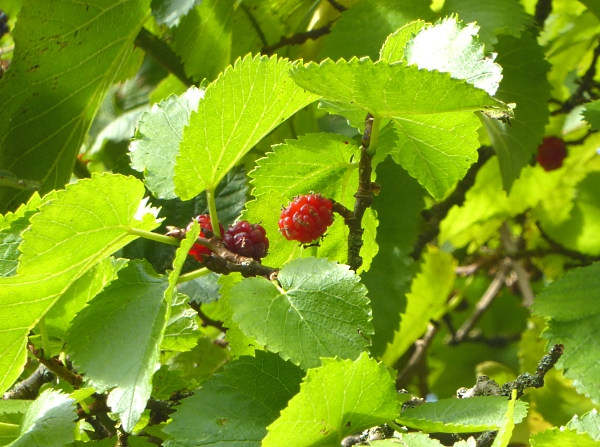
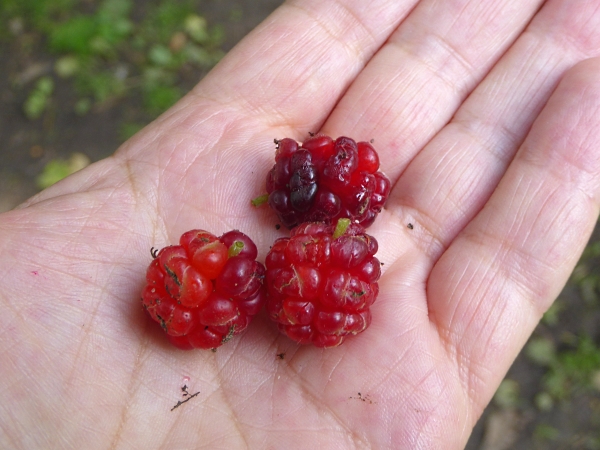
We also noted Hornbeam, Turkey Oak and Common Lime. We were really looking for the Black Mulberry Morus nigra which we found in the open area south-east of the Manor House, east of the ha-ha, near some Scots Pines. It looks like the upper branches have died, and it has been pruned back. It was still leafing bravely though, and bearing unripe fruit. That’s 20 I-Spy points, taking us to exactly 1000, so we savoured the moment.


Behind the bike racks next to the Mansion House we looked at what we remembered to be a Snowbell Tree, Styrax japonica, but it didn’t look like the small trees that I have been seeing blooming prettily in parks and gardens recently. Not a Snowbell after all, our memories were faulty, it was the rarer (Mountain) Snowdrop or Silver Bell Halesia monticola. There is a Snowberry bush in front of it, just to add to the confusion.

Along the wall of the Gent’s toilets is a patch of the rare parasitic plant Ivy Broomrape Orobanche hederae.  It has none of the green pigment chlorophyll so it cannot make food for itself, and is entirely dependent on the roots of the Ivy.

The Common Walnut tree by the flower beds had the Walnut Leaf Gall Mite Aceria erinea infesting the leaves.

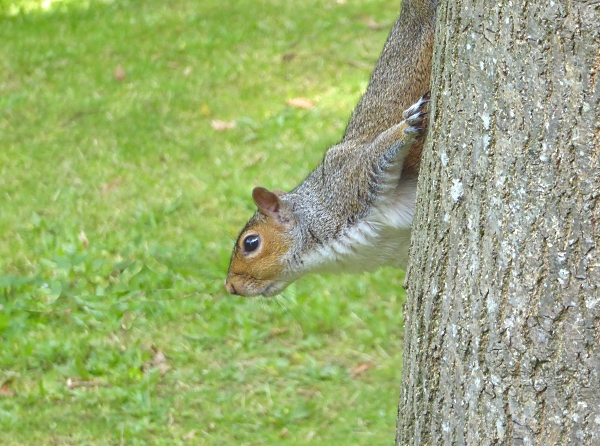
We had lunch in the Old English Garden, entertained by the very tame or cheeky (take your pick) wildlife which gathers at butty time. There was a Grey Squirrel on the edge of the pond, and several more of them under the benches. A Dunnock ventured out and there were two Robins and a Great Tit trying their luck. There was also a rather tame Jay skulking about on the Pergola. One of the Robins looked quite scruffy, and I saw it take a fly-by dip into the pond, without landing on a leaf, just skimming the water and wetting its breast. Was that why it looked so scruffy, because it was wet? Or was it infested with something and trying to relieve an itch?

I thought there was a Large-leaved Lime opposite the old stable block (now the Gallery area) but all we found was a cut-down trunk. The one at Flaybrick will be our last hope for those points. One of us spotted a shield bug on a Maple. The British Bugs shieldbug page has a lot of pictures, and I think it was the Red-legged Shieldbug Pentatoma rufipes. They are said to be widespread and common in wooded areas, orchards and gardens, and feed mainly on oak, alder, hazel and other deciduous trees including apple and cherry.

One of our target trees was this Japanese Red Cedar Cryptomeria japonica, which isn’t a Cedar at all, but a more primitive type of tree. It was worth 15 points.

Another target was the Douglas Fir Pseudotsuga menziesii (another 15 points). As far as I know this one in Calderstones is the only one on Merseyside, possibly at the southern edge of its range. It’s another tree with a misleading name, as it isn’t a Fir at all, but is also from a more primitive group. Its name honours two great Scottish plant hunters, David Douglas and Archibald Menzies. The easiest way to identify it is by the distinctive cones, which have a long tridentine (three-pointed) bract that protrudes over each scale.

In the Swamp Cypress near the Allerton Oak we spotted a couple of young Blackbirds, looking very brown and fluffy, who had perhaps just left their nest today. We were looking for a flowering Tulip Tree Liriodendron tulipfera. We’d seen the small one on the lawn in front of the Mansion House and a much bigger one inside the Old English Garden, but there was hardly a flower to be seen. Had we missed them? Perhaps. They may start flowering as early as May. However, the big Tulip Tree near the Swamp Cypress still had some flowers so we claimed our 25 points.

We saw no new birds this week. No new wildflowers either, although we correctly answered two questions on last week’s flowers, and thereby raised our score to 600. How does Hedge Woundwort get its name? Because the leaves were once used to dress wounds. The Rosebay Willowherb is also called Fireweed; do you know why? Because it grows on burnt ground. Trees are up to 1055 and I-Spy badges and certificates for passing 1000 will follow!  There are only 18 trees left to spot, worth 350 points at most. It’s possible we might yet get them all (except the English Elm, of course.)

While we were on the bus on the way back, we noticed that many Rowan trees have their berries just turning brown, and some are fully red. So that’s it, autumn already!

Public transport details: Bus 86 from Liverpool ONE at 10.15, arriving Mather Avenue / Ballantrae Road at 10.45. Returned on the 76 bus from Menlove Avenue / opp Druid’s Cross Gardens at 1.50, arriving Liverpool 2.25.

Posted in Sunday Group | Comments Off on Calderstones Park, 2nd July 2017

Great Orme, Llandudno 1st July 2017

Alice’s Rabbit Pal

A small group of MNA members met at Chester railway station before boarding the train to Llandudno for our walk around the Great Orme. We admired the large carved wooden Rabbit – part of the Alice in Wonderland trail before heading down to the promenade.

Spear-leaved Orache

A variety of maritime Plants with Spear-leaved Orache Atriplex prostrata, Sea Beet Beta vulgaris subsp. maritima, Sea Plantain Plantago maritima and a flowering clump of Viper’s-bugloss Echium vulgare.

Viper’s-bugloss

We took the zig-zag path up the rocky slope opposite the Grand Hotel to Happy Valley noting a few dried-out spikes of Ivy Broomrape Orobanche hederae which is parasitic on the roots of Ivy Hedera helix, Tutsan Hypericum androsaemum, White Stonecrop Sedum album, Common Rock-rose Helianthemum nummularium, Hedge Woundwort Stachys sylvatica, Wood Sage Teucrium scorodonia, Ground-ivy Glechoma hederacea, Wild Clary Salvia verbenaca, Wild Privet Ligustrum vulgare Red Valerian Centranthus ruber. A wild patch near the Camera Obscura held Common Bird’s-foot-trefoil Lotus corniculatus, Wild Carrot Daucus carota subsp. carota, Sea Carrot Daucus carota subsp. gummifer, Spear Thistle Cirsium vulgare, Creeping Thistle Cirsium arvense, Yarrow Achillea millefolium, Oxford Ragwort Senecio squalidus, Hemp-agrimony Eupatorium cannabinum. Ron Crossley spotted our first Humming-bird Hawk-moth Macroglossum stellatarum of the day hovering around a formal flower bed.

Smurf-free zone

We dropped down through the public park at Happy Valley stopping at Alice’s seat and the scattering of Fly Agaric mushrooms and noting Round-leaved Crane’s-bill Geranium rotundifolium and three Bee Orchid Ophrys apifera spikes in the unmown area at the bottom edge of the park. Billowing Altocumulus clouds above the limestone escarpments of the Orme made for an impressive view.

Altocumulus

We were soon notching up the familiars of this limestone habitat Pellitory-of-the-wall Urtica pilulifera, Biting Stonecrop Sedum acre, White Stonecrop Sedum album, Salad Burnet Sanguisorba minor, Kidney Vetch Anthyllis vulneraria, Bloody Crane’s-bill Geranium sanguineum, Fairy Flax Linum catharticum, Thrift Armeria maritima, Dropwort Filipendula vulgaris, Harebell Campanula rotundifolia, Lady’s Bedstraw Galium verum, Red Valerian Centranthus ruber, Small Scabious Scabiosa columbaria, Yellow-wort Blackstonia perfoliata, Common Centaury Centaurium erythraea etc.

Conditions were becoming more overcast and blustery which kept the Butterflies and Moths hunkered down – we did note small numbers of Small Skipper Thymelicus sylvestris, Silver-studded Blue Plebejus argus, Red Admiral Vanessa atalanta, Grayling Hipparchia semele, Meadow Brown Maniola jurtina, Small Heath Coenonympha pamphilus, Six-spot Burnet Zygaena filipendulae and Cistus Forester Moth Adscita geryon.

The Northern Fulmars were cackling away to their neighbours on their nest ledges, a Peregrine cried out as it zoomed over the escarpment summit. Out at sea predominantly Cormorants with the odd Shag flew by. Great views as a pod of a dozen or more Common Bottlenose Dolphins Tursiops truncatus and a few Harbour Porpoise Phocoena phocoena. were swimming by off the end of the headland.

Whitethroats called from the scrub, Wrens and Dunnock added their songs and a pair of Stonechat ‘tacked’. A few Mepits parachuted down on their display flight and a Rock Pipit performed its best Flycatcher impersonation almost hovering whilst chasing insects. Along by the nesting cliffs beside the lighthouse were Guillemots and the odd Razorbill with a group of Cormorants loafing on their rock platform with wings-outstretched.

Further along more plants with Wild Marjoram Origanum vulgare, Common Milkwort Polygala vulgaris and Common Butterwort Pinguicula vulgaris growing in a damp area were water was oozing down the rock face. Plenty of Lichens patterning the rocks on the stone wall beside the path. The rocks also held a variety of fossils with corals, brachiopods, oyster shells etc.

Yet more Plants with Ploughman’s-spikenard Inula conyzae, Wild Madder Rubia peregrina that we have never knowingly seen before growing to heights of 3ft as it scrambled through the Privet and Loganberry Rubus loganobaccus beside the path. Small scrubs of Juniper Juniperus communis and Western Gorse Ulex gallii were holding their own in the blustery conditions. It was the antics of eleven Chough that provided a finale for the day – tumbling and playing in the wind, tucking their wings tight by their body and diving before spreading their wings fully out again the straggly end feathers like fingers. They even wished us ‘Ciao.’

If you are interested in the wildlife of the north-west of England and would like to join the walks and coach trips run by the Merseyside Naturalists’ Association, see the main MNA website for details of our programme and how to join us.
Posted in MNA reports | Comments Off on Great Orme, Llandudno 1st July 2017

West Kirby, 25th June 2017

The trains to Wirral came back on this week, after several months of disruption while the track under the river was being replaced. We celebrated by going to West Kirby. Mercifully, it was a much cooler day, with light drizzle early on, but the sun came out about lunchtime. Our first port of call was Sandlea Park, which has a lot of Common Walnut trees, which have liked the hot weather and have produced a bumper crop of fruits.

We cut through the houses and down to South Parade, which overlooks the beach. The tide was coming in and the Lifeguards in their jeep were watching the last stragglers returning from Hilbre. A Swallow flew below us, low over the sand. A Great Black-backed Gull contemplated the large flock of gulls congregated on the tideline. We headed southwards past the Marine Lake and spotted a  Sandwich Tern, which was moving too fast for me to catch a picture. Various small yachts were out, taking advantage of the breeze, which hadn’t yet dissipated the grey mist on the Flintshire side.

A Common Tern patrolled up and down, occasionally hovering, and it caught at least one fish from Marine Lake.

At the southern end of South Parade we admired an intensely red clump of flowers in someone’s garden.

Then along Sandy Lane and Mcdona Drive. We always like seeing other people’s gardens, and we were highly amused by this cheeky drain cover!

Our destination was Cubbins Green near Caldy, where we lunched. Lots of wildflowers were coming out, including Common Mallow, Common Toadflax and our first Ragwort.

Then we ambled back along the Wirral Way, spotting lots more wild flowers for our list – Creeping Thistle, Rosebay Willowherb, Honeysuckle, Greater Trefoil, Ox-eye Daisy, Hedge Woundwort.


Creeping thistle


Hedge woundwort


Honeysuckle

The back of one house had an overgrown Hornbeam hedge, which is another tick on our tree list. Even though the sun was out, the only butterfly we saw was this Small White.

There were a couple of 7-spot ladybirds, but they seemed quite orangey rather than the usual scarlet. The book says they CAN occasionally be yellow, so maybe this is a local intermediate form. I have decided I want some Garlic Mustard in my garden, in the hope of getting Orange Tip butterflies. While I was gathering a couple of seed-heads we disturbed a mother Nursery Web Spider Pisaura mirabilis. Here’s her web with the spiderlings. I do hope she returned.

John was hoping to spot either Treecreepers or Bullfinches, birds still missing from our I-Spy list, but none were about today, even in Ashton Park.

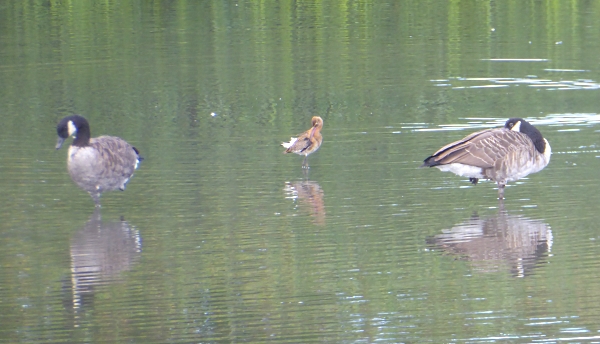
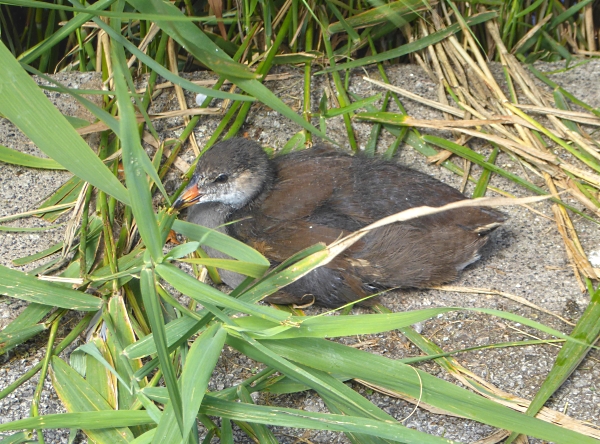
The pond had the usual common birds – moulting Mallards, Coot, Canada Geese, juvenile Herring Gulls and a Moorhen. I took the opportunity to get a good look at the Coot’s semi-webbed feet.

No advance on the bird list today. We spotted Walnut and Hornbeam, so the tree list is up to 980 points. We will break 1000 points next week at Calderstones, where I have four definite ticks in mind worth 70 points, and we might make 90 if we find the Mulberry. We had eight wildflower ticks today, taking us to 570 points.

Public transport details: Train from Central at 10.05, arriving West Kirby at 10.35. Returned on the 14.01 train from West Kirby, arriving Liverpool 2.35.


Posted in Sunday Group | Comments Off on West Kirby, 25th June 2017

Crosby Parks, 18th June 2017

On the hottest day of the year we took refuge in the cool, shady tranquilly of Alexandra Park in Crosby. (The picture above is a 2009 autumn picture “borrowed” from Flickr.)  The park was opened in December 1902, just scraping into the year of Queen Alexandra’s coronation. It was designed as a place simply for promenading in big hats, with no bowling greens or football fields. Unfortunately, this means that very many of the original trees could now be 115 years old, dominating the canopy, and coming to the end of their lives. Nothing appears to have been done about succession for many decades, but kudos are now due to Sefton Council who have embarked on a project to gradually replace the old trees with very interesting younger ones. Following their receipt of almost £75,000 from a pot of “Section 106 money” (money that developers of larger sites pay to the council to reduce the impact of the development), they have been planting some well-grown young trees of unusual varieties. The list includes Hybrid Red Maple Acer x freemanii ‘Autumn Blaze’; Paperbark Maple Acer griseum; Cut-leaved or Fern-leaved Alder Alnus glutinosa ‘Imperialis’; Swedish Cut-leaved Birch Betula pendula ‘Dalecarlica’; Katsura Cercidiphyllum japonicum; Judas tree Cercis siliquastrum; Japanese Larch Larix kaempferi; Pin Oak Quercus palustris; Henry’s Lime Tilia henryana; Golden Smooth-leaved Elm Ulmus carpinifolia ‘Wredei Aurea’; Snowy Mespil Amelanchier arborea ‘Robin Hill’; Manchurian Cherry Prunus maackii ‘Amber Beauty’; Bird Cherry Prunus padus ‘Watereri’; two varieties of Flowering cherry Prunus ‘Accolade’ and Prunus “Amanogawa”  and a row of Laburnum Laburnum x watereri ‘Vossii’.


The row of new young Laburnums, which flowered within a month of planting.


One of three Henry’s Limes, none of which appear to have come into leaf, and may have failed.

We also noted Peacock and Speckled Wood butterflies, and several common birds, Blackbird, Chaffinch and Wren, which were very relaxed around people. Shrubs included Privet, which is just coming into bloom and scent, some late Bird Cherries flowering in the shade and this lovely white-flowered one, which I think is the Snowbell Tree Styrax japonicus.

After lunch we headed off to Coronation Park, which was wide open and very hot. They were having a Community Day, with face painting, a magic show, a bouncy castle, pony rides, and a display by Lancashire Hawks and Owls.  They are all rescued birds, and money is raised for their keep by charging people £2 to have a hawk or owl on their arm. There were many young customers queuing for the privilege.


Tawny Owl


Little Owl

The park had only one tree that caught my eye, in a corner by the duck pond. Could this be a Medlar (the young fruit has quite a wide-open end) or will these fruits simply mature into Apples? I will keep my eye on it later in the year to see how they develop.

We crossed the road to the graveyard of St Luke’s church, which had been very wildlife-friendly a few years ago, but the impetus seems to have gone. Even the bug hotel is almost completely overgrown by Ivy, Nettle and Goosegrass, although I suppose the bugs don’t mind!

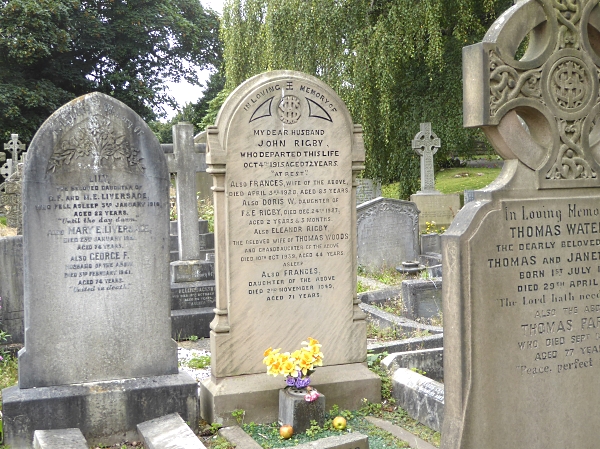
One of the gravestones was worthy of note – a lady who died in 2004 aged 83, who had been a code breaker at Bletchley Park. The old Butterfly garden had a large patch of Red Valerian intertwined with Hedge Bindweed.

No new birds for the I-Spy list today. The only tree new to our list was an old Silver Birch in Alexandra Park (10 points), a tree which we have inexplicably failed to count so far. It takes our score to 940. Flowers – the Red Valerian was worth 25 points, the Hedge Bindweed 5, and we doubled some points from Kirkby by answering the associated questions. (What are the fruits of the Bramble called? Blackberries. What are the fruits of the Dog Rose called? Hips.) Total now 475.

Public transport details: Bus 53 from Queen Square at 10.15, arriving Mersey Road / College Road at 11.02.  Returned on bus 47 from St Luke’s Church, Liverpool Road at 2.26, arriving City Centre at about 3pm.

Posted in Sunday Group | Comments Off on Crosby Parks, 18th June 2017

Stanley Park, 11th June 2017

Stanley Park wasn’t quite at its best, with the massed Daffodils of the Field of Hope all gone, and  the formal beds yet to come into their peak flowering.  It was quite a grey day too, overcast and warm, but with a blustery wind and occasional sharp showers.

One splash of colour was provided by some Poppies on a wild bit of grass verge.

I spotted one of the trees from our I-Spy list, known as False Acacia, Locust Tree or Black Locust, Robinia pseudoacacia. Its leaves are pinnate like Ash or Rowan, but it bears flowers like a Laburnum, on pendulous racemes, but they are white not yellow, and much shorter.

There were Swallows over the open fields and Canada Geese, Mallards and Coot on the lake.  The fishermen had their tents pitched all along the edge, and on the far side we saw some very big fish lurking in the shallows, easily a foot (30 cm) long. Foraging along the edge was a Grey Wagtail.

In the wider reaches of the lake was a bird with a bright orange-yellow head. We think it was a male Red-crested Pochard, possibly the same bird that John saw on Walton Hall Park lake in February.

I was fascinated by a row of Lime trees, which had the remains of their flowers sticking out at odd angles, and I think they might have been Small-leaved Limes. All the illustrations in the books show this.  Later we saw what must have been the Common Lime, which had its flowers all pointing down. Regrettably, neither tree is on the I-Spy list and we must wait for the much less common Large-leaved Lime to claim any points.


Flowers sticking up – Small-leaved Lime?


Flowers hanging down – so Common Lime

Near the circle of old Plane trees we heard a loud wheeping bird call, which we were convinced was made by a Nuthatch, but when we spotted the bird making the noise it was a Chaffinch!  One Swift flew high overhead. Near the island in the lake a pair of Great Crested Grebes were loitering, but they had no stripy chicks with them. The nest was there behind them, with bits of brightly-coloured litter attached, but their clutch must have failed.

The Coots had done better, and here are two youngsters on their nest.

There were several trees with long dangling strings of seeds, blowing in the wind. They were the Caucasian Wingnut Pterocarya fraxinifolia.

We lunched by the Isla Gladstone Conservatory, and were treated to cake by Bill, who was 90 that day and is still going strong. In March this year the World Economic Forum publicised the Japanese custom of “Tree Bathing” and the health benefits of being around trees and forests. Bill appears to be a beneficiary of the effect.

Then we walked along towards the Cemetery, spotting half a dozen Goldfinches on the flowerbeds and a Mistle Thrush on the wall. In Anfield Cemetery we noted the old VC graves, the ruined catacombs, and we looked unsuccessfully for the gravestone of William Herbert Wallace and his wife Julia. He was convicted of her murder in 1931, but the verdict was (uniquely and controversially) overturned on appeal, and now it is generally accepted that he didn’t do it.

There were Grey Squirrels all over the cemetery. My eye was caught by this shapely little tree with white blossom just going over. I have no idea what it was. The flowers and leaves looked like Common Hawthorn, but there were no thorns, it was flowering too late, the faded flowers looked quite unlike Hawthorn and the tree shape was wrong. I speculate that it was some sort of Hybrid Cockspur Thorn, but that’s just a guess.

New birds for the group today were Swift (15 points), Grey Wagtail (20) and Great Crested Grebe (15), which makes 50 and takes our total to 1285.
Flowers: Just the Common Poppy (10) taking us to 420.
Trees: Today we added the False Acacia / Locust Tree / Black Locust (25). Last week on the way to the Cathedral Flower Festival the group passed the Foxglove Tree in Henry Street (25) but were too late for its flowering. Our total is now 930.

Foxglove tree (with the large light-coloured leaves and gone-over flower spikes)

Public transport details: Bus 17 from Queen Square at 10.12, arriving Arkles Lane / Anfield Road at 10.30. Those of us going back to Liverpool got the 19 bus from Walton Lane / Priory Road at 2.24, arriving City Centre at 2.38.

Posted in Sunday Group | Comments Off on Stanley Park, 11th June 2017

MNA Coach Trip Dovedale, Derbyshire 3rd June 2017

Early Purple Orchid

Inquisitive Cow

Mayfly Ephemera danica

Posted in MNA reports | Comments Off on MNA Coach Trip Dovedale, Derbyshire 3rd June 2017

Conwy Valley, Wales 30th May 2017

A trip with DaveB, Richard Surman and Ron Crossley along the Conwy Valley. Our first stop was St Mary’s Church at Caerhun, situated on the site of the Roman Fort of Canovium, overlooking the River Conwy. The churchyard is occasionally frequented by Hawfinches. Not luck today with them although we had nice views of a pair of Redstart. We continued along the Valley to Dolwyddelan. According to Wiki the name of the village translates as “Gwyddelan’s meadow”, referring to the 5th or 6th century Saint Gwyddelan, after whom the parish church is named.

Cladonia Lichen

After parking beside the railway station we crossed a stone bridge that had Maidenhair Spleenwort Asplenium trichomanes, Wall-rue Asplenium ruta-muraria, Wild Strawberry Fragaria vesca, Ivy-leaved Toadflax Cymbalaria muralis and Herb-Robert Geranium robertianum growing from its mortar. We climbed along a lane out of the village, Greenfinch wheezing away until we reached the track that led into the southern end of Gwydir Forest Park. The weather was drizzly and various mosses and Cladonia Lichens were benefiting from the damp conditions. A Siskin called and landed at the top of a Conifer – a mere silhouette in the mist. The ubiquitous Willow Warbler, Blackcap and a scattering of Garden Warblers were in song.

Hard-fern

Plants included Hard-fern Blechnum spicant, Welsh Poppy Meconopsis cambrica, Greater Stitchwort Stellaria holostea, Cuckooflower Cardamine pratensis, Bilberry Vaccinium myrtillus, White Stonecrop Sedum album, Tormentil Potentilla erecta, flowering Hawthorn Crataegus monogyna, Common Bird’s-foot-trefoil Lotus corniculatus, Tufted Vetch Vicia cracca, Red Clover Trifolium pretense, Foxglove Digitalis purpurea, Thyme-leaved Speedwell Veronica serpyllifolia, Germander Speedwell Veronica chamaedrys, Marsh Thistle Cirsium palustre, Goat’s-beard Tragopogon pratensis and still flowering Bluebell Hyacinthoides non-scripta .

Angle Shades

The high-pitched zee of Goldcrests came from the tops of the conifers and a couple of Redpoll were flying around. Hiding in the Bracken Pteridium aquilinum was an Angle Shades Phlogophora meticulosa and a few Snipe Fly Rhagio scolopaceus were adopting their usual down-looking pose. I took a detour down a slope to view a couple of small waterfalls and a group of Common Spotted-orchid Dactylorhiza fuchsia. A wet bank beside the track held Common Butterwort Pinguicula vulgaris – an insectivorous plant.

Ruins Tai Penamen

We stopped for lunch at the ruins of medieval Tai Penamnen, built by the powerful Welsh nobleman, Maredudd ab Ieuan, as his family home. Dog Lichen Peltigera sp. grew on the stonework, a Redstart was singing close by and a Great-spotted Woodpecker called.

Dog Lichen

Further along the track the sun put in a brief appearance and we took a small detour and crossed a newly constructed wooden footbridge over a stream, A Buzzard circling against an impressive rocky crag reminiscent of Wyoming scenery as the backdrop. A Grey Wagtail was chasing after insects in the stream bed, a Small White Pieris rapae flew by and Richard located a Spotted Flycatcher in the streamside Conifers.

Mother Shipton Moth

Returning to the main track we continued up the valley noting a Mother Shipton Moth Euclidia mi on a wooden fencepost and a Rove Beetle possibly Aleochara lanuginosa racing along. We then took a sharp detour off-piste up a steep track where the Forestry Commission had felled the Conifers the previous year. A Peregrine cried from further along the valley, a Raven croaked above us and a Tree Pipit performed its aerial display flight landing amongst the tree-felling debris and Conifer stumps. A Dor Beetle Geotrupes sp. plodded along until DaveB turned it upside down briefly to see whether it was infected by mites – it wasn’t. After a couple of stops to catch our breath and note the Heath Bedstraw Galium saxatile we reached the top and the drizzle started as we headed over moorland dotted with Hare’s-tail Cottongrass Eriophorum vaginatum and began our descent.

It was squelchy underfoot and the retreating stream had caused bankside erosion. A few interesting plants with more Common Butterwort Pinguicula vulgaris, Lesser Spearwort Ranunculus flammula, Round-leaved Sundew Drosera rotundifolia, Common Milkwort Polygala vulgaris and Lousewort Pedicularis sylvatica.

Lichen

Mepits and a Stonechat were seen, I heard the bubbling call of a Curlew and we heard the plaintive call of the Cuckoo – the first of three individuals. Passing through a farm we were glad that the barking dogs were on thick chains. The typical Welsh Oak woodland it was surprisingly devoid of bird song although further along we did note a party of Long-tailed Tits, Robins, Prune and Great Tit. We continued through sheep pasture with some quite bold ewes protecting their lambs from our perceived threat. Their dung held both Coprophagous Fungi and a scattering of Yellow Dung Flies Scathophaga stercoraria. The ruins of Dolwyddelan castle looked spooky against the increasingly greying skies on the opposite side of the Afon Lledr. Gates and stiles had allowed our progress to continue over the fields but we came across a fence that barred our way and had to backtrack to find the correct route. I briefly glimpsed a Kingfisher peeping along the river.

The heavens opened and we donned waterproofs for the last leg of the walk back into Dolwyddelan – Swallows and House Martins zipping around a couple of fields festooned with Pignut Conopodium majus on the edge of the town.

If you are interested in the wildlife of the north-west of England and would like to join the walks and coach trips run by the Merseyside Naturalists’ Association, see the main MNA website for details of our programme and how to join us.
Posted in MNA reports | Comments Off on Conwy Valley, Wales 30th May 2017

Kirkby, 28th May 2017

We went to Kirkby to follow up reports of nesting Peregrines on the church, but we had a good look at the trees in St Chad’s Gardens first. They have a fine young Deodar, a Laburnum arch that has just finished, a Red Horse Chestnut and one that I first mistook for a Japanese Maple, but it was an Oriental Plane, said to be rare north of the Midlands. The only other one I know of in Merseyside is on the central reservation of East Prescot Road near Springfield Park.
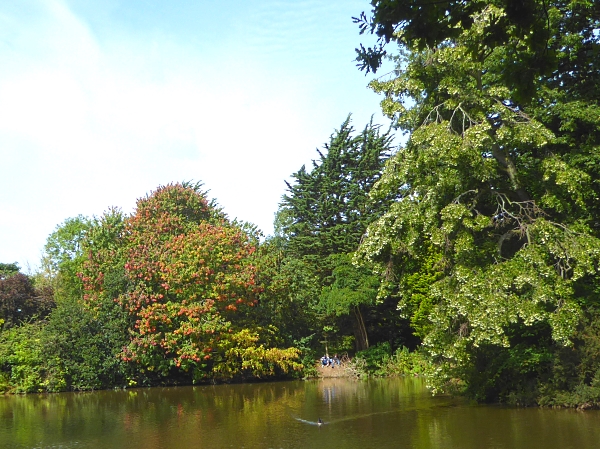
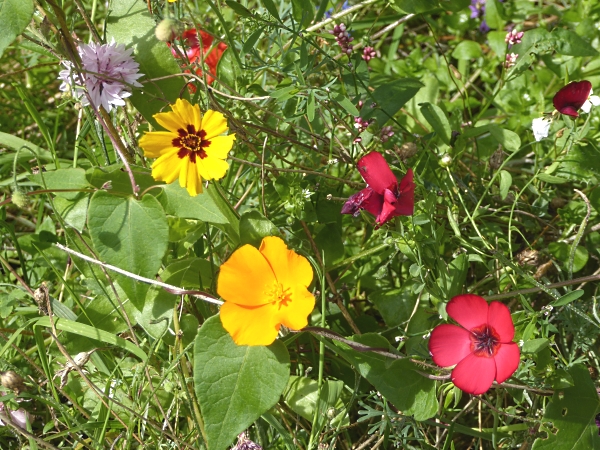
There was some sort of Lime, not sprouty at the base and showing a low graft. The leaves were glossy and papery and there were no seeds. I hoped that it was a Large-leaved Lime (worth 15 points) but it doesn’t match the book at all. It was more like a Small-Leaved Lime in features, except for the size of the leaves. These Limes are doing my head in!  We had more luck with the matching pair of youngish trees on either side of the gate. They were conical trees, no seeds, but with big alternate leaves with their stalks reddish and hairy. I think they are Turkish Hazels, which the Collins Tree Guide says are now a locally frequent street tree.
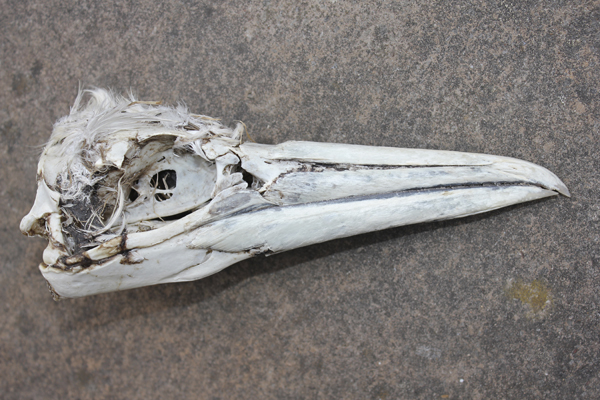
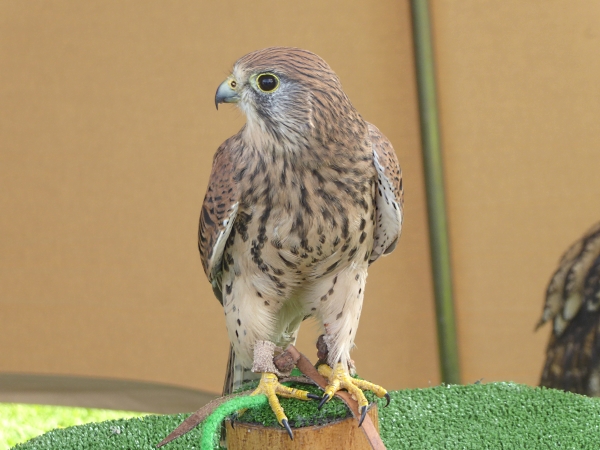
As promised, a pair of Peregrines were nesting in the church belfry. Neither of them were impressed when the church bells rang, and they flew away screeching, but one soon came back.

We met a local lad, who joined us in foraging for pellets. We broke open the only one we found, revealing the leg rings of a racing pigeon!

The young bird watcher also knew where all the birds’ nests were. He pointed out the tree hole which a Great Spotted Woodpecker had investigated, but was soon put off by a pair of Blue Tits who also fancied it. There is a Kestrel nest in a drainpipe hopper and he said he’d heard the chicks calling, but all we saw was a tail, and then the brooding adult flew off. The first of three Corpses of the Day was a Hedgehog, decomposing gently by the side of the path.

After lunch we went into the park behind the church, called Millbrook Millennium Green. A Song Thrush was singing loudly from a thicket and both Bramble and Dog Rose were coming into flower. The Guelder Rose Viburnum opulus was blooming well, but something was eating its leaves down to lace. On the undersides of the leaves were the culprits, larvae of the Viburnum Leaf Beetle (or Guelder Rose Leaf Beetle) Pyrrhalta viburni.

The bird-watching lad turned up again, and in his bag he had a brood of baby Blue Tits, which he’d found cheeping on the ground. Had they fallen from the nest? They had probably just fledged that morning. We urged him to take them back to the same place, where their parents could find and feed them.

There is a little wetland there, part of the Simonswood Brook. A Sedge Warbler was singing in the reeds but we couldn’t see it. Flowers included Meadow Cranesbill, White Clover, Hemlock Water Dropwort, Yellow Flag Iris and Blue Iris.

We returned for a last look at the birds on the church. There was a young Starling lying dead on the path – Corpse Number Two. Both Peregrines were sitting by the belfry louvers, listening to the sounds of the young ones inside.

Our third corpse was a Wood Pigeon in a bus shelter in Kirkby bus station, a clean and perfect bird, but with a broken neck. We could see the imprint of its wings on the glass. Had it been chased by a Peregrine that morning, and went the wrong way in its panic? Near the bus station, more “birds of prey”, but this time they were dubious public sculpture. An artist called Geoff Wood has been allowed to set up three oversized armchairs, each with a huge pair of wings attached. The installation is called “Kirkby Thrones” and is labelled “Imagine these winged thrones giving flight to your ideas.” The white one was called “Osprey”, the dark brown one “American Eagle”, and the red-gold one “Golden Eagle”.

Our I-Spy points for flowers are going well. We doubled the 50 points for Freshfield’s Common Nettle to 100 because we got the question right. Q: True or False? The young leaves are good to eat. (Answer at the end).  We also got 65 points from five more flowers today, taking us to 410. There are questions on Meadow Cranesbill, Dog Rose and Bramble that I still have to ask, so we might increase to 400. We got 50 points for the Peregrine (a Top Spot) and I think John will also count the noisy Sedge Warbler, although we didn’t see it. Probably 1235 points by now. There was no advance on the tree points, still at 880. (A: True)

Public transport details: Bus 20 from Queen Square at 10.10, arriving Kirkby Row / James Holt Avenue (outside St Chad’s gardens) at 10.52. Returned on the 20 bus from Kirkby bus station at 2.25, arriving Liverpool City Centre at 3.10.

Posted in Sunday Group | Comments Off on Kirkby, 28th May 2017