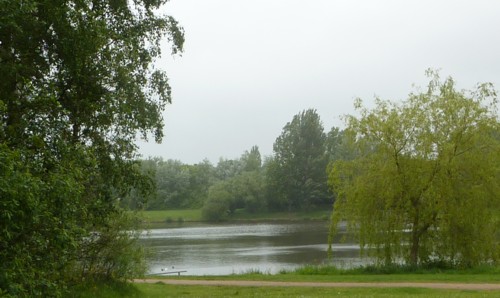
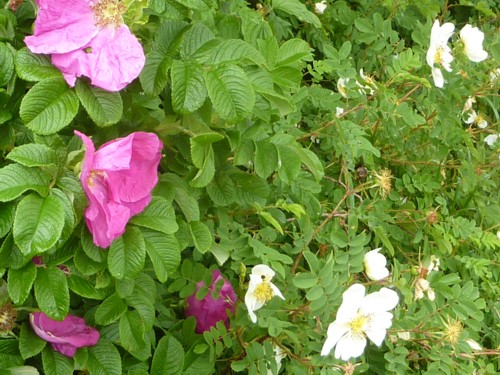
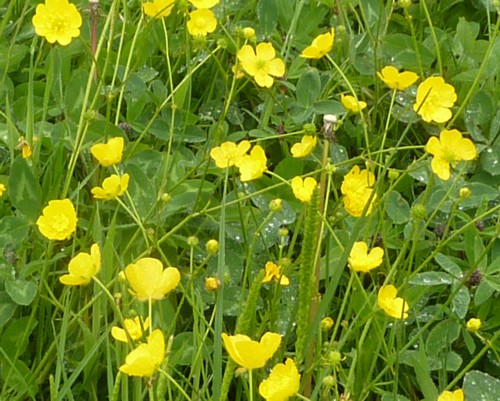
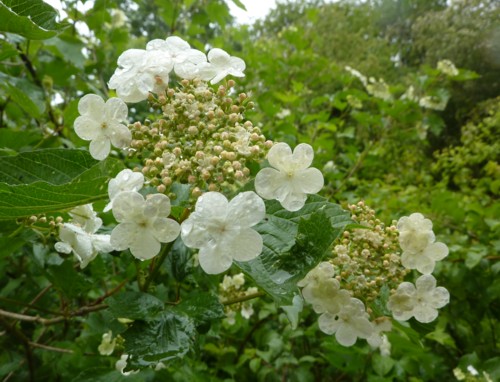
Sefton Park April 3

Just took a stroll around Greenbank and Sefton Parks. Both have many calling nuthatches and I watched three different nest holes being used by pairs. While having an ice-cream at the Boating Lake in Sefton Park I watched 5 buzzards circling together. Two stock doves fought for possession of a nesting hole for 10 minutes. By the Dell a pair of sparrowhawks soared high together and a red kite came into view and drifted south. Another buzzard, a chiffchaff and pair of nuthatches in Greenbank rounded off an eventful afternoon walk.

Posted in MNA reports | 1 Comment

Dibbinsdale 27th March 2011

Despite the change of clocks, we all made it to Central Station at 10am for the 10.15 Chester train to Bromborough Rake.

It was a still day with very low cloud and the woods would have been silent if it wasn’t for the wonderful and continuous birdsong. As soon as we started down the path we heard and saw three Jays squabbling overhead, but they were soon left behind and we were captivated by the calls and songs of Nuthatches, Great and Blue Tits, a Song Thrush, a Robin and three Great Spotted Woodpeckers.  Carpets of Wood Anemones and Lesser Celandine were just coming into bloom, but the flowers didn’t fully open until the sun shone on them later in the day. We noted that some of the Wood Anemones had pinkish flowers and that some had darker foliage than their neighbors.

dibbinsdale-wood-anemones.jpg

dibbinsdale-lesser-celandine.jpg

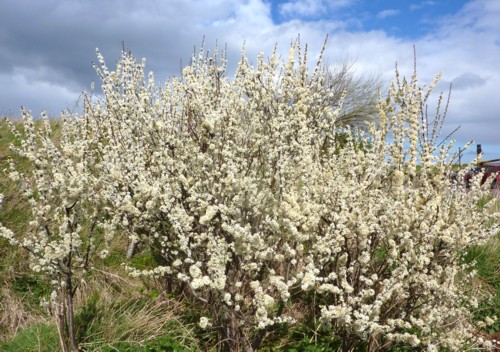
It was snowing Blackthorn petals in places, and we also saw Opposite-leaved Golden Saxifrage in the damper spots.

dibbinsdale-saxifrage.jpg

A few of the group caught a glimpse of a male Mandarin Duck in the river Dibbin, and near Boden’s Hey Meadow a Grey Heron was stalking through the marsh, so intent on frog-hunting it wasn’t alarmed by people passing by only fifty feet away. Its bill seemed to be pinkish, so perhaps it was an unwary juvenile. A Buff-tailed Bumblebee was buzzing over the flowers. During our lunch stop we saw Buzzards flying over the trees beyond the meadow, some Jackdaws in a tree, a Bullfinch, which appeared only briefly, and we heard our first Chaffinch singing.

Near the pond at the start of footpath 29 we saw a Treecreeper, then made our way over the unploughed path through a smooth harrowed field. The copses of stark bare trees reminded me of David Hockney’s recent woodland paintings. Near the far end there is a badger sett with holes in the bank, but we didn’t want to walk over to it for fear of disturbing the farmer’s perfect tilth.

dibbinsdale-badger-sett.jpg

On the way to Otters Tunnel we passed a Crack Willow tree, which had not just cracked, but spectacularly collapsed!  Then the sun came out and it must have gone to our heads because we stopped beyond the tunnel to play Pooh Sticks.

dibbinsdale-collapsed-willow.jpg

dibbinsdale-pooh-sticks.jpg

Woodslee Pond had both frogs and toads, busily mating and spawning. David fished out a bundle of toads, three small males gripping a larger female, and we feared the female was dead, or nearly so. She had been underwater without moving for quite a long time. The males were lively enough, though. When David fished out some toad spawn to take home for his garden pond, another male latched tightly onto his finger and croaked joyfully.

dibbinsdale-toad-quartet.jpg

dibbinsdale-toad-spawn.jpg

Near the car park we stopped to examine a tree with remarkable undulating bark. No idea what it was. The leaves were thick, leathery and evergreen, with occasional small spines on the edges, reminiscent of the leaves Holly bears above the reach of browsers. Any suggestions for what it might have been?

dibbinsdale-undulating-tree.jpg

We walked up to Spital station in time for the 3.15 train back to Liverpool.

Posted in Sunday Group | 1 Comment

Ainsdale 27th March 2011

A large group of 30 or so people met up at 11am with Dr Ian Wallace of Liverpool Museum where Shore Road joins the beach at Ainsdale. This was the field meeting organised as a follow-on event to last weekend’s “Shells Training” afternoon. We were given some common sense safety advice on beachcombing such as checking the tide times, taking care with the sharp edges of broken shells and avoidance of squidgy cylindrical brown shapes on the beach. We all checked we had remembered our Liverpool Bay Marine Recording Partnership Sheets; trays, sieves and plastic bags from a well known supermarket were handed out to collect our finds then we spread out and headed across the beach towards the sea.

A large variety of Shells were found including numerous Rayed Trough Shells Mactra stultorum – a large wreck of this species occurred in January along the Sefton Coast and there are still many scattered along the beach, plenty of Pod and Bean Razor Shells Ensis species, a few Otter Shells Lutraria lutraria, Common Cockles Cerastoderma edule, a few Prickly Cockles Acanthocardia echinata, White Piddocks Barnea candida and Thin Tellins Angulus tenuis.

 mna-white-piddock1.jpg

White Piddock Barnea candida

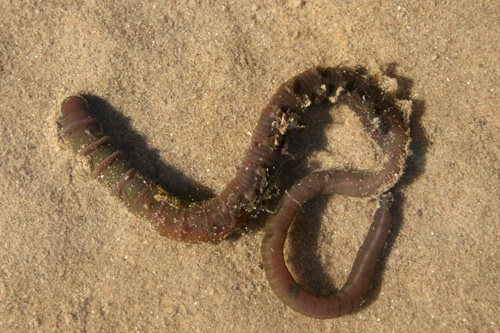
Green round gelatinous eggs belonging to the Green-leaf Worm Eulalia viridis were attached to the sand by a thread or in groups attached to seaweed. There were plenty of Sea Gooseberries Pleurobrachia pileus – the small spherical comb jelly around 2cm in diameter.

mna-green-paddle-worm-eggs1.jpg

Green-leaf Worm Eggs Eulalia viridis

A brown scum over the surface of the sand was caused by diatoms, unicellular organisms whose colouration is caused by its yellow-brown chloroplasts that enable them to photosynthesize. Indeed, tiny bubbles of oxygen produced by this process were visible above the scum. These diatoms are an important food source for some of the filter feeding molluscs.

mna-ainsdale-diatoms1.jpg

Photosynthesizing Diatoms

Dr Wallace gave us a demonstration of mud puddling in an area of quicksand much to the amusement of the children in the group. The Cockles and Tellins are moved to the surface and we watched as they began to bury themselves back into the sand.  

 mna-ainsdale-beach-survey1.jpg

We found a few Common Cockle and Rayed Trough Shells that were black in colour but otherwise appeared as normal. Anaerobic bacteria living in anoxic sediments produce hydrogen sulphide that can interact with iron in the sediment producing iron sulphides that blacken sea shells. This blackening only usually occurs on the shell surface. If more oxidising conditions and iron is present – leading to the formation of ferric oxides then shells can be stained orange.

One of the largest shells found at around 13cm was that of the Icelandic Cyprine Arctica islandica recently re-named as the Ocean Quahog. They are one of the longest lived bivalve molluscs with individuals reaching nearly 400yrs old! They live buried just below the sand with only their small siphon tube extended just above the surface of the seabed. They are an important food source for Cod and are also eaten by people in Norway and Iceland. Over the next few years, parts of the Irish Sea will be given further environmental protection in the form of Irish Sea Conservation Zones. One potential zone runs from Crosby along the Sefton Coast to Formby an area where Ocean Quahogs and Oysters have been recorded as well as the famous intertidal peat beds where Mesolithic and Neolithic footprints from humans and animals have been found.

mna-ocean-quahog1.jpg

Ocean Quahog Arctica islandica

Another interesting find was a piece of cartilaginous material possibly from a Skate and I found a small piece of the soft-coral Dead Man’s Fingers Alcyonium digitatum and the remains from a Masked Crab Corystes cassivelaunus.

 mna-cartilaginous-bone1.jpg

Cartilaginous Bone

After discussing our finds a few of us wandered along the strandline finding many Sea Wash Balls the egg cases of Common Whelks Buccinium undatum, Sand Mason Worm Tubes Lanice conchilega, Hornwrack Flustra foliacea the bryozoans with broad-lobe like fronds often mistaken for seaweed.

mna-seawash-ball3.jpg

Seawash Ball

A great introduction to the variety of ‘dead sea life’ that can be found whilst beachcombing on the Sefton Coast.

Posted in MNA reports | Leave a comment

Neston Old Quay 21/3/11

In view of an exceptionally high tide, 10.2 metres, I headed upriver for a change towards the old sandstone quay below Neston’s sewage plant. Seaward it proved rather quiet – numerous Shelduck, a dozen or so Pintail, one Short-eared Owl and four Little Egrets, busy stabbing at the water and drifting vegetation and unusually vociferous. As I wandered the fields, hedgerows and copses birds were in full song – numerous Greenfinches and Chaffinches, Great and Coal Tits, Robin, Dunnock, Song Thrush, Blackbird and at last a Chiffchaff, eventually joined by another. March is that transition month because in the paddock five Redwings were feeding in the grass by the horses.

To have my lunch and survey the flooded marsh I sat on the old quay. I hadn’t been there long when two pipits landed on the wall about 40ft away and what a contrast. One was an obvious Meadow Pipit with its boldly black-streaked underparts while the nearer bigger bird was more upright, longer-legged and with an overall sandier brown plumage and brown streaks confined to the upper breast. It was a Richard’s Pipit and so convenient to have the two birds together. They stayed for a few minutes before the inevitable dog frightened them off.

Posted in MNA reports | 1 Comment

Liverpool Bay Marine Recording Partnership

I spent an enjoyable afternoon at the World Museum in Liverpool on 19th March 2011 in the company of Dr Ian Wallace and Steve Cross on a ‘Shell Training Course.’ The Liverpool Bay Marine Recording Partnership (LBMRP) has recently been set up to record some of the common species that can be found washed up on Liverpool Bay Beaches. A handy recording sheet has been produced with photographs of the variety of shells; crabs, shrimps & other crustacea; starfish,; urchins, jellyfish; eggs; fish and seaweeds that can be found. It focuses on species found on Liverpool Bay beaches so you are not bogged down with shells etc. that may only occur in say Cornwall. Dr Wallace jokingly referred to it as the Dead Sea Life Survey as those species washed up on our beaches will be decaying or dead.

We had a brief introduction to the internal shell anatomy of bivalves, followed by the anatomy of gastropods and how to identify right and left spiralled shells. We then tested our skills using the recording sheet to identify a variety of shells and seashore debris from the museum collections.  A field day is being held at Ainsdale Beach on 27th March 2011. Meet 11am at the western end of Shore Road where it joins the beach.

Recording Forms can be obtained from LBMRP via Steve.cross@liverpoolmuseums.org.uk or write to Steve Cross, Clore Natural History Centre, World Museum, William Brown Street, Liverpool L3 8EN. Also return any completed forms to Steve who will enter the information onto a database. If you encounter something really interesting that is not featured on the recording form please send them a photo they’d be interested to know. 

mna-razorshell-group1.jpg

Pod Razor Shell Ensis siliqua

mna-turitella-communis1.jpg

An Auger Shell Turritella communis

mna-wentletraps1.jpg

Common Wentletrap Epitonium clathrus

We were invited to a quick behind-the-scenes tour of the aquarium. They had a few Common Whelks Buccinum undatum in one tank. Whelks orientate by smell and when some food was dropped into the tank they all migrated towards it with their siphon tubes waving around as they tried to locate the source of the smell.

We were also shown the re-circulation systems for the tropical and cold-water tanks in the aquarium including protein skimmers, UV sterilizers and sand filters.  IAT International Aqua-tech in Anglesey (who my brother happens to work for) designed the system. Their projects have included some of the world’s greatest aquaria such as in the Burj-al-Arab in Dubai and Shanghai Ocean Aquarium. 

We took a peek into the top of the tropical tanks when a Long-horned Cowfish Lactoria cornuta decided to take a peek back at us. Certainly not a species we’re likely to see on our beaches! but I was lucky enough to see one in Madagascar a few years back that a group of fishermen had hauled up in their nets. They thankfully don’t eat them so they kindly placed it on the sand for me to take a quick snap before returning it to the sea. 

mna-long-horned-cowfish-above1.jpg

Posted in MNA reports | 1 Comment

Carr Mill Dam 20th March 2011

It was a cool, overcast morning, with spots of rain. We went from Lime Street station on the 10.30 Blackpool train to St Helens Central, then took the 352 bus from St Helens bus station at 5 to 11 for the 20 minute ride to Carr Mill Road and the Waterside pub.

There were plenty of pairs of Great Crested Grebes out on the water, although none were dancing yet. One pair were bill-wagging, but many of the others didn’t quite seem to be in full plumage.  But there were Canada Geese, Black-headed Gulls, Coots and Mallards.  The trees were still looking wintry and the remaining leaves on the small Beech trees gave the woods an autumnal look.

carr-mill-dam-view.jpg

But some things were sprouting: Horse Chestnut buds were just breaking, Irises were shooting up at the lake margins and a patch of Coltsfoot was in bloom.

carr-mill-dam-coltsfoot.jpg

There were plenty of woodland birds like Blue Tits, Magpies and Nuthatches. We stopped to look at a hole in the elbow of a bare Oak tree which was being checked out by a pair of Blue Tits. Were they nesting? But while they were away a Nuthatch came to the same hole and the Blue Tits didn’t return.

carr-mill-dam-tree-hole.jpg

Near the bridge there was a Mute Swan on a nest and we saw a Kingfisher fly under the bridge into the bushes at the northern end of the lake, where it disappeared.

While we were eating our lunch on the bridge, a small river fly landed in Bill’s lunch box. It seemed reluctant to fly off, but after some encouragement and a rest on Bill’s knee, it flew off back towards the bank. It was a pretty thing, about half an inch long (12 mm). The nearest match in my very cursory Collins Gem insect book is to an Alder Fly, but I am open to suggestions.

carr-mill-dam-river-fly.jpg

On the track near Otter Swift Farm there are usually lots of ground-feeding birds because someone used to put food out there, but it looks like this has stopped. We saw a Robin, a Dunnock and some Collared Doves and Wood Pigeons on the way back to the lake, and Cormorants, Lapwings and Long-tailed Tits. An old oak had some bushy galls called Witches Broom and a felled Elder tree had three kinds of fungus on the stump: Alfred’s Cakes, Judas’s Ear and clusters of yellow fungi which were probably either Honey Fugus or Sulphur Tuft.
carr-mill-dam-yellow-fungus.jpg

By the slipway to the Sankey Valley we saw a Grey Wagtail, a Song Thrush and some Goldfinches.

The 352 bus outside the Waterside took us back to St Helens bus station, where we got the number 10 bus at 20 to 3 to take us back to Liverpool.

Posted in Sunday Group | 4 Comments

Waterloo 13th March 2011

On a cool, dry and sunny morning we took the 47 bus to Cambridge Road and walked through Potter’s Barn Park.

waterloo-potters-barn.jpg

We found some little red apples, the size of cherries, in the water of the disused fountain, but although Margaret looked all around the edge of the area, she couldn’t find a tree they could have come from.

waterloo-little-apples.jpg

House Sparrows were chirping and a Magpie was building a nest in a tall tree. The daffodils were glorious.

waterloo-daffodils.jpg

There was a Common Gull on the grass by the car park. We looked through the fence to Seaforth Nature Reserve and saw a Heron, several Shelduck, Cormorants, Coots and Lapwings, about five Black-tailed Godwits, an Oystercatcher, two Pied Wagtails and two Rabbits. The air was clear enough for us to see the snow on the tops of the Snowdonian mountains. The tide was half way out and several of the Iron Men were up to their knees in the sand. There is a plan to move 30,000 cubic metres of sand from Crosby to Hightown this autumn, to bolster Hightown’s coastal defences, which might give them more leg-room. See this article from the Crosby Herald.

We walked along Crosby Prom, hearing Skylarks singing, then doubled back around the Boating Lake.

waterloo-dunes-and-houses.jpg

There were Mallards, seven Tufted Ducks (four males and three females) Canada Geese and a Mute Swan without a leg ring. On the barrier across the lake were Black-headed Gulls and juvenile Herring Gulls. We left some MNA leaflets in Crosby Adventure Centre, then had our lunch in Crescent Gardens. It’s a little sun trap there, with daisies out on the lawns, and we felt warm for the first time that day. One of the group thought she saw a Small Tortoiseshell, but we couldn’t find it again. A Dunnock was singing, more Sparrows were flitting about and a pair of Wood Pigeons sat in the trees.  Later we saw a Robin and some Long-tailed Tits.

The houses along Waterloo Gardens have two blue plaques for former residents, one to Edward John Smith, the captain of the Titanic, and one to Thomas Henry Ismay, the founder of the White Star Line.

We explored all four of the gardens after lunch. The northernmost, Beach Lawn Gardens, has a clogged-up pond, where we have seen newts before, but not today.

waterloo-beach-lawn-garden-pond.jpg

It did, however, have three Common Frogs, two of them in the embrace called amplexus – the male gripping the female tightly while she lays her eggs, fertilising them as they swell into frogspawn. They had obviously been successful, as there were several masses of spawn in the pond. Only the unmated frog was willing to pose for a photo !

waterloo-frog-and-spawn.jpg

The old fountain pool in Crescent Gardens is derelict, and the Friends of Waterloo Seafront Gardens are running a competition to replace the pool with a sculpture over cobbles. Despite its neglected state, there was still life in it – a water snail, some Water Boatmen and some Dragonfly nymphs.

As we were leaving we stopped to admire a Silk Tassel bush Garrya elliptica with its long male “catkins”. It is a native of the west coast of the USA, only growing within 20 miles of the Pacific Ocean. It seemed quite at home in Waterloo.

waterloo-garrya-elliptica.jpg

Posted in Sunday Group | 1 Comment

Wigan Flashes 5th March 2011

Thirteen MNA members met at Wigan Pier before heading along the Leeds – Liverpool canal. A Robin was perched on a metal fence paying us no attention whatsoever as we walked past it. We were dismayed to see a large amount of rubbish both in the water and along the canal banks. A male Bullfinch softly ‘pheuuing’caught my attention along with a few Great Tits and a Long-tailed Tit. On Pearson’s Flash were the usual gathering of Coot, Tufties 60+, Goldeneye I counted 9 males and 14 females but they were regularly diving so I may have missed a couple, a few Teal hiding out on the reed edge and a sign of Spring on the way with a pair of Great Crested Grebes indulging in their courtship display with symmetrical head waggling. A few Buff-tailed Bumble Bee Bombus terrestris queens were flying low to the ground. The young fertilised queens survive the Winter hibernating in a hole or under moss.

Scotsman’s Flash was quiet with one of the Coots practising his threat posture ready for seeing off rivals in the mating season, a few Canada Geese, large flock of Black-headed Gulls 120+ some of which were already in summer plumage with their chocolate heads, a few Herring and Lesser Black Backed Gulls and an obliging Common Gull that perched on a buoy allowing some of the newer members to check out its identification features. We wandered down through the reedbed at the south west end of Scotsman’s Flash and into the woodland. Good selection of Tits with Blue, Great, Coal and Willow. Goldfinch were twittering away and a male Siskin was hiding at the back of one of the feeders at the feeding station. We continued round to our usual picnic spot at Ochre Flash, clearly ‘the place to be’ for the local delinquents with a tent, various flysheets, beer cans, discarded pieces of pizza and other rubbish strewn about.  

mna-wigan-flashes-debris.jpg

A pair of Mute Swans –  the resident male is fitted with a blue darvic ring FAL, another pair of Great Crested Grebes and a few Teal were keeping to the reed edge. A flock of Fieldfare 22+ were silhouetted in a tree at the back of the flash and a Grey Heron flew in shortly before we continued.

We stopped to overlook the top pool at Bryn Marsh where a couple of pairs of Gadwall were mooching. A Kestrel was hovering over the marsh later landing on one of the electricity pylons and a few of us latched onto a distant Buzzard. A lady walking her Jack Russell was kindly doing a bird seed drop on top of the fence posts. We stopped and watched as the track became alive with small birds taking advantage of the food. A Willow Tit gave great views allowing us to see the pale wing patch along with a Prune (Dunnock to the uninitiated ;), Blackbird, Chaffinch, a Jay plus numerous Blue and Great Tits. At the bottom end of Bryn Flash we watched more Gadwall and Great Crested Grebes plus some Pochard, 3 males and 1 female. We found the newly emerged yellow flower spikes of Coltsfoot Tussilago farfara that has been used historically as a medicinal plant to treat lung ailments.

Fungi finds were disappointing, only Turkey Tail, Birch Polypore and some rather past-it Velvet Shank. I did find a nice collection of Pixie-cup Lichen Cladonia fimbriata on top of a fence post.

mna-wigan-pixie-cup-lichen1.jpg

We crossed over the stone bridge and everyone checked out the erupting catkins. Fluffy Goat Willow catkins were joined by Alder – allowing us to distinguish between the small rounded female and long male catkins and last year’s female woody cones. Further along at Pearson’s Flash we made a grim discovery; a Mute Swan cygnet was lying dead on the bank. It was un-ringed and had no obvious sign of injury. Quite touchingly a few other cygnets including blue darvic YF4 and an adult Swan were floating on the water close to the dead bird obviously concerned that it wasn’t moving. Nearby on the bank was a dead Black-headed Gull, again appearing uninjured and un-ringed. Dave Bryant later called the warden Mark Champion who was aware of the dead Swan which is to be sent for tests. Some MNA members are already aware of the Mute Swan deaths at Southport Marine Lake, apparently Swans from Pennington Flash and Three Sisters are also being taken into the RSPCA facility at Stapeley Grange for treatment of the mystery infection.

mna-wigan-dead-swan2.jpg

mna-wigan-dead-bhg1.jpg

We continued into the wood where we checked out the orange rust coloured filamentous terrestrial alga Trentepohlia aurea that was covering a number of tree trunks. The typical green chlorophyll colour is masked by large amounts of carotenoid pigments.

mna-trentepohlia.jpg

Also examined the Dog Lichen, a species I have previously had confirmed as Peltigera hymenina – it is very common and some had the raised, curled, digitate lobe tips i.e. red-brown “fruiting” structures, or apothecia present.

mna-wigan-peltigera1.jpg

We were all too quickly back to civilisation…

Posted in MNA reports | 1 Comment

“Liverpool Discovers” 6th Mar 2011

We walked around Liverpool City Centre today, following the “Liverpool Discovers” public art project trail.  As there was no nature or wildlife content at all, that’s all I’ll be saying!

Posted in Sunday Group | 1 Comment

Beddmanarch Bay, Anglesey 1/3/2011

Calm weather with blue skies were forecast and so I took the train to Holyhead and made my way to Penrhos Coastal Park which is close to the causeway carrying the railway and A55. The tide was out, the remaining water was like glass, the light was excellent after so much gloom and it was quite warm. The immediate centre of attraction were the numerous Pale-bellied Brent Geese scattered along the tide line – 96 of them. Busy feeding amongst them were good numbers of Shelduck, Oystercatchers, Redshank and Curlew with the occasional Grey Plover. Downstream towards the headland of Gorsedd-y-penrhyn were the usual pair of Slavonian Grebes – cruising about and then busy diving – all at very close range. Nearby was male Red-breasted Merganser.

In the wooded area a Coal Tit and Dunnock were singing as were several Chaffinches, Greenfinches and Great Tits. Strolling along the paths I came across flowering Fumitory, Lesser Celandine, Winter Heliotrope and a great sheet of white Violets, something I haven’t seen previously. It was so warm that a Buff-tailed Bumble was very active, later to be accompanied by a Peacock butterfly.

Posted in MNA reports | 1 Comment