Bats in the Park, 23 Aug 2012

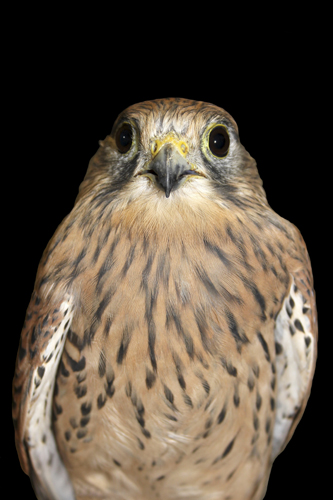
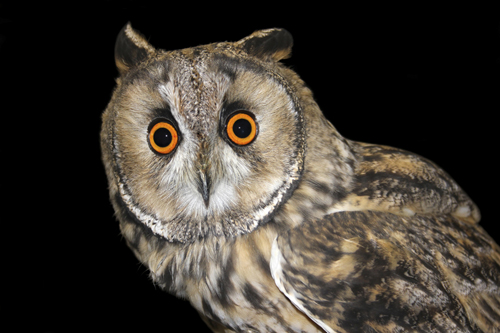
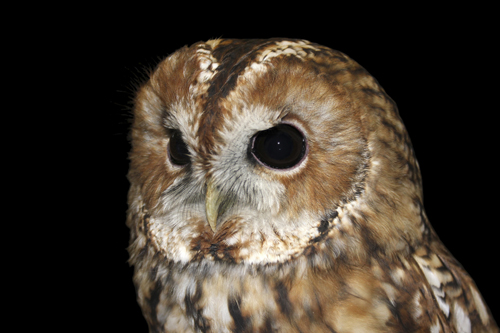
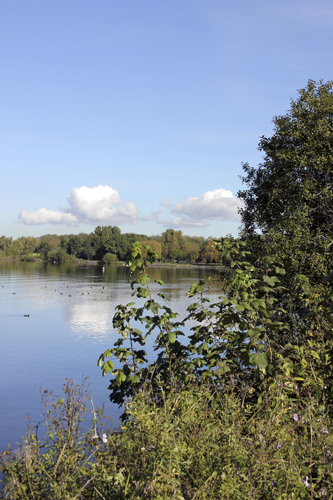
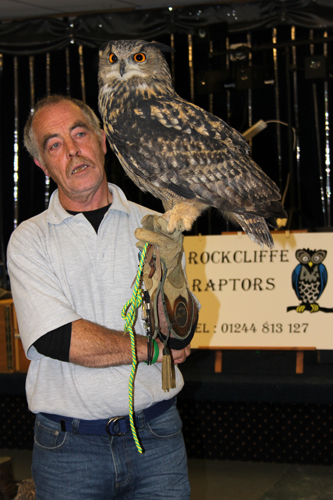
Eleven members and former members turned up at the south end of Sefton Park at 8pm. It was a perfect evening for bats – dry, warm and still. Three of us had bat detectors, so we set them to different frequencies and stolled along the west side of the lake and up to the café, detecting nothing. We spotted the Little Grebes, though, which was a first for some of the group. On the way back south we made detour up the stream to the east, where we heard the call of a Tawny Owl and Terry spotted a probable Daubenton’s bat over the narrow waterway.
The clickings from the detectors grew more frequent on the east side of the lake, some very fast, like the rude noise called a “raspberry”. Dave Hardy though those were Pipistrelles, but we didn’t see them. After some people had left, the remaining five or six of us saw and detected several more probable Daubenton’s bats over the lake, flying low and fast through a patch of pale reflected light from the sky. The clicks from the detectors were all around us now, and we turned to the lakeside trees and lit up the trunk of a pine with our torches. At least two bats were flying around at head height, clicking in the 45-50 kHz range. After a quick consultation of the FSC guide, we thought these might have been Natterer’s bats.

No Noctule bats were seen or detected, although they have been seen in Sefton Park in previous years.

A few nice pictures of British bats and their habitats are here:

Posted in MNA reports | 1 Comment

Garston Shore, 19th August 2012

24-garston-view-with-teasels.jpg

It was an overcast, muggy day, with a few spots of rain. We took the 80A bus to Banks Road / Garston Park and made our way through the Speke and Garston Coastal Reserve down to the shore path. On the mud were lots of Knot, some Redshanks, Oystercatchers, Lesser Black-backed Gulls, a few Curlews, Lapwings, a small horde of Ringed Plovers (perhaps 50-100) and one Greater Black-backed Gull. A small party of young Swallows flew south and some Goldfinches passed through. One Cormorant was sitting on a tall pole, silhouetted against the grey river. (Tracey Emin was paid megabucks for a sculpture just like this!)

24-garston-cormorant.jpg

We walked southwards along the shore path between wild edges of Bracken, Reeds, Bindweed, Nettle and Rose Bay Willowherb. There are very few Cinnabar Moth caterpillars on the Ragwort this year, so it’s blooming beautifully. Spear Thistle, Wild Mint, Common Bistort, Teasels, and Yarrow with some pinkish flowers caused (according to my book) by cross-pollination from garden cultivars.

24-garston-spear-thistle.jpg

Spear Thistle

24-garston-wild-mint.jpg

Wild Mint

24-garston-common-bistort.jpg

Common Bistort

24-garston-pink-yarrow.jpg

(Pinkish) Yarrow

The only butterflies we saw were one each of Gatekeeper and Meadow Brown.

24-garston-golden-mound.jpg

In a small park near the B & M warehouse there is a path leading back to the old airport building. When they landscaped it the men with the diggers had fun making rows of mounds on either side of the path, and now it looks like a processional way lined with the burial mounds of ancient kings. Some flowers prefer the drier conditions on top, so some of the mounds are capped with gold. At the back end there is an area like an amphitheatre with four mounds arranged like a star.

24-garston-four-mounds.jpg

We tried to get into Speke Hall by the back way but the gates were welded shut. Someone has decided that all visitors will come in through the turnstiles!  It was drizzling then, so we headed back to town. On the way back we admired the rows of mature trees along Brodie Avenue which were just starting to turn red with autumn. Were they planted after City Engineer Brodie died in 1934 or are they younger than that? There were once tram tracks down the middle of Brodie Avenue so perhaps the trees weren’t planted until the tram tracks were taken up (in the 1950s?).

Posted in Sunday Group | 1 Comment

Little Crosby, 12th August 2012

From Hall Road station we walked along Hall Road East, admiring the houses and gardens. The Rowan berries are red now and the blackberries are ripening. At the junction of Manor Road a narrow path leads through nettles and brambles into the fields around Little Crosby.  It was cooler, overcast and breezy, but we expected it to be sunny later.

23-little-crosby-willow-ditch.jpg

23-little-crosby-blackberries.jpg

We took the left-hand path towards Sniggery Wood, crossed the footbridge over the ditch and entered the wood. It’s quite narrow, with light coming in on either side, but silent and without much wildlife. There were some bird boxes up, and I saw a Robin earlier in the week, but nothing today. The wood is apparently the haunt of groups of anti-social lads who camp and drink. We emerged onto the path to return to Dibb Lane, and spoke to a dog walker who said there is a regular Barn Owl over the fields and that he had seen Weasels playing on Ackers Lane.
23-little-crosby-flax.jpg

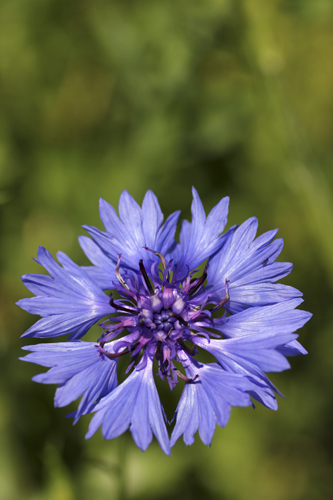
On the south-west side of the path was a meadow with sparse wheat and wildflowers, including a lovely blue one which may have been Perennial Flax. The field of Oil-seed Rape had recently been harvested, while the potato field to the south was in flower. The only birds were two Lapwings and a Wood Pigeon. The rain started then, and just as we got to Little Crosby Village there was a heavy downpour, so we dived into the Wellbarn and through an open door into the office of a small aromatherapy business called Carribean Essentials.
We had a damp lunch in the churchyard then walked up Delph Road where there are two big buddleias. Earlier in the week I’d seen a Peacock and a Comma, but there was only a Green-veined white today. On the lawn at the back of The Courtyard restaurant  we saw a Blackbird and a Robin.

23-little-crosby-garden.jpg

Then the sun came out as we made our way back along Dibb Lane. The long hedge was full of Wild Roses and ripening Rose Hips. About a dozen white butterflies and a Meadow Brown emerged into the sunshine. The young Swallows were out too. Along the path leading to Sniggery Wood a Magpie was stalking slowly, hunting for something. Then a Moorhen passed us in heavy flight, long legs dangling, heading for splashdown in the ditch.

23-little-crosby-wild-roses.jpg

23-little-crosby-white-butterfly.jpg

At home, the first Peacock of the year was feeding on my own Buddleia.

Posted in Sunday Group | 2 Comments

Haskayne, 11th August 2012

Report from John Clegg

Six members travelled out by bus from Liverpool and were joined at Haskayne by a further five.  On a sunny and warm day the walk started off with a Buzzard flying high, with a large number of Swallows over the fields. Yellowhammer were singing in the fields and we finally saw one at the lunch stop among the wildflower meadow of Haskayne Cutting LNR.  There was an abundance of butterflies there, too.

After lunch Sid found he had been sitting on a nest of Yellow Meadow Ants!  Just as the group was leaving the cutting Chris Butterworth spotted a female Southern Hawker laying eggs into a small pool.

We continued along the Leeds-Liverpool canal, where there was a large number of young Mallard. A high point was a good close view of a Banded Demoiselle.

Seen on the day:
Birds (25 species). Wood Pigeon, Swallow, House Martin, Carrion Crow, House Sparrow, Kestrel, Robin, Greenfinch, Lesser Black-backed Gull, Dunnock, Yellowhammer, Heron, Chaffinch, Goldfinch, Buzzard, Collared Dove, Starling, Mallard, Coot, Moorhen, Mute Swan, Magpie, Blackbird, Black-headed Gull and Hobby.
Butterflies (15 species). Large White, Green-veined White, Speckled Wood, Peacock, Meadow Brown, Gatekeeper, Comma, Painted Lady, Ringlet, Small Skipper, Holly Blue, Common Blue, Small Tortoiseshell, Small White and Small Copper.
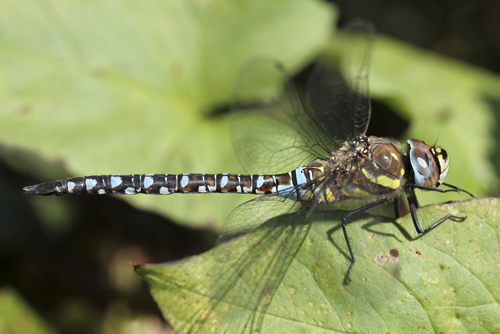
Dragonflies and Damselflies (5 species). Banded Demoiselle, Common Blue Damselfly, Common Red Darter, Brown Hawker and Southern Hawker.

Posted in MNA reports | 1 Comment

Sefton Park, 5th August 2012

22-sefton-park-flowers-and-cottage.jpg

It was a very hot and sunny day, with the threat of thundery showers, but we missed one downpour whilst we were on the bus. The park lake had only pigeons at the south end, but there were lots of Black-headed Gulls and Coots at the top. I counted five Coot nests, some of them still with youngsters, since Coots nest all through the summer. One Mallard had four very late ducklings. There was a Mute Swan and a well-grown cygnet on the island, some Canada Geese, a Moorhen and just one Little Grebe. I got rid of the last of the duck and swan food to the BHGs, who dived for it enthusiastically, and the very last crumbs went onto the bird table by the Palm House.  Near the bandstand in the upper lake, a very young Heron posed picturesquely on the bank.

22-sefton-park-view-with-heron.jpg

The terrapins were probably all removed when the lake was drained a few years ago, but the rats are still flourishing. One was creeping out of a crevice under a rock to snaffle turnip peelings left by someone. Did they think the birds would eat it?

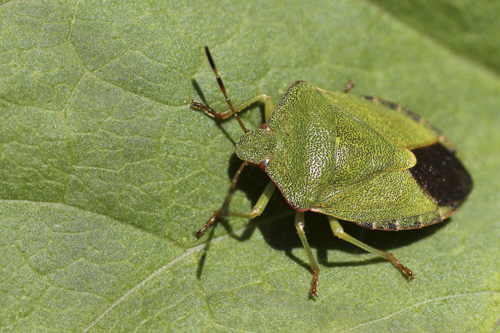
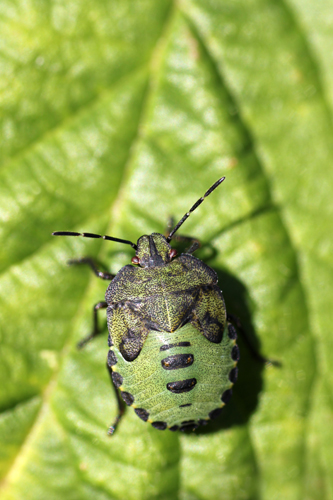
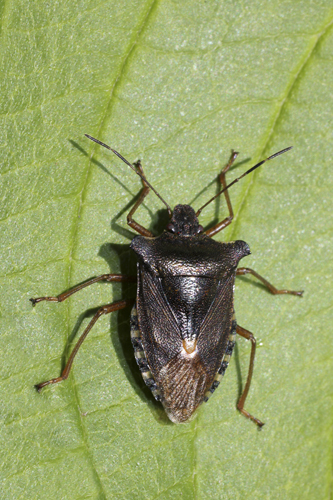
The gardeners are allowing much of the grass to grow long and the lake banks are full of natural wild flowers. This may be why we saw more insects than usual. There were two species of butterfly, a Green-veined White and a Ringlet, plus a Brown Hawker dragonfly and a damsel fly, possibly a Blue-tail. Clouds of midges or gnats were circling over the water. On the railing I spotted a splendid brown Shield Bug with an orange and brown edging. I think it was Pentatoma rufipes, a common and widespread species which usually lives in trees. It was hopefully climbing up each semi-circular rail top, only to find itself guided down again.

22-sefton-park-shield-bug.jpg

At the Eros statue we were reminded of the flights of fancy of the former Park Ranger, Ritchie Baker, who always asserted that it was “Eros’s younger brother”

22-sefton-park-eros-younger-brother.jpg

The wildflower bank by the Palm House was looking past its best, and the only creatures were the little animals on the Peter Pan statue – mice, frogs, and a lizard. But we nodded to the statues of the secular saints of natural history, Darwin and Linnaeus.

22-sefton-park-linnaeus.jpg

A brief thunderstorm overtook us in the Dell, and as we sheltered under the trees we spotted the Moorhens and Squirrels doing the same under the Rhododendrons.

Posted in Sunday Group | 1 Comment

More pictures from Long Mynd

Chris Derri has sent me some of his pictures from the coach trip to Long Mynd on 21st July.

long-mynd-ringlet.jpg

Ringlet butterfly

long-mynd-raven.jpg

Raven

long-mynd-redstart-juv.jpg

Juvenile Redstart

long-mynd-willow-warbler.jpg

Willow Warbler

long-mynd-kestrel-female.jpg

Female Kestrel

long-mynd-green-splenwort.jpg

Green Splenwort

long-mynd-common-lizard.jpg

Common Lizard

Posted in MNA reports | 1 Comment

New Brighton, 29th July 2012

21-new-brighton-lifebelt.jpg

It was raining hard before we set out, but by the time we emerged from the train at Wallasey Grove Road it had mostly cleared up, and we were greeted by a Goldfinch singing on a telegraph wire.

Today’s birds included Magpies, Starlings and Carrion Crows on the grass and Oystercatchers, Redshanks, one Cormorant, Herring Gulls, Lesser Black-backed Gulls and Black-headed Gulls on the beach. Some of the BHGs have nearly lost their black head feathers already. Two big brown LBB chicks were begging from their mother. She got fed up and flew away for a dip in a tidal pool but they pursued her relentlessly.

21-new-brighton-cockle-bits.jpg

All along the Coastal Drive we noticed the joints in the pavement were full of bits of cockle shell. Have the gulls or crows been dropping them from a great height to break them? A Carrion Crow flew past with one in its beak and we watched it hopefully to see if it would do the trick for us, but it took it over to the grass to fiddle with.

The only butterfly we saw was a Small White, and there were no Cinnabar moth caterpillars on any of the Ragwort. But House Martins were flying about near the Lifeguard station so there must be some insects about.  Parties of Dads and sons were taking advantage of the breezy sunshine to go crabbing, using fresh bacon as bait. It’s the crab’s favourite, we were assured. This weekend was the 11th National Whale and Dolphin Watch. We didn’t see any whales, but near the breakwater a sculptor had carved three pieces of driftwood into a row of leaping dolphins.

21-new-brighton-dolphin-sculptures.jpg

Posted in Sunday Group | 1 Comment

Added pictures

Just a note that I have added some extra pictures by Chris Derri.
To Potteric Carr on 7th July I’ve added two Longhorn Beetles and a Picture-winged Fly.
To Cemlyn Bay on 23rd June I’ve added an Arctic Tern and a Sandwich Tern.

Posted in MNA reports | 1 Comment

Gorse Hill, 22nd July 2012

20-gorse-hill-sign.jpg

Off to Gorse Hill Nature Reserve, near Ormskirk, on a hot and sunny day. We took the train to Aughton Park, the stop before Ormskirk, and headed for Aughton Church. Just opposite, a footpath leads up through barley fields to the reservoir. House Sparrows were tweeting in the shrubbery opposite the church, a few young Swallows swooped above, and we were interested to see a large number of Banded Snails clustering on dried umbellifer stalks.

20-gorse-hill-snails.jpg

The gate to the reservoir was secured with an amazing set of 10 padlocks.

20-gorse-hill-padlocks.jpg

Further along we went through a field of very confident and inquisitive black ponies. One tried to get into Olive’s backpack, one gave Sheena a “friendly” nip on the arm and two clustered around the stile, making it hard to get over the stile and away from them!  But then we were in amongst the farmer’s fields. One was growing two types of Kale, the normal green curly variety, and the taller and darker Black Tuscan kale. We saw ripening fields of all three main grains – wheat, oats and barley, the barley catching the sun and looking as if it was made of bronze.

20-gorse-hill-barley.jpg

We had lunch on a verge near the top of Gaw’s Hill. Although only 81 meters (265 feet) high, the Lancashire Plain is otherwise so flat that we could see Blackpool Tower and the funfair ride called The Big One on the horizon. Butterflies were scarce. We saw just one Painted Lady and a couple of Meadow Browns. Back in the woodlands we heard Greenfinch singing, a few young Great Tits cheeped in the bushes and, our best bird of the day, a Yellowhammer which was calling, then seen perched on a wire.

20-gorse-hill-road-and-oats.jpg

Posted in Sunday Group | 1 Comment

MNA Coach Trip Long Mynd 21st July 2012

mna-long-mynd-sheep1.jpg

Fifteen members joined the MNA Coach Trip to Long Mynd, Shropshire. We parked in the National Trust car park in Cardingmill Valley, Church Stretton where a yaffling Green Woodpecker greeted our arrival. House Martins and Swallows were buzzing overhead and Coal Tits were in the conifers.In order to escape the crowds we took the path up the adjacent valley called Townbrook Hollow. The climb followed a small stream that attracted patrolling Common Hawker Aeshna juncea  and Golden-ringed Dragonfly Cordulegaster boltonii with Butterflies including Large White Pieris brassicae, Small White Pieris rapae, Meadow Brown Maniola jurtina, Ringlet Aphantopus hyperantus and Small Heath Coenonympha pamphilus. Although steep in places between huffing and puffing along some members glimpsed Common Lizard Lacerta vivipara and plenty of interest for the botanists with Tormentil Potentilla erecta, Harebell Campanula rotundifolia, Wild Thyme Thymus polytrichus, Heath Bedstraw Galium saxatile, Bog Pimpernel Anagallis tenella, Monkey Flower Mimulus guttatus, Herb Robert Geranium robertianum, Wall Speedwell Veronica arvensis, Common Catsear Hypochaeris radicata, Bilberry Vaccinium myrtillus, Enchanter’s Nightshade Circaea lutetiana, Sheep’s Bit Scabious Jasione montana and Sand Spurrey Spergularia rubra.

mna-long-mynd2.jpg

Eventually we all safely reached the moorland above and were joined by a rather friendly Sheep that bleeted in hope of a few scraps whilst we ate lunch – its mates dung attracted the inevitable Yellow Dung Fly Scatophaga stercoraria. A noticeable passage of Meadow Pipits, Whinchat, two male Stonechat, Northern Wheatear, two unusually silent Ravens gliding close overhead were joined by some spectacular raptors – Common Buzzard, Peregrine, Hobby – looking Swift-like and agile, swooping to catch Dragonflies and one particular feisty individual having a go at two Kestrels that dared to be in it’s patch. Some of the group decided to return on the path down Ashes Hollow towards Little Stretton – it turned out to be rather precarious in places and what had been mere streams in the recce had swollen into mini-rivers with recent rains. The remainder of the group tromped across the moor spotting a Ichneumon Wasp, a few Dark Green Fritillary Argynnis aglaja and various Moths including Bordered Straw Heliothis peltigera, Spinach Eulithis mellinata and Bilberry Tortrix Pasiphila debiliata. Chris Derri caught a number of Micromoths that he later identified as Scoparia pallida, Scoparia pyralella, Donacuala forficella and Ancylis unguicella. We reached a small copse of trees which held Redstarts including some juveniles, Chiffchaff, Goldcrest, Wren, Chaffinch, Goldfinch and a Buzzard feather.

mna-buzzard-feather1.jpg

Buzzard Feather

An adjacent acidic boggy pool held Floating Club-rush Eleogiton fluitans and was surrounded by some impressive Sphagnum Moss had another Moth – Brown China Mark Elophila nymphaeata and a few Damselflies Emerald Damselfly Lestes sponsa and Common Blue Damselfly Enallagma cyathigerum.

mna-long-mynd-pond1.jpg

A couple of locals with a dog directed us onto another track that also returned to Little Stretton via a fantastic route that provided great views across the moors to various peaks and ridges.

mna-long-mynd1.jpg

En route we noted the rather bloated corpse of a Common Shrew Sorex araneus and a few Fungi – Brown Puffball Bovista nigrescens and Sulphur Tuft Hypholoma fasciculare.

mna-long-mynd-shrew1.jpg

Common Shrew

On reaching the picturesque village of Little Stretton we found to our dismay that the Ragleth Arms – country pub complete with obligatory hanging baskets and union jack bunting – was closed! Thankfully our driver kindly drove us back along to Church Stretton to the King’s Arms where we indulged in a pint or two before the journey back to Liverpool. 

mna-long-mynd-hanging-baskets1.jpg

Posted in MNA reports | Leave a comment