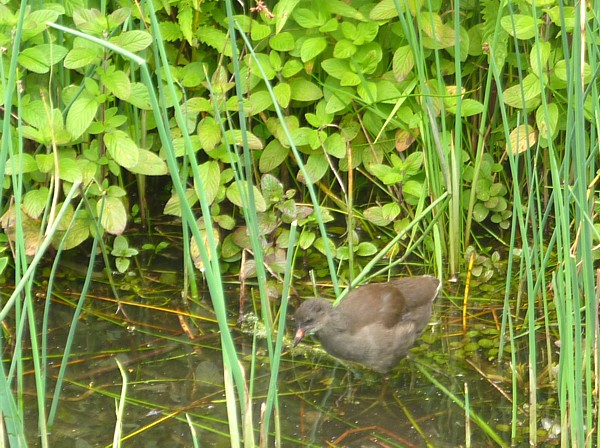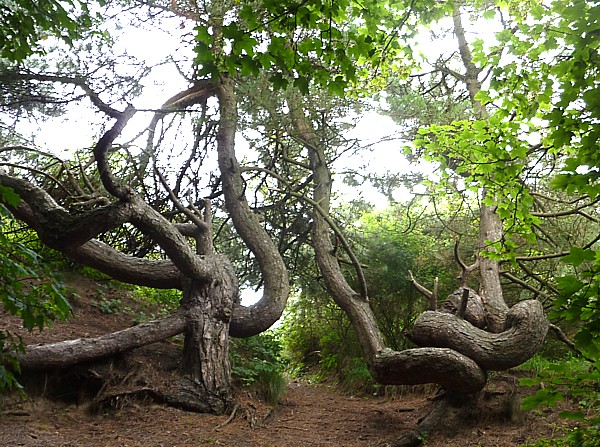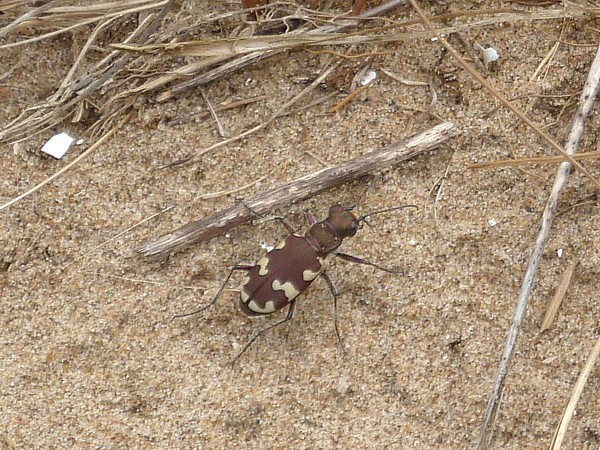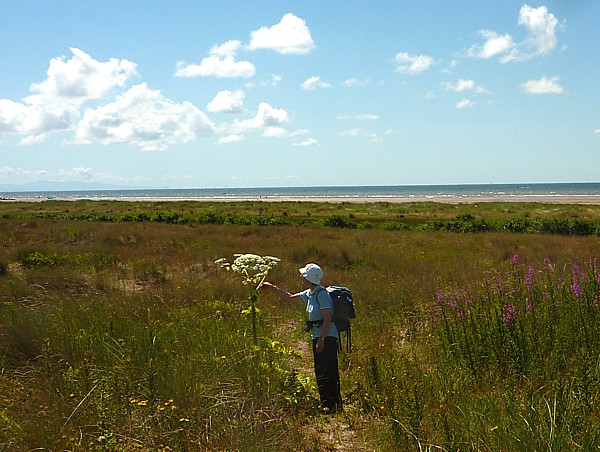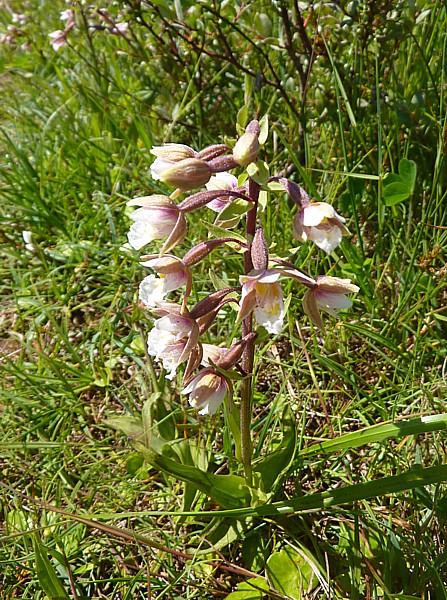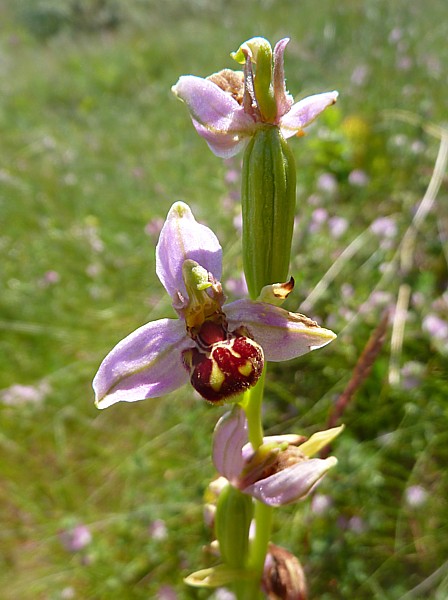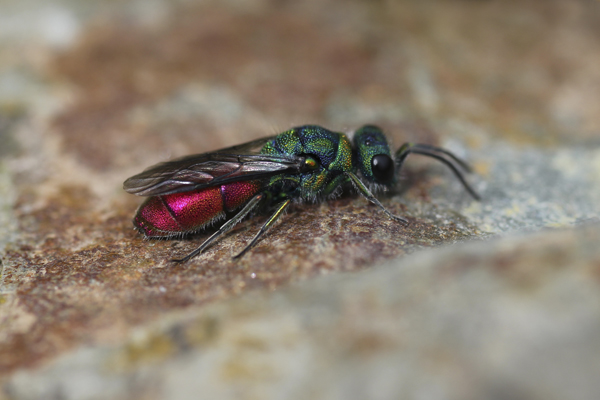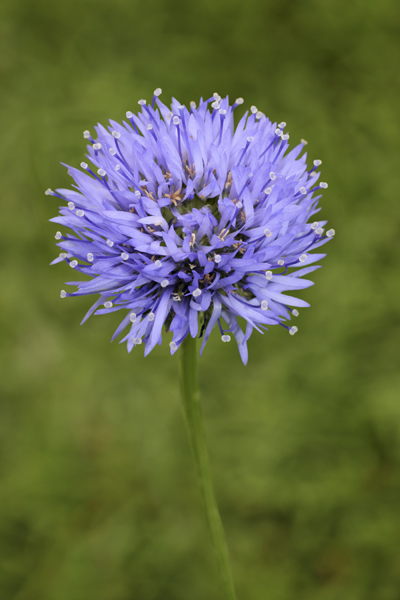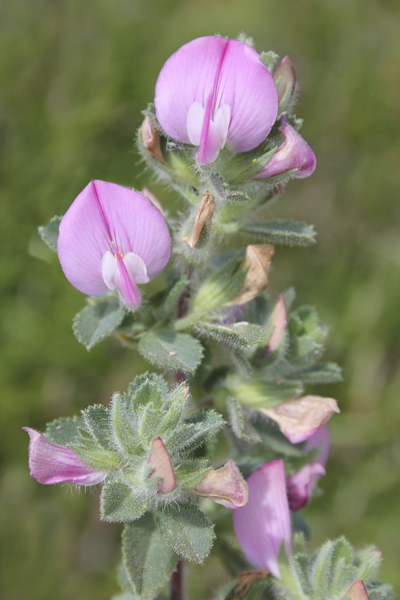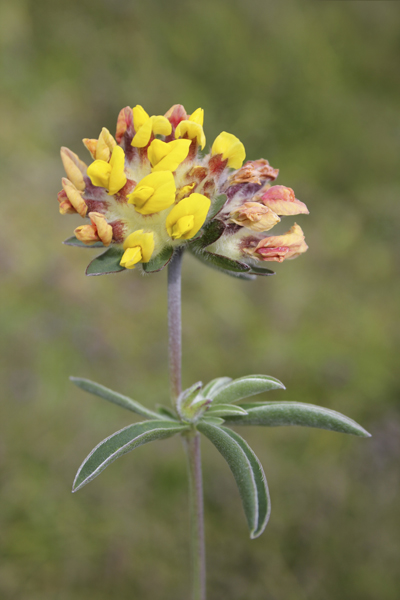
Hilbre Island, 14th June 2014

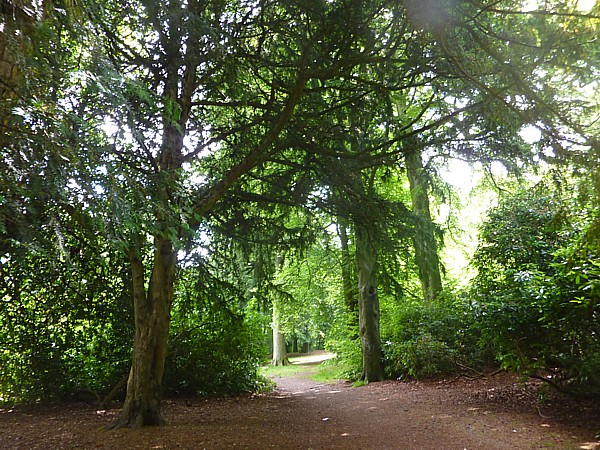
From David Bryant: A cool breeze and low cloud accompanied our walk out to Hilbre and persisted much of the morning. As the tide advanced around the island Common Terns flew by with their screeching calls while to the north Gannets flew west, some much closer than usual. One settled on the water, only to splash about and begin preening. Two other birds flew past from an upriver direction which is rather unusual.

The commonest birds on Hilbre were half a dozen Linnets flitting about and Meadow pipits, some indulging in their song flight which attracted our attention. A Dunnock sang from the roof of the bird observatory, Swallows swooped low over the springy turf and a female Stonechat made a brief appearance in the Bracken.A pair of Great Crested Grebes swam slowly by towards Red Rocks. On the ebb tide four Little Egrets settled in one of the shallow gutters. One of the highlights was a male Scoter at the north end during the afternoon when blue skies prevailed; extremely close in, so that its admirers could easily see the yellow tip to the bill. Earlier we had had a female towards Middle Eye and a string of 16 flying towards the wind turbines.

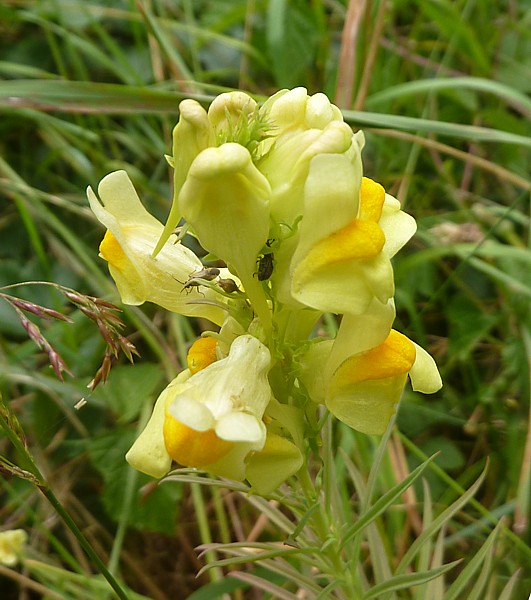
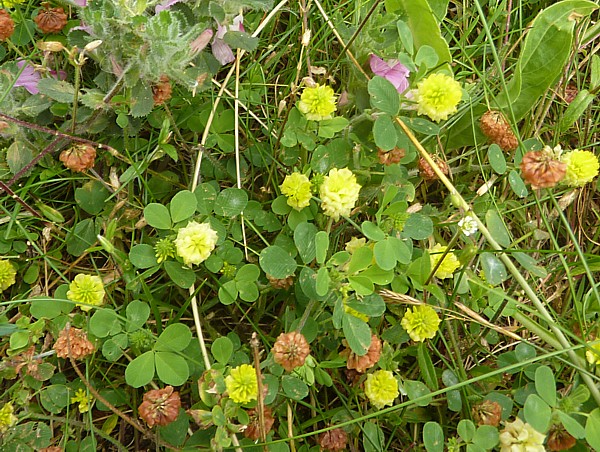
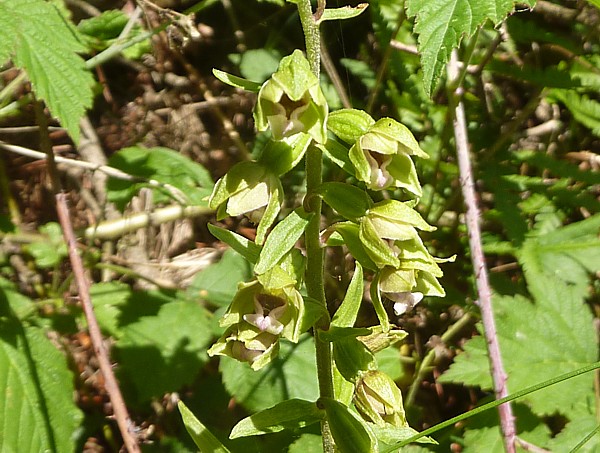
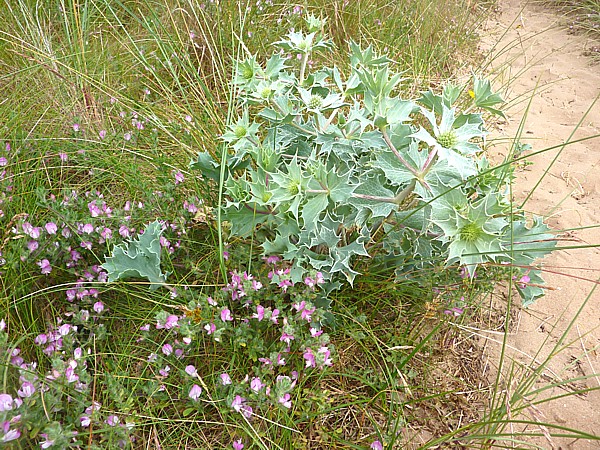
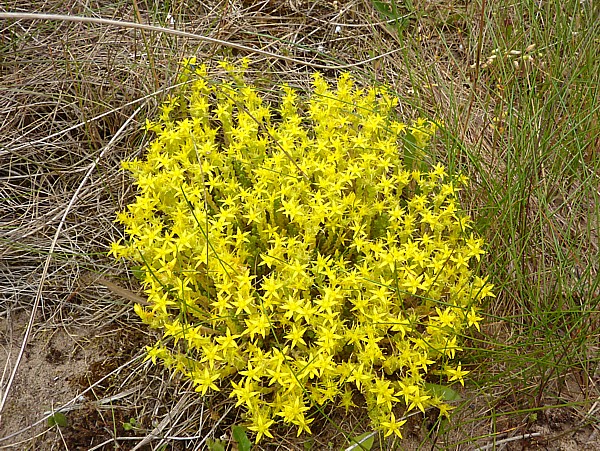
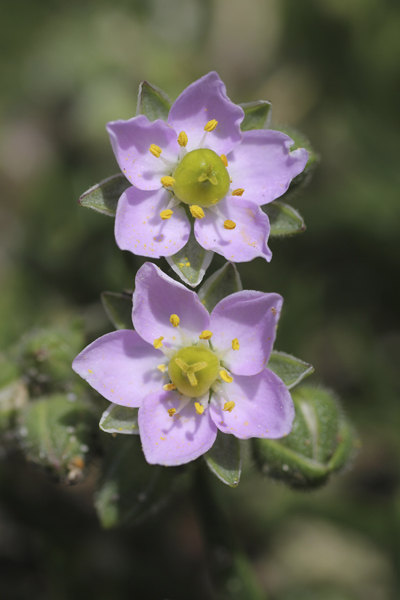
The flora put on a good show with Sea Pink, Thrift, Common Centaury, Rock Sea Spurrey, Heath and Ladys Bedstraw, Pignut, Lesser Stitchwort, Common Scurvey Grass and three Plantains – Ribwort, Sea and Buckshorn. Naturally we couldn’t visit Hilbre without looking up its two specialities, namely Rock Sea Lavender and Sea Spleenwort fern which prefer the bare rock.

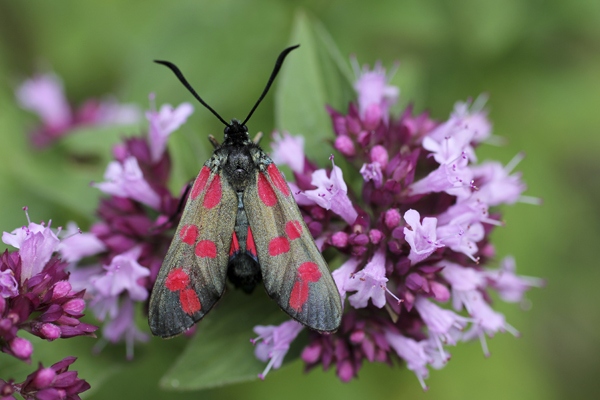
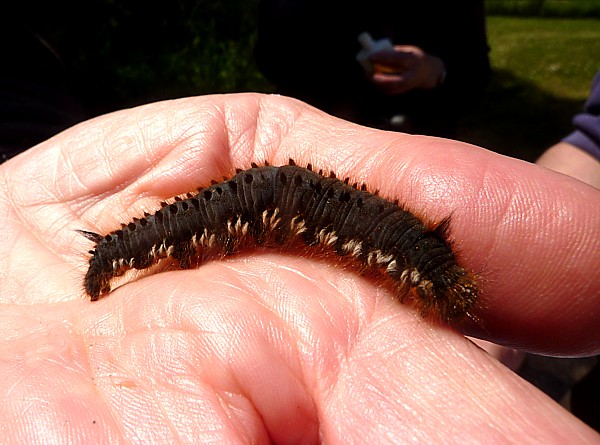
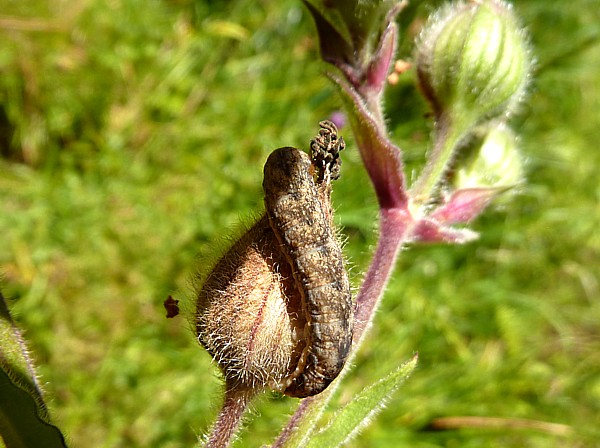
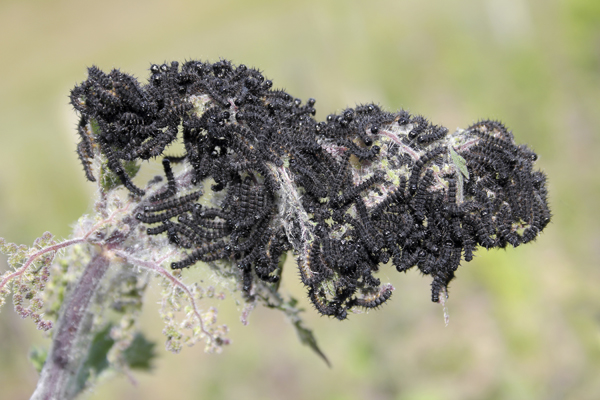
Variety was added to by a large Common Frog, several gaudy Cinnabar Moths, a Short-tailed Vole speeding along a well-defined run in the grass and five very hairy, chestnut and black Garden Tiger caterpillars, their speed of movement astonishing their observers!

Caterpillar Garden Tiger Christine Barton


A spectacular conclusion to the day was Christine Barton’s discovery of large numbers of colourful caterpillars in the Brambles and shrubs around the observatory which proved to be those of the Yellow-tailed Moth – a small white moth with a yellow tip to the abdomen.

Caterpillar Yellow tailed moth Christine Barton

Pictures by Christine Barton

Posted in MNA reports | Comments Off on Hilbre Island, 14th June 2014

MNA Holiday East Anglia June 2014

Plenty of highlights on the MNA holiday to East Anglia during the first week in June. Raptors included Marsh Harriers, Hobby, Red Kite, Buzzard. Nightjars and roding Woodcock at dusk close to the Wolferton Triangle. Common Cranes at the Lakenheath RSPB Reserve. Stone Curlews nr RAF Lakenheath and at Minsmere RSPB Reserve. Booming Bitterns and fantastic flight views as they glided across the reeds at Lakenheath and Minsmere. Plenty of reedbed birds with Reed, Sedge, Cettis Warblers and Bearded Tits giving great views. An atypical Reed Warbler put on a fine Marsh Warbler impersonation at Cley mimicing everything from Black-headed Gull, Sandwich Tern, Oyks and Beardies aswell as its speeded up typical Reed Warbler phrases. Dartford Warblers posing on the heather at Dunwich Heath. We even had time to twitch the Spectacled Warbler at Burham Overy!

Mammals included Brown Hare Lepus europaeus, Roe Deer Capreolus capreolus, Red Deer Cervus elaphus, Chinese Muntjac Deer Muntiacus reevesi andChinese Water Deer Hydropotes inermis inermis.

Some memorable Dragonflies with Norfolk Hawker Aeshna isosceles, Hairy Dragonfly Brachytron pratense, Scarce Chaser Libellula fulva and Red-eyed Damselfly Erythromma najas being new ticks for me along with Swallowtail Butterfly Papilio machaon britannicus at Strumpshaw Fen RSPB reserve.

Here’s a few minibeast photos from the trip

MNA Norfolk Blue Tailed Damselfly1

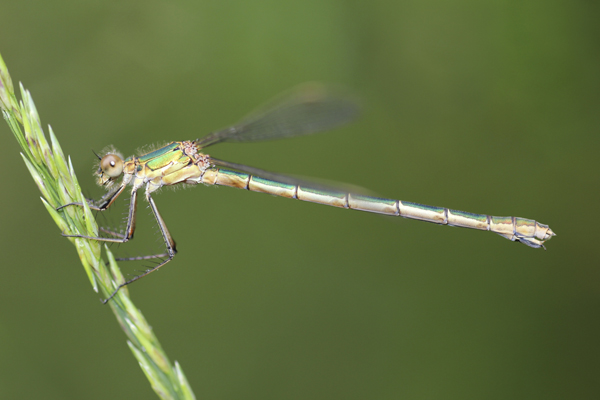
Blue-tailed Damselfly Ischnura elegans Immature violacea form

MNA Norfolk Blue Tailed Damsel Orange Form1

Blue-tailed Damselfly Ischnura elegans Female rufescensobsoleta form

MNA Norfolk Variable Damselfly2

Variable Damselfly Coenagrion pulchellum Male eating prey

MNA Norfolk Variable Damselfly1

Variable Damselfly Coenagrion pulchellum Female dark form

MNA Norfolk Brown Tail Moth Caterpillar1

Brown-tail Moth Euproctis chrysorrhoea caterpillar

MNA Norfolk Drinker Moth Caterpillar1

Drinker Moth Euthrix potatoria caterpillar

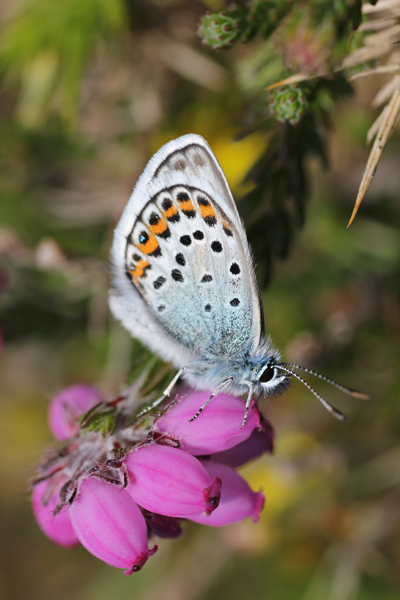
MNA Norfolk Common Blue1

Common Blue Polyommatus icarus

MNA Norfolk Dragonfly1

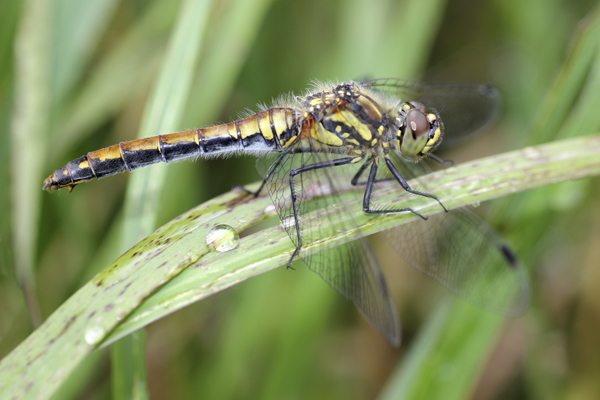
Black-tailed Skimmer Orthetrum cancellatum teneral Male

MNA Norfolk Mating Tiger Craneflies1

Mating Tiger Craneflies Nephrotoma appendiculata

MNA Norfolk Mayfly1

Mayfly Ephemera sp.

MNA Norfolk Moth1

The Snout Hypena proboscidalis

MNA Norfolk Small Tortoiseshell1

Small Tortoiseshell Aglais urticae female laying eggs

MNA Norfolk Stretch Spider1

Common Stretch Spider Tetragnatha extensa

MNA Norfolk Crab Spider1

Crab Spider Xysticus ulmi 

MNA Norfolk Thick Legged Flower Beetle1

Thick-legged Flower Beetle (a.k.a. False Oil Beetle) Oedemera nobilis male

MNA Norfolk Volucella pellucens1

Hoverfly Volucella pellucens

A wide photographic selection of birds, marine life, insects, mammals, orchids & wildflowers, fungi, tribal people, travel, ethnography, fossils, hominids, rocks & minerals etc. is available on my Alamy webpage

Posted in MNA reports | Comments Off on MNA Holiday East Anglia June 2014

Images this spring from Ken Lewis

Ken says: I thought you would like to see some of my images taken this year.

Black Grouse Lekking
Black Grouse Lekking on Ruabon Moor

Black Grouse Fighting on the Lek
Black Grouse fighting on the Lek

Grebes Mating
Great Crested Grebes at Carr Mill Dam, mating

Grebes Feather Feeding
Great Crested Grebes feeding a feather to a chick

For more pictures by Ken, see his website at KEL Images.

Posted in MNA reports | Comments Off on Images this spring from Ken Lewis

Roby, 1st June 2014

24 Roby path


It was a scorcher today, hot with bright sunshine. We set off southwards along the footpath called Carr Lane, with a Robin calling. It’s a narrow path, thickly grown with a luxuriant mass of Goose Grass, Japanese Knotweed and Nettles. There was Wood Avens going to seed, with the hooks to catch on to passing legs and disperse. A Greenfinch was calling, the Brambles were just coming out and there seemed to be lots of Green-veined white butterflies. At the end of the path there is a tall footbridge over the M62, and on the far side a big Bramble patch with lots of Red-tailed Bumble Bees and Common Blue Damsel flies.
(Added 17th June 2014. David Bryant commented “Your excellent photo of a damselfly is in fact the Azure not the Common Blue – only a small diagnostic splits them!” Thanks David – I have looked at my FSC identification card and I still can’t see the difference. Good job an expert is on the case!)

24 Roby Common damsel

Nearby in a damp patch were several orchids. The first, with plain leaves, is a Southern Marsh Orchid I think, but nearby was a paler, purpler one with spotted leaves.

24 Roby Orchid Southern Marsh

24 Roby Orchid 2


A small pond contained lots of frog tadpoles. The yellow stripy sedge was gorgeous, and over it flew dozens of Common Blue damselflies, perhaps hundreds. Yellow Flag Iris was in bloom and we heard the song of a Sedge Warbler.

24 Roby pond

The path continued through fields of rape, mostly gone to seed. By the verge was Scentless Mayweed. Swallows, House Martins and a Swift collected insects, and there were two Buzzards overhead. One was carrying something – a pigeon? It flew off north westwards, over the motorway towards Page Moss, being mobbed by a Lesser Black-backed Gull. Further on, on a mound of fresh bare earth that may have been dumped topsoil, a single Lapwing was being menaced by two Magpies. Did she have eggs? There was a lot of dodging to and fro, and we think the Magpies got something, because the Lapwing eventually flew off. Near our lunch spot two Rabbits ran off up the path and a clump of Comfrey was full of bees. Mostly White-tailed, I think.

24 Roby White-tailed on Comfrey

We carried on westwards and expected to come out at the open ground marked on my old A-Z as “Sports Ground” next to Edenhurst Avenue. It was all fenced off with big red signs saying it was private. We managed to get out near Dauntsey Mews, and a lady with a dog said the fence had been up about a year, the locals had had no warning and they don’t know what’s planned for the site. Along Sarum Road we admired a big seed head of Goatsbeard, then spotted a black infestation around several of the leaf/stem junctions. There were ants running about over them. Could it be Black-bean aphids, which gardeners call blackfly?

24 Roby infestation

Leaves of a Common Lime tree had developed tall red blobs. It’s called Lime Nail Gall and is caused by the gall mite Eriophyes tiliae.

24 Roby Lime nail gall

Court Hey Park had a Swedish Whitebeam with its flowers just going over, and we also noted the delicate leaves of a Pin Oak. There was a Wren on the fence, Wood Pigeons on the grass, a Robin darting out of the shrubbery to peck at a patch of breadcrumbs, a Carrion Crow on the path and a Great Spotted Woodpecker flying overhead. In the flower verge outside the National Wildflower Centre we saw Fox-and-Cubs, Kidney Vetch and Viper’s Bugloss. One large Peacock butterfly and several male Common Blues were flying about. We wondered where the females were, but they are said to be less active at this time, resting or egg-laying.

24 Roby Common Blue

There was a clump of Lady’s Mantle, more Hop in the hedge and this special grass which I think is Greater Quaking Grass Briza maxima.

24 Roby quaking grass


Public transport details: We planned to get the 61 bus from Queen Square, but a sign said it was being diverted. So we went to Lime Street and got the 10.15 train towards Manchester Airport, which arrived at Roby Station at 10.25. Returned on the 61 bus from Roby Road, Court Hey Road at 2.55, arriving Queen Square 3.15.

Posted in Sunday Group | Comments Off on Roby, 1st June 2014

Cynwyd, Wales 27th May 2014

Richard Surman, Dave Bryant and I headed over to Wales driving through Corwen and onto Cynwyd where we passed through the village for a mile before climbing a narrow road for another mile parking at the end beside a barn. The raptor list soon began with Red Kites lazily flapping their wings and effortlessly turning using their forked tails, a Peregrine shooting by with its fast determined flight on pointed wings and Buzzards soaring around with outstretched tails and a few pale looking individuals perched on fence posts. A pair of Ravens occasionally did sorties after the Red Kites if they glided too close to their patch.

The road continued on a muddy track beside stone-walled fields containing ewes and the lambs, a few curly horned rams and some skittish cows. Some lambs had escaped and were gambolling along the track in front of us for a while before doubling back and finding a gap in the stone wall to return to their mums. Some fabulous Lichen with Map Lichen Rhizocarpon geographicum and Lecidea lithophila – a crustose lichen on iron-rich silicaceous rocks with a cracked-areolate greyish thallus usually with patches that are stained rusty-red and large flat black apothecia.

MNA Cynwyd Lichen1

Lichens

MNA Cynwyd Lichen2

Lecidea lithophila

The track continued by flowering Hawthorn Trees giving off a wonderful smell and a small copse with fresh cones on the European Larch Larix decidua with sweet-smelling resin.

MNA Cynwyd Young Larch1

Larch Cones

A Cuckoo was calling, a few Redstarts proved elusive yet again and Willow Warbler and Chiffchaff were in hearty song. A Pied Wagtail flitted along a stone wall and we nosed at a flock of Ewes and lambs rounded up in a stockade ready to be sheared. Large numbers of Pheasants were hanging around in the fields with the livestock, showy males including one with drooping tail feathers trying to impress the smaller numbers of hens. Rabbits were also in abundance.

MNA Cynwyd Sheep1

Flowers included English Bluebell Hyacinthoides non-scripta, Germander Speedwell Veronica chamaedrys, Heath Speedwell Veronica officinalis, Greater Stitchwort Stellaria holostea, Tormentil Potentilla erecta, Wood Forget-me-not Myosotis sylvatica, Wood Sage Teucrium scorodonia, Heath Bedstraw Galium saxatile,Pignut Conopodium majus, Meadow Buttercup Ranunculus acris, Bilberry Vaccinium myrtillus and a lone Common Dog-violet Viola riviniana. A number of the Stinging Nettles Urtica dioica were infected with Nettle Rust Puccinia urticata causing swelling, distortion and discoloration of stems and forming aecia – cluster cups.

MNA Cynwyd Nettle Rust1

Nettle Rust

A few Insect species with large numbers of Yellow Dung Flies Scathophaga stercoraria on the sheep droppings, a couple of Buff-tailed Bumblebees Bombus terrestris and a Common Carder Bee Bombus pascuorum.

MNA Cynwyd Scenery1

Continuing out onto more exposed moorland there were a few parachuting Meadow Pipits,  Skylarks, twittering Linnets and a couple of Swifts. Half a dozen Lesser Black Backed Gulls flew overhead and as we sat down for lunch a low flying LBBG that dropped out of sight had us going for a short while, was it a male Hen Harrier? – No such luck. There was a Geology interlude examining great boulders of Milky Quartz dotted about a few fields.

MNA Cynwyd Milky Quartz

Milky Quartz

We then returned spotting a male Redstart sat on top of a Hawthorn close to the car. We continued back to Cynwyd Village before parking up and walking through the hodge-podge of cottages and houses. The stone walls and stone bridge across the small River were covered in Ivy-leaved Toadflax Cymbalaria muralis, Shining Cranesbill Geranium lucidum, Maidenhair Spleenwort Asplenium trichomanes and Wall-rue Asplenium ruta-muraria.

We climbed up the small lane passing a garden with flowering Japanese Rose Rosa rugosa with Welsh Poppy Meconopsis cambrica and plenty of Wall Pennywort Umbilicus rupestris. Chiffchaff, Willow Warbler and Blackcap were in song along with Great Tit. There was some humongous Dryad’s Saddles Polyporus squamosus approx. 40cm diameter growing in tiers at the base of a Sycamore Tree.

MNA Cynwyd Dryads Saddle

Dryad’s Saddle

Currant Galls were noted On Sessile Oak Leaves Quercus petraea caused By the Gall Wasp Neuroterus quercusbaccarum.

MNA Cynwyd Oak Currant Galls1

Currant Galls

Crosswort Cruciata laevipes, Herb Robert Geranium robertianum, Herb Bennet Geum urbanum, Foxglove Digitalis purpurea and Red Campion Silene dioica were added to the day’s plant list. The path continued passing a coniferous plantation that was being quite ruthlessly felled where a Redpoll was buzzing around.

MNA Cynwyd Scenery2

The sun put in an appearance and it became quite humid – that made it ideal for Insects. A Two-banded Longhorn Beetle Rhagium bifasciatum settled on my coat but flew off quickly before I could get a photo but luckily another played ball and posed on a white version of Marsh Thistle Cirsium palustre. Another Longhorn – Speckled Longhorn Beetle Pachytodes (Judolia) cerambyciformis was less co-operative swaying on an umbellifer.

MNA Cynwyd Two Banded Longhorn Beetle1

Two-banded Longhorn Beetle

MNA Cynwyd Snipe Fly1

Snipe Fly

Soldier Beetles Cantharis nigricans, a Click Beetle Athous haemorrhoidalis, Scorpion Flies Panorpa sp. Snipe Flies Rhagio sp. a single Dance Fly Empis sp. and a single Red-and-black Froghopper Cercopis vulnerata were also noted. A few Butterflies and Moths with single Orange Tip Anthocharis cardamines, single Small Copper Lycaena phlaeas and half a dozen Common Nettle-tap Moths Anthophila fabriciana.

As we headed back along the lane a few Dunnocks hopped around some felled branches and a Garden Warbler sung from cover.

Posted in MNA reports | Comments Off on Cynwyd, Wales 27th May 2014

Cronton and Pex Hill, 25th May 2014

23 Cronton Pex Hill sign

Pex Hill, at a measly 200 ft (61m) stands so high above the Lancashire plain that Liverpool Astronomical Society has an Observatory there! It was a mostly wet day but even in those conditions, the views towards Liverpool were impressive. We could see both Cathedrals above a band of trees.

23 Cronton hazy view

On our way up the hill there was a Grey Squirrel on a driveway, foraging under a bird feeder, and we heard Robin, Chiffchaff and Chaffinch. Outside the Observatory there are picnic tables, but it was too early for lunch so we strolled around the top in the weak sunshine. About a dozen 7-spot Ladybirds were out on Stinging Nettle leaves, catching the few rays there were, but they didn’t seem to want to bask on the White Dead-nettle right next to them. In the woods we spotted a Mistle Thrush, Jelly-ear on a branch, Wood Avens in the shade, masses of Cow Parsley and Red Campion in the sunny glades and a Rabbit scampering off. Then the rain started and we sheltered under some oaks, finding more currant galls, now we know what to look for. A Jay and a Great Spotted Woodpecker put in fleeting appearances, and two Wood Pigeons hunched miserably on telegraph wires in the rain. Above the quarry there was a pretty little pond with Yellow Flag Iris.

23 Cronton Iris pond

We were back at the Observatory for lunch, just as the rain eased off. Two big stones outside are carved with fake fossils – a Trilobite and an Ammonite, I think.

23 Cronton ammonite

Swifts flew over, and a slow flapping Heron. The Broom was blooming brightly.

23 Cronton Broom

We walked down the hill and came out by Holy Family RC church. In the gardens we admired the juxtaposition of blue Cyanotis and yellow Mexican Orange, and a pink Hawthorn was in full bloom.

23 Cronton pink hawthorn

Sandy Lane appears to be closed to traffic as part of the Cronton Pathways project. Twined along its Hawthorn hedge were the pale green leaves of Hop, perhaps a single vine running for about 50 yards.

23 Cronton hop hedge

We saw several white butterflies in the fields, and a Speckled Wood on Ivy along Chapel Lane. Then we crossed to the footpaths through the wheat and barley fields. A Grey Partridge clattered out of a low crop. We saw a Whitethroat with food in its beak, which was probably nesting amongst the Brambles in the ditch. We heard the songs of Yellowhammer and Skylark, and saw Song Thrush, Starling, Reed Bunting and House Martin. A black plastic milk crate by the side of the path had several 7-spot Ladybirds and a few Wolf Spiders. This one seems to be carrying her egg-case. She doesn’t seem to be the Rustic wolf spider (no pale band) so she’s probably the Common Wolf Spider Pardosa pullata, but I’m not very sure. (Added later. Chris F tells me she was the Spotted Wolf Spider Pardosa amentata)

23 Cronton wolf spider

Further on, Margaret spotted a Ladybird, laying her eggs on Cow Parsley. We did a bit of spot-counting (13? 18?), but in retrospect I think it was a Harlequin, because the spots are so irregular.

23 Cronton ladybird and eggs

Coronation Gardens near the Black Horse has the Cronton War Memorial and a set of very rare five-holed stocks, which we all wanted to play on!

23 Cronton old stocks

We sat there for a while, waiting for the bus home, and it came just as the rain started again.

Public transport details: 7A bus from Queen Square 9.54, arriving Pex Hill, Cronton (outside the Sixth Form College) at 10.50. Note that this is just outside the Merseytravel boundary so you may have to pay for the last couple of stops. Returned from the bus stop opposite the Black Horse, Cronton (within the Merseytravel area) on the 7A bus at 2.45, arriving back in Liverpool at 3.40.

Posted in Sunday Group | Comments Off on Cronton and Pex Hill, 25th May 2014

MNA walk Bootle to Old Roan, Saturday 24th May 2014

Four MNA members met at Bootle Post Office and another joined us on the way. I suspect most people were worried about the weather forecast, which had predicted heavy rain all day. However, it was dry when we set out. The magnificent sweep of Weeping Willows just north of Stanley Road was planted by John Clegg when he was working for Bootle parks and gardens, several decades ago.

22 Canal willows

We saw the usual canal birds, Canada Geese, Coots, Moorhens, Mallards (one with eight ducklings), a couple of Mute Swans (no leg rings and no sign of nests). Many of the Coots had chicks, with each parent taking one or two to care for. Moorhens were scarcer, but this one had two of its usual ugly little chicks.

22 Canal Moorhen family

Other birds included Blackbird, Wood Pigeon, Lesser Black-backed gull, Magpie, Pied Wagtail, Goldfinch, Chaffinch, Blue Tit, Robin, Wren, Collared Dove. On some bird feeders in a garden there were Great Tits and Goldfinches. Opposite Tesco Litherland we heard House Sparrows and Greenfinches. Flowers included Wild Rose, Buttercups, Daisies, Ragwort, and the leaves of Fringed Water Lily on the canal.
22 Canal Ragwort and lily pads

We crossed the canal near Hatton Hill Park to eat our lunches. Swallows flew by and there were Swifts high overhead. The sun nearly came out. Under the bridge were masses of Cow Parsley and the Elder was blooming through the railings.

22 Canal Cow Parsley

22 Canal Elder

As we set off again we were joined by a lady who was interested in wildlife walks. We gave her a leaflet and she walked with us for a little way, although she hurried off when rain threatened. There were some orangey-brown Acer seeds ripening, wings almost straight out, which Joe identified as Field Maple Acer campestre.

22 Canal field maple

On the verge near Rimrose Valley Country park was a display of Lupins.

22 Canal Lupins

We detoured from the towpath to the Fulwood wetland in Rimrose Valley, and amongst the reeds we heard three different Sedge Warblers singing, each competing against the others with their scratchy songs. Some of us saw one in the reeds, and also a Reed Bunting. In the hedgerow was a good display of blooming Guelder Rose.

22 Canal Guelder rose

As we headed towards Cookson’s Bridge pub the heavens opened and we had to shelter under the trees for a while. Then it settled into a gentle, steady rain for the rest of the day. There were two dead young Coots in water, Crows and a Rook in the fields. About a dozen House Martins flew low over the water in the rain, white rumps gleaming in the murk. A Heron was on the bank, doing its usual stupid trick of flying a few yards ahead, then being disturbed again.

22 Canal heron in flight

We got to Wally’s Steps at Old Roan about 3 o’ clock. Some went off to the bus and some to train.

Public transport details: X2 bus from Queen Square bus station at 10.06, arriving Bootle New Strand at 10.21. Returned to Liverpool by the train from Old Roan at 3.15.

If you are interested in the wildlife of the north-west of England and would like to join the walks and coach trips run by the Merseyside Naturalists’ Association, see the main MNA website for details of our programme and how to join us.

Posted in MNA reports | Comments Off on MNA walk Bootle to Old Roan, Saturday 24th May 2014

MNA Coach Trip Coombes Valley RSPB Reserve 17th May 2014

After circumnavigating the Staffordshire Market Town of Leek on a road diversion we eventually arrived at the RSPB Reserve at Coombes Valley. Coombes Valley was formed at the end of the last ice age, some 10,000yrs ago. A massive ice sheet covered the Cheshire Plain and as it retreated the trapped melt-water formed a huge lake which found an escape, carving the impressive V-shaped valley.

Coombes Valley is predominantly ancient broadleaved woodland dominated by Oak (Quercus sp.) with Birch (Betula sp.), Rowan Sorbus aucuparia, Holly Ilex aquifolium, Ash Fraxinus excelsior and Hazel Corylus avellana. Although much of the woodland was felled in the 1920s and 30s and charcoal production, used in the production of iron, occurred until the 1950s small areas of this ancient woodland remain. Currently the woodland areas are managed to provide a network of open rides and glades for the benefit of breeding Warblers and a UK Biodiversity Action Plan Priority species – the Argent & Sable Moth Rheumaptera hastata. Argent and sable are heraldic terms that mean ‘white and black.’ Two different races occur associated with different habitats. The smaller race nigrescens is a moorland species whose caterpillars feed on bog myrtle whereas for the slightly larger and darker race hastata which occurs in Coombes Valley sapling Birch (Betula spp.) up to a metre tall that are in full sun for most of the day appears to be essential.
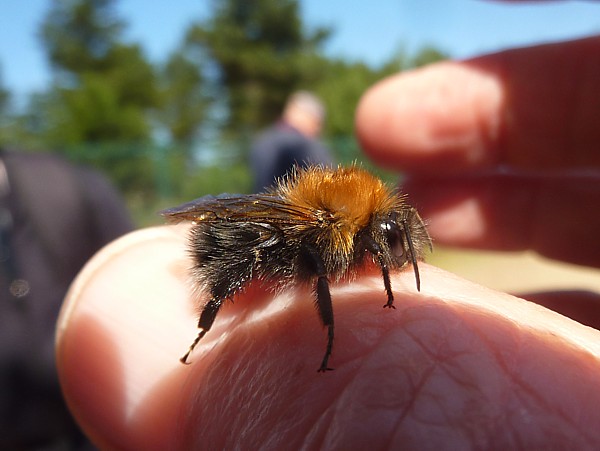
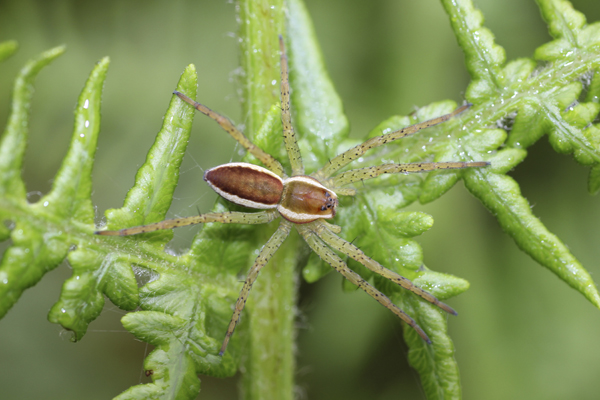
The sunny conditions had brought out the Insects and Spiders – so the macro lens was quickly attached to the camera. A Nursery Web Spider Pisaura mirabilis was characteristically sun basking on vegetation with the first two pairs of legs together, stretched out at an angle – giving the impression on first glance that it only had six-legs. They usually stay motionless in this position until a fly or insect passes by, quickly sprinting to capture it. After mating the female produces a very large egg sac which she carries around in her fangs! When the time for the Spiderlings to hatch approaches, the female deposits the egg sac on a leaf and spins a protective silk ‘nursery web’ tent around.  She can often be seen standing guard on the tent until the Spiderlings eventually disperse.

MNA Coombes Valley Nursery Spider1

Nusery Web Spider

MNA Coombes Valley Snipe Fly1

Snipe Fly

Scrambling in the undergrowth I noted Scorpion Fly Panorpa communis, plenty of Snipe Flies Rhagio sp. Red and Black Froghopper Cercopis vulnerata, Green Tortoise Beetle Cassida viridis and a number of Cranefly species including Tipula luna and a pair of mating Tipula vitatta.

MNA Coombes Valley Mating Craneflies1

The leaves of Broad-leaved Dock Rumex obtusifolius had a number of Green Dock Beetles Gastrophysa viridula and the leaf undersides held groups of the oval yellow eggs.

The most numerous Hoverfly was Rhingia campestris – this distinctive species with a long snout, orange abdomen with a black line along the axis and along the lateral margins of the tergites was happily feeding on the masses of flowering Bugle Ajuga reptans and Lady’s Smock Cardamine pratensis. Other Hoverflies noted included Heliophilus pendulus and Eristalis abusivus.

MNA Coombes Valley Rhingia campestris1

Rhingia campestris

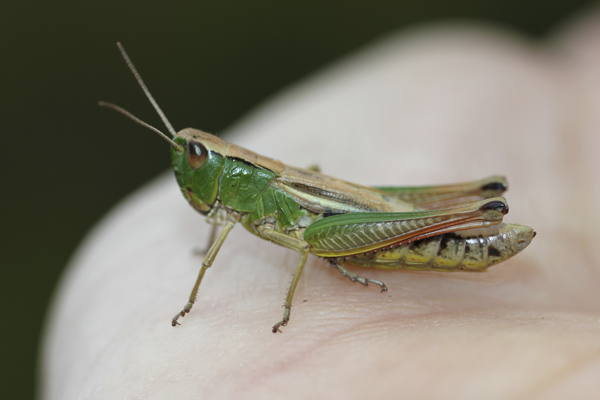
A couple of members had found a Leaf Beetle Chrysomelidae that I later identified as a Brown Willow Beetle Chrysolina staphylaea whose food plant is noted as Creeping Buttercup Ranunculus repens. Another interesting find was a male Slender Groundhopper Tetrix subulata –this small Grasshopper-like insect has wide ‘shoulders’ and a narrow tapering abdomen hidden beneath an extended pronotum.

MNA Coombes Valley Slender Groundhopper1

Slender Groundhopper

Most members had good views of one of the reserve’s specialities Pied Flycatcher with both male and female active around their nest-box close to the trail. A tree close held impressive tiers of the Fungi Dryad’s Saddle Polyporus squamosus. The Redstarts were slightly more skulking than the Pied Flys; although a number of males could be heard singing only a few members had brief glimpses. Willow Warblers, Chiffchaff and Blackcap were also in song. The woodland appeared ideal habitat for Wood Warbler – the young volunteer warden mentioned that they are in surrounding woodland but he hadn’t heard any singing in the reserve itself. A Nuthatch was seen entering its nest-hole and John Clegg observed a Great Spotted Woodpecker attempting to peck into one of the nest boxes.
MNA Coombes Valley Pink Purslane1

Pink Purslane

The botanists had a great day with a small group led by Pat Lockwood identifying over seventy species! Everyone was impressed by the abundance of flowers such as Germander Speedwell Veronica chamaedrys, Greater Stitchwort Stellaria holostea, English Bluebell Hyacinthoides non-scripta & hybrids, Herb Robert Geranium robertianum, Tormentil Potentilla erecta, Pink Purslane Claytonia sibirica, Red Campion Silene dioica, Bitter-vetch Lathyrus linifolius, Yellow Pimpernel Lysimachia nemorum etc. I particularly liked the slender, delicate drooping branches of Wood Horsetail Equisetum sylvaticum.

MNA Coombes Valley Yellow Pimpernel1

Yellow Pimpernel

MNA Coombes Valley Wood Horsetail1

Wood Horsetail

A good selection of Butterflies was noted including Green-veined White Pieris napi, Orange Tip Anthocharis cardamines, Small Copper Lycaena phlaeas, Peacock Inachis io and Speckled Wood Pararge aegeria. Walking back through the meadow area I was treated to a swarm of around twenty Longhorn Micro-moths Adela reaumurella dancing in the sunshine along the edge of a young Oak (Quercus sp.) hedge. A day-flying Moth – Small Yellow Underwing Panemeria tenebrata, was flitting around feeding on various plant species including Common Mouse-ear Cerastium holosteoides and Lady’s Smock Cardamine pratensis.

MNA Coombes Valley Small Yellow Underwing1

Small  Yellow Underwing

Love was in the air for a couple of Soldier Beetles Cantharis pellucida –they can more usually be seen feeding on both nectar and pollen from Hawthorn Crataegus monogyna and umbellifers.

MNA Coombes Valley Mating Soldier Beetles1

Cantharis pellucida

Back at the reception we caught up with other member’s sightings – Lynn and friend struck lucky with the Argent and Sable Moth on one of the woodland rides, they also noted Green Hairstreak Callophrys rubi and a stunning Two-banded Longhorn Beetle Rhagium bifasciatum.

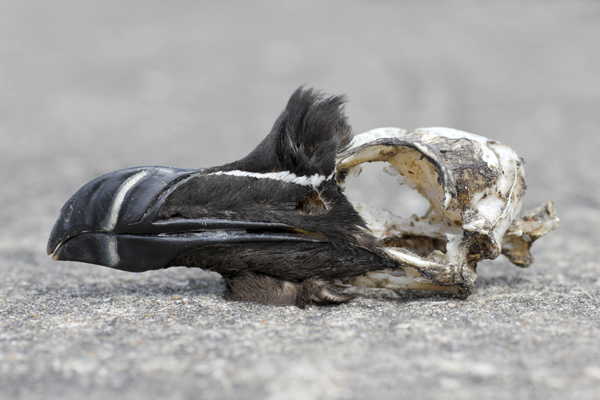
As a finale there was not one but two Corpse Of The Day! A European Badger Meles meles skull – the jaw is normally permanently attached to the skull due to the “wrap-around” articulation and the presence of a sagittal crest that tends to overhang the back of the skull as it gets older.

MNA Coombes Valley Badger Skull1

Badger Skull

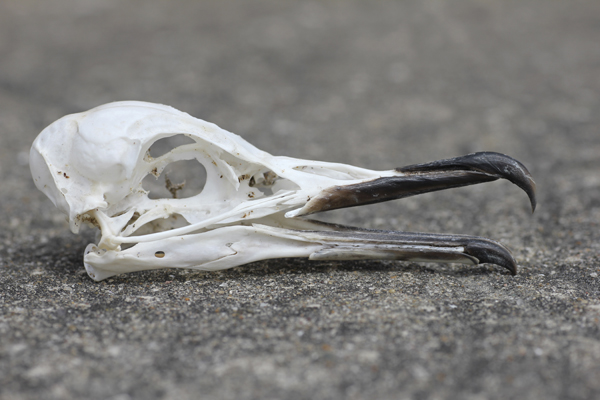
A Red Fox Vulpes vulpes skull – similar to a Dog but with flat or concave surfaces to the post-orbital processes.

MNA Coombes Valley Fox Skull1

Fox Skull

If you are interested in the wildlife of the north-west of England and would like to join the walks and coach trips run by the Merseyside Naturalists’ Association, see the main MNA website for details of our programme and how to join us.

A wide photographic selection of birds, marine life, insects, mammals, orchids & wildflowers, fungi, tribal people, travel, ethnography, fossils, hominids, rocks & minerals etc. is available on my Alamy webpage


Posted in MNA reports | Comments Off on MNA Coach Trip Coombes Valley RSPB Reserve 17th May 2014

Wirral Woodland Walk, 18th May 2014

It was very hot and sunny, and we were happy to be in woodland shade for nearly all of our walk today.

21 Arrowe woodland path

Our first birds were Swifts in Claughton, spotted from the bus. When we got off we turned straight into Upton Meadows Millennium wood, run by the Woodland Trust, which follows the Arrowe Brook northwards. The waysides were full of Hawthorn, Cow Parsley, Green Alkanet, Red Campion, Garlic Mustard, Buttercups, Goose grass, Nettles and an odd clump of Three-cornered Leek.

21 Arrowe three cornered leek

This tree with long sprays of white flowers puzzled us for a while. The leaves and bark looked like cherry but the blossom was different. It was Bird Cherry.

21 Arrowe Bird Cherry

While we were looking at some young oak leaves to determine which oak it was (and we still don’t know) we spotted some whitish spheres growing from the leaves. We assumed they were young Marble galls, but I later found they were Oak Currant Galls. According to Trees for Life they are caused by the same Gall wasp that makes spangle galls. “The tiny disc-like spangle galls are abundant on the undersides of oak leaves in the autumn. The galls drop to the forest floor, where the grubs develop over winter under the cover of fallen oak leaves. In the spring an all-female generation emerges. These are ‘agamic’, meaning that they are able to reproduce without mating. They lay their eggs in oak buds, producing Currant Galls on the catkins and leaves. The sexual generation of male and female wasps emerge from the Currant Galls in June, mate, and then lay their eggs on the undersides of the leaves. Spangle galls develop, and so the cycle continues.”

21 Arrowe currant gall

Some years ago we saw a nesting Kingfisher along the Arrowe Brook, but not today. Just the songs of Blackbird, Wren and Robin. There was a clump of yellow Welsh Poppies, a pair of Speckled Wood butterflies dancing in patch of sunshine, and a large Rat which peeped out from behind a bit of corrugated iron sheeting on the far bank.  We crossed Arrowe Brook Road into Arrowe Park Country Park and continued along the Arrowe Brook. There is a magnificent weeping beech at that entrance. On the fishing lake young Mallard was jumping for midges and a family of younger ducklings sat with their parents on the bank.

21 Arrowe Mallard family

There were a couple of Canada Geese and a Moorhen. Another mother duck and five ducklings were sitting on a fallen tree. When we looked closer we were startled to see that she was a female Mandarin. There was no male Mandarin about so who fathered her brood? A Mallard? You can see that their eye-stripes look Mandarin, but their backs look Mallard.

21 Arrowe Mandarin brood

A Jay flew low through the woods, a Nuthatch perched on the fence and a Robin perched on the footpath sign.

21 Arrowe robin on sign

There were some pretty yellow flower in the shadiest areas, which definitely weren’t buttercups. Later identified as Wood Avens.

21 Arrowe wood avens

On a bit of meadow I finally got around to photographing and later identifying this common plant. It’s the Ribwort Plantain.

21 Arrowe ribwort plantain

There was a Blackcap in the trees on the other side of the meadow, and a Great Tit nesting in the woods. She came to a branch right by us, apparently trying to see us off. As we approached Arrowe Park Golf Club we saw another Nuthatch coming to seed left on a post. One of the parkland trees bore flowers looking like Russian Vine but the leaves were like Ash. It definitely wasn’t a Rowan. At home, I identified it as a Manna Ash, a tree I’ve heard of but never seen before.

21 Arrowe Manna Ash

Park birds included Wood Pigeon, Magpie, and some Swallows over the putting green. The Wisteria and the Laburnum were out, and we also noticed two huge Cedars of Lebanon and a row of seven or eight tall Cypresses. Not sure what kind they were. Some were green and some looked like a golden variety. The golden ones had huge buttresses at the base, as if they had been grafted low down, many years ago.

21 Arrowe cypress butress

Here’s a lovely sight – sunshine through the back of copper beech leaves.

21 Arrowe copper beach

We emerged at the back of Arrowe Park Hospital. They have a wild flower verge, with Speedwell, Vetch, Ox-eye Daisy, and Pink Campion. Despite the bad smell from a sewer drain we lingered, then saw something big flying about. A big bee? A Hornet? No it was a dragonfly! It was a female Broad-bodied Chaser and she posed on a Red Campion, as well-behaved as any photographer could wish!

21 Arrowe chaser

Public transport details: 487 bus from Sir Thomas Street at 10.03, to Greasby Road (Cortsway) outside the Premier Inn, arriving at 10.35. Returned from the Arrowe Park “internal grounds” bus stop on the 471 bus at 1.55, arriving Liverpool City Centre at 2.25.

Posted in Sunday Group | Comments Off on Wirral Woodland Walk, 18th May 2014

Carr Mill Dam, Sunday 11th May 2014

Report from Tony Carter.
The North West Fungus Group held a foray at Carr Mill Dam. The site was chosen because it was thought that, after a couple of very dry springs, the boggy areas held more prospect of finding fungi. After all the recent rain, many of those areas were flooded and inaccessible. Most of the fungi that were identified were the small disc and crust fungi as it is s bit early for most of the larger gilled species.

The day started well with a large ring ofCalocybe gambosa (St Georges Mushroom) and a very early but slug-eaten Russula gracillima (Slender Brittlegill) found by the water’s edge.

Calocybe gambosa
Calocybe gambosa (St Georges Mushroom)

Moving into the woodland areas it was disappointing to see that the Impatiens glandulifera (Himalayan Balsam) has continued to grow unchecked and has taken over an increasing area, subduing other vegetation. At least the dead stems support a number of ascomycetes. Mollisia melaleuca and a Hymenoscyphus (yet to be identified) were soon collected.

Mollisia melaleuca Carr Mill 0514
Mollisia melaleuca

Hymenoscyphus
Hymenoscyphus (yet to be identified)

The boggy areas that could be accessed were fruitful. The uncommon Cudoniella clavus var. grandis (Sping Pin) and a couple of Naucoria subconspersa (Aldercap), a fungus that has a symbiotic association with Alnus (Alder), were identified.

Cudoniella clavus Carr Mill 0514
Cudoniella clavus var. grandis (Sping Pin)

Some Mycenas (Bonnets) were collected, Mycena acicula (Orange Bonnet), adscendens (Frosty Bonnet), speirea (Bark Bonnet) and vitilis (Snapping Bonnet).
Mycena_acicula_J  Delforge
Mycena acicula (Orange Bonnet) by J Delforge

A few corticioid (crust fungi) were in evidence, one being Phanerochaete sordida, which is not collected often but probably because it is very similar to a number of other white crusts and cannot be identified without resort to a microscope.

Polyporus tuberaster (Tuberous Polypore) was another find, this being one of the few local sites that the fungus appears regularly, now three years in a row.

Polyporus tuberaster Carr Mill 09
Polyporus tuberaster (Tuberous Polypore)

Allium ursinum (Ransom) was in full flower, some of the leaves sporting the rust Puccinis sessilis and an interesting smut Microbotryum violaceum was seen growing on the flower anthers of Silene dioica (Red Campion).

Puccinia sessilis on Ramson Carr Mill 0514


Puccinis sessilis

smut_Microbotryum violaceum-D  Fenwick
Microbotryum violaceum by D Fenwick

The final total was fifty three species identified, not bad for the time of year. And it did not rain while we were there.

As we left we were sent on our way by a tuneful Phylloscopus trochilus (Willow Warbler) somewhere in the trees lining the water.

Note that two of the photos above are from the internet and have been attributed to the original photographer.

Posted in MNA reports | Comments Off on Carr Mill Dam, Sunday 11th May 2014