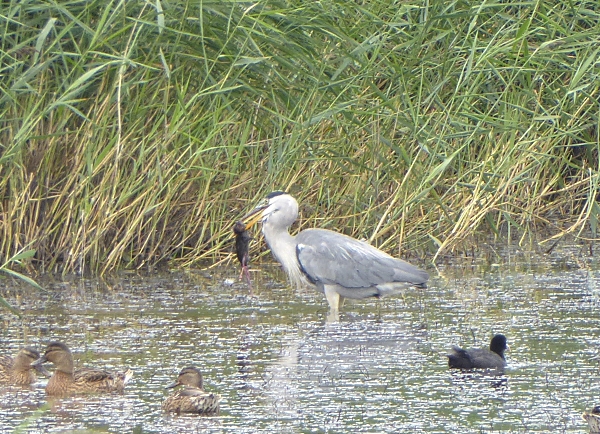
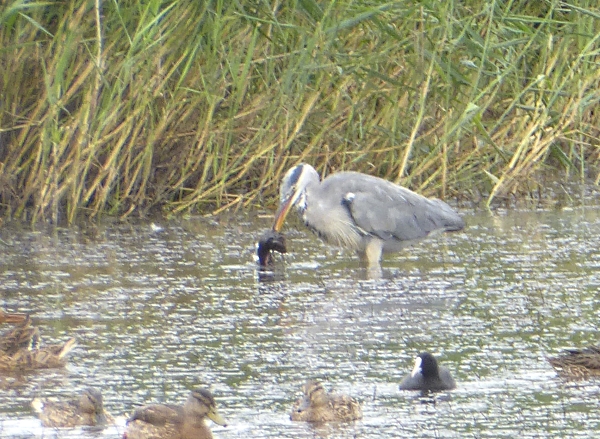
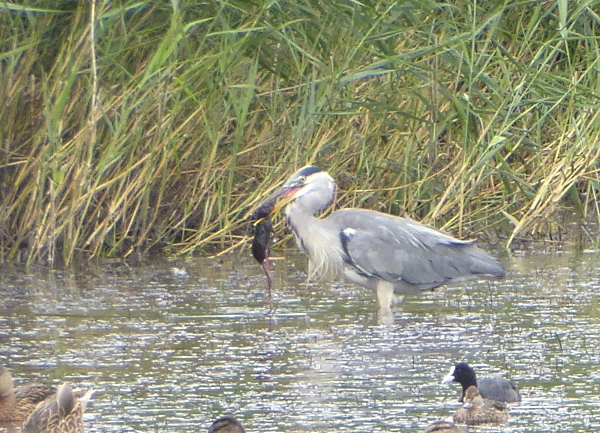
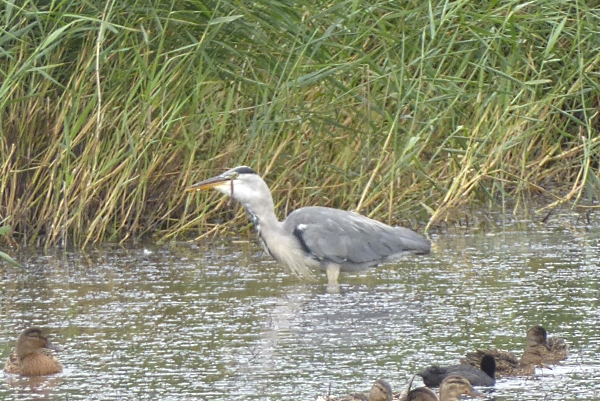
Dibbinsdale 31st July 2016

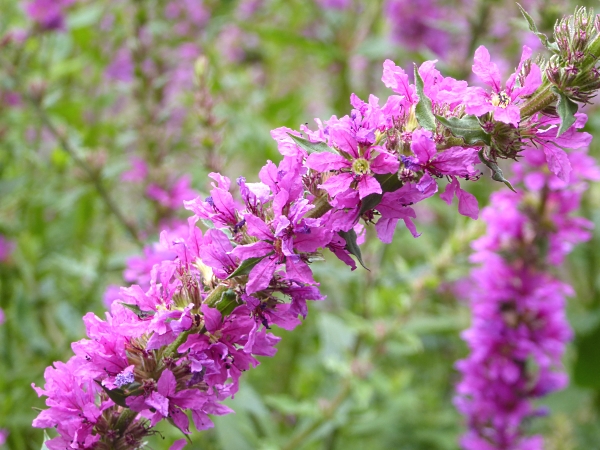
A productive morning wander around Dibbinsdale. Purple Loosestrife Lythrum salicaria, Hedge Bindweed Calystegia sepium, Water Forget-me-not Myosotis scorpioides and Bittersweet Solanum dulcamara were found beside the path through the reedbed. A mother Coot was escorting her four squealing youngsters through one pond with quacking female Mallards on another. In the wooded area were the spiky seed pods of Wood Avens Geum urbanum, Enchanter’s Nightshade Circaea lutetiana and Hedge Woundwort Stachys sylvatica. Nuthatches were calling away, one has been a regular visitor to my garden.

In Bodens Hay Meadow the various grasses were above knee height with a scattering of Wildflowers including Meadowsweet Filipendula ulmaria, Tufted Vetch Vicia cracca, Meadow Vetchling Lathyrus pratensis, Great Willowherb Epilobium hirsutum, Rosebay Willowherb Chamerion angustifolium, Yellow-rattle Rhinanthus minor with some plants still flowering but the majority now with seed pods. The Common Knapweed Centaurea nigra flowers were attracting good numbers of Red-tailed Bumblebees Bombus lapidarius and Buff-tailed Bumblebees Bombus terrestris.

MNA 2016 Dibbinsdale Common Blue1

Common Blue

On the Common Ragwort Senecio jacobaea was a lone caterpillar of the Cinnabar Moth Tyria jacobaeae. A selection of Butterflies with Large White Pieris brassicae, Small White Pieris rapae, Common Blue Polyommatus icarus, Gatekeeper Pyronia tithonus and Meadow Brown Maniola jurtina.

MNA 2016 Dibbinsdale Leptura maculata1

Spotted Longhorn Beetle

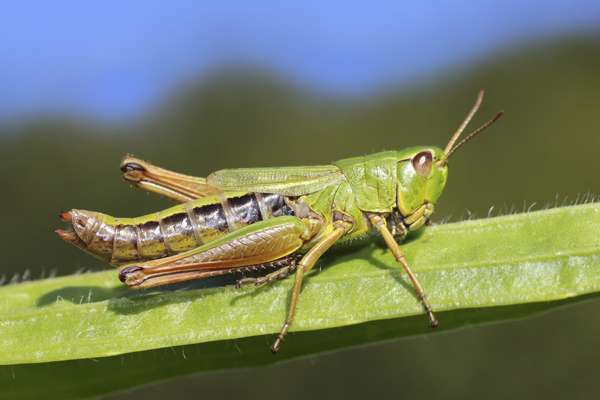
A couple of Spotted Longhorn Beetles Leptura maculata were covered in pollen from feeding on the umbellifer heads. At the west edge of Bodens, Meadow Grasshoppers Chorthippus parallelus sprung into the air from under my feet.

MNA Dibbinsdale Green Grasshopper1

Meadow Grasshopper

In Spital Fields I spotted a Hornet Mimic Hoverfly Volucella zonaria, a species that I first observed in Dibbinsdale last summer. There were a few Commas Polygonia c-album basking in the sunshine and a Dingy Footman Eilema griseola, a Moth that flies in July and August that feeds on various Lichens.

MNA 2016 Dibbinsdale Dingy Footman1

Dingy Footman

If you are interested in the wildlife of the north-west of England and would like to join the walks and coach trips run by the Merseyside Naturalists’ Association, see the main MNA website for details of our programme and how to join us.
Posted in MNA reports | Comments Off on Dibbinsdale 31st July 2016

Maghull to Lydiate, 31st July 2016

28 Maghull canal view

There were magnificent displays of flowers all around Maghull station, and congratulations are due to the Maghull in Bloom volunteers and their sponsors, including the Great Mogul pub and other local businesses.

28 Maghull station flowers

Access to the canal is down Rutherford Road and over the footbridge. A great day for butterflies started with a damaged Comma on the footbridge handrail, soon followed by a Large White, bird-pecked in almost the same place.

28 Maghull Comma

28 Maghull large white

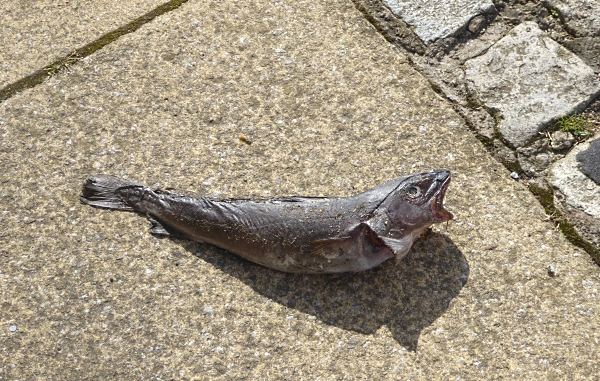
One of the many fishermen said the canal is well-stocked with Bream, Tench, Roach, Perch and Pike. We saw many young fish swimming about in the murky waters in Maghull town centre and another fisherman told us they were Roach, which smell bad when they are caught. Further along we watched yet another angler bring in a Bream, then remove the hook and put it back.

28 Maghull Bream

On the fields bordering the canal we noted Carrion Crows, Starlings, Jackdaws, Sparrows and Black-headed Gulls. A Cormorant flew high overhead, heading westwards. One Moorhen seemed to be living on top of a hedge on the other side, while another clucked at us angrily as we passed her three tiny black balls of fluff, perhaps hatched just that morning.  There were some very tiny Mallard ducklings, too.

28 Maghull ducklings

There was a Green-veined White butterfly on Creeping Thistle, a second Comma, and a Red Admiral flew across the water. Several Holly Blues were hanging around in the nettles.

28 Maghull Holly Blue

Also on the nettles was this small orangey Ladybird with something like 18 spots. Not one of the commoner ones, and I think it’s the Water Ladybird Anisosticta 19-punctata. North west England is getting near to the northern end of its distribution.

28 Maghull water ladybird

Masses of flowers on the tangled verge, including Great Willowherb and Rosebay Willowherb, Yarrow, Honeysuckle, Meadow Sweet. Pineapple Weed, Tufted Vetch and Burdock. None of the Ragwort had any Cinnabar moth caterpillars here either.  On the canal edge were the water-loving Water Mint, Marsh Woundwort and Gypsywort.

28 Maghull Water Mint
Water Mint

28 Maghull Marsh woundwort
Marsh Woundwort

28 Maghull Gypsywort
Gypsywort

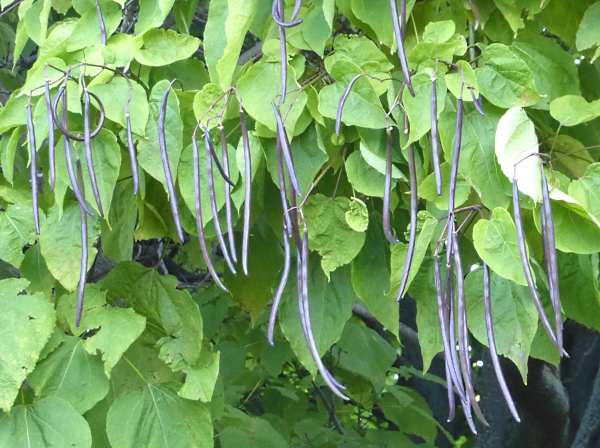
Just after the Maghull Business Centre there’s a Fig tree on the opposite bank, and what looks like a small palm-type tree. Are they the remains of a garden that’s now built over, right to the water’s edge? There are other surprising things in some of the gardens. One had a very convincing-looking pair of bird sculptures of dancing Cranes. Near Lollies Bridge 17A there’s an Indian Bean tree on a lawn, and one verge has four very active beehives.

28 Maghull beehives

We checked all the Buddleia trees on the other side, but there were hardly any butterflies on them. Just one Peacock all day. Where are the dozens we used to see on Buddleias not so many years ago? It was better on the towpath, where we added Gatekeeper, Meadow Brown and the always-photogenic Speckled Wood.

28 Maghull Speckled Wood

There were Greenfinches calling and Swifts overhead. On another lawn we spotted a Mistle Thrush and a Song Thrush feeding side by side. Blackberries and Cherries are ripening. By Lollies Bridge someone had fished a filthy old bike out of the canal, and it was propped up to dry. It was covered with what we think were freshwater mussels. They were smaller than the marine variety, just a little bigger than a pistachio nut shell. There must be plenty of them living down there, providing food for water birds. Our last interesting flower was a Nettle-leaved Bellflower on a shady bank, with just one spike, and another one that had fallen over.

28 Maghull bellflower

We came off the canal at Jackson’s Bridge, onto Hall Lane. Near the junction of Eager Lane we heard a Yellowhammer, but couldn’t see it. Some of us got the bus on the main road right away, but four of us went to the Hayloft for tea and a visit to the Farm Shop.

Public transport details: Ormskirk train at 10.10, arriving Maghull 10.30. Returned on the 300 bus from Southport Road / Hall Lane (outside the RC church) at 3.35 (which was the 3.29, late), but we could have got the one an hour earlier. Arrived at Bootle New Strand at 4.05.

Posted in Sunday Group | Comments Off on Maghull to Lydiate, 31st July 2016

Parkgate to Neston, 24th July 2016

27 Neston Parkgate square
The tide was out at Parkgate, and on the marsh were two Little Egrets, a young Heron, two Mute Swans and very many Black-headed Gulls. There are House Martins nesting on Mostyn Square.  We walked up to the Old Baths and lunched on the picnic tables there, sheltering under a tree from a  short but heavy shower. Then up to the Wirral Way, noting Buttercups, Ragwort and Greater Willowherb. There was a Buzzard calling, flying over the farmhouse by the steps down to the Wirral Way.

27 Neston Meadow Sweet

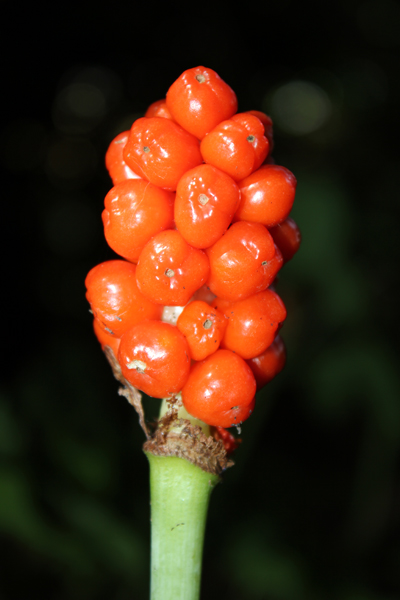
There was a mass of tangled greenery on each side of the path, including great swathes of Meadow Sweet. Lots of Ragwort, all immaculate, with never a Cinnabar moth caterpillar to be seen all day. Tall Stinging Nettles, Yellow Loosetrife, Convolvulus, Yarrow, White Dead-nettle, Rosebay Willowherb, Herb Robert, Black Horehound, White Clover, Hogweed, Wild Carrot, a Snowberry bush with its little pink flowers, Hemp Agrimony just coming out, Burdock and the bright orange-red berries of Lords and Ladies Arum maculatum, also known as Cuckoo Pint or Wild Arum.

27 Neston Hemp Agrimony
Hemp Agrimony

27 Neston Burdock
Burdock

27 Neston lords and ladies
Lords and Ladies

It was overcast, so the only butterfly out and about was a Speckled Wood, and during the whole of today’s walk I spotted just one tiny patch of the Horse Chestnut leaf miner.

27 Neston Horse chestnut leaf miner

Near the crossing of Station Road there is a new car park with steps up to it. Nearby is an old wartime pillbox, its gun slits bearing on the road, ready to attack any German tanks coming up from Parkgate.

27 Neston pill box

Several autumn fruits are coming on, and it isn’t even August. There were green Hawthorn berries,  wild Raspberries, unripe Damsons, Rose Hips and some ripening Blackberries.

27 Neston rose hips

27 Neston blackberries

Near Neston a big old hollow Ash had fallen, spreading three broken-off branches in different directions. Locals said it had been down for a week.

27 Neston broken Ash

There’s a great view over to Moel Fammau from there.

27 Neston Moel Fammau

We turned off into Church Lane, and up through the graveyard of the lovely sandstone church of St Mary and St Helen (1874, Grade II*).

27 Neston churchyard

And just to note, before we set out this morning I checked St John’s Gardens, and the Indian Bean trees are now in copious blossom.

27 Neston Indian Bean blossom

Public transport details: Bus 487 from Sir Thomas Street at 10.29, arriving Mostyn Square Parkgate at 11.20. Returned on the 487 from Neston Brook Street on the 487 at 2.36, arriving Liverpool 3.25.

Posted in Sunday Group | Comments Off on Parkgate to Neston, 24th July 2016

Marshside, 17th July 2016

26 Marshside cattle

There’s a small colony of House Martins nesting under the eaves in Preesall Close, which is near where the 44 bus dropped us, and adjacent to the path along the sea wall on the south east side of the reserve.

26 Marshside House Martin

It was overcast, and cooler than we expected with a brisk breeze in our faces as we walked along Marshside Road. Along the verge we noted Tansy, Burdock, Convolvulus, Great Willow Herb, Poppy, Ragwort, Yarrow, Mint and Comfrey. We had heard that a Glossy Ibis has been coming and going here for the last few weeks, so we kept our eyes peeled, but saw only Wood Pigeon, Moorhen, Mallard, a few Oystercatchers and a Little Egret posing nicely.

26 Marshside Little Egret

We had a quick look in Junction Pool, but there were just Shovellers, Greylag Geese with goslings, Black-headed Gulls and a Coot. Then we walked along to Sandgrounders hide. The sides of the path there remind me of Darwin’s tangled bank, such a lot was going on in just those three hundred yards. Plants included Rest Harrow, Evening Primrose, White Campion, Green Alkanet, White and Red Clover, Yarrow (including some with pink flowers), a Pyramidal Orchid, Hop Trefoil, and a clump of about 20 stalks of something nettley, each covered with very dark sepal tubes and sparse pink flowers. Was it Black Horehound? That’s best match I can find. The book says it has a disagreeable smell, but I regret we didn’t think to sniff it.

26 Marshside Black Horehound

There was also plenty of Ragwort, but only one small patch had caterpillars. There were about four  plants, two on each side of the path. Did a single laying female put eggs in just this spot? The caterpillars were fatter than the ones we saw last week, looking almost ready to pupate and  twitching occasionally.

26 Marshside Cinnabar caterpillars

The sun was now out and several Gatekeepers were basking. The ones with the brown diagonal smudges on their upper wings are males, apparently.

26 Marshside Gatekeeper

Sitting quietly and inconspicuously amongst the leaves was this handsome moth, possibly a Shaded Broad Bar, Scotopteryx chenopodiata.

26 Marshside Shaded broad bar

There were Red-tailed Bumble Bees visiting something very like Bramble, but growing far less aggressively, so I think it was the dune specialist Dewberry. Also several pairs of mating Burnet moths, probably Six-spot, although they were quite entangled, making the spots difficult to count precisely.

26 Marshside Burnets mating

From Sandgrounders hide there were mainly BHGs, Coot, Moorhen and Canada Geese. Suddenly all the Lapwings from further out, and all the gulls, flew up but there was no sign of a predator. One Black-headed Gull parent had two chicks who were a little younger than all the others, and who were still pestering her for food.

26 Marshside BHG and chicks

Then off to Nel’s hide. There was a herd of cattle there, of many mixed colours, doing some conservation grazing. A couple of Avocets had two well-grown chicks and were very twitchy and aggressive in protecting their young. First they saw off a Mallard, and then a mother Shoveller with two fluffy shovellettes.

26 Marshside Avocet and Shoveller

Then 100+ Black-tailed Godwits wheeled overhead and settled to the pool. They drove the Avocets frantic!  The Avocets kept on flying at the Godwits, trying to herd them away to the far side of the pool, and amazingly, they succeeded!

26 Marshside Avocets and Godwits

On the way back to Marshside Road we looked at the Duke of Argyll’s Tea Tree Lycium barbarum which grows on the bank here. It was flowering, and later it will have red berries which are attractive to birds. Apparently those berries are the much touted “superfood” Goji Berries, although I would be cautious with anything from the Solanaceae, which includes the poisonous Nightshade group.

26 Marshside D of As Tea Tree

The volunteer in Sandgrounders hide had told us that the Glossy Ibis had been seen that morning near the corner of Marshside Road and the sea wall footpath, over the wooden pens and near the pond intended for Natterjacks. Sadly, no joy. We saw a Heron and a Collared Dove, but the Ibis was hiding or gone.  So we descended the bank into Pilling Close and spotted the Tree of the Day. It was a small Fir tree in a garden, about 6 or 8 feet tall and covered with cones. I think it was a Korean Fir Abies koreana. It’s “infrequent” and endangered in its native Korea, but sometimes planted in European gardens, because it doesn’t grow very tall and it bears abundant cones, even on young trees.

26 Marshside Korean Fir

Public transport details: Train from Central at 10.08, arriving Southport 10.50, then 44 bus from Hoghton Street / London Street (opposite the Little Theatre) at 11.17, arriving Elswick Road / Preesall Close at 11.29. Returned on the 44 bus from Elswick Close / opp Pilling Close at 2.44, arriving Southport, by the Little Theatre, at 2.55. Just missed the train at 2.58, so got the 3.13, due in Liverpool at 3.55.


Posted in Sunday Group | Comments Off on Marshside, 17th July 2016

Pickerings Pasture, 10th July 2016

25 Pasture bridge view
Before meeting the group I checked some of the trees in St John’s Gardens. The Indian Bean trees are in bud and will flower shortly.

25 Pasture Indian bean buds

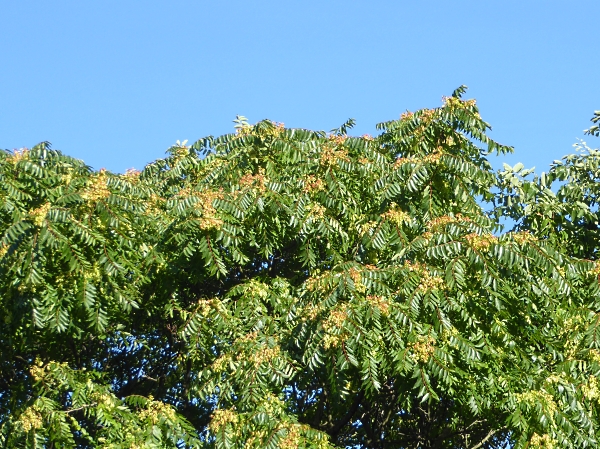
The Trees of Heaven are flowering, but what kind of flowers are they? Various books say they bear both male and female flowers, usually on separate trees. I can’t say I saw any differences so I’ll just have to wait and see which ones bear seed.

25 Pasture Tree of Heaven flowers

We walked a different way to Pickerings Pasture today, on the private road around the water treatment works. There were plenty of Ragwort plants along the roadside, and we looked for Cinnabar moth caterpillars, and found them on only one plant, clustered on the buds.

25 Pasture Cinnabar caterpillars

All along the roadside was a very tall plant of the “dandelion-ish” persuasion, the biggest perhaps 8 feet high. Probably Prickly Lettuce, Lactuca seriola.

25 Pasture Prickly lettuce

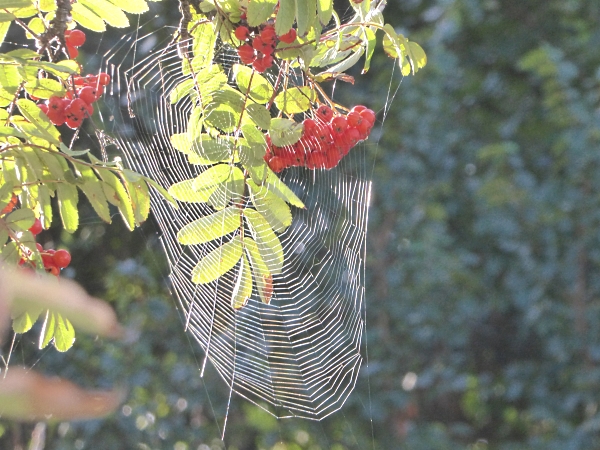
A Rowan bush was covered in ripe red berries. That’s early.

25 Pasture Rowan

Other flowers included Rosebay Willowherb, a yellow pea flower on a spike which was one of the Melilots, Red and white clover, Wood Avens and some patches of unusually tall Self-heal, some growing over 6 inches high, when they are usually very low to the ground.

25 Pasture selfheal

It was supposed to be showery, but it stayed dry, and although it went threateningly overcast once or twice, there were also intervals of bright sunshine, which brought out butterflies. We spotted Meadow Brown, Large White, Small White, Green-veined White, Gatekeeper and Speckled Wood.

25 Pasture Meadow Brown
Meadow Brown

25 Pasture Small white
Small White

We emerged into Pickerings Pasture at the south end, near the bird hide. The bird feeder in the woods there has been vandalised, but from the hide we saw a Heron, a Black-headed Gull, a Lesser Black-backed Gull, loads of Canada Geese, some Shelduck and a Cormorant. Nothing very exciting, sadly. As we returned through the wood we spotted a Spindle tree, Euonymus europaeus, one of the native British trees, and one we don’t see very often. The oddly-shaped seeds were still green, but they will go bright orange in the autumn.

25 Pasture Spindle fruits

They have planted a great field of Meadow Cranesbill, with occasional Yellow Rattle and Musk Mallow.  It was full of bees and other insects, and both Swifts and Swallows were overhead.

25 Pasture meadow cranesbill

We also found several very bright and smart Small Tortoiseshells, and there were a few Orchids in the meadow.

25 Pasture Small tortoiseshell

25 Pasture Orchid

We heard a Great Spotted Woodpecker, but it didn’t show itself. There’s an Aspen tree there, the only one I can recall seeing in the whole of Merseyside. It’s near the junction of the “inland” path with the path that goes towards the river and the visitors’ centre, not far from the Control Meadow (= the Bramble patch).

25 Pasture Aspen leaves

Near the visitors’ centre a small Lime tree was in splendid flower.

25 Pasture Lime flowers

There was another tree on the island in the car park. At first glance it said “Sweet Chestnut”, but it wasn’t. It had long leaves, about six inches long, with serrated edges. We were scratching our heads, and then we spotted Alder cones on the ground. Further scrutiny revealed Alder cones actually growing on the tree itself, so there was no doubt about it. We’ve never seen an Alder with leaves like that before. After a quick riffle through the book we decided it had to be a Grey Alder, Alnus incana, a new one to us, which has to be Tree of the Day. Mitchell says it’s rare as a garden tree, but “a useful tree for rapid growth on dry and difficult soils; planted in land-reclamation schemes.” That sounds right.

25 Pasture Grey Alder

25 Pasture Grey Alder leaf and cone

The tide was coming in strongly as we headed north towards the footbridge, then up the steps and back by the woodland path. There were Shelduck and Lapwing on the sandbanks and big patches of frothy yellow Ladies Bedstraw by the wayside. Another patch of pink flowers with square stems foxed us. Could it be Corn Mint or its hybrid with water mint called Whorled Mint?

25 Pasture Corn Mint maybe

There was also lots of Wild Carrot. I’m used to the flowers having a pink bit in the middle, but these all seemed to have a small black insect on them. Closer inspection revealed a central floret that was so dark red or purple as to be almost black. It stood up from the others, too.

25 Pasture Wild Carrot face on

25 Pasture Wild Carrot side on

We walked back to the bus up Mersey View Road. There were ripe wild Plums in the hedges, the Privet was flowering and the Field Maple seeds were looking autumnal already.

Public transport details: 82A bus from Liverpool ONE bus station at 10.15, arriving Halebank, Garnett’s Lane at 11.04. Returned on the 82A from Halebank / Mersey View at 2.25 (the 2.15, late) arriving Liverpool ONE bus station at 3.15.

Posted in Sunday Group | Comments Off on Pickerings Pasture, 10th July 2016

MNA Coach Trip Malham, Yorkshire 9th July 2016

MNA Malham Cove

The MNA Coach parked beside the Yorkshire Dales Visitor Centre in Malham village and after donning waterproofs against the typical English Summer weather we were soon listing slightly unusual botanical sights like a huge coppiced Laburnum Laburnum anagyroides and a Bay Willow Salix pentandra beside Malham Methodist Chapel. Butterbur Petasites hybridus leaves lined the banks of Malham Beck and a Tree of note in Dingle Dell was Yellow Buckeye Aesculus flava with similar shaped leaves to Horse Chestnut. Swallows, House Martins, Sand Martins and Swifts were hovering insects at speed above and around us. Wren and Song Thrush in full song, twittering Goldfinch and a Grey Wagtail perched in a tree beside the Beck. John Clegg tried to add Kingfisher but the larger than life sculpture on the bridge didn’t fool us.

MNA Malham Meadow Cranesbill1

Meadow Cranesbill

MNA Malham White Stonecrop1

White Stonecrop

Wandering through the village the various Fern species growing on the stone walls were identified as Hart’s Tongue Fern Asplenium scolopendrium, Black Spleenwort Asplenium adiantum-nigrum, Maidenhair Spleenwort Asplenium trichomanes, Wall-rue Asplenium ruta-muraria and Brittle Bladder-fern Cystopteris fragilis. Also in the banksides and walls was Welsh Poppy Meconopsis cambrica, Garlic Mustard a.k.a. Jack-By-The-Hedge Alliaria petiolata, Biting Stonecrop Sedum acre, White Stonecrop Sedum album, Wood Avens Geum urbanum, Meadow Crane’s-bill Geranium pratense, Shining Crane’s-bill Geranium lucidum, Herb-Robert Geranium robertianum, Hedge Woundwort Stachys sylvatica, Germander Speedwell Veronica chamaedrys, Lady’s Bedstraw Galium verum, Cleavers Galium aparine, Crosswort Cruciata laevipes, Wall Lettuce Mycelis muralis etc.

We turned off beside the Youth Hostel passing some fragrant Sweet Cicely Myrrhis odorata and wandered along a small track adjacent to a stone wall that held some impressive cushions of Moss before stopping for lunch, sheltering from the rain underneath the trees. A Harvestmen wandering along the stone wall had a number of scarlet parasitic Mite larvae belonging to the genus Leptus attached to its legs and body. We crossed over farm fields adding another plethora of plants to the list – Meadow Buttercup Ranunculus acris, Trailing Tormentil Potentilla anglica, Creeping Cinquefoil Potentilla reptans, Common Bird’s-foot-trefoil Lotus corniculatus, Bush Vetch Vicia sepium, White Clover Trifolium repens, Red Clover Trifolium pratense, Cow Parsley Anthriscus sylvestris, Ground-elder Aegopodium podagraria, Selfheal Prunella vulgaris, Spear Thistle Cirsium vulgare, Creeping Thistle Cirsium arvense, Common Knapweed Centaurea nigra, Prickly Sow-thistle Sonchus asper.

MNA Malham Self Heal1

Selfheal

After watching a Treecreeper spiralling around a tree and a couple of Spotted Flycatchers chasing after Insects we crossed over Malham Beck using one of the traditional stone clapper bridges. Amongst the Yellow Meadows Ant Lasius flavus hills we found Wild Thyme Thymus polytrichus, Eyebright Euphrasia officinalis, Harebell Campanula rotundifolia, Heath Bedstraw Galium saxatile, Mouse-ear-hawkweed Pilosella officinarum, Yarrow Achillea millefolium and Betony Stachys officinalis. Marsh Valerian Valeriana dioica grew along the Beck’s bankside, Water-cress Rorippa nasturtium-aquaticum in the Beck itself and across the Beck were a few flowering Jacob’s-ladder Polemonium caeruleum.

MNA Malham Wild Thyme1

Wild Thyme

In front of us was the curved limestone ampitheatre of Malham Cove. This cliff face was formed along the line of the Middle Craven Fault through ice and water erosion but nowadays the water flows underground through fissures in the limestone exiting at the foot of the Cove into Malham Beck. (On our return coach journey DaveB passed around an aerial photo from December 2015 when torrential rainfall from Storm Desmond briefly created a waterfall as it sent torrents cascading over the 260ft cliff face for the first time in hundreds of years.)

MNA Malham Belted Galloway

Belted Galloway

We headed over to the Peregrine Viewpoint where staff and volunteers from the RSPB and the Yorkshire Dales National Park Authority (YDNPA) had scopes set up on the two Peregrine chicks that have fledged this year. Given the inclement weather they were hunkered onto the cliff but for the past few weeks have been honing their flying skills around the cove. This is the 20th year that Peregrines have successfully raised chicks at this site. A small herd of Belted Galloway cattle were providing alternative entertainment browsing on the Ash trees running along the beck edge, craning up their necks and extending their tongues to grab the leaflets – or given a helping hand by ChrisB and our driver Jed.

MNA Malham Yellow Loosestrife1

Yellow Loosestrife

We wandered back along the track towards the village and in the absence of any ‘Corpse of the Day’ we decided on ‘Mollusc of the Day’ the cutey Brown-lipped Snail Cepaea nemoralis. Their slimier cousins adorned the Meadow Buttercups in the form of Black Slug Arion ater red form and Slug Deroceras sp. Back in the village a profusion of Yellow Loosestrife Lysimachia vulgaris was growing beside a stone wall and we decided a new Fern for the day was Southern Polypody Polypodium cambricum. Trooping Crumble Cap Coprinellus disseminatus and some Artist’s Bracket Ganoderma applanatum were growing on the remains of a dead Tree.

MNA Malham Southern Polypody1

Southern Polypody

At the entrance to the Beck Hall car park were a couple of fine wooden sculptures of Boxing Hares

MNA Malham Hare Sculpture1

Whilst ChrisB and I sat outside the Lister Arms with a pint busy putting the world (or should I say academia) to rights, DaveB led a small group of members along to Gordale Scar. They had a Blackcap singing and a brief snatch of Redstart song coming from a grove of Sycamores and Ash, Green Woodpecker in flight and a very ragged Common Buzzard hovering in the breeze above the crags with fairly large prey in its talons. More plants with Wild Marjoram Origanum vulgare, Agrimony Agrimonia eupatoria, Upright Hedge-parsley Torilis japonica, Imperforate St John’s-wort Hypericum maculatum and Common Spotted-orchid Dactylorhiza fuchsia. On the return walk they heard a Curlew frequently calling.

John Clegg wandered along to the waterfall at Janet’s Foss where Gordale Beck flows over a limestone outcrop topped with tufa into a pool below that was once used for sheep dipping. Janet was apparently a fairy queen that lived in a cave nearby. John didn’t spot Janet but did see half a dozen Dippers along the beck.

If you are interested in the wildlife of the north-west of England and would like to join the walks and coach trips run by the Merseyside Naturalists’ Association, see the main MNA website for details of our programme and how to join us.
Posted in MNA reports | Comments Off on MNA Coach Trip Malham, Yorkshire 9th July 2016

Marford and Minera Quarries, Wales 5th July 2016

A natural history packed day as DaveB and I visited a couple of sites in the Wrexham area using public transport. We initially took the train to Chester then boarded Arriva’s 1 bus alighting at the village of Marford famous for its quaint Gothic revival cottages, built as part of the former Trevalyn Hall estates. Crosses also feature in the cottage designs to protect the inhabitants from the ghost of Marford “Lady Blackbird”, who is said to tap at the windows.

The land around Marford and nearby Gresford was formed at the end of the last Ice Age when two ice sheets joined. When the ice melted, about 14,000 years ago, it left behind huge areas of sand and gravel and Marford Quarry was opened in 1972 providing the source of the aggregate for the Mersey Tunnel. The site was designated a SSSI in 1989 primarily because of its rare Invertebrate species including solitary and spider hunting Wasp species and Plants including Wild Liquorice Astragalus glycyphyllos, Green-flowered Helleborine Epipactis phyllanthes. North Wales Wildlife Trust bought the site the following year.

A range of notable Plants included Greater Spearwort Ranunculus lingua growing in the small pond, Stinking Hellebore Helleborus foetidus, Thyme-leaved Sandwort Arenaria serpyllifolia, Perforate St John’s-wort Hypericum perforatum, Weld Reseda luteola, Scarlet Pimpernel Anagallis arvensis, Creeping Cinquefoil Potentilla reptans, Wild Strawberry Fragaria vesca, Hogweed Heracleum sphondylium, Common Centaury Centaurium erythraea, Yellow-wort Blackstonia perfoliata, Wood Sage Teucrium scorodonia, Carline Thistle Carlina vulgaris, Musk Thistle Carduus nutans, Pyramidal Orchid Anacamptis pyramidalis and Common Spotted-orchid Dactylorhiza fuchsia. Dave identified a speciality favouring lime soils in quarries and the edges of woodland as Common Gromwell Lithospermum officinale.

MNA Marford Woodlice1

Woodlice

We turned over a few logs and disturbed groups of Common Striped Woodlouse Philoscia muscorum, Common Shiny Woodlouse Oniscus asellus and a couple of Pill Millipedes Glomeris marginata. Another log had a few Ground Beetles including one of the two species of Violet Ground Beetle called Carabus problematicus which has ridges and dimples on its elytra. A small felt mat that is designed to absorb heat and attract Reptiles to hide underneath had done its job well with a female Slow Worm Anguis fragilis adopting a sinusoidal pose.

MNA Marford Slow Worm

Slow Worm

A Sand-tailed Digger Wasp Cerceris arenaria sat on a leaf for a photo and later we saw a number of others entering the nest holes in a sandy bank, from which side-tunnels radiate leading to cells. An egg is laid in each cell and the growing larvae are provisioned with paralysed prey, mostly Weevils Curculionidae sp.

MNA Marford Nomada Wasp

Sand-tailed Digger Wasp

The leaves of the tall flowering Great Mulleins Verbascum thapsus around the site had been almost completely decimated by the caterpillars of the Mullein Moth Cucullia verbasci leaving noticeable frass (pelleted excreta). However there were no caterpillars now visible – we searched on and under those remaining leaves, amongst the flowers and in nearby vegetation. We then found a few flowering spikes of White Mullein Verbascum lychnitis which had half a dozen caterpillars of varying sizes.

MNA Marford White Mullein Caterpillar1

Mullein Caterpillar

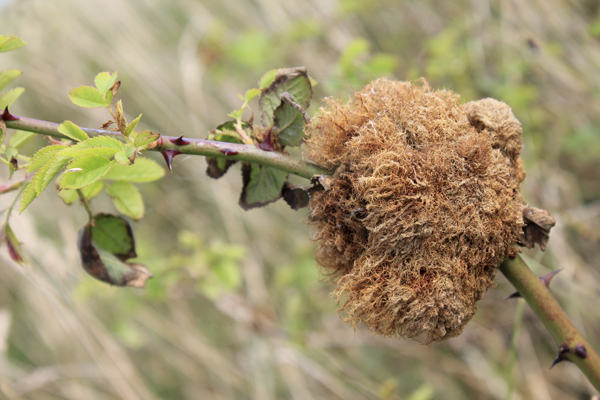
There were a few small but bright red Robin’s Pincushion Galls a.k.a. ‘Bedeguar Gall on Dog Rose Rosa canina caused by the Gall Wasp Dipoloepis rosae, Willow Rust Melampsora spp. on the leaves of Salix sp. and a Yellow Waxcap Hygrocybe flavescens.

MNA Marford Robins Pincushion Gall1

Robin’s Pincushion Gall

MNA Marford Willow Rust1

Willow Rust

Butterflies included a Meadow Brown Maniola jurtina and plenty of Ringlets Aphantopus hyperantus with Odonata including a patrolling male Broad-bodied Chaser Libellula depressa and a very obliging Migrant Hawker Aeshna mixta.

MNA Marford Migrant Hawker1

Migrant Hawker

We returned to Marford Village along Springfield Lane noting Green Alkanet Pentaglottis sempervirens, Ivy-leaved Toadflax Cymbalaria muralis, Red Valerian Centranthus ruber and Feverfew Tanacetum parthenium before boarding an Arriva 1 bus again to Wrexham.

After quickly eating our lunch we boarded the Arriva 10 bus to Minera  whose name derives from the Latin for “mine” or “ore” (the Welsh name Mwynglawdd translates roughly as “ore mine”). We disembarked at the village triangle walked down the road and crossed the newly re-pointed stone bridge over the River Clywedog where Dave spotted a Dipper flying upstream before turning onto Ty Brith Ln and onto the track leading up to the Quarry. Plants included Greater Celandine Chelidonium majus, Hedge Woundwort Stachys sylvatica and the feathery-looking leaves of Brittle Bladder-fern Cystopteris fragilis growing amongst the Polypody Polypodium vulgare.

A scrubby area with flowering Blackberry Rubus fruticosus and Field-rose Rosa arvensis attracted Mountain Bumblebees Bombus monticola and the Hoverfly Volucella pellucens with the umbellifer heads of Ground-elder Aegopodium podagraria holding a scattering of other Insects.

Next the wooded area growing on the old lime slag heaps had Common Spotted Orchids Dactylorhiza fuchsii in a variety of colours, Common Twayblade Neottia ovata along with Broad-leaved Helleborines Epipactis helleborine that were just in bud and a few spikes of the green fruits of Lords-and-Ladies Arum maculatum.

MNA Minera Quarry

Minera Quarry

We arrived in the main quarry the sun putting in an appearance which brought out a selection of Butterflies including Large Skipper Ochlodes venata, Common Blue Polyommatus icarus, Grayling Hipparchia semele, Meadow Brown Maniola jurtina, Ringlet Aphantopus hyperantus and Small Heath Coenonympha pamphilus.

A feast of Wildflowers with Lady’s-mantle Alchemilla sp. Common Bird’s-foot-trefoil Lotus corniculatus, Tufted Vetch Vicia cracca, Meadow Vetchling Lathyrus pratensis, Wood Sage Teucrium scorodonia, Selfheal Prunella vulgaris, Wild Thyme Thymus polytrichus, Eyebright Euphrasia officinalis, Yellow-rattle Rhinanthus minor, Lady’s Bedstraw Galium verum, Small Scabious Scabiosa columbaria, Carline Thistle Carlina vulgaris, Welted Thistle Carduus crispus, Marsh Thistle Cirsium palustre, Common Knapweed Centaurea nigra, Oxeye Daisy Leucanthemum vulgare and the leaves of Colt’s-foot Tussilago farfara. Pyramidal Orchids Anacamptis pyramidalis joined masses of Common Spotted Orchids Dactylorhiza fuchsia, a handful of Heath Spotted-orchids Dactylorhiza maculata and Fragrant Orchids Gymnadenia conopsea that were just beginning to bloom.

MNA Minera Quarry Pyramidal Orchid1a

Pyramidal Orchid

The small pond fringed with Marsh Horsetail Equisetum palustre held a Great Diving Beetle Dytiscus marginalis, a couple of Pond Skaters Gerris lacustris along with a Large Red Damselfly Pyrrhosoma nymphula and a few Common Blue Damselflies Enallagma cyathigerum.

MNA Minera Frog Orchid

Frog Orchid

We climbed up a path through woodland along the bottom edge of the quarry before emerging at a ridge giving great views over the whole quarry complex. A few more Wildflowers with Salad Burnet Sanguisorba minor and Kidney Vetch Anthyllis vulneraria but the best was kept until last. I’d only read a few days before our visit that Frog Orchids Coeloglossum viride had been re-discovered at the quarry in 2014 and lo and behold there was a small flowering spike. The compact cowl of three sepals forms a globular shape with the tongue only just protruding from beneath the cowl. Once we had our eye in, we counted forty small spikes!

If you are interested in the wildlife of the north-west of England and would like to join the walks and coach trips run by the Merseyside Naturalists’ Association, see the main MNA website for details of our programme and how to join us.
Posted in MNA reports | Comments Off on Marford and Minera Quarries, Wales 5th July 2016

Anglesey & Great Orme June 2016

A few days visiting some familiar sites in Anglesey and the Great Orme in late June proved fruitful.

MNA Breakwater Summer

At Breakwater Country Park the initial clouds did give way to some blue sky giving a great backdrop to the dramatic rocky coastline. Highlights included the wildflowers growing on the cliff path – Thrift Armeria maritima, Wild Thyme Thymus polytrichus, Sea Plantain Plantago maritima, Eyebright Euphrasia officinalis agg. Sheep’s-bit Jasione montana along with the dark purple hues of Northern Marsh-orchids Dactylorhiza purpurella.

MNA Anglesey Breakwater NM Orchid1

Northern-marsh Orchid

On the path to the Magazines was Common Toadflax Linaria vulgaris and elsewhere Yellow-rattle Rhinanthus minor looked somewhat incongruous growing amongst Bracken Pteridium aquilinum – this plant is more usually seen in meadows being hemi-parasitic on grasses.

MNA Anglesey Breakwater Toadflax1

Common Toadflax

MNA Anglesey Breakwater Chough Mosaic1

Chough mosaic

We closely approached two Chough as they fed close to the cliff top path and occasionally calling their names. In the Quarry one of the Peregrines wasted no time in seeing off six Ravens from its patch as they flew by. The Ravens settled further along the Quarry face and uttered some deep throated ‘kraa’ calls in indignation.

Along at Holyhead Harbour a few people were peering over the railings pointing to something in the water below. I went to investigate and saw around twenty sack-shaped Comb Jellies ranging in size from 5-12cm. They were particularly impressed by the multi-coloured shimmering effect of the longitudinal combs which consist of plates of transverse rows of hairs that beat in waves downwards allowing the Comb Jelly to swim. I later identified them as Beroe cucumis which apparently may reach up to 15 cm in length. Also floating around was a Moon Jellyfish Aurelia aurita with another one stranded, a Lion’s Mane Jellyfish Cyanea capillata and three Sea Gooseberries Pleurobrachia pileus.

MNA Comb Jelly

Comb Jelly

Along at Penmon Point we watched a Black Guillemot and fishing Sandwich Terns, three passing Little Egrets and a Rock Pipit that was hopping around the rocky beach foraging for insects. In one of the deep rock pool a dozen Brown Shrimp Crangon crangon were darting around and finding cover amongst the various Seaweeds. A few interesting plants with Rock Sea-spurrey Spergularia rupicola, Thrift Armeria maritima, Meadowsweet Filipendula ulmaria, Yellow-rattle Rhinanthus minor, Chamomile Chamaemelum nobile and Common Spotted-orchid Dactylorhiza fuchsia. Whilst parked up eating a picnic lunch overlooking the Menai Strait we had two Common Scoters fly past.

At Victoria Park, Llandudno at the foot of the Great Orme a few Bee Orchid Ophrys apifera spikes were still in flower.

MNA Great Orme Bee Orchid1

Near the artificial ski slope the hyperactive Silver-studded Blues Plebejus argus led me a merry dance before one finally posed on Bloody Cranesbill Geranium sanguineum .

MNA Silver Studded Blue Cranesbill1

Silver-studded Blue

The usual Wildflowers were in evidence with Common Rock-rose Helianthemum nummularium, Lady’s Bedstraw Galium verum, Thrift Armeria maritima, Wild Thyme Thymus serpyllum,  Red Valerian Centranthus ruber and Dropwort Filipendula vulgaris that has a passing resemblance to its cousin Meadowsweet Filipendula ulmaria.

MNA Great Orme Dropwort1

Dropwort

If you are interested in the wildlife of the north-west of England and would like to join the walks and coach trips run by the Merseyside Naturalists’ Association, see the main MNA website for details of our programme and how to join us.
Posted in MNA reports | Comments Off on Anglesey & Great Orme June 2016

Everton Park, 26th June 2016

24 Everton St George

Everton Park has been planted up with wild flower meadows, and it is spectacular. We wandered for an hour or more, admiring Poppies, Corncockle, Corn Marigold, Corn Chamomile, Buttercup, Red Campion, Viper’s Bugloss, Hedge Bedstraw, White Clover, Field Scabious, Knapweed, Teasel, Wild Carrot, Birds-foot Trefoil, Musk Mallow, Common Mallow, Self-heal and many more.

24 Everton massed poppies
Massed Poppies

24 Everton scabious
Field Scabious

The Creeping Thistle had loads of 5-spot Burnet Moths, some mating.

24 Everton Burnet moth

There were 7-spot Ladybirds on the Creeping Thistle, too, and we saw Large White butterflies and a Small Tortoiseshell. There were just a few Ragwort plants, and we saw no Cinnabar moth caterpillars on them. One Cherry tree had some curled-up leaves, and inside were broods of some kind of Blackfly, apparently tended by ants. One curled leaf also had froth and froghoppers, perhaps unconnected to the Ant / Blackfly communities, just there opportunistically.

24 Everton cherry leaf community

We lunched under the Pergola with wonderful views over the city. We were so high up, a Swift flew below us.

24 Everton city view

Then we walked along Shaw Street, noting flowering Privet and a small shrub that looked like Robinia, with yellow pea flowers. Along Islington Square there is a border of Musk Mallow, Poppies and Viper’s Bugloss, which look very lovely together. On the corner of Gildart Street we noted a large stand of Japanese Knotweed, and there were clumps of Gallant Soldier on the edge of the pavement by the empty Norton Street bus station.

24 Everton Vipers Bugloss
Viper’s Bugloss

24 Everton Musk Mallow
Musk Mallow

It was threatening rain, so we were heading for the Museum. The Wildflower Meadow outside had some spikes of a pink pea flower, which was probably Lucerne, and a tall yellow one which was later identified as Dark Mullein.

24 Everton Dark Mullein

We met former MNA Secretary Steve Cross, who works in the Natural History Unit, and he said they had surveyed that patch and identified 120 plant species. He also said there was another plant along nearby pavements, not Gallant Soldier, but the similar Shaggy Soldier, more obviously hairy. We will look more carefully at the next lot!  They got out their model of a Great Auk egg for us, which is like a Guillemot’s, but much bigger.

24 Everton Gt Auk model egg

It was National Insect Week. Inside the Bughouse a lady was enthralling children with close encounters with various live invertebrates. They couldn’t touch, but peered inside the open containers at various large Millipedes and Cockroaches, and also Emperor Scorpions and Red-kneed Tarantulas.

24 Everton Emperor Scorpion
Emperor Scorpion

24 Everton Tarantula
Red-kneed Tarantula

I was surprised to learn that the Bughouse is officially a Zoo, the smallest in the UK, set up for educational purposes. They have a few endangered species there including Fire Salamanders, Yellow-bellied Terrapin and a few baby Seahorses. In small glassed enclosures they also keep  Fruit Beetles Pachnoda marginata from Africa, and Indian Domino Cockroaches Therea petiveriana, which mimic Indian Ground Beetles Anthia sexguttata. The Bughouse was the first to breed Indian Ground Beetles in captivity.

24 Everton Fruit Beetles
Fruit Beetles

24 Everton Indian Domino Cockroach
Indian Domino Cockroaches

24 Everton Indian Ground Beetle
Indian Ground Beetle

Public transport details: Bus 17 from Queen Square at 10.13, arriving St Domingo Road / Northumberland Terrace at 10.22

Posted in Sunday Group | Comments Off on Everton Park, 26th June 2016

MNA Coach Trip Potteric Carr 18th June 2016

MNA Yorkshire Wildlife Trust Sign1

Four years have passed since the previous MNA Coach Trip to the Yorkshire Wildlife Trust Reserve at Potteric Carr, close to Doncaster. Most members headed to the far side of the reserve with the scrapes and Huxter Well and Piper Marshes. They returned bubbling with news of fantastic views of Bittern, Black-necked Grebe, Marsh Harrier, Little Ringed Plover, Little Egret etc. and seemed pleased with the Odonata including an Emperor Dragonfly Anax imperator and a few Migrant Hawkers Aeshna mixta. The usual Summer Reedbed Warblers were around with Reed, Sedge and Cettis heard and seen in many cases. Mammals included a few Rabbits Oryctolagus cuniculus, Grey Squirrels Sciurus carolinensis tucking into the bird feeders and Bryan Workman had views of a young Muntjac Muntiacus reevesi.

MNA Potteric Carr Bee Sculpture1

Bumblebee Sculpture

I concentrated my efforts around the main Reedbed filtration system and Willow Marsh in my usual guise becoming tangled amongst the vegetation and reeds looking for real Insects amongst the fine wood carvings. I certainly had a packed day with a Spotted Longhorn Beetle Leptura maculata formerly Strangalia maculata, a Golden-bloomed Grey Longhorn Beetle Agapanthia villoviridescens, a Wasp Beetle Clytus arietis, a couple of Red-headed Cardinal Beetles Pyrochroa serraticornis, a Pine Weevil Hylobius abietis and Black and Red Froghopper Cercopis vulnerata. Biting critters included half a dozen Black-horned Clegs Haematopota crassicornis failing to look innocent on a wooden boardwalk railing.

MNA Potteric Carr Longhorn

Leptura maculata

MNA Potteric Carr Weevil1

Pine Weevil

MNA Potteric Car Rose Sawfly

Large Rose Sawfly

Three Large Rose Sawfly Arge pagana were egg-laying all in a line along the stem of a Dog Rose Rosa canina and there were Alder Vein Angle Galls caused by the Gall Mite Eriophyes inangulis. Hoverfly species included Heliophilus pendulus, Volucella pellucens and Syrphus ribesii, Parhelophilus frutetorum and Eristalis pertinax.

MNA Potteric Carr Volucella pellucens1

Volucella pellucens

Butterflies and Moths included a Large Skipper Ochlodes venata, Brimstone Gonepteryx rhamni, Speckled Wood Pararge aegeria, Cinnabar Moth Tyria jacobaeae, the striking caterpillar of the Rusty Tussock Moth a.k.a. Vapourer Orgyia antiqua and Small Magpie Anania hortulata.

MNA Potteric Carr Brimstone1

Brimstone

MNA Potteric Carr 2016 Tussock Caterpillar1

Rusty Tussock Moth Caterpillar

As well as Dragonflies the Damselflies were well represented with males, females, tenerals and some interesting colour forms noted. They included Large Red Damselfly Pyrrhosoma nymphula, Azure Damselfly Coenagrion puella, Common Blue Damselfly Enallagma cyathigerum and Blue-tailed Damselfly Ischnura elegans with colour forms rufescens and rufescens-obsoleta represented.

MNA Potteric Carr 2016 Damselfly1

Blue-tailed Damselfly Ischnura elegans female form rufescens-obsoleta

MNA Potteric Carr 2016 Damselfly2

Blue-tailed Damselfly Ischnura elegans female form rufescens

MNA Potteric Carr 2016 Damselfly3

Common Blue Damselfly Enallagma cyathigerum female

MNA Potteric Carr 2016 Damselfly4

Azure Damselfly Coenagrion puella male

MNA Potteric Carr 2016 CS Orchid1

Common Spotted-orchid

Plant Species included Perforate St. John’s Wort Hypericum perforatum, Silverweed Potentilla anserina, Wild Strawberry Fragaria vesca, Wood Avens a.k.a Herb Bennet Geum urbanum, Dog-rose Rosa canina, Common Bird’s-foot-trefoil Lotus corniculatus, Tufted Vetch Vicia cracca, Black Medick Medicago lupulina, White Clover Trifolium repens, Field Forget-me-not Myosotis arvensis, Hedge Woundwort Stachys sylvatica, Selfheal Prunella vulgaris, Wild Teasel Dipsacus fullonum, Common Knapweed Centaurea nigra, Beaked Hawk’s-beard Crepis vesicaria, Fox-and-cubs Pilosella aurantiaca, Oxeye Daisy Leucanthemum vulgare, Common Ragwort Senecio jacobaea, Bulrush Typha latifolia, Common Spotted-orchid Dactylorhiza fuchsia and a profusion of Southern Marsh-orchids Dactylorhiza praetermissa.

MNA Potteric Carr 2016 SM Orchid1

Southern Marsh-orchid

If you are interested in the wildlife of the north-west of England and would like to join the walks and coach trips run by the Merseyside Naturalists’ Association, see the main MNA website for details of our programme and how to join us.
Posted in MNA reports | Comments Off on MNA Coach Trip Potteric Carr 18th June 2016