MNA Walk Wigan Flashes 20th Nov 2010

A dozen MNA members met at a sunny Wigan Pier for the walk around Wigan Flashes led by John Clegg. We wandered along the Leeds -Liverpool Canal past the new apartments, stopping to watch Blackbirds, a rattling Mistle Thrush, Chaffinches and Greenfinch enjoying berries on the Rowan trees.

mna-wigan-pier2.jpg

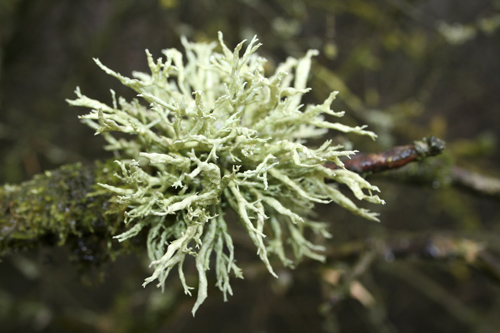
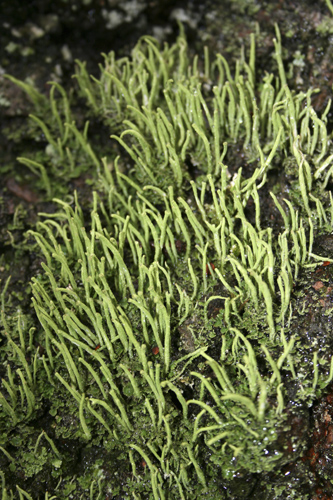
Further round British Waterways appeared to be carrying out repairs on the canal, the path was cordoned off and the water level low exposing mud. We crossed over a small bridge, continued through a new industrial estate and into the woodland. Candlesnuff Fungi Xylaria hypoxylon was growing on some of the moss covered logs and plenty of the trees had Lichens including Evernia prunastri and a few Pixie Cups Cladonia sp.

mna-candlesnuff-fungi2.jpg 

Candlesnuff Fungi Xylaria hypoxylon

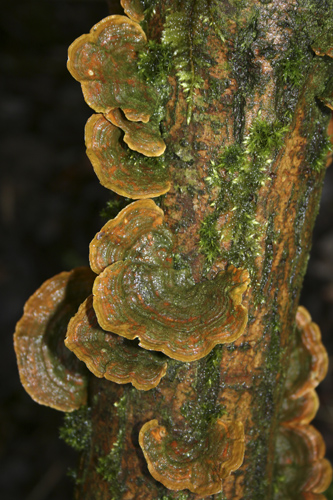
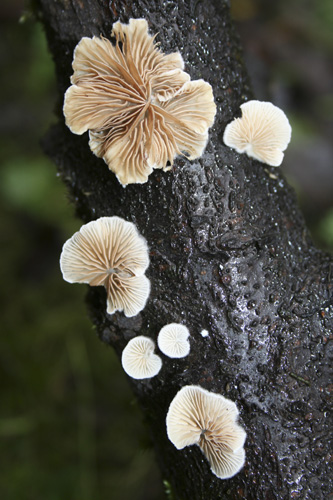
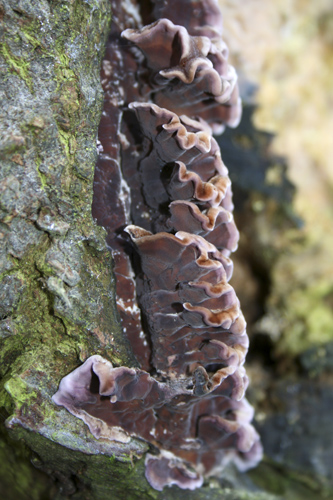
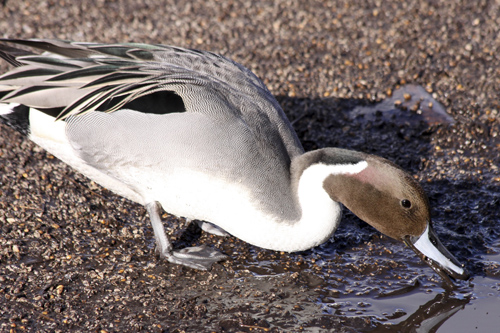
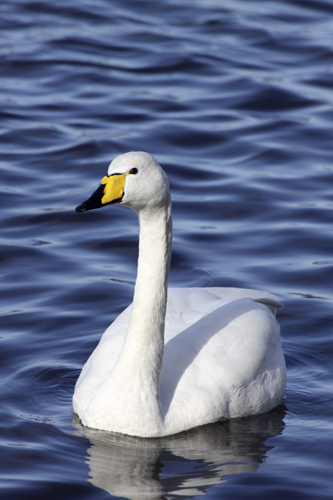
Birdlife was quiet with only a few Robins and Blue Tit.  The sun was in our eyes looking onto Scotsman’s Flash but no matter it was uncharacteristically free of birdlife with only a few Coot and BHGs. Everything was crammed onto Pearson’s Flash with a great count of 58 Mute Swans, gazillions of Coot, Tufties, Gadwall, five female Goldeneye, a lone Great Crested Grebe and five male Shoveler hiding out in the reeds. Descended down to the woodland at the south west end of Scotman’s Flash. I had a route around finding some Purple Jellydisc Ascocoryne sarcoides and a collection of small orange discs on a fallen tree trunk – Eyelash Fungi Scutellinia scutellata, a.k.a. Molly Eye-winker 🙂

mna-eyelash-fungi1.jpg

Eyelash Fungi Scutellinia scutellata

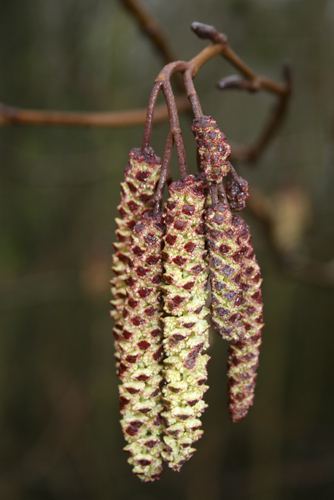
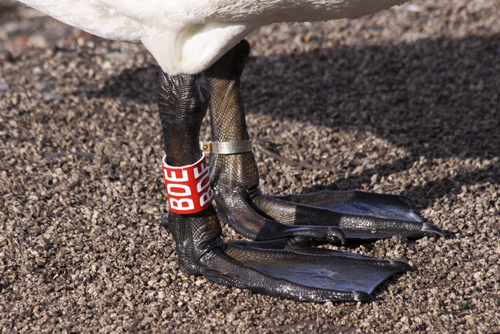
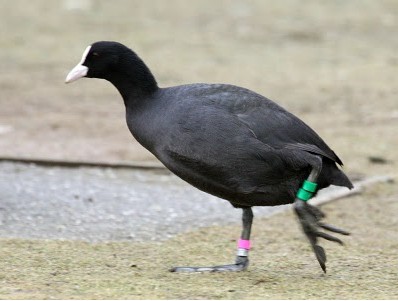
Ate lunch on the picnic tables at Ochre Flash, motley collection of BHGs, plus a few Mallards; Grey Heron and Cormorants flying around. Continued along the path Goldfinch and five Redwing overhead, Willow Tit was also reported. We stood by the reedbed where we had seen the Bittern last year. A ‘spring’ of Teal and a female Pochard but nothing else of note. Walked back along the canal and crossed over the bridge before having another nose over at Pearson’s Flash. One of the Mutes had a green (Cheshire) Darvic ring but was too distant to read it. Plenty of lilac coloured Alder catkins out already! plus a few Pussy Willows. A flock of Long-tailed Tits was a nice end to the walk before we headed back into Wigan.

Posted in MNA reports | 1 Comment

Ethiopia

I’m just back from a quick two week trip to Southern Ethiopia. The main focus of the visit was to experience the diverse range of tribal people found in the Omo Valley and get to know a little about their unique traditions. Undoubtedly you can’t visit Africa without noticing the birds and wildlife and we managed to see some of these as we travelled along the Great African Rift Valley with Lake Langano, Abiata-Shala NP, Lake Awasa and Lake Chamo 🙂

small-ethiopia-vervet-monkey1.jpg

 Vervet (Grivet) Monkey  Cercopithecus aethiops

small-ethiopia-toad1.jpg

Toad

small-ethiopia-roller1.jpg

Rufous-crowned Roller Coracias naevius

small-ethiopia-marabou-stork1.jpg

Marabou Stork Leptoptilos crumeniferus

small-ethiopia-white-pelican3.jpg

Great White Pelican Pelecanus onocrotalus

small-ethiopia-dragonfly1.jpg

Dragonfly Ictinogomphus ferox

small-ethiopia-beetle1.jpg

White-eyed Assassin Bug Platymeris biguttata A large predatory bug the feeds on smaller insects and grasshoppers.

small-ethiopia-karo-tribe1.jpg

Karo Tribesman on the banks of the Omo River. Kalashnikovs are a common sight amongst the tribesmen. Cattle are the primary source of wealth for many tribal groups and the men will fight to save them from intertribal rustlers.

small-ethiopia-karo-tribe4.jpg

Karo Tribeswoman

small-ethiopia-mursi-tribe4.jpg

A lip-plated woman of the infamous Mursi Tribe

Posted in MNA reports | Leave a comment

Waterloo 14th November 2010

We took the 47 bus from Sir Thomas Street to South Park in Bootle, arriving about 10.30 for the Remembrance Service.

Bootle War Memorial

There were several marching bands, a contingent from 238 Transport Squadron and several local worthies, including Joe Benton MP. It had been overcast earlier, with dark clouds threatening, and as the bands took their places a cold rain began. It always seems to rain on Remembrance Day.

p1000577.JPG

We jumped on a 53 bus to Waterloo Station and had lunch in Crescent Gardens, one of the four seafront gardens now being restored by the local Friends group. They have made a bog garden and wildlife haven in the old overgrown pond and rockery. See this Crosby Herald article.
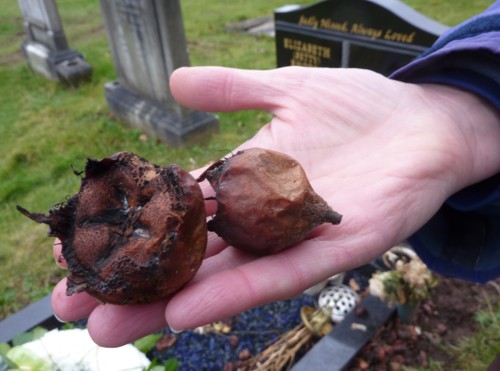
The shrubbery has been cut back and re-planted, allowing some of the older fruit trees to flourish. One of the group collected a handful of quince for her jelly, and we saw some young figs growing by the railings.

A double handful of quince

Young figs

There were no rarities on the Boating Lake, just the usual Black-headed gulls, Mallards, Coots, Mute Swans, Canada Geese and a few Tufted Duck. In the biting wind we walked back to the new Crosby Lakeside Adventure Centre. It is open to the public, not just to the Yacht Club, and they have a restaurant and bistro. It will be a wonderful place to sit with a coffee and snack to observe the birds on the Marina. There were leaflets about general outdoor activities in their rack and the receptionist agreed we could bring some MNA leaflets for approval.
By 2.15 we were heading back to Waterloo Station for the train home.

Posted in Sunday Group | 1 Comment

Swan mussel captures bird.

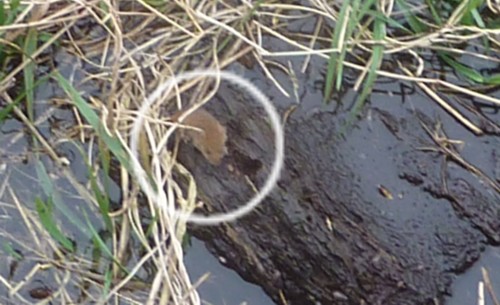
I got to Meresands Wood yesterday 11/11/10 with the strong and building winds, birdlife was keeping low with the view towards Martin Mere revealing pink feet being blown over the sky. However on reaching the Rufford hide I noticed a coot swimming towards the bank in a strange manner, it then climbed onto the bank and appeared to carrying what I first took to be a water vole/shrew. On closer inspection the object turned into a large swan mussel which was firmly clamped to the lower mandible of the bird, the coot lay down in the grass and appeared quite weak so this situation must have in place for some time, preventing the bird from feeding. After a while the coot returned to the water and wether it ever manged too release the mussel I don’t know, but unless it did it was likely to become a victim of this strange underwater predator.

Dave Hardy

Apologies for the poor photo below

Swan Mussel and Coot

Posted in MNA reports | 1 Comment

Otterspool, 7th November 2010

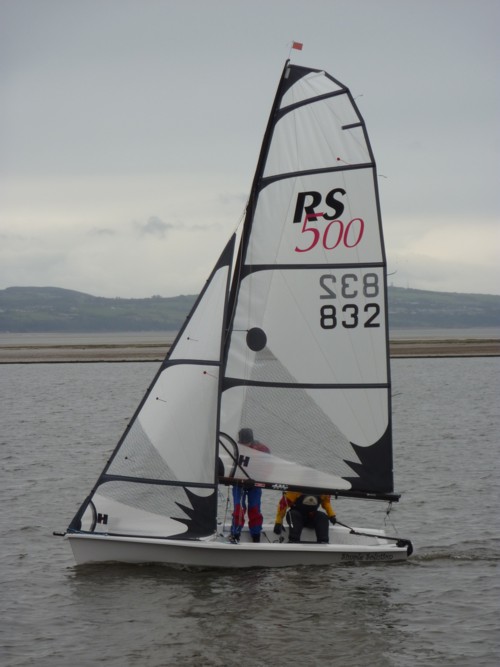
It was a lovely bright day, no wind, but quite cold (5°C). We met at Liverpool ONE and took the 82A to Riverside Drive / Otterspool Prom, arriving about 10.30. We walked southwards, looking at the yachts out on the river on the height of the tide.
 
Yacht at Otterspool

Several fishermen were catching cod and whiting, which, although perfectly edible, were deemed too small and were thrown back. A seal popped its head up, then rolled on the surface before disappearing. In two old mimosa trees on the bank near the children’s playground there was a Pied Wagtail and three or four Linnets which flew down to pick about in the grass. There was a small party of gulls near the exercise machines, mostly Common Gulls, and we watched one of them paddling its feet to charm the worms.
During the morning several emergency craft went upriver towards Speke at roughly quarter-hour intervals. First was the Fire and Rescue speedboat, then the RNLI hovercraft, then a yellow Air-Sea Rescue helicopter from Anglesey, then the Hoylake Lifeboat. Hovering in the distance over the Wirral was the small Air Ambulance. While we ate our lunch we watched the helicopter fly slowly back downriver, hovering over the Fire and Rescue speedboat, winching somebody up. The Liverpool Echo reported on Monday that it was a special exercise, simulating a plane landing in the river. See this link to a photo gallery.
After lunch we walked up to Aigburth Vale through Otterspool Park, with falling bronze leaves sparkling through patches of sunlight.

Golden leaves Otterspool Park

They were unusual leaves so I collected a couple to identify.
Sefton Park lake had the usual Mute Swans, Canada Geese and Mallards. The air was full of Black-headed Gulls. About 40 Coots were gathered at the northern end, some already charging each other aggressively and frightening the Moorhens. A pair of Little Grebes kept out of the way around the shore of the island.

Moorhen and cherry leaves Sefton Park

We made our way through the autumn colours of the park to the new Ranger Station for a slide show at 2pm by Ranger Paul on “The History of the Liverpool Parks”. Ranger Ronnie agreed to take a handful of MNA leaflets for display and he positively identified the fallen leaves I had collected earlier as cut-leaved beech (also known as feather beech or fern beech).

Cut-leaved beech

Posted in Sunday Group | 1 Comment

Hoylake to West Kirkby 31st October 2010

We planned to start the day at the Hoylake Local Food Fair so we took the 10.05 train from Central to Manor Road and found Hoylake Community Centre at the bottom of Hoyle Road. It was very well-attended, in fact it was a bit of a scrum. Local dignitaries included Wirral West MP Esther McVey and several councillors. We managed to get to some of the stalls through the crush, tasted some free samples and by the time we emerged several of us had bought cheese, kale, celery or bacon.
We lunched in the Promenade Gardens, happy that it was dry and fairly warm for late October (about 16
°C) although the sun was hidden by clouds. Then we set off northwards, passing the Lifeboat station. The tide was very far out, so apart from a few pigeons on the sand and a few gulls flying over, the only thing we noted was the Spartina grass coming up again on the beach.
Spartina grass on Hoylake beach

The grass has been of great concern to the locals for some time. In 2008 the Wirral Globe had an article “Don’t let Hoylake beach become another Parkgate”, and the Hoylake Junction blog showed pictures in September 2009 and June 2010, the latter showing council workers strimming it.

Towards Red Rocks the prom petered out so we picked our way across the splashy sand and were relieved to reach the rocks and the boardwalk. We spotted a pair of Stonechats on high twigs amongst the reeds and noted some late flowers. There were huge patches of Sea Aster in depressions near the houses.
sea-aster-red-rocks.JPG

Also what appeared to be Soapwort (although it is not supposed to flower later than September).

soapwort-red-rocks.JPG

We caught the 3 o’clock train from West Kirkby and were back in Liverpool about 3.30.

Posted in Sunday Group | 1 Comment

Ellesmere Port National Waterways Museum – Cheshire “Count me in!” celebration.

We met at Central Station at 10am for the 10.15 train. Changed to a Rail Replacement bus at Rock Ferry, which didn’t get us to Ellesmere Port until 20 to 12, and we were at the Museum just before 12. We booked for Jeff Clarke’s talk at 1pm followed by his guided walk. After lunch outside in the chilly sunshine we went up to the exhibition room and met Dave Hardy and David Bryant, who had been manning the MNA’s table all morning.
Jeff Clarke’s presentation was most entertaining, then we went with him to the rough grassland outside where he demonstrated the use of sweep nets and “beating the bushes” for catching invertebrates. The haul was various spiders, snails, caterpillars, a harvestman, a shield bug and several ladybirds: a harlequin, a 2-spot, a 7-spot, a 10-spot, an 11-spot and three 22-spot.
We caught the 2.45 Rail Replacement bus, the train from Rock Ferry and we were back in Liverpool before 4pm.

Posted in Sunday Group | 1 Comment

Victoria Park, Widnes 17th October 2010

We met at Lime Street station for the 10.26 train to Widnes, then walked just a few yards along Birchfield Road to the park. It was a perfect autumn day, with a clear sky and crispy leaves underfoot. 

 widnes-swans.jpg

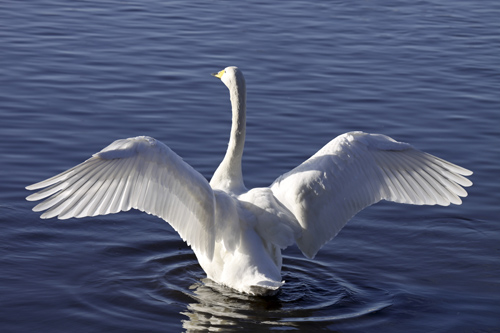
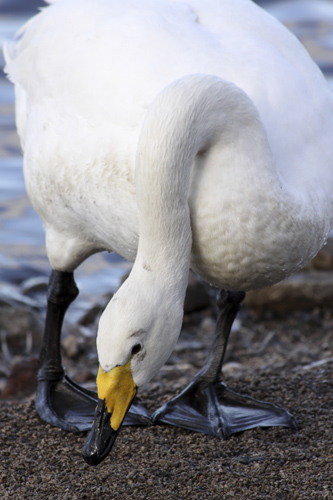
The pond was full of Mallards and Canada Geese, well-trained to bread, with some Black-headed gulls, one Moorhen and about 14 Mute Swans. None appeared to be this year’s cygnets (they were fully white) but they all looked like females, lacking the prominent black forehead knob of the mature cob. They may have been second-autumn juveniles.
The park was full of visitor-friendly features – a bandstand, a café, exercise machines, a BMX park and a climbing wall. The glasshouses had bedding plants for sale, two caged iguanas and a rather disappointing butterfly house. Near the Gladstone Memorial Fountain was an old milestone showing damage from a Zeppelin bombing raid in 1918.

 zeppelin-milestone.jpg

The wooded area on the west side of the park is the “nature” area, where we saw Long-tailed Tits, Great Tits, a squirrel and a Collared Dove in the trees. The wardens have put up bird and bat boxes and made a “Bug Hotel”. It must have been working because we saw what we thought at the time were three different Ladybirds in the area. The first one is the native 7-spot ladybird, but the other two are probably both Harlequins, which are very variable.

three-ladybirds.jpg

Something we have never seen before is a bat hibernaculum. The adjacent signage said there are Common Pipistrelles, Soprano Pipistelles and Daubenton’s in the area, who may spend the winter in their newly-built home.

bat-hibernaculum.jpg

On the way back across the field we saw a Magpie and three Pied Wagtails on the grass. We caught the 2.15 train back to Lime Street, arriving just before 3pm. 

Posted in Sunday Group | Leave a comment

Canal cruise 10th October 2010

What a contrast to last week! We had a glorious sunny boat trip on the canal from Haskayne to Burscough on the barge “Pride of Sefton”.
Twelve of us met at 10.10 am on 10/10/10 (which had to be a good omen) for the 300 bus from Sir Thomas Street to the King’s Arms at Haskayne. We were escorted aboard, then setted down in the bow to drift happily northwards watching the wildlife. There were the usual Mallards, Coots, Moorhens and Black-headed gulls, and we saw two Herons on the banks, one of which flew ahead in short stretches, only to be disturbed again by our progress. Yellowhammers, Robins, Blackbirds and Goldfinches flitted across the canal, a Buzzard flew high in the blue sky, Crows flocked into an isolated tree and a Kingfisher disappeared into the reeds somewhere past Heaton’s Bridge.

p1000318.JPG

For long stretches we meandered along with the canal to ourselves, passing only a very few walkers and fishermen and hardly any other narrowboats. The leaves on the trees had not yet started to turn, but the hedges were red with Hawthorn and Rowan berries, rose hips and apples. We spotted one white butterfly and several dark ones: one at least was a Red Admiral.
We turned near Burscough, right in the middle of a fishing competition, and had a chance to take a second look at three garden Peacocks (the birds not the butterflies); one was the white or leucistic variety. The skipper took us further south on the return journey, where we saw a most unexpected brood of seven Mallard ducklings, only a day or two old. Not only were their parents breeding very late (or early), they had a very mixed ancestry. Two ducklings were very dark brown, two were lighter brown, two were butter-blonde while the seventh was fawny-grey with dark flecks.  We disembarked at the Scarisbrick Arms at Downholland Cross at 4pm and caught the 300 bus back to Liverpool, due back in the City Centre at 5.15.

Posted in Sunday Group | 1 Comment

Eastham CP 9th October 2010

Had a trip over to Eastham CP on the Wirral on 9th October 2010. In between being nearly savaged by an old woman’s Dalmatians and listening to the dulcet tones of people screeching at their kids / dogs (delete as appropriate) I found quite a few interesting fungi and slime moulds.

Half a dozen Shaggy Parasol Mushrooms Macrolepiota rhacodes were at various stages of development. This large species is quite common and can be recognised by its scaly-looking cap and smooth unmarked stem. It is edible but must be cooked to remove toxins.

mna-eastham-parasol-fungi3.jpg

Masses of Sweet Chestnuts Castanea sativa littered the woodland floor which the ever present Grey Squirrels were busily collecting.

mna-eastham-sweet-chestnut1.jpg

 A whopper Common Earthball Scleroderma citrinum with hard scaly skin was growing on the soil at the base of a Beech tree.

mna-eastham-common-earthball1.jpg

The elongated hard black clusters of Birch Woodwart Hypoxylon multiforme were growing on a dead branch.
mna-eastham-birch-woodwart1.jpg

 A few Stump Puffballs Lycoperdon pyriforme were growing on a mossy fallen log. Their latin name ‘pyriforme’ means pear-shaped and they have a much smoother appearance than the more usual Common Puffball Lycoperdon perlatum.
mna-eastham-stump-puffball1.jpg

On the inside of a damp well rotted tree trunk I found a large colony of immature sporocarps of the Slime Mould Trichia varia

 mna-eastham-yellow-dot-slime-mould1.jpg

The second slime mould of the day was the salmon-pink spore mass of Arcyria incarnata. On close examination the capillitium have a mesh-like appearance. 

mna-eastham-pink-slime-mould1.jpg

Posted in MNA reports | Leave a comment