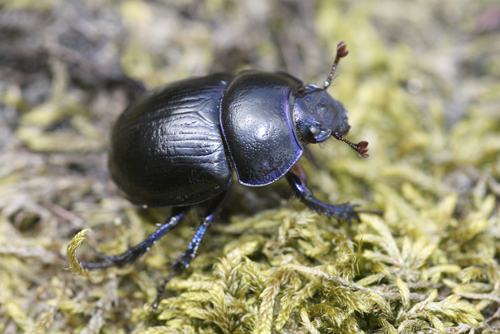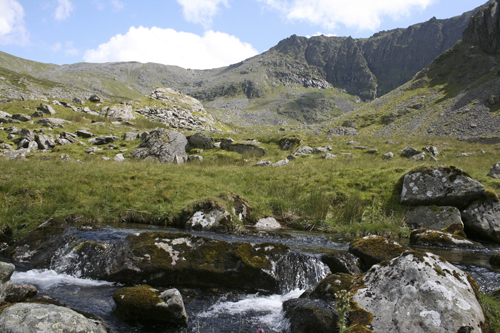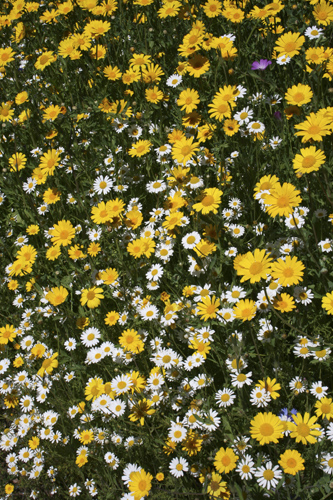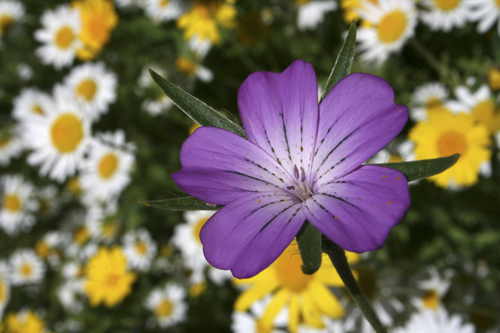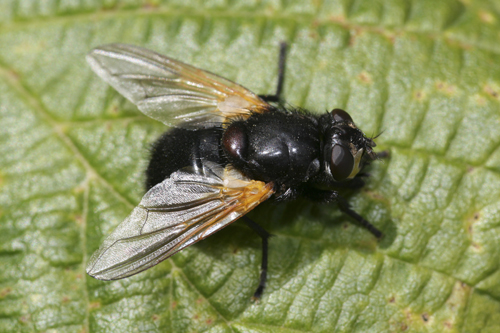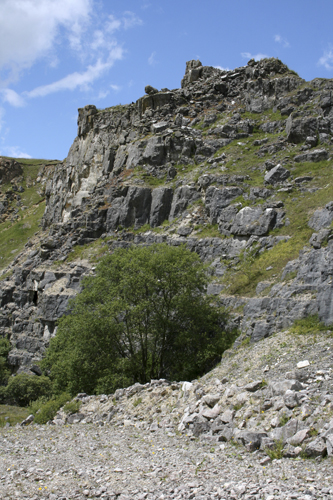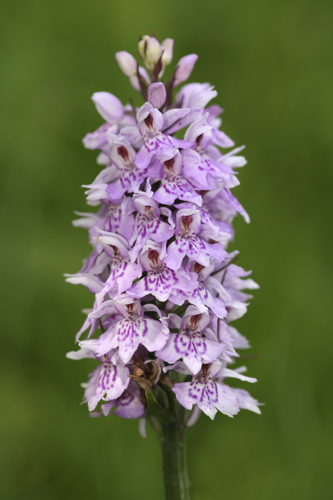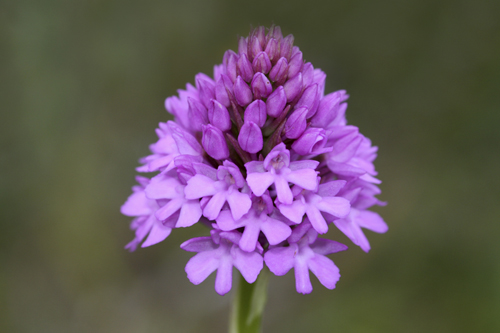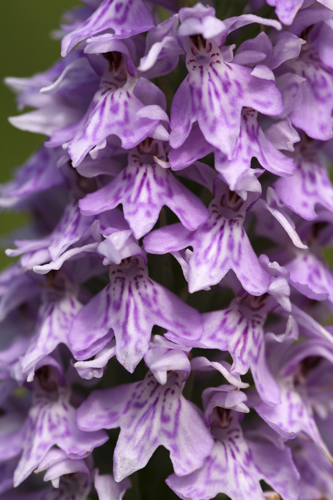
Sefton Meadows 19th June 2011

Two days before the official start of summer, and some of the trees think it’s autumn already! We’d got the 130 bus from Queen Square to Northern Perimeter Road and on the way we saw some Rowan trees with orangey berries. As we turned into Chapel Lane, we saw just a few Hawthorn bushes with their haws turning dark brown, nearly red. It’s a very funny spring!  It was quite hot when the sun came out but the rest of the time the breeze made us keep our jackets on.

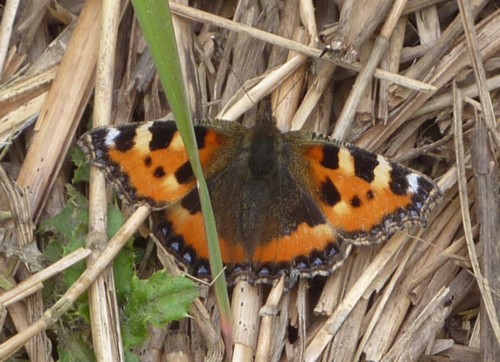
Through the fields of rough grass, wheat and broad beans we saw Rooks, Swallows, Swifts, House Martins, Skylarks, Chaffinch, Greenfinch and Goldfinch. The Ground Elder was in flower and there were some thick patches of Scented Mayweed. We spotted a Small Tortoishell basking.

sefton-meadows-small-tortoiseshell.jpg

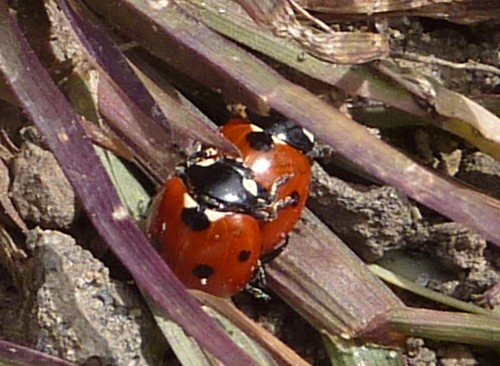
There had been a large hatch or emergence of 7-spot Ladybirds at the edge of the wheatfield, and I caught two of them mating.

sefton-meadows-ladybirds.jpg

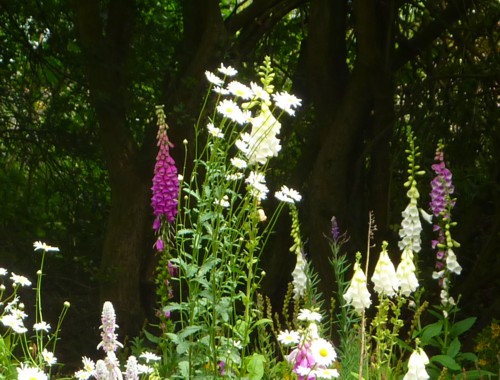
Near Sefton Church there are a lot of new houses being built, but it was quiet enough in the graveyard, where we had our lunch among the wild flowers.
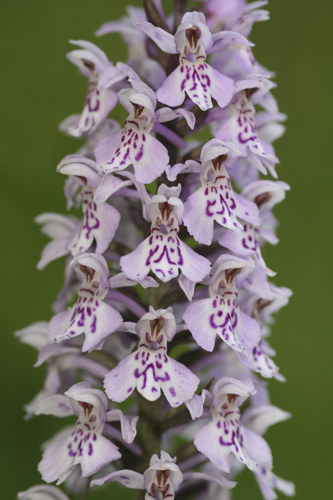
sefton-meadows-churchyard.jpg

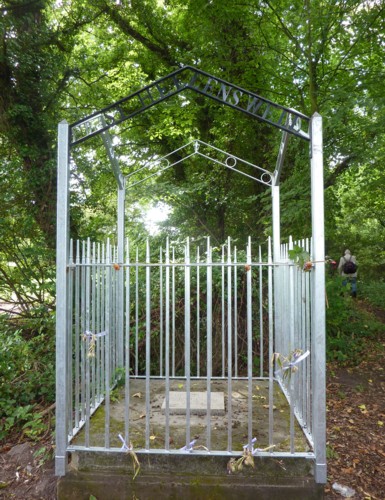
Nearby is the old St Helen’s Well, perhaps a holy place for millennia, pre-dating the church. The council have recently capped and railed it off, quite handsomely, and people are still tying votive offerings to the railings – plastic flowers nowadays.

sefton-meadows-st-helens-well.jpg

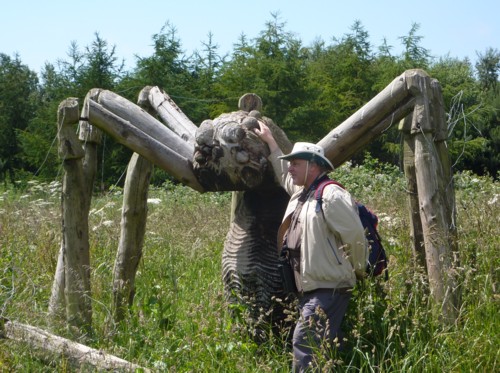
Near the Community Woodland around the River Alt there is an interesting wooden sculpture of a spider, but it only had six legs!.

sefton-meadows-john-and-spider.jpg

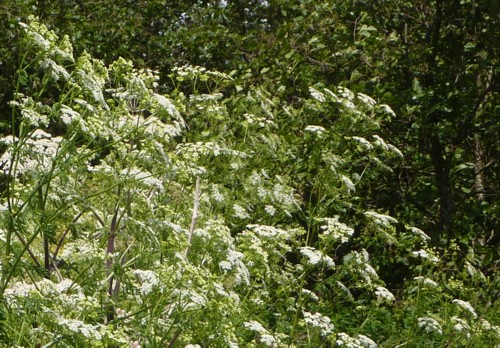
We saw a Thrush, heard a Chiffchaff, a Shelduck flew over and we saw our bird of the year so far – a Lesser Whitethroat. From the bridge we saw a Mallard with 8+ ducklings and in some reeds a Reed Bunting. Other butterflies were a second Small Tortoiseshell and a Speckled Wood. On the way back to Sefton Church there were masses of tall (six feet or more) white Umbellifers in the verges. Not Hogweed (we saw that as well), not Cow Parsley (too late). Could it have been Hemlock? It had spotted stems.

sefton-meadows-hemlock-maybe.jpg

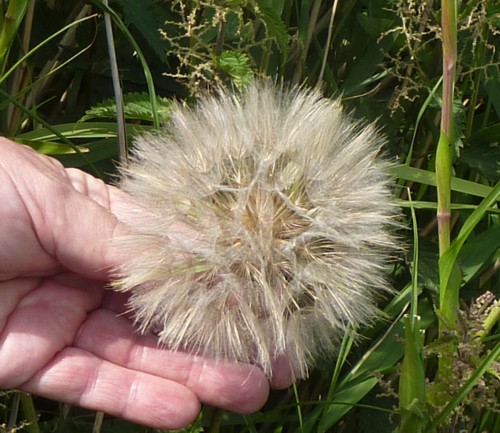
Other flowers were Hedge Woundwort, Evening Primrose just starting to bloom at the bottom of the flower spike, and the huge seed head of Goat’s Beard.

sefton-meadows-goats-beard-head.jpg

Back to Northern Perimeter Road via Brickwall Lane, and we got the 55 at 2.45 returning to the City Centre.

Posted in Sunday Group | 1 Comment

Stocks Reservoir Bird Pellet

MNA members John from Biobank and Martin Corcoran headed up onto the fells during our visit to Stocks Reservoir on 4th June 2011. They came across a pile of bird pellets on a rock amongst the moorland vegetation and brought me a prezzie of two pellets in a plastic bag.

The Barn Owl pellet collected from Carsington Water on our February Coach Trip contained bones from Field Voles see post https://naturalistsnotebook.mnapage.info/2011/02/28/owl-pellet/ These two pellets were entirely different.

mna-stocks-bird-prey-pellet1.jpg

I measured them – one being 4cm long the other slightly larger at 5cm.

mna-stocks-bird-prey-pellet2.jpg

After soaking in water in a petri dish I teased apart the two pellets. Here’s a photo of what they contained:-

Top left shows vegetation – moss, a couple of grass seeds and pieces of stem.

Bottom left shows three small stones and a snail.   

Middle show the bones that were visible on the outside of the top pellet with a random assortment of non-identifiable small bones probably tarsus with the odd claw from the bottom pellet.

Top Right shows mostly abdominal and sternite plates from black beetles.

Middle Right shows leg parts, heads and elytra – the wing cases from black beetles. 

Bottom right shows elytra and leg parts from brown beetles.

mna-stocks-pellet-contents.jpg

Here’s the beetle bits and pieces in greater detail. Could the piece of orange and black patterned elytra have come from a Sexton Beetle Nicrophorus vespilloides ? I saw one during our visit.

mna-beetle-bits1.jpg

Little Owl pellets often contain a large number of beetles but these pellets were too large for that species.

Posted in MNA reports | 1 Comment

Taylor Park St Helens 12th June 2011

After the very dry weather of the last few weeks, today we were washed out early by heavy rain. It had been only cool and drizzly when we left Queen Square on the 10A bus at 10 past 10, but a light rain was falling when we got to the park soon after 11. For shelter we took the route along their Oak Wood path.

taylor-park-glade.jpg

A Blackbird, a Mistle Thrush and seven Wood Pigeons were all poking about on the sunken lawn, hoping for waterlogged worms. We saw several spotty young Robins, plenty of Magpies and the grass was full of molehills. On the lake there were the usual Mallards, now starting their moult, Canada Geese, one Greylag, and a Lesser Black-backed Gull. A Coot was sitting on a late nest.

taylor-park-coot-on-nest.jpg

Several Swallows were over the water, and one or two Sand Martins. We asked the Rangers, but they didn’t know the nearest place they nested. I wonder how far they had come?  A family of Long-tailed Tits were flitting about, an unidentified Tern flew over and a pair of Mute Swans had five cygnets, but we couldn’t see any leg rings.

taylor-park-swan-and-cygnets.jpg

A Great Crested Grebe had made a nest on the rolls of barley straw that were all around the edge of the lake. She may have been brooding chicks, but we didn’t see any. Perhaps she was on a late clutch.

taylor-park-gc-grebe-on-nest.jpg

It was now raining heavily, and we sheltered under the eaves of the Ranger Station to have our lunch. One of the Rangers took pity on our bedraggled state and let us inside, so we finished lunch in style on their covered lakeside terrace! I left some MNA leaflets on their rack.

We dropped into their Quarry Garden on the way back to the bus. They have arranged a large collection of bog oak along one side and planted young ferns amongst them. The whole sunken garden will look interestingly prehistoric soon.

taylor-park-bog-oak.jpg

We got the number 10 at 1.40, dried out on the bus and were back in Liverpool by 2.30, where it was still raining!

Posted in Sunday Group | 1 Comment

Hay Bridge 11th June 2011

Terry, Dave Bryant and me headed up to Hay Bridge, the private reserve owned by the John Strutt Conservation Foundation (JSCF) nestling in the Rusland Valley in Cumbria. As ever we were to have a wonderful day with a variety of birds, reptiles, insects and plants. We headed down to the compost heaps where we found a Slow Worm Anguis fragilis and around eight Grass Snakes Natrix natrix, one of which slithered away between Terry’s legs! A Meadow Ants Lasius flavus nest was in one of the heaps and the adults quickly began removing their larvae to shade when we peeled back the tarpaulin cover. There were a few recently shed snake skins and with a bit of ‘technical assistance’ with Dave holding one of the skins I took a close-up of the head showing the clear lens that would have been over the snake’s eyes.

mna-haybridge-snake-skin1.jpg

We wandered down to the river through the fields. During last year’s drought in the Rusland Valley the cows weren’t grazed in these fields and a number of grassland species shot up including Ox-eye Daisy Leucanthemum vulgare, White Clover Trifolium repens, Yellow Rattle Rhinanthus minor and Yorkshire Fog Holcus lanatus. They’ve decided to continue keeping the cows out until the plants have seeded. Plenty of insect life around here including Grasshoppers, numerous Chimney Sweep Moths Odezia atrata, a few Garden Chafer Beetles Phyllopertha horticola, a Mirid Plant Bug that I later had identified as Leptopterna dolabrata a 5th instar nymph and single Common Blue Polyommatus icarus and Large Skipper Ochlodes venata.

 mna-haybridge-large-skipper1.jpg

Large Skipper

A Spotted Flycatcher was perched on a wire beside the study centre, occasionally dashing up to grab at a passing insect before returning to its perch. The woods held Pied Flycatcher, Blackcaps, Willow Warbler and a few Garden Warblers. Dave had a couple of Small Pearl-bordered Fritillaries Boloria selene flitting around in the sunlight. Tree Pipits were performing their display flights in a few clearings. Terry on raptor watch saw wing-tagged Red Kites, Buzzards carrying snakes in their talons and Sparrowhawk.

At Black Beck Tarn a few female Four-spotted Chaser Libellula quadrimaculata were patrolling their patch of water and Common Blue Damselfly Enallagma cyathigerum, Blue-tailed Damselfly Ischnura elegans and Large Red Damselfly Pyrrhosoma nymphula were in good numbers staying in the vegetation on the tarn edge and a few pairs in copulating wheels on the White Water Lily pads Nymphaea alba. A few Emerald Damselfly Lestes sponsa were perched in their characteristic stance with their wings half-open.

mna-haybridge-large-red-damselfly2.jpg

Large Red Damselflies in copulation wheel

 mna-4-spot-chaser2.jpg

4-spot Chaser

A Longhorn Beetle Rhagium mordax with black spots on its wing cases landed on the grass beside me and walked quickly up the stems occasionally posing for a photo. The larvae of this species feeds on the rotten wood of deciduous trees.

mna-longhorn-beetle-rhagium-mordax1.jpg 

Longhorn Beetle Rhagium mordax

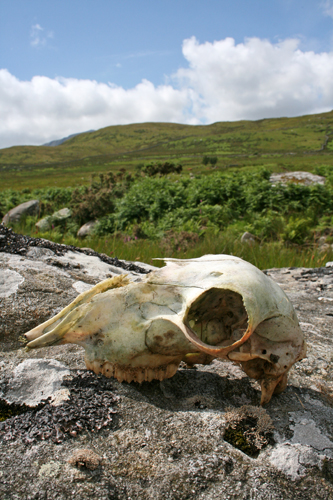
There was a Sawfly Aglaostigma aucupariae, a dozen or so Longhorn Micromoths Nemophora degeerella resting on bracken fronds on the edge on the track passing White Moss Tarn and the Bird Cherry Tree on the track leading to High Hay Bridge again held the larval tents of the Bird Cherry Ermine Moth Yponomeuta evonymella.Returned to the Study Centre for a late lunch and to photograph some of the skulls including those from a two-year old Roe Deer buck, a ‘Hummel’ Red Deer stag –a rare condition where stags fail to develop pedicles on the skull and thus are unable to grow antlers and an Otter. A rather gruesome find in the Study Centre collection was the feet and talons from a Kestrel.

mna-roe-deer-buck-skull1.jpg

Roe Buck Skull & Antlers

mna-otter-skull1.jpg

Otter Skull

mna-kestrel-talons1.jpg

Kestrel Feet & Talons

Dave had been out on the mosses where he had seen a number of Large Heath Coenonympha tullia butterflies whilst having lunch. This species favours bog areas and acidic moorland, the main larvae foodplant being Hare’s-tail Cottongrass Eriophorum vaginatum. It has declined seriously in England and Wales and I have never seen it so we headed back along the boardwalk and onto the mosses. As we walked around we disturbed a number of individuals that flew low to the ground with the breezy wind and landed deep amongst the tussocky grass and moss. Eventually I managed a few shots of one nestled in the grass.

mna-large-heath1.jpg

Large Heath

Other finds included Roundleaved Sundew Drosera rotundifolia, Common Milkwort Polygala vulgaris and a Common Lizard Lacerta vivipara basking on a pile of pine logs before quickly hiding beneath the bark.

mna-round-leaved-sundew1.jpg

Round-leaved Sundew

We headed back to the Study Centre and wrote up our sightings into the log book then Helen, the warden’s partner showed us a female Adder Vipera berus curled up on the side of a Meadow Ant nest. It frequently basks in this spot and Helen had been past it previously with the lawnmower and it had remained there undisturbed.

mna-adder.jpg

Female Adder

A great finish to the day… but there was more to come…We drove along some increasingly narrow lanes to check out where Roundsea Wood Nature Reserve was located. It is managed by Natural England and is home to Raft Spiders Dolomedes fimbriatus and Dormice Muscardinus avellanarius. As we headed back I spotted a bird of prey circling just above the line of oaks on my side of the car which was joined by another. We stopped the car and Terry identified them as a pair of Honey Buzzards with their wide wings held completely flat when gliding. Top birds to end a great day!   

Posted in MNA reports | 1 Comment

Longton Brickcroft 11th June 2011

This was a joint MNA / RSPB trip, but although there were 12 MNA members (some with dual membership) there were no RSPB-only people.

It was sunny some of the time, but a fresh breeze kept the temperature down.

longton-jungle.jpg

Four species of butterfly seen: Meadow Brown, Speckled Wood, Red Admiral and Small Tortoiseshell.  Dave H caught and released a Cream-Spot ladybird and a Dock Beetle.  We saw one Common Blue Damselfly.

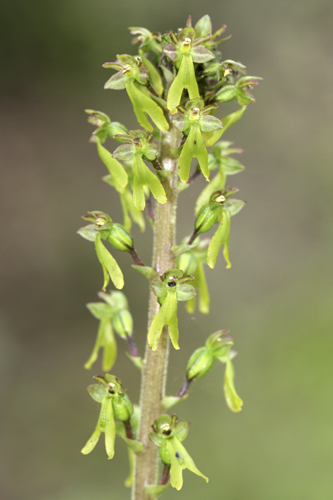
Flowers included both Yellow and White waterlilies, Flag Iris,  some late Bluebells still in flower, Ragged Robin and two kinds of Orchid, tentatively identified as Southern Marsh and possibly Common Spotted.

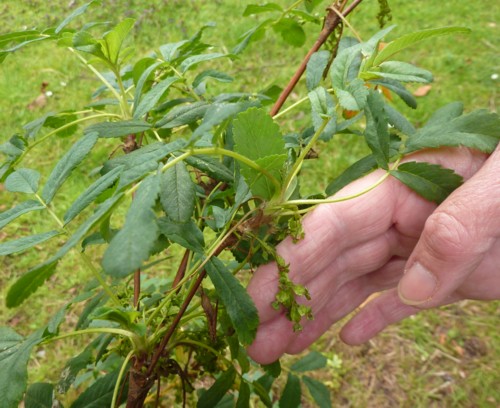
A  Blackthorn bush had some very strange growths on the edges of its leaves.

longton-blackthorn-galls.jpg

Sid collected some to see what would eventually hatch out, and Dave H later identified them as galls caused by mites (Eriophyes prunispinosae).

There was a pair of Great Crested Grebes with two stripy young, and we watched one of them being fed by an adult. Several Jays were in the trees.  A pair of Mute Swans had five cygnets with them.

longton-swan-family.jpg

Both swan parents had leg rings – blue SNA and blue SNB.

At the upper lake, where many Mallards congregate hoping for bread, we saw one very funny-looking duck. Smaller than a Mallard, and looking like it was partly Mandarin.

longton-funny-duck.jpg

Posted in MNA reports | 1 Comment

MNA Coach Trip Stocks Reservoir 4th June 2011

19 MNA members joined the coach trip visiting a new venue for the group at United Utilities Stocks Reservoir near Slaidburn in the picturesque Trough of Bowland, Lancashire.

mna-stocks-reservoir1.jpg

It turned out to be a fantastic day and a place many wish to return to in the future.We began our exploration from School Lane car park located at the north-east of the reservoir. An eight mile trail runs around the reservoir edge but there was so much to see that most of the group concentrated on the immediate area. This first section of the trail also ran adjacent to Gisburn Forest, leased to the Forestry Commission by United Utilities and managed as a commercial coniferous plantation. Plenty of birdlife with Willow Warblers and Blackcaps in good numbers and a single Garden Warbler performing its melodious song that sounds quite similar to a Blackcap for beginners. Wren, Chaffinches, Long-tailed Tits were in song along with Redpolls buzzing away, one of which perched briefly on top of a Sycamore Tree. A bird hide was conveniently located as a lunch stop. This gave views across the reservoir and few exposed sandy banks where we viewed Greylag and Canada Geese, Red-breasted Merganser, Redshank, Oystercatcher, Lapwing, Common Sandpiper, Lesser Black Backed Gull. We continued down through a meadow where Sand Martins and Swallows were zipping around, the former nesting in holes a sandy bank where the River Hodder enters the reservoir. We crossed the Lock Bridge over Hasgill Beck and had a route around in the stream over turning rocks in the hope of finding Freshwater Crayfish, no luck although we did see a shoal of Minnows Phoxinus phoxinus.

mna-stocks-res-hasgill-beck.jpg

Les Hale checking underneath stones for Freshwater Crayfish

We climbed up onto the fell passing Swaledale Sheep and a small herd of Cows with their calves.

mna-stocks-res-cows1.jpg

Curlews were flying around calling their plaintive cry, Meadow Pipits were performing their aerial parachute display flight, Skylarks were ascending to great heights whilst singing and a couple of Oystercatchers were flying round one perched giving good views on a drystone wall. Some of the group continued round to the River Hodder and saw a Redstart.

The area was an entomologist’s heaven both for the sheer number and variety of species. Ichneumon Wasps were a prominent feature of the day. These members of the Hymenoptera order are parasitoids -their larvae feeding on another insect. There are around 1200 species of Ichneumon Wasp in Britain so a couple of specimens were collected in tubes for accurate identification by entomologists in Liverpool Museum.

A couple of Sawflies were seen including this handsome specimen Macrophya duodecimpunctata with white markings on its black legs

mna-stocks-res-ichnumenon-wasp1.jpg

Sawfly Macrophya duodecimpunctata

A vivid lime green and black Sawfly was later identified as Tenthredo mesomela 

mna-sawfly.jpg 

Sawfly Tenthredo mesomela

Black and Red Froghoppers Cercopis vulnerata were present in large numbers and their cuckoo spit could be seen splatted on plant stems.

mna-black-red-froghopper1.jpg

A Common Cockchafer Melolontha melolontha flew in and began feeding on Hawthorn flowers. It was caught and placed on the ground allowing good views of its feathery antennae before taking off.  

mna-cockchafer2.jpg

I watched a male Scorpion Fly Panorpa germanica tucking into its lunch of a Soldier Beetle Cantharis nigricans .

 mna-stocks-res-scorpion-fly1.jpg

Another species of Soldier Beetle Cantharis pellucida was also seen by many. Green Nettle Weevil Phyllobius pomaceus were full of the joys of Spring and engaged in a bit of bonking. A tiny Weevil Polydrusus formosus only around 5mm in length and sporting a wonderful metallic shine posed on Dave Hardy’s arm.

 mna-stocks-res-weevil1.jpg

mna-stocks-res-weevil2.jpg

An Alder Fly Sialis lutaria posed nicely. Despite their name they have no connection with Alder Trees, their larvae are aquatic and the adults emerge in May and June.

mna-alder-fly1.jpg

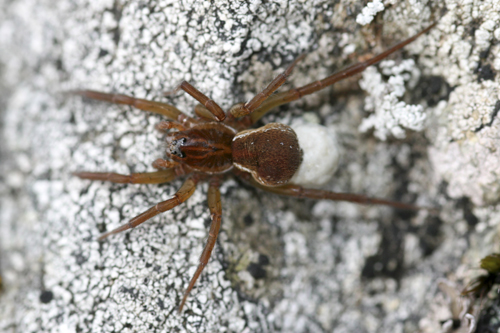
A couple of Spiders including a female Wolf Spider Pardosa sp. carrying an egg sac and the Spider Tetragnatha nigrita was seen in its typical resting position that gives rise to the family name of Stretch Spiders.

mna-stocks-res-spider1.jpg

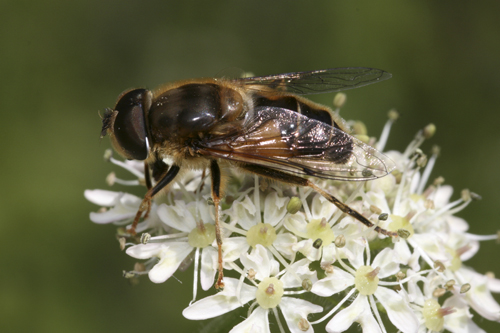
Plenty of Hoverflies with Eristalis sp. Xylota segnis, Volucella pellucens and Sericomyia silentis being recorded.

 mna-stocks-res-hoverfly1.jpg

Common Bog Hoverfly Sericomyia silentis

Many species of Diptera were seen but again this is a specialised field for accurate identification, Empis tessellata, Green Bottle Lucilia sp. Yellow Dung-fly Scatophaga stercoraria, Robber Fly Asilidae sp. Flesh-fly Sarcophaga sp. were all seen but there were countless others.

mna-stocks-empis-fly1.jpg

Empis tessellata

mna-yellow-dung-fly1.jpg

Yellow Dung-fly Scatophaga stercoraria on sheep dung

Other insects recorded included Green Lacewing Chrysoperla sp. Click Beetle Athous haemorrhoidalis and a distinctive orange and black Beetle that escaped my camera lens as we sat on the seats in the picnic area at the end of the walk that I later identified as a Sexton Beetle Nicrophorus investigator

Barbara and co. found a Longhorn Beetle in an upper corner of the Lakeside hide. John Clegg captured it in one of his collecting pots, then let it go on the windowsill of the hide whilst Barbara poised with camera. Harry came along soon after with his Chinery “Collins Guide to the Insects” and the one that most resembled the photo was Rhagium sycophanta.

mna-stocks-longhorn-beetle.jpg

Harry had also seen a reddish coloured Deer earlier possibly a Sika Deer Cervus nippon which are the predominate deer species inhabiting Gisburn Forest.A few notable Butterflies with a male Orange Tip Anthocharis cardamines, a rather washed-out Small Copper Lycaena phlaeas and a few Small Heath Coenonympha pamphilus. Red-necked Footman Atolmis rubricollis was the moth of the day with around twenty flying around the tops of the Spruce Trees and a couple of individuals resting up on vegetation.
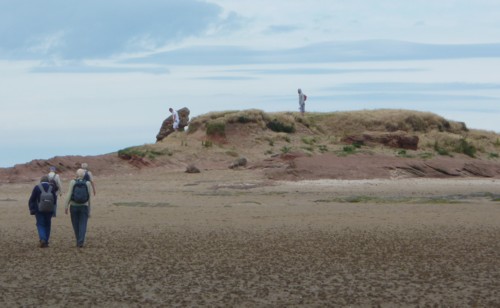
mna-red-footed-footman1.jpg

Red-necked Footman Atolmis rubricollis

The botanists were not disappointed with some Spring species such as Hawthorn, Bluebells Hyacinthoides non-scripta and Cuckoo Flower Cardamine pratensis still in flower. Heath Speedwell Veronica officinalis, Brooklime Veronica beccabunga, Water Forget-me-not Myosotis scorpioides, Common Spotted-orchid Dactylorhiza fuchsia, Meadow Buttercup Ranunculus acris, Common Bugle Ajuga reptans, Water Avens Geum rivale, Herb Bennet Geum urbanum, Bush Vetch Vicia sepium, Greater Stitchwort Stellaria holostea, Heath Bedstraw Galium saxatile and Red Campion Silene dioica.

 mna-stocks-res-water-avens1.jpg

Water Avens Geum rivale

Although no longer in flower Wood-sorrel Oxalis acetosella and Coltsfoot Tussilago farfara were identified by their distinctive leaves.Compact Rush Juncus conglomeratus, Ribwort Plantain Plantago lanceolata and plenty of Meadow Foxtail Alopecurus pratensis were also noted.

mna-ribwort-plantain1.jpg

Ribwort Plantain Plantago lanceolata

Posted in MNA reports | 1 Comment

Roby 5th June 2011

A day of flowers today, both in the fields south of the M62 and in the National Wildflower Centre.

We got the 161 bus at 10.20 from Queen Square to Roby Village and walked south along the footpath called Carr Lane. Goldfinches, a Wren and a Speckled Wood on a great bush of Japanese Knotweed. The verges were a wild tangle of Nettle, Goose Grass, Buttercups and Dock, with some lovely wild white rose bushes, unlike the usual Dog Roses.

roby-wild-rose.jpg

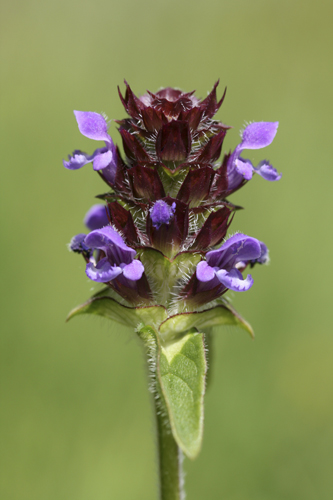
The day was overcast and not as warm as it had been earlier in the week – about 60 °F, 15 °C. A Kestrel was hovering overhead as we crossed the M62 by the footbridge and descended into the rough grasslands and wheat fields beyond. There were a few spots of rain which didn’t come to much, and then the sun tried to come out. We saw three orchids in the wet grass, which all looked different from each other – one white, one pale mauve and one a darker purple. None appeared to have spotted leaves. Despite careful reading of my book, I still can’t say what they were, although I note that they are all said to hybridise readily, which is bound to confuse identification.

roby-orchid-1.jpg

roby-orchid-2.jpg

roby-orchid-3.jpg

A male Reed Bunting was in the reeds, Swallows and Swifts flew overhead and a Buzzard sat on a telegraph pole. Greenfinches and Skylarks were singing and we saw a Heron on a fence near a pool, standing very upright and slim, almost disappearing when he was face on. A clump of fungi, past their best, were probably Shaggy Ink Caps.

roby-shaggy-caps.jpg

The edges of the cultivated fields were full of Meadow Buttercups and Scented Mayweed, which smells very sweet when rubbed.

roby-scented-mayweed.jpg

In the old sports field next to Edenfield Road we saw two Greater Spotted Woodpeckers low down on a tree trunk, probably a parent feeding a newly-fledged youngster.  In a Lime tree on Edenfield Road itself we saw several ladybirds, probably after the aphids. One was quite an odd one – long and slim, with some black spots around its midriff – but it got away before I could photograph it. But the other was a red-on-black Harlequin ladybird.

roby-harlequin.jpg

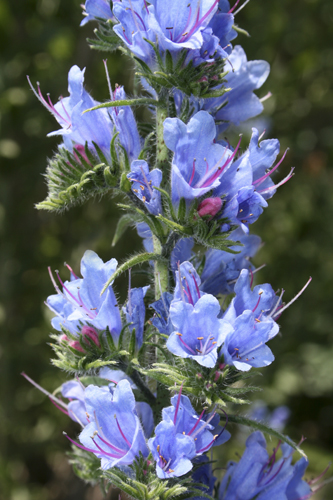
The National Wildflower Centre in Court Hey Park had an event on – Magical Midsummer Party – and it was thronged with kids and pushchairs. But the wildflower areas had some magnificent Viper’s Bugloss, some Meadow Cranesbill, and the orange Fox-and-Cubs.  There was a Common Blue butterfly amongst them.

roby-vipers-bugloss.jpg

Vipers Bugloss

roby-meadow-cranesbill.jpg

Meadow Cranesbill

roby-fox-and-cubs.jpg

Fox-and-Cubs

After a quick foray into the Farmers’ Market so that I could buy some Stinking Bishop cheese, we got the 61 bus on Roby Road and were back in Liverpool by 3.30.

Posted in Sunday Group | 1 Comment

Freshfield 29th May 2011

We met at Central for the 10.08 train, arriving at Freshfield at 10.40. It was a dull, overcast day with a stiff breeze. It’s been windy for over a week now.  We walked around the Freshfield Dune Heath LWT reserve, spotting a Wren, a Song Thrush, Whitethroat, Magpies, Jackdaws, Carrion Crows and Wood Pigeons. There was a Jay under some trees, a Chiffchaff was calling and a pair of Linnets flew up. An obliging Chaffinch sat on a post for us and a Heron flew over. The gorse at the edge of the fields was very brown, perhaps frost-damaged, but many healthy young oak seedlings were coming up. We saw some rabbits and also the brown Hebridean sheep that are being used for conservation grazing.  Most of the ponds had dried to about a quarter of their normal levels, and one was full of tadpoles.

We crossed the railway and the golf course and headed down to Fisherman’s Path and the Ainsdale Sand Dunes NNR. It stared to rain so we ate our lunches in the shelter of the pine trees.

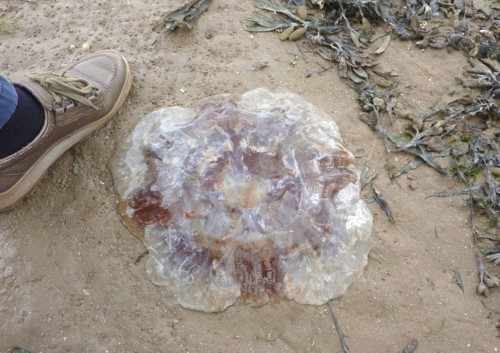
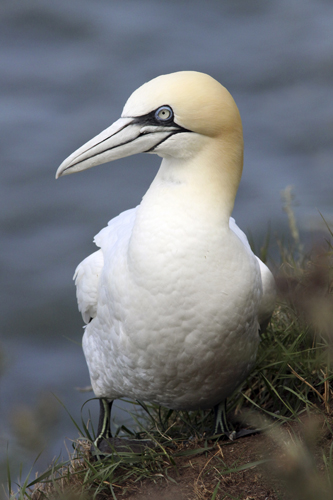
The sun had begun to shine when we reached the beach, but there was still a very strong onshore wind and blowing sand. The recent gales must have been too much for one Gannet, which we found dead on the sand. But about 100 Herring Gulls were enjoying themselves, hovering and wheeling in the updraught where the wind hit the edge of the dunes.  We saw some Lesser Black-backed gulls and Sanderlings on the tideline, but most of our attention was taken with the sea life the gales had blown in.  Thousands of Common Jellyfish had been washed up, together with some Sea Potatoes, Whelk shells, Starfish and tens of thousands of Razor Shells.

freshfield-common-jellyfish.jpg

freshfield-sea-potato.jpg

freshfield-starfish.jpg

freshfield-whelk-and-razors.jpg

At Freshfield station we found a Cream-spot Ladybird.

freshfield-cream-spot-ladybird.jpg

We caught the 2.41 train, due back in Liverpool about 3.15.

Posted in Sunday Group | 1 Comment

Nercwys Forest 28th May 2011

Four members met at the Druid’s Inn for an evening meal – David, Alexander, Ann and me. We met two more at the Rainbow afterwards (father and son from Chester, new members, can’t recall your names, sorry.)

Regrettably, despite a long wait into the dusk on the forest path, we neither heard nor saw a Nightjar, although David was sure the black bird which we caught a fleeting glimpse of as we arrived, disappearing into shrubbery by the path, was a Nightjar we had disturbed. David has heard Nightjars at this location on at least three occasions in the past, but not tonight !

We had more luck with bats on the way back to the car park at 10pm.  My bat detector  easily picked up the small bats flitting at head height through the tunnels of trees. They were calling at about 45KHz so were almost certainly Common Pipistrelles. We also picked up something at 20 KHz, which ought to have been a Noctule, but we couldn’t see anything flying higher up.  Nothing at 80 KHz +, which would have been Greater and Lesser Horseshoe bats.

Posted in MNA reports | 1 Comment

More pictures from Walney

Here are John Clegg’s Walney pictures.

jc-walney-herring-gulll.jpg

Herring gull at nest

jc-walney-lbb-gull.jpg

Lesser Black-backed gull at nest

jc-walney-ringed-plover.jpg

Ringed plover at nest

jc-walney-two-headed-eider.jpg

John commented that this is a rare two-billed Eider, perhaps affected by radioactive emissions from the nearby Sellafield nuclear reprocessing plant.

jc-walney-wall-brown.jpg

Wall Brown butterfly on a sheltered sunny bank.

jc-walney-hare-1.jpg

And here are two views of the obliging Brown Hare which posed for us outside one of the hides.

jc-walney-hare-2.jpg

Posted in MNA reports | 1 Comment