Quick update

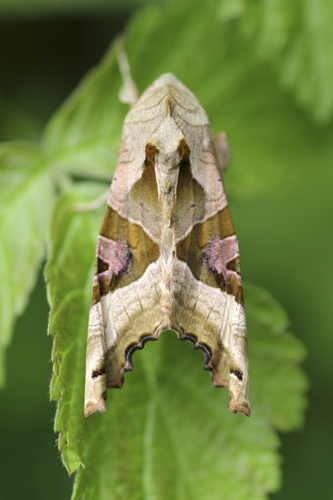
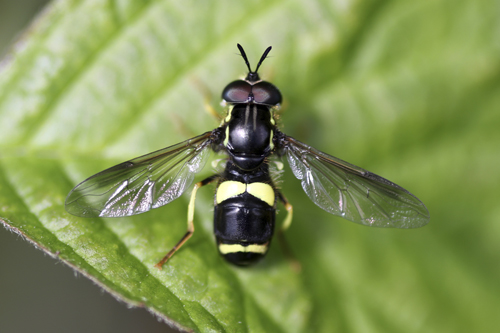
I have added some pictures by Chris Derri to the post about Woolston Eyes on 14th April, and also a picture of a Sexton Beetle and some moth IDs to the Cabin Hill post on 24th May

Barbara

Posted in MNA reports | 1 Comment

Worthington Lakes 27th May 2012

mna-worthington-lakes1.jpg

Worthington Lakes, owned by United Utilities, are made up of three reservoirs built to supply Wigan with drinking water and are fed by the River Douglas which originates on the moors above Rivington.It was still hot when we arrived at Worthington Lakes from Brockholes and a singing Wren greeted our arrival. Flowering woodland plants included Herb Robert Geranium robertianum, Wood Avens a.k.a. Herb Bennet Geum urbanum, Greater Stitchwort Stellaria holostea and Yellow Pimpernel Lysimachia nemorum. Mike Barrow and Chris Derri found two plant species that were infected by fungus.

mna-worthington-lakes-red-campion1.jpg

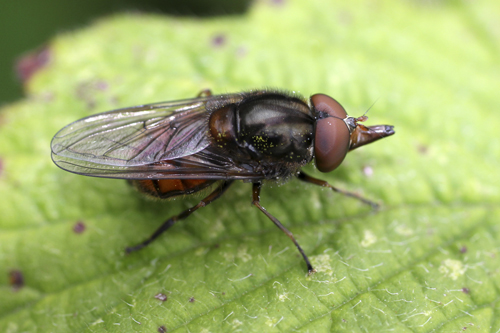
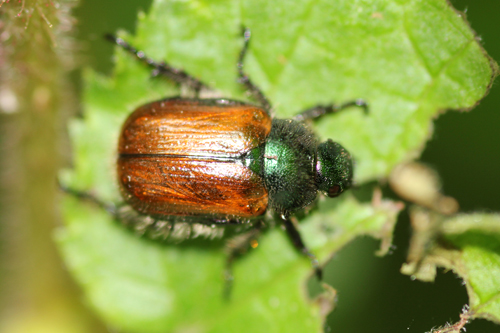
The anthers of Red Campion Silene dioica were covered in a black dust caused by the anther smut Microbotryum violaceum. The rust fungi Uromyces muscari had formed yellow patches with reddish brown spots on a Bluebell Hyacinthoides non-scripta leaf. Insects included a Scorpion Fly Panorpa sp. various Hoverflies and good numbers of the Click Beetle Athous haemorrhoidalis. Click Beetles have a special hinge on their thorax, and by arching their body they can create a tension on the hinge, like a coiled spring. When threatened they leap into the air and the tension is released causing a ‘click’sound.

mna-worthington-lakes-click-beetle1.jpg

We were unlucky with our target bird species – Mandarin Duck which nest here but did have good views of a pair of Great Crested Grebe with four stripey young.

Posted in MNA reports | Leave a comment

Brockholes 27th May 2012

mna-brockholes2.jpg

Blue skies blazing sun and breezy conditions greeted our arrival. A large shoal of Common Minnows Phoxinus phoxinus and a young Pike Esox lucius were swimming amongst the newly planted reeds as we crossed the boardwalk to the visitor village. We sat down and scanned over Meadow Lake where Tufties, Mallards, Canada Geese, Mute Swans and Gadwall were joined by a fine drake Garganey.

mna-brockholes.jpg

 We climbed up the path overlooking the lake. The notched pink flowers and very deeply cut leaves of the annual herb Cut-leaved Cranesbill Geranium dissectum were noted and Sedge Warblers blasted out their scratchy song from the reedbed. We continued passing recently planted woodland where Willow Warblers, Chiffchaff and Blackcap all added to the bird song. A European Toad Bufo bufo hopped over the path as we descended onto floodplain grazing marsh at the edge of the River Ribble. It appeared friendly so Barbara held it in her hand whilst I took a few pics.

mna-brockholes-toad.jpg

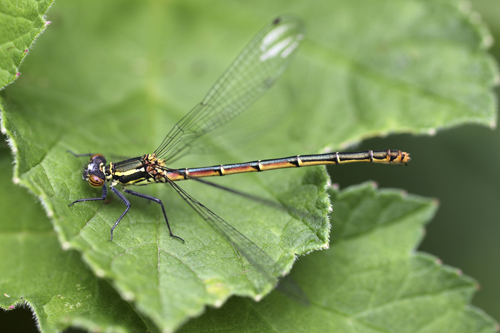
A pair of Black Swans swam upstream towards the weir and a helpful birdwatcher put us onto a Kingfisher that was sat amongst overhanging vegetation on the far side of the river. The River held shoals of Common Bleak Alburnus alburnus, a large Pike Esox lucius mooching in the shadows and Common Carp Cyprinus carpio. A couple of Swallows buzzing overhead were joined by numerous Sand Martins that nest in the sandy river banks. A Pheasant called, Whitethroat sang from one of the flowering hawthorns and a Jay flew through a wooded area. A number of Banded Demoiselles Calopteryx splendens were perched on lush bank-side plants. The male is particularly attractive with metallic blue body and translucent wings with dark iridescent blue-black spot on the outer part. These Damselflies are flighty and despite many attempts I only managed to photograph a female with metallic green body.

mna-banded-demoiselle1.jpg

Riverside plants included Cow Parsley Anthriscus sylvestris, Crosswort Cruciata laevipes, Brooklime Veronica beccabunga and Watercress Nasturtium officinale.

mna-crosswort1.jpg

We continued back up to through meadowland onto the public footpath that transects the reserve. In sunny sheltered patches of nettles a few insects were basking with Dance Fly Empis tessellata, Scorpion Fly Panorpa communis and Black and Red Froghopper Cercopis vulnerata.  We ate lunch overlooking number one pit – that provided the ideal breeding habitat of bare gravel around the flooded pit for the Little Ringed Plover that called it’s mournful single pe-ou note. Green Dock Beetles Gastrophysa viridula had been mating and clusters of little yellow eggs were on the underside of a few leaves.

mna-dock-beetle-eggs.jpg

More Damselflies beside the footpath with Blue-tailed Damselfly Ischnura elegans and Common Blue Damselfly Enallagma cyathigerum – one female of which had a distinct kink in her abdomen. This occurs when a damselfly emerges from the exuvia too near some obstruction such as a twig and the exoskeleton hardens in this shape.

mna-brockholes-blue-damsel1.jpg

A tandem pair of Large Red Damselfly Pyrrhosoma nymphula – the male clasping the female by her neck – caused the clicking of cameras.

mna-brockholes-large-red-damsel1.jpg

Chris Derri and Mike Barrow also did well with Odontata finding a small pond with Four-spotted Chaser Libellula quadrimaculata, Broad-bodied Chaser Libellula depressa and the violet form of Blue-tailed Damselfly. They also had the mega find of Floating Water-plantain Luronium natans. This rare aquatic plant with white 3-petalled flowers is found in two different forms. In shallow water, it develops floating oval leaves, while in deep water it can have long narrow, strap-shaped leaves.

We counted eight Snipe Fly Rhagio scolopacea in their characteristic head-down position on the trunk of a Willow Tree Salix sp. that give them their common country name of Downlooker Flies. There are around 15 species of Rhagionidae recorded in Britain and Ireland and these predatory Flies catch smaller insects in flight and return to their look-out post to eat them.

mna-brockholes-snipe-fly2.jpg

mna-snipe-fly1.jpg

We returned to the visitor village to catch up with other member’s sightings. John Clegg and co had a fantastic day for Butterflies with eight species – Large White Pieris brassicae, Small White Pieris rapae, Green-veined White Pieris napi, Orange Tip Anthocharis cardamines, Common Blue Polyommatus icarus, Small Tortoiseshell Aglais urticae, Peacock Inachis io and Speckled Wood Pararge aegeria. A great introduction to this new Lancashire Reserve and it can only improve with maturity.

Posted in MNA reports | 1 Comment

Raven Meols and Cabin Hill 24th May 2012

It was a only a small group that turned up at Formby Station for the first of this summer’s evening walks – Dave Hardy, Chris Butterworth, Chris Derri and me.  On a wonderful warm sunny evening we set off along St Luke’s Church Road, going right down to the beach, then northwards along the sands and back by Albert Road.

Although we saw and heard some birds on the way down to the beach – Linnets and Goldfinches twittering, Greenfinch calling, Chaffinch singing, Carrion Crows about – the main interest of the evening was invertebrates. On a rotting log was a small crop of slime moulds Lycogala terrestre, like a scattering of small orange peas.

mna-1-lycogala-terrestre.jpg

cabin-hill-sexton-beetle-reduced.jpg

Sexton Beetle – picture by Chris Derri

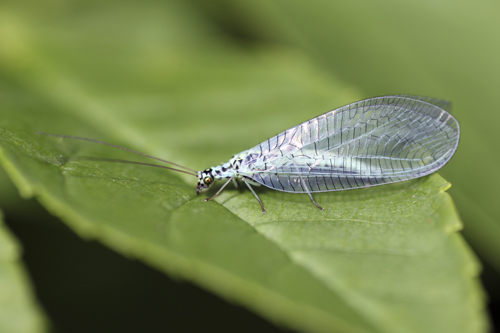
In the undergrowth we found a Sexton Beetle, and in the open verge was a Red-tailed Bumble Bee looking for a nest. It investigated a rabbit hole then disappeared into thick vegetation. We also saw a Garden Bumble Bee Hortorium sp. Chris Derri was hunting moths with a net. He caught a mid-sized “Tertrix” micro-moth and a really tiny white one which he took away to ID.  (Later identified as Phalonidia manniana and Elachista argentella respectively.) He also caught a Lacewing and a Picture-winged fly.

mna-1-chris-d-with-net.jpg

Out in the dunes there were some big dark fast-moving moths over the grass. Although they were very lively, CD managed to catch and pot one, and it was an Eggar Moth, probably an Oak Eggar.

mna-1-eggar-moth.jpg

Other invertebrates included a roosting Common Blue butterfly, a Brimstone Moth on Albert Road, a very sticky slug (Tadonia sp.) and a Millipede Schizophyllum sabulosum.

mna-1-slug.jpg

mna-1-millipede.jpg

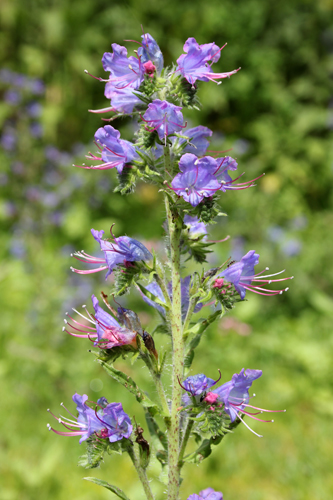
Flowers seen included Green Field Speedwell, Common Dog Violet, Viper’s Bugloss, Common Bugloss and Hound’s Tongue Bugloss, and a lovely patch of Bird’s Foot Trefoil.

mna-1-birds-foot-trefoil.jpg

On the beach CB found Common Necklace Shell, Common Whelk, Spiny Cockle, Prickly Cockle, Rayed Trough Shell, Thick Trough Shell Spisula solida, Banded Wedge Shell, Baltic Tellin (he commented “in comparison to Wirral they are surprisingly uncommon on the Sefton Coast”), Pharus legumen (“the one that looks like a small Razor Shell, but has the hinge half way along the shell, not at the end”) and Pod Razor Shell. One of the Common Necklace Shells had what looked like dried sand in a crevice, but CB said it was Hydractinia echinata, a close relative of Sea Anemones.  One Banded Wedge Shell had a small hole showing it had been predated by a Common Necklace Shell.

mna-1-shell-with-hole.jpg

A Reed Bunting was in amongst the Marram Grass near the beach. On Albert Road there is a big mound of wild Lily-of-the-Valley. Also blooming marvellously was the Hawthorn: one tree was almost all white.

mna-1-may-blossom.jpg

On our way back past St Luke’s Church about a hundred Jackdaws flew in to roost, calling noisily. We were at Formby Station just before 10pm, and it still wasn’t quite dark.

mna-1-sunset.jpg

Thanks to Chris Butterworth for the shell identifications and Chris Derri for a photo and the IDs of the moths.

Posted in MNA reports | 1 Comment

Dove Stones RSPB Derbyshire 22nd May 2012

Dave Bryant, Dave Hardy and I picked a stonking day to visit the RSPB reserve at Dove Stones in the Derbyshire Peak District. We caught the Scarborough train at Lime St, changing at Staleybridge and continuing for a few stops along to Greenfield. Descending the hill from the station we walked a short distance through the village listening to the screaming Swifts before reaching the small river with its resident Grey Wagtails. A clump of Common Comfrey Symphytum officinalis was growing on the river bank. These delicate clusters of tubercular flowers were white with pink markings – different to the usually seen mauve colour.

mna-dovestones-comfrey1.jpg

A few Orange Tip Butterflies were flitting around along with Peacock and Speckled Wood. A burst of bird song had us debating whether it was Blackcap or Garden Warbler – being short in duration like a Blackcap but bubbly like a Garden Warbler lacking the scratchy Blackcap tones. After brief views we decided on Blackcap.  

From our path it looked like fishermen were marooned with their rods in the middle of a field.  We headed over and found a narrow canal with brown peat stained waters. An Alder Fly Sialis lutaria perched on the canal bridge.

mna-dovestones-canal1.jpg

We began climbing with great views of the sheep covered fells and a dilapidated mill then passed the old mill workers terraced cottages which had a cheery collection of garden plants outside them and a cute stone gargoyle sat on a wall. Continued along a leafy lane to the main reservoir.

mna-dovestones-reservoir1.jpg

The blazing sun and blue skies had brought out the day trippers and dog-walkers. Walked anti-clockwise around the reservoir edge before heading up a side clough to escape the crowds. Birdlife was quiet with only a few Willow Warblers, Chaffinches, Robins and Coal Tits around. A small copse of trees provided shelter from the sun whilst we ate lunch. We followed a small stream before eventually finding enough stepping stones to safely cross and climbed up again onto the fell path passing our first Meadow Pipits but no sign of any Wheatears amongst the weathered craggy rocks. We stopped close to a coniferous forest, watching and listening whilst Redpolls buzzed around – one male in bright pink plumage perching on top of a conifer. Behind us a Tree Pipit took to the air singing whilst it parachuted quite a long distance into a small tree.

A Pheasant was chasing a dark green plumaged individual across the fell. Dave H said that this was one of the American varieties brought into the UK providing a greater challenge to the ‘sportsman’ during the beat as these birds fly higher than our native breed.As we continued climbing to one of the smaller reservoirs Green Tiger Beetles Cicindela campestris took to the air from the sandy path before dropping down in front of us a few feet away. We played their chase game for a while before we found a more confiding Beetle that couldn’t fly particularly well in the rough grass beside the path. Dave H caught it in a tube before transferring it onto the sand for a few pics and a closer look at the powerful jaws of this predatory mini-beast.

mna-dovestones-green-tiger-beetle1.jpg

mna-dovestones-green-tiger-beetle2.jpg

The characteristic high-pitched whistling flight call of a Common Sandpiper directed our gaze to three of these birds flying along the far edge of the reservoir with another two playing hide and seek on our side of the shore. Later we watched as two seemingly flew directly at the reservoir wall and concluded they must have a nest in one of the plastic inflow pipes. We watched a couple of Dippers bobbing around the rocks in a bubbling in-flow stream at the head of the reservoir and a Curlew landed beside the water before unusually silently taking to the air again.

mna-dovestones-reservoir2.jpg

We descended stopping to watch half-a-dozen Nomada Wasps flying near a stone wall before reaching the main reservoir where a carpet of Wild Strawberries Fragaria vesca and Germander Speedwell Veronica chamaedrys put on a good show. It was a wander back along the road into Greenfield village watching the bunnies in the adjacent field enjoying the late afternoon sun and hearing a Nuthatch in a leafy copse. We rewarded our aching limbs after the climb up to the station with a quick pint in the Station pub before catching the return train.  A fantastic day with stunning scenery and hopefully a place to feature on next-years MNA programme.

Posted in MNA reports | 1 Comment

Thornton and Lunt, 20th May 2012

We’ve never been here before, onto land managed by the Forestry Commission and called Broom’s Cross, part of the Mersey Forest. We took the bus to the Aldi Supermarket in Thornton, then walked through the houses to the junction of Lydiate Lane and Rothwell’s Lane, just to the north of Thornton cemetery.  A short way along Rothwell’s Lane are the young forestry plantations and open fields between Thornton and Lunt.

13-thornton-lane.jpg

Wildflowers were blooming everywhere: Cow Parsley lined the lanes, the Hawthorn was just coming into bloom (it’s a bit late this year) and the hedgerows had Honesty, Buttercups, White Dead-nettle, Dandelions and Hawkbit, Cowslips (mostly gone to seed), Speedwells, Ox-Eye Daisies and great masses of Pink Campion.

13-thornton-pink-campion.jpg

A Pied Wagtail was sitting on a wire (unusual – they are most often seen on the ground or on roofs), there were Swallows, House Martins and Swifts over the fields, Chiffchaffs and Greenfinch were calling, we saw a Whitethroat in the taller trees and a Buzzard wheeling above the spire of Sefton Church. There was a Song Thrush on the edge of the cemetery, we flushed a Grey Partridge, which clapped its wings right over our heads, and on the edge of a Rape field we saw our best bird of the day, a Corn Bunting.

13-thornton-fingerpost.jpg

It had been overcast all morning, but the sun came out while we had our lunches, and we soon started peeling off our extra layers. It wasn’t hot by any means, perhaps only in the early sixties, but warm enough to bring out the butterflies. Large White, a pair of Orange Tips, and several Peacocks, one of which must have had an unfortunate encounter with a bird, because some of its second “eye” was missing.

13-thornton-one-eyed-peacock.jpg

We were very happy to see stern notices from the Forestry Commission saying “Help us! Report illegal motor bikers and drivers. Motorbike, quad and 4 x 4 use is an offence”, and giving the phone number of Merseyside Police. But we saw several young trees that had been vandalised.

13-thornton-vandalised-tree.jpg

We emerged on the south side of Thornton cemetery. I recommend this walk, which can only get better as the young trees mature.

Posted in Sunday Group | 1 Comment

More Seacombe to New Brighton pics 13th May 2012

Whilst the Sunday Group members walked along the prom from Seacombe to New Brighton I had a firkle along the shoreline. Barnacle species included Semibalanus balanoides the most widespread intertidal barnacle in the British Isles. It has six calcified grey-white shell plates and a diamond shaped opercular aperture.

mna-semibalanus.jpg

There were plenty of Common Periwinkles Littorina littorea and a few White Piddock Shells Barnea candida – despite its fragile appearance this bivalve burrows into soft rocks on the lower shore. A dead female Shore Crab was lying on her back in the sand.

I counted around 45 Sea Gooseberries Pleurobrachia pileus washed up on the shoreline – these Comb-jellies or Ctenophores are roughly spherical gelatinous masses, around 2cm in diameter and have eight rows of comb-like plates with tiny cilia along their sides.

mna-sea-gooseberry1.jpg

There were a number of Sand Mason Worms Lanice conchilega. These burrowing marine polychaete worms build a tube out of sand grains and shell fragments which projects out of the sand.

mna-sand-mason-worms1a.jpg

Lush fronds of Sea Lettuce Ulva lactuca was floating in the sandstone rock pools. Like its name suggests it is edible and contains a variety of vitamins and minerals, especially iron.
mna-sea-lettuce1.jpg

And here’s a pic of the wonderful flowering Quince Chaenomeles speciosa in Vale Park

mna-quince1.jpg

Posted in Sunday Group | 1 Comment

Seacombe to New Brighton, 13th May 2012

It was a lovely day for the ride on the ferry, and they even have a new commentary!

Right by the Seacombe Ferry building I was surprised to see Feral Pigeons pecking about on the beach (they do it a lot, apparently). I had them pegged as diehard “townies”. Skulking quietly under the pier, near the water’s edge, were three Turnstones. One seemed to be well on the way to its summer plumage and should have flown north weeks ago. Perhaps it was a young one which won’t breed this year. Another surprise was a Ringed Plover. That shouldn’t be here any more either!  Herring Gulls and Lesser Black-backed Gulls were scattered all over the beach, and there were a couple of Shelduck. Opposite Vale Park we spotted some Common Terns diving over a buoy.

12-seacombe-view.jpg

It was sunny and warm, although there was a lively breeze. Some of the first Hawthorn trees were in flower in the seafront gardens and near Magazine Lane a tree was shedding lots of fluffy white male flowers. We tried to see which tree they came from, without success. Anyone know what they are? Elm? Ash? Some kind of Poplar? (Added 20 May – possibly a hybrid Black Poplar)

12-seacombe-tree-fluff.jpg

Quince was flowering in Vale Park, Swallows flew over and we saw a Large White butterfly. Opposite Manor Lane there is a bit of rocky / sandy breakwater which rarely gets covered by the tide, so it has some beach-loving plant life, including big clumps of Sea Kale and a good showing of Red Valerian.

12-seacombe-red-valerian.jpg

There are House Martins near New Brighton, and fossil oysters in the sea-defence rocks near the Lifeboat Station. At the Marine Lake people were lining the railings and catching crabs with a simple line and any old bait.

As for man-made attractions, we looked at the artwork embedded in the seafront roadway all along from Seacombe to New Brighton, and particlarly liked the ring of dancers, commemorating the Tower Ballroom, whose dresses were picked out in various polished granites.

12-seacombe-granite-dancers.jpg

Posted in Sunday Group | 1 Comment

Parbold and Fairy Glen 12th May 2012

(Report by John Clegg. Pictures by Dave Hardy.)  Six members met at Ormskirk and a further two at Parbold for our five mile walk on this sunny day.

fairy-glen-in-the-glen.jpg

We started by walking along the canal with Swallows and Swifts flying overhead and Mallards on the water. We soon had a good view of a Whitethroat singing at the top of a tree. At Bridge 40 we walked down from the canal to the bridge over the River Douglas in the hope of a Kingfisher, but not today. While we ate our lunches we saw Orange Tip butterflies.After lunch we crossed Bridge 40 into a small wood, then out onto farmland. Jackdaws and Pheasants were about, along with Peacock butterflies. In the Fairy Glen the ground was carpeted with English Bluebells, the white flowers of Ramsons (Wild Garlic) and Pink Purslane.

fairy-glen-pink-purslane.jpg

On the bridge over the lower waterfall we spotted a pair of Grey Wagtails feeding in the fast-flowing stream. Up the steps on the other side of the bridge we came upon a patch of Marsh Marigolds in full flower. There was another pair of Grey Wagtails at the larger, upper waterfall, and a Chiffchaff was in full song.

fairy-glen-one-of-the-two-waterfalls.jpg

On leaving the Fairy Glen we had to cross the main road to get to more farmland, where we saw Lapwings and Wood Pigeons. In the woodland on the side of the fields we saw Chaffinch and Willow Warbler singing away, and there was also a Jay. In the open fields beyond a Skylard was singing high in the sky with Buzzards flying over. Around a small pool there were St Mark’s Flies.

We returned to Parbold and ended the day with a group of Swifts flying over. A good walk enjoyed by all on a very fine day.

A total of 33 bird species were seen: House Sparrow, Blackbird, Robin, Goldfinch, Song Thrush, Chiffchaff, Willow Warbler, Whitethroat, Chaffinch, Blue Tit, Dunnock, Wren, Starling, Grey Wagtail, Pied Wagtail, Linnet, Skylark, Moorhen, Mallard, Jackdaw, Carrion Crow, Magpie, Jay, Swallow, Swift, House Martin, Wood Pigeon, Collared Dove, Buzzard, Kestrel, Black-headed Gull, Pheasant, Lapwing.

Four species of Butterfly: Peacock, Orange Tip, Small White and Green-veined White.

How to get there: Train from Liverpool to Ormskirk. From Ormskirk Bus Station take bus 3A (hourly Monday to Saturday) or bus 337 (2-hourly Monday to Saturday) to Parbold shops. No Sunday bus service. Alternately, take the train from Southport or Wigan to Parbold Station.

Posted in MNA reports | 1 Comment

Taylor Park, St Helens, 6th May 2012

On the previous two occasions we had been to Taylor Park, it had rained hard, so we were surprised to finally see it as it ought to be. It was bright, sunny and warm nearly all day.

11-taylor-park-ranger-station.jpg

Several unidentified white butterflies were on the wing and a pair of Speckled Woods were dancing together next to some shrubbery. In the parkland we saw Robin, Wood Pigeon, Blue Tits, a Wren, a Nuthatch, two Treecreepers and we heard a Chiffchaff. A Great Spotted Woodpecker flew over the trees in the distance. On the main lake (“Big Dam”) were Canada Geese, a motley-looking Greylag, Mallards, Coots (two on nests), Herring and Lesser Black-backed gulls, a Swallow, a pair of Common Terns, one of whom often sat squatly on an orange buoy, the other taking an interest in a possible nesting platform. A Grey Wagtail flew out from under the Ranger Station. A Mute Swan was nesting in the bushes on the far side and there was also a Great Crested Grebe on a nest. The swan and duck food came out of my pocket (I’m still trying to get rid of it.) The geese turned their beaks up once again, but the Mallards seemed to like it. The squirrels were not impressed.

11-taylor-park-coot.jpg

We planned to lunch beside Big Dam, but some enthusiasts were running their noisy model boats, so we headed for the Quarry Garden.

11-taylor-park-quarry-garden.jpg

Above the Quarry Garden is a viewpoint looking over to Billinge Hill.

11-taylor-park-view.jpg

The leaves on the Whitebeam trees were just coming out, standing up like Magnolia blossom against the blue sky.

11-taylor-park-whitebeam.jpg

In the wooded area around Eccleston Bottom Dam there was Yellow Archangel, Marsh Marigold, white and blue Bluebells (of mixed English / Spanish ancestry) and something we thought was Pink Purslane.

11-taylor-park-yellow-archangel.jpg

11-taylor-park-bluebells.jpg

11-taylor-park-pink-purslane.jpg

On Eccleston Bottom Dam we stopped to watch a pair of Great Crested Grebes with two well-grown youngsters, nearly fledged. Dad approached with a large fish (perhaps five or six inches long) and one of the chicks steamed towards him and gobbled it down. A few minutes later Daddy Grebe came up with a similar fish and again one chick hurried over to him and was fed. There was no squabbling over the food, the chicks seemed to know whose turn it was. We asked a fisherman, and he thought the male Grebe was catching young Roach for his family. That same fisherman was just about to return a very nice fish to the water, a large Bream.

11-taylor-park-bream.jpg

Posted in Sunday Group | 1 Comment