Wildflowers at Walton Station

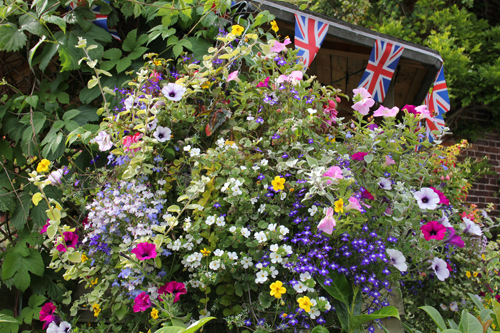
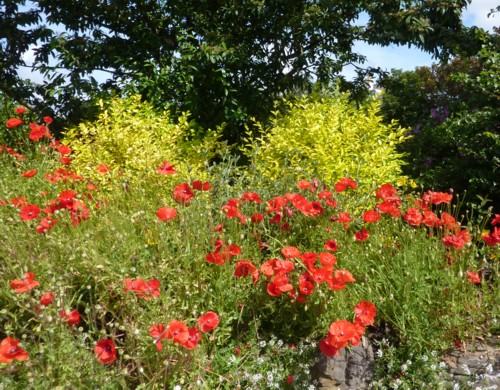
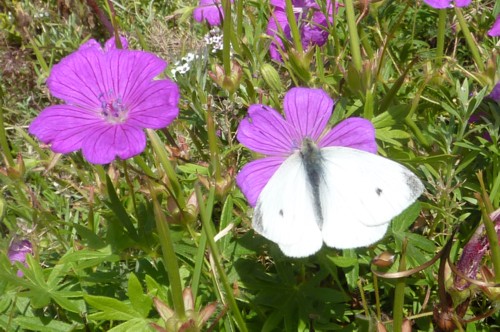
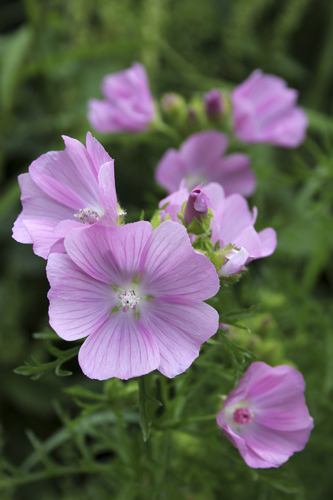
A few months ago David Bryant offered to plant a wildflower meadow on an unused bank next to Walton Station. Merseyrail were happy to allow it. It’s now up, the poppies are out, and it’s alive with bees. David asked me to go along and photograph it.

along-the-bank.jpg

poppies-and-cornflower.jpg

bee-on-corn-chamomile.jpg

Posted in MNA reports | Leave a comment

Festival Garden, 1st July 2012

17-festival-waterlily-pond.jpg

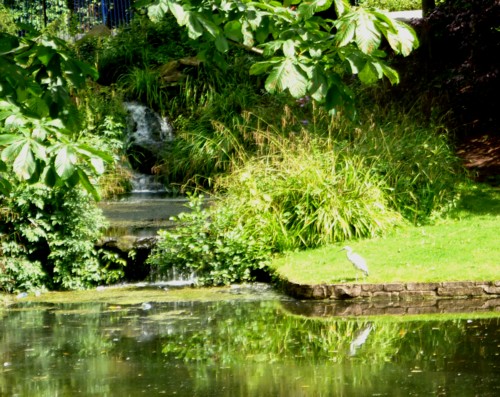
Although it was raining a bit when we set out, and overcast and blustery most of the day, happily the rain held off while we were in the new Festival Garden. The developers have done a splendid job of restoring the Japanese garden and the Chinese Pavilion. All the young trees planted in 1984 have now matured, and there are woodland walks which make the park seem much bigger than it really is. Most of the ornamental planting is with wildflowers, both as meadows and verges.

17-festival-wildflowers.jpg

Even though the gardens had only been open for a few days, there were some signs of vandalism already, and lots of temporary signs on blackboards. “Do not throw stones” by the lake, and “The water is for wildlife – please keep out of the water” by the Cascade. A coot has nested on rocks right in front of the Chinese pavilion, so perhaps the stone-throwing had been directed at her.

17-festival-sign-stones.jpg

The ponds had plenty of life, which had probably done well during the 28 wilderness years. There were Whirligig beetles, Water Boatmen and a newt in one pond. It didn’t seem to be sporting any exciting crests or frills so it was probably just a Common Newt. We also spotted a Blue-tailed damsel fly. In another pond, fringed by lots of sedge and weed, was a mother Mallard with nine happy babies. It looked like duckling heaven – no big fish, and no Herons have found them yet.

17-festival-ducklings.jpg

We didn’t see many other birds, which have probably all been scared off by the building works, but we heard Greenfinch and Chiffchaff in the woods. At the highest point of the woodland walk the trees open out and there are grand views over the Mersey to the old New Ferry Tip (which will be a nature reserve in a year or two) and Eastham Woods.

17-festival-river-view.jpg

The borders were drifts of blue, mostly some kind of Bell flower. It wasn’t Giant Bellflower, so it might have been Greater Bellflower or possibly a garden variety. There were also large clumps of Lamb’s Ears, which were magnets for Buff-tailed Bumble bees and Red-tailed Bumble bees.

17-festival-lambs-ear-bees.jpg

Skulking amongst  the Bellflower and Lamb’s Ear was a little yellow flower, later identified as Yellow-wort. My flower book says it is widespread but not common, and is often found on dunes. Has it been there since before the Garden Festival in 1984, did it survive into the original garden, flourish when it went wild, then come up again? Who knows.

17-festival-yellow-wort.jpg

One plant which caught our attention had big leaves and a tall square stem, and looked as if it was going to be topped off with something spectacular, but the actual flower was a small odd-looking red thing. Later identifed as Common Figwort.

17-festival-common-figwort.jpg

Another strange survival from the wild period was the tall blue spike of a very poisonous plant variously called Monk’s Hood, Aconite or Wolf’s Bane. It was in the woods, on a corner of two paths. All the plants around it were dead, and so were the lower leaves of the plant itself. The gardeners must have spotted it and given it a blast of herbicide, but the tall flower spike was still in bloom.

17-festival-monks-hood.jpg

After we left the garden we walked southwards along the prom and the sun came out at last. There were 100+ Lesser Black-backed gulls on a sandbank in the middle of the Mersey.

Posted in Sunday Group | 1 Comment

West Kirby, 24th June 2012

Although we were planning to go to Childwall Woods, we thought they would be far too muddy for comfort after the storms and floods of the last few days, so we went to West Kirby instead.

16-west-kirby-windsurfers.jpg

There was only one bird (a pigeon) in Sandlea Park, but the Mock Orange was out, there were bees on the lavender and the lawn had a small but well-chewed Puff Ball.

16-west-kirby-puffball.jpg

The tide was just starting to come in and the onshore breeze was stiff enough to allow the Herring Gulls to simply hang on it. While we ate our lunches we watched the windsurfers, and the GP14 dinghies racing around the Marine Lake, clipping the buoys as they turned. Two of them “fell over” (I don’t know the technical term, but I bet there is one) and one crew managed to get their spinnaker wrapped around their foresail. A Swallow flew past, but although we kept our eyes out for the Little Swift which was thrilling the twitchers at New Brighton, it didn’t come our way.

We went up Sandy Lane, onto the Wirral Way and into Ashton Park.

16-west-kirby-ashton-park.jpg

A pair of Coots is nesting at the base of the fountain, handy for quick baths, and the pair changed over their incubation duties while we watched. The island had the usual Muscovy Duck, one white domestic duck and a white goose. Further out was a single Tufted Duck. The Mallard drakes were skulking about looking glum because they were flightless, moulting and probably itchy.

16-west-kirby-moulting-drakes.jpg

In the upper park there were Blackbirds and Magpies on the lawns, a Small White over the daisies in the rose garden, and back on the Wirral Way we spotted a Speckled Wood. Comfrey and Bramble were in bloom and the Green Alkanet was full of bees, one of which was a Red-tailed Bumble Bee. A Dunnock surprised us by sitting on the path in full view, and our last treat of the day was a brood of newly-fledged Wrens flitting about in the tall bindweed and bramble bank just at the end of the Wirral Way.

Posted in Sunday Group | 1 Comment

MNA Coach Trip Cors Erddreiniog 23rd June 2012

A packed MNA coach for our visit to Anglesey. Our first blustery location was Cors Erddreiniog the largest of the Anglesey fens. This extensive reserve is located between the small villages of Bryn Teg and Capel Coch and boasts NNR, SSSI, SAC and Ramsar status. This year’s corpse tally rose with dead Common Shrew Sorex araneus and Pygmy Shrew Sorex minutus.

mna-anglesey-common-shrew1.jpg

Common Shrew

Large Skipper Ochlodes venata was the only butterfly but plenty of Dragonfly and Damselfly species with Large Red Damselfly Pyrrhosoma nymphula including one female unusually holding it’s wings outstretched like an Emerald Damselfly Lestes sponsa, Blue-tailed Damselfly Ischnura elegans, Southern Hawker Aeshna cyanaea and Four-spotted Chaser Libellula quadrimaculata.

mna-anglesey-emerald-damselfly1.jpg

Large Red Damselfly female

Hoverfly species included Heliophilus pendulus, Eristalis sp. Volucella bombylans var. plumata and Rhingia campestris.

mna-hoverfly-rhingia-campestris1.jpg

Rhingia campestris

Other interesting Insects included a Weevil Sitona sp. Ichneumon Wasp sp. Sawfly Tenthredo mesomelas and a Conopid Fly – the larvae of Conopids are parasites on Hymenoptera, the female Conopid laying an egg in between the abdomen segments of their host.  

mna-anglesey-tenthredo-mesomelas1.jpg

Tenthedro mesomelas

mna-conopid-fly1.jpg

Conopid Fly 

It was the botanists who were really in their element though with Lesser Spearwort Ranunculus flammula, Tutsan Hypericum androsaemum, Red Campion Silene dioica, Ragged Robin Lychnis flos-cuculi, Greater Chickweed Stellaria neglecta, Cut-leaved Cranesbill Geranium dissectum, Bush Vetch Vicia sepium, Meadow Vetchling Lathyris pratensis, Bird’s-foot Trefoil Lotus corniculatus, Harsh Downy-rose Rosa tomentosa, Tormentil Potentilla erecta, Meadowsweet Filipendula ulmaria, Herb Bennet Geum urbanum, Round-leaved Sundew Drosera rotundifolia, Marsh Pennywort Hydrocotyle vulgaris, Common Milkwort Polygala vulgaris, Marsh Cinquefoil Potentilla palustris.

mna-marsh-cinquefoil1.jpg

Marsh Cinquefoil

Bog Myrtle Myrica gale, Wild Angelica Angelica sylvestris, Amphibious Bistort Persicaria amphibian, Bogbean Menyanthes trifoliate, Marsh Lousewort Pedicularis palustris, Red Bartsia Odontites vernus, Water Mint Mentha aquatica, Common Skullcap Scutellaria galericulata, Self Heal Prunella vulgaris, Common Butterwort Pinguicula vulgaris, Southern Marsh-orchid Dactylorhiza praetermissa, Northern Marsh-orchid Dactylorhiza purpurella, Early Marsh-orchid Dactylorhiza incarnata, Common Spotted-orchid Dactylorhiza fuchsia, Common Valerian Valeriana officinalis, Marsh Valerian Valeriana dioica, Common Marsh Bedstraw Galium palustre, Marsh Thistle Cirsium palustre, Creeping Thistle Cirsium arvense, Common Water-Plantain Alisma plantago-aquatica and Lesser Water-plantain Baldellia ranunculoides.

mna-anglesey-marsh-orchid1.jpg

Marsh Orchid

Posted in MNA reports | 1 Comment

MNA Coach Trip Cemlyn Bay 23rd June 2012

mna-cemlyn-bay1.jpg

Sea Kale Growing On Cemlyn’s Shingle Bank

After a brief convenience stop at the loos at Penrhos CP it was off to the second venue for today’s coach trip Cemlyn Bay NR. Cemlyn is known mainly as a valuable site for terns with Common Terns, Sandwich Terns and Arctic Terns seen on the breeding colony – unfortunately no sign of the Roseate Tern that the warden noted.

cemlyn-bay-arctic-tern.jpg

Arctic Tern. Picture by Chris Derri.

cemlyn-bay-sandwich-tern.jpg

Sandwich Tern. Picture by Chris Derri

Other Birdlife included a second year Northern Gannet, Mute Swan, Red-breasted Merganser, Goosander, Black Guillemot, Barn Swallow, Rock Pipit, male and two juv Stonechats and Raven. Grey Seal bobbing around and the corpse of a Bloody-nosed Beetle Timarcha tenebricosa.

Plenty of seashore life with Flat Periwinkle Littorina obtusata, Common Periwinkle Littorina littorea, Velvet Mite Entrombidium rostratus, Marine Springtail Anurida maritima, Common Limpet Patella vulgata, Black-footed Limpet Patella depressa, Beadlet Anemone Actinia equina, Encrusting Red Algae Lithothamnion sp., Red Algae Polysiphonia lanosa, Channel Wrack Pelvetia canaliculata, Egg Wrack Ascophyllum nodosum, Spiral Wrack Fucus spiralis.

mna-anglesey-chanelled-wrack1.jpg

Channel Wrack

Seashore Lichens of note included Xanthoria parietina, Sea Ivory Ramalina siliquosa and Black Shields Lecanora atra.

mna-anglesey-sea-ivory1.jpg

Sea Ivory Lichen against the yellow Xanthoria parietina

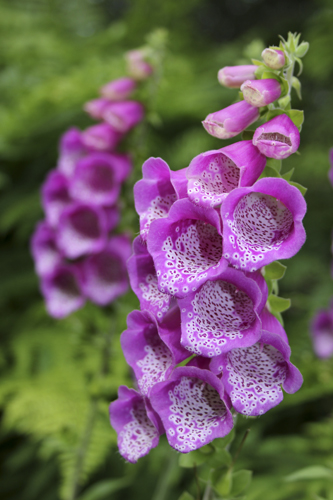
Botanists again were delighted with Cross-leaved Heath Erica tetralix, Bell Heather Erica cinerea, Thrift Armeria maritima, a rather interesting Centaury sp. with rounded leaves, Common Lousewort Pedicularis sylvatica, Yellow Rattle Rhinanthus minor, Heath Spotted Orchid Dactylorhiza maculata, Southern Marsh-orchid Dactylorhiza praetermissa x Heath Spotted Orchid Dactylorhiza maculata hybrid, Heath Bedstraw Galium saxatile, Wall Pennywort Umbilicus rupestris, Curled Dock Rumex crispus, Heath Groundsel Senecio sylvaticus, Tormentil Potentilla erecta, English Stonecrop Sedum anglicum, Spring Squill Scilla verna, Foxglove Digitalis purpurea, Wall Pennywort Umbilicus rupestris, Sea Campion Silene maritima, Halberd-leaved Orache Atriplex hastate, Sea Kale Crambe maritima, Common Gorse Ulex europaeus, Western Gorse Ulex gallii and Wild Carrot Daucus carota.

mna-english-stonecrop1.jpg

English Stonecrop

A memorable last find of the day by Harry – a desiccated Lesser Spotted Dogfish Scyliorhinus canicula.

mna-anglesey-lesser-spotted-dogfish1.jpg

Lesser Spotted Dogfish

mna-anglesey-lesser-spotted-dogfish2.jpg

Thanks to Chris Butterworth for help with the species lists and Chris Derri for use of his macro lens when mine had a premature death.

Posted in MNA reports | 1 Comment

Fungal news from Tony Carter

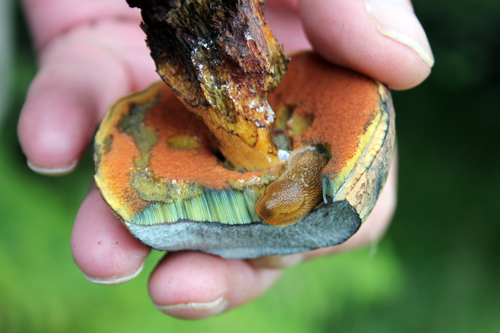
Last Sunday, the 18th June, I assisted Merseyside Biobank who organised a Bioblitz, where various naturalist disciplines meet to record species over a period of twenty four hours. The event was held at Court Hey Park, the home of The National Wildflower Centre.  I agreed to record fungi and lead a foray at the same time. More eyes are most useful. Unfortunately the weather was not kind but eight people joined me and we recorded forty species, a good result for this time of year.

Most notable was Schizophyllum commune (Splitgill) on a fallen Beech trunk. It is found most often in southern Britain but as our climate warms up these species are moving north. Another good find was of an uncommon Bonnet fungus Mycena clavularis at the base of a Yew tree. Kew Herbarium asked me for a specimen but when I went the next day, overnight heavy rain had washed them away.

A separate visit to Calderstones Park in Liverpool produced a large group of twenty five Melanoleuca verrucipes (Warty Cavalier). Last year, a find of only three was sufficiently important to interest Kew Herbarium. This second find and in such quantity could be another sign that our climate is getting warmer.

melanoleuca-verrucipes2-calderstones-0612-reduced.jpg

Warty Cavalier Melanoleuca verrucipes

Another unusual find was of Panus conchatus (Lilac Oysterling) on a fallen Beech tree.

panus-conchatus-calderstones-0612-reduced.jpg

Lilac Oysterling Panus conchatus

Posted in MNA reports | 1 Comment

The Berwyns 20th June 2012

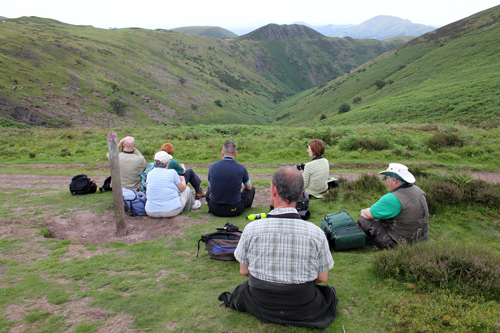
Chris Butterworth, Dave Bryant and I had a hike up through a forestry reserve and across the moors between Cynwyd and Corwen in Denbighshire Wales. At Cynwyd we looked across a stone bridge at the cascading Trystion stream, a tributary of the River Dee (Afon Dyfrdwy) and saw our first Grey Wagtail. As we climbed up the small lane through the village a Nuthatch was calling and Chiffchaff singing.

mna-wall-pennywort.jpg

Wall Pennywort

We found Welsh Poppy Meconopsis cambrica, English Stonecrop Sedum anglicum, plenty of Wall Pennywort Umbilicus rupestris, Slender St John’s Wort Hypericum pulchrum, Fox ‘ n’ Cubs Hieracium aurantiacum, Dog Rose Rosa canina and the Harsh Downy-rose Rosa tomentosa with its furry leaves and cerise red flowers that seem to lighten to more pinky tones on aging. There were some humongous Dryad’s Saddles Polyporus squamosus growing at the base of a couple of Sycamore trees.

mna-downy-rose1.jpg

Harsh Downy-rose

We ate lunch at a sunny spot on the lane. A few Hoverflies mainly Eristalis sp. with a Xylota segnis and then found our first Garden Chafer Phyllopertha horticola one of many during the day.

mna-garden-chafer1.jpg

Garden Chafer

We reached the small reservoir where nine Canada Geese were in residence, three Grey Wagtails and a few Siskin. As we continued to climb Mountain Bumblebees Bombus monticola were on the wing along with a White-tailed Bumblebee Bombus lucorum. There were plenty of plants with Greater Stitchwort – Stellaria holostea, Tormentil Potentilla erecta, Crosswort Cruciata laevipes, Heath Bedstraw Galium saxatile, Pignut Conopodium majus, Bird’s-foot Trefoil Lotus corniculatus, Germander Speedwell Veronica chamaedrys, Common Field Speedwell Veronica persica, Heath Speedwell Veronica officinalis, Brooklime Veronica beccabunga, Wood Forget-me-not Myosotis sylvatica, New Zealand Willowherb Epilobium brunnescens and Hard Fern Blechnum spicant. More fungi with Orange Birch Bolete Leccinum versipelle and the first corpse of the day – a European Mole Talpa europaea.

mna-cynwyd-walk.jpg

We heard our first Cuckoo, the odd scratchy Whitethroat, a Redstart, singing Willow Warblers, Blackcaps, Chaffinches, Goldcrest and Coal Tits carrying food in their beaks. A further corpse turned out to be a young Coal Tit whose body was covered in Flesh Flies Sarcophagidae sp. as we approached and had also attracted a Beetle Staphylinidae sp.  

mna-coal-tit-corpse1.jpg

More grossness with the aptly named Dog Vomit Slime Mould Fuligo septica on top on a conifer stump.

mna-wales-dog-vomit-slime-mould2.jpg

Dog Vomit Slime Mould

We found the footpath out onto the moorland heading towards the ruins of Liberty Hall. Only a few butterfly species with Green-veined White Pieris napi and a few Small Heath Coenonympha pamphilus.

mna-small-heath1.jpg

Small Heath

An interesting lichen on a fence post turned out to be Usnea florida – the apothecium show branched eyelash cilia.

mna-usnea-florida1.jpg

Usnea florida

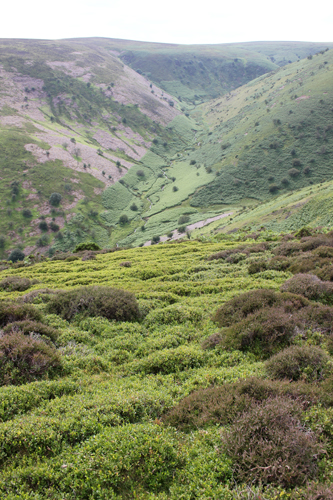
A Tree Pipit performed its aerial flight, plenty of Skylarks, the odd Mepit, two male Whinchats, we heard another Cuckoo and the babblings of a Red Grouse. The single spikelets of Hares tail-Cotton Grass Eriophorum vaginatum were swaying in the breeze and Lousewort Pedicularis sylvatica grew in a wet area further down the track. A Ground Beetle Carabidae sp. proved too fast for my lens and the last few miles down into Corwen were too fast for my legs! We had to march through bog and scramble down stone steps in order to catch our bus back into Wrexham and onwards to Chester then the train back into Liverpool.

Posted in MNA reports | 1 Comment

Litherland, 17th June 2012

The weather was far more promising today, although it was overcast when we arrived at Ford RC Cemetery. We were amazed at the number of people and cars there, then realised it was Father’s Day, a prime grave-visiting Sunday. There weren’t many birds about, just Wood Pigeons, Collared Doves, some Magpies, a male Blackbird with its beak full of grubs to take back to his chicks, and one Swift overhead.

We had lunch outside the pub at Cookson’s Bridge, and watched two Specked Wood butterflies chasing each other around an Elder bush. When I looked at my pictures later, I saw that one had been damaged, perhaps by a bird.

15-litherland-two-speckled-woods.jpg

The sun was out by the time we set off along the canal. A fisherman told me he often caught Mirror Carp (a domesticated variety with irregular and patchy scales). His story was that in the 1980s the local Angling Club had a pond on Aintree Racecourse, near Becher’s Brook, which they had stocked with young Mirror Carp. When new owners wanted them removed, club members moved about 2000 fish in buckets to the canal. Most weighed one or two pounds, but there was one big one of about 5lb. Twenty or thirty years later those same fish are now 20lb or more and 3 feet long. My informant claimed to have caught two such big fellows himself this year. Fisherman’s tales, eh!

The hedgerows were full of flowering honeysuckle, lupins, bramble and dog rose, insects were everywhere and we spotted some House Sparrows in the bushes, which are worth noting nowadays.

15-litherland-bee-on-dog-rose.jpg

The Coots have had good breeding success this year. We saw broods of three, four, six and five youngsters, but only three young Moorhens and three Mallard ducklings. There were some big fish swirling up for bread and the duck food, so maybe the Mirror Carp aren’t so mythical after all. They must take many chicks and ducklings.

15-litherland-ducklings.jpg

Posted in Sunday Group | Leave a comment

MNA Coach Trip Leighton Moss / Gait Barrows 10th June 2012

The planned destination for today’s MNA coach trip was Hutton Roof but it was not to be… Our coach developed a mechanical problem close to Carnforth and we slowly trundled into the Truckhaven services in first gear.Nature is everywhere! so we took the opportunity to have a nose around a grassed area and hedgerow and were not disappointed. A Small Tortoiseshell Aglais urticae and Dingy Skipper Erynnis tages flitted over the grass and I found an Angle Shades Moth Phlogophora meticulosa resting on a leaf.

mna-carnforth-angle-shades-moth1.jpg

Plenty of Hoverflies with mating Helophilus pendulus, a few Volucella pellucens and a rather cool Chrysotoxum bicinctum – this distinctive species has two yellow bands, chocolate wing patches and long, forward pointing antennae.

mna-carnforth-hoverfly1.jpg

There were a number of Sawflies including the vibrant green Rhogogaster viridis. There must have been a recent hatch as Green Lacewing Chrysopa perla flew up as we walked through a reedy area.

mna-green-lacewing1.jpg

After a short deliberation we decided to change the venue to Leighton Moss RSPB Reserve and took the short drive in a local minibus taxi to the reserve. A group of MNA members led by John Clegg explored the reserve and had singing Cettis Warbler with some members having a glimpse of this skulking reedbed bird.

mna-lm-caterpillar1.jpg

Photo courtesy of Barbara

Margaret Parry spotted an interesting caterpillar. It was an inch long, orange and black covered in fine tufty hairs and feeding on Pussy Willow. Barbara later identified it as the Yellow Tail Euproctis similis. An interesting wigwam built from reeds has been designed by the Leighton Moss warden David Mower for Bearded Tits to nest in. He had a dilemma as Bitterns prefer wet reedbeds whereas the Beardies prefer drier conditions. Luckily they love the wigwams and he now makes 40 a year.
mna-beardies-wigwam.jpg

Photo courtesy of Barbara

The other group of MNA members led by Dave Bryant headed up to Trowbarrow Quarry and onto Gait Barrows NNR. A female Broad-bodied Chaser Libellula depressa and a number of Common Blue Damselflies Enallagma cyathigerum and Blue-tailed Damselflies Ischnura elegans were zooming around us as we ate lunch in Trowbarrow. I chased after a Cinnabar Moth Tyria jacobaeae which eventually settled and there were a couple of Dingy Skipper Erynnis tages. Plants included Common Rock-rose Helianthemum nummularium, Herb Bennet Geum urbanum, Common Dog Violet Viola riviniana, Wild Strawberry Fragaria vesca and Common Twayblade Orchid Listera ovata. A photographer pointed out a Fly Orchid spike Ophrys insectifera! This mimic Orchid has evolved a flower structure and also produces a pheromone scent in order to attract male digger wasps to pollinate the orchid.
mna-fly-orchid1.jpg

A small pond held Newts and three male Broad-bodied Chasers Libellula depressa were on patrol joined by a female.As we walked along the small lane joining Trowbarrow to Gait Barrows NNR Dave Bryant and Chris Butterworth both had glimpses of a male Pied Flycatcher. Not surprisingly given the recent rain there was some fungi about with three large Dryad’s Saddles Polyporus squamosus, Oyster Mushroom Pleurotus ostreatus, Deer Shield Pluteus cervinus and Birch Woodwart Hypoxylon multiforme.

mna-gaitbarrows-dryads-saddle1.jpg

We hot hoofed along the boardwalk beside Little Hawes Water stopping briefly to view the Bird’s-eye Primrose Primula farinosa – a native pink-flowered perennial herb that is a nationally scarce plant of the northern Pennines; Common Gromwell Lithospermum officinale – a green herbaceous plant with pale yellowish-white flowers and a few flitting Brimstones Gonepteryx rhamni.

mna-birds-eye-primrose1.jpg

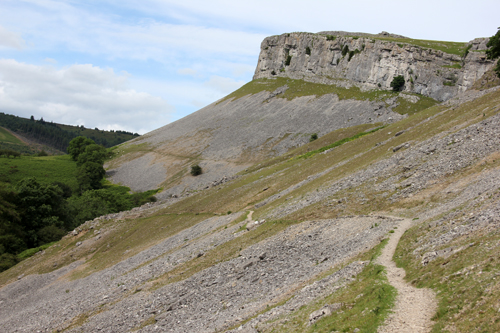
We followed the trail onto the famous limestone pavement where rainwater has slowly eroded broad flat blocks (clints) to form a variety of solution features including deep fissures (grikes) and shallow runnels. Gait Barrows has the most diverse flora of any pavement in Britain and we soon found Herb Paris Paris quadrifolia and Angular Solomon’s Seal Polygonatum odoratum. Herb Paris is a plant that was used both in ancient marriage rituals and to guard against witches. Although it is noted to have four oval-shaped leaves we found a few plants with five and six leaves.

mna-gaitbarrows-ls-orchid2.jpg

Our target species was Britain’s rarest flowering plant the Lady’s-Slipper Orchid Cypripedium calceolus. Victorian plant collectors caused Britain’s population to decline to near extinction. Indeed in 1917 the Lady’s Slipper Orchid was officially declared extinct until in 1930 a botanist found a single plant on a Yorkshire hillside. Natural England has worked closely with Kew Gardens to cross-pollinate this surviving wild plant and attempt to re-introduce it to some of its former flowering sites.

mna-gaitbarrows-ls-orchid1.jpg

As we continued across the limestone pavement I noticed an orange and black coloured Leaf Beetle then a mating pair that I later identified as Cryptocephalus bipunctatus bipunctatus var. sanguinolentus.

mna-gaitbarrows-mating-beetles1.jpg 

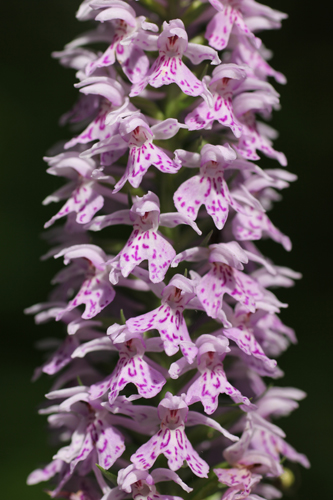
A Garden Warbler heralded our arrival in the meadow area where the hemi-parasitic herbaceous plant Yellow Rattle Rhinanthus minor was doing a great job at restricting grass growth and thereby allowing other species to thrive – Common Spotted Orchids Dactylorhiza fuchsia were joined by Northern Marsh-orchids Dactylorhiza purpurella and Ragged Robin Lychnis flos-cuculi. Chris Butterworth found a Common Frog Rana temporaria and invertebrates included a Sexton Beetle Nicrophorus sp. and Soldier Beetle Cantharis rustica. All too soon it was time to return for our minibuses back to Liverpool.

Posted in MNA reports | 1 Comment

Chester, 3rd June 2012

Well, that was the summer over! It was raining gently when we set out, and rather more persistently when we arrived at Chester. We didn’t risk the planned canal walk but headed straight into Grosvenor Park looking for shelter. What we found instead was the “Chestival” Roman weekend, so we abandoned our plans to look at wildlife and spent the rest of the day watching the parades, visiting the stalls and watching the belly dancers!

14-chester-roman-legionaries.jpg

The only interesting bird we saw was a Mute Swan on the canal towpath as we were on our way back to the station. It had a green Darvic ring, number CB11. The Cheshire Swan Study tell me it was a male bird, ringed at Winterley, Sandbach on 13th August 2001 when it was then a 1-year-old juvenile. It was re-spotted at Winterley several times in 2001 and early 2002, but not since then. It is now 12 years old, and has been “under the radar” for ten years.

Posted in Sunday Group | 1 Comment