MNA Coach Trip Brockholes NR 9th February 2014

 Seventeen MNA members joined our first coach trip of the year to the Lancashire Wildlife Trust Nature Reserve at Brockholes just off the M6. Given the recent prolonged heavy rains exceptional foresight was shown by Adam Khan architects design of the visitor centre named ‘A Floating World’ comprising of a cluster of buildings based on an ancient marshland village that floats amongst the reedbeds on one of the site’s lakes.

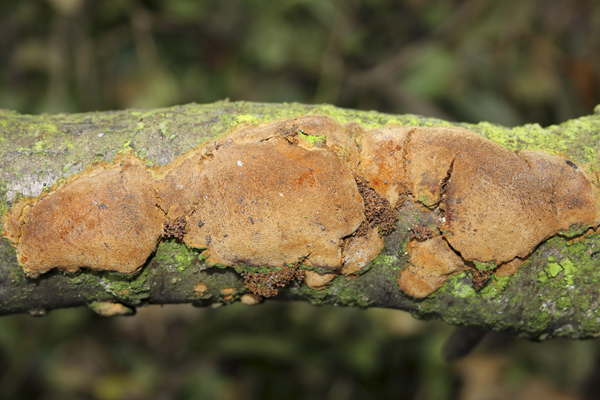
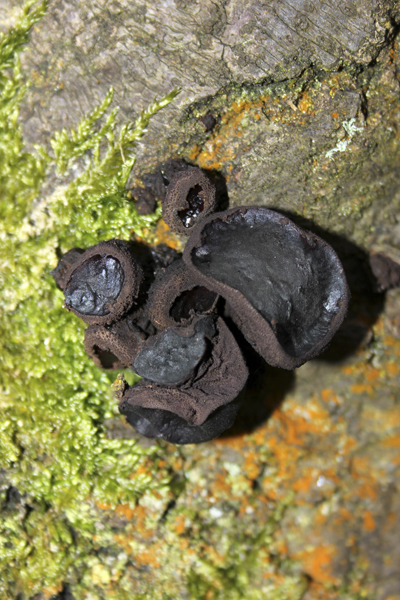
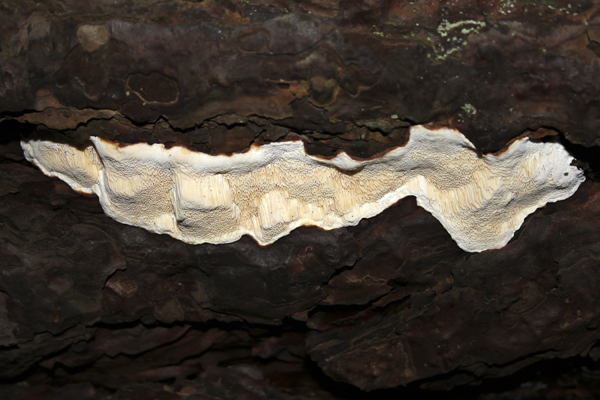
After looking around the visitor centre and a couple of members talking to BBC Lancashire Local Radio about our visit we braved the blustery winds and drizzle and headed off. I became side-tracked looking at fungi on the twig fence leading down to the visitor centre from the car-park finding Exidia plana – a shiny black gelatinous fungi with individual fruit-bodies blending into one another like the folds of a brain; Waxy Crust Vuilleminia comedens – a grey resupinate fungi with purple tinges growing beneath the bark on dead branches causing the bark to characteristically roll-back and Tukeytail Trametes versicolor. On looking up the group had disappeared! However upon catching up with everyone at the end of the day we seemed to have seen most of the same species.

MNA Brockholes Exidia plana1

Exidia plana

MNA Brockholes Waxy Crust1

Waxy Crust

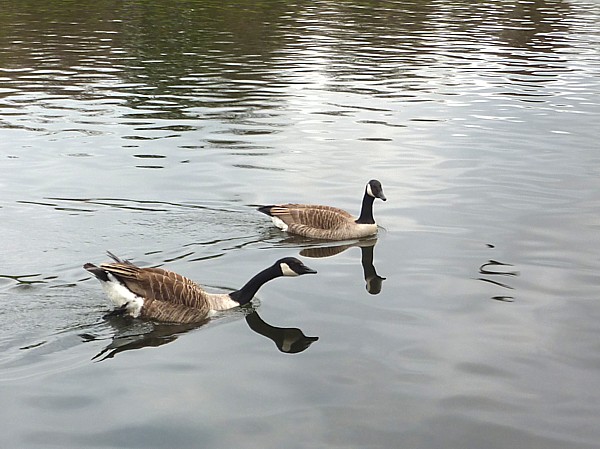
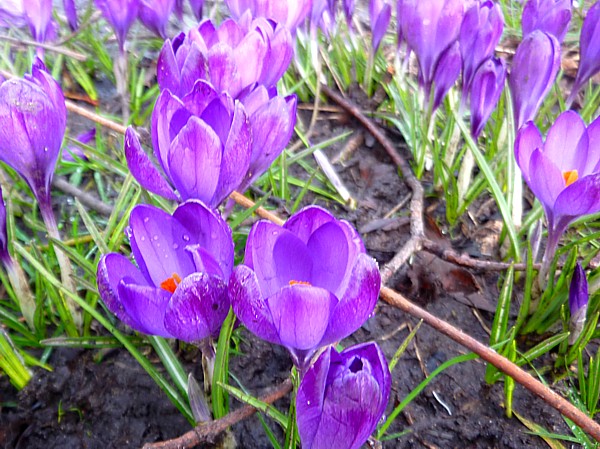
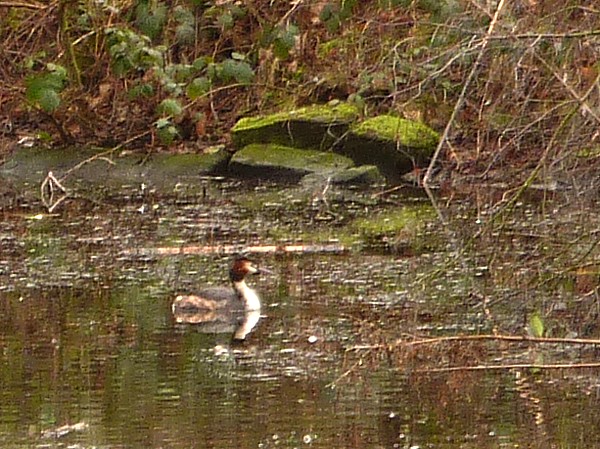
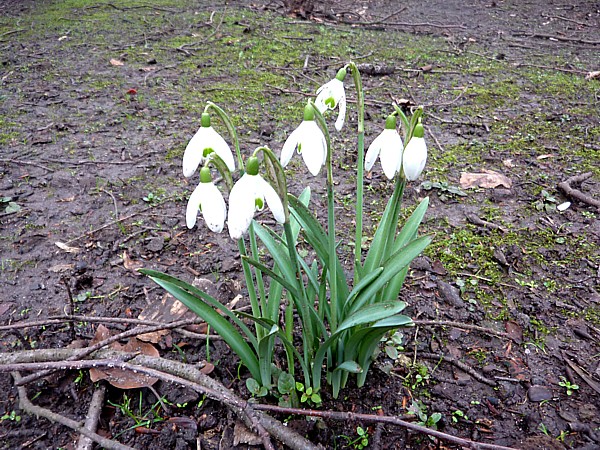
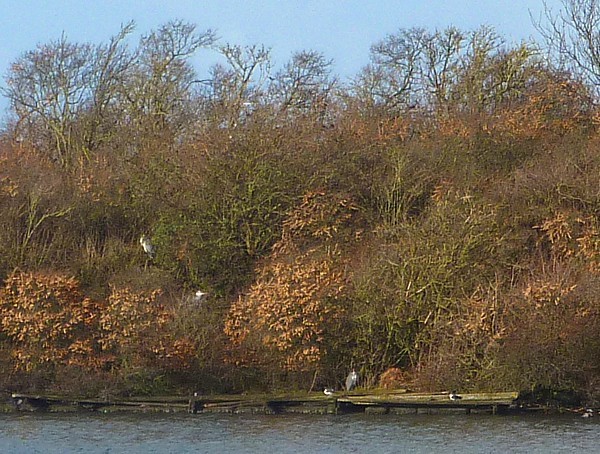
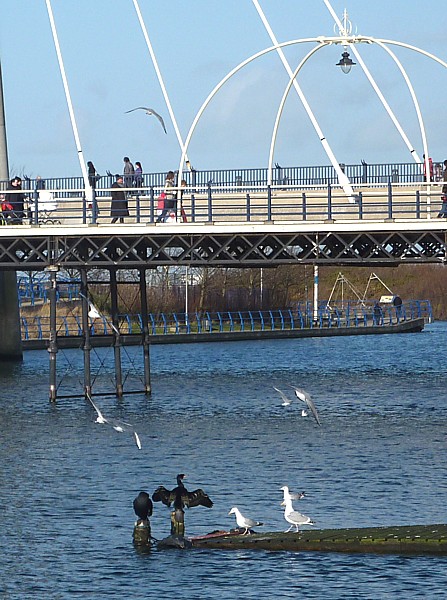
The lakes held resident and winter wildfowl with Canada Geese, a few Mute Swans, Grey Heron, Mallard, Teal, Gadwall, Tufted Duck, Great Crested Grebe, a couple of male Shovelers, a pair of Goldeneye and a motley collection of Cormorants stood in line on the edge of one of the islands. The feeding table had a male Pheasant and Woodpigeon perched on top, Mallards hovering up any spilt feed, along with Chaffinch and Great Tits. The woodland was productive with singing Wrens, Dunnocks, Robins and Blackbirds; Great and Blue Tits, Goldcrest, Nuthatch and Treecreeper. John Clegg’s group noted flowering Snowdrops in the woodland.

I spent most of the day scrambling about the fallen and felled trees in the ancient woodland of Red Scar Wood where I found a scattering of Fungi. Jelly Ear Auricularia auricula-judae – large numbers of this common pinkish brown ear-shaped gelatinous fungi growing on Elder, Common Inkcap Coprinus atramentarius, Glistening Inkcap Coprinus micaceus – dense clusters of this tawny-coloured bell-shaped Fungi growing on a fallen log.

MNA Brockholes Jelly Ear1

Jelly Ear

MNA Brockholes Glistening Inkcap1

Glistening Inkcap

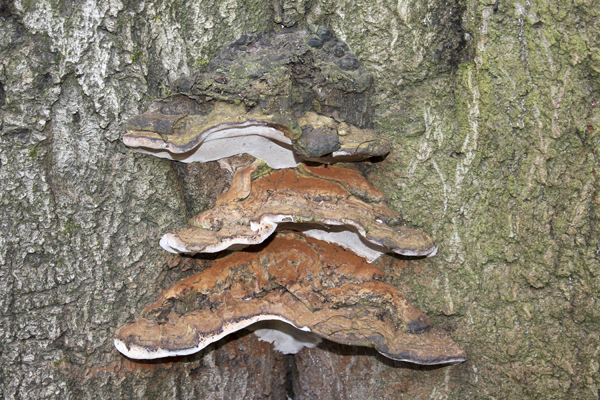
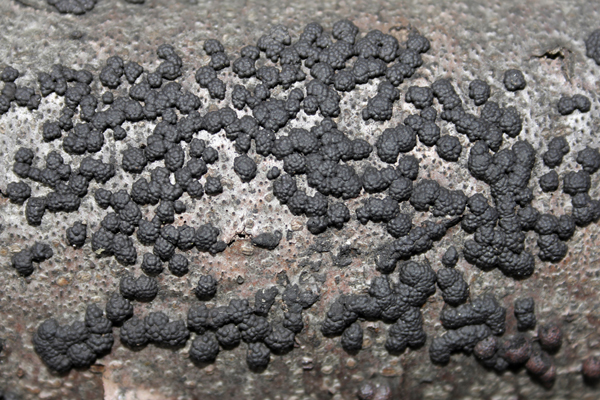
King Alfred’s Cakes Daldinia concentrica the common ball-shaped Fungus usually found on dead wood of ash trees, Velvet Shank Flammulina velutipes this common bright orange winter Fungi was growing in clusters on a few deciduous tree stumps, Crystal Brain Exidia nucleata, Beech Woodwart Hypoxylon fragiforme – with small warty brown growths swarming over dead branches of Beech.

MNA Brockholes Cramp Ball1

King Alfred’s Cakes a.k.a. Cramp Balls

MNA Brockholes Beech Woodwart1

Beech Woodwart

Rosy Crust Peniophora incarnata and also Peniophora quercina a pinkish resupinate fungus growing on Oak branches, Honey Fungus Armillaria mellea one fallen tree was covered in the black bootlace like flattened rhizomorphs of Honey Fungus that develop beneath the bark and Jelly Rot Phlebia tremellosa.

MNA Brockholes Peniophora incarnata1

Peniophora incarnata

MNA Brockholes Peniophora quercina1

Peniophora quercina

MNA Brockholes Honey Fungus1

Honey Fungus rhizomorphs

Find of the day was Scarlet Elfcup Sarcoscypha austriaca – a friend had noted seeing lots of these recently at nearby Leighton Moss RSPB reserve so I was hopeful I’d see some today. I spotted my first group of these bright red cup-shaped beauties close to the path – Dave Bryant’s group also saw these particular ones. The inside of the cup is smooth whereas the outside has whitish hairs that are curly or corkscrew shaped. With more searching I found four cups in pristine condition 🙂

MNA Brockholes Scarlet Elfcup1

Scarlet Elfcup

Also noted was Bleeding Oak Crust Stereum gausapatum, Bleeding Broadleaf Crust Stereum rugosum, Hairy Curtain Crust Stereum hirsutum, Lumpy Bracket Trametes gibbosa, Yellow Brain Tremella mesenterica – a yellow gelatinous mass of lobes and folds sometimes called Yellow Witches Butter and Candlesnuff Fungus Xylaria hypoxylon.

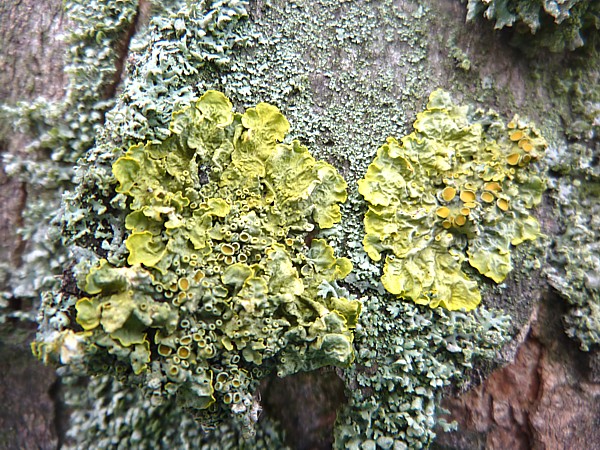
Lichen covered a number of the smooth-barked trees these included Lecidella elaeochroma f. elaeochroma – an early colonist with an grey thallus and small black spot-like apothecia and Lecanora chlarotera – with crustose grey thallus and apothecia with thick margins and buff brown discs.

MNA Brockholes Tree Lichen1

Tree Lichens

If you are interested in the wildlife of the north-west of England and would like to join the walks and coach trips run by the Merseyside Naturalists’ Association, see the main MNA website for details of our programme and how to join us.
A wide photographic selection of birds, marine life, insects, mammals, orchids & wildflowers, fungi, tribal people, travel, ethnography, fossils, rocks & minerals etc. is available on my Alamy webpage

Posted in MNA reports | Comments Off on MNA Coach Trip Brockholes NR 9th February 2014

Birkenhead Park, 2nd February 2014

It was a bright and sunny day, so we headed off to Birkenhead Park.

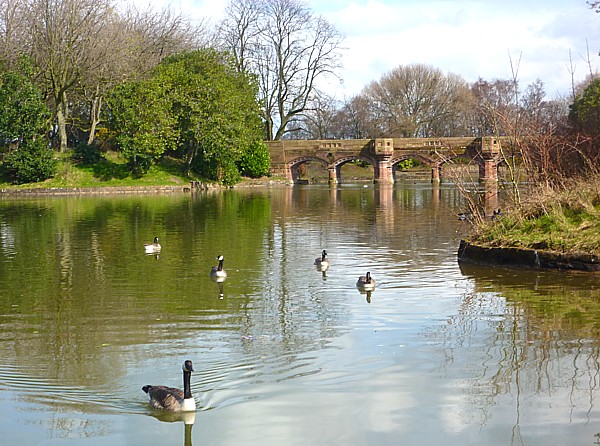
05 Birkenhead Park view
There were the usual park birds on and around the lake – Mallards, Coots, a Moorhen, Canada Geese, Wood Pigeons, Black-headed Gulls and a single female Tufted Duck. There were loads of Grey Squirrels, sometimes five at a time, all mooching for hand-outs. They came to within a few feet of us but are then shy and hesitant.

05 Birkenhead Park squirrel

Someone had hung up a disused Christmas wreath with green and red nut bags and sprays of millet fastened to it. The nuts were all gone, but not even the squirrels eat millet in Birkenhead.

05 Birkenhead Park millet wreath


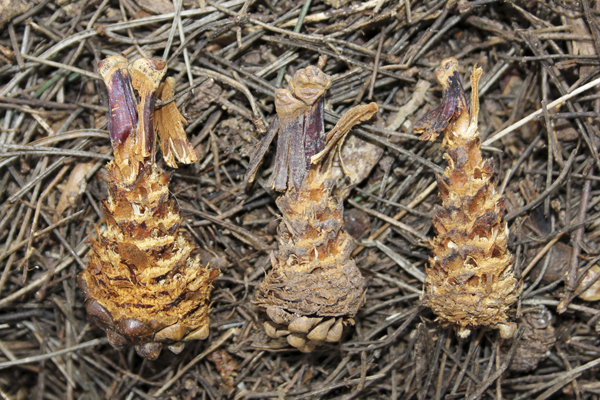
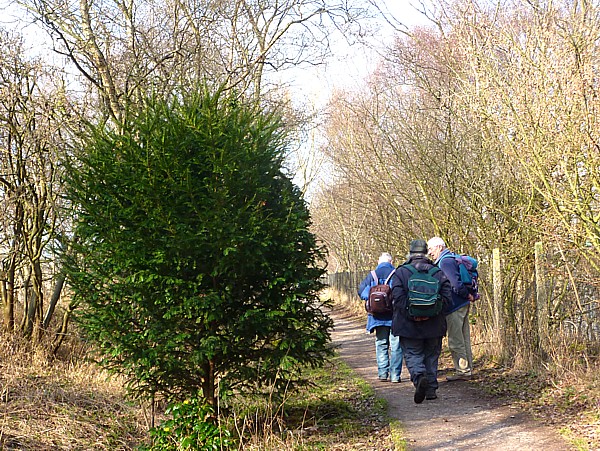
At the west end of the Swiss Bridge there are two handsome evergreen trees. The one on the right is a Yew, but the one on the left (lake) side is some sort of Cypress. I think it’s Monterey Cypress Cupressus macrocarpa. There were some dead branches lying around with a cluster of old cones, each about an inch (2.5cm) across.

05 Birkenhead Park cypress

05 Birkenhead Park cypress cones


In a shaded corner under the wooden bridge to the east of the Swiss Bridge we always see a group of very odd ducks. They hang around here and seem to keep to themselves. In November 2011 there were five slim black ones with a white domestic-looking one, and a Ranger said he thought the black ones had some Indian Runner in them. In March 2013 there were just two of the black ones left, with the same slim, elongated look, yellowish beaks and dark green heads. This time we saw the same two black ones, but they were in company with two strange grey ones.

05 Birkenhead Park black & white ducks

As we were looking at the odd-bods, three other atypical ducks emerged from under the bridge. They were iridescent green all over, Mallard shaped (fatter than the black ones), but with fan tails and light tips to their beaks.

05 Birkenhead Park green duck

As they swam around we could see that all three of the dark green ones were ringed, as was one of the greys, but we couldn’t tell if the other one was. The two black ones were definitely not ringed. They were small orange rings, too small to read. Anyone know anything about these ringed hybrid ducks?

We are still keenly looking for signs of spring. We examined the early male flowers of Yew, which were still quite undeveloped. A shrub was in flower, which excited us for a moment, but it was  Viburnum tinus, which flowers from October to June, so is perfectly in its season. Loads of bulbs were shooting up, but none were in flowers. Our best indication was later in the day, when we found an ornamental flowering cherry blooming in a garden.

05 Birkenhead Park blossom

After lunch by the pavilion, we set off across the park for the Williamson Art Gallery, noting as we passed that the recent high winds have felled a tree, which made a big dent in the fence as it fell!

05 Birkenhead Park bent fence

On Balls Road, just around the corner from the Gallery entrance, is a very old fluted pillar box. It is thought to date from about 1856, only four years after they were first introduced. It’s one of the oldest in Britain, older than the Victorian Penfold box near the park, which dates to 1870.

05 Birkenhead Park fluted pillar box


The very enthusiastic guide in the Williamson Art Gallery told us all about the ceramics on show, made by the local Della Robbia pottery.

05 Birkenhead Park Della Robbia plaque

He was very keen to tell us all about the collection of magnificent ship models, including one of the Mauretania. Another model was of the steam-frigate HMS Birkenhead, which was wrecked off South Africa in 1852, when the troops aboard famously stood to attention as the women and children were saved in the (too few) lifeboats. They also had an interesting wall poster for the Birkenhead ferries.

05 Birkenhead Park ferry poster


Public Transport details: Train at 10.16 from Lime Street station, arriving Birkenhead Park at 10.28. Returned by 423 bus at 2.45 from Borough Road, opposite Birkenhead Library

Posted in Sunday Group | Comments Off on Birkenhead Park, 2nd February 2014

Parkgate Old Quay, 1st February 2014

04 Old Quay view

Ten of us met at Sir Thomas Street for the 487 at 9.46, arriving Neston Cross, Brook Street at 10.38. Despite the forecast of heavy, persistent rain and strong winds, we were lured out by one of the highest tides of the year, due about lunchtime. In fact, it was bright and sunny, if a little blustery. As we passed through the church St Mary and St Helen we spotted our first birds, Long-tailed Tits and Great Tits.

04 Old Quay churchyard

We crossed the Wirral Way and some muddy fields near the sewage works. A tree was full of Carrion Crows, Jackdaws were calling and Goldfinches were twittering. The combination of recent heavy rains and, later, the high tide, turned our walk into a bit of an obstacle course, the first of which was the well-puddled kissing gate, which most of us preferred to avoid, climbing through the fence instead.

04 Old Quay Obs 1A

04 Old Quay Obs 1B


This is horse country, and one paddock had lots of Redwings, Song Thrushes, Starlings and Chaffinches on the ground. In the hedges near the quay we noted Robin, Blackbird, Meadow Pipits and a Reed Bunting.

04 Old Quay CB and friends

When we reached the Old Quay the marshes were filling up. Greylag Geese, Cormorants, a big flock of Pink-footed Geese in the distance. 100+ Oyster Catchers were in flight, a couple of dozen Black-tailed Godwits clustered in a pool, Carrion Crows hunted in the shallows, Skylarks flew up as the water advanced and Black-headed Gulls wheeled overhead. A huge flock of Curlews took off and the Pinkfeet all started to fly upriver. Shelduck and Redshank came nearer and a Little Egret poked about the clumps of grass. There were Teal, with a few Pintail amongst them, Mallards, a Heron, Lapwings wheeling and Lesser Black-backed Gulls joining the hunt. A scatter of showers produced a rainbow, then it was sunny again. And the tide just kept on rising.

04 Old Quay View with rainbow

04 Old Quay high water

As the water passed the fence line the little beasties started swimming in. The first was a small unidentified mammal which disappeared into the rough grass below the fence. Then a bigger creature emerged, either a Water Vole or a Rat, but that hid itself quickly, too. Then the best one of the day arrived, a Field Vole aka Short-tailed Vole Microtus agrestis, which ran right up to us in its panic, briefly skulked by my feet as if it was hoping to run up my trouser leg, then burrowed into a pile of mulch. I managed to get two rather hurried pictures of it, though.

04 Old Quay vole 1

04 Old Quay vole 2

We ate our lunch while we waited for the waters to go down. A Grey Wagtail flitted past, then out onto the marsh. Drama was provided by a Cormorant which had caught a huge eel. Part of the eel was down the bird’s throat, but at least a foot was still hanging out. The semi-throttled Cormorant thrashed and plunged, the eel flexed and jerked, and there was much splashing as the Cormorant struggled to overpower its catch. Eventually it swallowed it all down and took off, but then thought the better of it, perhaps finding itself too heavy. As it settled back onto the water we could see its swollen crop.

Jim H arrived, having walked from Gayton. He had seen a Great White Egret at Parkgate, three Short-eared Owls and eight Little Egrets. He said it was pandemonium back there, with thousands of people crowding the prom and chaotic traffic. We had had a far better view where we were. The only problem was the time it was taking for the water to recede and the path to emerge from the water. Eventually we got tired of waiting and went around by a field and struggled through a barbed wire fence, our second obstacle of the day. A party of young Ramblers was doing the same.

04 Old Quay Obs 2

Our third obstacle was the flooded Marshlands Road before the Harp Inn. We went around it by  Orchard Drive and spotted a Tree Sparrow behind the Harp, so that was an unexpected bonus. It was still sunny and blustery with just a few spots of rain. Where was the downpour we had heard about? From the Harp Inn we saw two Mute Swans and thousands of Oyster Catchers in a black line out on a bank. Further along the cycle path was another bit of flooding, our fourth obstacle. Jim commented that Commando training was essential today!

04 Old Quay Obs 4

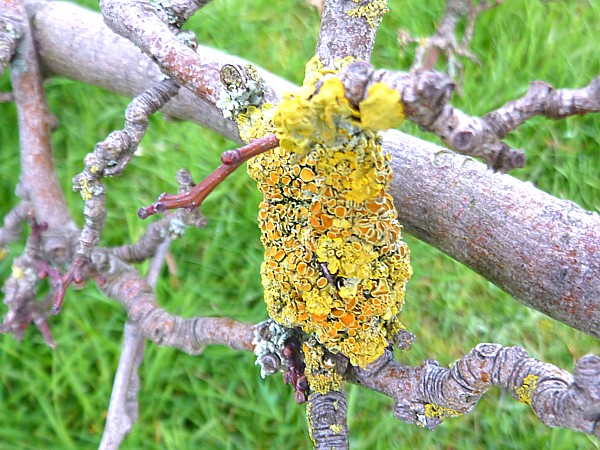
As we approached Denhall Lane we saw a Great White Egret ahead. We hadn’t seen the one from Parkgate pass us, so was this a second bird?  A female Kestrel was hovering, with her head into the onshore wind. Someone spotted an old damaged nest, probably made by a Goldfinch, and there was some yellow lichen on a Blackthorn twig. I think it’s Xanthoria parietina, called Common Orange Lichen, Yellow Scale, Maritime Sunburst Lichen or Shore Lichen. It is said to be widespread and often found near the shore.

04 Old Quay Maritime Sunburst

04 Old Quay nest

There was now some very thick grey cloud and rain behind us and over to the Welsh side, so we picked up our pace, stopping briefly to admire a weather vane near Denhall Fishery, made in the likeness of a pair of Pintail.

04 Old Quay weather vane

Dave B pointed out the verge below the sandstone wall on the corner of Denhall Lane, which is a known spot for the rare Early Purple variety of Sweet Violet, Viola odorata var. praecox. It was still there, flowering daintily. Eric Hardy wrote about it in January 1984, and you can read it on page 30, column 1 of In the Footsteps of Eric Hardy.

04 Old Quay Early Sweet Violet

The Daffodils were nearly out in Denhall Lane, Lesser Periwinkle was flowering, and there were two types of fern, Hart’s Tongue Fern and a big spread of what might be Royal Fern, although David B said he would have to see it in flower later in the year to be sure. (Added 12th Feb – DB now thinks is is merely Common Polypody.)

04 Old Quay Royal Fern perhaps

04 Old Quay Royal spores perhaps

As we neared the top of Denhall Lane skeins of Pink-footed Geese were flying overhead, heading back to the Marsh. The two people who were in front managed to jump on to the 2.31 bus at the turnaround, but the rest of us headed the few hundred yards to Ness Gardens. Just as we arrived the torrential rain and wind came in, and roared against the windows of the shop and café area. Excellent timing!  On the next 487 bus back to Liverpool, we compared notes and counted 36 or 37 bird species for the day.

If you are interested in the wildlife of the north-west of England and would like to join the walks and coach trips run by the Merseyside Naturalists’ Association, see the main MNA website for details of our programme and how to join us.
Posted in MNA reports | Comments Off on Parkgate Old Quay, 1st February 2014

City Centre, 26th January 2014

This was the first meeting of the Sunday group this year, but since it was raining hard when we met, we decided not to go any further afield. We retreated from the weather into the Walker Art Gallery, where we saw all the usual classics – Henry VIII, “When did you last see your Father”, “The Death of Nelson” and an exhibition of early Hockney paintings. Sadly, Philistines that we are, we were most charmed by this eccentric musical instrument.
03 Museum Loophonium

Called the “Loophonium”, it was designed and made by Liverpool musician, broadcaster and humorist, Fritz Spiegl, and was regularly played at the Liverpool Philharmonic April Fool Concerts in the 1950s, 60s and 70s. The Gallery invites the visitor to press a button, at which the Loophonium plays “Frère Jacques”.

We went into the World Museum to have our sandwiches in the indoor picnic area on the 4th floor, then visited the Clore Natural History Centre. We put an MNA leaflet on their notice board. The Centre has many fascinating exhibits including the following.

03 Museum T rex foot


Tyrannosaurus rex foot cast, Cretaceous, about 66 million years ago

03 Museum insect case
Display case showing the main orders of insects.

03 Museum Apatosaurus femur


Cast of the femur of an Apatosaurus, Jurassic, about 150 million years ago (with Olive for scale)

03 Museum Chirotherium footprint
Fossil footprint of a Chirotherium, found in Storeton Wirral

03 Museum Coco de Mer seed
Seed of the Coco-de-Mer, Lodoicea maldivica, endemic to some islands in the Seychelles

03 Museum Iggy the Iguanodon
Model of a young Iguanodon from the Museum lobby

It was dry when we emerged, so we had a browse around St John’s Gardens.  The bulbs in the flower beds are well advanced.

03 Museum bulbs coming up
Public Transport details: No public transport used today, we stayed in town.

Posted in Sunday Group | Comments Off on City Centre, 26th January 2014

Pickerings Pasture, Sunday 19th January 2014

Six members travelled by bus, which arrived a bit late, so those meeting at the published time had already set off southwards. We met Gary and Linda Broad of The Friends of Pickerings Pasture,  who had the Visitors’ Centre open for us.

02 PickPast view

The bird table near the car park had already offered  Blue Tits, Goldfinch and Linnet and as we made our way southwards we added Herring Gull, Blackbird and Redshank. The tide was coming in strongly, and we noticed some Mallards facing upstream to Liverpool but being swept backwards to Runcorn. The hedgerows had a wonderful display of Sea Buckthorn berries, orange against the blue sky, and the Alder catkins were out, another sign of spring.

02 PickPast Sea Buckthorn


02 PickPast Alder catkins

We met the earlier group near the cycle bridge, making about 14 of us altogether, including at least one new member. In the Ditton Brook inlet there were Teal and Heron.

02 PickPast bridge

On the other side of the bridge Sabena photographed this nice lichen “growing on the wooden fence beside the zigzag path up the ‘mounds’ – it’s a Lecanora species with disk-shaped apothecia (fruiting bodies).”

02 PickPast Lichen (Sabena Blackbird)

As we made our way back to the Visitors’ Centre (some of us hoping for lunch!) Carol Cockbain of FoPP said her husband Rob would meet us at the hide at 12.30, and there was a Kingfisher! We made it in time to see the Kingfisher sitting on a post. Not only that, but a Great White Egret.

02 Pick Past GWE (Carol Cockbain)

Great White Egret by Carol Cockbain.

We ate our lunches at the hide, building up a long list of bird species, and I know I didn’t write them all down. John Clegg had 41 by the end of the day, plus a Jay which he heard but didn’t see. There were Shelduck, a Little Grebe being elusive, various geese and gulls. After a while a Little Egret came in, too. Rob Cockbain had his telescope out and was scanning the far fields. He spotted a Mediterranean Gull at extreme range, wheeling amongst a flock of commoner gulls. Some waders went up and we saw a Peregrine chasing them, but we didn’t see if it made a kill.

02 PickPast hide view

On the feeders were Great Tits, Chaffinch, Greenfinch, Long-tailed Tits and a Blackbird.

02 PickPast Feeder and LTT

02 PickPast Feeder and BB

02 PickPast Feeder and GT

There was a Robin in the wood and a Great Spotted Woodpecker perching overhead. Last spring it or another woodpecker had attacked a nest box high in the trees, opening up the entrance hole to get at the chicks inside. (Sorry the picture is “washed out”, but it was necessary to show the detail of the damage.)

02 PickPast Nest box attack

As we made out way back a Thrush was singing in the treetops and there was a Redwing on the grass. The woods had a collection of fungi, which Sabena tracked down. Here’s her list.
Turkeytail Trametes versicolor
Yellow Brain Tremella mesenterica
Crystal Brain Exidia nucleata
Jelly Ear Auricularia auricula-judae
Inkcap Coprinus sp.
Velvet Shank Flammulina velutipes
Candlesnuff Fungus Xylaria hypoxylon
Coral Spot Nectria cinnabarina
Oysterling Crepidotus sp.
Silverleaf Fungus Chondrostereum purpureum
Scurfy Twiglet Tubaria furfuracea

02 PickPast Jelly Ear (Sabena Blackbird)
Jelly Ear Auricularia auricula-judae by Sabena Blackbird

02 PickPast Silverleaf Fungi (Sabena Blackbird)


Silverleaf Fungus Chondrostereum purpureum by Sabena Blackbird

We had planned to go to the Duck Decoy today, but the recent heavy rains and the demise of FoPP’s pump made it impossible. Carol Cockbain has sent me a picture of the main walkway, which is now underwater. It would have been impossible for us to visit, so we’ll have to take up the offer some other time.  Our thanks to Gary and Linda Broad, and Carol and Rob Cockbain for giving us such a good day.

02 PickPast Decoy flooded (Carol Cockbain)

The waterlogged Hale Duck Decoy, by Carol Cockbain

Our last sign of spring was a Lesser Periwinkle in flower on the verge by the bus stop.

02 PickPast Lesser periwinkle

Public transport details: Liverpool ONE bus station for the 82A at 10.14. Arrived Mersey View Road late, about 11.10. Return bus at 2.20, arriving back at Liverpool ONE at about 3.10.

If you are interested in the wildlife of the north-west of England and would like to join the walks and coach trips run by the Merseyside Naturalists’ Association, see the main MNA website for details of our programme and how to join us.
Posted in MNA reports | Comments Off on Pickerings Pasture, Sunday 19th January 2014

Hoylake High Tide Watch, 4th January 2014

01 Hoylake warden sign

About 13 or 14 MNA members gathered at Kings Gap, plus a few other joint members who came with an RSPB party and many independent birders. There were several “civilians” too, drawn by the Wirral Rangers High Tide Birdwatch or attracted to the gathering of dozens of birders and telescopes.

01 Hoylake massed birders

We were very lucky with the weather. It was a calm, mild, dry day, sandwiched in amongst the storms and gales of the previous days and following forecasts. The highest tide was due at about quarter to two, 10.1 metres.

With two hours to go the tide was way out, so the interest was in a Pied Wagtail on the edge of prom and the gulls on the beach: Herring Gulls, Common Gulls, Lesser Black-backed Gulls and Black-headed Gulls. Some Cormorants and a lot of Oyster Catchers were on the distant water’s edge. Various small flocks of birds flew past and then 100+ Bar-tailed Godwits came in. Some telescopes spotted a Peregrine, just sitting on the sand a long way out, waiting for the food to arrive. Also on the beach was, unusually, a Great Crested Grebe. Several times it reared up and tottered towards the sea for a few steps, leaning forward like an unsteady penguin, then flopped onto its breast again. Grebes’ legs are too far back for them to walk well. Many of us had never seen one attempting to walk before. Had this one been stranded by the receding tide several hours before, or had it mistakenly landed on a glistening beach, thinking it was water?

Then several thousand Knot and Dunlin came in, and as the water came nearer, the birds on the tideline sorted themselves into bands. The Bar-tailed Godwits were the outermost, breast-deep in the water. Then a mixed flock of Knot, Dunlin and Grey Plovers on the water’s edge and finally the Sanderlings scurrying about in front. There were also some single Greater Black-backed Gulls out on the water.  One of the WEBS counters later estimated there were 450 Barwits, 5000 Knot, 5000 Dunlin, 200-300 Grey Plover and 200 Sanderlings.

01 Hoylake birds on waterline

Then suddenly a female Peregrine flew into a wheeling mass of Knot and pursued one out beyond the rest of the flock. We saw her jink and strike then fly off with her prey towards Hilbre.

With 15 minutes to go to high tide the water was lapping the bottom of the slipway railings and most of the birds had flown. Knot were circling in the sky, sometimes making interesting patterns like murmurations of Starlings. Some birders were discussing the theory of “aerial roosting”, suggesting that birds with nowhere left to land circle slowly in the sky, resting, and waiting for the water to recede.

01 Hoylake flying flocks

As five Redshanks flew past, another Peregrine appeared, this time a smaller male. He drove some small bird onto the surface of the water, probably a Dunlin, then plucked it up. But then a larger female appeared, perhaps the same one as before, and she forced the male to drop the bird it had just caught (which was still alive and fluttering) and then flew off with her stolen lunch towards Hilbre. What a show!

01 Hoylake tide up slipway

At about 1.30 we moved on to Red Rocks. At the bottom of Stanley Road there were House Sparrows twittering in a thick hedge but we couldn’t see them. There was a Carrion Crow on the bit of remaining beach on the right and a Pied Wagtail on the slipway railing.

01 Hoylake Pied Wag Red Rocks

Little Eye was just two low humps in the water, topped with Cormorants. Towards Hilbre there were some Pale-Bellied Brent Geese on the water, perhaps a couple of dozen. More Redshanks flew past and Chris B saw a seal poke its head up. In the very far distance, out by the wind farm at extreme telescope range was a Diver. The group thought it might be a Red-throated Diver, but I see that the Birdguides website had several reports that day of a Great Northern Diver at Hoylake or Hilbre.

Then we set off along the shore towards West Kirby. In the tall bare hedge Les H spotted a tiny cup-shaped nest made of fine fibres, and on the edge of the water was a Redshank with a bad limp. It took a few lurching steps then hunkered down again. Perhaps another victim of a Peregrine?  There were loads of Oyster Catchers on the edge of the salt marsh with several Curlews in amongst them.

01 Hoylake Little Eye, Oyks and Wales coast

Something was calling from the reeds. A Water Rail?  Christine B played the Water Rail call on her phone, and there was an instant response of repeated squeals from deep in the reeds. That’s confirmed, then!

01 Hoylake reeds at Red Rocks

As we approached West Kirby there were Starlings on the bank, and a pair of Stonechats were flycatching from the fence. Chris B led a bit of shell identification on the beach. The pink shells are Baltic Tellins Macoma balthica.

01 Hoylake Baltic Tellin

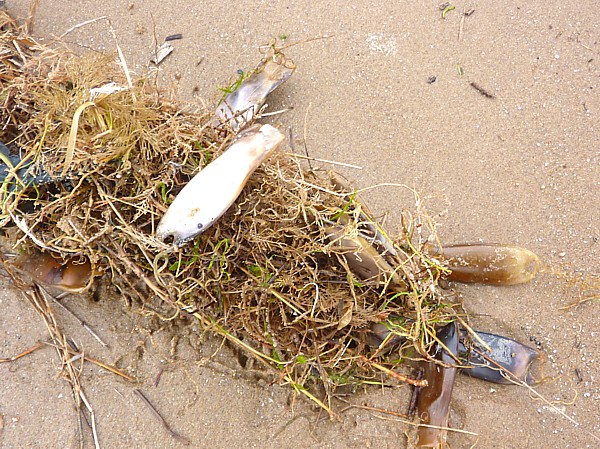
The long straight razors with the hinge at the end are Pod Razors Ensis siliqua.

01 Hoylake Pod Razor

The smaller curved razor shells with the hinge in the middle aren’t razor shells at all, they are clams. The Latin name is Pharus legumen, but they don’t seem to have a common name.

01 Hoylake Clam Pharus legumen

The one curved on both sides is Ensis ensis, which Chris called the Common Razor, and is also known as the Sword Razor. (It would be better named after a scimitar, I think, to emphasise the double curve.) Chris adds “The ones we saw were E. ensis, as both margins were curved, even though they didn’t look as curved or slender as the ones you find on the Sefton coast. One of the problems with molluscs is that shell shape can alter according to the habitat. Open coast individuals can, on occasion, look totally different to those from estuaries.”

01 Hoylake Sword or Common Razor

There is another one, which we didn’t see, which is curved on one side but straight on the other, called the Razor Clam Ensis arcuatus.
As we approached the Dee Lane Slipway at West Kirby we noticed tangles of weed caught in the railings, a souvenir of the recent high tides and storm surges.
01 Hoylake WK weed

Other reported sightings for the record: Ron Crossley saw about 80 Waxwings yesterday (3rd January) west and downhill from the Mons Hotel in Bootle.  Jean Lund saw a Red Admiral butterfly in flight at Cabin Hill beach on 2nd January.

Posted in MNA reports | Comments Off on Hoylake High Tide Watch, 4th January 2014

Fascinating Fungi of 2013

Report from Tony Carter:
In the course of a year, numerous species of fungi are collected and recorded. Most are common, some are unusual. But it is a bad year if something special fails to turn up.  These are my highlights of 2013.

Alternaria anagallidis
Alternaria on Scarlet Pimpernel

This might not be everybody’s idea of special but this is a fungus I have been trying to identify for twenty years. It is a tiny rust fungus that grows on Scarlet Pimpernel. There is only one previous British record. Scarlet Pimpernel grows on my allotment and every year the same small area supports this fungus but I can never find a spore, which looks a bit like like a tadpole, and is essential to identify the species. The leaves are very soft and dehydrate quickly making it very difficult to get a decent sample and even this depends on the fungus sporulating at the time. This year, at last, I found them. The samples were sent to Kew. There are now two British records.
Alternaria spores


Tephrocybe impexa
tn_Tephrocybe impexa Speke Hall 1013
Not previously recorded for VC59, this fungus grows on old bonfire sites. It is black. So are bonfire sites. It is a difficult one to spot. I found this at Speke Hall after they had burnt all the fallen branches and sticks they had cleared from the woodland.  Personally, I wish they would be less tidy and just leave all this woody material in situ as it is good for fungi and insects. At least some good came from this exercise. Kew Herbarium asked for my specimens.

Gymnopus fuscopurpureus
tn_Gymnopus fuscopurpreus Tesco 1113


Until recently this was considered a rarity but is now being found regularly in southern England. This is another example of a species moving north. Global warming? The tale of this find illustrates the problems faced by the urban mycologist. I saw a lot of them growing on old woodchip on one of the scrubby flowerbeds immediately outside the main entrance to Tesco in Allerton. So how to collect it without appearing totally mad?  I dropped my car keys, grabbed some quickly and legged it.

Sowerbyella radiculata
tn_Sowerbyella2 Allerton Towers 113
There is a small copse of mixed conifer at Allerton Tower where I regularly find a rare Earthstar, Geatrum striatum. I could not find it this year but was very surprised to find this Sowerybella, another rarity. It is a pine-loving cup fungus which has a long stalk that is embedded in the ground. Kew Herbarium declared an interest so it has also been sent there.

Paxillus obscurosporus
tn_Paxillus obscurosporus Booker Ave 1113
Many of you will know of Paxillus involutus (Brown Rollrim), a very common fungus frequently to be seen growing along central reservations in south Liverpool. This is Big Brother, measuring 28cms diameter, only recently arrived from Europe, probably on imported trees. It likes Lime trees which are very commonly planted along grass verges and roadsides. This one was growing under such a tree, immediately outside Booker Avenue Junior School, where parents park their cars to pick up their children. How something of this size survived is a mystery. Too big to kick? It was too big for Kew. They turned it down.

Astrosphaeriella stellata
tn_Astrosphaeriella stellata
While I was tending my allotment  I noticed this small fungus embedded in an old bamboo cane. I knew it was unusual because bamboo does not support many fungal species. I could not identify it. I had to send it to a colleague in Oban. He had his suspicions but had to send it to the expert at Kew before the final identification could be confirmed. Recorded from India and the Far East, this was a first for the United Kingdom.  I have hundreds of bits of bamboo cane but I have not yet found another specimen of this fungus.

This is the second ‘new to the UK’ fungus found on my allotment site. Perhaps it should be given SSSI status?

Posted in MNA reports | Comments Off on Fascinating Fungi of 2013

Croxteth, 15th December 2013

It was a grey and overcast day, still mild at about 8°C, and with a forecast of rain later. Dare I ask where winter has gone?

45 Croxteth statue pond

We entered Croxteth Country Park though the west gate near Dwerryhouse Lane and our first birds were House Sparrows twittering busily in a hedge at the back of Fallbrook Drive. There were Carrion Crows and Magpies on the grass and a Wood Pigeon on a TV aerial. Then there was some excitement when a Sparrowhawk flew into the trees at the back of Greenodd Avenue, perched for a minute or two for us to admire him,  then flew away northwards.

We spent the morning wandering around the paths, past Statue Pond, the Jungle Parcs treetop adventure attraction and the Long Pond, where there was a group of Mallards in fine winter plumage.

45 Croxteth mallards

On the way we saw a mixed flock of Blue Tits and Long-tailed Tits, a Jay on the grass, many winter trees in bud, the local husky dog team taking their kennelmaids for a walk near the River Alt bridge and the small herd of piebald horses, one of whom was being fed carrots by a young family.

45 Croxteth carrot

The sun came out as we had lunch in front of the Hall, to the accompaniment of Jackdaws calling from the rooftop. The great Beech on the lawn, which I photographed in its autumn glory on 21 Oct 2012, was stark and bare, but the Lucombe Oak is still green. It’s a hybrid between Holm Oak and Turkey Oak, scientific name Quercus x hispanica “Lucombeana”, which occurs naturally in the Mediterranean but is rarer in the UK. The British specimens are mostly clones of the one first cultivated in Exeter by William Lucombe in about 1762.

45 Croxteth beech

45 Croxteth Lucombe oak

Then it suddenly started to go very dark and a stiff breeze came up, threatening heavy rain, so we started for home. But it was a false alarm and after just a few drops it cleared.  To our surprise, we saw some very early blossom in the shrubbery. I think it was the Winter-flowering Cherry (Prunus subhirtella ‘Autumnalis’). We counted it as the first sign of spring, anyway, nearly a week before the equinox!

45 Croxteth blossom

At the back of Home Farm we spotted a Grey Squirrel. He reminded me of some good news I saw recently about Red Squirrels at Formby beginning to show resistance to poxvirus. The individual squirrel called Clark (after Superman’s alter ego Clark Kent) is the first definite survivor.

On the way to West Derby Village we had good views of the estate’s Highland cattle and in St Mary’s churchyard were two Robins and a Blackbird.

45 Croxteth highland cow

Public Transport details: Bus 18 from Queen Square at 10.10, arriving at the junction of Muirhead Avenue East and Dwerryhouse Lane at 10.25, then across the road and in through the western entrance.  Returned from West Derby Village, some by the 61 bus southwards and some by the 12 bus into Liverpool.

Posted in Sunday Group | Comments Off on Croxteth, 15th December 2013

Parkgate, 8th December 2013

Off to Parkgate on a fine sunny day, for our Christmas meal, and also with the prospect of seeing a Great White Egret. The RSPB had set up on the Mule Stand near the Christmas tree, for their “Skydancer” campaign for Hen Harriers.

44 Parkgate RSPB and tree

They said a female Hen Harrier and two juveniles had been seen passing earlier in the day, and they also pointed to where the Great White Egret had last been seen, but it wasn’t visible. All we saw were Mallards, Redshank, Common Gulls, Lapwings, Lesser Black-backed Gulls, Black-headed Gulls, a Pied Wagtail on the wall and this splendid Little Egret, who landed quite close to the road.

44 Parkgate Little Egret

The Old Quay pub has great views over the marsh, so we were able to keep our eyes peeled while we ate our carvery dinner. (Very nice meal, but no big white bird). When we emerged to walk off the effects of dessert, the RSPB people were able to find the Great White Egret for us in their telescopes, so that’s a good tick for the year!

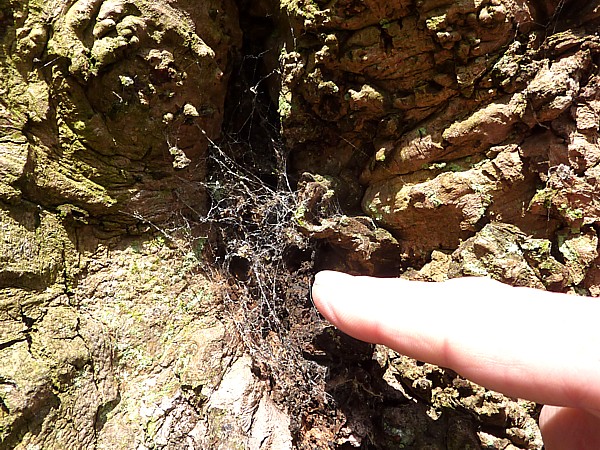
On the road sign for The Parade we saw something unusual. The whole sign was covered in spider web with very many small dead arthropods trapped in it.

44 Parkgate Parade sign


44 Parkgate sign corner

Was this something to do with the big storm last Thursday?  Had all these creatures been blown in off the marsh and smashed against the sign? But there were just as many on the lee side. Something to do with their life cycle?  The majority seem to be Stretch Spiders, and my guess is Tetragnatha extensa, which is common near marshes.

44 Parkgate sign edge

Since we didn’t want to wait nearly two hours for the 3.30 bus, we walked up Parkgate Road towards Neston. Two plants were in flower by the wayside. One looked like a Mayweed, but I didn’t smell it to see if it was Scented or Scentless, although Scentless is said to flower until October. The other was one of the DYCs (damn yellow composites). I think it was a Sow Thistle, probably Smooth, as that is said to flower “April to November and through mild winters”.

Near the Greenland Fishery pub (“16th century hostelry, reputed to be the only pub of its name”) is a sign saying John Wesley preached in a small house chapel nearby on 1st April 1762.

Public Transport details: Bus 487 from Sir Thomas Street at 10.30, arriving Parkgate Mule Stand at 11.20.  That only returns to Liverpool every two hours (1.30 and 3.30) so we walked to Brook Street, Neston (near Sainsburys) and got the 488 at 2.36.

Posted in Sunday Group | Comments Off on Parkgate, 8th December 2013

Canal 8, Heaton’s Bridge to Burscough, 1st December 2013

Today’s walk covered the last stretch of the Leeds-Liverpool canal that we plan to attempt. It was a dry and overcast day, very mild for December at about 10°C (50°F). After the train to Ormskirk then a bus to Heaton’s Bridge, we hit the towpath.

43 Canal 8 Martins Lane bridge

The first evidence of wildlife we saw was an abundance of fresh-looking Molehills all along the verge. Then the usual Moorhens on the path ahead and some Mallards in the water. Two of the Mallards were very odd-looking indeed. The brown one had a faint look of a Pintail about it while the other one is anybody’s guess. Martin Mere reserve is nearby, which Eric Hardy used to call a “duck brothel”, and you can see what he meant.

43 Canal 8 odd ducks

Other birds along the way were Magpie, Greenfinch and a small flock of Fieldfares. John checked, but there were no Redwings with them. There weren’t any flowers that we could see either, but the hedge was wound about with Honeysuckle vines flashing their red berries, and an Ash tree bore nothing but bunches of “keys”.

43 Canal 8 Ash keys

Martin’s Lane Bridge is another nice old one, pictured above, and we were delighted to find a set of stop planks on the east side, now very rotten and overgrown. They were once used to make a barrier for draining the canal when maintenance was needed; they dropped into slots below the bridge. I remember seeing a set outside the Ship Inn at Haskayne a few years ago, but they are gone now. These appear to be the only ones between Liverpool and Burscough.

43 Canal 8 stop planks

One smallholder was keeping free range hens, white and grey geese, and a few interesting brown sheep, which we first thought were Jacobs, but they seem to be the rare breed Zwartbles.

43 Canal 8 zwartbles

We had lunch at Great Score Swing Bridge, one of the ruined ones that are fixed open. Beyond the bridge is the former airfield of the Fleet Air Arm known as HMS Ringtail. Some of us perched on the side of the rubbish barge which moors here.

43 Canal 8 lunch on barge

The sun came out briefly as we had lunch and we spotted a single dark butterfly crossing the canal and heading north. Red Admiral? Impossible to tell. Two male Blackbirds were darting at each other on the bed of the decrepit old bridge. Perhaps it’s close to a territorial boundary, or perhaps the interloper was one of the continental birds which the resident birds have to chase away.

Further on there is an interesting view over the fields northwards towards Martin Mere. In this picture you can make out two hides above the hedge line in the middle distance – the Ron Barker Hide on the left and the Kingfisher Hide in the middle. The tower of Harrier Hide breaks the skyline on the right.

43 Canal 8 Martin Mere hides

At New Lane there are some remarkably pretty canalside cottages, many with bird feeders on the lawn outside, and one with a sumptuously-fruiting Rowan tree.

43 Canal 8 New Lane cottages

The pub on the other side of the canal here is the Farmer’s Arms, whose landlord is (or used to be) Shaun Teale, the former Southport and Aston Villa footballer. There is also a WWII blockhouse disguised as part of the pub.

43 Canal 8 Farmers Arms

North of the New Lane junction we were thrilled to see about 300 Whooper Swans grazing.

43 Canal 8 Whoopers

The last milepost we saw was the one showing 23 miles from Liverpool. Towpath Treks  says there is an even older milestone here, but we couldn’t find it. At the next bridge, Crabtree Bridge, the pub is called the Slipway. As suggested by its name there is indeed a small slipway in front of it. Notice also the WWII loopholes in the barn on the right.

43 Canal 8 Slipway

At last we arrived at Burscough Bridge, almost 24 miles from Liverpool. It’s only taken us a year!

43 Canal 8 The End

Anyone doing this walk should note that there are public conveniences at the back of the Hop Vine pub and that there is a very nice bakery and bread shop in the Burscough Wharf courtyard.

Public Transport details: We took the Ormskirk train from Liverpool Central at 10.10, arriving Ormskirk at 10.43. Up the path to Ormskirk Bus Station and then take the 375 bus towards Southport (not the Wigan-bound one) at 11.06, arriving at Heaton’s Bridge at 11.21. We returned from Burscough Bridge on the 12A bus (which is hourly) at 2.04, arriving Ormskirk at 2.18. If you get off near Ormskirk station approach road you can just make the 2.20 train back to Liverpool.

Posted in Sunday Group | Comments Off on Canal 8, Heaton’s Bridge to Burscough, 1st December 2013