Southport, 4th March 2018

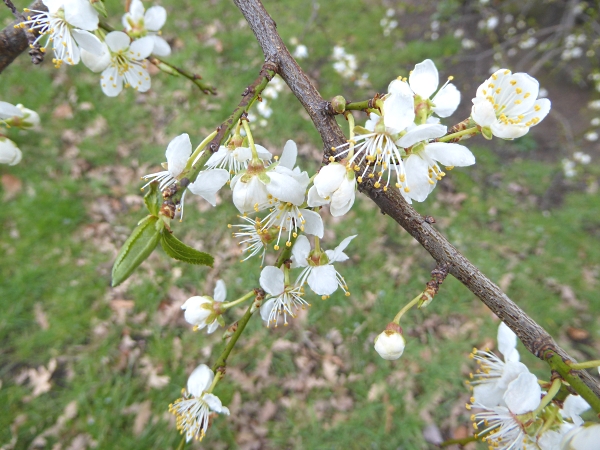
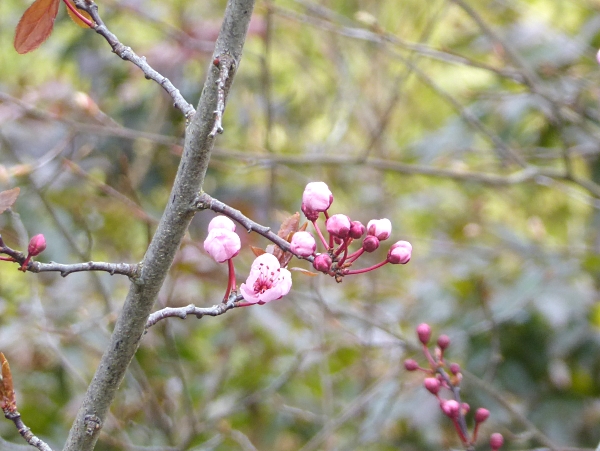
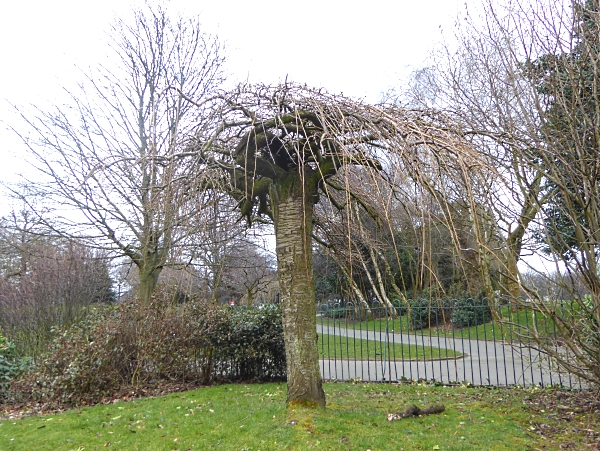
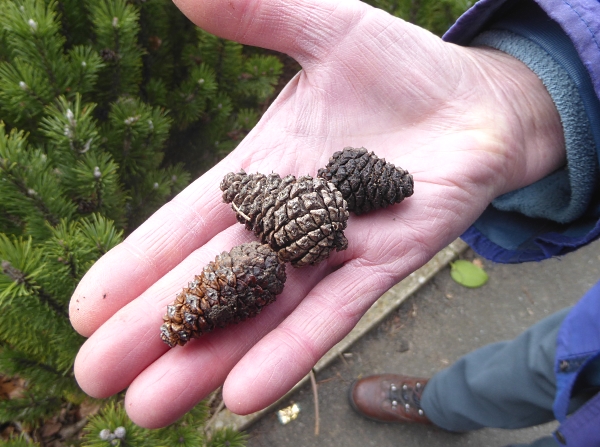
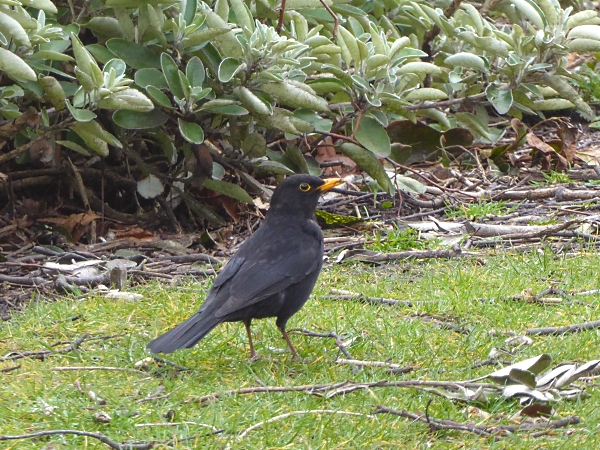
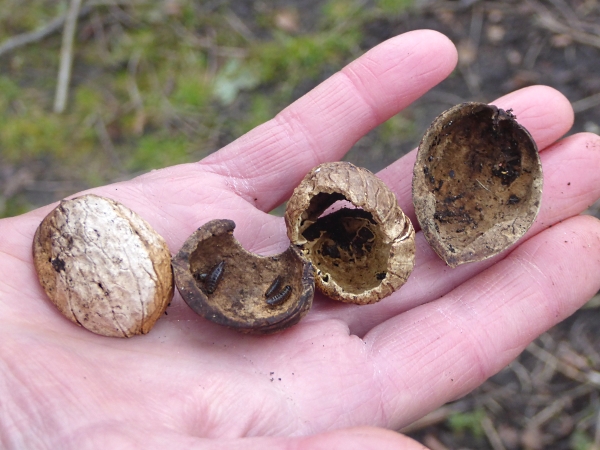
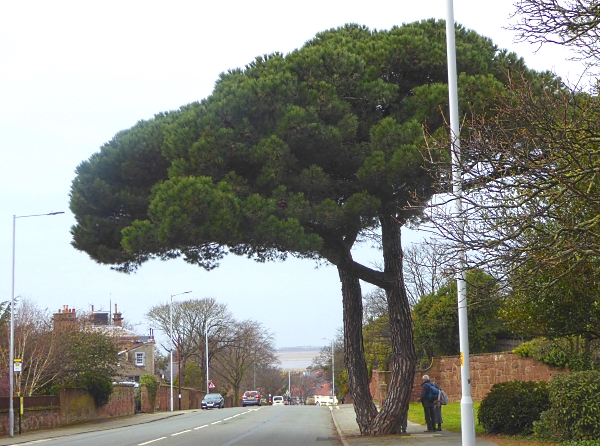
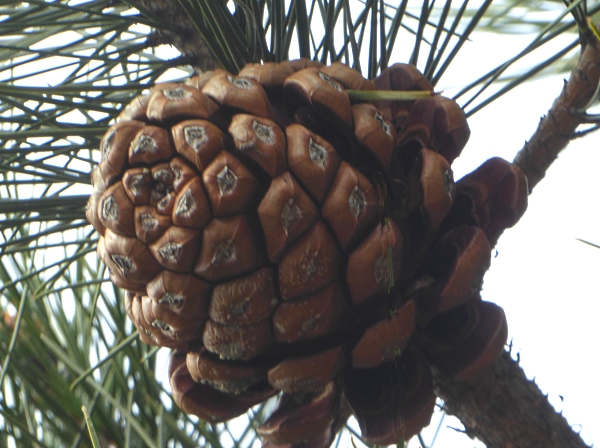
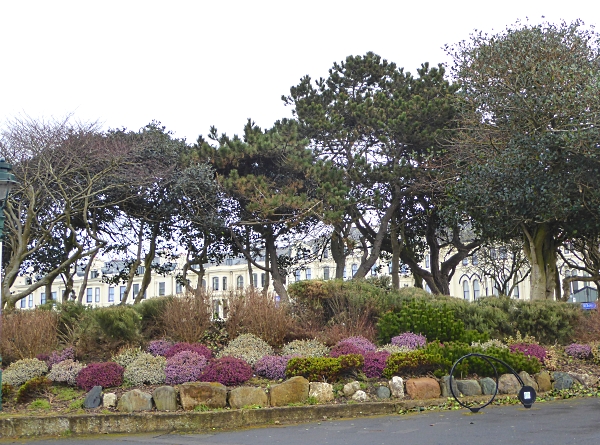
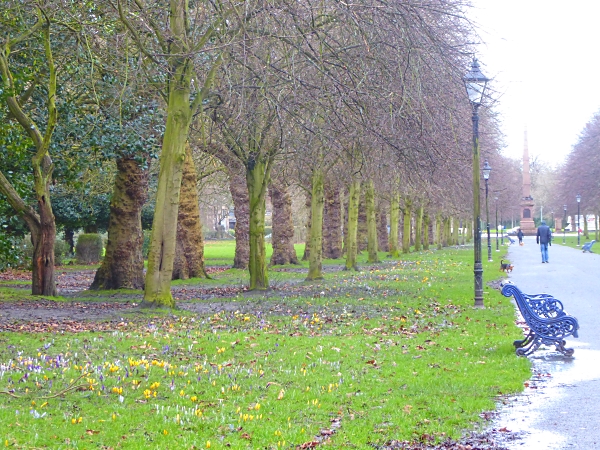
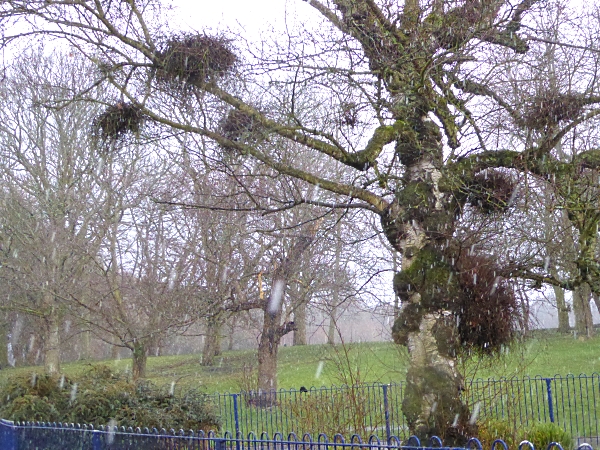
The big freeze seems to be over, and Merseyside got off lightly, with very little snow. It was mild but drizzly today, so we decided to go to Southport, where there is plenty of shelter. There were Wood Pigeons and Starlings on the lawn in King’s Gardens, and an Oystercatcher peeped as it flew by us. There is a clump of trees opposite the Clifton Hotel, with two or three Pines amidst the Holly. The bark of one of the pines definitely said “Scots Pine”, but was one of the others a Corsican Pine? We collected some pine cones, but now I look them up, I see that they were probably all Scots Pines. It’s very hard to distinguish these conifers!

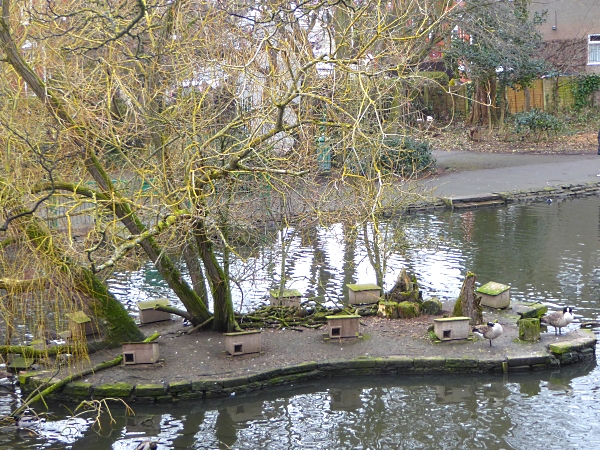
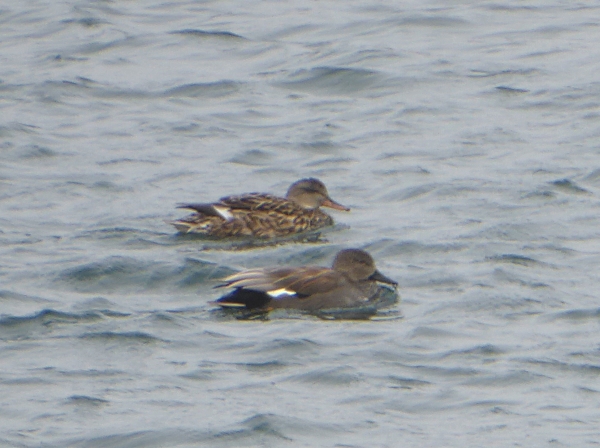
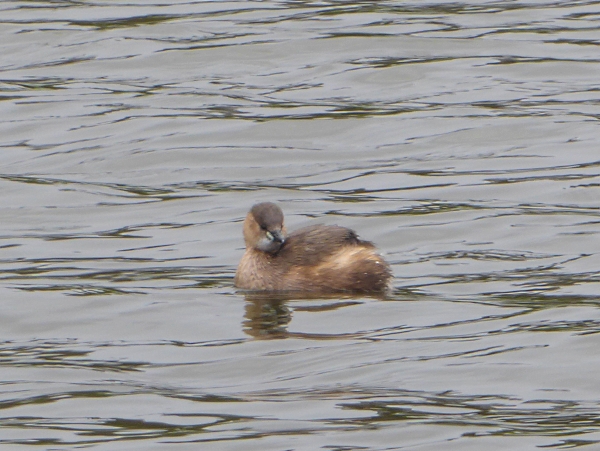
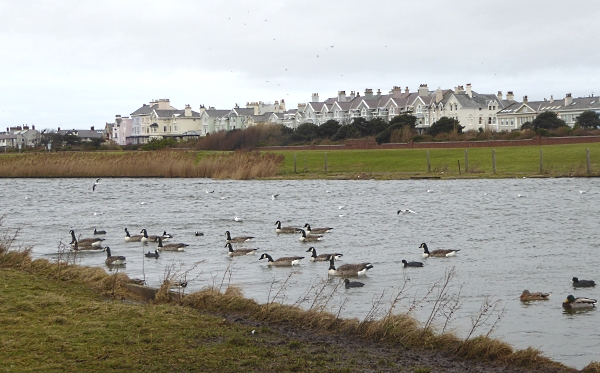
A small skein of Pink-footed Geese flew southwards, and the southern arm of the Marine Lake had the usual Mallards, Black-headed Gulls, Herring Gulls and a Moorhen. There was also a Little Grebe, and a pair of Gadwall, not skulking in the reeds like the ones at Marshside last week, but out in the open, showing off their elegantly understated plumage.

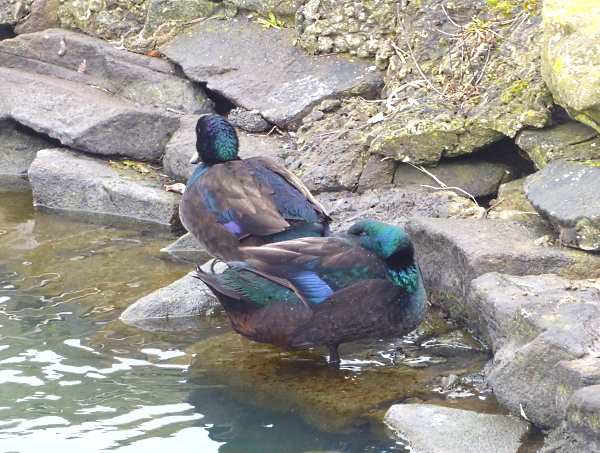
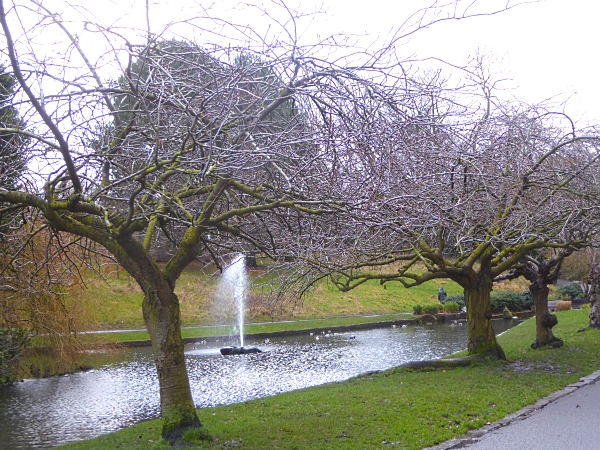
There was just one Mute Swan on the western side of the lake, but we could see several dozen Coot on the bank on the other side, near Funland. We headed over the Venetian Bridge to see if we could spot if any of them were ringed, but they declined to co-operate and set off into the middle of the lake before we could get a good look at them. There were two very interesting dark Mallards though, and these distinctive individuals, who must surely be brothers, give a clue that broodmates sometimes stick together throughout their lives.

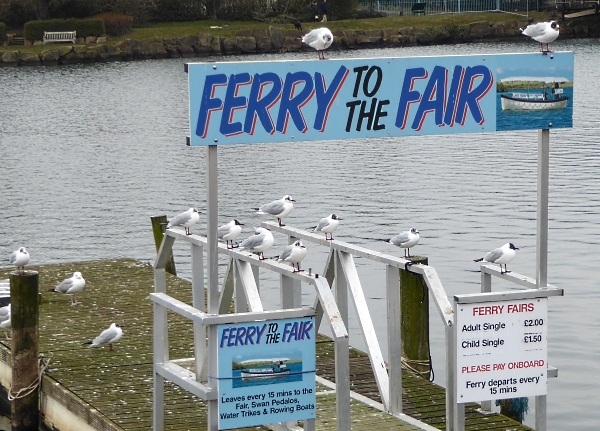
We lunched in a shelter near the café, and the sun came out. Four Greylag Geese flew in. Several Black-headed Gulls were waiting for the “Ferry to the Fair”, and over half of them now have their black head feathers well grown in.

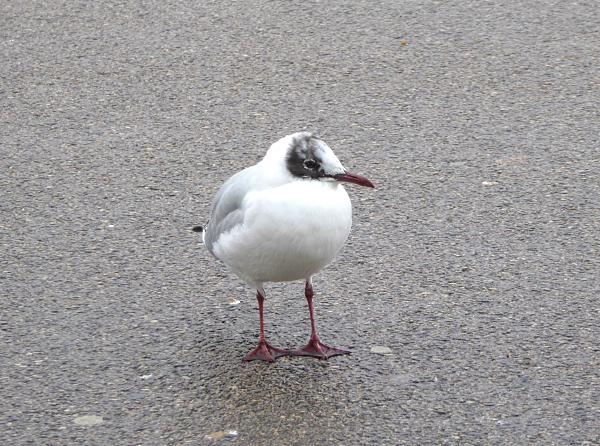
One squawky younger one, still with plenty of white on its head, watched us intently while we were eating our sandwiches, hoping for scraps. (Yes, we did relent after a while.)

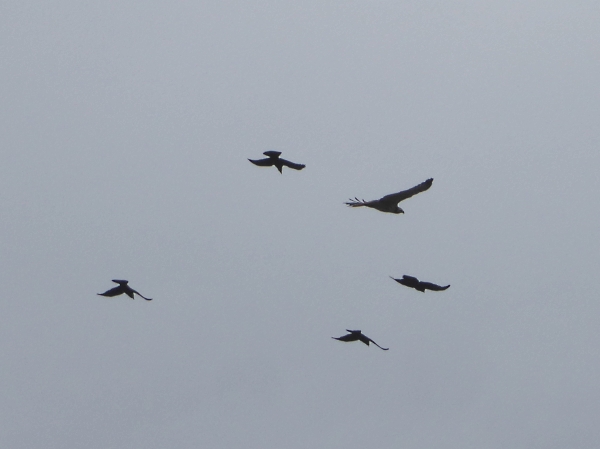
And then we tried the Atkinson Museum, but it has started closing on Sundays, so we mooched around the shops for a bit, then got the early bus home. A late wildlife bonus was a Sparrowhawk, which flew right across the front of the bus near Hillside Station.

Public transport details: Bus 47 from Queen Square at 10.10, arriving Lord Street / Duke Street (outside Morrison’s) at 11.12. Returned on the 47 bus from Lord Street Monument at 1.25.


Posted in Sunday Group | Comments Off on Southport, 4th March 2018

Marshside, 25th February 2018

There was a report of a rarish bird at Marshside, a (Greater) Scaup, a first-winter male. And since it was also an MNA meeting there, that was today’s destination sorted. It was a brilliantly sunny day, fairly cold, but not as cold as it will be when the Siberian airflow called “the beast from the east” hits us in the next few days. Our first birds of the day were a few dozen Pink-footed Geese which we saw out of the train window, just south of Hightown. Our fleeting glimpse of them wasn’t good enough to detect the single Taiga Bean Goose that is reputed to be hanging out with them.

A garden in Preesall Close had a Monkey Puzzle tree, the first one we’ve seen this year, and there were House Sparrows in the shrubs along the bank.

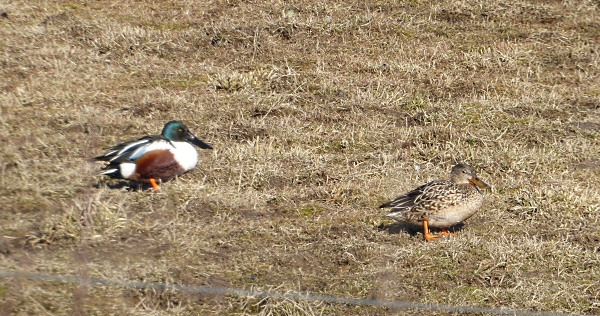
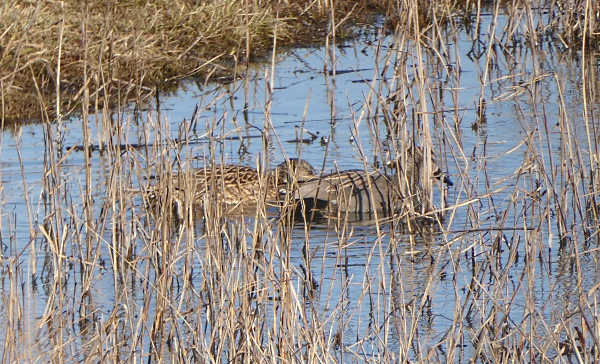
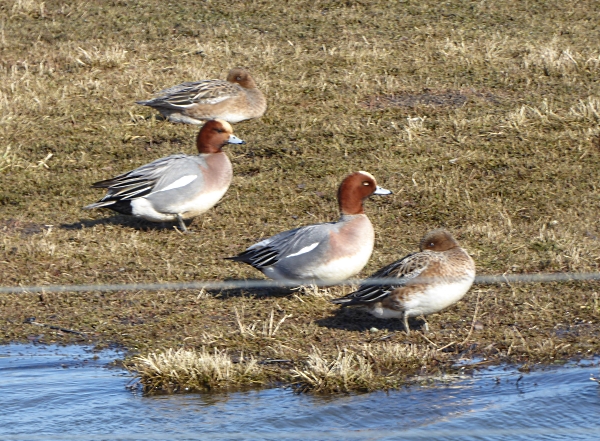
In the gutter along Marshside Road were Mallard, Moorhen, a Coot with an orange ring which we weren’t able to read, a Mute Swan cygnet, lots of Teal, Shovellers, a pair of Gadwall skulking in the reeds and 40+ whistling Wigeon, grazing the tussocky grass.


Shovellers


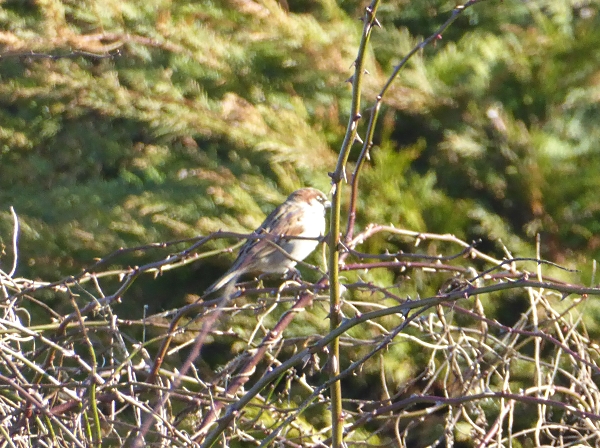
Gadwall


Wigeon

We found the MNA in Sandgrounders hide, and they were all just leaving, so we settled onto the now-vacant seats for lunch. Most of the birds were the same ones we had seen along the gutter, with the addition of Lapwings, various Gulls, a few Greylag Geese, two adult Mute Swans and two Snipe very close in, poking vigorously in the mud.

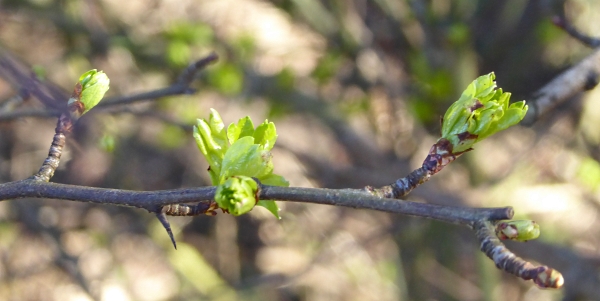
Then we strolled along to Nel’s Hide, where the Scaup was supposed to be. We noted the pair of Spindle trees on either side of the path leading down to the hide, although we wouldn’t have known them unless they were already familiar. They had none of the characteristic red fruits left, and  nothing else to identify them. In that sheltered little spot near the hide we spotted the first Hawthorn buds just breaking into leaf. No other trees have got even a hint of bud-break about them yet.

At first there was no sign of the Scaup, although I saw a Hare bounding along the bank between the pool and the marsh. They must be able to swim, or at least paddle! There was a small group of Avocets huddling in the middle distance.

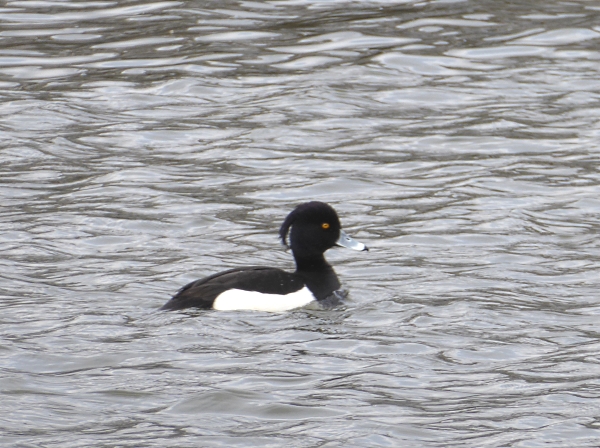
Then we found a small flock of Tufted Duck far over to the left, and we studied them carefully. Did one have a lighter back? Was that the Scaup? They were just too far away to be sure with binoculars. Then the MNA came in after their foray onto the marsh, and they had a couple of scopes. Jenny looked the Tufties over, we all had a look, and we decided that the one with the light back and the dark green head was probably the first-winter male Scaup. One for the year list and a lifer for me.

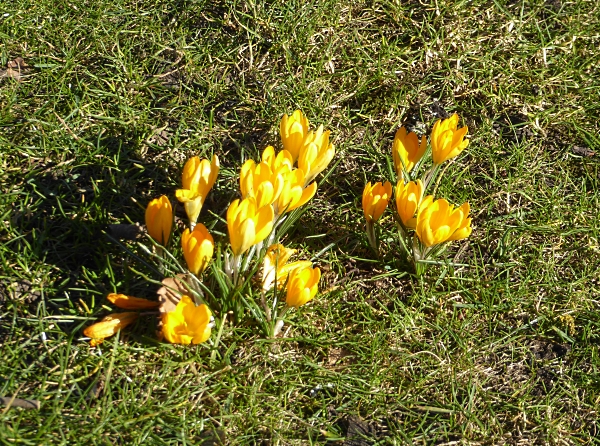
On the way back to the bus I looked for the Duke of Argyll’s Tea Tree Lycium barbarum, which is somewhere along that hedge bank. It’s another one that’s hard to spot when there are no leaves out, but I noted a thorny bush of about the right size and yes, when I looked it up at home, it does have thorns, so that was the one.  In the flowerbeds on Lord Street, Southport, the yellow crocuses were reaching out to the sun.

Public transport details: Train from Central at 10.23, arriving Southport 11.08. Bus 44 from Hoghton Street (opp Little Theatre) at 11.20, arriving Elswick Road / Preesall Close at 11.30.  Returned on bus 44 from Marshside Road / The Fog Bell at 1.55, arriving Hoghton Street 2.05. Train to Liverpool at 2.28, arriving Central at 3.15.


Posted in Sunday Group | Comments Off on Marshside, 25th February 2018

Friends Of Princes Park Bird Walk This Saturday 24th Feb

Saturday 24th Feb: 11:30am: birds

Bird walk to see and hear winter birds. One hour.

Meet at Sunburst Gates.

Posted in MNA reports | Comments Off on Friends Of Princes Park Bird Walk This Saturday 24th Feb

Town Centre, 18th February 2018

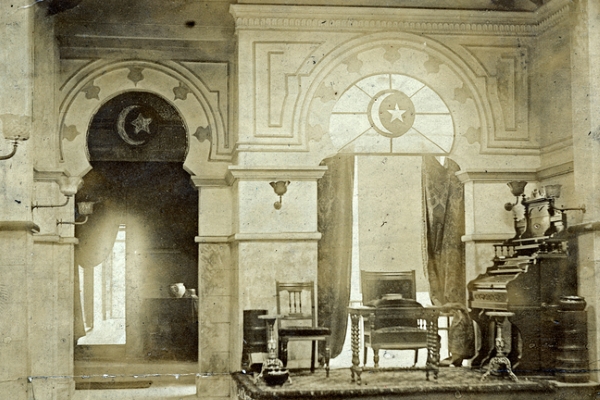
Not a lot of nature or wildlife today. It was “Visit My Mosque” weekend so we decided on the spur of the moment to visit the oldest mosque in Britain, the Abdullah Mosque in Brougham Terrace, run by the Abdullah Quilliam Society. It was founded in 1887 by the English solicitor William Henry Quilliam, who converted to Islam and took a new name.

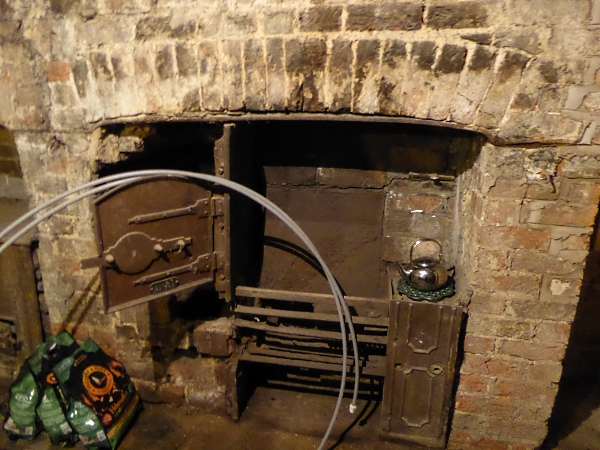
It was in a former private home, which later became a back storage room in the old Register Office. Then it went to rack and ruin and is now being restored as a working mosque. We had a tour around the whole building, where there is still lots of refurbishment work going on. They have saved some of the old plaster mouldings and also the ancient Victorian kitchen range in the basement.

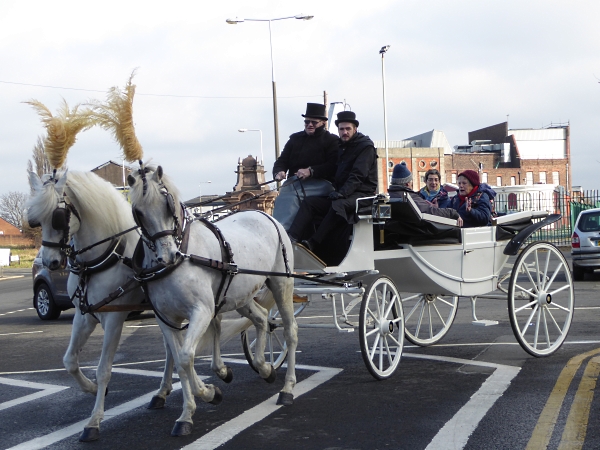
All the ladies on the tour were given a red rose on leaving and we all had a ride around the block in a two-horse carriage (a brougham?)

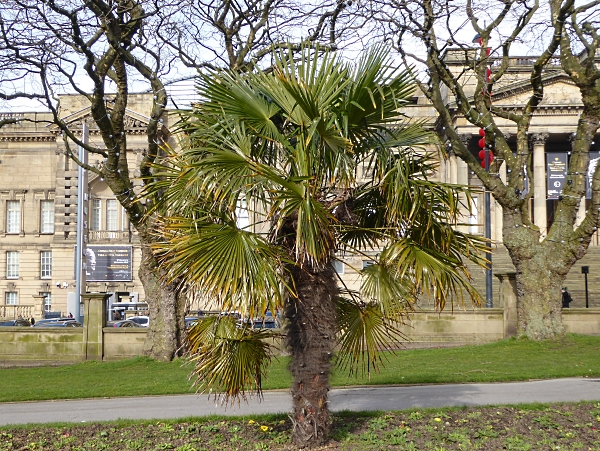
Then we headed back to the city centre. There is a row of small, neat trees on Lime Street, outside St George’s Hall, which have dark crimson new twigs and buds. Margaret thinks they are Limes (very appropriate in Lime Street!) and I suspect they might be Small-leaved Limes because there are no twiggy bases to the trunks. We need to look at them again when they flower. We lunched in St John’s Gardens, enjoying the mild weather for a change. We checked some old tree friends there – the London Planes around the perimeter with the four “interloping” Single-leaved Ashes; two Indian Bean trees and now only four Trees of Heaven by the plaque to the French Prisoners (one of them was cut down last autumn); there is also a Dove Tree, also known as a Handkerchief tree. Symmetrically placed are two Willow-leaved Pears and the side beds have about six Chusan Palms, only one of which seems to have a proper trunk.

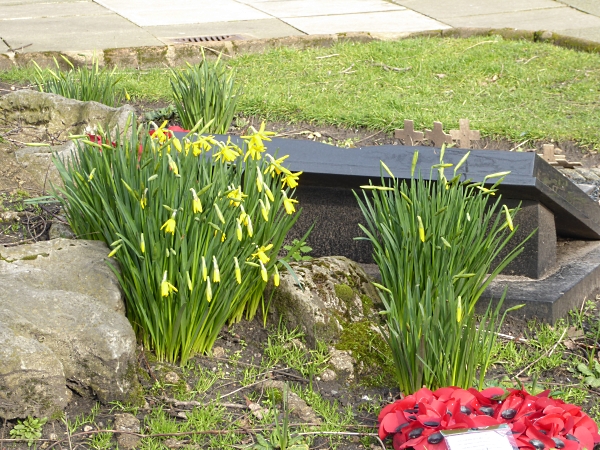
Daffs were starting to flower under the trees.

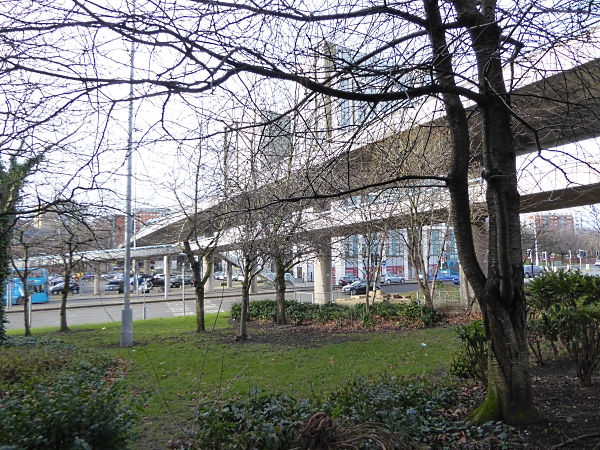
Then we went around the back of the Museum, to the shrubby traffic island under the fly-over, before Hunter Street. There are three Rowans there, several old Cherries, and also what might be a few White Poplars, but we’ll need to look at them again.

William Brown Street was busy with people coming from the New Year celebrations in Chinatown, and going into the Terracotta Warriors exhibition. The hotels, pubs and restaurants will do very well from that this year.

Public transport details: Bus 18 from Queen Square at 10.12, arriving West Derby Road / Everton Road at 10.20. Returned to Liverpool on the 18 bus from West Derby Road / Nevin Street at 12.20, arriving Lime Street at 12.30.


Posted in Sunday Group | Comments Off on Town Centre, 18th February 2018

Sefton Park, 11th February 2018

Despite the occasional hail showers, it was a good day for both trees and birds. Our very first bird was a Ring-necked Parakeet, calling and flying overhead as we approached the southern end of Sefton Park lake. There was a huge flock of Black-headed Gulls out in the middle, and the usual Mallards, Moorhens and Coots at the jetty end, joined by two Little Grebes. We usually see them in the more secluded area by the island, but they seem to be getting bolder.

The Canada Geese were honking, head-bobbing and parallel-swimming, getting in their breeding season mood. Several first-winter Mute Swan cygnets were scattered around the lake, perhaps five or six of them. Are they from the astounding brood of nine we saw last September? I suspect that only some of them were. The park cygnets are usually all ringed at the same time, with consecutive codes, but we saw only three with blue Darvics, 4CLY, 4CLZ and 4CUZ, while at least two more had no Darvic rings at all. Had the ringers not been able to catch all nine cygnets last autumn, or are the unringed ones new arrivals from other parks? We made our way along the lakeside under hail and a very threatening sky.

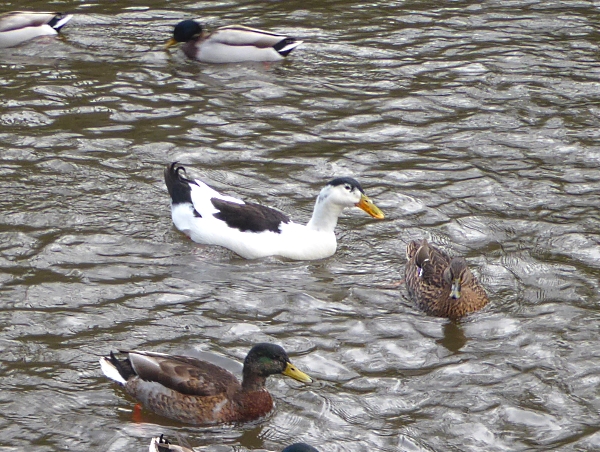
More Parakeets were flying around in the trees on the western side of the lake. The notices exhorting people to desist from feeding bread to the birds seem to be working, and we saw at least two lots of sweetcorn being offered, with one pile of corn on the far side attracting four Magpies. One rather odd duck was in close company with the Mallards.

Several trees were old friends. There is a mature Atlas Cedar on the west bank of the lake, unusual because it isn’t the blue ‘Glauca’ variety (as almost all the others we see are) but is apparently the basic green type. Other trees were Yews, Scots Pines, the Narrow-leaved Ash ‘Raywood’, the champion Black Walnut opposite the bandstand and the nearby Weeping Ash. The row of gnarled old Cherries near the fountain had a grey ghostly light on their bare branches.

Near the Eros statue is a yellow Witch Hazel with an aromatic scent.

In trees near the old bowling greens, a Carrion Crow had picked up what looked to us like an old crisp bag and was pecking at it. Now that I blow up another picture, I can see that it was an empty bag of Mattessons Fridge Raiders (ready-to eat chicken nuggets). Several other Crows muscled in, and there was a bit of jostling going on for possession of the bag. Was there the smell of the food in it? They didn’t seem to be trying to get into the open end. Or was it just the shiny orange colour that was attracting them?

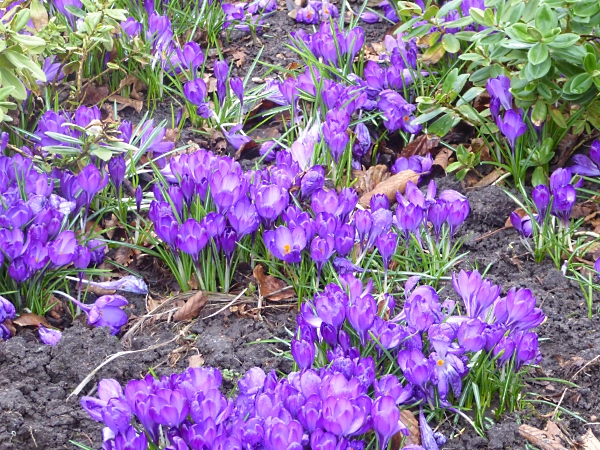
Alongside the path towards the Monument there is a mass of crocuses, not quite at their best yet.

There is a young Blue Atlas Cedar by the old aviary, and we started our lunch there, before we were interrupted by more hail. By the aviary path is a Birch infested with Witch’s Broom. There are many causes, but it is thought that the ones on Birch are usually caused by the fungus Taphrina betulina, which doesn’t kill the plant, just makes these twiggy excrescences appear.

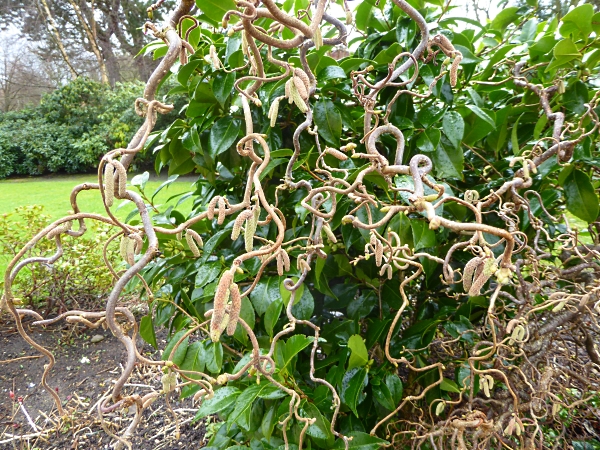
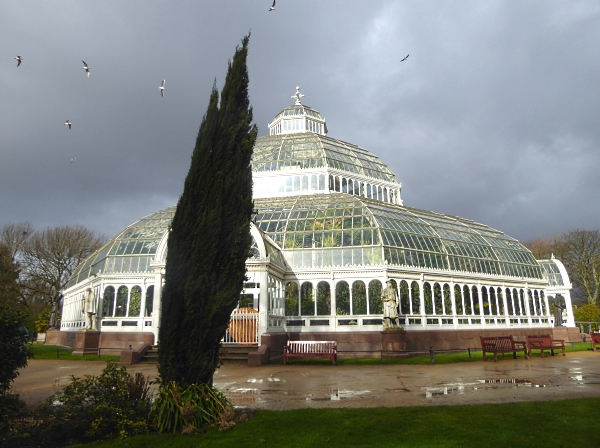
We passed the magnificent avenue of mature London Planes on the way to the Palm House. The beds surrounding it contain two kinds of palm. The one with the plain trunk and long strappy leaves is a Cordyline Palm, also known as the Cabbage Tree, while the ones with hairy trunks and fan-shaped leaves are Chusan Palms, like the ones in St John’s gardens. Near the Darwin statue is a Corkscrew Hazel, also known as Harry Lauder’s Walking Stick.

Next to the Hazel is an elegant slim Cypress tree of some kind, listing to one side. It had large smooth-scaled cones, looking rather like something’s droppings! It spoke to me of Tuscany, I have to say. When I looked it up at home I identified it as an Italian Cypress, Cupressus sempervirens, classed as “uncommon”. It’s a new one for me.

In the Fairy Glen there’s a readily identifiable Deodar Cedar. There had been lots of recent trimming and digging in the shrubberies, with much of the soil looking well rooted-over as if a troop of wild boar had been through it. One shrub caught our eye, pruned well down, with the hollow centres of the larger stems neatly closed with plastic plugs.

A very confident Robin was sitting not much more than arm’s length away.

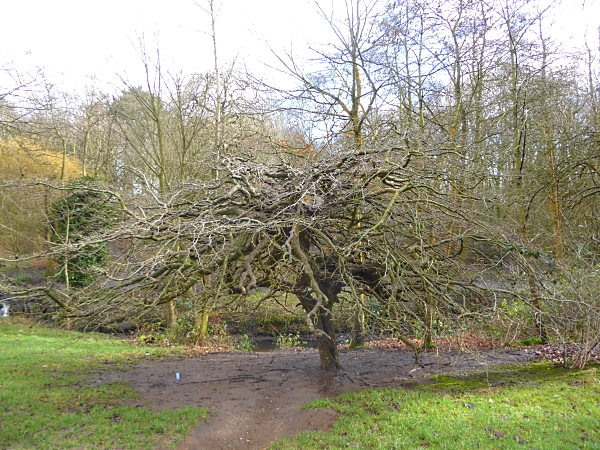
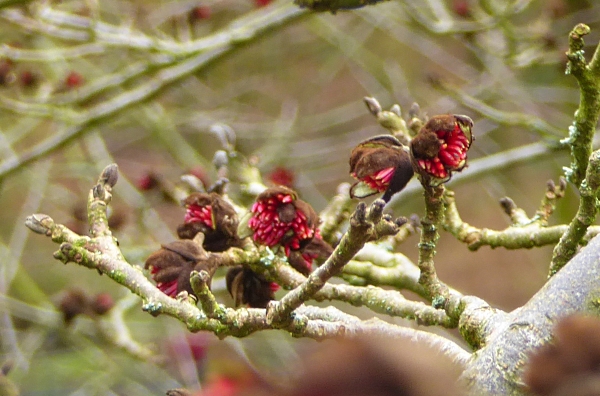
The Persian Ironwood doesn’t look interesting from a distance, just a low twisty tree, but from closer in we could see that it was flowering, with bursts of crimson stamens emerging from dark brown buds.

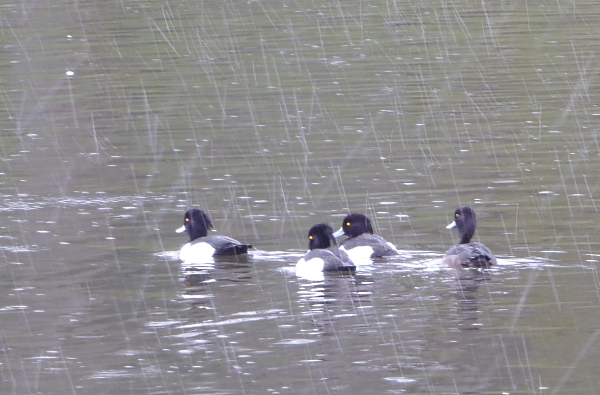
Another bird watcher tipped us off that there was a Great Crested Grebe near the island, but by that time it was hailing so hard again that we didn’t want to hang around. Even the Tufted Ducks appeared to be looking for shelter!

Public transport details: Bus 82 from Liverpool ONE bus station at 10.10, arriving Aigburth Road opp Ashbourne Road at 10.30. Returned from Aigburth Road / Jericho Lane on the 82 at 2.03, arriving Liverpool ONE bus station at 2.20.


Posted in Sunday Group | Comments Off on Sefton Park, 11th February 2018

Landican Cemetery, 4th February 2018

It was a brilliantly bright and sunny day, but an overnight frost had made the pavements very slippery. We went to Landican hoping to see Hares, which we have seen there before, but not today.

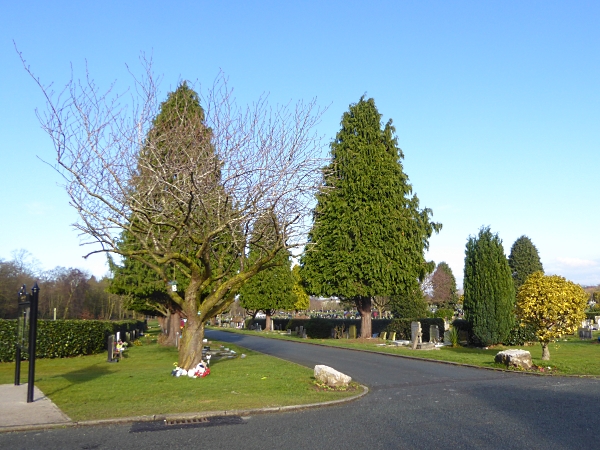
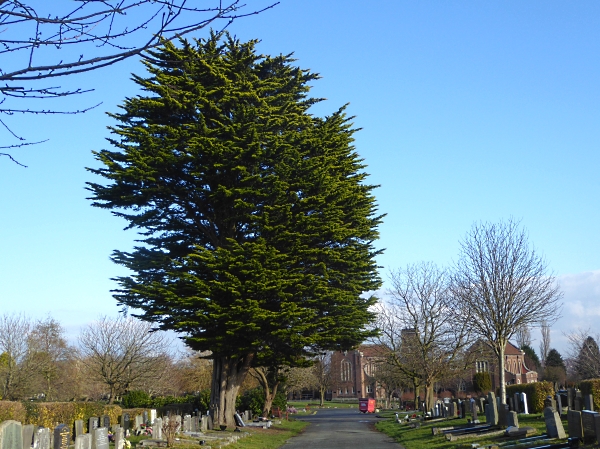
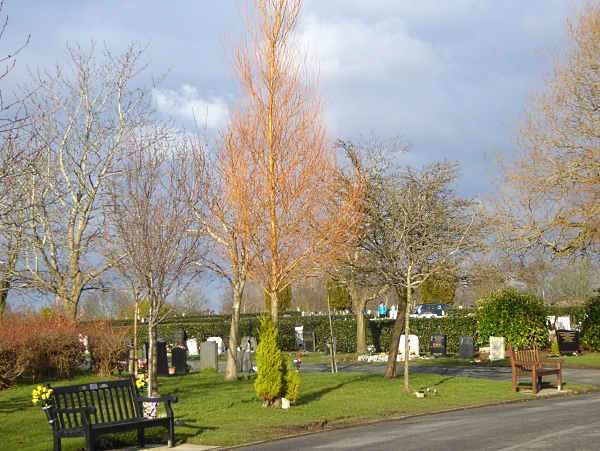
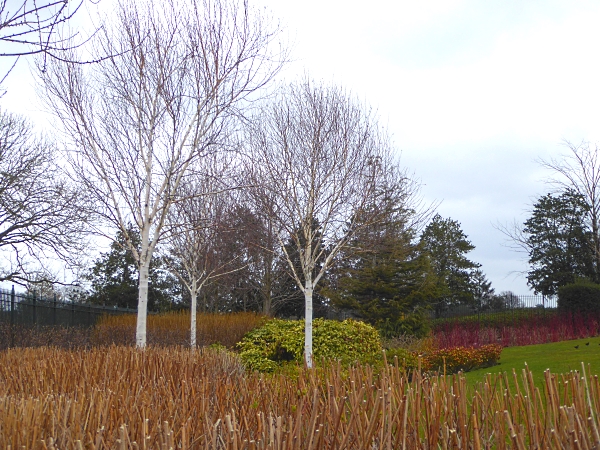
We did rather well for trees, though. Cemeteries always have elegant and architectural evergreens. The first one we looked at made an avenue of tall, neatly-conical trees, which were clearly some kind of Cypress, with droopy, feathery leaves and small cones. I’m pretty sure they were Lawson Cypress, Chamaecyparis lawsoniana. See top picture for a couple of examples of them. There was also a dense hedge of Leyland Cypress and a Common Yew by the bus stop. Our third Cypress was the one I think of as “the sticky-out one”. The trunk looks like several thick ropes twisted together, and the cones are over an inch long. It’s a Monterey Cypress, Cupressus macrocarpa.

Most of the birds were tucked away, keeping warm. Greenfinches were calling from deep in the  evergreens. Blue Tits, Great Tits and Chaffinches made occasional appearances in deep hedgerows, but there were lots of curious Robins flitting about. We never saw more than one Magpie or Wood Pigeon at a time, and there was a lone Black-headed Gull poking about on the grass, showing its dark head feathers coming in.

Although the deciduous trees have no leaves at this time of year, many were easily identifiable by bark, fruits and catkins. The Hazel was a no-brainer, with its delicate yellow catkins.

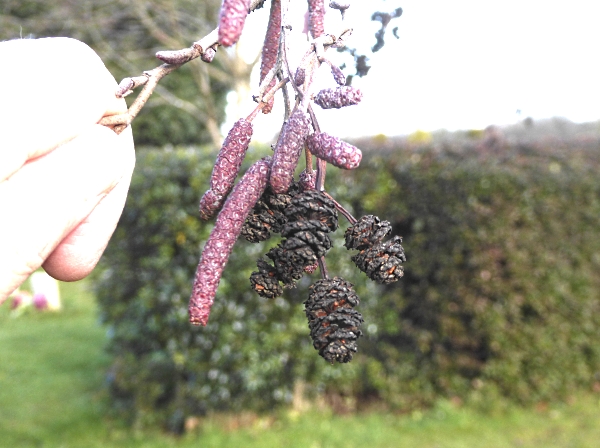
There were Silver Birches with their distinctive bark and thin pendulous branches. The skyline held several rows of classic tall Lombardy Poplars. Both types of Alder were frequently planted. The ordinary Common Alders Alnus glutinosa have small cones and purplish catkins next to them.

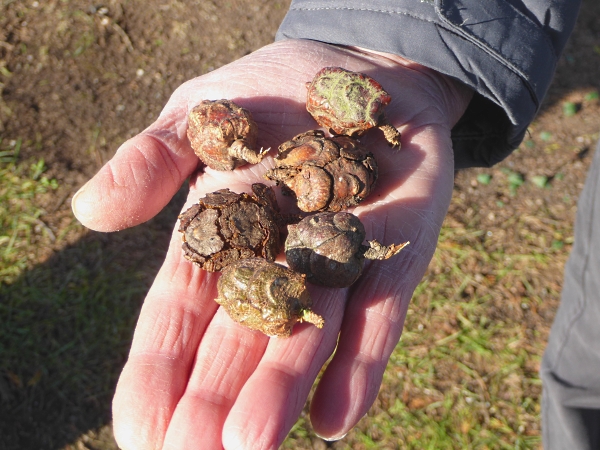
The Italian Alders Alnus cordata have far bigger cones, about an inch long, which seem to fall more easily.

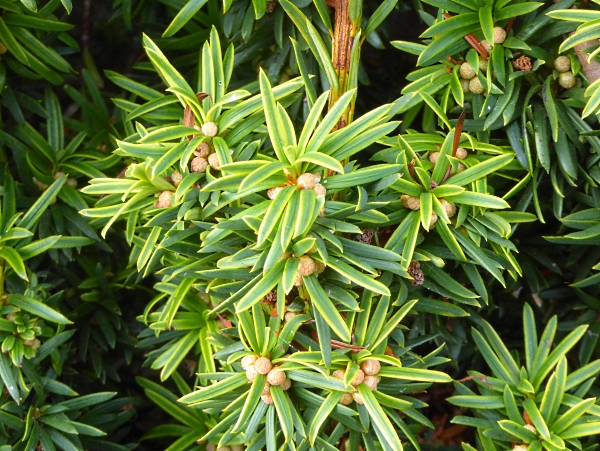
Plenty of Golden Irish Yew stood at the crossroads. They have yellow-edged leaves and are all male, with well-developed pollen sacs.

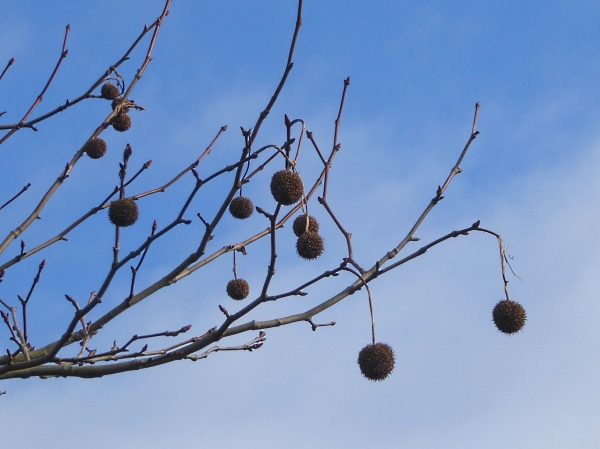
And the London Plane tree is easy to spot by its patchy patterned bark and hanging “bobble” fruit.

After lunch we headed down to the south end, where there were still no Hares, but long lines of molehills everywhere. (We allow ourselves to count them as a mammal sighting!) There was also a Grey Squirrel scampering along a horizontal branch. That area is the newest part of the cemetery  and we were interested to see they are planting many unusual young trees there. Some still had their labels on – Cut-leaved Alder Alnus glutinosa ‘Imperialis’; Golden Alder Alnus incana ‘Aurea’, (a cultivar of Grey Alder); and two varieties of Crab Apple, Malus hupehensis (white blossom) and Malus ‘Mokum’ (dark pink blossom). I suspect it’s cheating to identify trees by the nursery label, not by their features, but I intend to count them on our year list anyway!

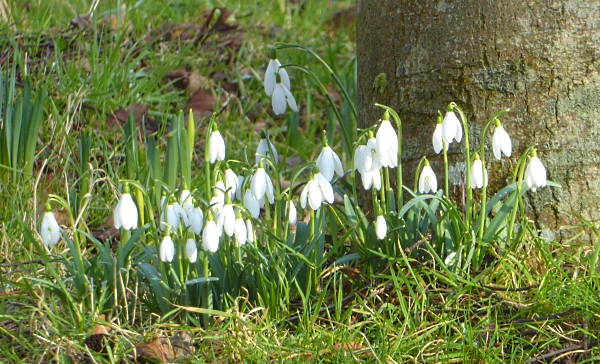
A pair of Buzzards soared against the blue sky, calling to each other. They were being harassed  by a Carrion Crow. At the eastern edge is a woodland area, provided for scattering ashes. Snowdrops and yellow Crocuses were blooming delicately under the trees.

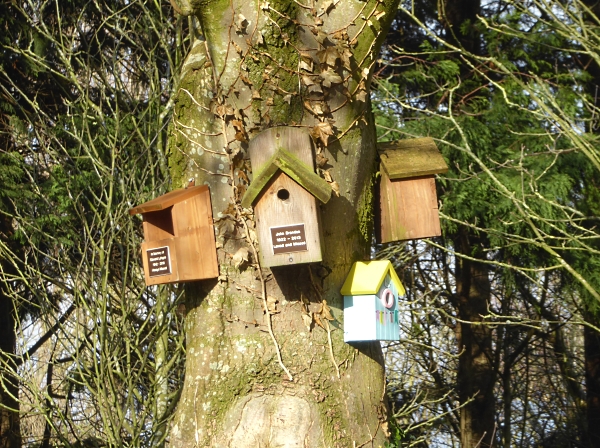
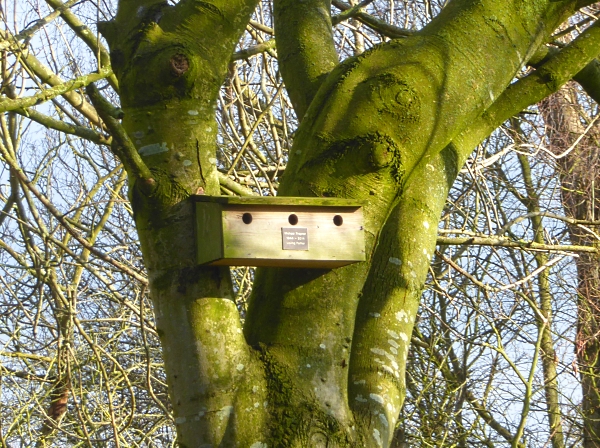
Huge numbers of bird boxes were attached to the trees, all with nameplates for loved ones. Some trees had as many as four boxes crowded together, while in a quieter corner was a three-room Sparrow hotel.

As we left we spotted this striking young orange-twigged tree. I think it’s a White Willow Salix alba. The twigs are the same colour as Weeping Willow, which is the weeping variety of the same species, and much commoner.

Public transport details: Bus 472 from Sir Thomas Street at 10.14, arriving at Arrowe Park Road / Landican Cemetery at 10.45. Returned from Arrowe Park Road / opp. Landican Cemetery on the 471 bus at 2.27, arriving Liverpool City Centre at 3.00.
Posted in Sunday Group | Comments Off on Landican Cemetery, 4th February 2018

Hunting the Bunting, 28th January 2018

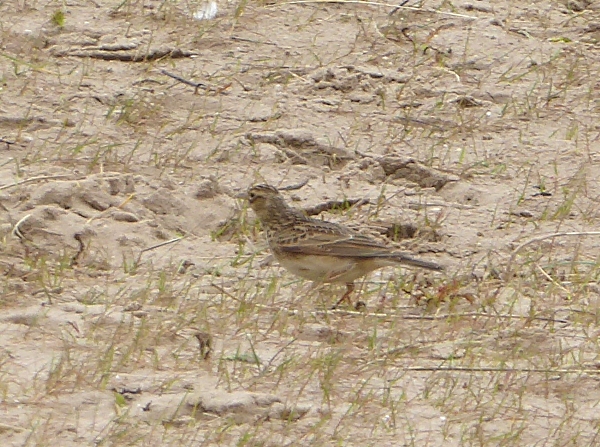
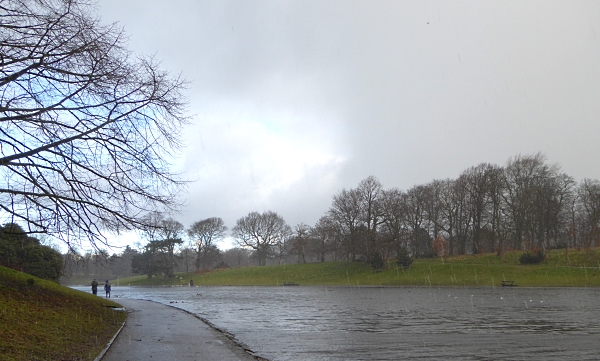
Another bird hunt today, for a Snow Bunting reported near Crosby beach “in the field at the bottom of Harbord Road, with Skylarks”. So off we went to Waterloo. We searched the specified field, but no Snow Bunting. There were lots of Black-headed Gulls on that field, with two Lesser Black-backed Gulls which might have been of the dark “Baltic” variety. Also a single Common Gull standing alone, as they so often do. A flock of Oystercatchers flew in, peeping as they landed. We headed up past the Boating Lake to Crosby Prom, delighting in the first Skylarks singing overhead, which occasionally landed.

There is a warning sign put up by the council about chunks of decaying Palm Oil that have been washing up on the beach, supposedly from a shipwreck far out to sea.

The gusty wind blew sand into our faces, so we didn’t linger near the beach for very long. Just inland we spotted a pretty little white horse, about the size of a Great Dane, which was out for a walk on a lead. The Boating Lake had the usual Coot, Mallard and Canada Geese, with a few Tufties further out.

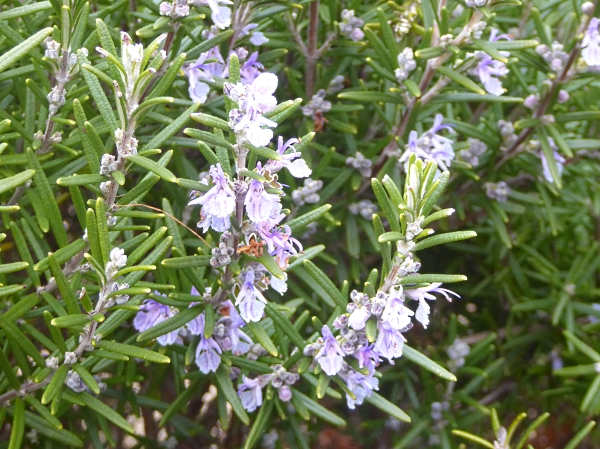
We retreated from the wind into Crescent Gardens. There were Daisies in flower, and the odd Shepherd’s Purse hanging on from the autumn. The shrub Laurustinus was also flowering, as was the Rosemary in the central herb garden. The undergrowth had been cleared around the bases of the decorative Holly trees, and we could see how vigorously they throw out suckers. We lunched there, with a threatening sky over the seafront houses.

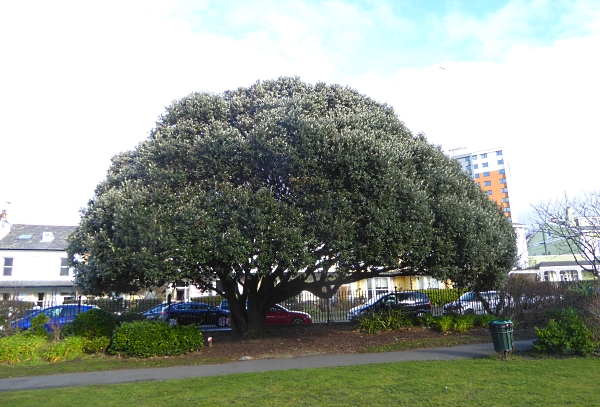
In the southernmost Marine Garden the Silk Tassel Tree was blooming, throwing out its long catkins. There were surprisingly few tassels, though, in comparison to other years, when the tree itself had been almost obscured. The red flower of Quince were coming out, and the unripe Figs were about as fat as they will ever get in this climate. There is a wonderfully-shaped Holm Oak there, one of the best on Merseyside. Apparently the people who live opposite say it spoils their view and they want it trimmed. Perish the thought!

Sefton Council have put up another sign on the garden gate, warning that Rats are increasing in the gardens, possibly caused by residents putting out food for the birds, although they also say that litter and rubbish partly contribute. Baiting stations have been put out, and the Council are appealing for people not to provide them with “bird” food. Along a sunny wall the leaves of Daffodils were pushing up, with a few buds. The Daffs are already out in Greenbank Park, apparently.  One tree with copious thick leaf buds caught our eye, but we weren’t able to identify it. Tamarisk? I’ll have to keep an eye on it. Above the rockery the Crack Willows were stretching their orange twigs up to the sky.

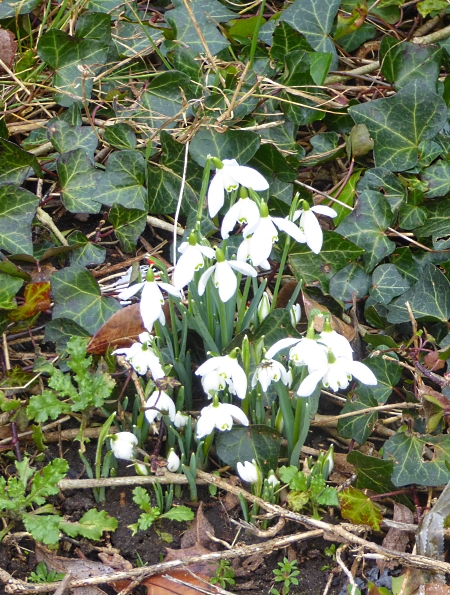
We headed back northwards through all four gardens. In Adelaide Garden there were crimson berries of some kind of Berberis and our first Snowdrops.

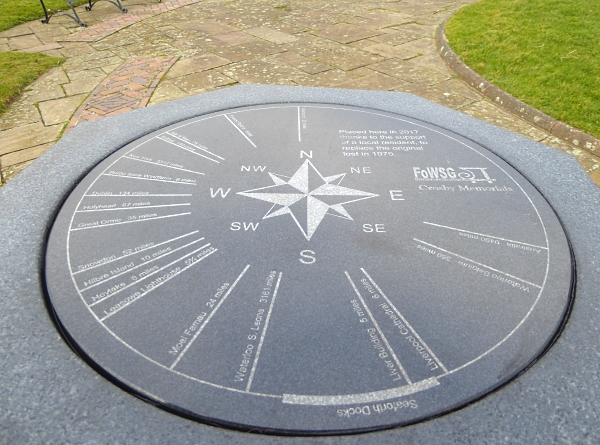
The Friends of the gardens have recently replaced the old Toposcope, with a compass rose and lines indicating the direction and distance of various landmarks. There are the expected Blackpool 22 miles, Great Orme 35 miles, Snowdon 52 miles, but also the surprising Waterloo Belgium 369 miles, Waterloo Sierra Leone 3161 miles and Australia 9490 miles!

We checked the recently-cleaned pond in the northernmost Beach Lawn garden, hoping for frogspawn, but no luck. Our last scan for the Snow Bunting was fruitless, too. But not a bad day by any means – this time of the year it’s easy to add new things to our lists, so we had five new birds and seven new trees.

Public transport details: Bus 53 from Queen Square at 10.20, arriving Oxford Road / Blucher Street 10.55. Returned on the 53 bus from Oxford Road / Manley Road at 2.25.
Posted in Sunday Group | Comments Off on Hunting the Bunting, 28th January 2018

Pennington Flash CP 27th January 2018

Some pics from the MNA visit to Pennington Flash

Scarlet Elf Cup Sarcoscypha coccinea

Black Witches Butter Exidia glandulosa

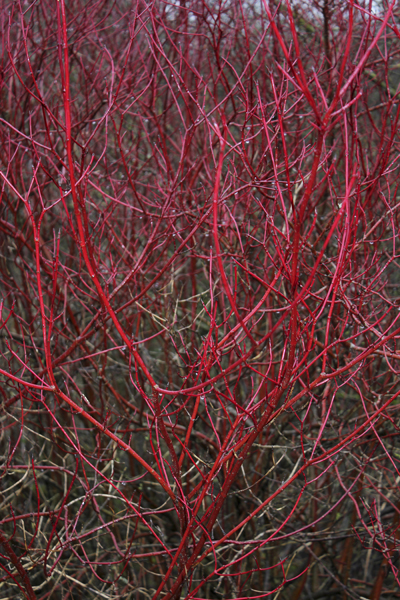
Dogwood Cornus sanguinea

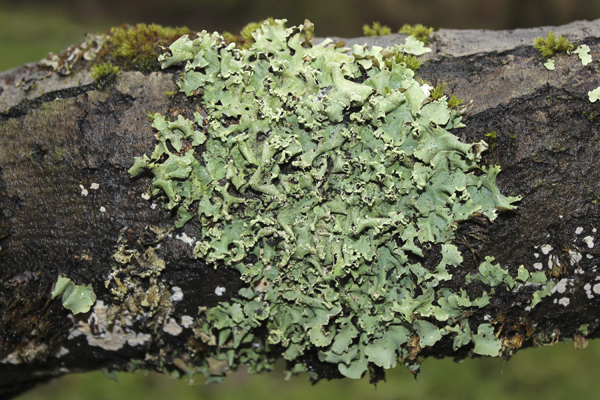
Common Greenshield Lichen Flavoparmelia caperata

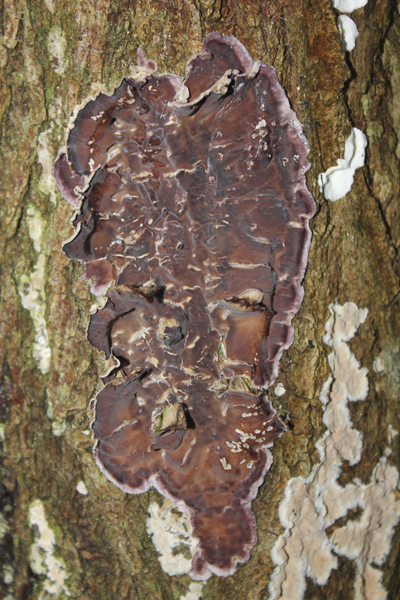
Silver Leaf Fungus Chondrostereum purpureum

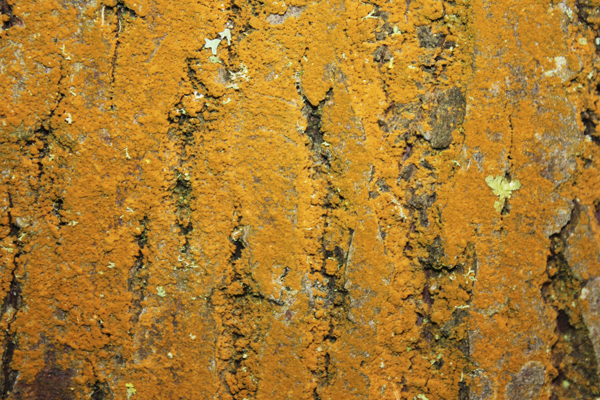
Orange Algae Trentepohlia sp.

Posted in MNA reports | Comments Off on Pennington Flash CP 27th January 2018

Hoylake, 21st January 2018

More bird spotting today, with a convenient high tide at Hoylake just after lunch, bringing the waders close inshore. Although the forecast was for heavy rain all day, in the event it wasn’t too bad, just very cold and blowy.

Only one tree tick today: in a pot outside a house in Manor Road was a pensioned-off but flourishing Christmas tree, a Norway Spruce, so that’s been added to the 2018 tree list. Then we walked down Hoyle Road and cut through Parade Gardens to North Parade, just north of the Lifeboat Station. The muddy sand was sprouting scattered tufts of Spartina grass and a solitary Redshank was pottering through the pools. Its old name is “Watchdog of the Marsh” because it calls and flies off at the least disturbance.

There is another kid’s pirate ship there, sister to the Black Pearl at New Brighton. Appropriately it’s called the Grace Darling.

A flight of Knot went southwards as the tide came in from the right. Sanderlings ran along the waterline and some Shelduck sauntered past.

There were also two Curlews, and a Greater Black-backed Gull which hunkered down by a patch of Spartina. A large flock of Oystercatchers stood by a reflecting pool and Cormorants lined up on a sandbank in front of the wind turbines.

The weather began to close in, and as Hilbre Island was cut off by the tide it dimmed in the hazy drizzle. At the top of the slipway by the Lifeboat Station we rummaged in the line of Bladder Wrack, dumped there by the last high tide, turning up various bits of biology. At the bottom right of the picture of our finds is a Razor shell (not further identified), and an egg case of the Common Whelk, also known as a Sea Wash Ball, looking like a blob of bubble wrap. Above them are two kinds of “Mermaid’s purses”. The small light ones on the left with curly tendrils look like the egg-cases of the  Lesser Spotted Dogfish while the bigger, darker ones on the right could be from the Spotted Ray. See this ID key from the Shark Trust.

Margaret also found one small section of a different sort of seaweed, with bigger bladders. I think it’s Knotted Wrack or Egg Wrack Ascophyllum nodocum which has large individual bladders spaced along a flat frond. This short bit had just two bladders, each a couple of inches long. (Thanks to John for the loan of the 50p piece for scale). It’s common all around the North Atlantic coasts.

There were two Pied Wagtails on the pavement as we made our way northward to Kings Gap. The spits and spots of rain settled into a downpour so we were soaked and cold by the time we got to Hoylake Station. Today’s new sightings were one new tree and seven new birds for our year lists.

Public transport details: West Kirby train from Central at 10.35, arriving Manor Road at 11.00. Returned on the train from Hoylake at 2.04, arriving Liverpool Central at 2.35.


Posted in Sunday Group | Comments Off on Hoylake, 21st January 2018

MNA Coach Trip Anglesey 20th January 2018

A rather soggy and cold start to our MNA Coach Trip programme of 2018. The first port of call was Holyhead – parking the coach just along from Holyhead Maritime Museum we quickly zipped up fleeces and donned waterproofs before scanning the main harbour. Patience was rewarded for many members who kept their eyes peeled for movement on the water – birds tantalisingly appearing for a few seconds before diving again beside the harbour buoys. We viewed a Great Northern Diver, a few Red-breasted Mergansers, a Great Crested Grebe, Shags and at least two Black Guillemots – one in ghostly winter plumage and another noted by Hugh and co. sporting dapper black summer plumage with white wing patches. On the grassy slope beside the harbour were a group of Oyks and Redshank. We wandered along stopping to watch a Peregrine in the distance above Breakwater Quarry, past the yachting marina and climbed the narrow lane beside a dilapidated hotel. In the lane edges was flowering Winter Heliotrope Petasites fragrans, and in the lane wall was the characteristic round leaves of Wall Pennywort Umbilicus rupestris.

Winter Heliotrope

We noted the yellow-green flowering umbels of Alexanders Smyrnium olusatrum – an edible plant which has been naturalised in Britain since the days of the Romans. Some of its leaves were infected by the Rust Fungus Puccinia smyrnii.

Alexanders Rust Fungus

Some of the Tree branches in the lane were covered in Lichens mainly Old Man’s Beard Usnea sp. and the Strap Lichens Evernia prunastri and Ramalina sp. A bit of a Geology interlude examining the twisted layers of local Chlorite Schist used as building blocks in the walls.

Chlorite Schist

After scanning the harbour again and talking to a local fisherman who had been trying for Herring we wandered down to a cove with a fantastic storm beach – large cobbles had been tossed much further inland by recent stormy high tides than we had previously noted and the cobbles were also covered in discarded Sea Belt Kelp Laminaria saccharina that had been ripped from their holdfasts out at sea, as well as the sinistrally coiled polychaete Spirorbis spirorbis attached to Toothed Wrack Fucus serratus and a scattering of discarded plastic netting. The cobbles were comprised of the aforementioned Chlorite Schist with others being Quartzite & Jasper more typically found on Llanddwyn Island. A Turnstone and Rock Pipit kept the birders contented.

Storm Beach with washed up Kelp

Quartzite & Jasper

We climbed up to the open pasture area adjacent to the rocky coast leading up to Holyhead Mountain. Stonechat, Peregrine and a couple of vocal Chough proved exciting.

At sea were a few Cormorants and Shags with passing Oyks. The Welsh Mountain ponies came over to say hello – Les Hale becoming their friend for life with tempting polo treats.

Thanks for the polos Les!

Rocks were festooned with some of the typical Coastal Lichens with Sea Ivory Ramalina siliquosa, Maritime Sunburst Lichen Xanthoria parietina and Crab-eye Lichen Ochrolechia parella.

Sea Ivory (grey strap lichen), Maritime Sunburst (yellow encrusting), Crab-eye (white encrusting)

Robins, Prunes, Blackbirds, and Song Thrush put in an appearance as we neared the visitor centre with Moorhen, Mallard and a selection of Gulls on the small pond. Jackdaws were vocal on the quarry face and a Raven who had come to the end of its tether with their mobbing turned the tables and dived bombed them a couple of times. We ate lunch in the small visitor centre – the only Marine Life in the small aquarium being a Shanny a.k.a. Common Blenny Lipophrys pholis. Wandered back towards the coach a flock of Starlings overhead and a pair of Stonechat hopping around on the ground in a field in front of the Magazines – the two buildings that were used to store the black powder that was used to blast the rock in the quarry and the ammunition for the fog gun.

We boarded the coach for the short hop around to the old fishing harbour in Holyhead. Another Great Northern Diver, a couple of winter plumaged Great Crested Grebes and a Red breasted Merganser were noted. Some old containers on the quayside had a covering of dead Barnacles – a type of Acorn Barnacle Balanus balanus with steeply conical shell with prominent longitudinal ridges.

Acorn Barnacles

We continued along to Penrhos Coastal Park beside Beddmanarch Bay. The sun had put in an appearance but it was bitterly cold with the breeze. However the birding more than compensated with Pale-bellied Brent Geese on the shoreline – DaveB estimating numbers at 280+, also large gatherings of Waders – scanning through we identified Knot, Ringed Plover, dumpy bodied Dunlin, a dozen or so Curlew, similar numbers of Oyks, a few Redshank plus a few Shelduck. On the far side of the water channel were dabbling Teal and Wigeon rested up on the sand. The oblique angle to the setting sun briefly caused a Herring Gull’s legs to look somewhat yellow but it wasn’t to be… A Little Egret was spotted by John Clegg as we drove along the causeway on our journey home.

If you are interested in the wildlife of the north-west of England and would like to join the walks and coach trips run by the Merseyside Naturalists’ Association, see the main MNA website for details of our programme and how to join us.

Posted in MNA reports | Comments Off on MNA Coach Trip Anglesey 20th January 2018