Martin Mere 25th Sept 2010

Headed up to Martin Mere on 25th September 2010. Large numbers of Pink-footed Geese present in the fields as I took the train from Southport to New Lane station. Estimates of Pinkie numbers on the reserve are currently around 10,000! Plenty of raptor activity with a couple of Sprawks, Buzzards, Marsh Harrier and Peregrine. Wader highlights were a couple of Curlew Sands amongst the Dunlin. The reserve was packed with visitors due to the ‘Animal Magic’ event. Corio Raptor Care were one of the exhibitors. Their centre is dedicated to the rehabilitation of sick, injured and mistreated birds of prey and they had brought along a selection of Owls from a diminutive White-faced Scops Owl to a huge Eagle Owl. They kindly allowed me behind the roped off area to photograph one of my favourites – a Tawny Owl Strix aluco

mna-martin-mere-tawny-owl4.jpg

mna-martin-mere-tawny-owl3.jpg

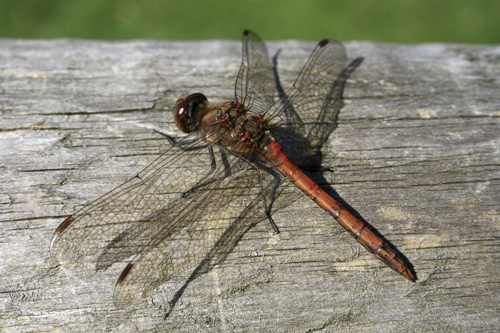
Around the captive wildfowl area were numerous Common Darters Sympetrum striolatum basking in the sun on the wooden handrails. 

mna-martin-mere-common-darter2.jpg

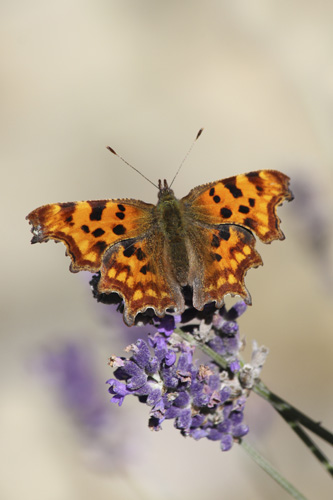
A Comma Polygonia c-album was enjoying some lavender in the Wildlife Garden close to the Beaver enclosure.

mna-martin-mere-comma1.jpg

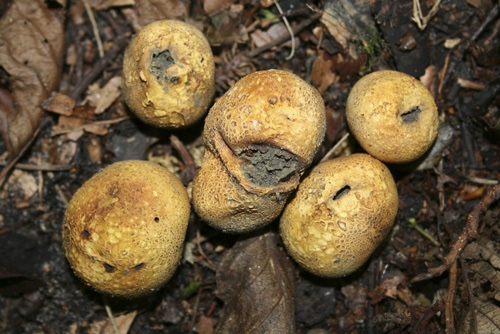
Couldn’t forget to mention some fungi! A few tall Shaggy Ink Caps Coprinus comatus under the pines beside Raines Hide and a group of Common Earthballs Scleroderma citrinum under trees beside the car park that had erupted releasing their spores.

mna-martin-mere-earthball1.jpg

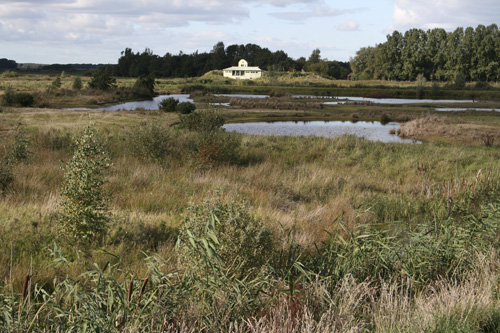
When the crowds became too much I took a slow amble back to New Lane station via the recently opened Reedbed Walk that winds its way behind the ponds at the back of the Harrier Hide. A couple of viewing platforms give great views across the reedbed and will be a fantastic place from where to watch the Pinkies coming in to roost on an evening.

mna-martin-mere-reedbed-walk3.jpg

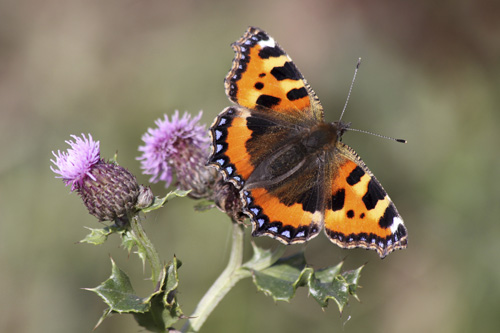
A bumper crop of berries adorning the bushes beside the path including Sloes, Guelder Rose, Hawthorn and Spindle. More Common Darters buzzing in front of me before landing on the path, a few Migrant Hawkers that didn’t settle and a lone Small Tortoiseshell Aglais urticae feeding on the Creeping Thistles. With a northerly breeze picking up it won’t be long before the Whoopers are back…

mna-martin-mere-small-tortoiseshell1.jpg

Posted in MNA reports | Leave a comment

Sefton Park, 26th September 2010

We got the 82 from Liverpool ONE bus station, got off at the stop before Aigburth Vale and we were at Sefton Park lake by 10.30. It was a cool day, but sunny and bright. Following the upheavals and renovations of the last year or two it was good to see the park getting back to normal. At the south end of the lake there were lots of Black-headed gulls and Canada Geese, a few Mallard, one each of Moorhen and Coot and nine adult Mute Swans with three full-grown cygnets. The cygnets were bred in the park this year, but their mother was killed by a dog during the summer and they are now in the sole care of their father. Further up the lake we saw a Coot sitting on a nest on a floating raft, but when it moved off we could see that there were no eggs. There was a young Common Gull on a post at the boating barrier. Rats are common on the banks, coming boldly into the open, and we also saw Crows, Jackdaws, Magpies and a Grey Squirrel.
The newly-built café at the southern end of the lake is open but the new Ranger Station and restaurant on the site of the old café will not be complete until next week. Near the new wild flower bank by the Palm House we saw Wood Pigeons, a Blackbird and a Jay, a Speckled Wood, three Red Admirals and a Comma.
We joined Ranger John’s walk after lunch then some of us went back to the Palm House for an afternoon concert by the Liverpool Ladies Barbershop Singers. Very civilised! Soon after 2.30 the last of us left for buses home.

Posted in Sunday Group | Leave a comment

Dibbinsdale Fungi again…

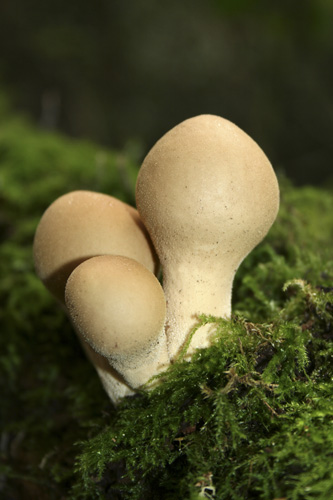
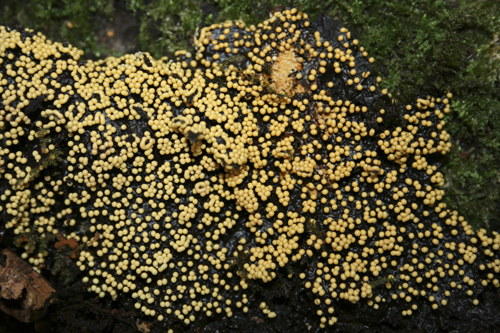
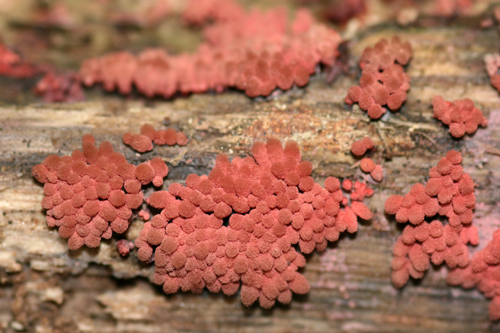
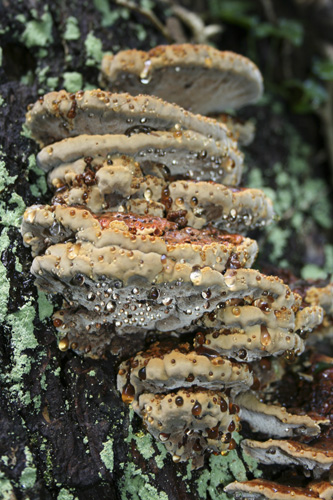
Took the afternoon off work on 22nd Sept 2010 to check on any new fungi additions at Dibbinsdale. Persistence or obsession 😉 is paying off and there were some more great finds.  A few Stump Puffballs Lycoperdon pyriforme, Smoky Bracket Bjerkandera adusta, Amethyst Deceiver Laccaria amethystea, Black Bulgar Bulgaria inquinans, the slime moulds Tubifera ferruginosa and Fuligo septica as well as the following…

Dryad’s Saddle Polyporus squamosus

Its name is derived from tree nymphs in Greek Mythology called dryads who could sit on the fungi riding it like a saddle. A week ago this polypore was only just beginning to sprout from the fallen tree trunk.

 mna-dibbinsdale-dryads-saddle2.jpg

Upright Coral Ramaria stricta

This beautiful delicately branched fungi was growing on the woodland floor. It has become more widespread in recent years and can be found growing on woodchip mulches.

 mna-dibbinsdale-ramaria-stricta1.jpg mna-dibbinsdale-ramaria-stricta2.jpg

Jelly Ear Auricularia auricula-judae

Formerly Jew’s Ear, quite a number seem to have appeared during the last week, this particular one being quite large and wrinkled.

mna-dibbinsdale-jelly-ear1.jpg

Shaggy Ink Cap Coprinus comatus

Also known as Lawyer’s Wig, the gills beneath the cap will mature and secrete a black liquid containing pores – hence the ‘Ink Cap’ name.

mna-dibbinsdale-shaggy-inkcap1.jpg

Posted in MNA reports | 1 Comment

Freshfield Fungi Finds

I headed along to Freshfield on the 18th September 2010 and had a route around the small wood beside the dune heath before crossing the railway and continuing down the Old Fishermans Path. A few smurf house fungi around, most of the Fly Agarics Amanita muscaria had lost their spots from the rain but I managed to find a cute newly emerged one and another hiding amongst a tangle of brambles that were quite fresh and spotty.

mna-freshfield-fly-agaric1.jpg

mna-freshfield-fly-agaric3.jpg

A few Pestle Puffballs Handkea excipuliformis with a long stalk dotted around the leaf litter

mna-freshfield-puffball1.jpg

Good numbers of Brown Birch Bolete Leccinum scabrum which can look similar to Penny Buns Boletus edulis but have dark squamules on the stem.

mna-freshfield-brown-birch-bolete1.jpg

On a pine stump was yet another Slime Mould, the orange coloured Tubifera ferruginosa. The individual sporangia or spore bearing structures are all tightly packed together.

mna-freshfield-tubifera-ferruginosa1.jpg

Posted in MNA reports | 1 Comment

Runcorn Hill LNR, 19th September 2010

It was a really wet day today, not really nature walking weather, so it was a help that the bus journey was 1¼ hours each way!  We took the 82A from Liverpool ONE bus station at 10.14 and rode all thorough Hale and Widnes, past Runcorn Bus Station and got off just past the War Memorial. Runcorn Hill NR is 5 minutes walk around the corner, up Highlands Road, and we arrived as the Rangers were opening up the Visitors’ Centre. The Nature Reserve is a former sandstone quarry with fossil footprints, areas of lowland heath and some rare wildlife. Sadly, the only birds we saw today were on feeders at the back of the Visitors’ Centre – two Nuthatches, a Coal Tit and some Great Tits.  We walked through the soggy, dripping woods and spotted one Foxglove still flowering, some Judas Ear fungi and one kicked-over Fly Agaric (the red one with the white spots).  In a brief clear spell we climbed up to Frog’s Mouth viewpoint to see the views over the Mersey Estuary to the Welsh mountains. On a clearer day it would have been spectacular.
We walked back for the return 82A at 1420 and were back in Liverpool by 1545.

Posted in Sunday Group | 1 Comment

Frodsham Marsh – 18/9/10

A small group met on Frodsham’s, Marsh Lane Motorway Bridge before following the lane westwards towards No 6 tank. It was interesting to see how the shrubs alongside the track had recovered after being stripped of foliage by the larvae of ermine moths earlier in the year. Most had re-clothed themselves with leaves but only one small spindle bush had produced any fruit, presumably having escaped the ravages the rest of the spindle trees had suffered from the caterpillar invasion. No surprises were to be found on the pool of No 6 tank with shelduck, teal, tufted duck and lapwing being the only birds seen in numbers, however good views were had of buzzard,kestrel, sparrowhawk and a peregrine which performed a vanishing act from where it had been sitting on the ground. Good numbers of goldfinch were moving around the area along with the now ever increasing starling flocks. Retracing our steps we headed back towards the Weaver bends, several meadow pipits posed nicely on fence posts and 2 common snipe whizzed away from the fields alongside the path as we approached the River Weaver. Again we failed to find any ‘special’ migrant waders on the bends with redshank, dunlin, heron, cormorant and a ruddy duck being the main editions to the list.        

 Dave Hardy

Posted in MNA reports | 1 Comment

Dibbinsdale Fungi 11-16/9/10

Quite a productive foray by myself and Sabena over a series of days.

Blackening Russule Russula nigricans, Red-cracked Bolete Xerocomus chrysenteron, The Charcoal Burner Russula cyanoxantha, Common Stinkhorn Phallus impudicus, Oyster Mushroom Pleurotus ostreatus, Common Earthball Scleroderma citrinum, Judas’s Ear Auricularia auricula-judae, Cramp-balls or King Alfred’s Cakes Daldinia concentrica, Orange Peel Fungus Aleuria aurantia, Velvet Shank Flammulina velutipes, Lilac Bonnet Mycena pura, Beefsteak Fungus Fistulina hepatica, Dead-man’s Fingers Xylaria polymorpha, Hairy Curtain Crust Stereum hirsutum, Jelly Rot Fungus Phlebia tremellosa.

Posted in MNA reports | 1 Comment

Yet More Dibbinsdale Fungi Finds

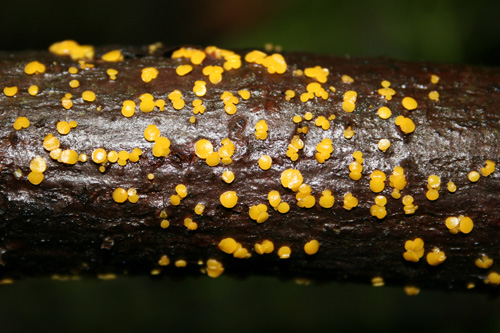
I had a phone call from Dave Bryant asking whether I had seen the Orange Peel Fungi at Dibbinsdale. I had not, these must have sprung up in the two days since I visited. I managed to take the afternoon off work on the 15th September 2010 and jumped on a train to Bromborough Rake. I quickly found a number of these attractive cup fungi on a patch of ground close to where I’d photographed the mass of Oyster Mushrooms on the 11th September. 

Orange Peel Fungus Aleuria aurantia

mna-dibbinsdale-orange-peel-fungi1.jpg

mna-dibbinsdale-orange-peel-fungi2.jpg

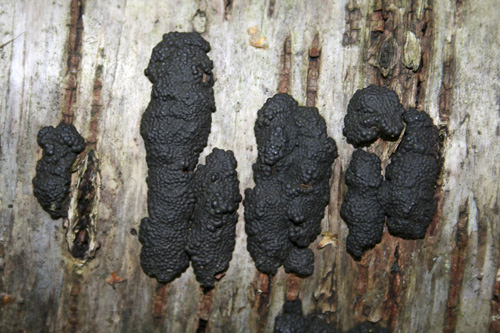
A small group of the morbidly named Dead Man’s Fingers Xylaria polymorpha were sprouting from a beech stump.

mna-dibbinsdale-dead-mans-fingers1.jpg

A nice specimen of Jelly Rot Fungus Phlebia tremellosa was on a particularly well rotted fallen log. You can clearly see the network of radiating folds and ridges covering the surface.

mna-dibbinsdale-white-rot-fungi3.jpg

A particularly glutinous looking Slime Mould Enteridium lycoperdon had a small spider stuck to its surface.

mna-dibbinsdale-enteridium-slime-mould1.jpg

Posted in MNA reports | 1 Comment

New Brighton and Rake Lane Cemetery, 12th September 2010

I heard the first Pink-footed Geese of the autumn this morning, flying over my garden in Crosby. It was a lovely bright day, but there was a bite of autumn in the air. We met at Sir Thomas Street for the 432 bus at 1015 to New Brighton. On the sandbanks at the edge of the rising tide we saw Herring Gulls, Cormorants and Oystercatchers, but there were probably more interesting waders amongst them that were too far away for us to identify. They are tearing up the seafront to build a Morrison’s supermarket, a Travelodge and a row of shops, but the restored prom has a smooth new surface (great for cycling, said Sheena) and they have planted a row of young trees – birch, alder, some maples and some pines: it will be interesting to see which survive the salty onshore winds. Great views over to Seaforth and Waterloo. We saw a Mute Swan on the boating lake, Black-headed gulls on the jetty in the marine lake and about a dozen small birds in rapid wheeling flight, possibly Turnstones.
After lunch in Marine Park we took the 410 to Rake Lane Cemetery and Chapel for Heritage Open Day tours of the beautifully-restored chapel (now a Russian Orthodox Church) and some of the interesting maritime graves in the Cemetery. There are gravestones there commemorating a stewardess lost on the Empress of Ireland in 1914; the Captain of the Great Britain, and his daughter, a Titanic survivor; eight of the twenty-three men lost in the 1939 Liverpool Pilot Boat disaster; and Raymond Thomas Holmes, one of “The Few”, who rammed a German Dornier bomber over London to stop it bombing Buckingham Palace, bailed out, hopped over a fence and kissed two girls!
We took the 410 on to Birkenhead Park Station and caught the train to Liverpool at just past 3pm.

Posted in Sunday Group | 1 Comment

More Dibbinsdale Fungi Finds

A return visit to Dibbinsdale LNR on the Wirral to forage for fungi on the 11th September 2010 proved what a difference a couple of weeks can make.

The Beefsteak Fungus Fistulina hepatica was now fully mature and had a sticky coating on the top.

mna-dibbinsdale-beefsteak-fungi4.jpg

A mass of Oyster Mushrooms Pleurotus ostreatus had appeared on an ivy covered fallen tree trunk

mna-dibbinsdale-oyster-mushroom1.jpg

Details of the gill structure viewed from below.

mna-dibbinsdale-oyster-mushroom2.jpg

A large group of decaying fungi proved photogenic, these weren’t present on the last visit having quickly sprung up before ageing. After seeking advice I was told these are the aptly named Blackening Russula Russula nigricans.

mna-dibbinsdale-dead-blushers2.jpg

A rather pungent smelling Common Stinkhorn Phallus impudicus had a gathering of flies. Every so often a parasitic wasp would buzz by and carry off one of the flies.

mna-dibbinsdale-stinkhorn-flies1.jpg

Glistening Ink Cap Coprinus micaceus peeking from a crevice on a beech tree trunk.

mna-dibbinsdale-glistening-inkcap1.jpg

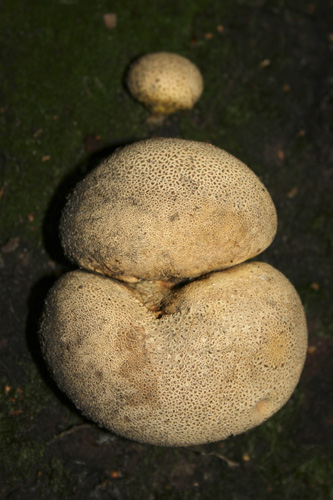
Common Earthballs Scleroderma citrinum were hiding amongst the fallen leaf litter.

mna-dibbinsdale-earthballs1.jpg

Posted in MNA reports | Leave a comment