Freshfield 29th May 2011

We met at Central for the 10.08 train, arriving at Freshfield at 10.40. It was a dull, overcast day with a stiff breeze. It’s been windy for over a week now.  We walked around the Freshfield Dune Heath LWT reserve, spotting a Wren, a Song Thrush, Whitethroat, Magpies, Jackdaws, Carrion Crows and Wood Pigeons. There was a Jay under some trees, a Chiffchaff was calling and a pair of Linnets flew up. An obliging Chaffinch sat on a post for us and a Heron flew over. The gorse at the edge of the fields was very brown, perhaps frost-damaged, but many healthy young oak seedlings were coming up. We saw some rabbits and also the brown Hebridean sheep that are being used for conservation grazing.  Most of the ponds had dried to about a quarter of their normal levels, and one was full of tadpoles.

We crossed the railway and the golf course and headed down to Fisherman’s Path and the Ainsdale Sand Dunes NNR. It stared to rain so we ate our lunches in the shelter of the pine trees.

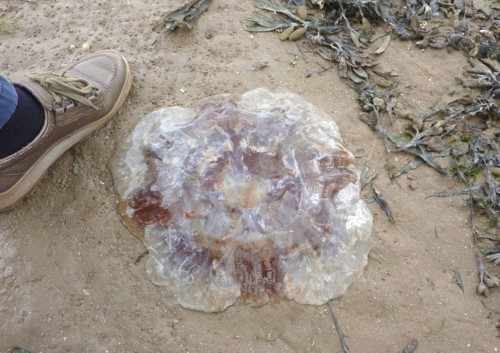
The sun had begun to shine when we reached the beach, but there was still a very strong onshore wind and blowing sand. The recent gales must have been too much for one Gannet, which we found dead on the sand. But about 100 Herring Gulls were enjoying themselves, hovering and wheeling in the updraught where the wind hit the edge of the dunes.  We saw some Lesser Black-backed gulls and Sanderlings on the tideline, but most of our attention was taken with the sea life the gales had blown in.  Thousands of Common Jellyfish had been washed up, together with some Sea Potatoes, Whelk shells, Starfish and tens of thousands of Razor Shells.

freshfield-common-jellyfish.jpg

freshfield-sea-potato.jpg

freshfield-starfish.jpg

freshfield-whelk-and-razors.jpg

At Freshfield station we found a Cream-spot Ladybird.

freshfield-cream-spot-ladybird.jpg

We caught the 2.41 train, due back in Liverpool about 3.15.

Posted in Sunday Group | 1 Comment

Nercwys Forest 28th May 2011

Four members met at the Druid’s Inn for an evening meal – David, Alexander, Ann and me. We met two more at the Rainbow afterwards (father and son from Chester, new members, can’t recall your names, sorry.)

Regrettably, despite a long wait into the dusk on the forest path, we neither heard nor saw a Nightjar, although David was sure the black bird which we caught a fleeting glimpse of as we arrived, disappearing into shrubbery by the path, was a Nightjar we had disturbed. David has heard Nightjars at this location on at least three occasions in the past, but not tonight !

We had more luck with bats on the way back to the car park at 10pm.  My bat detector  easily picked up the small bats flitting at head height through the tunnels of trees. They were calling at about 45KHz so were almost certainly Common Pipistrelles. We also picked up something at 20 KHz, which ought to have been a Noctule, but we couldn’t see anything flying higher up.  Nothing at 80 KHz +, which would have been Greater and Lesser Horseshoe bats.

Posted in MNA reports | 1 Comment

More pictures from Walney

Here are John Clegg’s Walney pictures.

jc-walney-herring-gulll.jpg

Herring gull at nest

jc-walney-lbb-gull.jpg

Lesser Black-backed gull at nest

jc-walney-ringed-plover.jpg

Ringed plover at nest

jc-walney-two-headed-eider.jpg

John commented that this is a rare two-billed Eider, perhaps affected by radioactive emissions from the nearby Sellafield nuclear reprocessing plant.

jc-walney-wall-brown.jpg

Wall Brown butterfly on a sheltered sunny bank.

jc-walney-hare-1.jpg

And here are two views of the obliging Brown Hare which posed for us outside one of the hides.

jc-walney-hare-2.jpg

Posted in MNA reports | 1 Comment

MNA Coach Trip Walney Island 22nd May 2011

MNA coach trip with 20 members visiting the South Walney Reserve run by the Cumbria Wildlife Trust. The area consists of a shingle island with lagoons where salt, sand & gravel were extracted during the 19th and 20th centuries. As our coach driver negotiated the single track road and speed bumps to we had our first sighting of a Cuckoo looking very raptor-like from the coach window. We had been previously warned about the likely attack from the large numbers of Lesser Black Backed and Herring Gulls that nest on the reserve.

 mna-walney-lbbg3.jpg

The majority of the breeding colony was now protected behind an electric fence but we still had to run the gauntlet past a few nesting pairs. One pair of Herring Gulls having chosen to nest almost on the track itself!

 mna-walney-herringgull1.jpg

A few Ringed Plovers were nesting on the shingle close to the track, one bird running off to draw attention away from her nest of three speckled eggs. A few Oystercatchers were running along the waters edge.

mna-walney-ringed-plover.jpg

Ringed Plover

mna-walney-oyk1.jpg 

Oystercatcher

We had seen a number of Greylags on the edge of the Reserve but two more unusual Geese caught our attention. They were Emperor Geese. These are the descendants of captive birds who escaped from Piel Island and have bred successfully here. Another big bird draw was the many Eiders Ducks, the males outnumber the females 10:1 so there is a lot of competition to impress the ladies. A few Eiders were battling the waves caused by the ferocious windy conditions and a large gathering resting on the shingle bank with the atmospheric backdrop of Piel Castle.

mna-walney-eiders2.jpg

mna-walney-eiders1.jpg

I had a wander along the track that runs to the Seasalter Pacific Oyster Crassostrea gigas hatchery / nursery in the old extraction lagoons and found a few discarded shells.

mna-oysters1.jpg

The tide was heading in as we continued south along the trail. A huge flock of Oystercatchers were resting on the edge of the saltmarsh amongst them was a leucistic bird i.e. one with reduced pigmentation causing some of its normally black feathers to be white. Shelduck and the odd Curlew were out on the marsh and a few Grey Seals were bobbing about in the water. Those that reached the Sea Hide were rewarded with views of Arctic and Sandwich Terns, distant Gannet and Manx Shearwater. A few members watched a dark Peregrine fly in from the sea just as a shower had passed overhead. John Clegg and co. watched a Brown Hare as it came and sat in the thick grass just in front of the hide.

Moths seen included a Magpie Moth Abraxas grossulariata escaping the wind in one of the hides, a Mother Shipton Moth Callistege mi hunkered down in the grass and half a dozen fat and hairy Drinker Moth Caterpillars Philudoria potatoria.

mna-mother-shipton.jpg

Mother Shipton Moth

mna-walney-drinker1.jpg

mna-walney-drinker2.jpg

Drinker Moth Caterpillar

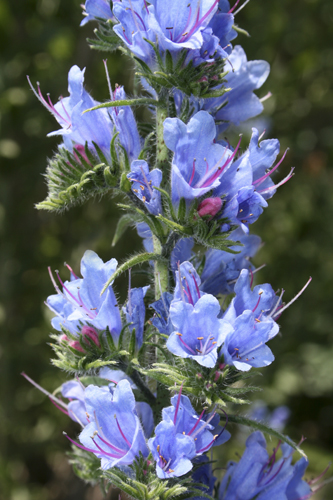
Plants included Houndstongue Cynoglossum officinale, Germander Speedwell Veronica chamaedrys, Silverweed Potentilla anserina, Common Stork’s-bill Erodium cicutarium and Bird’s foot Trefoil Lotus corniculatus.

Posted in MNA reports | 1 Comment

Orrell Water Park 15th May 2011

More silly games with Merseytravel this morning. We needed to get the number 10 bus at 10.06 to  make a tight connection at St Helens Bus Station. As we waited, a man came and fitted a new timetable into the holder – our bus wouldn’t be coming until 10.16. Nothing like plenty of notice!  At St Helens we saw our bus just drawing out so we had half an hour to wait.

But the 352 came eventually and dropped us outside Orrell Water Park just before noon. It’s north of Billinge, and very close to Orrell station. Although not billed as a nature reserve and catering for local fishermen, it is lovely place with lakes, streams, reedbeds and many wild flowers. On a better day it would have been delightful, but we had a steady drizzle all the time we were there.

 orrell-wp-view.jpg

We saw Mallards (one with seven newly-hatched ducklings), Coots (without rings), a Heron, some Great Crested Grebes, Black-headed Gulls, Canada Geese, a Robin and a Chaffinch. Part way along the southward path there is a screen for a bird feeding area, with a spider’s web catching the raindrops.

orrell-wp-cobweb-and-bird-table.jpg

Flowers included Red Campion, Yellow Flag Iris, Wild roses and Dog roses, loads of Buttercups and Guelder Rose.

orrell-wp-roses.jpg

orrell-wp-buttercups.jpg

 orrell-wp-guelder-rose.jpg

At the southernmost end is “Water Vole Bridge”, but none were showing. On our way back we saw a mother Coot feeding some of her chicks.

orrell-wp-coot-and-chick.jpg

We caught the 2.30 bus outside the Park, changed at St Helens and we were back in Liverpool by 4pm.  

Posted in Sunday Group | 1 Comment

Leasowe 8th May 2011

Heavy downpours and Merseyrail engineering works didn’t put off the sixteen members of the MNA / Sunday Nature Group who reached Leasowe Lighthouse for our Spring migrants meeting. We had a good route around the area, wandering along Lingham Lane checking out the fields and along the rubbish littered lane that runs towards Moreton Brickworks pond before retracing our steps to the lighthouse for lunch when the sun eventually broke through the clouds.

mna-leasowe.jpg

We then headed along the overgrown track beside the horse paddocks before turning right towards the seawall for a bit of seawatching before again returning back to the lighthouse. A good bird list with Great Crested Grebe a pair on the Moreton Brickworks pond, Little Egret standing in a field with its head crest blowing in the wind, Mallard, Moorhen, Coot with 2 juvs on the lighthouse ponds, Lapwing a few in the fields and horse paddocks, Feral Rock Pigeon, Wood Pigeon, Collared Dove, Swift 1 zooming overhead, Skylark 4 singing over the fields, Swallow 14+ flying low for insects, Meadow Pipit, Pied Wagtail, Wren, Dunnock, Robin, Northern Wheatear 1 female in the horse paddocks, Blackbird, Grasshopper Warbler 1 reeling close to the railway line, Sedge Warbler plenty scratching away giving occasional views, Lesser Whitethroat 1 performing its bubbling chaffinch-like song in a bush close to the lighthouse which gave brief views before flying to a nearby tree, Common Whitethroat half a dozen or more scolding us from the bushes with a few performing their aerial display flight, Blackcap, Chiffchaff, Willow Warbler, Great Tit one with a beakful of food flying into bushes beside the stream and another pair feeding young in a nest within a rusting signpost, Magpie, Carrion Crow, Starling, House Sparrow, Greenfinch, Goldfinch, Linnet the males looking particularly cerise pink, Reed Bunting 1 male. Chris Butterworth also had a Cuckoo perched on a wire close to the lighthouse and a few Stock Doves in one field.

The tide was in during our sea watch with a distant sandbank exposed out from Meols. More star birds with a Great Crested Grebe on the water, Cormorant few on the sandbank, Grey Plover 2, Dunlin small flock of 12+ flying, Bar-tailed Godwit 2, Whimbrel great views of a bird perched on the end of a rock groyne allowing scope views of its stripey head and less pronounced curved bill than the Curlews that were out on the sandbank, Turnstone 2 flying past, Black-headed & Lesser Black-backed & Herring Gulls in good numbers on the sandbank, Common Tern 1 flying past and another Wheatear on the rocky groyne.

mna-leasow-horse.jpg

Amphibians included a Common Frog and a Dead Toad. Butterflies on the wing included a Large White, a few Small Whites, Peacock 2, Small Heath 2, Cinnabar Moth 1 flying along the bottom of the seawall, no fewer than 16 Common Blues and half a dozen Small Tortoiseshell caterpillars on nettles. St Mark’s Flies Bibio marci, Picture-winged flies Tephritidae sp. and a Scorpion Fly Panorpa communis.

mna-flag-iris.jpg

Yellow Flag Iris

Flowers included Yellow Flag Iris Iris pseudacorus, Common Storksbill Erodium cicutarium, Woody Nightshade a.k.a. Bittersweet Solanum dulcamara,  Tufted Vetch Vicia cracca, Common Bird’s-foot Trefoil Lotus corniculatus, Green Alkanet Pentaglottis sempervirens, Oilseed Rape Brassica napa, Jack-By-The-Hedge Alliaria petiolata, Lesser Stitchwort Stellaria graminea, Star-of-Bethlehem Ornithogalum umbellatum.

mna-star-bethlehem.jpg

Star-Of- Bethlehem

Bushes in flower included Hawthorn Crataegus mongyna, Gorse Ulex europaeus, Broom Cytisus scoparius and Dog Rose Rosa canina.   

mna-broom.jpg

Broom

Posted in MNA reports | 1 Comment

Thornton Hough 1st May 2011

We took the 487 bus from Sir Thomas Street at 10.30, arriving at the Seven Stars at 11.15. Our walk today took us by fields and footpaths to Brimstage and back. It was a bright sunny day, but not quite warm enough for short sleeves because there was a stiff breeze.  The Swallows seem to have arrived now: we saw several over the fields, as well as some House Martins and three Swifts. They DO make a summer.

The field edges had great drifts of Cow Parsley. Other wild flowers included Green Alkanet, Comfrey, hybrid Bluebells and one of the Stitchworts, probably Greater.  Butterflies seen were Large Whites, Green-veined White, lots of fresh-looking Orange Tips, a Small Tortoiseshell, some Speckled Woods and our first Common Blue of the year. We also saw lots of St Mark’s Flies and a 7-spot Ladybird.

thornton-hough-cow-parsley.jpg

Skylarks were singing, we heard a couple of calling Pheasants and a Chaffinch in the hedgerows.  A Buzzard flew in the distance and we saw a Yellowhammer, Lapwings and a Blue Tit. In the courtyard at Brimstage two pairs of Swallows were nesting under the archway.

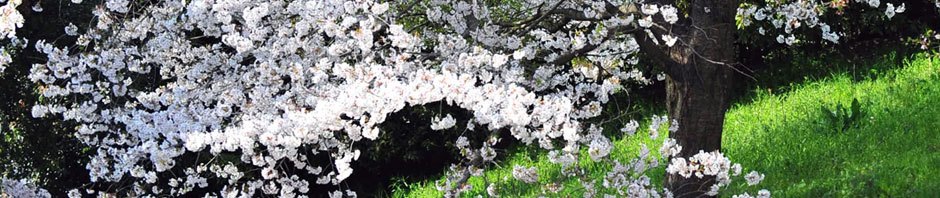
But the main interest of the day was the progress of the trees. Right on cue, on Mayday, the Hawthorn (May) blossom was out, and so were the Horse Chestnuts.

thornton-hough-may-blossom.jpg

thornton-hough-horse-chestnut.jpg

We remembered the old adage about whether we are in for a wet summer or a dry one. “Ash before Oak, you’re in for a soak. Oak before Ash, only a splash.”  I am happy to report that the Ash leaves were just emerging but the Oak was well in leaf, so a dry summer is predicted. We will see if it is true! 

thornton-hough-ash-leaves.jpg

thornton-hough-oak-leaves.jpg

We were back at Thornton Hough in time for the 2.45 bus back to Liverpool.

Posted in Sunday Group | 1 Comment

Lydiate “Tower and Steeple” walk 17th April 2011

We started the day with some fun with public transport. Since there were road works in Dale Street, the 300 bus, which usually stops in Sir Thomas Street, was meant to stop at Queen Square, but nobody had told the drivers. It sailed past and the Merseytravel men with walkie-talkies were unable to contact it.  So we jumped on a 130 which gets to the Black Bull by a more direct route, passed our 300 near Orrell Park Station, and just caught it at the next stop. What larks!

It was a warm sunny day, which wouldn’t shame July. From the stop after the Weld Blundell we went on a circular walk through fields and farms, taken from a published leaflet. Spanish bluebells were just coming out, and primroses, dandelions, nettles and forget-me-nots were in bloom. Amongst the houses we saw a Starling, Blue Tits, Goldfinches, Sparrows and a Blackbird, and heard a Greenfinch and a Pheasant calling.  On the footpath to Pygon Hill Lane we saw lots of butterflies: Orange Tips, Peacocks and a Small Tortoiseshell. Later in the day we saw a Speckled Wood. The newly-ploughed fields had Crows, Jackdaws, Magpies, Herring Gulls and Lesser Black-backed Gulls, some Rooks and a few calling Lapwings.

There is an old stone set into the footpath which says “From this spot six churches can be seen. Find them”. We tried, but only saw four, and a fifth one when we walked a little further along.

lydiate-church-stone.jpg

We had our lunch under a Blackthorn bush in full bloom.

lydiate-blackthorn.jpg

Just like the one two weeks ago, it didn’t seem to have any thorns, but there were dozens of 7-spot Ladybirds all over the blossom.

The rest of the walk took us past a small pig farm, several fields full of horses, one field of black-faced sheep and their lambs, and all had plenty of flying insects. The only thing missing was Swallows. We saw one two weeks ago at Leasowe, but the main migration doesn’t seem to have arrived yet.  The farmer was planting his spuds, a large field of oilseed rape was already in bloom, and we saw two different species of Bumblebee, Red-tailed and Buff-tailed.

lydiate-rape-field.jpg

We passed the remains of a mediaeval moated site, Walsh Hall, then through a farm yard, gingerly over a narrow plank bridge, across the canal and we were at the bus stop outside Our Lady’s RC church in Lydiate for the 300 at 3.20 to take us back to Liverpool.

Posted in Sunday Group | 1 Comment

Rivacre Valley County Park 16th April 2011

13 people met for this joint MNA / RSPB walk, starting from Liverpool Central or Overpool Merseyrail stations.  Only one Liverpool RSPB member, but several of the MNA regulars have dual membership. Two or three others were MNA members on their first outing with us.  It was a warm, mostly sunny day.

Birds – as well as the expected woodland species we noted Buzzards, a Sparrowhawk, Greater Spotted Woodpecker, Green Woodpecker (heard by all but seen briefly by only one of us), both a male and a female Bullfinch at different times, Grey Wagtail on the stream, many Chiffchaffs calling.  The most surprising was a flock of 17 Waxwings which we saw in flight. They had been reported at the Ranger Station by another walker earlier in the day.  (We left some MNA leaflets there.) The leader’s total for the day was 29 species of birds.

Butterflies – Small White, Large White, Peacock, Small Tortoiseshell, Brimstone, several pairs of Orange Tip and one pair of Speckled Wood. 7 species.

 Only one mammal species, a grey squirrel in the trees.

Plants included Wood Anemones, Lesser Celandine, native Blubells just coming into flower, the very poisonous Hemlock Waterwort and the uncommon Town Hall Clock  Adoxa moschatellina.


Posted in MNA reports | 1 Comment

MNA Coach Trip Conwy 10th April 2011

After our visit to The Spinnies we retraced our route back along the A55 to Conwy RSPB reserve at Llandudno Junction.

mna-conwy-lapwing-sign.jpg 

As always there was plenty of birdlife on the lagoons that could be viewed from the many hides on the circular route including Red-breasted Merganser 2males + 1 Female, Goldeneye 1 male, Wigeon, Tufties, Teal, a pair of Shoveler, A Little Egret, a few squabbling Mute Swans, loads of Canada Geese – one of which was missing an egg from its nest that had rolled down to the edge of a spit, plenty of Shelduck, displaying Lapwings and Black-headed, Herring and Lesser Black Backed Gulls. Overhead there was a Raven and Buzzards. More migrants with Sedgies in the reedbeds, Blackcaps, Willow Warbler and Chiffchaff.

mna-conwy-reedbed.jpg

Out on the estuary mudflats Redshank, Curlew and Oystercatcher were silhouetted in the sun. Seven Grey Heron were stalking around the shallows, a few Cormorants were floating around occasionally diving and White Wagtails were picking at insects on the narrow stretch of saltmarsh. Mammals included both Stoat and Weasel. A few nice insects with Comma and Small Tortoiseshell butterflies, I saw a few Tawny Mining Bees Andrena fulva and Nomada Bees burrowing in the sand embankment close to one of the lagoon viewing screens and Pond-skaters were quick to move onto the newly developed ponds. I found some fine yellow rosettes of the Lichen Caloplaca thallincola

mna-conwy-caloplaca.jpg

Plantlife included Marsh Marigold Caltha palustris, Primrose Primula vulgaris, Cowslip Primula veris, Common Dog Violet Viola riviniana and Spotted Medick Medicago arabica.

 mna-conwy-marsh-marigold.jpg

Marsh Marigold or Kingcup

A number of Willow Trees Salix sp. were laden with male catkins whereas others held the spiky pistillate (female) flowers.

mna-conwy-willow.jpg

mna-conwy-apple-blossom.jpg

Pinky white Apple blossom was just beginning to appear on  some trees.

Whilst stuck in roadworks on the A55 at Penmaenhead we did a bit of birding and watched the Fulmars that were nesting on the cliffs and gliding by on their stiff wings.   

Posted in MNA reports | 1 Comment