Colourful Calderstones, 29th April 2012

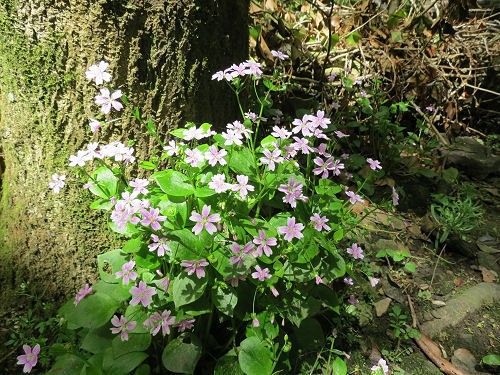
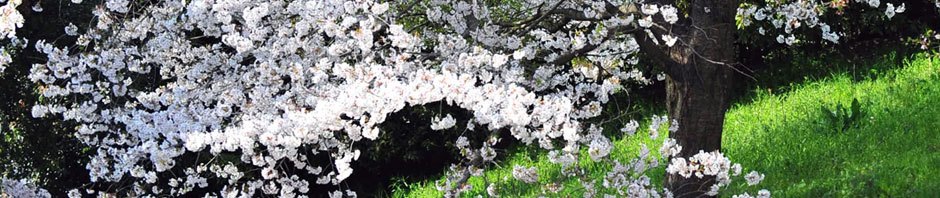
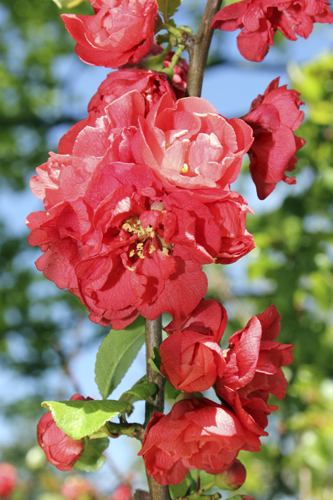
It was the perfect time of year to visit Calderstones Park. The cherries, azaleas and rhododendrons were in flower, and the trees with ornamental coloured foliage were at their freshest and best.

10-calderstones-japanese-garden.jpg

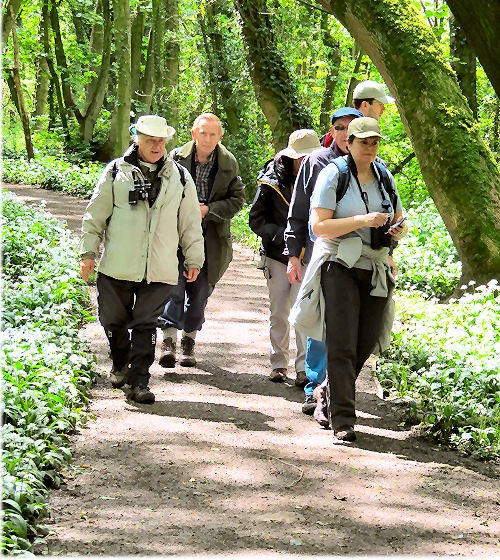
Sadly, it rained hard all day, coming down like the proverbial stair-rods, so our appreciation of the wonderful colours of the spring flowers and trees was spoilt by the weather. There was hardly any shelter, either. The greenhouses have been taken out, there was no exhibition in the Coach House, which was locked up, so we had to take refuge in the tiny shelter in the Japanese Garden.

10-calderstones-yellow-tree.jpg

But there were some birds about.  The sodden lawns were paradise for Blackbirds and a Mistle Thrush. Magpies were everywhere and we saw a Jay, a Bullfinch and a Nuthatch. But the weather was too much for us, and we were on our way home before 1pm.

10-calderstones-rhododendron.jpg

Note that I was away for the previous two Sunday walks, Lydiate on 15th April and Wirral Way on 22nd. John Clegg has written them up and I posted his accounts yesterday. However, I tinkered with the posting dates, so you will have to scroll down for them, where they appear in chronological sequence.

Posted in Sunday Group | 1 Comment

The Ken Jordan Memorial Foray (by Tony Carter)

On Sunday 22nd April, I led a foray to Freshfield Heath and Ainsdale Sand Dunes NNR on behalf of the North West Fungus Group. Some of you will remember that Ken Jordan used to lead this foray in conjunction with members of MNA. The NWFG continue to honour this annual foray and it has been named by them as The Ken Jordan Memorial Foray. The foray was attended by David Bryant and Peter Gahan, the manager at Ainsdale. Despite the rain, the reserves were very dry. Peter told us that the water level was now at its lowest point ever. Because of this lack of rain, fungi were few and far between on Freshfield Heath, mainly micro fungi on twigs and the odd grassland species such as Panaeolus fimicola (Turf Mottlegill).

2-panaeolus-fimicola-freshfield-0412.jpg

Ainsdale was little better. Melanoleuca cognata (Spring Cavalier) appeared on the fixed dunes.

2-melanoleuca-cognata-ainsdale.jpg

We did find a dozen Morcella elata (Black Morels) on the dry slacks (no attached photo of them). We also found  Clitocybe vermicularis. Although not unique to Ainsdale, there is only one other confirmed site for this species – in South Devon.

2-clitocybe-vermicularis-ainsdale.jpg

Another find was the very tiny (3mm) Monilina johnsonii (Haw Goblet). This grows on old hawthorn berries. It is said to be uncommon but I suspect this is because of its small size and that you have to search for it.

2-monilina-johnsonii.jpg

Posted in MNA reports | 1 Comment

Fungal Treasures (by Tony Carter)

Despite the freezing cold winter and very dry spring, 2011 turned out to be an excellent year for fungi, helped by the extended period of warm weather into the New Year.

A thaw in the treacherous conditions of January allowed me to take a stroll around some of my local parks in Liverpool. In a small copse of mixed pine at Allerton Tower that was clear of snow, I came across a group of Striate Earthstars –  Geastrum striatum. This is an uncommon species in this area. Samples were requested by Kew Herbarium and were duly dried and dispatched.

geasatrum-striatum-allerton-tower-reduced.jpg

In April, I went with a group of friends to Ainsdale to search for spring fungi. The weather had been so hot and dry that we found very little until we reached one of the now dried-up slacks. There we counted twenty seven Black Morels – Morchella elata.  I have not seen so many since the trees were removed to encourage the return of the dune system.

morchella-elata-ainsdale-reduced.jpg

At the end of last year the flowerbeds and shrubberies in Calderstones Park were heavily mulched. This proved to be a boon for the fungi. It was there, in June, that I spotted the Warty Cavalier – Melanoleuca verrucipes. Although fairly common in southern Britain, I know of only one other record for North West England, at Manchester. It is probably moving north with the warmer climate. Another specimen requested by Kew.

melanoleuca-verrucipes-reduced.jpg

In August, I was asked by a colleague to find some Sand Stinkhorns so that he could photograph them for a book he was preparing. Having taken advice from the wardens we searched an area just south of Pontins Holiday Camp at Birkdale. We failed to find any but I did stumble across a Stropharia halophila in the dunes. This species is on the Red Data List (Vulnerable).  There are only three previous records on the British Database, the nearest to our area being from Westmoreland. Another specimen for Kew Herbarium.

stropharia-halophila-birkdale-hills-reduced.jpg

Later that month, I was crossing over a central reservation in Allerton, Liverpool where, to my great surprise, I collected a Crimson Bolete – Rubinoboltus rubinus. This is another species on the Red Data List (Vulnerable) and was duly sent to Kew. Not a normal find on a central reservation but many of the roads in South Liverpool cut through the former estates of 19th century Liverpool merchants and still retain the trees planted in that era.

rubinoboletus-rubinus-liverpool-reduced.jpg

The extended warm weather in December found me in Calderstones Park again. On a mound of rotted-down garden waste I came across a group of Freckled Dapperling – Echinoderma asperum, another species moving north from warmer climes.

echinoderma-asperum-calderstones-reduced.jpg

But more exciting, on the same mound were a couple of Golden Bootleg – Phaeolepiota aurea. Although in poor condition, the telltale sheath on the stem was obvious. They are regarded as Rare on the Red Data List but unfortunately too far past their best to send to Kew.

phaeolepiota-aurea-reduced.jpg

The most exciting discovery of the year was on an allotment in Liverpool. In 2009, I had collected an unusual specimen growing amongst the vegetables. The striking feature was the very large inflated root or sclerotia that extended deep into the soil.  I could not identify it and eventually sent specimens to Kew to see if they had any idea. In 2010, it grew again but it was only in August of 2011 that the experts at Kew were able to name it. It is Hypholoma tuberosum.  This fungus had previously been recorded in South Australia and Vancouver. This was the first time it had ever been recorded in the United Kingdom. It seems that the key is an association with peat, which many gardeners used until recent exhortations to try alternative compost resources in order to protect the dwindling peat environment. How did it find its way to Liverpool?

hypholoma-tuberosum-reduced.jpg

The fascination of collecting and studying fungi is that they can be found at any time of year in just about every habitat. They do not run or fly away. There is no need to travel far afield or search out ancient woodlands.  It is possible to find rare species, even new to the UK, in your local park or your garden.  All you need is a good sense of observation.
 

Posted in MNA reports | 1 Comment

Wirral Way, 22nd April 2012

(Report by John Clegg) When we arrived at Hooton Station we had to fight our way through 300-400 people who were queueing for the train to Liverpool to see the Sea Odyssey giants.  On the Wirral Way we heard Great Tits and a Robin singing and had good views of  Great Spotted Woodpecker.

We had lunch at the restored Hadlow Road station, then continued all the way to Neston. Willow Warbler and Chiffchaff were singing all along the Wirral Way, Forget-me-Nots were in flower and we had a good close sighting of a pair of Treecreepers, flying from tree to tree.

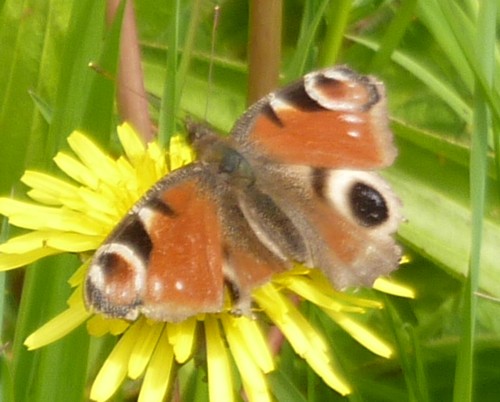
When the sun came out in the afternoon we saw lots of butterflies: Orange Tip, Speckled Wood, Peacock and Large White.  We got the bus home from Neston. A total of 24 bird species were seen

Posted in Sunday Group | 1 Comment

Woolston Eyes 14/4/2012

Despite a nagging, cold easterly breeze 15 members assembled at this large, secluded reserve hemmed in by the Mersey and the Manchester Ship Canal. Some arrived by car, others by train into Warrington Central and then the No.3 bus to Martinscroft where at the end of the run you walk down, appropriately enough, Weir Lane. At the end of the lane you suddenly come to the Mersey with its sluices and weir over which the river cascades. Between those structures a sheet of calm water offered views of Pochard, Coot, Shelduck and a Great-crested Grebe on its nest mound in the shallows.

woolston-eyes-canada-goslings-reduced.jpg

Canada Goose Goslings – picture by Chris Derri

Walking towards the canal  a singing Garden Warbler added variety to the Chiffchaffs and a Blackcap, a first chance to compare songs after many months of lack of practice on our part. Meanwhile, as many as eight Common Buzzards were soaring over the target area.

Using a key and a suspension bridge we gained access to Area 3 which is encircled by the Mersey. From the hides the nearby expanses of reedbed and shallow waters were the setting for numerous noisy Black-headed Gulls, Gadwall, Shoveler, Cormorants and the bird which many had come primarily to see, the Black-necked Grebe. There were a dozen, paired off, busy diving for food and closer in than usual so that a telescope was not really necessary to appreciate their fawny-yellow  feathers behind the red eye and chestnut flanks.

woolston-eyes-black-necked-grebe-reduced.jpg

Black-necked Grebe – picture by Chris Derri

Members had lunch and made the most of a rare opportunity. Great-crested and Little Grebes provided a suitable contrast while Greenfinches and a Great-spotted Woodpecker hogged the feeders. Walking the grassy trails we were amazed at the large number of White-lipped Banded Snails Cepea hortensis, bright yellow and undamaged – obviously the result of some predator. Returning to the bridge the last hide offered a lone Ruddy Duck, one of the few remaining after the national cull.

woolston-eyes-ruddy-duck-reduced.jpg

Ruddy Duck and Black-headed Gull – picture by Chris Derri

We then walked along the banks of the MSC so as to walk around Area 4 to the west which is open to the public. The flora gave Bugle, Common Field Speedwell, Wood Forgetmenot, Thale Cress, Common Puffball and Winter Heliotrope. Out of the wind a solitary Speckled Wood, Red-tailed and Buff-tailed Bumble Bees and a Tawny Mining Bee added interest. Amongst the scrub coming into leaf were several Willow Warblers in song and another Garden Warbler with its prolonged warble. A first for me was a very small variety of Cramp Ball, Daldinia vernicosa, which is often found on burnt gorse and which proved to be so!

Posted in MNA reports | 1 Comment

Lydiate, 15th April 2012

(Report by John Clegg) After getting off the 300 bus the walk started in Hall Lane, with Rooks flying around the church. We crossed the Racing Stables, where there were Lapwings on the gallops and we had lunch on the bridge over the Leeds-Liverpool canal. Swallows flew above the water and there was a Buzzard overhead.

After lunch we walked along the canal towpath to Jackson’s Bridge then returned to Hall Lane. At the farm shop on the other side of the road we saw a mother Mallard with 10 one-day-old ducklings, and six Peacocks were displaying on the field.

From the bus stop outside the church we saw a Raven fly over, and the churchyard had good numbers of both blue and white English Bluebells together with the yellow flowers of Lesser Celandine.  A total of 26 bird species seen.

Posted in Sunday Group | 1 Comment

Landican Cemetery and Arrowe Country Park 1st April 2012

The motor cyclists were gathering for the Egg Run in William Brown Street this morning, many of them dressed as chickens and bunnies. And since it was April Fool’s Day, the morning radio had been talking about donkey rustling for Palm Sunday services. Scorning these distractions we set off on the 72 bus for Landican.

09-landican-cemetery-view.jpg

After last week’s heatwave there was a cool breeze, although it was still warm in the sunshine. We took the path from Woodchurch Road along the side of the Cemetery, seeing a Dunnock, Blue Tits and Great Tits, Long-tailed Tits and some Wood Pigeons. In the cemetery we heard a Chiffchaff and saw a Blackbird, a Chaffinch, several Carrion Crows and a couple of Magpies. Pairs of Buzzards were courting overhead, a Jay glided through the trees, the Irish Yews were stately and elegant and the Blackthorn was starting to bloom.

09-landican-blackthorn.jpg

We kept our eyes peeled for Hares, since this is the place where Chris Packham was filmed creeping amongst the gravestones. But no Hares today, there were too many people about.

09-landican-birch-and-daffs.jpg

In Arrowe Country Park there was a Pied Wagtail on the bowling green where we had lunch, a Nuthatch and Greenfinches calling, a Robin, more Buzzards overhead, and two butterflies: a Small Tortoiseshell and our first Speckled Wood of the year.  In the shrubbery we saw a Coal Tit apparently harass a Chaffinch from its chosen perch, and our best bird of the day, a Goldcrest flitting through a Cherry Laurel bush.

Following the sound of engines, we found the British Model Flying Association at the far side of the big field, putting their craft through their paces. One of them had a model helicopter which he could make loop-the-loop, fly upside down, fly on its side – amazing!

09-landican-model-planes.jpg

Posted in Sunday Group | Leave a comment

Sugar Brook Park 25th March 2012

This was one of John’s mystery destinations, and it turned out to be a small park on the north side of the East Lancashire Road, between Lower Lane and Stonebridge Lane, near to the sewage works and opposite the Showcase Cinema. Someone, perhaps the North-West Development Agency, has landscaped the area around Sugar Brook, made paths, planted small trees and shrubs, and set up a fishing lake. We strolled around it in the warm sunshine and I asked a young fisherman what he caught. He said he’d had three Carp, his mate had had one and his cousin had had another.

08-sugar-brook-view.jpg

There were Mallards and Coots on the water, and Marsh Marigolds in the drainage ditches. Forsythia was blooming wonderfully, Coltsfoot was in flower, 7-spot Ladybirds were out basking, a Honey Bee with full pollen sacs foraged among the Broom, and a Peacock butterfly fluttered past. Two Cormorants flew towards Prescot, a Heron came up and headed for Croxteth Park and a dog flushed two very unexpected Grey Partridges from a small stand of trees. All along the path edges Field Horsetails were shooting up, and in several places they had started to break through the tarmac.

08-sugar-brook-horsetails.jpg

08-sugar-brook-tarmac.jpg

In a stagnant backwater right next to a path, two Mute Swans have built a nest and were sitting on three eggs. Neither had Darvic rings but the Cob had an unreadable BTO ring. They seemed to be in a very accessible and vulnerable position, so perhaps they are a young pair who don’t know any better, but there was evidence that the locals held them in some affection. A father was showing them to his little daughter and the water around them held whole slices of bread and a complete but very soggy bagel.
08-sugar-brook-swans.jpg

We ate lunch sitting on crash barriers, with the dull roar of the East Lancs on our right and the sweet songs of Chiffchaffs, a Dunnock and Goldfinches to our left.

08-sugar-brook-walking.jpg

After lunch we walked down to West Derby Cemetery to look for some gravestones, and admired three wonderful pink flowering Cherry trees.

08-sugar-brook-cherry-trees.jpg

Posted in Sunday Group | 1 Comment

Orrell Water Park 24th March 2012

Report from John Clegg

orrell-wp-view.jpg

A sunny, warm morning saw ten MNA members meet at Orrell Water Park for our walk.

We started with a pair of Great Crested Grebes dancing on the largest of the lakes, with good numbers of Coots, Black-headed Gulls and Canada Geese. At the feeding station a male Sparrowhawk  was seen to put up the feeding birds, including Blue, Great and Long-tailed Tits, Chaffinch, Bullfinch, Blackbird and Robin.

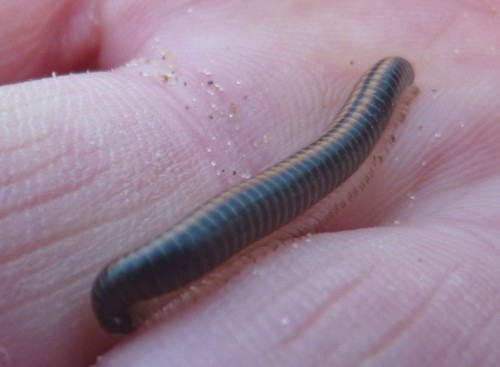
On the bank of a stream over 100 Miner Bees were seen , including Early, Tawny and Andrena Mining Bees. On the Holly hedge we saw a number of Holly Leaf Miner beetles and a Snake Millipede.

The sunny day brought out lots of butterfiles: Large White, Green-veined White, Comma, Small Tortoiseshell, Red Admiral and Peacock were all seen.  In the wood were carpets of White Wood Anemone and yellow Primrose.

A total of 21 bird species were seen on the day.

Posted in MNA reports | 1 Comment

MNA Coach Trip Shropshire Meres 18th March 2012

mna-white-goose1.jpg 

Farmyard Goose

A regular venue for MNA coach trips, Ellesmere is always a popular favourite. We arrived to scattered clouds, sunshine and a gaggle of rather vocal farmyard Geese, Greylags and Canadas all begging for food from the day-trippers. The geese looked non too impressed with Barbara’s swan and geese pellets!

mna-greylag.jpg

Vocal Greylag Goose

mna-barbara-feeding-geese.jpg

Barbara And The Geese

We had a quick nose in the visitor centre at the cameras fixed on the Grey Heron nesting Heronry on the island in the mere. A couple of Mute Swans had blue darvic rings on their legs with numbers 7FID and 7FIP. These birds have been ringed by Tony Cross of the Red Kite Trust and a record of these sightings were forwarded to him. As we slowly ambled around the mere Buzzards were mewing overhead, Tufted Duck and Goldeneye were diving out at the back and Great Crested Grebes were proudly sporting their spring headdress.

mna-chris-derri-buzzard1.jpg

Buzzard courtesy of Chris Derri

We stopped to look at a large Wellingtonia tree. Its fibrous looking trunk had a number of small indents with streaks of droppings beneath. Treecreepers snuggle into these holes to roost, their mottled back camouflaged against the trunk. Holes at various sides of the trunk are favoured depending on the wind direction.  As we entered the woodland we heard the distinctive tui-tui-tui call of a Nuthatch that was going to feature throughout the day.
mna-chris-derri-nuthatch1.jpg

Nuthatch courtesy of Chris Derri

Spring was evidently here with Chaffinches ‘pinking’, Great Tits calling ‘teacher teacher’, Wrens giving the occasional blast of song from the undergrowth accompanied by Robins, Dunnocks, Blackbirds, a few Song Thrushes, Blue Tits, the odd Coal Tit and Goldcrest. John Clegg had a lucky sighting of a Lesser Spotted Woodpecker flying across the path. A Raven joined the usual corvids exclaiming ‘prunk prunk’ as it flew overhead. We were glad when we watched a couple of upended Swans through our binoculars to find that they were Whoopers. A couple of members remarked that they seem to be able to hold their breath longer than Mute Swans.

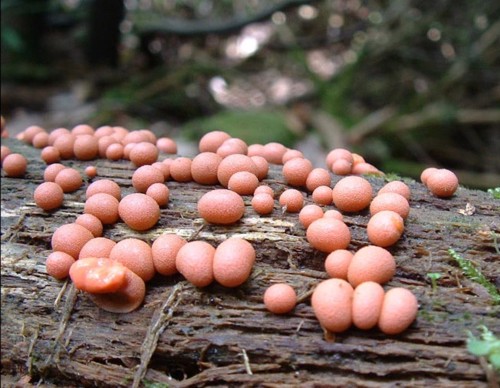
A few Spring flowers with Coltsfoot Tussilago farfara, Lesser Celandine Ranunculus ficaria, Snowdrops and Daffodils. Fungi included Southern Bracket Ganoderma adspersum, Hairy Stereum Stereum hirsutum, Turkeytail Trametes versicolor, Velvet Shank Flammulina velutipes, Jelly Ear Auricularia auricula-judae, Coral Spot Fungus Nectria cinnabarina, Slime Mould Enteridium lycoperdon and some rather gross looking Dog Vomit Slime Mold Fuligo septica splattered over Smoky Bracket Bjerkandera adjusta.

mna-dog-vomit.jpg

The aptly named Dog Vomit Slime Mould

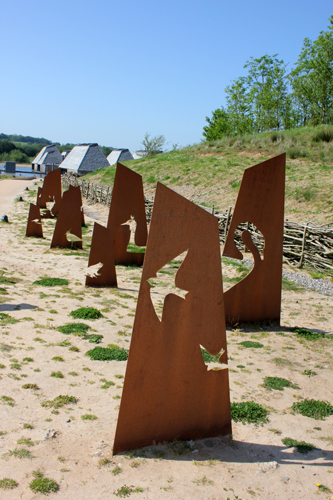
Various metal figures etc had been stuck onto some glacial erratic boulders beside the path. Modern art that had many scratching their heads!After lunch a small group of five of us walked through the small Shropshire Wildlife Trust Plantation Wood Reserve and down to the Shropshire Union Canal. 

Walked along the towpath of the Shropshire Union Canal hearing a few more Nuthatch, Wrens bursting into song and a calling Chiffchaff. Two Red Legged Partidge ran across an arable field at the far side of the canal and a number of Mallard pairs sat on the edge of the towpath some dropping into the water as we walked by. Wood Anemones were in flower along the canal. It was a flat calm Blakemere with a pair of Great Crested Grebes joining the two Cormorants on the water.

mna-blakemere.jpg

Blakemere Reflections

A few Greylags and Canada Geese were next to a pair of Mallards mooching in vegetation at the edge of Blakemere. A bare tree held a further eighteen Cormorants with one individual having particularly iridescent green plumage. Another Cormorant was holding its wings outstretched although it is still not fully understood why Cormorants exhibit this behaviour. Drying their wings, cooling off due to the heat generated by digesting a fish, keeping space between birds to allow for rapid take off have all been suggested. We continued along towards Coelmere where the Star birds were the flotilla of Goosanders – mostly females looking stunning in the sunlight.

mna-chris-derri-goosander1.jpg

Male Goosander courtesy of Chris Derri

Notices around the lake about the invasive Killer Shrimp. We passed the Coelmere Sailing Club building a nice with herringbone chimney pot and came across a Hawthorn tree parasitized by Mistletoe.

mna-chris-derri-mistletoe1.jpg

Mistletoe courtesy of Chris Derri

As we walked up Wood Lane from Coelmere we passed a number of quaint thatched cottages. Wood Lane Quarry could be seen as we peaked through the thick holly hedge. There is a large Sand Martin colony here in the summer. Lesser Celandine and Red Dead Nettles grew along the lane edge. A Sparrowhawk flew from a tree and glided across a rolling glacial drumlin field. We nosed through the slits in a wickerwork viewing screen at the ponds of Shropshire Wildlife Trusts Wood Lane Nature Reserve. Over twenty six Lapwings along with a couple of Curlew and Oyks and a lone Common Sandpiper comprised the waders. Gadwall and Teal joined the usual Coot and Moorhen for the ducks.We continued our walk along Wood Lane passing a vocal Coal Tit and surprising a couple of Rabbits that bolted into their burrows under the Holly hedge. We crossed the main road and onto a small track leading to Whitemere where there was a few Coot and Great Crested Grebes on the water. A Red Fox was foraging along the edge on the Mere on the far side and a Buzzard was sat in a tree. We continued back along the main road to Ellesmere with aching knees but with some great sightings!

Posted in MNA reports | 1 Comment