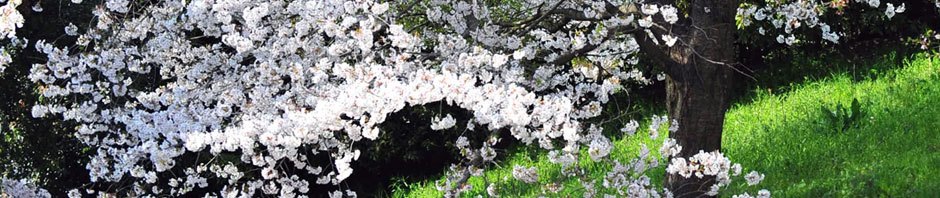
Many Parakeets were calling near the Sunburst Gates as we arrived at the entrance to the park. The Friends of Princes Park have produced wonderful tree maps, and our plan was to look at some in the “200” set, in the corner near Windermere Terrace. The map and key are on the Friends’ website. Scroll down to just above the cherry blossom photo for links to them.
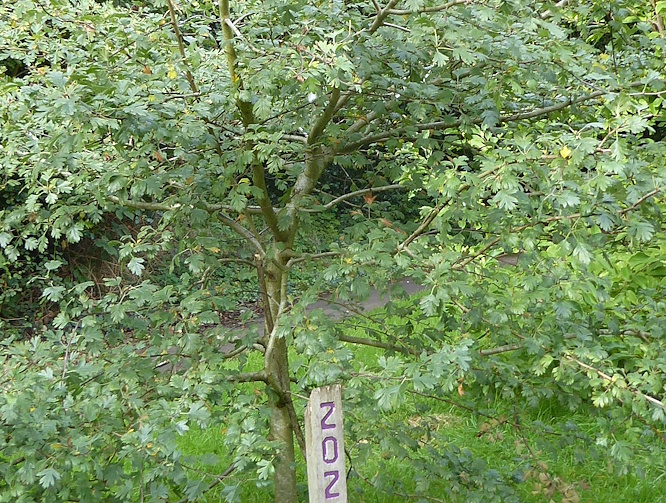
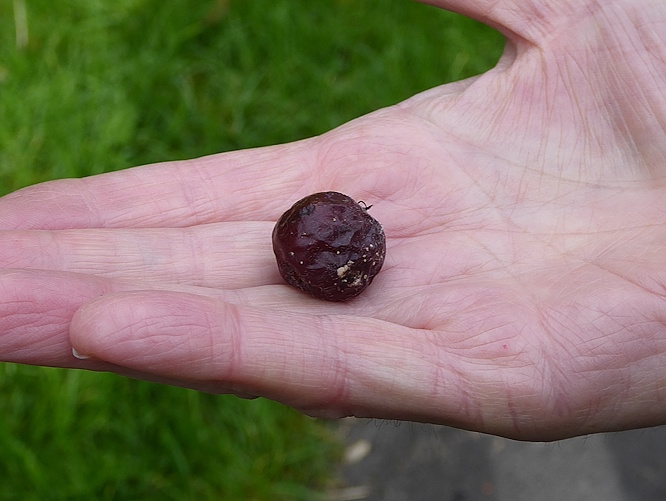
Tree 204 is listed as a Blue Hawthorn Crataegus schraderiana. That’s a new one on me, and not in either Mitchell’s or Collins’ tree books. The RHS calls it “A small, round-headed, deciduous tree with grey-green, deeply-divided leaves. Clusters of creamy flowers in late spring are followed by dark, purple-red fruit in early autumn.” There was no tree number post for tree 204, but we found that a tree marked 202 and listed as a type of Pear was definitely some kind of Hawthorn. It looks like a mistake was made in setting the number post. So the one labelled 202 is probably the Blue Hawthorn. The leaves were pale green and we found a single big fruit on the ground below, dark red, with 4 seeds inside.
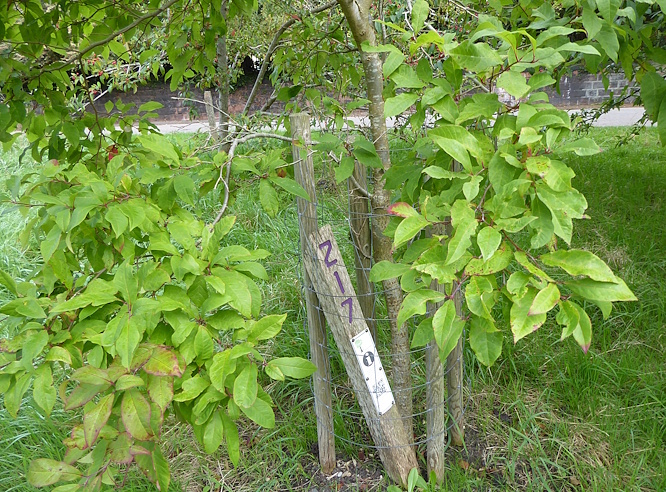
We checked out our favourite Golden Rain tree Koelreuteria paniculata, number 215, listed with its alternative name of Pride of India. It is now growing well out of its cage and seems to be doing well. Then on to the Tupelo Nyssa sylvatica, number 217. Unlike the one I saw last weekend in Arrowe Park, this one is still mostly green, with a few red leaves, but should colour up spectacularly before the end of the year.
A very big, old tree next to the top path had black winter buds like an Ash, but not the usual long pinnate leaves. It had no number post beside it, but I think it was number 702, Single-leaved Ash Fraxinus diversifolia.
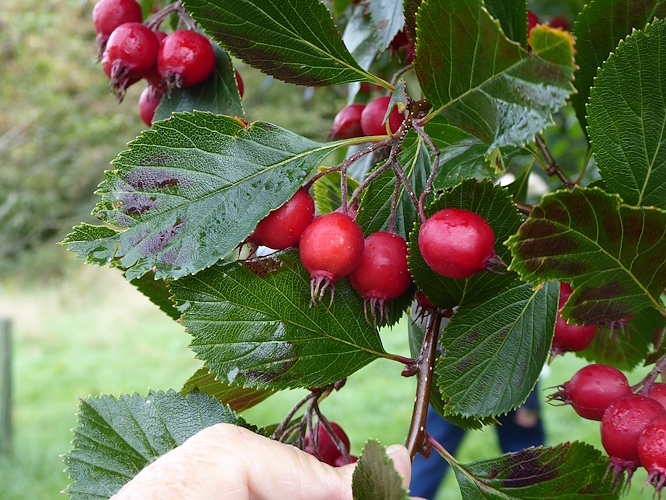
Near the end of the lake is a trio of unusual thorns. The Midland Thorn Crataegus laevigata (228) and the Cockspur Thorn C. crus galli (230) were both looking rather sparse and stressed but the Broad-leaved Cockspur Thorn C. x prunifolia (229) was in fine fettle, with lush foliage and large fruit, over half an inch across.
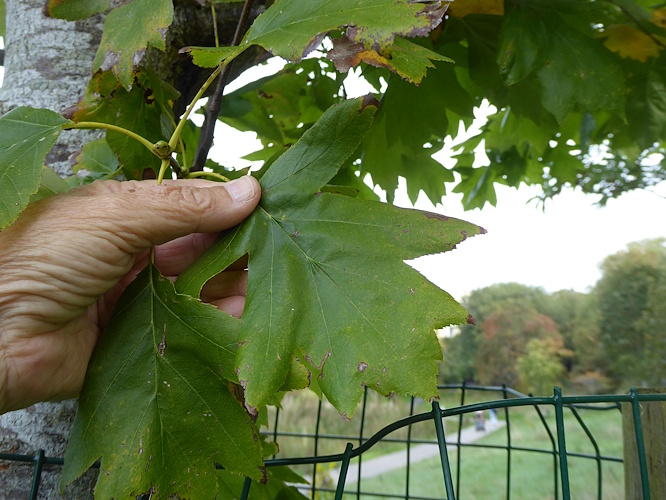
We also looked at a cluster of Rowan and other Sorbus relatives, numbers 231 to 236. Most interesting was number 235, listed by the park as “Service Tree Sorbus domestica” but that species has leaves like Rowan or Ash – long with many equal-sized leaflets. I suspect the park may have ordered one of those, but what they were sent by the nursery is a different species: 235 is a Wild Service Tree S. torminalis. I know it by those odd-looking leaves which I think are like “a hand with too many fingers”.
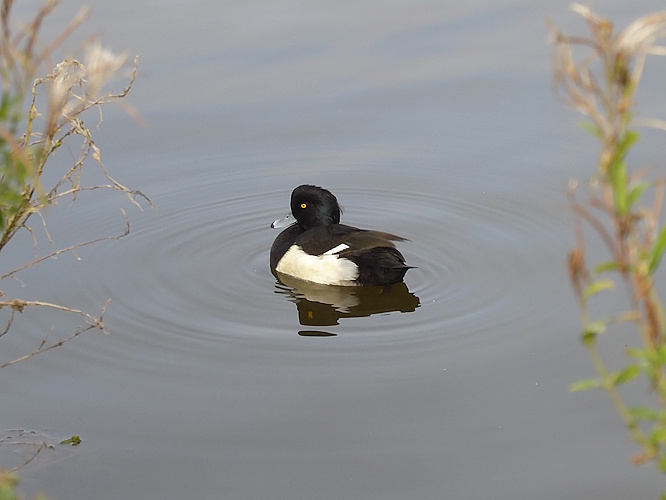
Two Grey Wagtails flew near the lake, and the male Coots were squabbling and splashing. We also saw Mallards, Moorhens, some Little Grebes and a single male Tufted Duck.
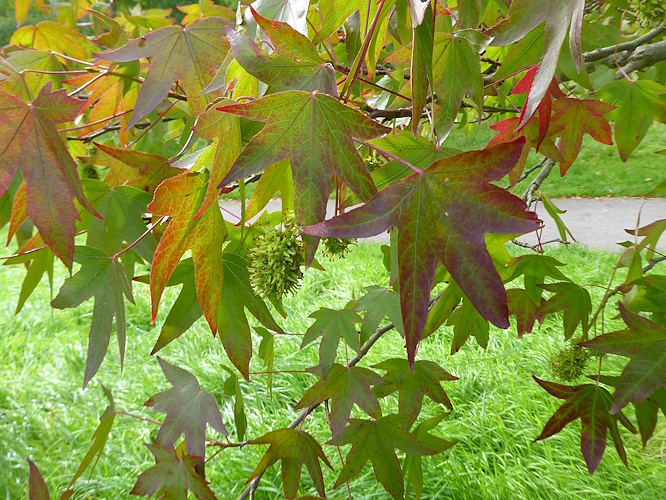
A small coppery tree caught our eye. It was a Sweet Gum Liquidambar styraciflua number 308. The leaves were already on the turn, looking gorgeous, and it had produced quite a few of the spiky fruit that were unknown in Britain until about a decade ago, when winters warmed up.
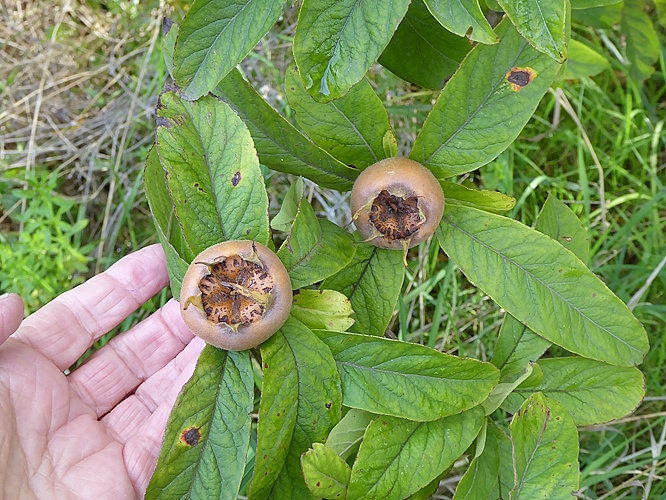
Along the south-eastern path towards the Belvedere Road entrance we spotted a Medlar in fruit.
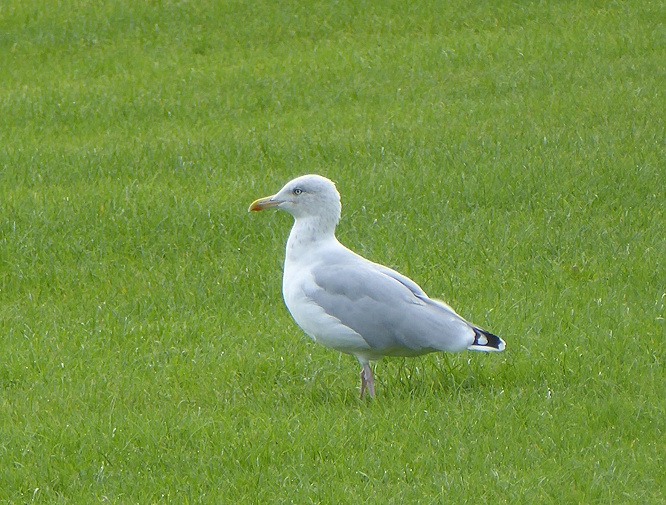
After an excursion to the nearby McDonalds to use their facilities, we returned to the park for lunch. Magpies and Wood Pigeons were about, and a pair of Jays moved between the trees overhead. Some gulls were dotted about on the open playing fields, mostly Herring Gulls.
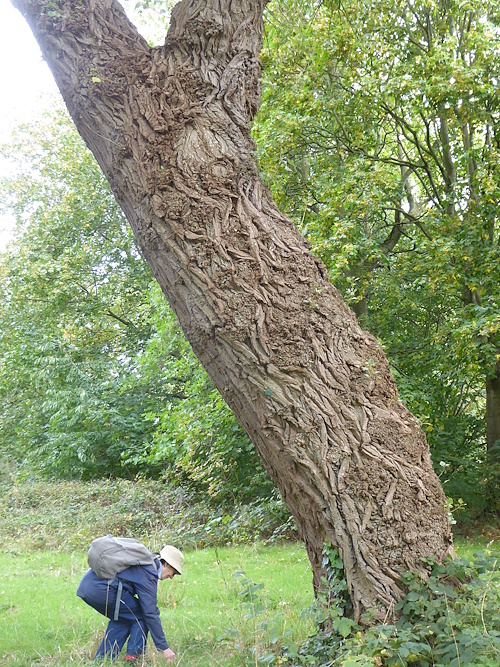
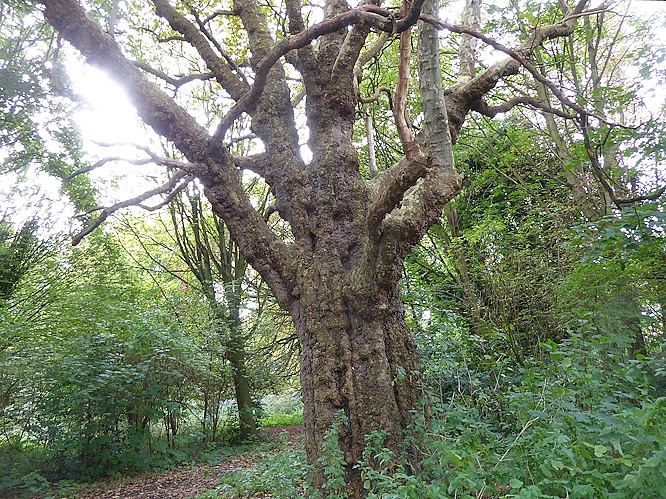
On our way back via the play area we noted two young Bhutan Pines in a glade and this old Black Poplar tree with a wonderful ribbed and burred trunk. I think it must be one of the rare surviving native Black Poplars, because the more usual hybrid trees have smoother trunks.
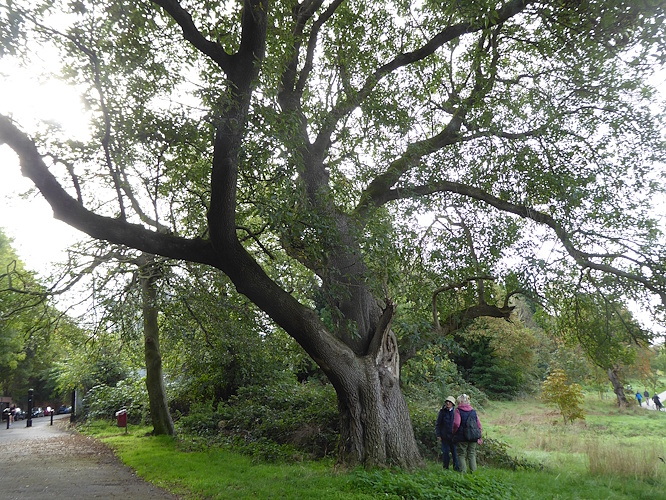
Finally, we admired this veteran tree near the Sunburst Gates, set back a little from the path. It’s tree number 701, a London Plane, but its number post is missing. Someone told me it was thought to be the oldest tree, possibly 220+ years old, and 40 years older than the park itself. Was it already there when the park was designed or did Paxton move it from Chatsworth?
There won’t be a Sunday walk next week as many of us will have a long day on Saturday, on the MNA coach trip to Dunham Massey. Details of the walk on Sunday 18th tba.
Public transport details: 75 bus from Elliot Street at 10.02, arriving Princes Avenue / Kingsley Road at 10.13. Returned on the 75 bus from Princes Road / Princes Gate West at 2.08, arriving city centre at 2.20.
Anyone is welcome to come out with the Sunday Group. It is not strictly part of the MNA, although it has several overlapping members. We go out by public transport to local parks, woods and nature reserves all over Merseyside, and occasionally further afield. We are mostly pensioners, so the day is free on our bus passes, and we enjoy fresh air, a laugh and a joke, a slow amble in pleasant surroundings and sometimes we even look at the wildlife!
If you want to join a Sunday Group walk, pack lunch, a flask, waterproofs, binoculars if you have them, a waterproof pad to sit on if we have to have lunch on the grass or a wet bench (A garden kneeler? A newspaper in a plastic bag?), and wear stout shoes or walking boots. We are usually back in Liverpool City Centre by 3pm at the latest.
If you are interested in the wildlife of the north-west of England and would like to join the walks and coach trips run by the Merseyside Naturalists’ Association, see the main MNA website www.mnapage.info for details of our programme and how to join us.