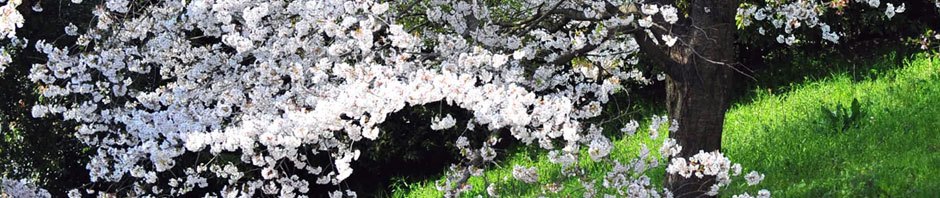
We had a sunny day, but it’s starting to get a bit nippy in the north wind. There isn’t much sign of autumn colour on the trees yet, although we did see a wonderful Sweet Gum (Liquidambar styraciflua) from the bus in Birkenhead at the junction of Park Road North and Laird Street. Bidston Court Gardens are on a west-facing slope, with terraces stepping down by winding brick paths. It was once the setting for a house called Bidston Court, built in 1891 by a soap manufacturer called Robert William Hudson. Then it was owned by John Laird of the Cammell Laird shipbuilders, and then by Sir Ernest Royden. In the late 1920s Royden had the house dismantled, moved and rebuilt in Royden Park, where it is now known as Hillbark. Only the grounds remain as Bidston Court Gardens.
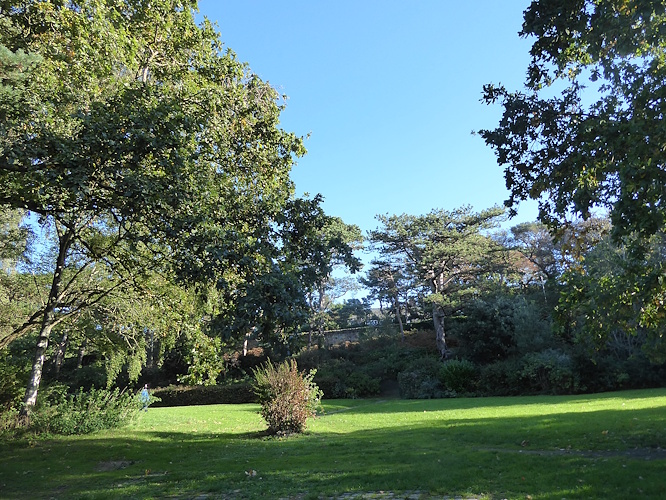
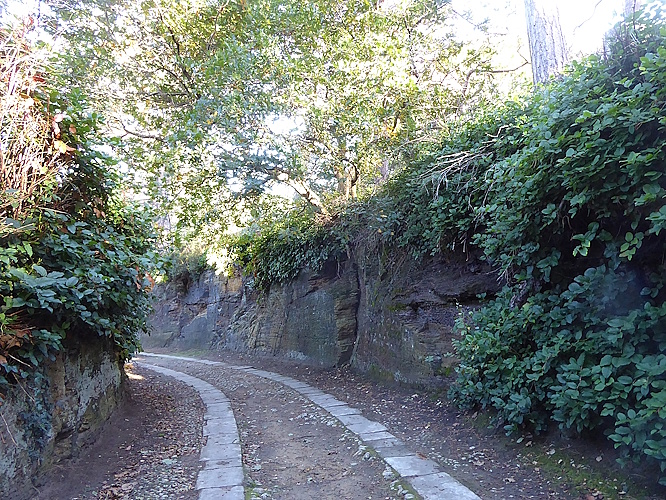
It is surrounded by a huge northward loop of Upton Road, and the steep footpath down the gardens conveniently cuts across it. The path is jocularly known as “Thermopylae Pass”, probably named by one of the classically-educated previous owners of the old house. We didn’t walk straight along it, but instead zig-zagged down the terraces.
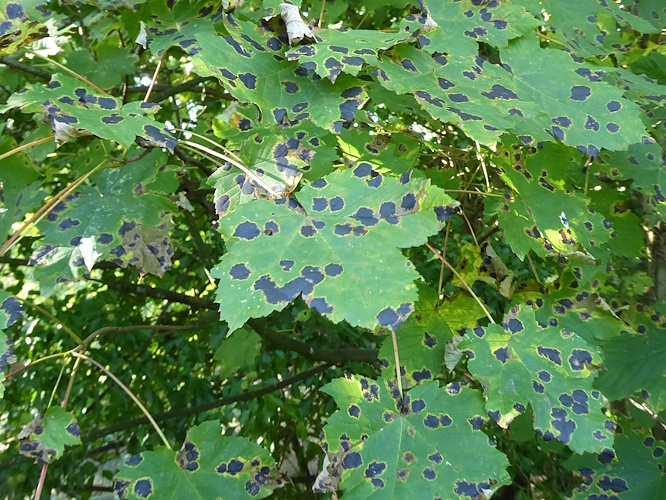
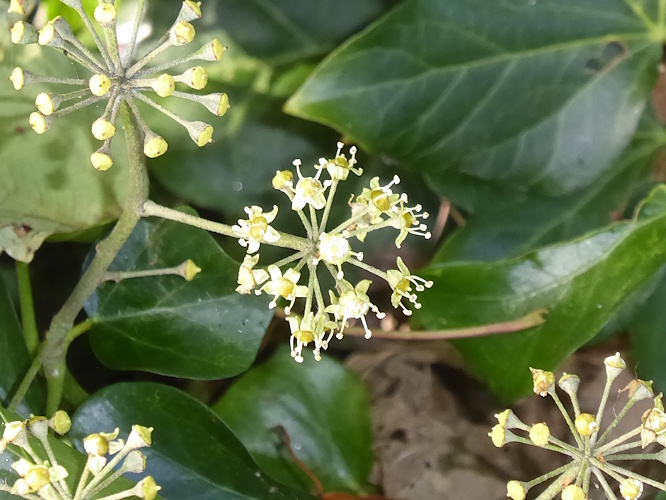
The gardens are full of old trees and the remains of terraced lawns. The Sycamores were liberally marked with Tar Spot fungus. The Ivy was just starting to flower, and was quite a draw for insects. We later saw a Red Admiral on it, which is quite late to see them on the wing. There was also a wasp’s nest in the ground amongst it, with all the wasps still busy and active.
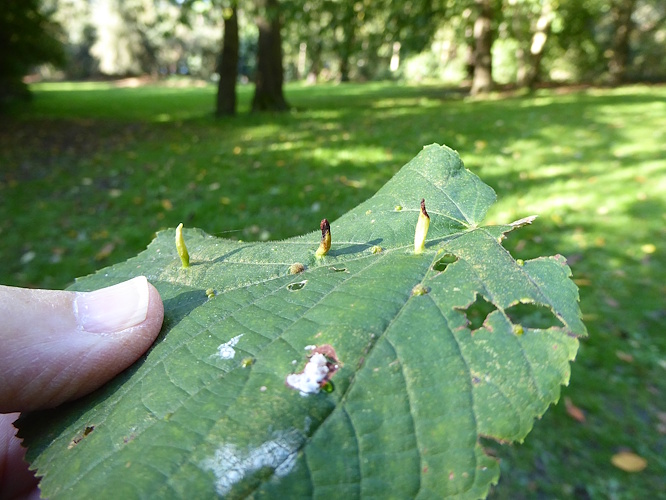
We think the avenues of Lime trees were Large-leaved Limes, as they were a bit “cabbagey”. One fallen leaf had the remains of Lime Nail Galls. The galls stick up out of the leaf surface and are bright red in high summer, although these have faded. They are caused by the gall mites Eriophyes tiliae.
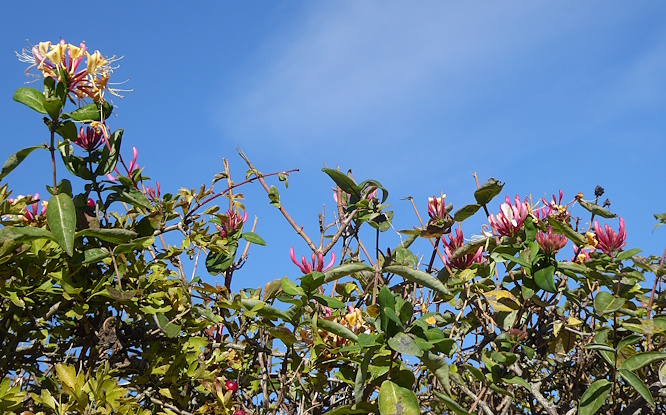
We didn’t hear much birdsong, although we did spot Blackbirds and Robins, Magpies and Wood Pigeons. Near some tall pines was a fast moving flock of tits, possibly also a Goldfinch and definitely a Nuthatch. Otherwise it was very quiet, apart from the ever-present traffic noise from the loop of Upton Road. After our lunch we emerged from the park at its lowest end to catch a 437 bus going back the way we came. By the bus stop near Warren Drive there was blooming Honeysuckle winding through a Hawthorn hedge.
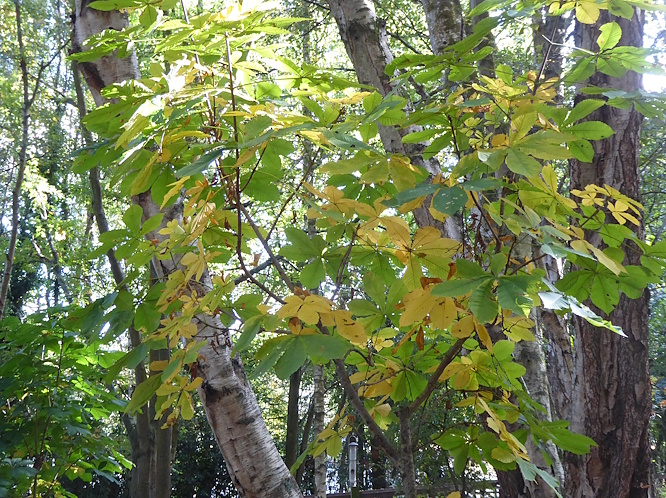
The bus took us just a few stops to Tam O’Shanter urban farm. They have Alpacas, pigs, ponies, goats, lots of chickens, ducks and Guinea fowl. One of the animal paddocks has been remodelled as a forest school for children, with a circle of log seats. Surrounding them is a circle of young Horse Chestnut trees (did the kids plant a ring of conkers?). The saplings had no sign of the now ubiquitous leaf miner, and so the leaves were whole and clean, just starting to go yellow. This is what Horse Chestnut leaves used to look like in the autumn!
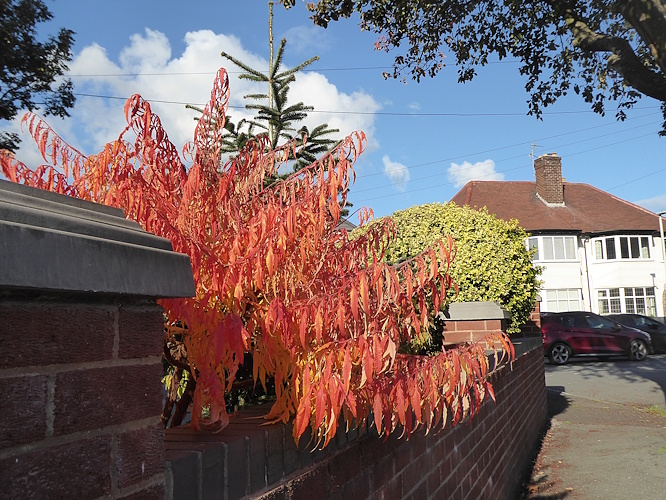
In a garden near my home in Crosby I saw the best autumn colour so far, a shrub of the Sumac family, possibly Shining Sumac Rhus copallinum, which is known to turn fiery red in autumn.
Public transport details: Bus 437 from Sir Thomas Street at 10.04, arriving Upton Road / Noctorum Lane at 10.30. Returned from Upton Road / Boundary Road on the 437 bus at 1.55, arriving Liverpool at 2.20.
Next week we plan to go to Greenbank Park, entering at the northern end via Gorsebank Road. Meet at Elliott Street (Blackler’s corner) at 10 am prompt for the 75 at 10.02. Or at the junction of Ullet Road and Smithdown Road at about 10.20, near the Shell garage opposite The Brookhouse.
Anyone is welcome to come out with the Sunday Group. It is not strictly part of the MNA, although it has several overlapping members. We go out by public transport to local parks, woods and nature reserves all over Merseyside, and occasionally further afield. We are mostly pensioners, so the day is free on our bus passes, and we enjoy fresh air, a laugh and a joke, a slow amble in pleasant surroundings and sometimes we even look at the wildlife!
If you want to join a Sunday Group walk, pack lunch, a flask, waterproofs, binoculars if you have them, a waterproof pad to sit on if we have to have lunch on the grass or a wet bench (A garden kneeler? A newspaper in a plastic bag?), and wear stout shoes or walking boots. We are usually back in Liverpool City Centre by 3pm at the latest.
If you are interested in the wildlife of the north-west of England and would like to join the walks and coach trips run by the Merseyside Naturalists’ Association, see the main MNA website www.mnapage.info for details of our programme and how to join us.