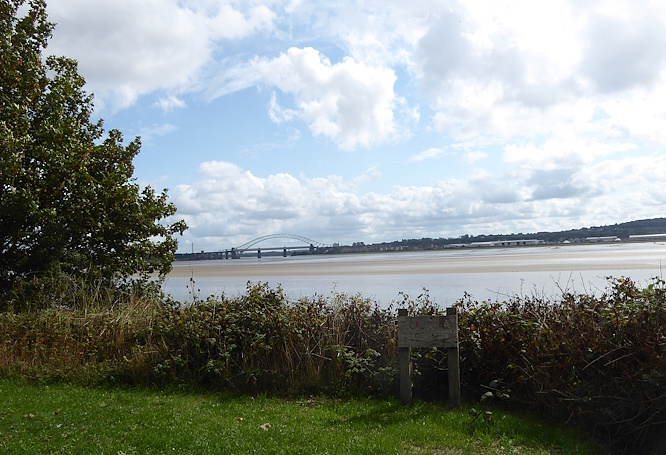
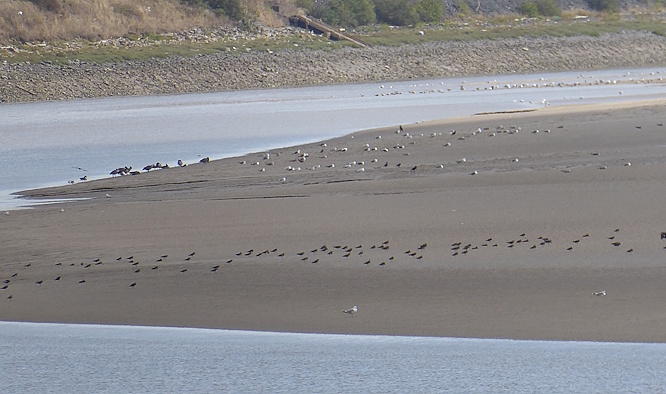
Pickering’s Pasture is a local nature reserve on the Mersey estuary, near to the Widnes/Runcorn bridges. When we arrived the sandbanks were still showing in the river, soon to be covered by the incoming tide. They held many distant birds – Lesser Black-backed gulls, Herring gulls, Mallards, some Lapwings.
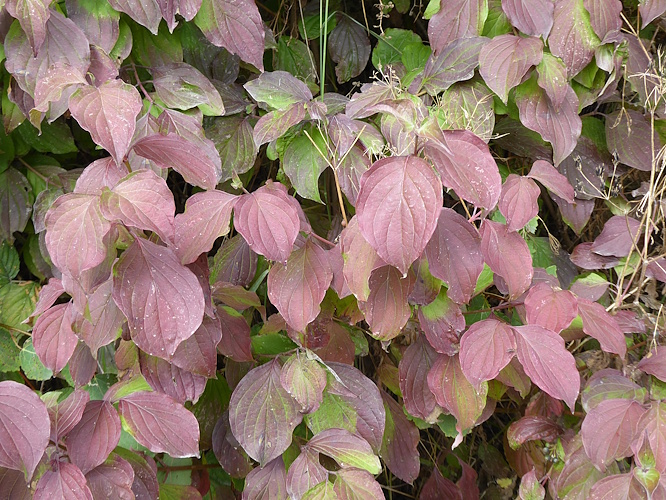
It was quite sunny as we headed northwards towards the footbridge over the Ditton Brook. Signs of autumn are still coming in. The hedges held wild Rose hips, the red berries of Black Briony, berries of Elder and Hawthorn. There is much more Aspen growing here than I remember, a native tree, but uncommon, and it’s the only place I know of on Merseyside where it is so abundant. There was a lot of Dogwood, too, with their leaves turning to that lovely subtle purple.
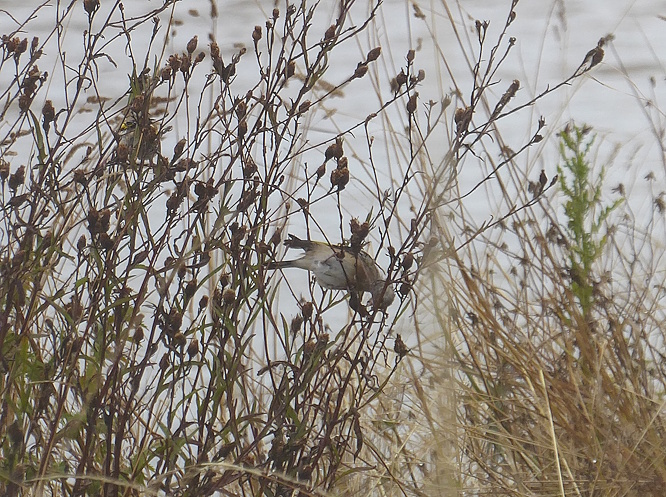
Young Goldfinches were feeding on thistle seeds.
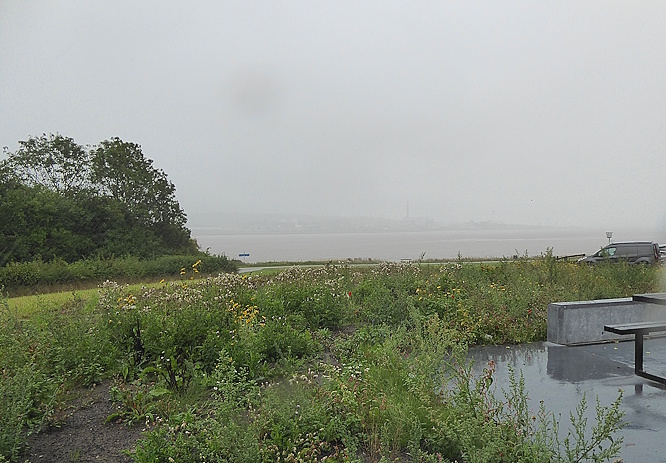
As we headed back towards the café and car park area, thick mist came in off the river, then a very heavy shower. They still have a small wildflower meadow blooming near the café but it looked quite sad in the heavy rain.
It soon cleared up though, so we set off for the other end of the reserve, where there is a bird hide overlooking a pool called “The Scrape”. As we had heard from others, the Scrape was completely dry after this long hot summer.
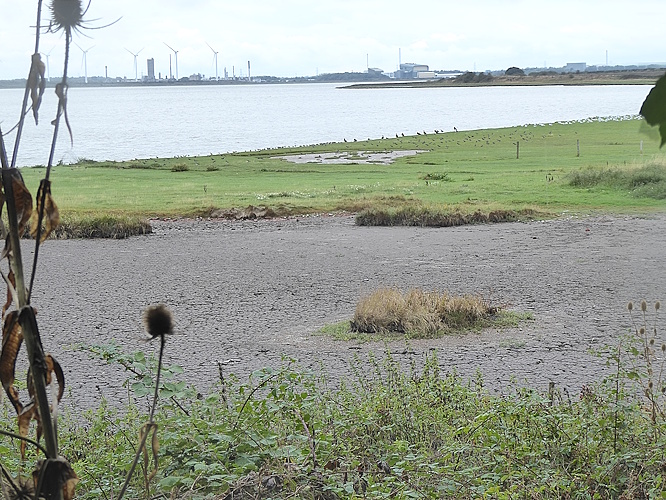
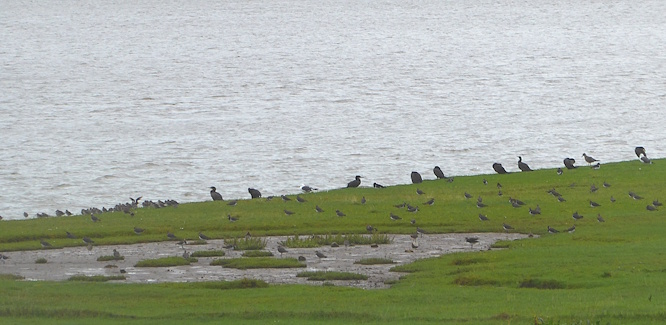
There were plenty of birds along the river edge, watching the high water, waiting for the sandbanks to become available again. They were also at quite a distance, but we could name Cormorants, a few gulls, lots of Lapwings, and a large number of Canada Geese in the fields further back.
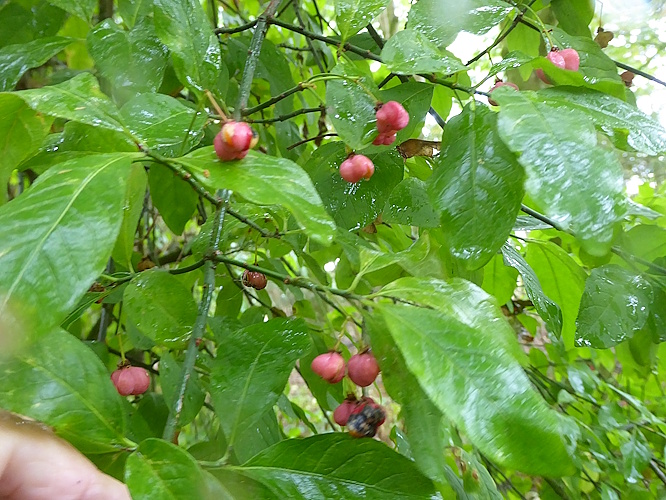
In the little woodland surrounding the hide there are bird feeders, currently empty, but they are still the haunt of many little birds including Robin, Blue Tit, Great Tit, Long-tailed Tit and Greenfinch. We also spotted a Spindle Tree, which is a native small tree, and there are probably very many of them, but their leaves are plain and simple, not eye-catching at all, and its only when they put out their four-lobed red fruits that they are noticeable.
There were small stands of Aspen here too. I found one with leaf miner scars and did a bit of homework later. There are three species of tiny moths which lay eggs in Aspen, but the patterns of the mines are different, so I think these were caused by the larvae of Stigmella assimilella, the White-tipped Dot or Aspen Pigmy moth.
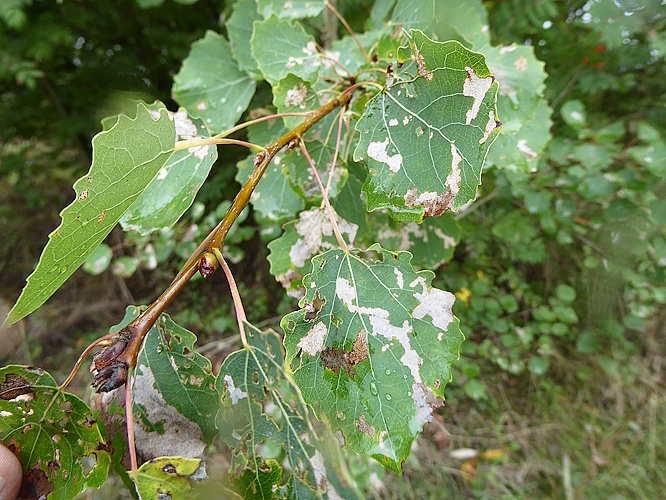
It is found mostly in south-eastern England and in the Scottish Highlands, but it IS known in spots on Merseyside. It is generally described as “elusive and nowhere common, but secure where its specific host plants thrive.”
We lingered later than our usual departure time, because there was a chance that the aerial display team, the Red Arrows, would be flying over the bridges at about 2.30 as part of the Southport Air Show. Sadly, the threatening weather must have curtailed their range, and they didn’t appear.
Public transport details: Bus 82A from Liverpool One bus station at 10.12, arriving Halebank / Merseyview at 11.10. Returned on bus 82A from the stop opposite at 2.57, arriving Liverpool One at 3.55.
Next week we are going to Crosby. Meet at Queen Square bus station at 10.00
Anyone is welcome to come out with the Sunday Group. It is not strictly part of the MNA, although it has several overlapping members. We go out by public transport to local parks, woods and nature reserves all over Merseyside, and occasionally further afield. We are mostly pensioners, so the day is free on our bus passes, and we enjoy fresh air, a laugh and a joke, a slow amble in pleasant surroundings and sometimes we even look at the wildlife!
If you want to join a Sunday Group walk, pack lunch, a flask, waterproofs, binoculars if you have them, a waterproof pad to sit on if we have to have lunch on the grass or a wet bench (A garden kneeler? A newspaper in a plastic bag?), and wear stout shoes or walking boots. We are usually back in Liverpool City Centre by 3pm at the latest.
If you are interested in the wildlife of the north-west of England and would like to join the walks and coach trips run by the Merseyside Naturalists’ Association, see the main MNA website www.mnapage.info for details of our programme and how to join us.