
Ichneumon Wasp Rhyssa persuasoria

Golden-ringed Dragonfly Cordulegaster boltonii
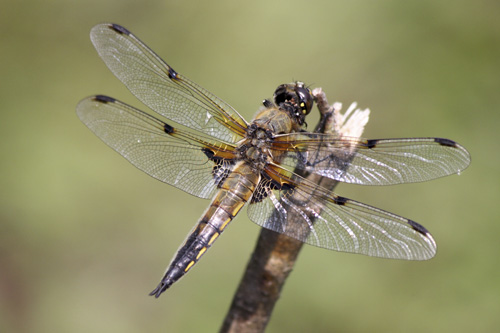
Four-spotted Chaser Libellula quadrimaculata

Nursery Web Spider Pisaura mirabilis
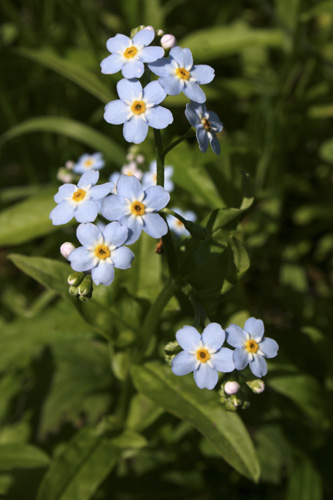
Water Forget-me-not Myosotis scorpioides
Ichneumon Wasp Rhyssa persuasoria
Golden-ringed Dragonfly Cordulegaster boltonii
Four-spotted Chaser Libellula quadrimaculata
Nursery Web Spider Pisaura mirabilis
Water Forget-me-not Myosotis scorpioides
Terry Williams was kind enough to take Dave Bryant and me back to Hay Bridge Reserve with some great sightings as always! Birds Of Prey included a displaying Osprey, a Honey Buzzard and the cutest Tawny Owl fledgling 🙂 A couple of female Ichneumon Wasps Rhyssa persuasoria with enormously long ovipositors were hanging around a woodpile probably looking for Wood Wasp larvae on which they paratisize. Longhorn micromoths Nemophora degeerella were dancing in the dappled sunlight of the woodland which also held Spotted Flycatcher, Garden Warbler, Blackcap, Marsh Tit and Bullfinch. A Bird Cherry that I identified by its blossom on the last visit had a number of larval tents of the Bird Cherry Ermine Moth Yponomeuta evonymella although few caterpillars were present. Female Nursery Web Spiders Pisaura mirabilis were guarding their silken tents in the bracken. Black Beck Tarn was Odonata heaven with Common Blue, Azure, Large Red and a couple of Emerald Damselflies, Four-spotted Chasers, a pair of Emperor Dragonflies and an egg-laying Golden-ringed Dragonfly.
Out on the mosses (which were as dry as a bone with the drought) were further Golden-ringed Damselflies and Beautiful Demoiselles were flitting along Rusland Pool which also held a sorry sight of a dead Red deer fawn laying half submerged in the mud. Aquatic Plants were represented by Water Plantain and Water Forget-me-not. Birdlife included Lesser Whitethroat, Pied Flycatcher and families of Robin and Willow Warbler with young. Plants on the mosses included a nice specimen of Heath-spotted Orchid, Lousewort that was past its prime and the aromatic shrub Bog Myrtle. A few Small Pearl-bordered Fritillaries were joined by Large Skippers and a single rather shabby looking Small Copper.
From Queen Square at 10.10, the number 20 bus to just past Fazakerly Station. A very hot and sunny day. Adlam Road, Signal Works Road, over the railway and into the wildlife area in the former railway marshalling yards. Lots of bramble in bloom. At the edge of the dried-up pond there were several examples of very tall Wild Teasel, which will be attactive to butterflies when it is in bloom. Not many butterflies today, just a few Meadow Browns and Speckled Woods and one Large White. Took the path around the edge of the racecourse, and we passed Becher’s Brook, which looked very odd “naked”, just a bank and a gully. Around the Canal Turn there were orchids in the long grass probably Southern Marsh. During lunch opposite Valentine’s, Radio City’s live coverage of the “Race for Life” was blaring over from the grandstand. As we came out onto the Melling Road twenty or more Rooks flew up. We doubled back along the canal and under the railway bridge to Sherwoods Lane. We were back on Longmoor Lane by 2.15 and split up to trains or buses home.
A very noisy place on the lagoon behind the steep shingle bank what with 1600 pairs of sandwich terns, 100 pairs of common terns and some 40 pairs of arctic terns – a constant relay of birds – all incoming with fish, mostly sand eels. A marvellous place for the photographer. Along the shoreline numerous moon jellyfish and a few large lion’s mane jellies.
Very warm, sunny day proved excellent for butterflies on a circuit of the Marine Drive – large numbers of silver-studded blues, impressive numbers of graylings on the hot rocks, 7-8 small pearl-borded fritillaries, several large skippers,ringlet, red admiral, ringlet, small tortoiseshell, wall brown and speckled wood. Interesting plants were slender St. John’s, fairy flax, pyramidal orchid, rock whitebeam and juniper. Another visit 2 days later had a family of choughs feeding in the steep turf above the seabird cliffs near the lighthouse, gannets diving close inshore and a pair of peregrines causing great commotion amongst the kittiwakes.
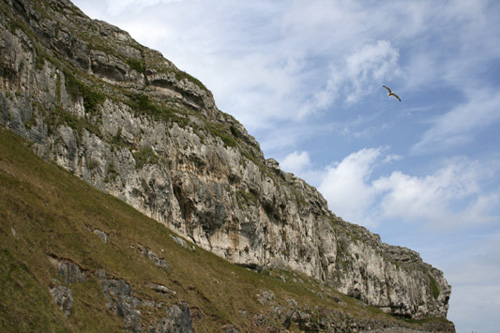
Limestone Cliffs on the Great Orme
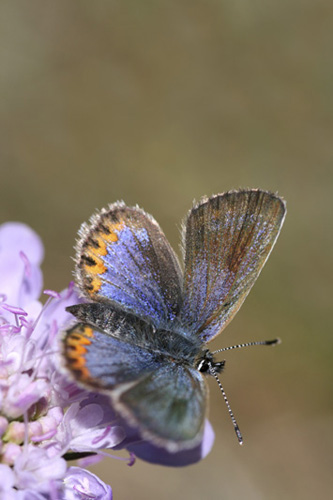
Silver Studded Blue Female
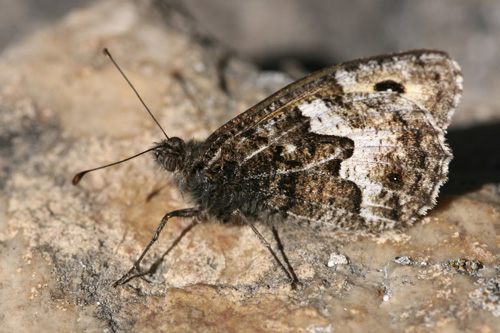
Grayling
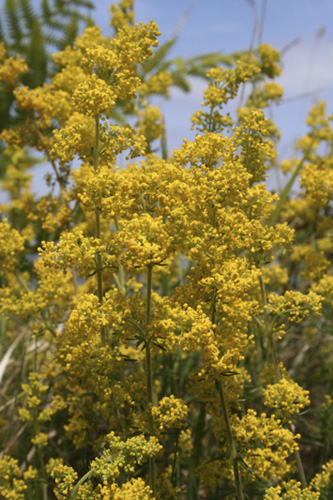
Lady’s Bedstraw

View from the Great Orme overlooking Llandudno Bay towards the Little Orme
A much needed day off work! visiting the Great Orme at Llandudno with Dave Bryant and Dave Hardy. Scorching hot day, highlights included: cackling Fulmars on the cliff ledges, nesting Guillemots and Razorbills, Peregrine gliding along the cliff face, Choughs, Ravens, Rock Pipits. Gazzilions of Silver Studded Blues, Graylings sunning themselves on the rocks and plenty of Small Pearl-bordered Fritillaries feeding on Wild Thyme and Devil’s Bit Scabious. Ruby-tailed Wasps were investigating the dry stone wall along the Marine Drive toll road probably looking for the nests of Mason Bees that it paratisizes. Plants included Wild Privet, Bloody Cranesbill, Lady’s Bedstraw, Common Rock-rose, Bugle, Wild Clary, Vervain, Dropwort, Strawberry Tree, Common Spotted Orchid and Pyramidal Orchid. Those past their best included Stinking Iris, Nottingham Catchfly and Ivy Broomrape.
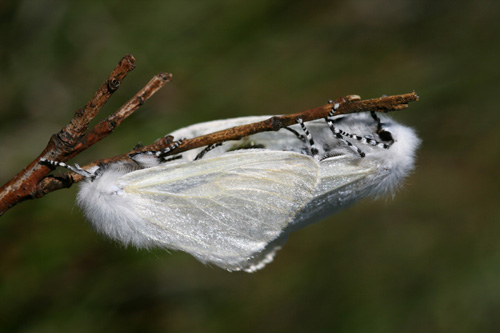
White Satin Moth Leucoma salicis pair mating
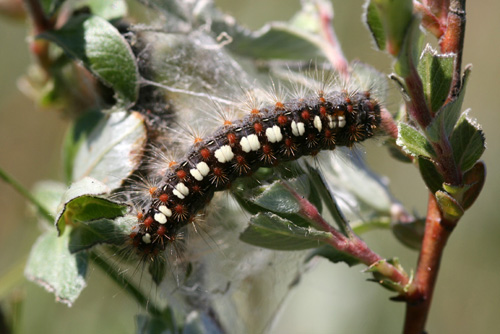
White Satin Moth Caterpillar
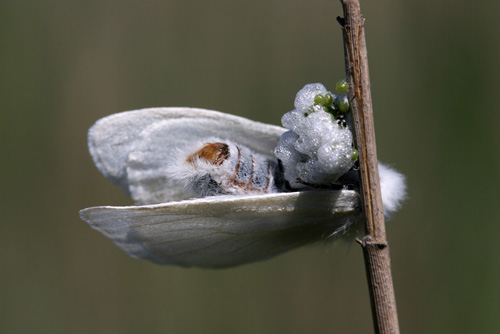
White Satin Moth female laying eggs
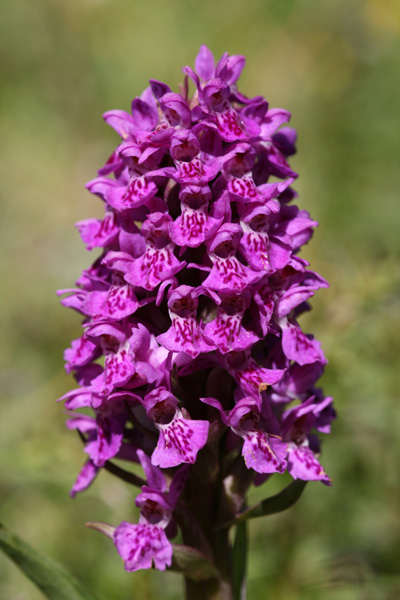
Southern Marsh–orchid Dactylorhiza praetermissa
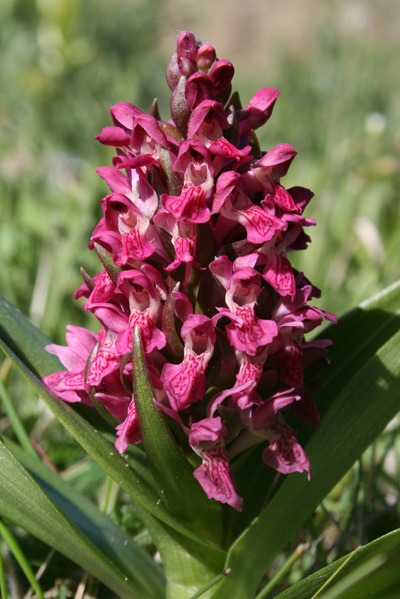
Early Marsh–orchid Dactylorhiza incarnata
Lots of White Satin Moths Leucoma salicis in the large dune slack south of the Ainsdale Discovery Centre. Plenty of empty pupae cases, adult moths on the wing, mating pairs and females busy laying eggs. Unusually, the Satin Moth overwinters in the caterpillar stage so the caterpillars present were probably from last year. Not a great profusion of Orchids in the dunes with scatterings on Early Marsh and Southern Marsh Orchids and only one lone Bee Orchid. Nice to see an extensive carpet of Yellow Rattle in one dune slack. Butterflies on the wing included Common Blues and Small Heaths.
The pair of Mute Swans on Sands Lake have five cygnets. Unfortunately yet another idiot dog owner had his collie off the lead that went for the Swans. Mum thankfully moved them into safety on the water whilst the Cob Swan took out his revenge on the dog!
We took the 10.10 train to Ormskirk, then the 2B bus from Ormskirk bus station at 11.15, arriving outside Longton Brickcroft at noon. It was a warm and sunny day. We shared our lunches with a Blackbird, a Robin and a Song Thrush at the picnic tables just inside the reserve. Mainly Coots on the lakes, although we saw a Mute Swan family with six cygnets, a Great Crested Grebe family with three young ones and a Mallard with nine tiny ducklings. There was a Song Thrush whacking a snail against the hard path. When we gently tried to get past, the Thrush retreated to the undergrowth but came back to its work after we had gone by. We made a long detour up to a hay meadow, hoping for butterflies but there were only a few Speckled Woods. Perhaps it wasn’t quite warm enough. Then through the Recreation Ground and some houses and we were at the top end of the second lake to complete the circular walk. We got the 2B bus at 2.35 back to Ormskirk and just caught the 3.20 train, due at Liverpool Central at 10 to 4.