Crosby to Bootle on the canal, 5th September 2010

We met at Queen Square on a warm but overcast morning for the X2 at 9.57. From Myers Road East we walked through the houses to Rimrose Valley Country Park, straight across to the Leeds-Liverpool canal and turned south. There were just the usual Coots, Moorhens, Mallards and Canada Geese on the canal today. Many of the male Mallards were in their fresh new plumage and were already hanging about hopefully with the females. We were surprised to see several young Moorhens, still in their first brown plumage, and in one place there were even two pairs of fluffy black Moorhen chicks, no more than a week or so old. Moorhens obviously keep breeding throughout the summer, but the Coots don’t. The sun came out as we lunched on the terrace at Tesco Litherland, while watching a flock of about 200 Starlings taking flight from the roof of the Red Lion. They did some passable attempts at formation flying, making several big globes which turned in unison.  There were Michaelmas daisies on the canal verges, possibly rather early since the feast of St Michael isn’t until September 29th. The fringed water lilies were still in flower, and we noticed two small clumps of white water lilies on the far side, which I have never seen on the canal before. They were at the foot of waterside gardens, so were perhaps planted by the residents. Under a bridge a coot was successfully “bobbing for an apple”, achieving the difficult task of lunging at a floating apple and hacking off chunks faster than the apple could submerge.   Nearing Bootle we spotted an abandoned swan’s nest in the reeds, and the swans themselves further downstream, with no cygnets. We were at Bootle Strand at 2.00 and split up for home. 

Posted in Sunday Group | 1 Comment

Eastham CP Fungi Finds

Another fungi hunt this time to Eastham Country Park on the Wirral, 4th September 2010. More good finds and with the wet weather due this week it should be a great Autumn for fungi!

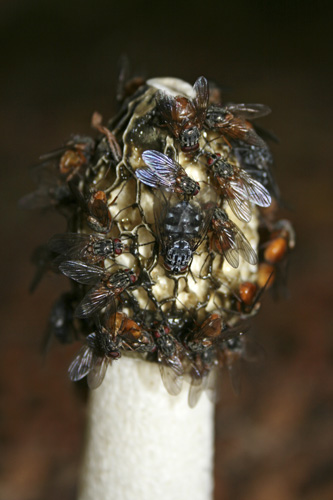
The distinctive foetid smell of the Common Stinkhorn Phallus impudicus in one area of the woods allowed me to sniff out this mature specimen. Other Stinkhorns were still at the embryonic egg stage.

mna-eastham-common-stinkhorn2.jpg

Amethyst Deciever Laccaria amethystea

mna-eastham-amethyst-deciever1.jpg

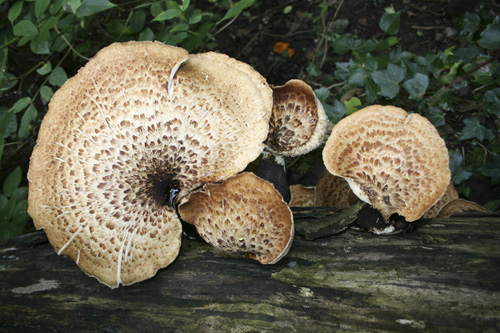
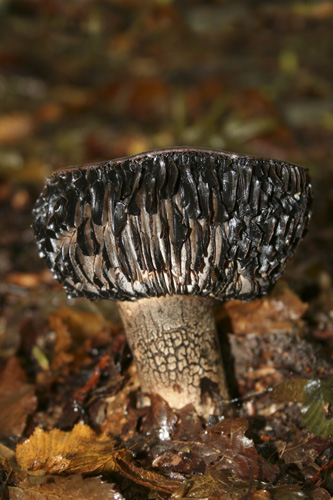
 Some huge chunky specimens of Southern Bracket Ganoderma australe

mna-eastham-ganoderma2.jpg

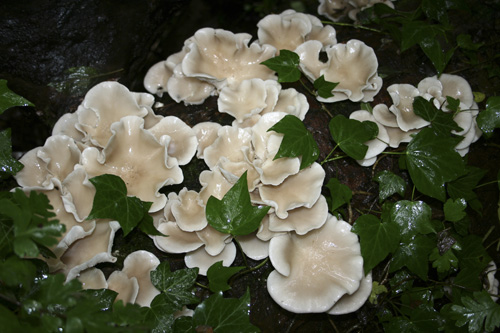
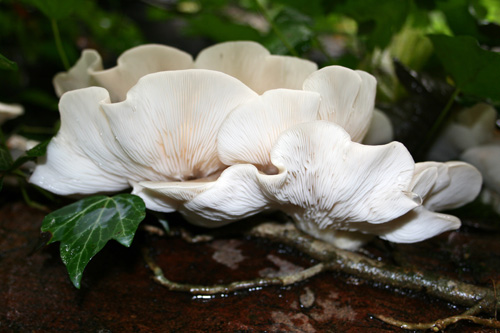
In contrast to the delicate Branched Oyster Pleurotus cornucopiae

mna-eastham-oyster-mushroom1.jpg

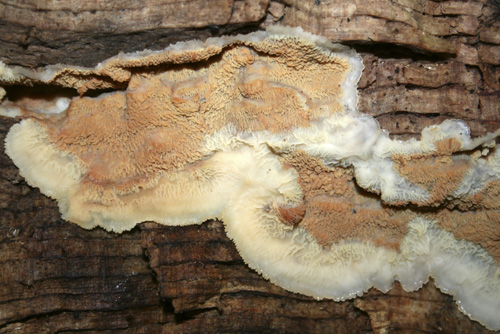
A rather nice example of Turkeytail Trametes versicolor 

mna-eastham-turkeytail1.jpg

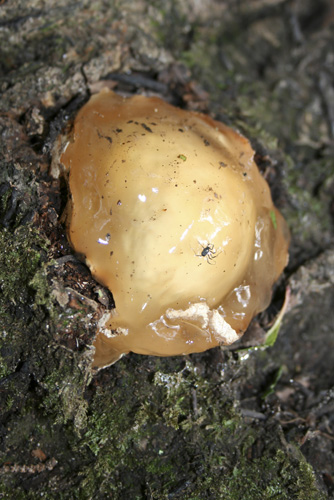
And finally a Myxomycetes going by the name of Dog Vomit Slime Mold Fuligo septica

mna-dog-vomit-slime-mould1.jpg

Posted in MNA reports | 1 Comment

Dibbinsdale Fungi Finds

An August bank holiday outing to Dibbinsdale LNR on the Wirral provided some interesting fungi finds including some edible and some deadly delights!

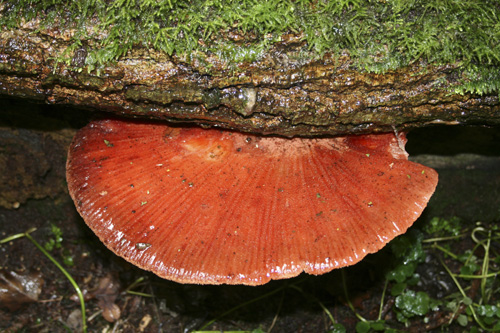
A 22cm wide fresh specimen of edible Beefsteak Fungus Fistulina hepatica. In a couple of weeks this will have matured to resemble a prime cut of meat.

mna-dibbinsdale-beefsteak-fungi1.jpg

The deadly Funeral Bell Galerina marginata that can be confused with the edible Sheathed Woodtuft Kuehneromyces mutabilis

mna-dibbinsdale-orange-fungi2.jpg

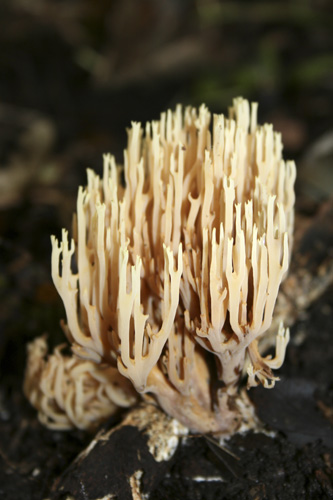
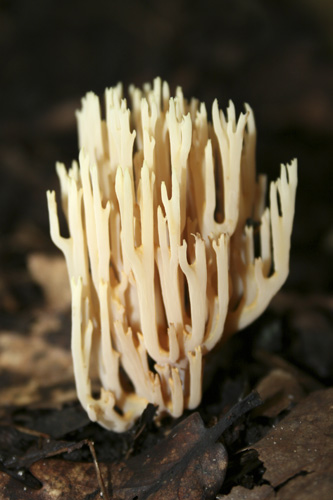
The yellow spindle coral fungi Clavulinopsis fusiformis

mna-dibbinsdale-clavaria1.jpg

Ochre Brittlegill Russula ochroleuca

mna-russula-ochre1.jpg

Sulphur Tuft Hypholoma fasciculare

mna-dibbinsdale-sulphur-tuft3.jpg

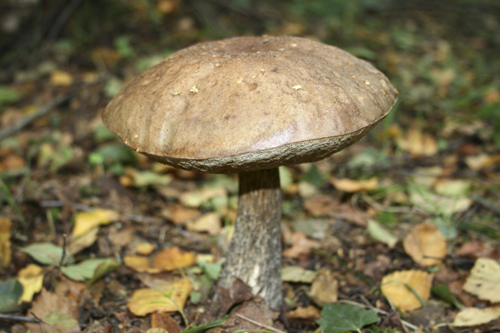
Bay Polypore Polyporus badius = P. durus

mna-polyporus-fungi1.jpg

Posted in MNA reports | 1 Comment

Oak Galls

A selection of distorted growths or Galls found on Pedunculate Oak Quercus robur trees, caused by a variety of Gall Wasps which lay eggs within leaf buds or the leaves.

Oak Artichoke Gall Andricus fecundatormna-artichoke-oak-gall1.jpg

Oak Common Spangle Gall Neuroterus quercusbaccarum 

mna-spangle-oak-galls1.jpg

Oak Marble Gall Andricus kollari

mna-oak-marble-gall1.jpg

Oak Knopper Gall Andricus quercuscalicis

mna-knopper-oak-galls1.jpg

Posted in MNA reports | 1 Comment

Woolton, 29th August 2010

It was a wild and blowy morning as we took the 78 from Liverpool ONE bus station to Woolton. The sun came out while we were in the field on the way to Woolton Woods, and we saw Woodpigeons, Black-headed gulls, Jackdaws and Starlings on the grass. The wildflower verge was past its best, but we looked at the huge acorns on the pedunculate oak, many with knopper galls.  The rowan berries are all red but the elderberries are only just starting to turn. A squall of heavy rain sent us into the woods for shelter, but it was short-lived, and the sun came out again in the walled garden. One Speckled Wood was flying about and we spotted a Holly Blue and a Green shield bug.
After lunch we walked to Camp Hill and enjoyed the splendid view over the old Speke airport and across to Stanlow. In the sunken Dutch Garden of Meditation there were some trees of the maple family, just starting to turn: they will be magnificent in a week or two. On the way to Allerton Cemetery we saw a Red Admiral on white Buddleia. In the field there was one Common Gull amongst the Black-headeds, and Swallows and House Martins still flying. We crossed Hillfoot Road to Allerton Hall, went through the Eric Hardy Nature Reserve, crossed Woolton Road and entered the garden of Allerton Towers. The avenue of Irish Yews outside the orangery are now mostly reduced to stumps, having been burnt by vandals, but there were a pair of Speckled Woods dancing together in a shaft of sunlight. We were back in Woolton Village at 3pm for buses home.

Posted in Sunday Group | Leave a comment

Thornton and Crosby Cemetery Gardens, 22nd August 2010

We took the X2 from Queen Square at 9.57, arriving at Aldi in Thornton at about 10.30. We walked via Edge Lane, Water Street and Lydiate Lane to Thornton Garden of Rest. It was a really warm sunny day, which was a good job because there would not have been much shelter if it had rained. It’s a big cemetery but a bit too tidy for much wildlife, apart from magpies and wood pidgeons, although we found some wild bits beyond the hedges, overgrown with nettles and ragwort. There are rabbits living there, we heard a pheasant calling and we saw a buzzard, goldfinches and sparrows.  There were plenty of white butterflies about, one Peacock and about half a dozen seven-spot ladybirds. Rowan berries are all red now and there were a lot of ripe blackberries along Lydiate Lane. After lunch we went to Crosby and visited St Luke’s Community garden. The parishioners have made some lovely wildlife-friendly small gardens around the edges of their graveyard.  Lots of white butterflies here too, and another Peacock. There were a pair of shield bugs mating on the arm of a bench – dark ones with a lighter spot in the middle of the back, probably the red-legged shieldbug. We also spotted a red mossy growth on a branch of a dog rose – a Robin’s pincushion gall caused by a gall wasp laying its eggs in a bud.  We got the bus outside the church before 3pm, due back in Liverpool at 3.30.

Posted in Sunday Group | 1 Comment

Freshfield Dune Heath etc, 8/8/10

After several weeks of overcast damp weather 15 members enjoyed a warm sunny day. The Heather, Gorse and Silver Birch produced 2 fungi, The Blusher and Slippery Jack, and 6 butterflies – Small Copper, Meadow Brown, Large White, Common Blue, Peacock, Gatekeeper. Aerial interest was provided by the Kestrel, Buzzard and Sparrowhawk. Tansy was an interesting find by the railway as were the sheet webs and tubular retreats of the Labyrinth spider in the Gorse. A few small Oaks had all 3 galls – Marble, Knopper and Artichoke. A water tank had an attractive, yellow micromoth Agapeta zoegana floating on itAlong Fisherman’s Path were the Northern Tiger Beetle, a very faded Ruby Tiger moth, a Robber Fly, Grayling and Red Admiral. On the bare sand were a good dozen Russulas, mainly Purple Brittlegill, R.atropurpurea, whereas amongst the Silver Birch and Alder large specimens of Brown Rollrim attracted a lot of attention. Towards the yellow dunes Goldenrod and Carline Thistle were added. Out on the shore Sanderlings ran back and forth along the tideline as Common and Sandwich Terns flew past and over a Grey Seal which bobbed up and down. Gannets and Manx Shearwaters were way out. Dunlin and Ringed Plover poked about on the exposed silt beds.10 Lion’s Mane jellyfish were scattered about. Returning to the station up Victoria Road a Red Squirrel was up in the Pines as a tame Fox attracted an audience of daytrippers. To round things off Terry glimpsed a Hobby amongst the Swallows above us.

Posted in MNA reports | 1 Comment

Freshfield Dune Heath / Fisherman’s Path Photos 8th August 2010

mna-ainsdale-the-blusher1.jpg

The Blusher Amanita rubescens

mna-freshfield-comma1.jpg

Comma Polygonia c-album

mna-water-mint1.jpg

Water Mint Mentha aquatica

mna-freshfield-small-copper1.jpg

Small Copper Lycaena phlaeas

mna-northern-dune-tiger-beetle.jpg

Northern Dune Tiger Beetle Cicindela hybrida

mna-fishermans-path-dunes.jpg

Sefton Coast Dunes

mna-sand-mason-tubes1.jpg

Sand Mason Worm Tubes Lanice conchilega

Posted in MNA reports | 1 Comment

Report Your Jellyfish Sightings!

ecojel.gif http://www.jellyfish.ie/index.asp

The EcoJel project aims to assess the opportunities and detrimental impacts of jellyfish in the Irish Sea.

They need your help!

We are into the jellyfish season and the EcoJel team are interested in your recent jellyfish sightings. They have a handy Jellyfish ID card with colour photos of all the jellyfish you are likely to see:-

http://www.jellyfish.ie/downloads/IDCard.pdf

You can report your sightings via a form on their website:-

http://www.jellyfish.ie/jellyfish_sight.asp

Big Thanks!

Posted in MNA reports | 1 Comment

Pickering’s Pasture, 1st August 2010

The flowers and the butterflies were wonderful today! It was overcast and breezy as we took the 82A from Liverpool ONE at 10.15 to Hale Bank. A short walk down Mersey View Road brought us down to the river bank.  Out on the sandbanks were three kinds of gulls, Herring, Black-headed and Lesser Black-backed, plus Cormorants with their wings out like Liver Birds, Redshank and a Heron, with Swallows and a House Martin overhead and a Sparrowhawk even higher.
Along the grassy embankment we found Field Scabious (with bees), Common Toadflax, Chicory, Meadow Cranesbill, Ribbed Melilot, Clover, Buttercup, Yarrow, Red Bartsia, Ragwort (with Cinnabar moth caterpillars), Wild Carrot (with black and yellow-striped insects, probably not wasps), Weld, Viper’s Bugloss, Teasel, Thistles, Agrimony, Nettle-leaved Bellflower and Cowslips.
The flowery banks were alive with butterflies, many more than we’ve seen elsewhere this summer – Meadow Brown, Common Blue, Small, Large and Green-veined Whites, Comma, Gatekeeper, Speckled Wood and a single Peacock. We also caught a Grasshopper and saw a 7-spot Ladybird and an unidentifed dragonfly. Lots of planes were coming into Speke airport, and we also spotted a Mersey Ferry making its way home along the Manchester Ship Canal.
From the hide overlooking Hale Marsh we saw thousands of Canada Geese, dozens of Lapwings, several Redshank and a possible Godwit in deeper water. On the way back through the woods we looked at the vertically-flattened stalks of Aspen leaves, which is why they quiver. Autumn seems to be coming early this year – several people were picking the first ripe blackberries. Back at Hale Road for the 82A at 2.22, and we were back in Liverpool at 3 pm.  

Posted in Sunday Group | 1 Comment