Port Sunlight Summer Festival 24th July 2011

What a lovely hot and sunny day for the festival ! It was packed. There was even a party of Spanish cruise ship passengers whom we saw being ushered through Central Station in the morning, all clutching Port Sunlight leaflets.

port-sunlight-balloons.jpg

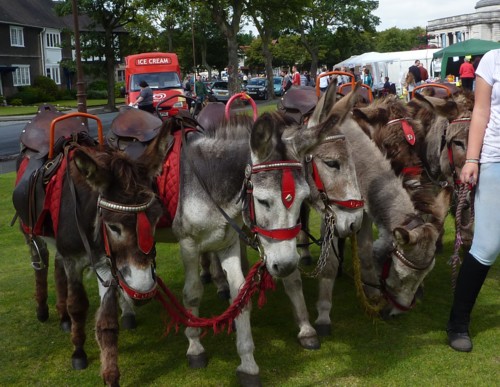
Apart from a Sparrowhawk we saw while we were eating our lunches by the bowling greens, we didn’t do much wildlife spotting. Instead we watched the Mersey Morris Men, admired the donkeys, the brass band and the vintage cars, and came away with many goodies from the food stalls – fidget pie, pheasant pie, black puddings, locally-brewed beer, chutneys and sweet puddings!

port-sunlight-donkeys.jpg

port-sunlight-morris-men.jpg


Posted in Sunday Group | 1 Comment

Great Orme, Llandudno 23/7/2011

A warm day with blue skies and a gentle NW breeze greeted a good turnout of 16 MNA members outside the Grand Hotel near the pier, most having travelled by train. The plan was circuit of the Orme by way of the Marine Drive. It got off to a promising start with Ivy Broomrape opposite the Hotel and fine displays of Sea Spurrey and White Stonecrop on top of the seawall. Soon the steep grassy slopes were a mass of yellow Rock Rose, Harebell and Small Scabious with a sprinkling of Yellow-wort, Carline Thistle, Mouse-ear Hawkweed and Large Birdsfoot Trefoil. Looking over the wall revealed a solitary Slender Thistle and a good clump of Rock Samphire. Movement attracted us to Small and Large Skippers, a very obliging Hummingbird Hawkmoth and a Dark-green Fritillary which dashed about. A very confiding Rock Pipit flitted up and down the roadside rocks, so close that binoculars were hardly needed. Occasional seepages supported dozens of the insectiferous Butterwort, some being in fresh flower. As if that was not enough we found Saw-wort, a single specimen – similar to Creeping Thistle but no spines – a first for most observers.

At our lunch stop 4 Peregrines, an adult with 3 young, called, soared and even hovered in the updraught directly above us. Cormorants were on a large flat rock far below with a single Oystercatcher. Up the road a Stonechat called and offered good views as it perched on top of the Bracken while the nearby rocks held a few Dropwort and the large leaves of Wild Cabbage. Then the cliffs below the old lighthouse came into view – no auks, mainly Shags and Kittiwakes. Fulmars soared and banked on stiff wings as Gannets passed by far offshore. All was fairly peaceful until a Peregrine cruised along the cliffs! Some of the party ahead of us saw a Great Black-backed Gull dismembering a Kittiwake, a Black Guillemot on the sea and half a dozen Oak Eggar moths in the turf.

Dropping down to the more warmer more sheltered, western slopes the rocks were alive with Graylings while the grassy patches with Bramble flowers were the domain of the Silver-studded Blue. Diversity was made with the Small Heath, a perfectly posed Dark-green Fritillary and another but paler Hummingbird Hawkmoth. While Linnets flocked about the gorse below a Wheatear and 4 Greenfinches were on the rocks high above, just as 2 Choughs called and flew by against an intense blue sky. Meanwhile we added to the flora with Ploughman’s Spikenard, Spotted Catsear, Great Bellflower, Spiny Restharrow and surprisingly numerous Vervain with its delicate lilac flowers.

Posted in MNA reports | Leave a comment

Seacombe to New Brighton 17th July 2011

It wasn’t the best day to walk along the front – the gloomy weather forecast said heavy rain all day. Only the hardiest few of us turned up for the 10am ferry and we almost had it to ourselves. Surprisingly, the rain soon stopped, leaving a grey and threatening sky, but we were sheltered from the westerly wind by the Wirral peninsula itself, so we hardly needed our hoods or umbrellas.

egremont-view.jpg

There were very few people out, just the odd runner and cyclist, an orange-clad lifeguard on his second day at work and small groups of fishermen. One told us he caught a Bass last week, but usually he gets Plaice and Dab, too small to eat.

The birds all seemed to have gone somewhere pleasanter. Two Cormorants were on the post at the end of the Egremont groyne, odd gulls were being thrown about in the wind and there were Wood Pigeons and Starlings in the gardens. Near New Brighton two young swallows were trying their luck in the updraught from the waves battering the sea wall. One of them may have been a House Martin, but it was too windy to get a proper look.

As the tide neared its highest point the waves were crashing over the railings.

egremont-waves.jpg

There was a lot of activity from the Pilot boats and tugs. We watched a liquid natural gas ship come in, the Haci Fatima Ana registered in Istanbul, and two more whose names we couldn’t read.

As we turned the New Brighton corner the wind hit us like a slap in the teeth. Heads down, we made it to the bus stop in time for the 432 at 1.15. No point in chancing our luck any further.

Posted in Sunday Group | 1 Comment

Pickerings Pasture 16/7/2011

Early Saturday morning hardly looked promising, prolonged heavy rain and wind, as some of us assembled at the Liverpool ONE bus station for the 82A to Hale Bank but sheer optimism drives you on! During the journey patches of blue sky and only the occassional shower saw an improvement and that was the order of the day. At our destination you are immediately greeted with a blaze of colour in the form of a wildflower meadow, the first of a series, composed mainly of Corn Marigold, Scentless Mayweed and Corn Cockle. From the trees came the soft song of a Garden Warbler and then the more strident notes of a Song Thrush. Scanning the Mersey at low tide revealed a few mallard in eclipse and on the sandbanks clusters of Redshank, a few Cormorants, three Bar-tailed Godwits and a Great Black-backed close to a Lesser Black-backed Gull to demonstrate the size difference. Peering through the screen at the north end the normally shallow lagoon was just black mud, holding only a lone Grey Heron. While scanning the Black-headed Gulls on the cliff top the three previous Godwits joined them, one having a very russet plumage. Several fields away the scene was dominated by a great straggling flock or herd of grazing Canada Geese. Just to make it more interesting 16 Black-tailed Godwits flew in, wheeled about and then headed out over the incoming tide.

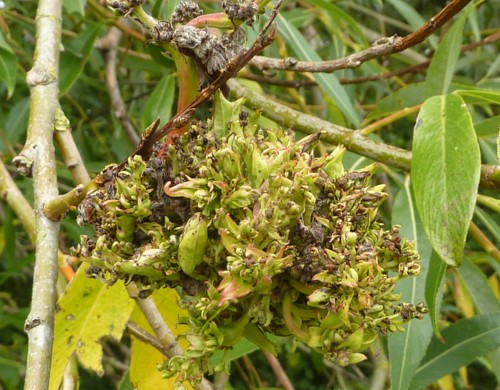
At our lunch stop the meadow was one largely of Ox-eye Daisy, Hairy Tare, Field Scabious and Yellow Rattle, most of the latter having gone to seed. Up until then insect activity had been scarce  – merely a Gatekeeper butterfly seeking refuge. But now the sun came out and what a difference. Within a minute or two the place was a hive of activity with Large Whites , Meadow Browns and Burnet Moths followed by a Small Copper and a Holly Blue. To add to the diversity Dave Hardy picked out a Tree Bee Bombus hypnorum, a new arrival into the UK. We were intrigued by the prominent, large, spiky, green galls on the Crack Willows – later perusal of a FSC showed them to be caused by a virus. Returning to the reserve entrance we concluded with a Peacock, a nice clump of Tansy, a Whitethroat sculking about, Chiffchaff and Blackcap in song and a Brown Silver-line moth flushed amongst the grasses.

Posted in MNA reports | 1 Comment

Calderstones Park 10th July 2011

We met at Great Charlotte Street and took the 76A towards Woolton, getting off at 10.45 at the junction of Menlove Avenue / Beech Lane and Cromptons Lane. It was warm, still and overcast. No special birds today, but we saw Wood Pigeons, Crows, Blackbirds and two young Magpies begging food from their mother. There was a Mistle Thrush on one of the lawns, but it was harassed by a Magpie until it flew off. There ought to have been plenty of lawn for everyone!

The Calder Stones are still locked away in their greenhouse, which is now very dilapidated.

calderstones-the-stones.jpg

calderstones-sign.jpg

A sprawling tree caught our attention. It had collapsed rather spectacularly in several directions, but was carefully propped up and supported. We couldn’t tell what it was, perhaps some kind of rarity. It had very papery bark, leaves with five separate leaflets and young seeds that looked rather elm-like. Anyone any idea what it is?

calderstones-collapsed-tree.jpg

calderstones-tree-leaves-and-seeds.jpg

The flowerbeds and floral clock were neat and lovely and we spent some time admiring the Japanese garden.

calderstones-floral-clock.jpg

calderstones-japanese-garden.jpg

The pond was alive with Water Boatmen.

calderstones-water-boatman.jpg

Just before noon the heavens opened, so we sheltered from the torrential rain in the small roofed area in the corner of the Japanese Garden. A Robin and a Dunnock had the same idea and the Robin eyed the crumbs from our lunch with interest.

calderstones-robin.jpg

Olive had invited us for a strawberry cream tea, so after the rain stopped we walked down Menlove Avenue, amused by several Beatles-related encounters. A young woman with an American accent asked us how to get to Strawberry Fields, the Magical Mystery Tour bus drove past and we stopped to look at John Lennon’s house, “Mendips”.

calderstones-mendips.jpg

After some excellent home-baked scones (thanks Olive!) we caught the 74 in Woolton Village just after 3pm.

Posted in Sunday Group | 1 Comment

MNA Coach Trip Llafar Valley Photos

mna-llafar-valley-english-stonecrop1.jpg

English Stonecrop

mna-llafar-waterfall1.jpg

Waterfall On the Afon Llafar

 mna-llafar-valley-lichen1.jpg

Lichen – Rhizocarpon species

mna-llafar-valley-wolf-spider1.jpg

Female Wolf Spider Pardosa sp. carrying egg sac

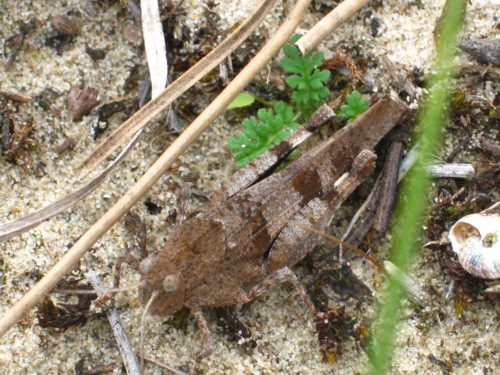
mna-llafar-valley-grasshopper1.jpg

Common Green Grasshopper Omocestus viridulus

mna-llafar-barbara-on-stile.jpg

Barbara On Wooden Stile

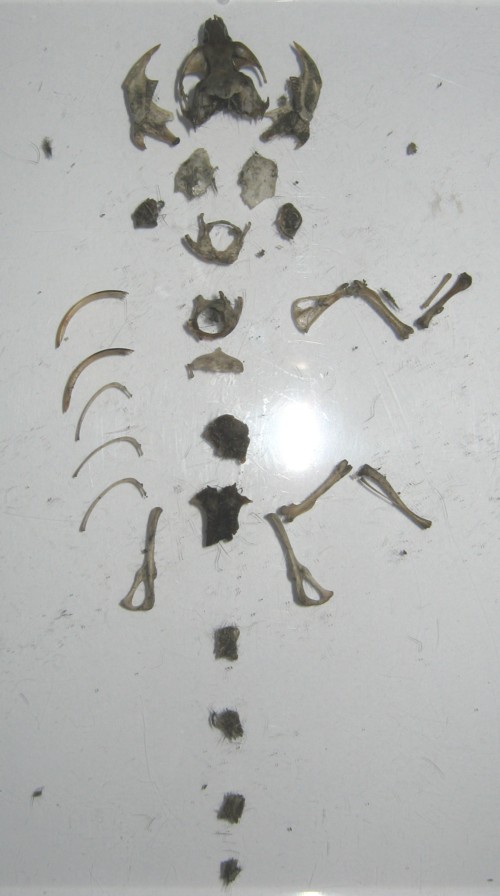
mna-sheep-skull.jpg

Harry’s Sheep Skull

mna-llafar-valley-beetle1.jpg

Dor Beetle

mna-llafar-valley2.jpg

The Scenery 🙂

Posted in MNA reports | 1 Comment

Ness Gardens 3rd July 2011

mna-ness-gardens-waterfall.jpg

I had a visit over to the University Of Liverpool’s Ness Botanical Gardens on the Wirral. As well as being packed with traditional and rare garden plants it also has a number of wildflowers. A wildflower meadow area had been created which contained Corncockle Agrostemma githago, Corn Marigold Chrysanthemum segetum, Cornflower (a.k.a. Bachelor’s Button) Centaurea cyanus and Ox-eye Daisy Leucanthemum vulgare.

mna-ness-wildflowers.jpg

 Corn Marigolds and Ox-eye Daisies

mna-ness-gardens-corncockle.jpg

Corncockle

 The drooping flowers of Borage (a.k.a. Starflower) Borago officinalis were just beginning to open out. The flowers have a cucumbery taste and can be added to salads or even to liven up your glass of Pimms!

mna-ness-gardens-borage.jpg

The Monkey Flower Mimulus guttatus was introduced to Great Britain in the 1820’s and soon became naturalised in Wales growing beside streams and in wet marsh areas.

mna-ness-gardens-monkey-flower.jpg

Viper’s-bugloss Echium vulgare was putting on a fine show with a branched spike of attractive funnel-shaped blue flowers. It is a favourite flower of bees and butterflies for their nectar fix.

mna-ness-gardens-vipers-bugloss.jpg

Posted in MNA reports | 1 Comment

Minera, Wales 30th June 2011

The two Dave’s and I took a trip over to Minera near Wrexham in Wales whose name derives from the Latin for “mine” or “ore” (the Welsh name Mwynglawdd translates roughly as “ore mine”)

mna-minera-hoverfly1.jpg

Hoverfly Eristalis sp. on umbellifer

mna-minera-noonday-fly1.jpg

Noonday fly Mesembrina meridiana

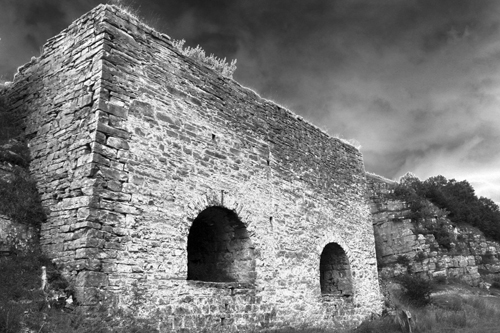
Our walk took us up a country track passing plenty of insect covered umbellifers through a wooded area growing on the old lime slag heaps whilst nibbling Wild Strawberries Fragaria vesca, up to the limestone quarry and onto a wildflower meadow before the return journey.

 mna-minera-quarry1.jpg

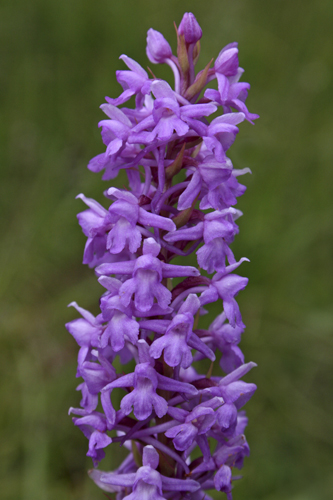
Highlights of the walk included the profusion of Orchids – Common Spotted Orchids Dactylorhiza fuchsii in a variety of colours along the track and wood, Common Twayblade Neottia ovata on the slag heap in the wood along with Broad-leaved Helleborines Epipactis helleborine that were not yet in flower, Pyramidal Orchids Anacamptis pyramidalis abounded in the quarry and we counted around a dozen Fragrant Orchids Gymnadenia conopsea that were just beginning to bloom.  

mna-minera-cs-orchid2.jpg

 Common Spotted Orchid

mna-minera-cs-orchid3.jpg

Common Spotted Orchid flower detail

mna-minera-cs-orchid-white1.jpg

Common Spotted Orchid var. albiflora

 mna-minera-pyramidal-orchid1.jpg

Pyramidal Orchid

mna-minera-common-twayblade1.jpg

Common Twayblade

 Other flowers included Field Bindweed Convolvulus arvensis, Hedge Woundwort Stachys sylvatica, Mossy Saxifrage Saxifraga hypnoides, Wild Thyme Thymus polytrichus,  Common Milkwort Polygala vulgaris, Eyebright Euphrasia officinalis, Common Rock-rose Helianthemum nummularium, Self Heal Prunella vulgaris, Bird’s-foot Trefoil Lotus corniculatus and Weld Reseda luteola.

mna-minera-self-heal1.jpg

Self Heal

Birdlife included singing Chiffchaff in the woodland, a squawking Jay, Peregrine, Buzzard and Raven up in the quarry. Plenty of Butterflies and Moths with Large Skipper Ochlodes venata, Dingy Skipper Erynnis tages, Small White Pieris rapae, Common Blue Polyommatus icarus, Small Tortoiseshell Aglais urticae, Meadow Brown Maniola jurtina, Ringlet Aphantopus hyperantus, Small Heath Coenonympha pamphilus, Six-Spot Burnet Zygaena filipendulae.

mna-minera-common-blue1.jpg

Common Blue Butterfly male

mna-minera-burnet-moth1.jpg

Six-Spot Burnet Moth on Wild Thyme

Posted in MNA reports | 1 Comment

Hilbre Island 26th June 2011

It was a beautiful day for the crossing, warm and mostly sunny, breezy out by the islands but quite humid inland. We caught the 9.50 train from Central and were at the Dee Lane slipway by 10.45. The sands were absolutely full of Lugworm casts and burrows.

hilbre-little-eye.jpg

hilbre-lugworm-hole.jpg

There were no seals out on the Hoyle Bank, just a group of moored yachts.  No exciting birds: five Shelduck flew over towards the Welsh side, there was a Little Egret on the side of Hilbre towards Red Rocks and a flock of Oystercatchers on the waterline, with Cormorants and a few Greater Black-backed Gulls. Swallows were about, and there were two Linnets on a fence.  One Meadow Brown and an unidentified White butterfly fluttered past.  Out on the water it looked like a rescue helicopter was winching someone up from a dinghy. We imagined it was Prince William out there, but he probably doesn’t fly the local yellow helicopter!  Off the seaward end of the main island there were about a dozen Grey Seals in the water, just staring back at us!

hilbre-seal.jpg

As we made our way back to West Kirby for the 3 o’clock train we saw a big jellyfish stranded on the rocks, about 30-35 cm across, which looked like a Lion’s Mane. (According to Wikipedia the largest specimen ever found was 7 foot 6 inches across – 2.25m – which makes this one look like a baby!)

hilbre-jellyfish.jpg

In the dryer sand nearer the slipway we spotted one small patch of Spartina grass, so it looks like it has started to encroach from Hoylake.

hilbre-spartina.jpg

Posted in Sunday Group | 1 Comment

MNA Coach Trip Bempton Cliffs 25th June 2011

mna-bempton-sign1.jpg 

23 MNA members joined the coach for our visit to the RSPB reserve at Bempton Cliffs in East Yorkshire. Looking back at my records it is five years since we had visited the reserve so there were a lot of expectant members wishing to experience the thrill of a major seabird nesting colony in the midst of the breeding season. On arriving at 12:30pm after a long drive I immediately headed down to the viewpoint known as Staple Newk which has fine views over a sea stack with nesting Gannets.

mna-staple-newk1.jpg

There are around 6,000 pairs that nest on the chalk cliffs and Bempton has long been famed as having the only mainland nesting colony of Gannets in the UK. These huge birds seemed ungainly as they bunched together on their nests protecting their fluffy chicks from the beaks of their close nesting neighbours. It was in the air that they came into their own. It was breezy to say the least but these birds appeared graceful as they glided by with outstretched wings occasionally maneuvering with their tails and exhibiting some precision timing back flapping as they approached the cliff to land. A few Gannets did land at the top of the cliff and through the thick cliff top summer flowers and grasses you could see them collecting beakfuls of vegetation to take back to their nests to keep things looking ship-shape for Mrs Gannet.  

mna-bempton-gannet1.jpg

mna-landing-gannet1.jpg

I slowly ambled back along the cliff path (mainly due to the weight of the tripod and new 500mm lens I was carrying) taking in the sights and smells of the seabird colony. There were a number of other viewpoints overlooking the cliffs and all the visitors were commenting on the comings and goings of the other nesting species.

mna-bempton-cliffs1.jpg

Around 38,000 pairs of Kittiwakes are packed onto the cliffs. There was a real cacophony of sound with their ‘kitt-e-waak – kitt –e-wakk’ call being blasted from the cliffs and circling birds coming into land. Many of the nests held recently hatched fluffy white chicks and I watched one of the hungry chicks feeding greedily. Around 60,000 Guillemots were nesting side by side on the narrow ledges. Their eggs are pear-shaped so that they roll in circles rather than off the cliff ledge. I spotted a few ‘bridled’ Guillemots amongst the colony. These are exactly the same species but have a white bridle mask around their eyes. They become more common in colonies further north in the UK. There is a stable population of 5,000 nesting pairs of Razorbills. Like many of the nesting seabirds they mainly eat fish, like sandeels.

mna-bempton-guillemots2.jpg

A favourite that many visitors were enthusing over were the Puffins. Bempton doesn’t have any rabbits so their more usual nest site of disused rabbit burrows isn’t available. Instead they lay a single egg in a crevice in the cliff rock face. Their dumpy little bodies and tiny wings are not designed for easy flight and you could hear the gasps from visitors as the Puffins appeared to plummet from the cliff edge before their tiny wings beating furiously took them out onto the water.

mna-puffin-toy1.jpg 

Other nesting seabirds included Herring Gulls and around 1,200 pairs of Fulmar. This stiff-winged ocean wanderer is a member of the Albatross or tube-nose family. Pairs often cackle to each other sounding like drunken witches and they will spit thick oily gastric juices at intruders. 

mna-fulmars1.jpg

As I wandered along the cliff-path there were plenty of Swallows zipping around, Meadow Pipits and Skylarks battling with the wind performing display flights, Yellowhammers, Reed Bunting and a Corn Bunting performing its jangly-keys song. Rocks Doves were sat amongst the cliff-top flowers and Jackdaws were enjoying the breeze and could occasionally be seen pinning their wings back and plummeting almost like a Peregrine down the cliff face.

mna-bempton-gannet3.jpg

I stopped again at Jubilee Corner viewpoint trying to photograph Gannets in flight when one bird landed extremely close amongst the cliff-top grasses. It was the perfect end to the day and a last opportunity to appreciate these stunning birds with their snow white plumage, black wing tips, creamy-yellow heads, steel grey beaks with dark outlines and blue orbital rings.

mna-bempton-gannet2.jpg

Posted in MNA reports | 1 Comment