Maghull to Old Roan, 12th October 2014

For this sixth section of the Trans-Pennine Trail we had a gloriously sunny day, 12 degrees when we started out (that’s 54 degrees in old money), but getting much warmer in the sunshine during the day.  Our first birds were spotted in Queen Square before we got our bus. Eight or ten geese flew over in a V-formation, flying northwards. In Maghull we walked down Rosslyn Road and re-joined the TPT at Old Racecourse Road. A Robin was singing eagerly on a garden tree. At the end of Meadway a footpath leads to Sefton Meadows. On some Flowering Currant bushes there were lots of ladybirds sunning themselves. Most were orange with black spots, but one was black with red spots. I think they were all Harlequins.

40 Maghull ladybird

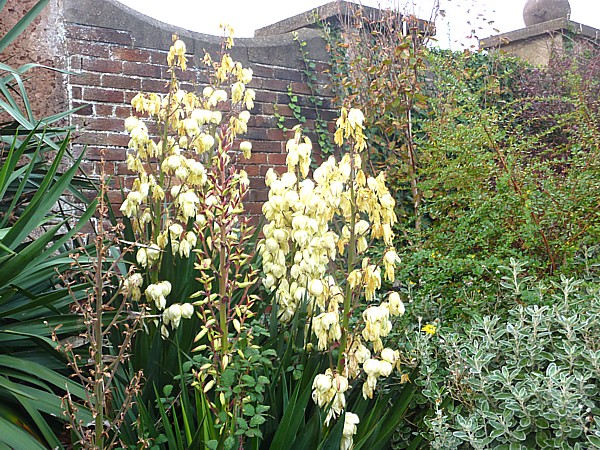
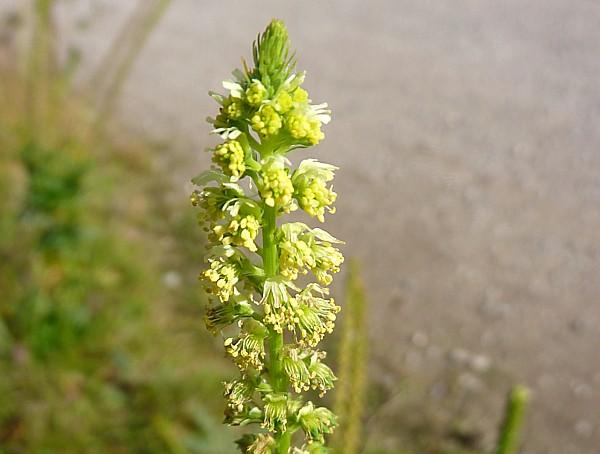
Flowers in bloom were Himalayan Balsam, Ragwort, Hogweed, White Dead-nettle, and today’s mystery plant – this yellow-flowered one with a cluster of flowers and seed-heads atop a very stout stem, with shiny, prickly leaves like a thistle. Perhaps it had been cut off at the top and was re-sprouting. My best guess is Smooth Hawksbeard, which is common, has shiny leaves, lives on path-sides and flowers to December. (Added 1st November – I made a bad guess.  Patricia Ann tells me it was really a Rough Sow Thistle  Sonchus asper, and adds kindly that they sometimes grow a bit oddly at this late time of year. Thanks Pat!)

40 Maghull hawksbeard

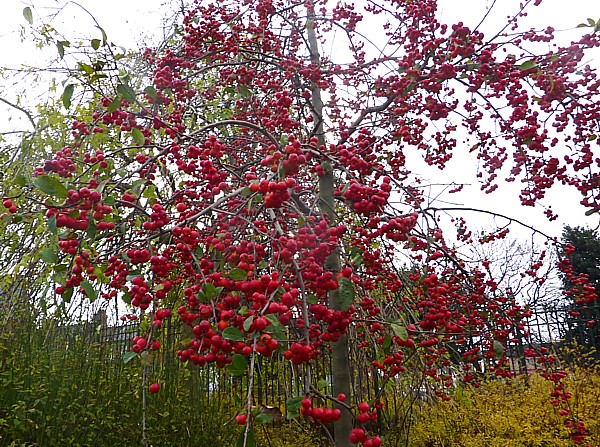
Jackdaws and a Pheasant were calling and there were flocks of Rooks from the Maghull rookery flying overhead. After the bridge onto Chapel Lane there was a signpost pointing right saying “Jubilee Woods”, which we must investigate another time. Pathside trees included one bearing bright red apples and a White Poplar with its top leaves catching the sun.

40 Maghull white poplar blue sky

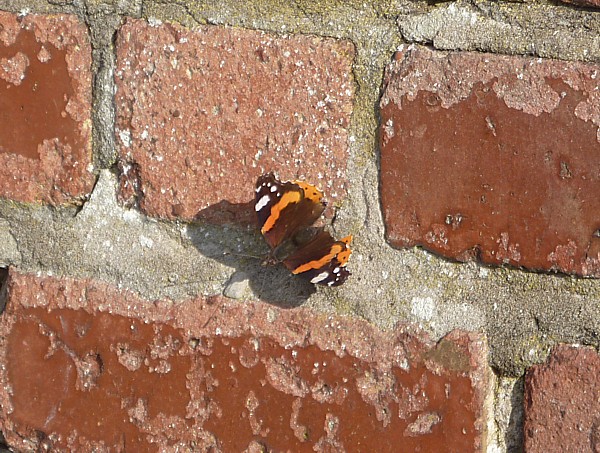
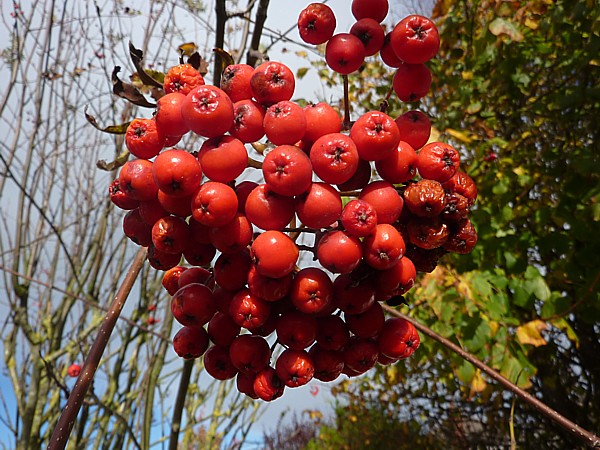
We lunched at a broken-down picnic table, surrounded by empty beer bottles and crisp packets. Then over Mill Dam Bridge crossing the River Alt and onto Chapel Lane, across the flat fields between Switch Island and Sefton Church. A Buzzard was calling but we couldn’t see it. Two Red Admirals were flying over fields and a Grey Wagtail flew up from Moor Hey Brook.  The Hawthorn berries are very abundant this year.

40 Maghull Hawthorn berries

We paused where the road crossed the line of the new Broom’s Cross Road. We won’t be able to stand in that spot next year!  The first picture below looks south towards Switch Island and the second looks northwards towards Thornton, with Sefton Church on the horizon. The works appear to have been flooded by the recent heavy rains.

40 Maghull road southwards

40 Maghull road northwards

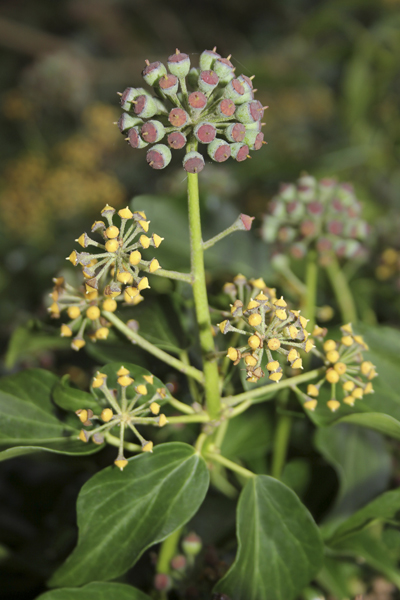
We crossed Northern Perimeter Road into Netherton, where there are three roads named for the moon landings. Aldrin’s Lane (after the astronaut Buzz Aldrin), Lunar Drive and Apollo Way (after the title of the manned space programme). Then we turned onto the canal. The Mallard drakes are now in their full breeding plumage after their moult. Also the usual Coots and Moorhens. Ivy was in  flower all along the fences, full of insects. This one is the Drone Fly Eristalis tenex, I think.

40 Maghull dronefly

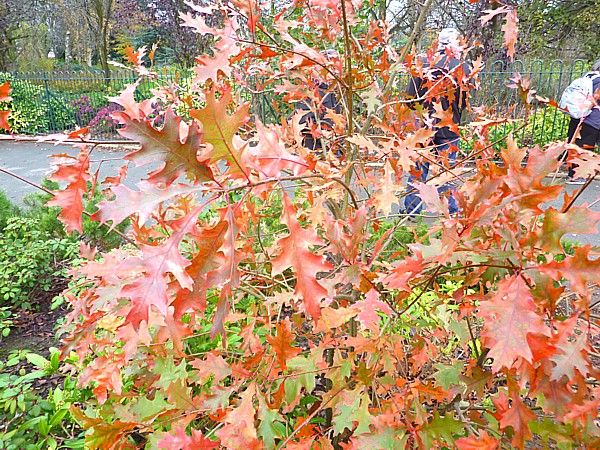
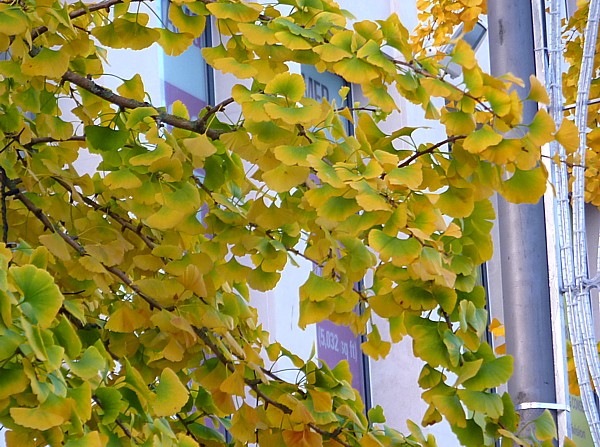
Other signs of autumn included the red leaves of either Virginia Creeper or Russian Vine (which are very hard to tell apart) and Golden Cotoneaster berries, probably of the variety “Rosthchildianus” .

40 Maghull golden cotoneaster

There were lots of Red Admirals about today. We saw two flying over the fields and at least six along the canal on the Ivy.

40 Maghull Red Admiral

As we approached Old Roan we admired the great row of Poplar trees on the far side.

40 Maghull Canal Poplars

Today we walked two and a half miles of the Trans-Pennine Trail, taking us to 14.5 miles from Southport.

Public Transport details: 300 bus from Queen Square at 10.18, arriving Liverpool Road/Rosslyn Road Maghull just after 11. Some of us returned on the 1.58 train from Old Roan to Liverpool, while others got the 55 bus outside the station at 2.06, heading for connections at Bootle Bus Station.

Posted in Sunday Group | Comments Off on Maghull to Old Roan, 12th October 2014

Port Sunlight Riverside Park, 5th October 2014

39 Sunlight aerial view


It was a bright and sunny autumn day, noticeably cooler than in recent weeks. The new Port Sunlight Riverside Park lies between Bromborough Pool and New Ferry, on the south bank of the Mersey. The explanatory sign said it is on the site of the Bromborough Dock landfill site, which operated from 1995 to 2006. The waste built up into a 37 metre high mound, and at the end of operations it was encased in a high-density polyethylene geomembrane, then covered in engineered clay and a layer of soil. Nature has been allowed to take a hold and over the coming years more vegetation will grow, forming a new woodland on the south side of the mound.

39 Sunlight climbing path

Along the path which climbs to the summit were Brambles, masses of Michaelmas Daisies, Rape, Ox-eye Daisy, Evening Primrose, Wild carrot, Tansy, Ragwort, Yarrow, Teasel, and this plant with spiky seed heads that we couldn’t identify. It was about three feet tall. Any suggestions? (Added later: Margaret has identified it as a Milk Thistle Silybum marianum. Originally a French plant, long naturalised in Britain, although Merseyside is near the northern limit of its range. Found in “bare and sparsely grassy places, often on the coast.”)

39 Sunlight spiky seeds


39 Sunlight Michaelmas daisies


One Jay flew over, a Kestrel hovered near the summit, there was a big flock of Goldfinches amongst the seed heads and a Robin was chattering in a hedge, quite close to us, very bold and relaxed.

39 Sunlight Robin

There are wonderful views from the top, as far south as Garston and Speke airport tower, right across Liverpool and out to the river mouth.
39 Sunlight river mouth

On the way down we spotted this shrub with weird-looking cloudy blue/white berries. Both fruits and leaves reminded us of Blackcurrants. It’s the ornamental Flowering Currant, Ribes sanguineum, native to the US West Coast.

39 Sunlight berries flowering currant

We lunched in the sunshine by the riverside then set off north on Mersey View Walk to look at the lake.

39 Sunlight lunch spot

On the north east corner the path overlooks Rock Ferry shore, where there were Redshanks, an Oystercatcher, a Curlew, some Lesser Black-backed Gulls, Black-headed Gulls and a Shelduck. There are steps down, which probably join up to Rock Park, a route which we might investigate another day.

39 Sunlight view

On the lake were Gadwall, Moorhen, Shoveler, a Mute Swan, a Snipe and over a dozen Black-tailed Godwits.

39 Sunlight Godwits

Alongside the path along the southern edge there was a climbing plant twining around a wild rose stem, with bright red berries. It was the poisonous Black Bryony.

39 Sunlight Black Bryony

There was a late bee on one of the massed clumps of Michaelmas Daisies, and a single Large White Butterfly near some flowers of Purple Toadflax.

Public transport details: Number 1 bus from Sir Thomas Street at 10.23 (the Chester bus), arriving New Chester Road / Shore Drive 10.55. Returned on 41A bus at 1.54 from New Chester Road / Shore Drive to Birkenhead bus station. Some of us were going to the Vintage Bus and Tram display at Woodside, but two of us went to Conway Park for the 14.24 train to Liverpool Central.

Posted in Sunday Group | Comments Off on Port Sunlight Riverside Park, 5th October 2014

MNA Coach Trip Old Moor RSPB Reserve 4th October 2014

23 members joined the MNA Coach Trip over to Old Moor RSPB Reserve in the Dearne Valley near Barnsley in North Yorkshire. We were slightly later in the year than our last visit in September 2011 but despite missing the passage Waders the sheer volume of Ducks and some fantastic views of Raptors led to an enjoyable day.

After a quick nose at the feeders beside the visitor centre – Robin, Blue and Great Tit, Chaffinch and later Willow Tit and Great-spotted Woodpecker seen by some, a large group of members headed to Bittern Hide overlooking the Mere for lunch. A Little Egret was seen stalking around and flying out at the back – later John Clegg & co viewed a Little Egret with a red darvic ring –too distant to read the number and also a Kingfisher. A pale looking Peregrine was being harassed by a couple of Carrion Crows. Ducks included Teal, Wigeon, Shoveler, Mallard, Tufted Duck, Gadwall, Coot with Greylag Goose, Canada Goose, eighteen Cormorant standing on an island and Black-headed and Lesser Black Backed Gulls. Better views of the Wildfowl was seen around at the Family Hide along with four Pochard and a pair of Little Grebe diving close in, plenty of Moorhens stalking around the islands, a Mute Swan and cygnet, a Grey Heron and a female Marsh Harrier gliding at the back of the reeds being chased on and off by half a dozen Magpies. A few passerines with small flocks of Goldfinch, Linnet, Starlings and the odd Reed Bunting. A Rabbit Oryctolagus cuniculus was sat on the grass just outside the hide meticulously cleaning its long ears and paws.

At the nearby Field Pool West Hide I’d only just sat down when a couple of Magpies flushed a Snipe which circled around eventually landing out of sight in a ditch. The sixty or so Wigeon standing on the edge of the channel then quickly took to the water ‘whistling’ as the pale coloured Peregrine put in another appearance circling above their heads then gliding over the field at times unusually almost stopping mid-flight and doing a quick hover like a Kestrel before gliding off again. I wandered along the Green Lane Trail adding Blackbird, Long-tailed Tit, Dunnock and Woodpigeon to my day’s tally. At Wader Scrape Hide a real Kestrel was showing much interest around island five at the north-east end of the Mere sitting on the island sign then dropping down on the coarse island vegetation before flying up and hovering. It didn’t catch any unsuspecting Vole though as it too flew off after being harassed by the ever present Magpies.

At Wrath Ings Hide I was counting yet more Wigeon, Shoveler and Gadwall when a flock of thirty or so Golden Plover flew over, they circled a few times but didn’t land. They were soon followed by sixty Lapwing that broke off into two smaller groups and had only just put their feet to the ground when they were back in the air – the pale coloured Peregrine gliding by again!

MNA Old Moor Brown Rollrim1

Brown Rollrim

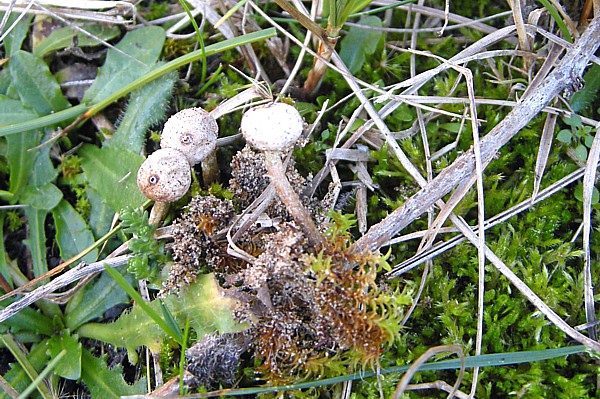
Only a couple of Fungi species were noted with eight Brown Rollrim Paxillus involutus growing on a patch of short grass close to the Mere and King Alfred’s Cakes Daldinia concentrica growing on the base of one of the wildlife themed wood carvings that were scattered around the reserve and had begun to decay.

MNA Old Moor Willow Gall1

Willow Galls

A number of Gall species with Red Galls on Crack Willow Salix fragilis leaves caused by the Sawfly Pontania proxima and a number of Robin’s Pincushion Galls a.k.a. Bedeguar Gall caused by a Gall Wasp Diplolepis rosae which lays its eggs in either the leaves or stem of the Dog Rose. They were unfortunately past their best unlike a fine example we saw on the MNA walk around Wiggs Island NR in September. However, one of the Galls did have the added bonus of a Hairy Shieldbug  a.k.a. Sloe Bug Dolycoris baccarum sat on it.

MNA Old Moor Robins Pincushion Gall1

Robin’s Pincushion Gall with Sloe Bug

MNA Wigg Island Robins Pincushion Gall1

Robin’s Pincushion Gall at Wigg Island NR

ChrisB pointed out some Galls on the Sloe Prunus spinosa bushes called ‘pocket plums’ caused by the fungus Taphrina pruni that results in an elongated and flattened gall, devoid of a stone. The leaves of the Sloes were rolled up tightly perpendicular to their mid-rib caused by the Leaf-curling Plum Aphid Brachycaudus helichrysi.

MNA Old Moor Pocket Plums1

Pocket Plums

Dull overcast cold conditions kept the Insects at bay but there were numerous Alder Leaf Beetles Agelastica alni making short work munching through the leaves and when the sun put in a brief appearance when we were about to depart a Migrant Hawker Aeshna mixta was patrolling a trail.

Autumn fruits and berries covered the hedgerows and trees with Bramble Rubus fruticosus, Japanese Rose Rosa rugosa, Dog-rose Rosa canina, Blackthorn a.k.a. Sloe Prunus spinosa, Sea-buckthorn Hippophae rhamnoides and Guelder-rose Viburnum opulus. Very few plants were still in flower with Michaelmas-daisy Aster sp. Water Mint Mentha aquatica Ribbed Melilot Melilotus officinalis and Hedge Bindweed Calystegia sepium. Pat Lockwood pointed out an invasive species of Pigmyweed Crassula sp. that seemed to be taken firm hold in a lot of the water channels and one pond was covered in White Water Lily pads Nymphaea odorata.

MNA Old Moor Owl Playground1

I think I may have to put in a submission to the British Birds Rarities Committee  – I came across this magnificent Owl in the children’s adventure playground 🙂 After resisting the urge to buy more books in the Reserve shop I headed out where a Red Admiral Vanessa atalanta was flitting around the masses of Ivy Hedera helix that completely covered the gable end of the stone centre. ChrisB had found some Grapes growing in a small Herb Garden – a few of the vine leaves giving wonderful Autumn colours.

MNA Old Moor Vine Leaf1

Vine Leaf

As a finale John Clegg shouted out ‘Red Deer herd!’ standing in a nearby field when we had just re-joined the M6 for our return journey.

If you are interested in the wildlife of the north-west of England and would like to join the walks and coach trips run by the Merseyside Naturalists’ Association, see the main MNA website for details of our programme and how to join us.

A wide photographic selection of birds, marine life, insects, mammals, orchids & wildflowers, fungi, tribal people, travel, ethnography, fossils, hominids, rocks & minerals etc. is available on my Alamy webpage
Posted in MNA reports | Comments Off on MNA Coach Trip Old Moor RSPB Reserve 4th October 2014

Town Lane woodland, Southport, 28th September 2014

This area is managed as part of the Mersey Forest and is located at Kew, south east of Southport town centre, near Southport General Hospital and close to Dobbies Garden Centre. It is open scrubland with some trees, and Fine Jane’s Brook runs through it.

38 Town Lane bridge


It was a cloudy, calm and mild day, unusually warm for late September. One public thermometer in Bootle said 20 degrees and the other said 18 degrees, and that was only mid-morning.

There were Carrion Crows on the open fields, with Herring Gulls and Black-headed Gulls overhead. A Moorhen hid under the bridge over the brook and House Sparrows and Blue Tits flitted along the gully. A Robin was singing, and there were Starlings in the trees. A Jay flew low over the scrub and we spotted a female Stonechat high on a Bramble patch.

There were two big patches of late-flowering crucifers. I think the yellow one with the three-seeded pods might have been Sea Radish, while the similar white one might have been Wild Radish, although they are said to hybridise readily, so could have been mixed. Evening Primrose and Himalayan Balsam were still in flower, and big patches of Michaelmas Daisies were splashed about. There were red berries in various shades, dark Hawthorn, brighter Rowan and the very jewel-like clusters of Guelder Rose. We noted a very heavy crop of Elderberries, their weight dragging them down.

38 Town lane elderberries

As we lunched at a cluster of picnic tables, a line of about 20 geese flew north west, then a V-formation of 50, then another 30 until there were more and more, perhaps 1000 altogether. We didn’t see them close-up but we could hear some honking, and they were probably Pink-footed Geese. There are reports that they have already arrived, and they were probably flying from the Lancashire plain towards Marshside.

We saw just one white butterfly in the distance, coming down onto some Michaelmas Daisies. It was probably a Large White by its size. In a horse field some fodder appeared to have been spilled, and it had attracted 17 Collared Doves, a Pheasant, several Magpies, some Gulls and a few Jackdaws. One small Oak tree bore both Spangle Galls and Silk Button galls, and one leaf had both.

38 Town Lane oak galls

Outside Dobbies garden centre a group called S & R Birds were displaying their rescued birds of prey. A Buzzard, a Barn Owl, a female Kestrel, a Burrowing Owl and a European Eagle Owl.

38 Town Lane Barn Owl

38 Town Lane Burrowing Owl

38 Town Lane Eagle Owl

Then we went into Dobbies and browsed for bargains. They have some of their Christmas decorations out already, but I preferred this bright display of Cyclamens.

38 Town Lane cyclamen

Public transport details: Bus 300 from Queen Square at 10.18, arriving Town Lane, Kew, at 11.30. Returned on the 44 bus at 2.11 from Bentham’s Way (outside Dobbies) to Southport at 2.35 then the 2.58 train to Liverpool, arriving 3.45.

Posted in Sunday Group | Comments Off on Town Lane woodland, Southport, 28th September 2014

Gannets at Bass Rock

Ken Lewis says: I have just got back from North Berwick.  I had a day on Bass Rock and the Scottish Sea Bird Centre. Did a chumming on the return to Dunbar. It was very special and I would like share my images with our members.

04 Gannets

01 Gannets

05 Gannets


Posted in MNA reports | Comments Off on Gannets at Bass Rock

Clock Face Country Park, Sunday 14th September 2014

Tony Carter reports: A cool day for the North West Fungus Group foray. Although conditions were dry there were still plenty of fungi to be found. This is a very new piece of woodland, planted on the site of the old colliery and the ground is more acidic than other local sites, so it was interesting to discover what species it might support.

Starting in the car park we found a large patch of Lactarius pubescens (Bearded Milkcap). This species was growing just about everywhere a pine tree grew. Further along the path we came across a close but more colourful relative, Lactarius torminosus (Wooly Milkcap) that prefers birch woodland. This was quickly followed by another pine lover, Lactrius deliciosus (Saffron Milkcap).

The boletes were also well represented by Suillus luteus (Slippery Jack), Suillus grevillei (Larch Bolete) and an uncommon Suillus viscidus (Sticky Bolete).

tn_Suillus grevillei Clock Face 0914
Suillus grevillei (Larch Bolete)

We identified a lot of the more common fungi such as Amanita muscaria (Fly Agaric)and rubescens (Blusher), Lactarius turpis (Ugly Milkcap) and glyciosmus (Coconut Milkcap)and quickly had recorded over fifty species including a number of grassland fungi such as waxcaps and puffballs such as a very large Lycoperdon excipuliforme (Pestle Puffball). Also a lone Helvella lacunosa (Elfin Saddle).

tn_Lycoperdon excipuliforme Clock Face 0914


Lycoperdon excipuliforme (Pestle Puffball)

tn_Helvella lacunosa Clock Face 0914


Helvella lacunosa (Elfin Saddle)

The most interesting finds were of Cortinarius, a difficult genus to identify even with a microscope. Fortunately these had very clear distinguishing features, Cortinarius trivialis (Girdled Webcap) and Cortinarius alboviolaceus (Pearly Webcap).

tn_Cortinarius trivialis Clock Face 0914


Cortinarius trivialis (Girdled Webcap)

tn_Cortinarius alboviolaceus


Cortinarius alboviolaceus (Pearly Webcap).

Also found were Tricholoma terreum (Grey Knight), Tricholoma fulvum (Birch Knight) and a very uncommon Tricholoma psammopus (Larch Knight) that has not previously been recorded locally.

tn_Tricholoma fulvum Clock Face 0914
Tricholoma fulvum (Birch Knight)

tn_Tricholoma psammopus Clock Face 0914


Tricholoma psammopus (Larch Knight)

Considering that this land was only reclaimed in the late 1990s, we were surprised by the diversity and numbers of fungi that could be found. If we had been able to visit a week earlier, before it got so dry, we would have found even more.

Posted in MNA reports | Comments Off on Clock Face Country Park, Sunday 14th September 2014

Wigg Island NR 13th September 2014

MNA Runcorn Mural1

MNA Runcorn Urban Garden1

A group of MNA members caught the X1 bus from Liverpool One bound for Runcorn. After quick photos of a mural on the side of a building close the bus station depicting Runcorn’s ‘Heroes & Industry’ and the adjacent urban garden we wandered through the back streets heading towards Wigg Island Nature Reserve managed by the Cheshire Wildlife Trust. We noted Hart’s-tongue Phyllitis scolopendrium with lines of sporangia on the underside of the frond were growing from a brick building and House Martins were nesting in the eaves of some modern terrace houses and. A few Blue Tits, Robin, Blackbird and a charm of Goldfinches were in nearby trees. We crossed the Old Quay swing bridge onto the island disturbing roosting feral pigeons, more of which were bathing in the River Mersey. Swallows were zipping after insects above the surface of the water remaining in a narrow tidal channel, two engaged in some amazing tandem twists and manoeuvres that the Red Arrows would have been proud of. On the canal were a few Coot and a Great Crested Grebe moulting into Winter plumage and along the canal bank was a large clump of Scentless Mayweed Tripleurospermum inodorum. A few Shaggy Ink Caps Coprinus comatus were growing in the grass beside the Visitor Centre – one of which was a fresh specimen, the others having matured dissolving into black ink.

A few plants beside the visitor centre were still in flower Scarlet Pimpernel Anagallis arvensis, Dove’s-foot Crane’s-bill Geranium molle and Tansy Tanacetum vulgare. We waited for the rest of the MNA and Liverpool RSPB group member to arrive before setting out. Plenty of Black-headed Gulls and a lone Great Black Backed Gull out on the exposed mudflats in the River with a few Lesser Black Backed Gulls overhead. From the viewing screen we also noted Shelduck, Redshank, Grey Heron and passing Cormorants.

MNA Oak Knopper Gall Cut Out1

Oak Knopper Galls

MNA Red Oak Leaf Spangle Galls1

Common Spangle Galls

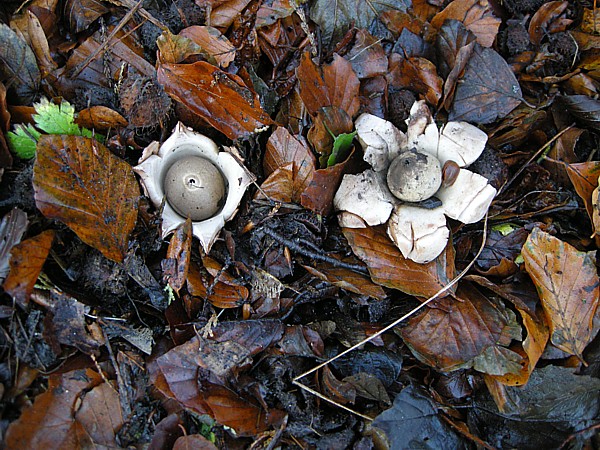
A selection of Galls caused by Gall Wasps were noted on Pedunculate Oak Quercus robur with Knopper Gall Andricus quercuscalicis, Marble Gall Andricus kollari and Common Spangle Gall Neuroterus quercusbaccarum. The latter was also seen on the leaves of a young Red Oak Quercus rubra. Autumn was clearly upon us with a selection of fruiting shrubs and trees including Bramble Rubus fruticosus agg. Hawthorn Crataegus monogyna, Elder Sambucus nigra and Guelder-rose Viburnum opulus. At the canal were a few Coot, Mallards and a pair of un-ringed Mute Swans with three of this year’s cygnets. Ron Crosby had earlier caught sight of a Kingfisher as had John Clegg on his recce during the week. I noted that a number of Poplar Tree Populus sp. leaves were covered in a Rust Fungus later identified as Melampsora medusa.

MNA Poplar Rust Fungus1

Rust Fungi  Melampsora medusa

We wandered along the path overlooking the construction site for the new River crossing. A few Hoverflies were taking advantage of few Dandelion Taraxacum officianalis agg. and Common Ragwort Senecio jacobaea still in flower including Dronefly Eritalis tenax, Tapered Dronefly Eristalis pertinax, The Footballer Heliophilus pendulus, Syrphus ribesii and a male Long Hoverfly Sphaerophoria scripta. We stopped for lunch at the picnic tables beside a small pond where a couple of Migrant Hawkers Aeshna mixta were patrolling. Out on the marsh a Buzzard was sat on a post. A pair of Mute Swans circled overhead a couple of times before landing only to be sent on their way by the resident pair with cygnets. Further along a tall viewing hide overlooking a small pond allowed views of Teal and a Little Grebe. Another Buzzard circled in the air harassed by a couple of Carrion Crows

MNA Wigg Island Sow Thistle Galls1

Perennial Sow-thistle Galls

Close by I noted Galls on the leaves of Perennial Sow-thistle Sonchus arvensis caused by the Midge Cystophora sonchi.

MNA Nut Leaf Blister Miner1

Leaf Mines On Hazel

MNA Hazelnuts Squirrel Nibbled1

Nibbled Hazelnuts

We continued through a wooded area where there were Leaf Mines on Hazel Corylus avellana leaves caused by the Nut Leaf Blister Moth Phyllonorycter coryli, plenty of Hazel Nuts that had been nibbled by Grey Squirrels Sciurus carolinensis and a few Common Earthballs Scleroderma citrinum. Out into a meadow area there were a few young Dog Rose Rosa canina shrubs one of which had a Bedugar a.k.a. Robin’s Pincushion Gall caused by the Gall Wasp Diplolepis rosae.

MNA Wigg Island Robins Pincushion Gall1

Robin’s Pincushion Gall

MNA Wigg Island Fox Carving1

Fox Carving

We passed a couple of wood carvings – one of a Red Fox the other a Rabbit before entering the Troll Wood where there were a few fungi sculptures designed by artists Mike Green and Angela Sidwell, a mosaic Wild Boar and some wooden Trolls one of which had a Red-legged Shieldbug Pentatoma rufipes perched on it.

If you are interested in the wildlife of the north-west of England and would like to join the walks and coach trips run by the Merseyside Naturalists’ Association, see the main MNA website for details of our programme and how to join us.

A wide photographic selection of birds, marine life, insects, mammals, orchids & wildflowers, fungi, tribal people, travel, ethnography, fossils, hominids, rocks & minerals etc. is available on my Alamy webpage
 

Posted in MNA reports | Comments Off on Wigg Island NR 13th September 2014

The Ken Jordan Memorial Foray, Sunday 7th September 2014

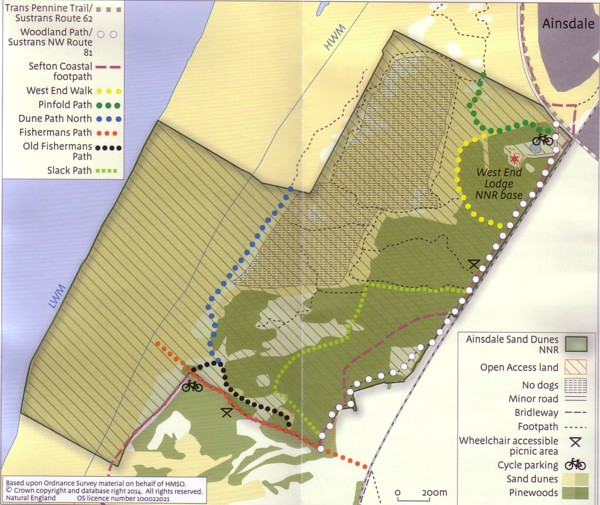
Tony Carter reports:  Members of North West Fungus Group and MNA joined together at the Warden’s Office to look for fungi at Ainsdale Sand Dunes Reserve.  Ground conditions were drier than expected and some areas were not as productive as in past years.  The area around the pond was fruitful. It used to be a struggle to get access to this area but the boardwalk takes you right round the pond. Lots of recognisable species such as Amanita muscaria (Fly Agaric) and Leccinum scabrum (Brown Birch Bolete) were found. Russula velenovskyi (Coral Brittlegill) was common under the alders.

tn_Russula velenovsky2 Ainsdale
Russula velenovskyi (Coral Brittlegill)

A nice find of Cortinarius uliginosus (Marsh Webcap) was made in an adjacent ditch.

tn_Cortinarius uliginosus Ainsdale 0914
Cortinarius uliginosus (Marsh Webcap)

There was very little in the paddock area which has deteriorated since it was flooded. Once a rich source of species, it is now very overgrown as is the wood leading to Pinfold Path, so little time was spent there. After a pleasant lunch in the sunshine on the dune grassland, we continued our search and made some interesting finds. The first was of an uncommon bolete, Suillus collinitus. It is very similar to a more common species (Weeping Bolete) but has a pink rooting system that colours the stem. This was quickly followed by Amanita citrina (False Death Cap) and Amanita submembranacea.

tn_Amanita citrina Ainsdale 0914
Amanita citrina (False Death Cap)

tn_Amanita submembranacea2 Ainsdale


Amanita submembranacea

There was lots of a very small puffball. Usually we find fresh specimens but need spores to identify it. Or we find sporulating specimens but do not know what a fresh one looks like. This time we found both and were able to identify them as Bovista limosa (Least Puffball). This species is very specific to the south Lancashire coast.

tn_Bovista limosa Ainsdale 0914
Bovista limosa (Least Puffball)

Similarly, Lycoperdon nigrescensalso appeared both fresh and with spores. Chroogomphus rutilus (Copper Spike) appeared under a lone pine tree as did a dune lover, Lepiota erminea.

tn_Lycoperdon nigrescens Ainsdale 0914
Lycoperdon nigrescens

We had to miss out the meadow area as it had not been mown so we went back into the pinewoods and made collections of Russula sanguinaria (Bloody Brittlegill) and Russula xerampelina. They can look identical with red caps and stems but the latter smells strongly of crabs, hence the name, Crab Brittlegill.

tn_Russula sanguinaria Ainsdale


Russula sanguinaria (Bloody Brittlegill)

The final stretch took us into the mixed birch and oak areas where we came across Chalciporus piperatis (Peppery Bolete) and Hygrophoropsis aurantiaca (False Chanterelle).

tn_Hygrophoropsis aurantiaca
Hygrophoropsis aurantiaca (False Chanterelle)

Despite the conditions, the joint effort succeeded in identifying seventy species. New for the site were Clavulinopsis laeticolor (Handsome Club), the ascomycete Eutypella scoparia, andthe corticiod Peniophora rufomarginata. These bring the total number of different species recorded by North West Fungus Group for this unique reserve to 941, which is why it was the favourite site of Ken Jordan. It rarely disappoints.

Posted in MNA reports | Comments Off on The Ken Jordan Memorial Foray, Sunday 7th September 2014

Freshfield Dune Heath Bioblitz 7th September 2014

A glorious hot sunny day for the Freshfield Dune Heath Bioblitz celebrating 10 years of the Reserve’s existence. They were still setting up the stalls when I arrived so I joined Lancashire Wildlife Trust volunteer Sue for a bit of pond-dipping in the only pond on-site that hadn’t completely evaporated. After a few sweeps of the net tipped into the water-filled sampling trays we had a handful of species. There were a couple of Common Backswimmer’s a.k.a. Water Boatmen Notonecta glauca – as their name suggests they swim upside-down on the surface of the water and are voracious predators, they inject their prey with a toxic saliva and slurp up their digested remains! One of the Backswimmers flipped itself over onto its front – being light brown in colour with large red eyes. There was a couple of large and 40+ smaller Ramshorn Snails Planorbarius sp.which have sinistral or left-coiling shells. There were a few Damselfly nymphs – greenish in colour with a narrow body and 3 fin-like gills at the end of the abdomen, they capture prey by using a modified lower lip (called a labium) that shoots out rapidly and seizes the prey item. Also noted were a Biting Midge larvae and a small Leech.

MNA Dune Heath Water Boatman1

Common Backswimmer

I had a mooch around the stalls, a number of organizations were present including the Merseyside Bat Group, Merseyside Mammal Group and the Southport and Formby Bee Keepers. There was also a stall where the kids could make plasticine Mrs Blobster.

MNA Dune Heath Blobster1

I then joined MNA member Jean Lund who was leading the Fungus walk. Dry conditions limited the number of species we found with Sycamore Tar Spot Rhytisma acerinum, Violet Bramble Rust Phragmidium violaceum, Birch Polypore Piptoporus betulinus, Fly Agaric Amanita muscaria, Blusher Amanita rubescens, Penny Bun Boletus edulis, Brown Birch Bolete Leccinum scabrum, Common Earthball Scleroderma citrinum, Ochre Brittlegill Russula ochroleuca, Bloody Brittlegill Russula sanguinea and Birch Woodwart Hypoxylon multiforme. Numerous Gall Wasps had been causing deformities on the reserve’s Oak’s Quercus sp. with Knopper Galls Andricus quercuscalicis, Marble Galls Andricus kollari, Artichoke Galls Andricus fecundator, Common Spangle Galls Neuroterus quercusbaccarum and Silk Button Galls Neuroterus numismalis.

MNA Dune Heath Oak Marble Gall1

Oak Marble Gall

MNA Dune Heath Silk Button Galls1

Silk Button Galls

There was also a Knotting Gall on Male-fern Dryopteris filix-mas fronds caused by the Dipteron Gall Fly Chirosia betuleti and leaf mines on Holly Ilex aquifolium caused by the Fly Phytomyza ilicis.

MNA Dune Heath Gorse Shieldbug

Gorse Shieldbug

Gorse Shieldbugs Piezodorus lituratus were present in great numbers on the Gorse Ulex europaeus with at least 60+ individuals and a final instar nymph. One of the Shieldbugs hadn’t been so lucky having been being caught and wrapped in silk in one of the many Garden Spider Araneus diadematus webs. Also plenty of Labyrinth Spider Agelena labyrinthica webs scattered throughout the gorse. I had a further mooch around between walks and noted Common Green Shieldbug Palomena prasina a couple of final instar nymphs, a dozen Tapered Droneflies Eristalis pertinax with single Hoverflies Heliophilus pendulus, Syrphus ribesii and a single Bumblebee mimic Hoverfly Criorhina berberina, a Buff-tailed Bumblebee Bombus terrestris, 7-spot Ladybird Coccinella 7-punctata, a dozen or so Field Grasshoppers Chorthippus brunneus and a Spiny Puffball Lycoperdon echinatum.

MNA Dune Heath Hedgehog Puffball1

Spiny Puffball

There were a handful of Common Darters Sympetrum striolatum zipping around and perching on the gorse.

MNA Dune Heath Common Darter1

MNA Dune Heath Common Darter2

Common Darter

On recording my sightings at the Merseyside Biobank stall there were a few sampling pots with other Bioblitzers finds including a Froghopper Cicadella viridis and another probably a Common Froghopper Philaenus spumarius which is an incredibly variable species with different colour forms.

A large group then set out with Phil Smith who talked about the reserve management the majority of which is low nutrient, acidic soil dominated by Heather Calluna vulgaris, Sand Sedge Carex arenaria and Gorse Ulex europaeus. Annual summer grazing takes place Herdwick sheep to prevent invasion by scrub plants. One area had been burned and the various stages of Heather re-colonization were apparent. A couple of Bioblitzers had seen a Ruddy Darter Sympetrum sanguineum so we headed off to the dried up pond. Phil caught the Ruddy Darter and held it between thumb and finger to allow for identification difference c.f. Common Darter to be seen, the former having all black legs and a more vivid red svelte – pinched waist abdomen.

MNA Dune Heath Ruddy Darter1

Ruddy Darter male

As six Buzzards circled overhead we investigated a sandy area were we found a male and female Mottled Grasshopper Myrmeleotettix maculatus that have a variety of colour forms and a few Field Grasshoppers Chorthippus brunneus.

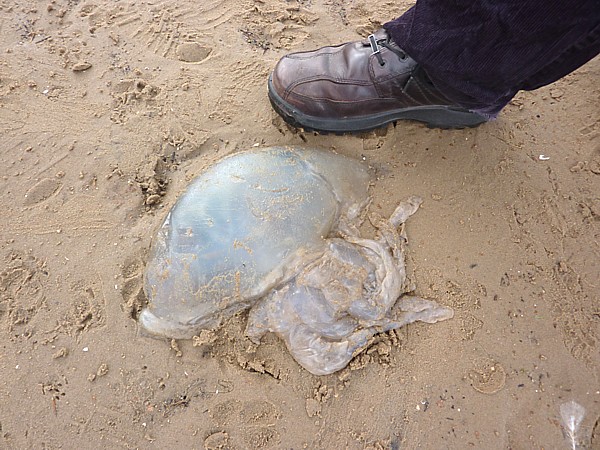
Dave Hardaker talked about the two Lizard species found on the Dune Heath – the Common Lizard and Sand Lizard. The latter naturally occurs in Dorset, Surrey and the Sefton coast – ‘our’ Sand Lizards having a more vivid green mottled appearance in the males than their more drab Southern cousins. There are estimated to be between 1000 and 1500 Sand Lizards on the Sefton Coast. The Sand Lizard is Britain’s only egg laying lizard – the eggs resembling mint imperials and it needs areas of open sand for incubating its eggs and their colonies are often found in banks and slopes so correct habitat management is essential for this species. Although present on the Sefton Coast the Sand Lizards were absent from the Dune Heath despite a large population of Common Lizards being present. Work was carried out in a fenced-off area to provide a re-introduction site for Sand Lizards captively bred from Merseyside stock by Amphibian and Reptile Conservation and in September 2010 hatchling lizards were released allowing them to be accustomed to their new home before the October hibernation. Dave had seen a mature male Lizard only the previous week so was confident that there is now a breeding population on site. Unfortunately we didn’t see any Lizards today although they love to bask out on the birch logs it was actually still too hot for them and would more likely to be seen later on in the early evening.

If you are interested in the wildlife of the north-west of England and would like to join the walks and coach trips run by the Merseyside Naturalists’ Association, see the main MNA website for details of our programme and how to join us.

A wide photographic selection of birds, marine life, insects, mammals, orchids & wildflowers, fungi, tribal people, travel, ethnography, fossils, hominids, rocks & minerals etc. is available on my Alamy webpage

Posted in MNA reports | Comments Off on Freshfield Dune Heath Bioblitz 7th September 2014

Lydiate to Maghull, 7th September 2014

For this fifth section of the Trans-Pennine Trail we had a clear and sunny day, bright and warm without being too hot.

37 Lydiate path

At Lydiate Hall Farm the Peacocks appeared to be moulting their tail feathers, but there was a stern sign warning visitors that the feathers were the property of the farm, not to be taken away, but could be purchased for charity in the farm shop.

37 Lydiate peacock

The cabbage field behind the farm was being visited by many Large White butterflies, which we used to call “cabbage whites” when I was little. As we walked south along the old Cheshire Lines path we also saw Specked Woods, several Small Tortoiseshells and this Red Admiral on Elderberries. It was opening and closing its wings, and I never could get a shot when they were fully open, but I like this one with the sun shining through.
37 Lydiate red admiral
We had lunch where the path crosses Carr Lane and Lydiate Station Road. There is no trace of the old station itself, although a passing cyclist said he remembered it being on the north side of the junction. But one of the houses in Carr Lane  is called “Railway Cottage” and the old level crossing barrier is still raised and waiting, even though it hasn’t seen a train since 1952.

37 Lydiate level crossing

We didn’t see many birds, because cyclists and walkers were passing every minute or two, and the hedges were too high for many long views. But there were Crows in the stubble and Starlings on the telegraph poles. We heard a Buzzard calling, and then it flew low over our heads. Later there were four high overhead, possibly young ones. Through one gap we saw a procession of about 20 or 30 Mallards, both ducks and drakes, apparently walking out of a farm gate into a field, making no attempt to fly off. Were they pinioned birds being kept for their eggs, or were they just moulting and mooching about?

The berries are all ripening now. Some people were still out blackberrying, and the hedges were red with Hawthorn, Guelder Rose berries and Rose Hips.

37 Lydiate rose hips

Near the border between West Lancs and Sefton we came across this shrub bearing clusters of white berries. I think it was some kind of Dogwood, perhaps White or Siberian Dogwood Cornus alba, which is native to Siberia and unlikely to be wild.

37 Lydiate white berries

Late flowers included Ragwort, Tormentil, a white umbellifer which I think was Common Hogweed and Rose Bay Willow Herb, some still in flower but most going spectacularly to seed.

37 Lydiate hogweed and willow herb seeds

Along the southernmost part of the path there were patches of a low lilac Cranesbill and clumps of the raggedy Perennial Sow Thistle. Large trumpet flowers of Bindweed were everywhere, but whether it was Hedge Bindweed, Large Bindweed or a hybrid of the two, I couldn’t say.

37 Lydiate bindweed

Today we walked just over two miles of TPT, taking us to 12 miles from Southport.

Public transport details: 300 bus from Queen Square at 10.18, arriving Our Lady’s Church, Lydiate, at 11.06. Returned from Liverpool Road South / Avondale Avenue on the 250 bus at 1.55, arriving Liverpool 2.35.

Posted in Sunday Group | Comments Off on Lydiate to Maghull, 7th September 2014