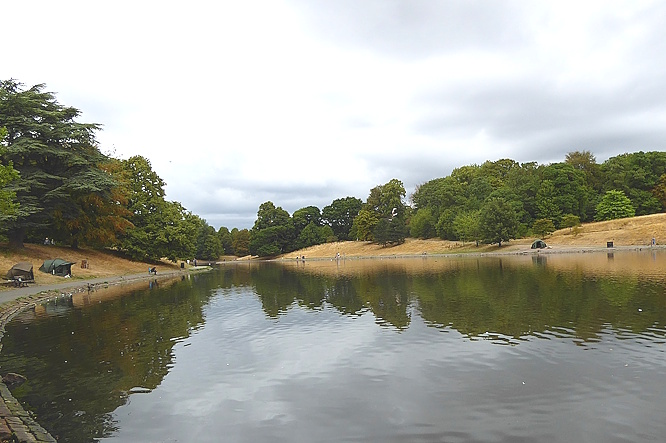
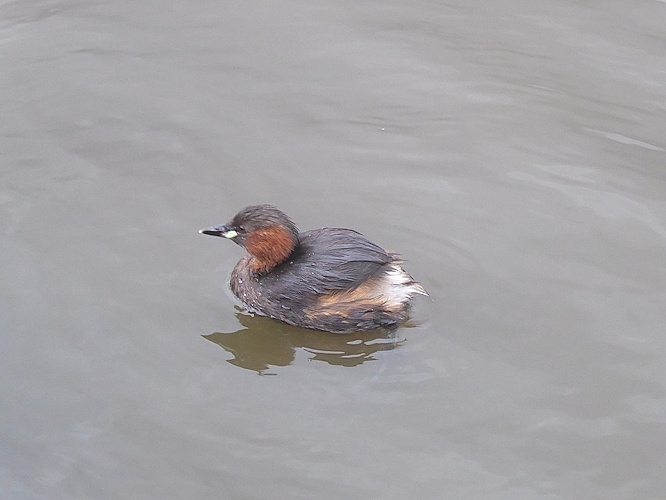
The water in Sefton Park lake is very low and the banks on either side, usually lush green grass, are now yellow and dried-up. We felt occasional spots of rain, and there will probably be some welcome proper rain later this week. The usual resident birds were all there: Mallards, Coots, Moorhens and Canada Geese. There were just a few Black-headed gulls, Herring gulls and Lesser Black-backed gulls, and many brown juvenile gulls from this year, happy to get handouts of bread. One bold Little Grebe was swimming and diving right by the café end. They are usually more timid, sheltering in the shady overhangs by the island.
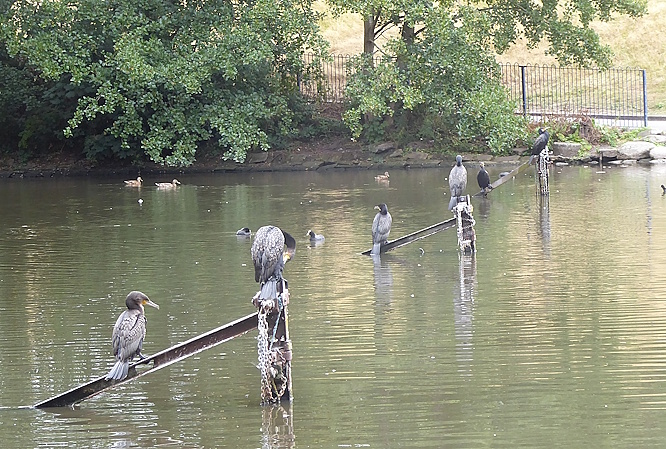
At the northern end of the main lake was a group of seven Mallards, looking like an almost-adult brood of six ducklings, still following their mother. They were possibly her second brood, as these young ones are unusually late. Six Cormorants were perched on the chain posts, and we later spotted a seventh, skulking under the trees on the island. I haven’t seen so many of them in the park before.
Corpse of the day was a Rat, recently dead and floating with its feet in the air.
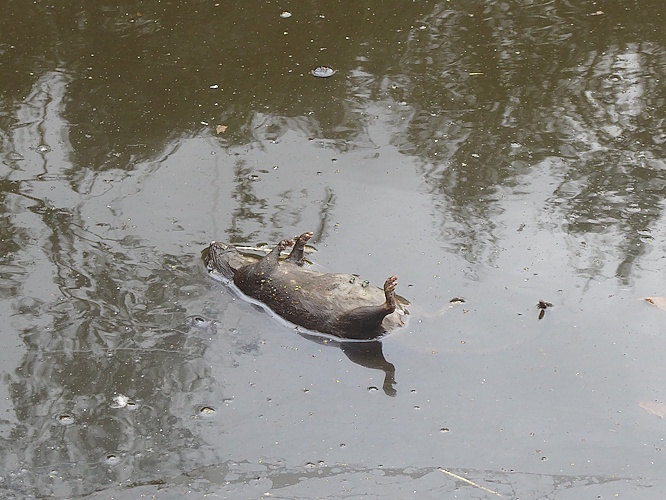
There was also a dead Canada Goose in the undergrowth nearby, which was partly eaten. These deaths remind me that there is an outbreak of avian botulism, reported this week from Walton Hall Park. Angling there is suspended and dog walking near the water discouraged. Dead birds recovered are Canada geese, Mallards, Gulls, Moorhen and Little Grebes. “Avian botulism is caused by the bacterium Clostridium botulinum and can affect populations of water birds, particularly during very hot weather. The bacteria can multiply in rotting vegetation and are particularly associated with ponds and lakes with low oxygen levels and poor water quality. Warm weather, falling water levels and increased algae can also create conditions in which the bacteria thrive.” I hope Sefton Park lake isn’t going the same way.
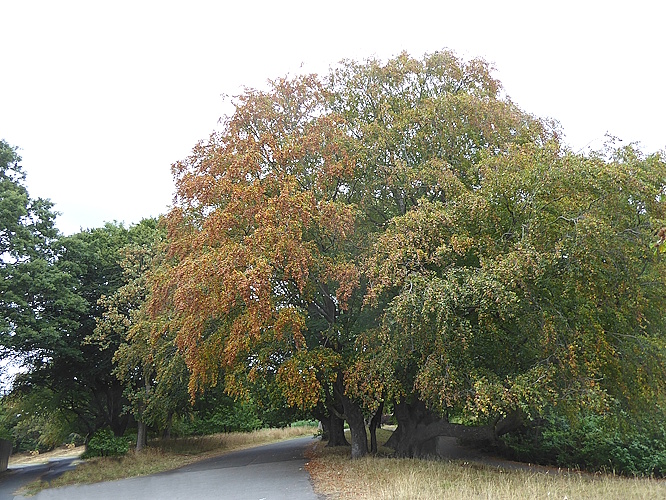
Away from the water we spotted Wood Pigeons, Feral pigeons, Crows and Magpies. Lots of Ring-necked Parakeets screeched overhead. The trees are starting to go brown, but it isn’t autumn yet. It’s probably caused by water stress and scorching by the hot sun. This Beech tree was badly affected.
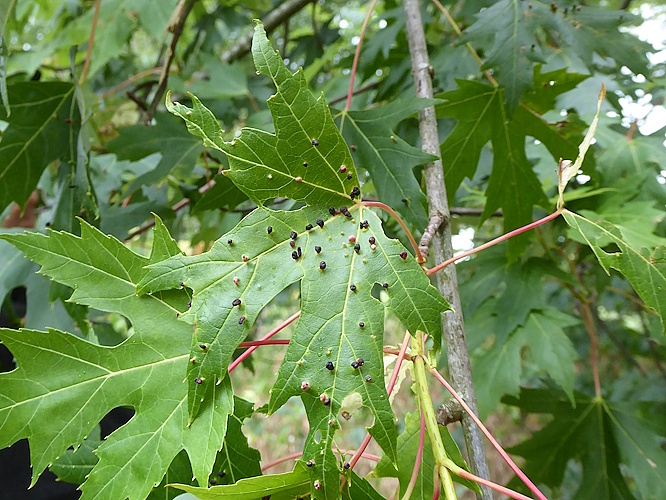
A Silver Maple tree Acer saccharinum had black galls on its leaves. They look like Maple bladder galls, caused by the tiny eriophyid mite Vasates quadripedes. The mite species is relatively new to Britain, being first recorded in London in 2002.
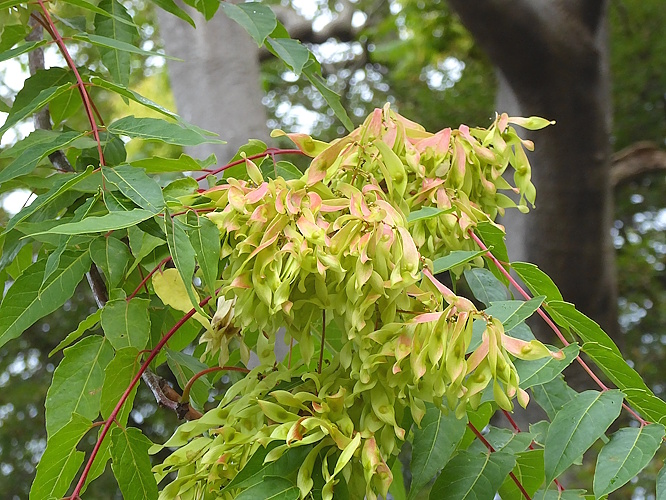
A tree I haven’t spotted here before is a rather spindly Tree of Heaven in copious brightly-coloured fruit. They have separate male and female trees, known as “dioecious”, so this is a female tree.
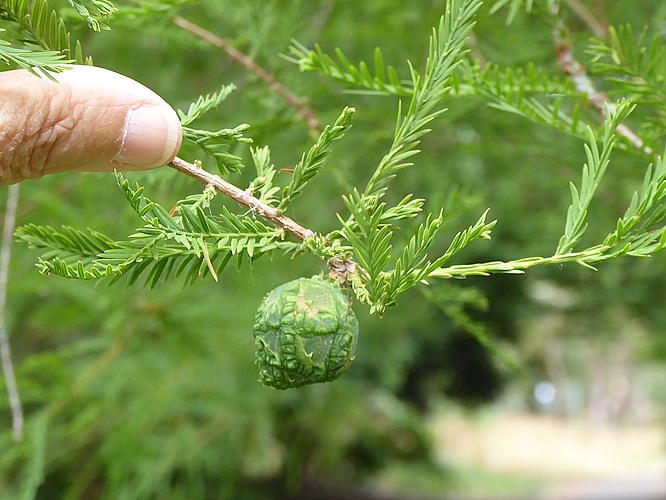
On the bank of the stream near the Oasis café was some kind of Cypress, which we initially looked at because there was a little bird in it, possibly a Goldcrest. The tree had some unusual “cones”. One of the apps suggested Swamp Cypress Taxodium distichum (also known as Bald Cypress), but this tree’s leaves were smaller than that, angled closer to the stem, and I have never seen any cones on the Swamp Cypresses I know. However, in this weather, trees might be doing all sorts of unusual things. There is a rarer tree called a Pond Cypress Taxodium ascendens which has leaves like that, so I don’t know which one this is.
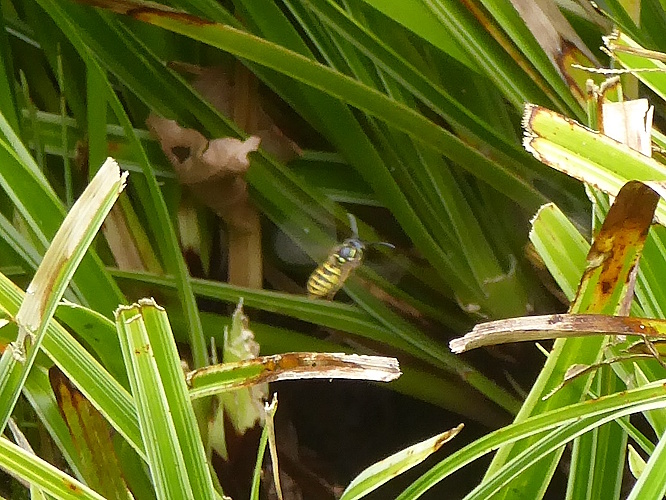
We lunched in the area of the old aviary. A strappy plant on the central bed caught our attention, with lots of bees or wasps coming out of the middle of it. They appeared to have a nest in the ground amongst the roots of the plant. Were they some kind of Mining Bee? But they were bigger than that, the size of ordinary Common Wasps. An app suggested the similar European wasp, Vespula germanicus. It is hard to tell the difference between them, it all depends on some spots on the wasp’s face and I didn’t want to look THAT closely! They were all busily on the move, but here is my best photo.
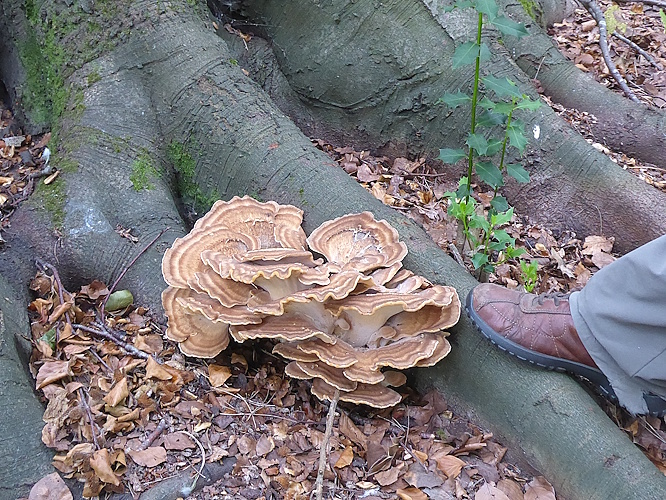
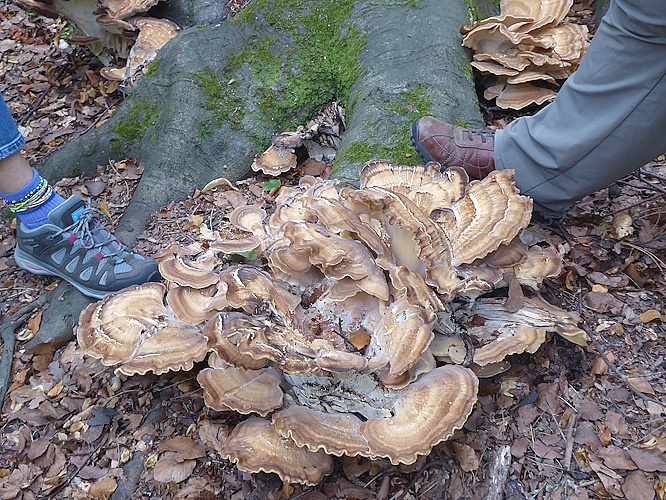
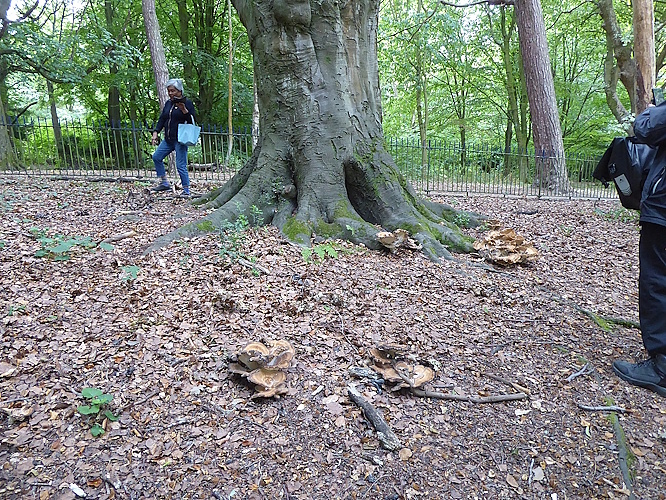
On the way to the Fairy Glen we passed several dozen dachshunds with their owners, walking companionably together. It is an organised event, a weekly Sausage Stroll! We were on the way to look for a Giant Polypore fungus Meripilus giganteus on a Beech tree. It had been spotted by MNA member Daniel earlier this week, who put pictures of it on our WhatsApp group. We looked by the wrong gate at first, then found the affected tree, uphill from the stepping stones, eastward towards Mossley Hill Drive, adjacent to the railings. It had at least half a dozen fruiting bodies, some of them several meters from the trunk, growing along the root lines. The old Beech is listed by the Ancient Tree Inventory, but must now be coming to the end of its life.
As we returned to the eastern side of the lake we admired more trees. There is a lovely wide-spreading Cut-leaved Beech in the Fairy Glen and a big suckering clump of Caucasian Wingnuts near the William Rathbone memorial. In the shady shrubbery was a pair of Mute Swans, no cygnets about, so if they nested this year, they failed. One bore a blue Darvic ring, but it was too dirty to read, even from a close-up photo.
Public transport details: Bus 82 from Elliot Street at 9.55, arriving Aigburth Road / Ashbourne Road at 10.15. Returned on the 82 bus at 1.45 from Aigburth Road / Jericho Lane, arriving Liverpool 2.05.
No Sunday walk next week, as most of us are on the MNA coach trip on Saturday. The following week’s destination (30th August) is to be advised.