Otterspool, 15th August 2021

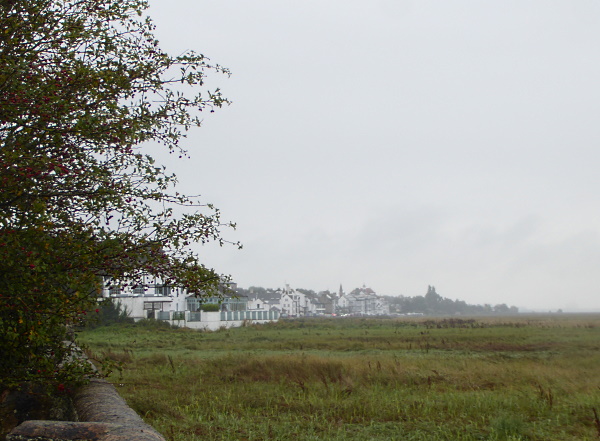
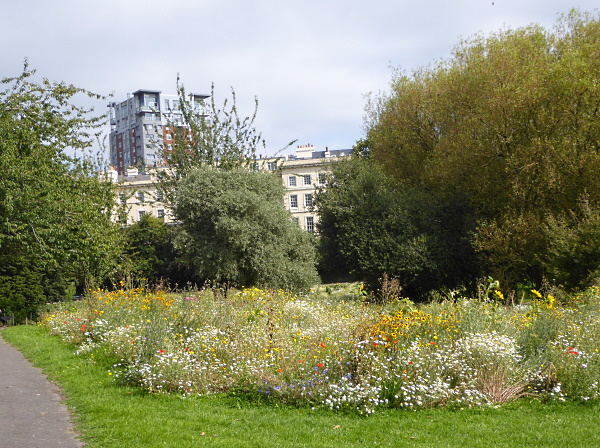
On a warm and humid day with the threat of rain, we went down to Otterspool promenade on the banks of the Mersey to see the carpets of wildflowers we had been told were there.  And so they were, masses of them, quite pretty, mostly yellow, but not the best we have ever seen.
The predominant flowers were yellow Corn Marigolds, interspersed with a few Cornflowers, Poppies and Wild Carrots.

In amongst them were occasional clumps of something pink-and-purple. I think it was Viper’s Bugloss, but it was very pink. There seemed to be clumps of a white variety too, which doesn’t occur in the wild. You get some odd things in some wildflower mixes. But there were lots of bees and hoverflies enjoying them.

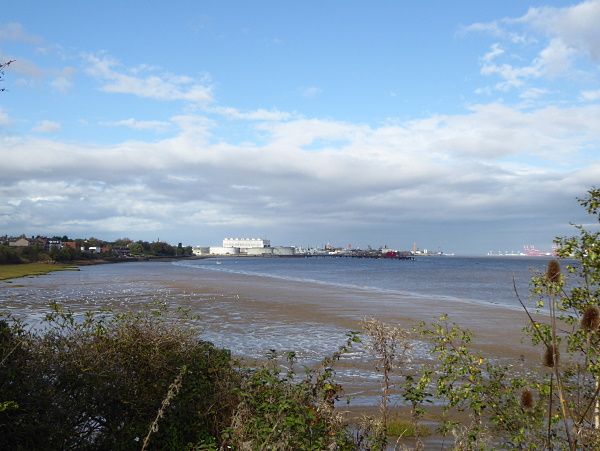
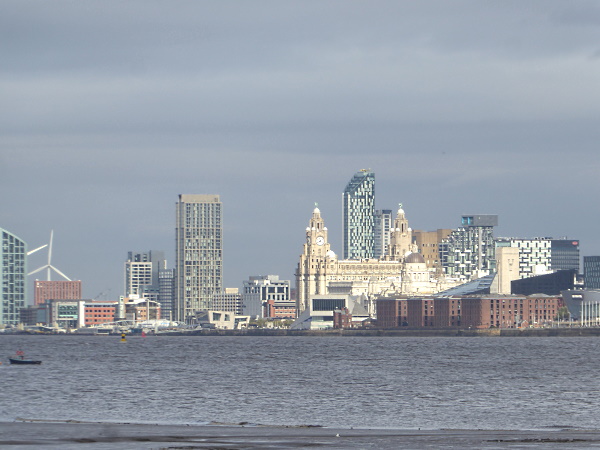
The tide was well out, exposing the mid-river sandbanks. There weren’t many birds loitering there, just a motley sprinkling of gulls and crows, one Greater Black-backed gull, a Common Tern with a fish, a Cormorant flying down river and a single Swallow. There were great views south eastwards to Garston, north westwards to Birkenhead and Cammell Laird’s shipyard, and way off to the south, Stanlow oil refinery with the Helsby and Frodsham hills behind it.
South to Garston
Birkenhead and Cammell Laird’s
Stanlow

We had a good look at the rocky mud at river’s edge. Picking about were the usual gulls, a few Oystercatchers, and also some autumn visitors – Redshanks and Turnstones, which have arrived very early.

Oystercatcher (left foreground), Herring Gull (the big one) and Turnstone (right, on the edge of the pool)

There is an old sewage outfall opposite Eastham. The river has now been cleaned up, but years ago, when the pipe was spewing out untreated sewage, this stretch of the Mersey was said to be the best place in the country to see large numbers of the uncommon duck, the Pintail. (Yuk!)

Walkers and cyclists can only go as far south as Grassendale, but a continuation of the prom can be seen past a fence and a gap. Rumour has it that the posh folk in Cressington and Grassendale didn’t want the public path joined up because they didn’t want all and sundry walking past their houses.

A squall of fine rain came up the river, so we took refuge under some trees, then headed up the  sheltered Beechwood Road South, past newly-built detached houses and up-market apartment blocks, north along the footpath by the cricket field, onto Riversdale Road and back down to the prom. The weather had cleared up in just those ten minutes, so we sat and ate lunch overlooking the Mersey with the tide coming in strongly, hoping for seals, porpoises or even a Killer Whale! No luck (although all those have occasionally been seen in the river.)

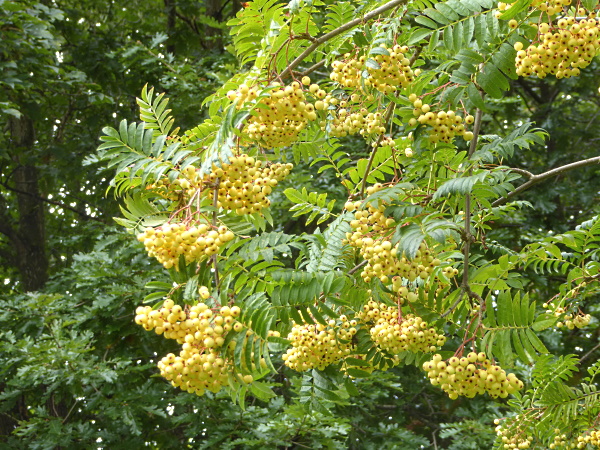
We retraced our steps back along the prom. During another heavy shower we sheltered under the awning of the Otterspool Adventure Centre café. Then, even though the sun had come out, we decided not to push our luck any further and call it a day.  On the way back to the bus we spotted some new plantings of Oak and Bird Cherry saplings and an orange-berried Rowan.

The most surprising tree was a Tamarisk in the centre of the busy roundabout at the bottom of Jericho Lane, leaning at an alarming angle. Its pink autumn flowers were starting to show and it will be splendid when it gets bigger, as long as it manages to stay upright.

Public transport details: Bus 500 (the airport bus) from Liverpool ONE bus station at 9.59, arriving Jericho Lane / Riverside Drive at 10.20. Returned from the opposite stop on the 500 at 1.25, arriving Liverpool ONE at 2.05.

Posted in Sunday Group | Comments Off on Otterspool, 15th August 2021

Stanley Park, 1st August 2021

Stanley Park is a purpose-built city park, designed by our favourite landscape architect Edward Kemp (Flaybrick Cemetery, Grosvenor Park Chester) and opened in 1870. It’s located between Liverpool and Everton football grounds, which are less than half a mile apart across the park, one to the north and one to the south.

The park contains three trees listed by the Tree Register, and the first is our old friend the Weeping Wych Elm (Ulmus glabra ‘Pendula’) in the circle of Plane trees in the roundel at the northern end. It isn’t a champion, simply listed as “remarkable”.

The second is Grignon’s Thorn, Crataegus x grignonensis, which we weren’t able to find. It’s the height champion of Lancashire at 6 meters, and is said to be on the north bank of the lake. Unfortunately its leaves look just like those of ordinary Hawthorn, and it is distinguished by its large flowers and masses of dark red fruit. We are looking at the wrong time, of course, between the spring and the autumn, so we will have to look for it another day.  We think we DID find the third tree, and it’s a real rarity, an Altai Thorn Crataegus wattiana.  It is said to be by the path on the north of the lake, and we found it (probably) around the new lake path, by a bridge.  The leaves look right, with deeply-cut lobes, distinctly different from normal Hawthorns. To be really sure we need to see the fruit, which is said to be yellow, with five stones. Again, we’ll have to look again.

There was a sign on the railings confirming that this lake, too, has blue-green algae. The water wasn’t looking too bad, but it was a bit luridly green in some quiet corners. It didn’t bother the birds, though. There were plenty of Mallards and Coots and an occasional Moorhen. A Great Crested Grebe put in an appearance, but most of us missed it while we were looking at the trees.  The only land birds were Magpies, Crows and Feral Pigeons.  Some of the Rowan berries have already turned red, and the berries of the Guelder Rose are just on the turn. It’s autumn!

Last year they planted wild flowers at the edge of the football field and this year they have used that land to plant young native trees, while moving the wildflowers further out.

The trees were mostly Oak, Birch and Willow, with some others that were too small to identify. Several white butterflies were flitting over the flowers, but nothing else. John was in the park nearly every day during lockdown last year, and said he saw 11 species of butterfly on the meadow (not all at once, of course) but this year is very poor. The flowers were lovely, with a mix of Poppies, Cornflower and Marigolds, with the occasional huge Sunflower.

Swallows were flying low over the grass near the terrace and the formal beds. Several had nested under the roofs of the pavilions, and some were still lurking inside.

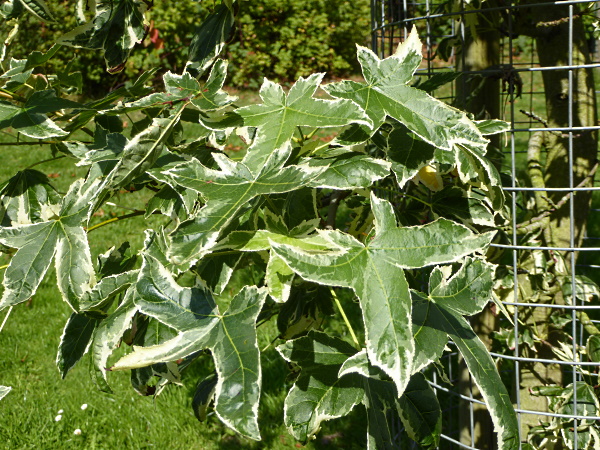
This marvellous shrub was near the Conservatory, and it looks like Smoke bush Cotinus sp., possibly the dwarf variety ‘Young Lady’.

Then we crossed into Anfield Cemetery. Earlier this year a Sparrowhawk nested in the spire of the old chapel, but there was nothing to see today. Other birds were scarce here too, with just the usual Magpies and Crows.

The Cemetery has many mature Silver Pendent Lime trees, filling the air with a lovely scent.

A recent addition is a number of signboards put up by the Friends, drawing attention to notable graves. One lists “Victoria Cross Heroes”, another is about the Chinese revolutionary Sou Zen Young, who drowned himself at Crosby beach after being exiled, and a third is about Michael James Whitty (1795-1873), who was a very important Victorian Liverpool worthy. He was Superintendent of the Night Watch in Liverpool’s first police force, later becoming the Head Constable of the Liverpool Fire Brigade and the Police (1836-1844). In about 1850 he founded the Liverpool newspaper, the Daily Post.

We were hoping to see a sign about James Maybrick, who was supposedly murdered by his wife Florence and is buried in this cemetery. She was the victim of a miscarriage of justice but escaped hanging.  We did see the grave of William and Julia Wallace. The nearby sign is headed “The Perfect Murder?” and goes into some detail about why William was suspected and convicted of Julia’s murder. Only at the very end does it say that his conviction was quashed, and the tone implies he “got away with it”. Now we know that he was innocent and was the victim of another miscarriage of justice.

Finally, we visited the grave of Norman Alexander Milne, 1924-1963, who was a famous British singer in the late 1950s and early 1960s under the name of Michael Holliday. You may remember him from “Starry Eyed” 1959 or the theme to the TV show “Four Feather Falls”.

Public transport details: Bus 19 from Queen Square at 10.04, arriving Walton Lane / Bullens Road 10.25. Returned on the 19 bus from Walton Lane / Priory Road at 15.10, arriving Liverpool City Centre 15.30

Posted in Sunday Group | Comments Off on Stanley Park, 1st August 2021

Croxteth Country Park, 25th July 2021

Croxteth Hall is the former seat of the Molyneux family, the Earls of Sefton. After the death of the last Earl in 1972, the estate passed to Liverpool City Council and is now a Country Park.  The long carriage drive to the house starts in West Derby Village, now little more than a suburban road junction with a church, a pub and a couple of shops, but it was once a more important place than Liverpool. It was the “capital” of West Derby Hundred, which is roughly equivalent to all of modern Merseyside, reaching as far as Leigh and Ormskirk.  It held a court every few weeks for minor offences, and the present little stone courthouse with shuttered windows is from a building which was constructed during the reign of Queen Elizabeth I.

Happily, it was a little cooler today. On the right of the main route was a detour into a wildflower meadow. Corn Marigold was on one side, buzzing with bees, and there were a few Poppies and Cornflower.

The wildflower planting on the other side of the path was puzzling. The edge was pink-flowered Redshank while the main mass was a similar but paler plant with white flowers. Was it Bistort or was it Pale Persicaria?

The herd of Highland Cattle were resting in the shade under a clump of trees. We were amused by the sign asking people not to feed them, as they are on a special diet!  There were Magpies climbing on them, like African Oxpeckers on zebras, and doing the same job of eating flies I suppose.

Near the great house there is still a Home Farm, some labourers cottages, an old smithy building and an amazing stableyard and carriage stores.

Mull Wood has been opened to the public in the last few years, mainly Beech and Sycamore.

Some trees had shed lots of crunchy beech mast underfoot, while others appeared to be holding on to theirs. Have some been dropping their fruits prematurely in the heat? An old cut trunk of (probably) Lombardy Poplar had some lovely white fungi sprouting from the dead wood. It looked like Oyster Mushrooms, and also reminded me of Velvet Shank Flammulina velutipes, but that’s orange/red so it couldn’t have been that.

The woodland path crosses the river Alt, and a passing cyclist said that on quieter days there is often a Kingfisher sitting on an overhanging branch.

On the lawn in front of the hall is a marvellous spreading Copper Beech, making a patch of shade for people to sit under.

We saw very few birds today. One Swallow, one Robin, plus the usual Crows, Magpies and Wood Pigeons, but not even many of them. There were a few White butterflies, and a fleeting dragonfly but most wildlife must have been hiding in the shade. The sun was very strong as we returned (uphill!) to West Derby Village.

As I arrived home I found a Red Admiral butterfly on my Buddleia. That’s the first one in my garden this year, and very welcome, but where have they all gone?

Some other home news. There is a small colony of Swifts near my house, but I have never found exactly where they nest. Five birds arrived in May, and I’ve seen them flying low most evenings since then. On Thursday evening (22nd July), there were suddenly eleven of them!  I assume that means they have fledged two broods of three youngsters. The expert who gave a talk to the MNA some years ago said they fly off to Africa immediately, but there were still six flying past and screaming on Sunday evening (25th). Do the youngsters hang around a few days longer, like young Swallows do?    

Public transport details: Bus 13 from Queen Square at 10.07, arriving Mill Lane / West Derby Village at 10.25. Returned from Mill Lane / Town Row on 13 at 15.02, arriving Queen Square 15.25.

Posted in Sunday Group | Comments Off on Croxteth Country Park, 25th July 2021

Leasowe, 18th July 2021

On what may have been the hottest day of the year we walked north from Moreton Station down Pasture Road, towards the sea front. The land on the east (right) is owned by Premier Foods and surrounds a Typhoo tea factory. There are new houses being built south of the factory site, but to the north is a popular green oasis called Ditton Lane nature area. Wirral Council have recently designated it as a Local Wildlife site, but the decision remains open to appeal by Premier Foods. There are said to be a large number of rare native Black Poplars there, but all we saw from the road was a Buzzard keeping watch from overhead. On the way back there were a couple of House Martins.

We crossed over into North Wirral Coastal Park and followed the path along the River Birkett towards the old lighthouse. The path was lined with masses of wild flowers: Great Willowherb, Green Alkanet, White and Purple Clover, Meadowsweet, Buttercup, Himalayan Balsam, Golden Rod, Common Mallow, Wild Carrot, Yarrow, Bindweed, Creeping Thistle, Coltsfoot leaves and clumps of Horseradish leaves. This red seedy plant confuses me. Is it Mugwort? Fat Hen?  After a rummage I now think it’s either Common Sorrel or Sheep’s Sorrel, with the latter more likely as it’s near the coast.

There were tufts of Ragwort everywhere. It’s many years since we saw huge numbers of the black-and-yellow caterpillars of the Cinnabar Moth, but we keep checking. None at Leasowe, but we saw a few yesterday at Lydiate.

We climbed up to the top of the sea-defence bank. The tide was way out, revealing an almost-empty beach (but the sea comes crashing against the sea wall at high tide in autumn gales.)  Leasowe is on the north-facing Wirral coast, with the Mersey and Dee estuaries on either side. To the left we could see all the way to Anglesey and the Great Orme, to the right we could see the docks at Seaforth and northwards along Crosby beach, and in front were the turbines, which were not spinning at all today.

We wandered south-westwards on the top of the bank. The birds on the sand were humdrum – Carrion Crows, Herring Gulls, Lesser Black-backed Gulls, while a few Starlings flew over, and we spotted just two Swallows.  Several White butterflies were abroad, and during the day we also saw a Comma, a Speckled Wood and a Red Admiral. Then we came down off the bank and headed back northwards via an overgrown path just inland of the Wirral Coastal Trail. It was almost machete-worthy, like Darwin’s tangled bank, made of walls of Reeds, Himalayan Balsam and Willow scrub, bound together by Brambles, Bindweed and Goose Grass.

Despite appearances, there was no chance of getting lost and we soon spotted the lighthouse, which led us back to better-trodden paths.  We stopped to admire this blue-flowering shrub. Is it some kind of Ceanothus? There are often garden “escapes” (more likely “dumps”) here, so it could be anything.

Yesterday (Saturday) was another very hot and sunny day for the MNA walk in Lydiate. We spotted two or three Yellowhammers.  On the Leeds-Liverpool canal there appears to be a breeding colony of Emperor dragonflies, south of Rimmer’s Swing Bridge. We saw several flying back and forth and a female clinging to waterside vegetation as she laid eggs.  The more common dragonfly, the Broad-bodied Chaser, was also there in good numbers and one male posed for me on a dead leaf of Arrowhead.

Public transport details: Train from Central at 10.35 towards West Kirby, alighting Moreton 10.55. Returned from Moreton on the train at 14.41, arriving Liverpool at 15.05.

Posted in Sunday Group | Comments Off on Leasowe, 18th July 2021

Sefton Park, 11th July 2021

The park was quieter than usual, not as crowded with people (or birds) as we often find. This may have had something to do with the state of the water. The main lake was blotched with blue-green algae. Signs all around the railings warned people and dogs to keep clear: even the local fishermen and the model boat club have been banned.

But most of the usual birds were there. Plenty of Coots, Mallards, Black-headed Gulls and Lesser Black-backed Gulls. A large flock of Canada Geese hung around for bread on the eastern bank. We never see them nest or breed here, so are they all juveniles? The Coots seem to be constructing nests all over the place, and we were surprised to see a Terrapin basking on the side of one. There used to be lots of Terrapins in the lake, ex-pets from the Ninja Turtles boom, but we thought they had all been removed when the lake was drained and cleared some years ago. Either one survived the purge, or it is a recent introduction. At the north end were a pair of Mute Swans with a single well-grown cygnet, a Cormorant on a post and a Great Crested Grebe. No sign of the Little Grebes, though.

We don’t usually come here in summer, so it was lovely to see some familiar trees in full leaf. The Narrow-leaved Ashes (Fraxinus angustifolia ’Raywood’) were still dark green, saving their magnificent purple and gold colour for the autumn.  The County Champion Black Walnut Juglans nigra opposite the bandstand was superbly elegant.

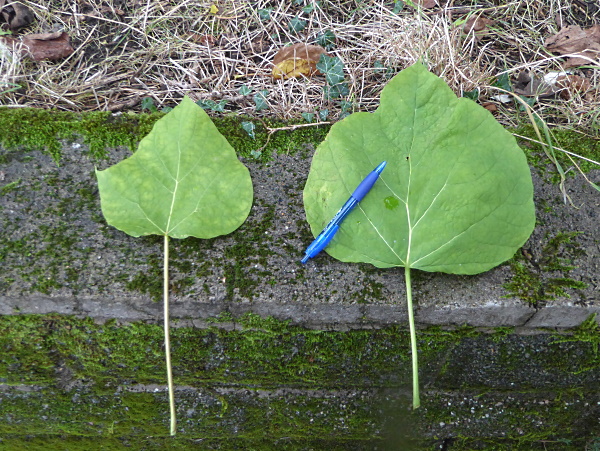
The tree just around the corner from the “Oasis in the Park” café was probably an Indian Bean Tree Catalpa bignonioides, although we discussed the atypical slight point or lobe on either side of some leaves. It looks as if it is on the way to being a Hybrid Catalpa Catalpa x erubescens and not quite the same as another on the other side of the stream.

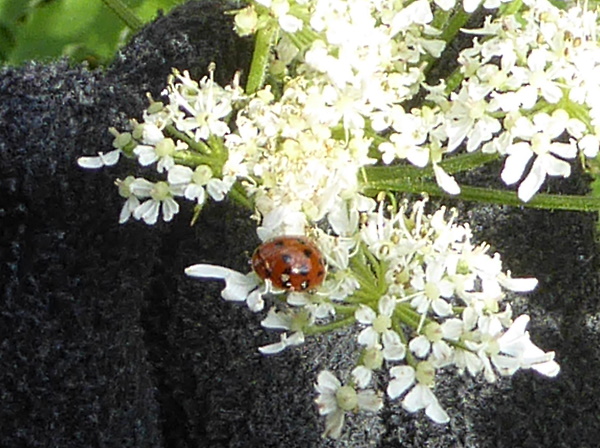
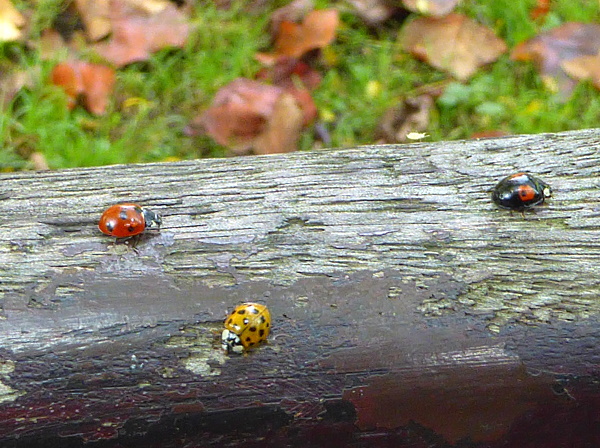
Near the old aviary a Comma butterfly sped past. On the nettles below the second Indian Bean Tree we found a Harlequin Ladybird nursery. The adults were just emerging from their larval coats. On this picture of three individuals, the top one is a larva, while the other two are adults with the larval coat clinging to their backs.

The stagnant stream by the café was completely covered with green scum, looking like a solid surface. Was this more of the blue-green algae? On it were thousands of long-legged flies. A Moorhen sat on the edge, not going in, but snatching as many flies as it could reach.

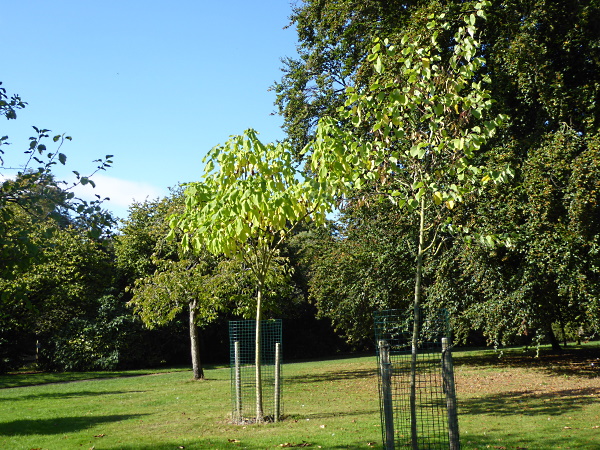
Just around the corner from the Eros Fountain, north of the path going east to the Plane Walk, three young trees were planted several years ago. We have noted them before, but now we see them in summer we are becoming more confident that they are Foxglove trees Paulownia tomentosa. The bark is a bit ridgier than we expected, but Mitchell’s tree book says this is typical of young trees.

The trickling stream in the Fairy Glen looked a bit “off”, too, appearing greyish like dirty dish water. Some little girls were fishing with dipping nets, and were bringing out tiny Sticklebacks, so the fish weren’t affected by the odd water. This is where Kingfishers are often seen, although they may be away breeding, as there is nowhere in the park for them to dig riverbank nest holes. A mother Mallard had six ducklings, perhaps hatched that morning. (Only five in the picture, because one was lagging behind, as one always does.)

Along the wildlife woodland path we spotted a fleeting Wren and just one Ring-necked Parakeet. We stopped to listen to some odd calls from the woods, which turned out to be the contact calls of a brood of young Magpies, just fledged, looking like adults, but clambering clumsily around the branches. Earlier we had also found a Jay’s blue wing feather.

Some trees have a second flush of new leaves in the summer, known as Lammas growth. (Lammas Day is 1 August). Here’s a Red Oak showing the effect.

There is a wildflower meadow, but it is a few years old and there was nothing much growing but yellow Hawkweed. However, find of the day was an Emperor Dragonfly, resting on the grass, and seemingly tangled in a grass seed-head. When disturbed it seemed to struggle for a moment, flew off level and unsteadily for a few inches then soared away.

Posted in Sunday Group | Comments Off on Sefton Park, 11th July 2021

Crosby, 4th July 2021

On a very hot and sultry morning we met at the Waterloo Sunset café at the south-western end of South Road, Waterloo, for a walk along the beach, by two nature reserves and through the seafront gardens.

There is a newish little nature reserve on the south-east corner of the Marine Lake, made up of a  boardwalk through reeds and plantings of native trees. We spotted one Common Blue Damselfly (but there would surely have been many more) and also a male Reed Bunting perching on a high reed. On the unmown grassland as we emerged there were patches of Bird’s Foot Trefoil (the food plant for several of the Blue butterflies), orchids in the long grass, and several butterflies on the wing. First was an unidentified White, then a Meadow Brown sipping from Creeping Thistle and finally what I think was  a Large Skipper, the sharp black line on the wing identifying it as a male. That new nature reserve is a success!

Bird’s foot trefoil
Meadow Brown
Large Skipper

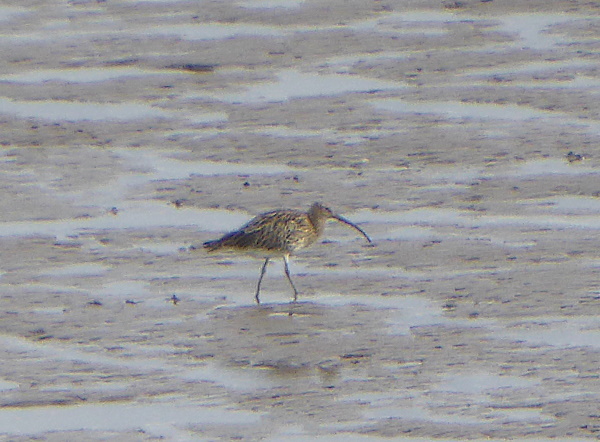
Beyond the fence along the south edge of the Marine Lake, are two pools within the dock estate, managed by the Lancashire Wildlife Trust. You need a permit to go in by the dock gates, so lesser mortals just have to peer through the railings. There was rumoured to have been a Roseate Tern there the day before, so we had a look. There were Shelduck, Oystercatchers, about a dozen Curlew, Cormorants, Mute Swans, Canada Geese and rabbits. Some Terns were on the floating platform, but there have been no reports of them nesting this year, and there was no way to see if one was Roseate.

Then we walked north on the path along the beach. The high speed catamaran “Manannan” sped past on its way to the Isle of Man.

The Sea Holly was budding and the Marram Grass had big, soft flower heads, which I don’t remember seeing before.

Anthony Gormley has been here recently with some heavy machinery to rescue some of his Iron Men which had fallen and were lost in the mud and sand. I thought he had made them all level with the beach again, but some near the prom were still buried to their thighs. These kids clearly want to help him out.

There were a prodigious number of  Mute Swans on the Boating lake, at least 30. They get free handouts of food from the locals and their kids.

There were the usual Mallards, Canada Geese, a few Tufted Duck and a row of immature Herring Gulls sitting on the barrier.

The local pair of Black Swans, which commute between Waterloo and Southport, were also present. They are native to Australia, and must have escaped from a wildfowl collection.

We looked at three of the four beachfront gardens. The only birds were Sparrows, Magpies and Wood Pigeons. A lot of the shrubs were flowering magnificently, especially the Mock Orange, strewing its white petals all over the paths. There were plenty of Snowbells (Storax japonica), a bright yellow Broom, several Globe Buddleias and this gorgeous Tree Mallow.

This shrub is one that I’ve seen often but never known what it was. It has spiky leaves a bit like Holly, but on Sunday I saw it flowering for the first time. It’s a kind of daisy bush called New Zealand Holly Oleana macrodonta.

And for those of you who are wondering how my crop of Sweet Peas is going this year – excellent! Here are the ones I cut a couple of days ago.

Posted in Sunday Group | Comments Off on Crosby, 4th July 2021

Calderstones Park, 27th June 2021

A day looking at trees in Calderstones is always a treat for me, there are so many rarities to find. We intended to go into the Japanese and Old English gardens, but found them closed because of a “dangerous wall and tree”, according to the sign. But on the formal lawn and beds outside was a lovely Cornus kousa, the Korean or Chinese Dogwood, at the peak of its lovely flowering.

Then we headed for the southern boundary, stopping on the way to look at an old stump with a low cranny which had been a nest of a Treecreeper family earlier in the year. (The arrow is mine!)

We were heading for the bog garden, but on the way enjoyed the woodland path along the Allerton Road edge.  There were lots of huge old trees, including this Oak in a clearing, which was probably Turkey Oak Quercus cerris. The leaves were bigger than we are used to but there were diagnostic bristly acorn cups on the ground below it.

There aren’t many birds around urban parks this time of year. The usual Blackbirds, Robins, Wood Pigeons and Magpies (and Canada Geese and Mallards on the lake), but we heard and spotted both a Chiffchaff and a Song Thrush, singing from high perches.

Song Thrush

We lunched on the edge of the woods, where a big old Poplar was shedding copious fluff. In the words of Richard Dawkins it was “raining DNA”. The fluff surrounds the seeds, helping wind dispersal, but that means the tree must be female. However, it looked rather like an upright “Lombardy” Poplar, which are all male clones. A puzzle! Perhaps it was some hybrid of a male Lombardy and a female Black Poplar.

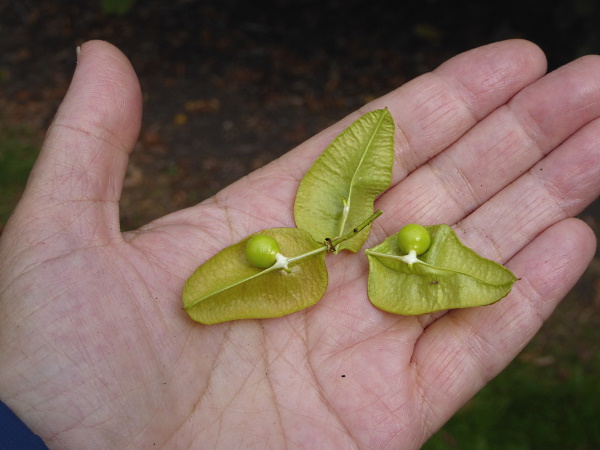
They have planted several interesting rarities in the Bog Garden. This is a Caucasian Wingnut Pterocarya fraxinifolia, a member of the Walnut family, with its long strings of winged seeds.

Tulip trees are always a pleasure to see, but this area has an even prettier variegated one, Liriodendron tulipifera ‘Aureomarginatum’. They are quite rare.

Our eyes were caught by this unusual Maple with red-winged seeds and leaves with single teeth on each side. It looks like one of the Snake-bark Maples, but the bark was smooth and grey. After consulting the book, I now think it might have been a Red Maple Acer rubrum. They have spectacular autumn colour, so it’s worth another visit later in the year.

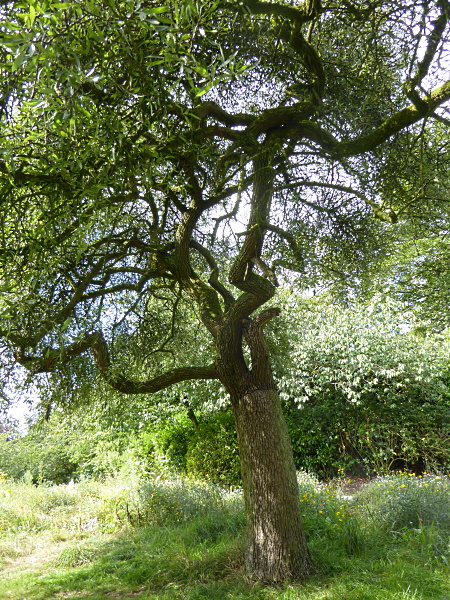
Our real target was a Dragon’s Claw Willow Salix matsudana ‘Tortuosa’. It’s so rare it doesn’t appear in most tree books, but an old Calderstones tree leaflet has one marked. I think it might be this one in an obsure corner. The trunk and inner branches are very contorted, but it has been severely pruned and the new growth looks like sparse weeping willow. The leaves are a bit twisted-looking, so it might be the one.

On the way back we went to look at the struggling Mulberry, which appears to have nearly died some years ago. It still has lots of dead outer branches but the core is re-sprouting well and bearing immature fruit.

Public transport details: Merseyrail train from Blundellsands and Crosby at 9.52, arriving Liverpool South Parkway at 10.27. Then bus 86 at 10.352, arriving Mather Avenue / Storesdale Road at 10.41. Up Ballantrae Road to the south-west entrance to the park. I came home on the bus 61 for Bootle, and was surprised at just how widely it roamed on the way north!

Posted in Sunday Group | Comments Off on Calderstones Park, 27th June 2021

Woolton and Childwall Woods, 20th June 2021

It had rained in the night, the first rain for a week or more, and it was still damp and humid as we entered the Black Wood (part of Woolton Woods). The sun was shining through trees, but it was very quiet and still. The only sound above the faint traffic noise was a Blackbird singing.

Woolton and Childwall woods in the south Liverpool suburbs, although adjacent, originated as the parkland and woodland of two different great houses. The land of Woolton Hall originally belonged to the Knights Hospitaller but was confiscated by the crown during the reformation. Various owners have held it over the centuries since then until it was acquired by Liverpool City Council in the 1920s. Childwall Woods were planted with Beech and Sweet Chestnut in the 1700s by Isaac Greene, a wealthy attorney from Prescot. None of the histories of either estate suggest that any of the wealth of the previous owners came from slave trading, which is unusual for Liverpool.

The oldest Beech trees in Woolton Woods are reaching the ends of their lives and are full of fungi. This huge growth might well be Hoof Fungus Fomes fomentarium,which is traditionally found on Birch but is being seen more on Beech as the climate warms.

The wildflowers on the path edges were Bramble, Wood Avens with its yellow flowers and hooked seeds, Cow Parsley and Wild Garlic that had both mostly gone over, and some patches of Dog’s Mercury, which is a  sign of ancient woods.

Childwall Woods, on the other side of Woolton Road, lead through to an open area called Childwall Fields, a wild Buttercup meadow dotted with orchids. There seemed to be three kinds, a dark cylinder, a taller lighter one with spotted leaves, and a shorter fatter one with dark purple flowers. We mulled over “Early Purple” and “Common Spotted” in the books, but they hybridise so readily that identification is very difficult. They are just lovely, that’s all.

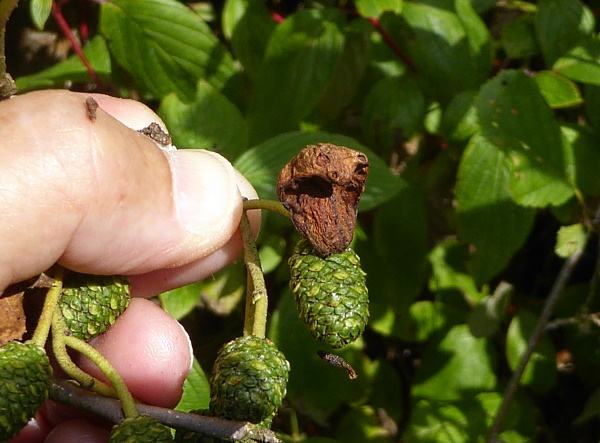
We stopped to examine a young Alder tree with holes in the leaves. As we suspected, it was full of Alder beetles. There were some patches of eggs, and some pairs of mating adults, but we couldn’t find any grubs. There must have been some somewhere to have chewed those holes in the leaves.

Along the sunny path we admired the Elder trees, currently in full bloom. One Hazel tree already had half grown nuts. The Brambles, Ground Elder and Hogweed had bees visiting them.

Birds seen or heard included Robin, Greenfinch, Chaffinch, Chiffchaff, a fast flypast of a Jay, a  Song Thrush, and a Wren in a Lime tree in Childwall Woods. Our only butterfly of the day was this very new-looking Speckled Wood, bright and colourful, which had perhaps just emerged from deep in the grass.

Public transport details: Bus 81 from Balliol Road at 9.57, arriving Countisbury Drive / Childwall Park Avenue at 10.35. Returned at 2.17 on the 81 from Woolton Road / Cabot Green.

Posted in Sunday Group | Comments Off on Woolton and Childwall Woods, 20th June 2021

Allerton Towers,13th June 2021

Three of us met on a warm, humid, overcast day. Allerton Towers is an easy “first choice” destination for our first venture out after several months. (See also 9th August and 13th September 2020).

The Hawthorns in the “Hawthorn and Holly” walk seem to be recovering from their bad 2020. They were in sparse leaf, with some blossom going over. The occasional healthy branch showed they are the variety ‘Paul’s Scarlet’ with pink double flowers.

Nearer the orangery two of them were different. They had larger white blossom and simple ovate leaves, and they look like one of the rarer thorns.

Off the walled garden the Laburnum arch had gone over, but still looked pretty.

On the lawn we spotted a huge tree, a False Acacia or Black Locust Robinia pseudoacacia. It was a bit sparse at the top, but it has never been hemmed in and has spread very widely. It had some of its Laburnum-like white flowers, too.

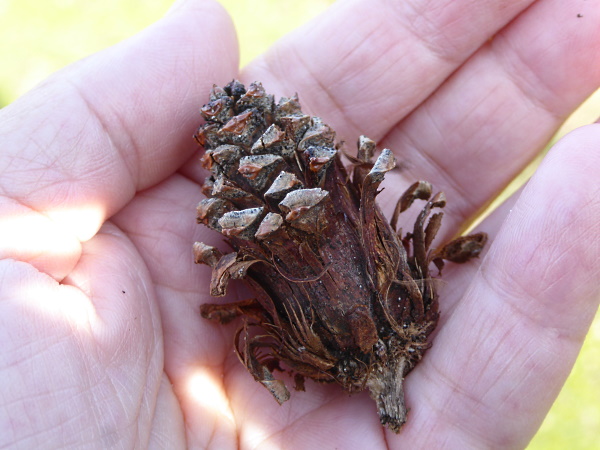
Near the Rose Garden we heard and saw both a Mistle Thrush and then a Song Thrush. There weren’t many birds about, just the ubiquitous Wood Pigeons and Magpies, although we did get a glimpse of a Dunnock. A cone under the Bhutan Pine looked squirrel-chewed, but we broke up the intact lower half looking for how the seeds are formed. They nestle in pairs inside the bottom of the scales.

Home news: Five Swifts appeared over my garden on 1st June, and they are still around, flying low around the houses at sunset. They must nest nearby but I have never spotted them entering any holes under eaves. A pair of Lesser Black-backed Gulls have nested amongst the chimneys on a house in Myers Road West. According to the neighbour opposite them, they have three chicks, and are dive- bombing anyone who walks by.  Here’s one of the parents keeping guard (but no chicks to be seen yet).

Other neighbours, with gardens next to mine, say a Hedgehog has been seen again (I saw it myself last summer). I’m seriously thinking of getting a trail camera!

Public transport details: Bus 76 from Queen Square at 10.02, arriving Menlove Avenue / Cheddar Close at 10.40

Posted in Sunday Group | Comments Off on Allerton Towers,13th June 2021

Thornton, 27th September 2020

I went on a short solo wander on Sunday morning to explore the rough land between Thornton Garden of Rest and the new Broom’s Cross Road. I took the bus to Edge Lane / Water Street and walked to the old Thornton village centre, which still has its ancient cross base and a set of stocks. They can’t be very old stocks because they appear to be made of cast iron. Perhaps they replaced older wooden ones.

Alongside the Nag’s Head pub is an old road called Holgate, which used to lead to a footpath into the farmland, but is now crossed by the fast new road. Happily, they put in several pedestrian crossings while they were building, to accommodate ancient rights of way, so I was able to achieve my ambition of stopping the traffic on that stretch.

I planned to go and see the ancient monument, the original Broom’s Cross, but the footpath was too overgrown. There was a bird of prey overhead, probably a Sparrowhawk, which had put up a large flock of small brown birds from the farmer’s field, possibly Linnets. High-pitched goose calls overhead attracted my attention to a small flock of Pink-footed Geese, heading eastward. They are regular migrants to south Lancashire for the winter.

Stopping the traffic again (what fun!), I took the new footpath alongside the road, leading to a patch of rough meadow. One Large White butterfly was still on the wing. Flowers still showing were Ragwort, Bindweed, Red Clover, and the lovely curled-up seed heads of Wild Carrot.

The path across the meadow led to the back of the local cemetery, Thornton Garden of Rest. The only birds seemed to be Magpies, Crows and Wood Pigeons, but there were plenty of small groups of people, visiting graves on this lovely bright autumn day.

Posted in Sunday Group | Comments Off on Thornton, 27th September 2020