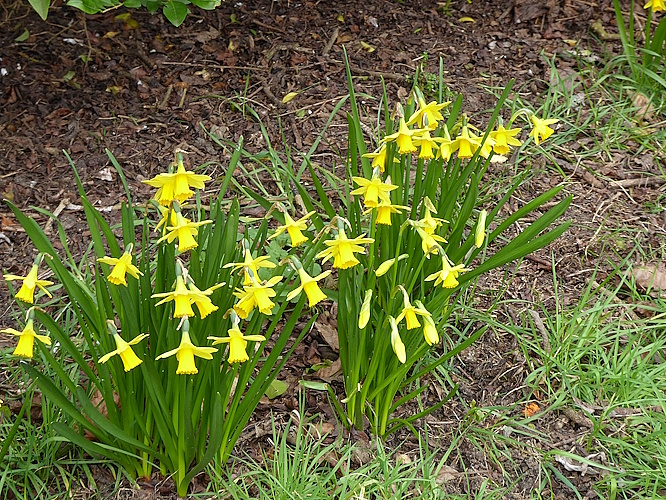
Today was St David’s Day, and he is the patron saint of Wales, whose emblem is a daffodil. The standard Welsh greeting for St. David’s Day is “Dydd Gŵyl Dewi Hapus”, which translates directly to “Happy St. David’s Day” and is pronounced roughly as Deeth goyl Dewi hap-iss.
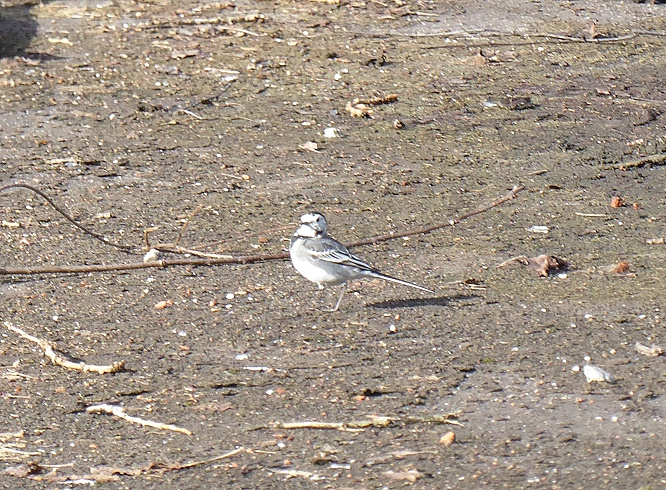
Today we visited three small parks in Crosby: Coronation, Alexandra and Victoria. Coronation Park was set up for outdoor activities, with a large children’s playground, now-neglected bowling greens and a former toy-boating pond. That pond is now empty and muddy, but was being enjoyed by a Pied Wagtail.
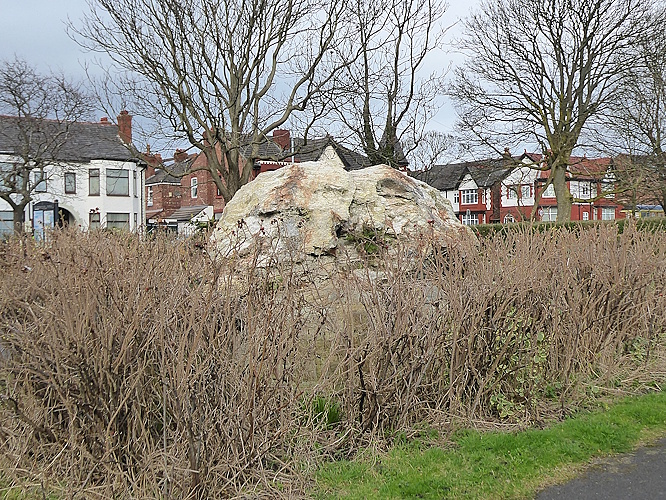
Coronation Park’s outstanding feature is an 18-ton gypsum boulder, found in the 1890s in the deep local clay. For years it has been identified as a “glacial erratic”, dragged here from the Lake District in the Ice Age, but last year a local news item (probably a spoof) said it was a meteorite from Mars.
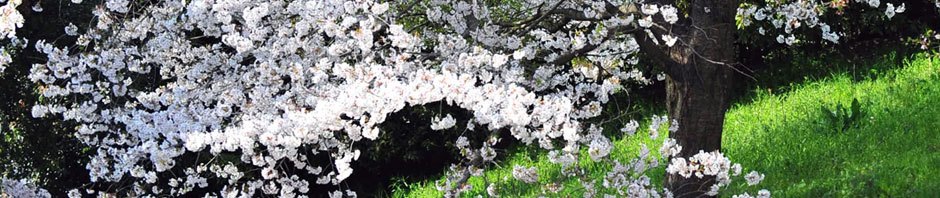
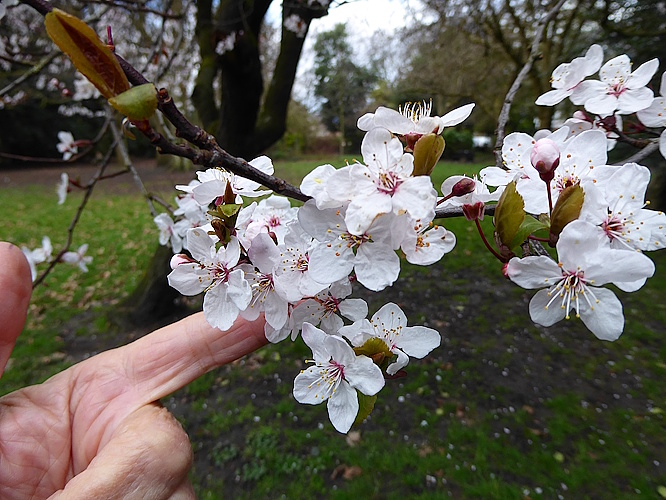
About 150 yards along Coronation Road is Alexandra Park, named for Edward VII’s wife Queen Alexandra. It is quite different from its companion park, apparently set up solely for promenading, with winding paths, mature trees and pretty shrubs. Birds we saw there were Wood Pigeon, Blackbird and Robin. There were several Cherry Plum trees, approaching their blooming peak.
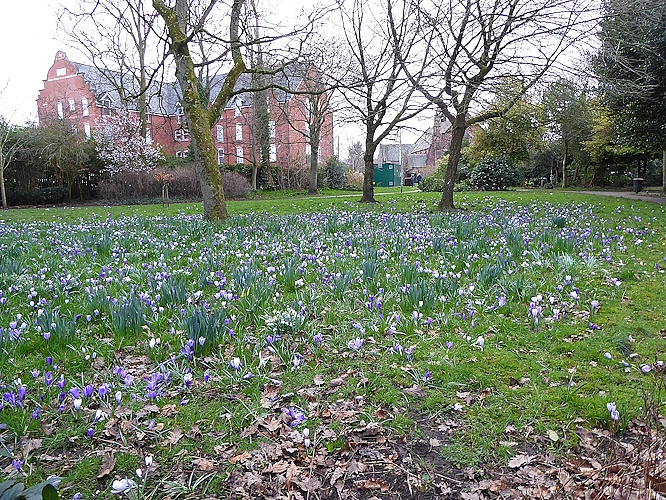
The lawns have splendid displays of Snowdrops and Crocuses.
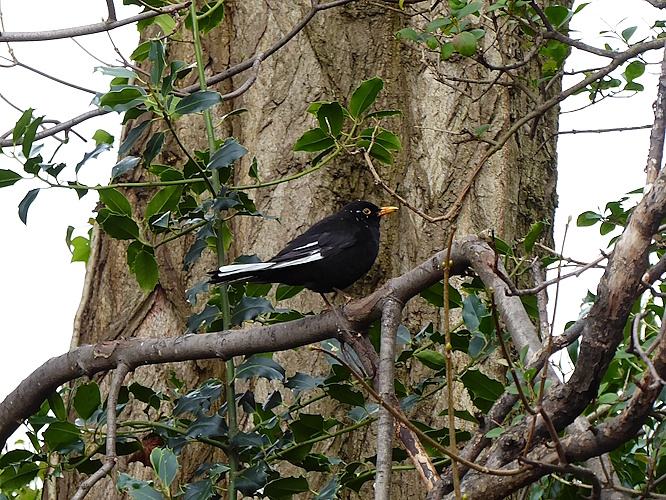
Victoria Park is bigger and older. It has more birds, too. We were looking at a Blackbird when a passer-by asked us “What’s that one with the white markings?” It was a partially-leucistic Blackbird.
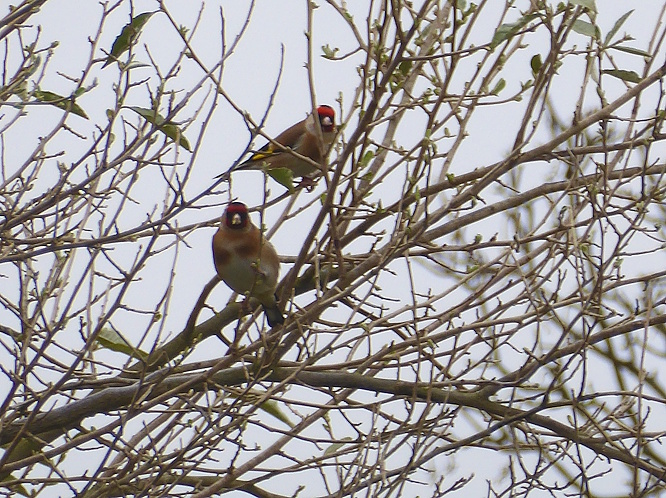
While we ate lunch in their sunken garden, we spotted Long-tailed Tits, Great Tits, Wood Pigeons, Crows, three Mallards flying over and we were observed by a small party of Goldfinches.
One of the big fields had fruit trees planted in each corner, intended as a Community Orchard. The species labels are long gone, and I have never seen any fruit on them (perhaps the foragers are up with the lark) but all the trees are about to blossom again.
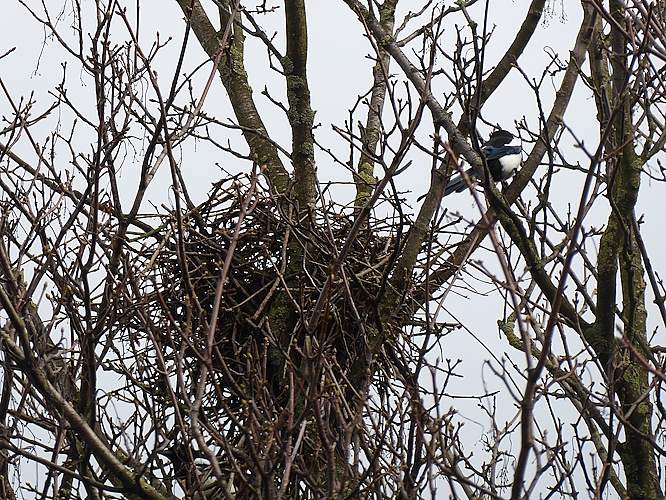
A Magpie was high in a tree next to a nest. Was it just building it, or was it surveying an old nest with a view to refurbishment?
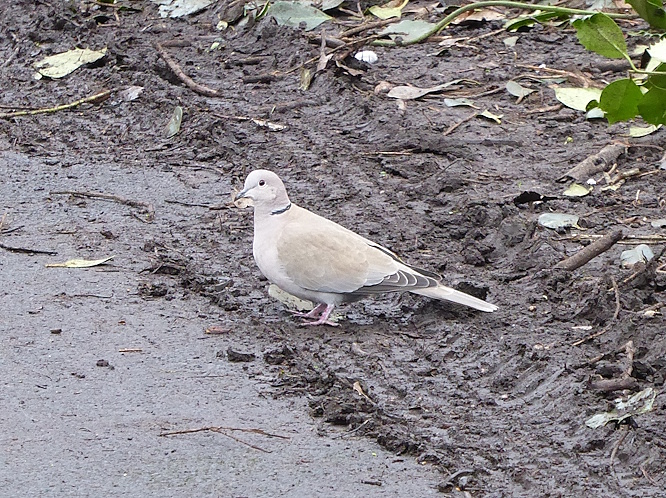
The least common bird we saw in the park was a Collared Dove.
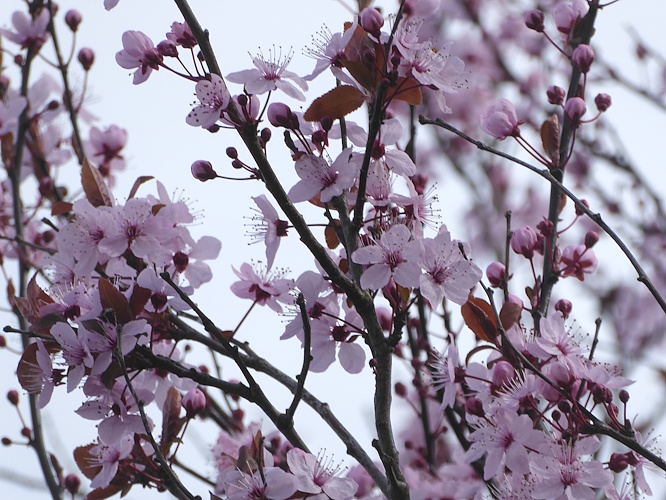
Some pink blossom caught my eye, and I thought it might be something like plum or almond, but on closer inspection it seems to be a Purple Cherry-Plum, Prunus cerasifera ‘Nigra’, identified by the small purple leaves which are just coming out.
Public transport details: Bus 47 from Queen Square at 10.15, arriving Liverpool Road opposite Queen’s Road (outside the Comrade’s Club) at 10.50.
No walk next week, as we will be on an MNA coach trip on Saturday. No plans yet for Sunday 15th.