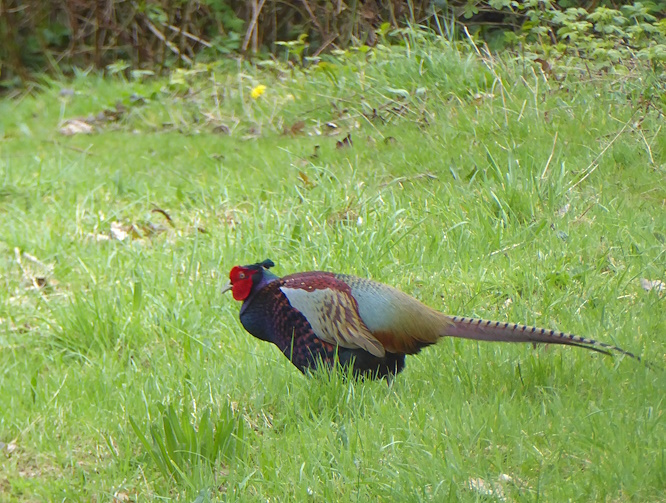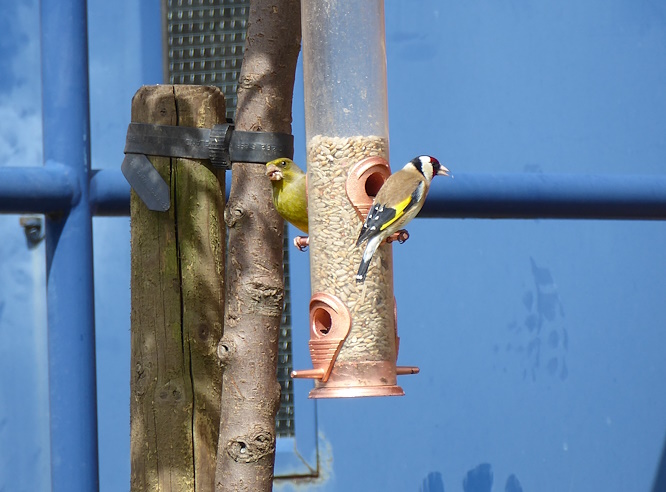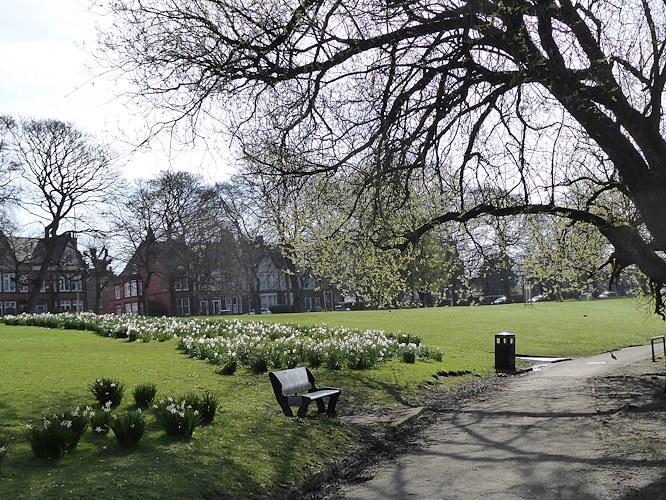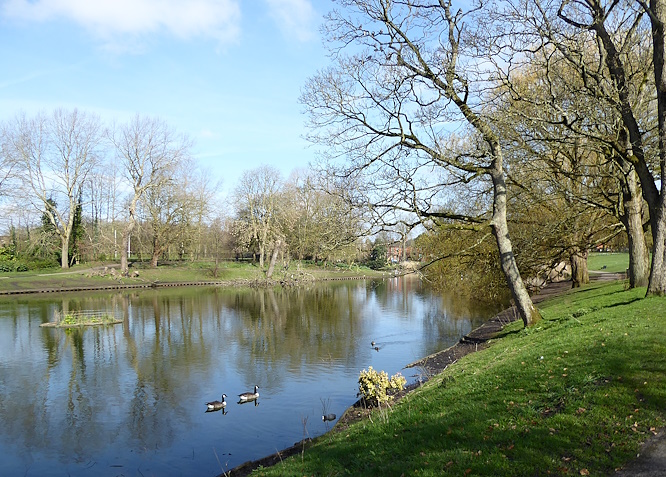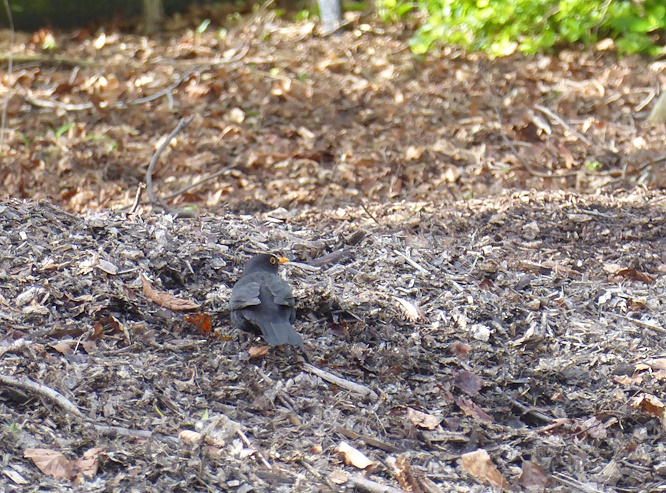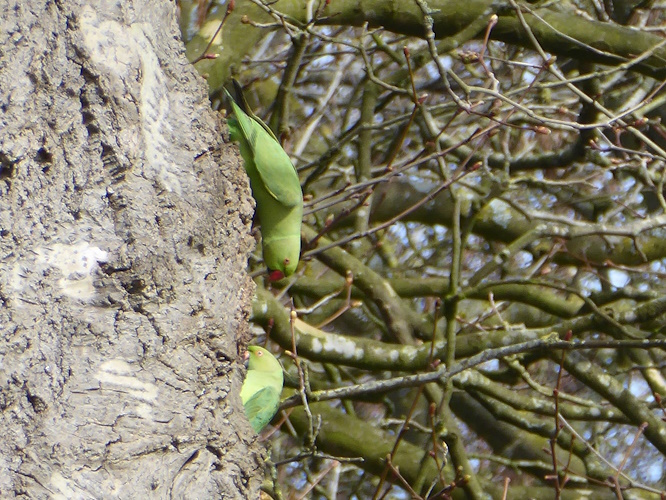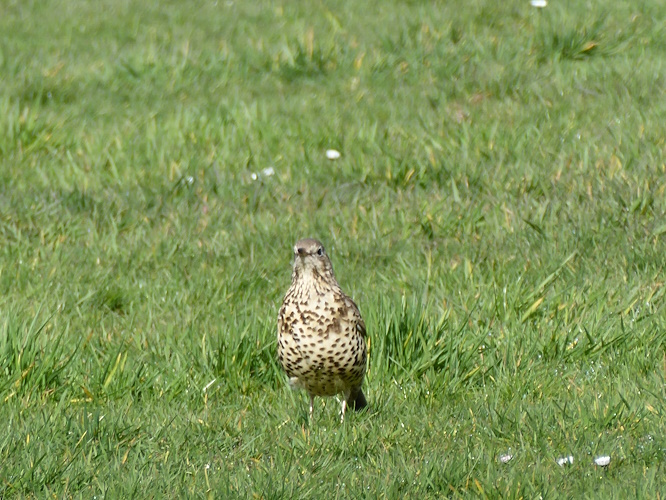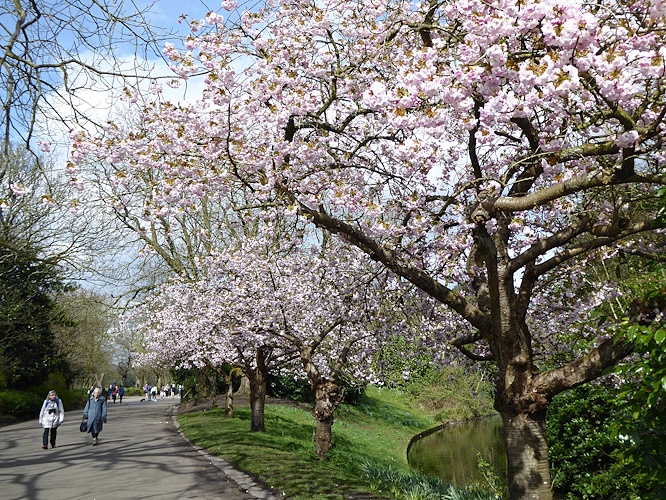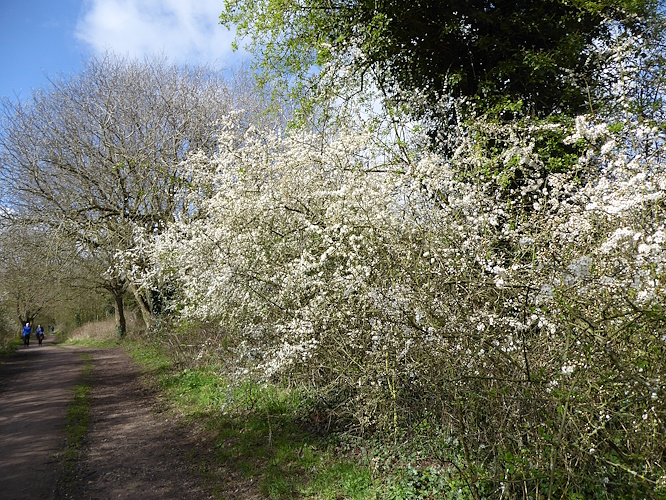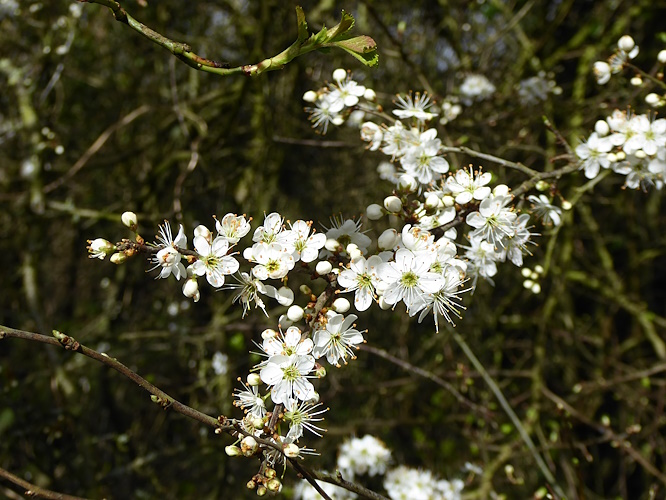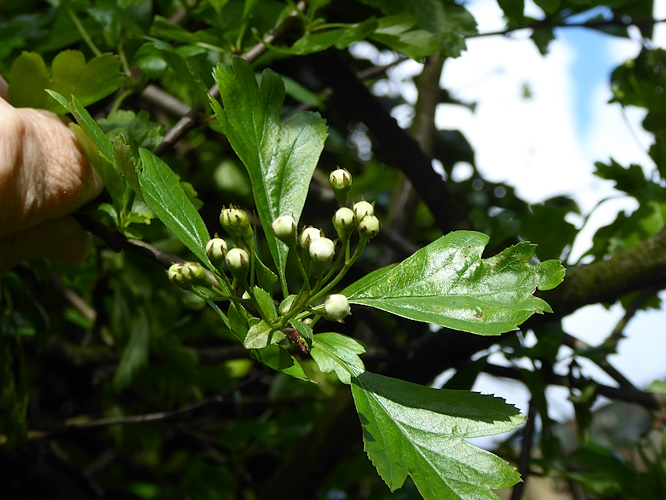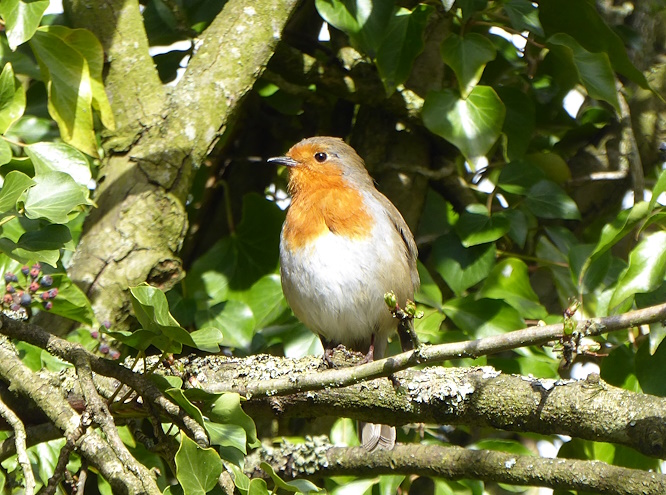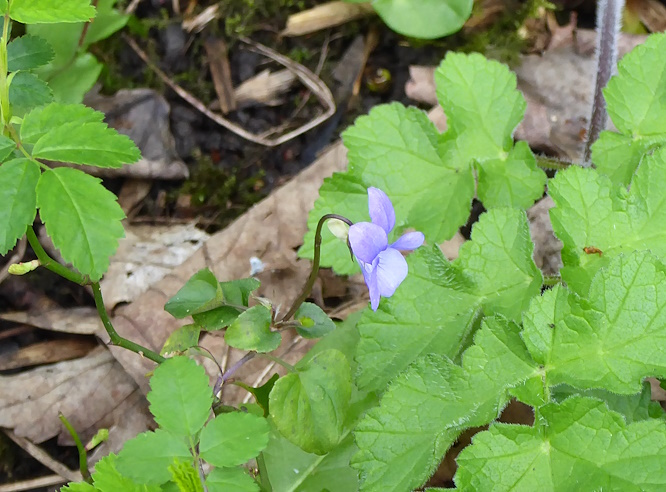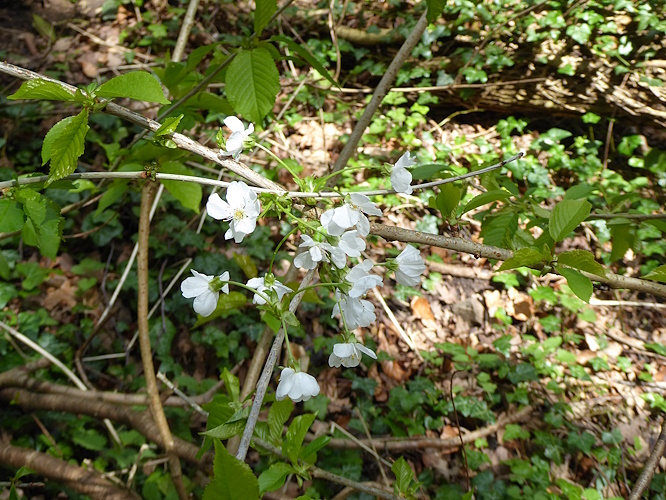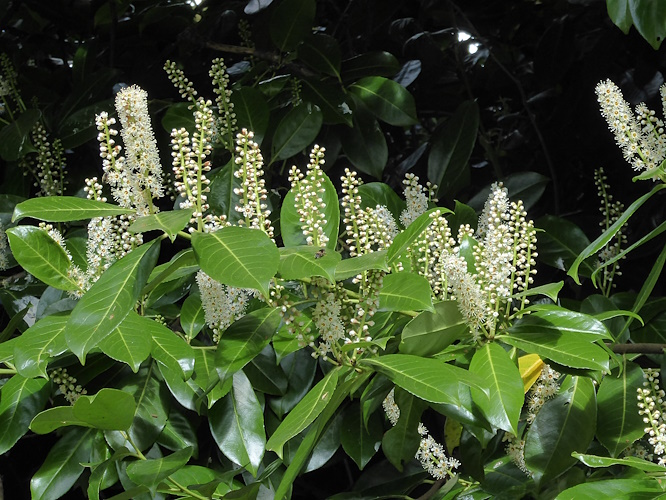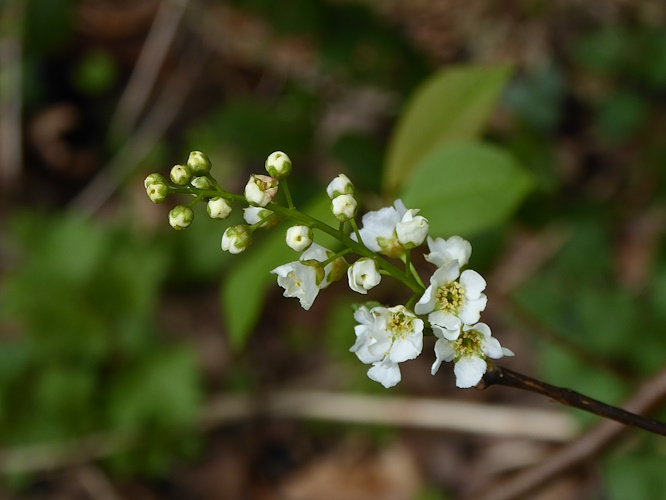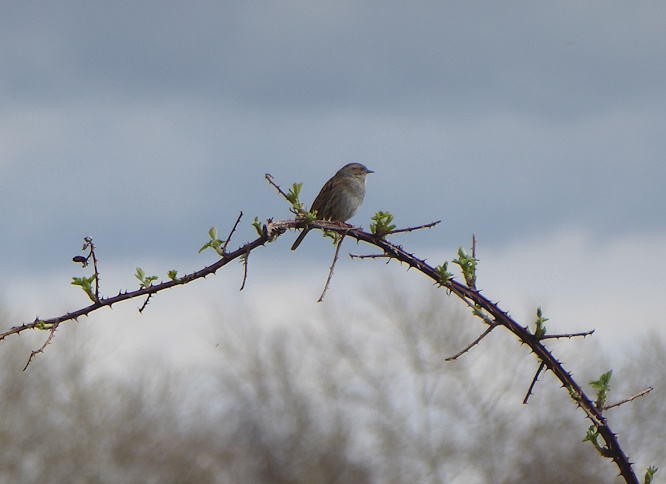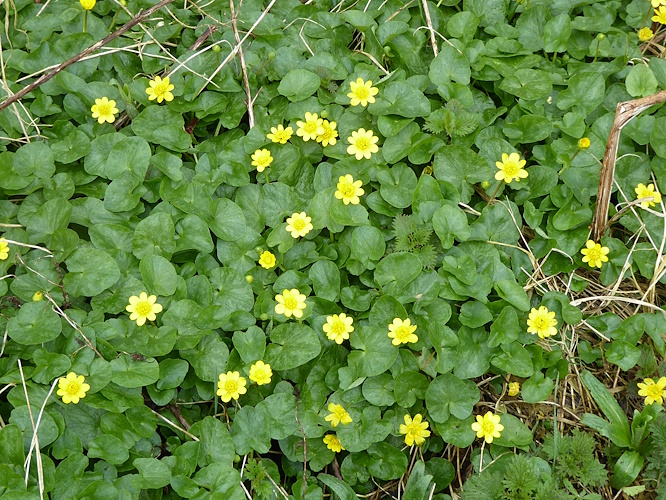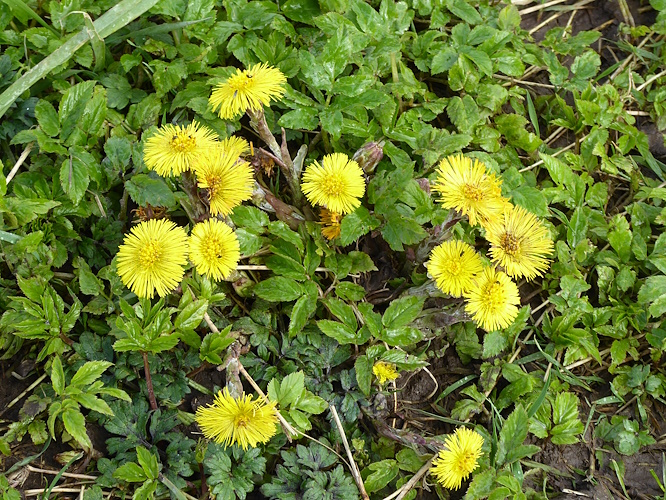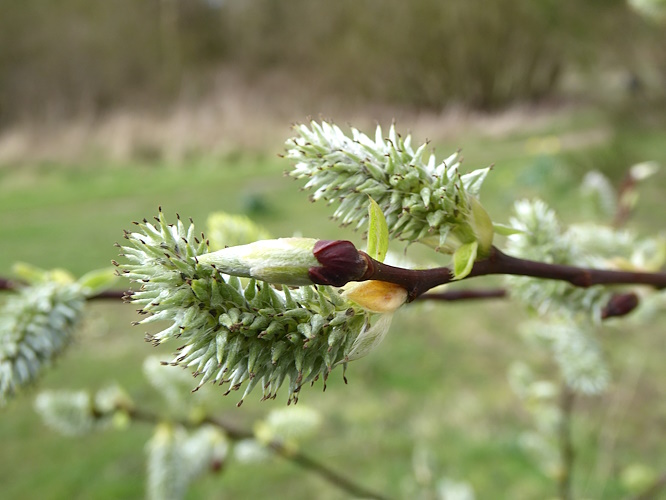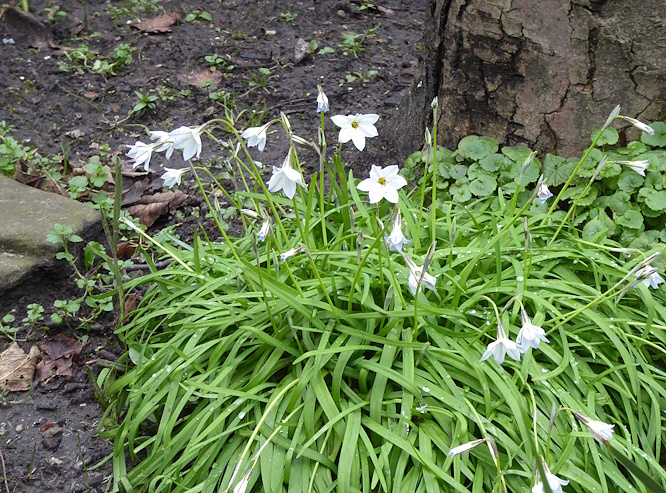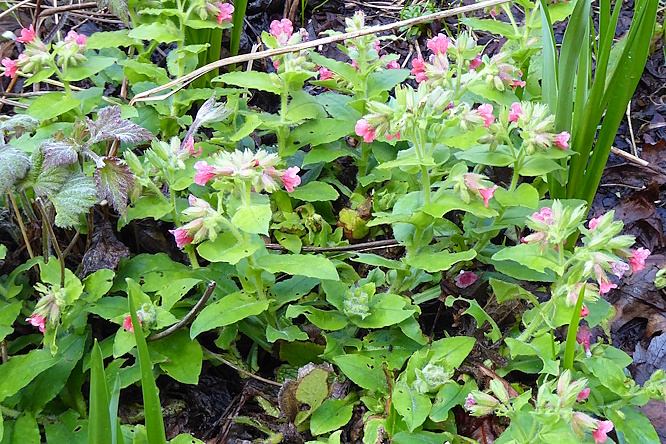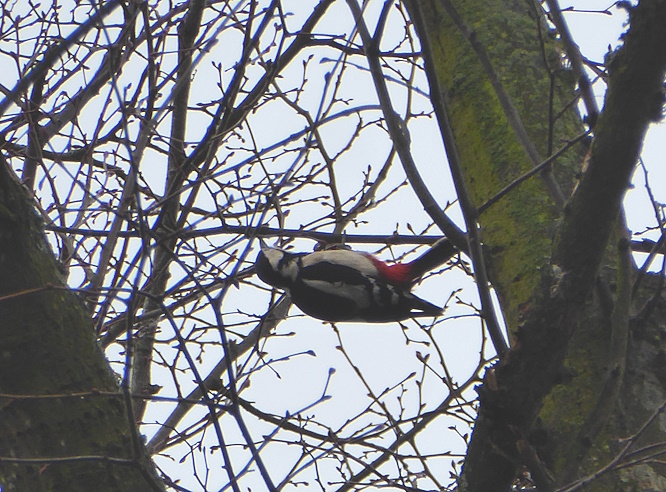
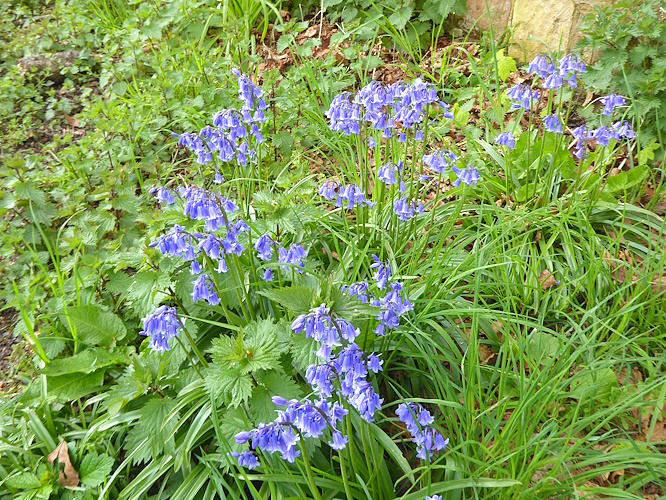
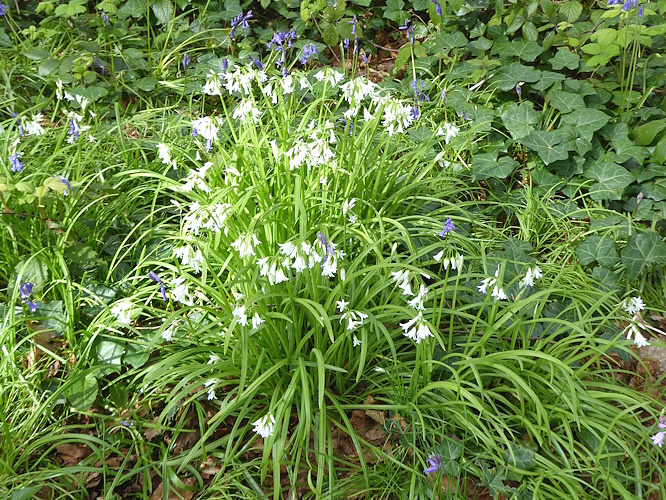
We approached Reynolds Park from the back end, where the wildflower meadow is, but it was too early for much in the way of flowers. There were plenty of birds singing though, Blackbird, Robin, Wood Pigeon, a noisy Nuthatch and a possible Wren and a Blackcap. A passer-by mentioned Woodpeckers and Owls. As we headed towards the trees, there were Bluebells, looking like the invasive Spanish ones, and some clumps of Three-cornered leek.
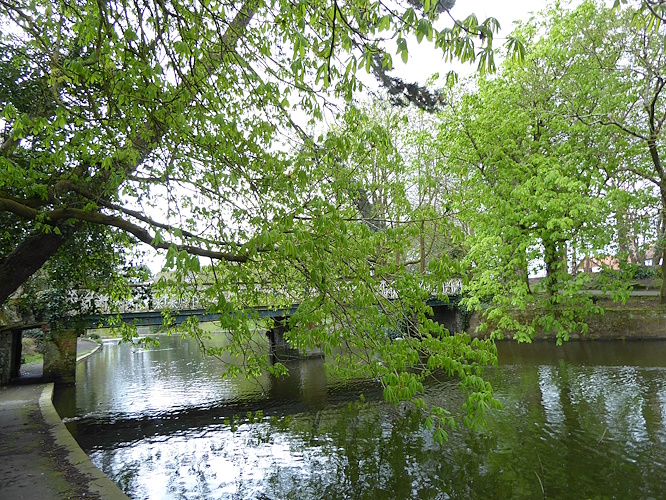
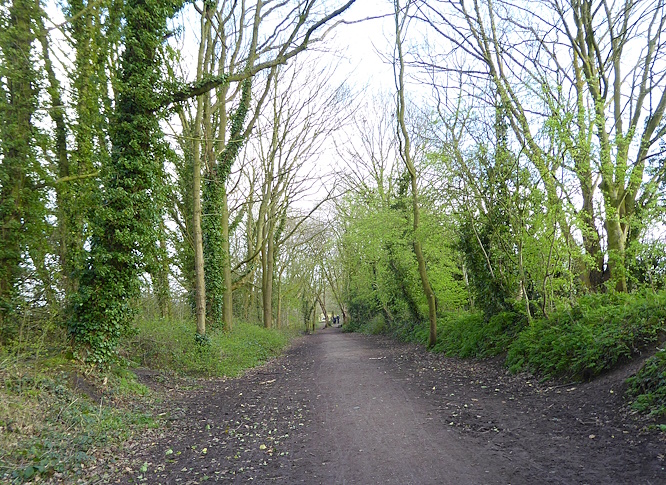
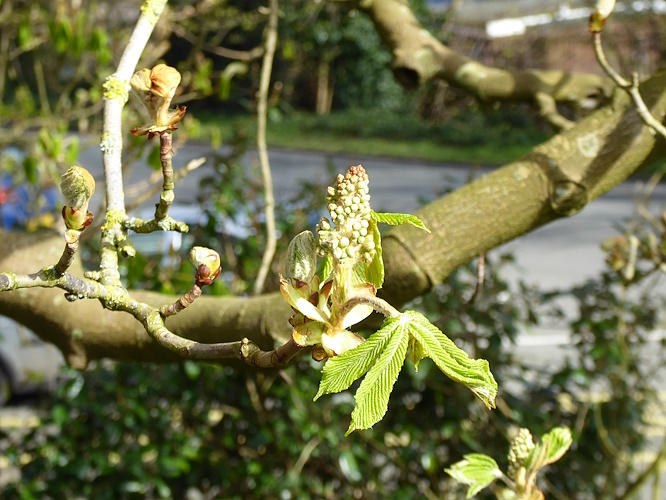
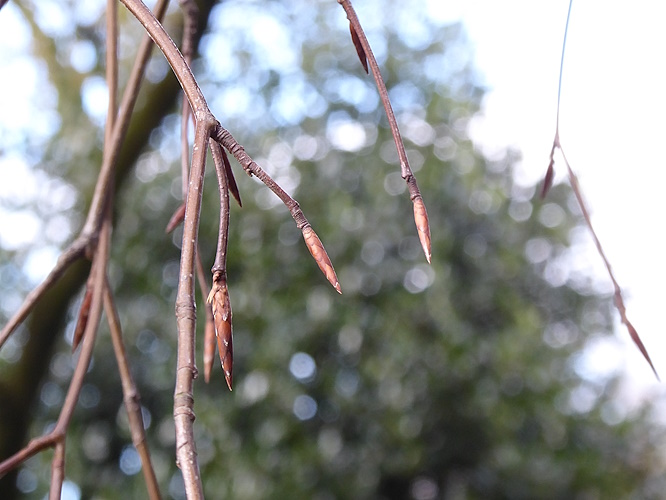
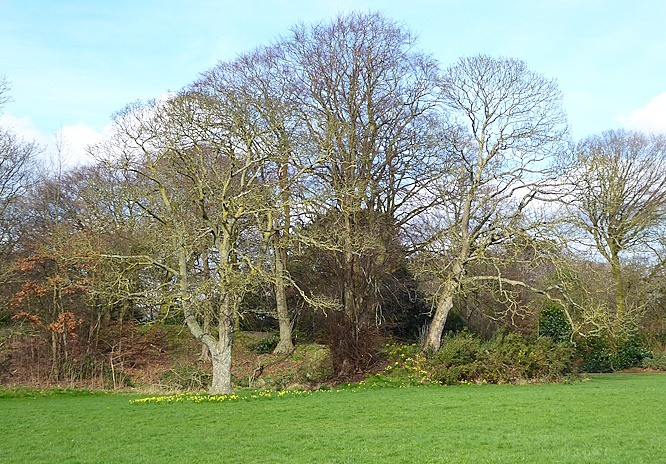
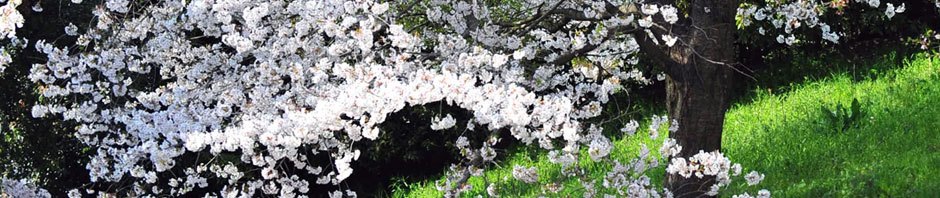
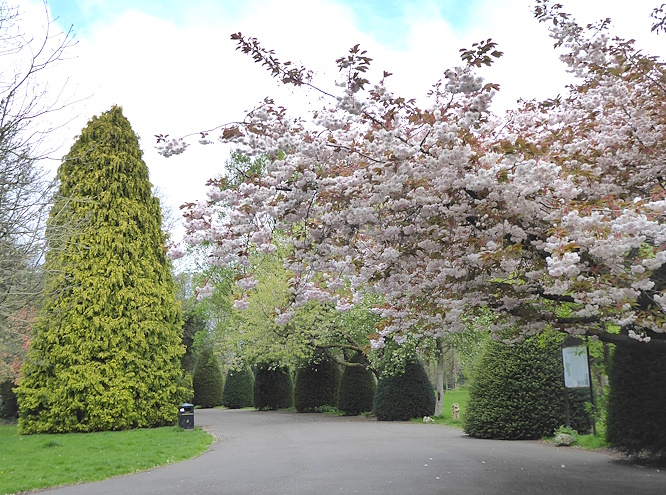
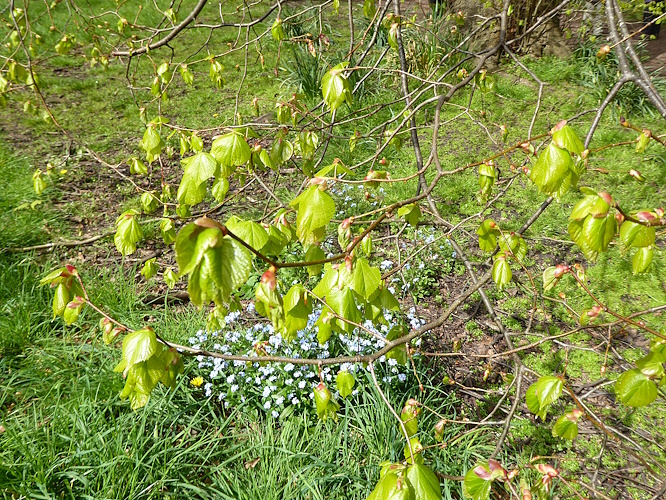
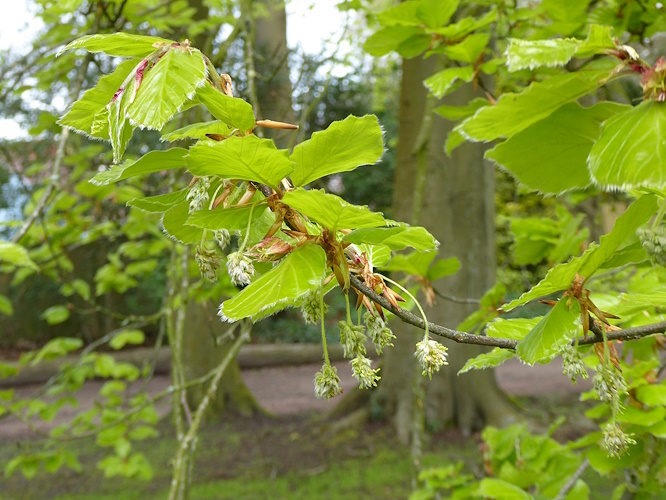
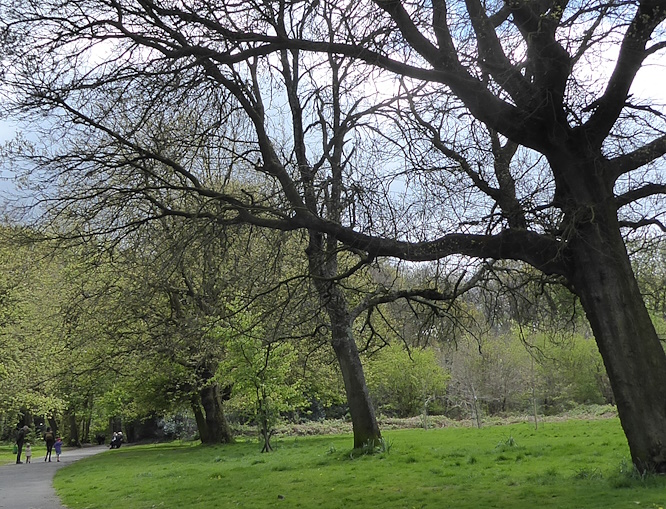
In just a week the main deciduous trees have changed their bare winter appearance, and have started to put out their leaves. Here are Lime (Linden) and Beech with its flowers.
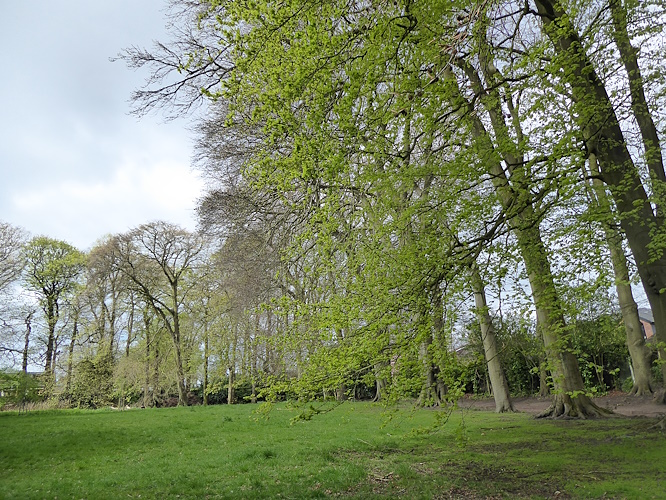
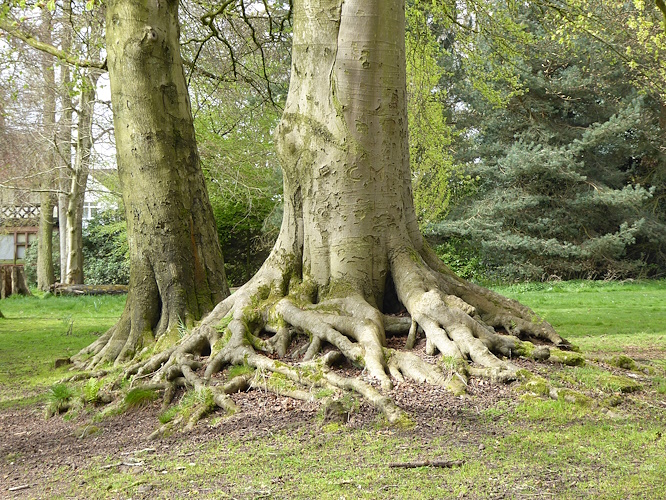
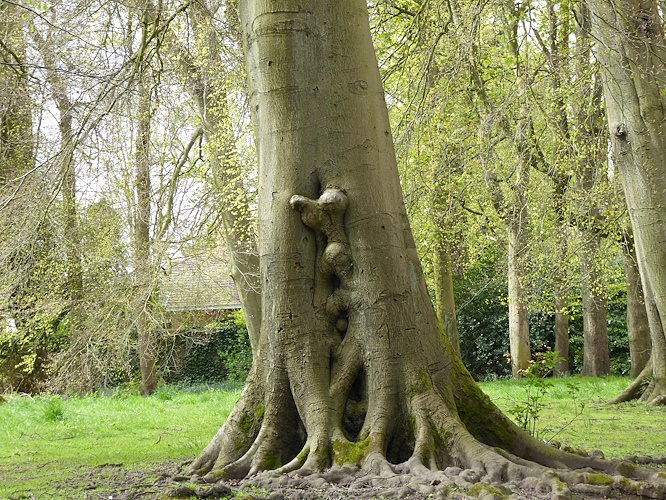
Some of the old Beech trees have marvellous networks of exposed roots while others have strangely lumpy trunks. You can see how legends started about wood fairies trapped in trees.
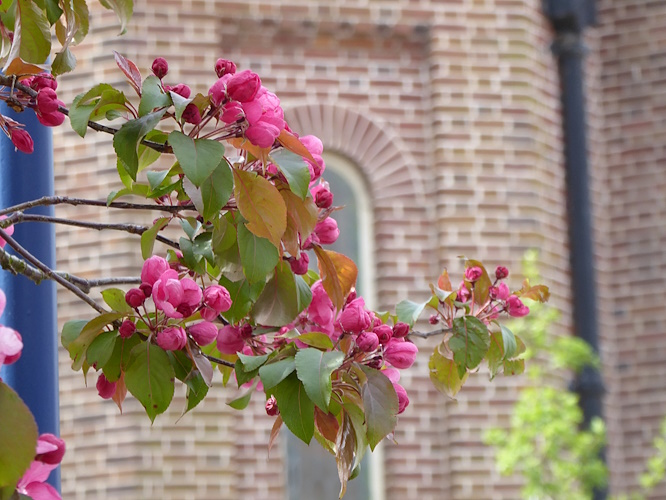
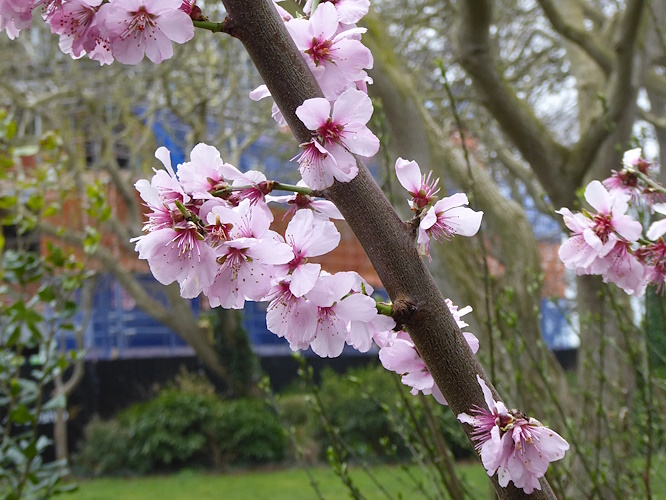
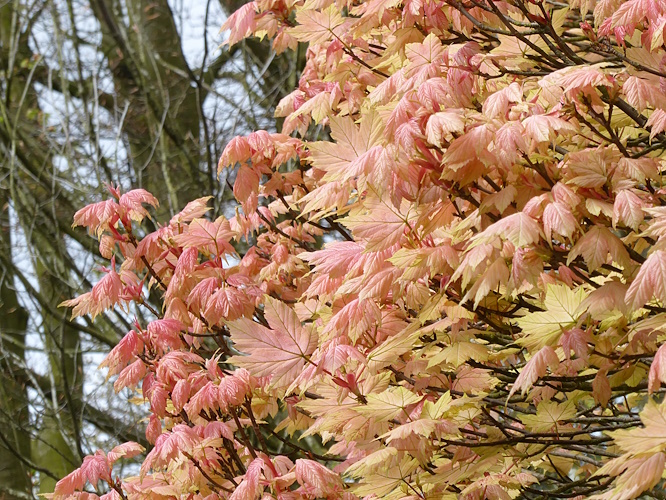
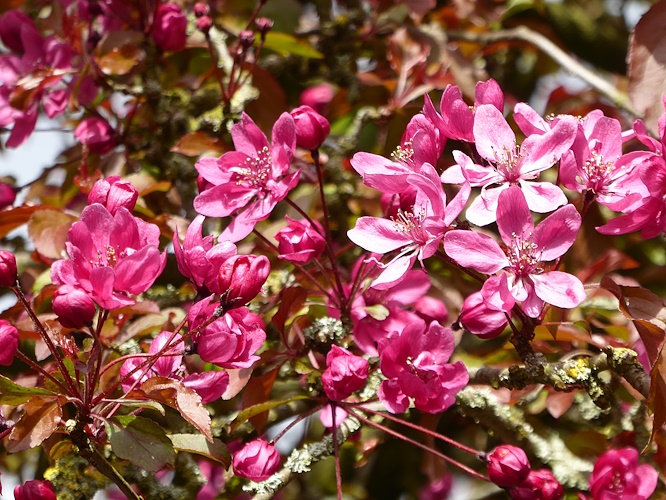
We spotted one very active blue butterfly heading up over a Holly hedge, so it was likely to be a Holly Blue. Nearby was a gorgeous red-blossomed Crab Apple and an unusual Sycamore, variety ‘Brilliantissimum’. Its young leaves open a marvellous salmon-pink, before turning green in a week or two and becoming indistinguishable from an ordinary Sycamore.
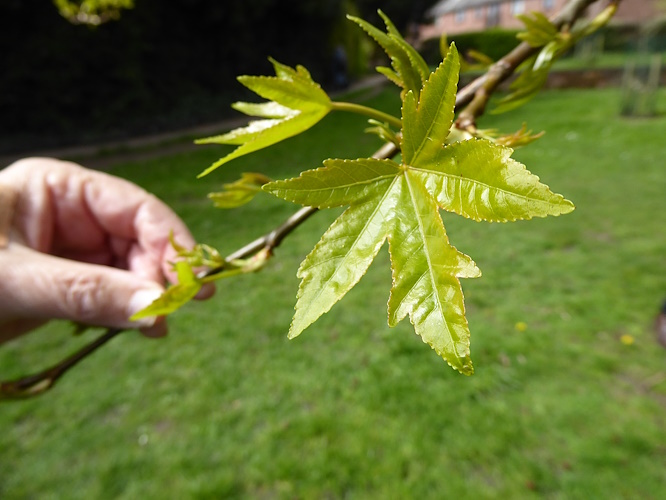
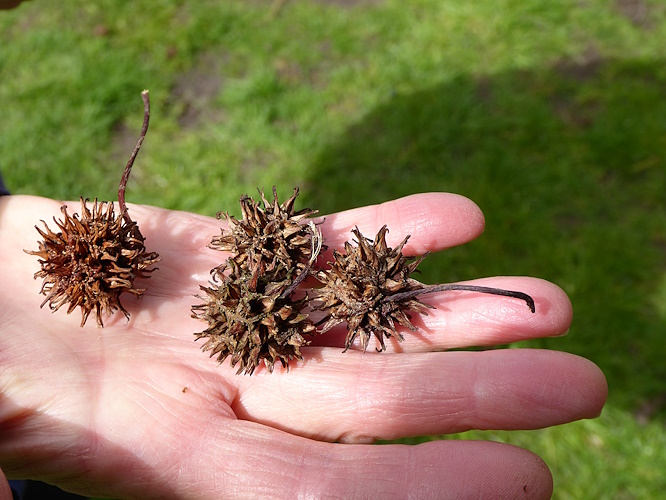
Another special variety (which we wouldn’t have known if it hadn’t been labelled) was a Sweet gum Liquidambar styraciflua ‘Worplesdon’. This is a variety said to have particularly spectacular colour and also to reliably produce their spiky fruit in our climate.
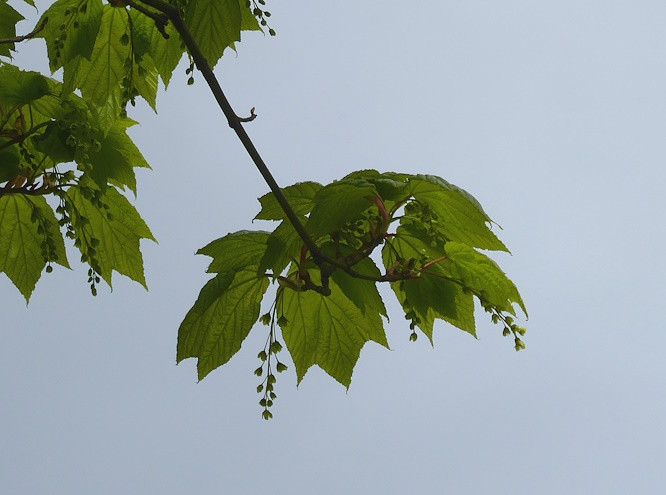
On the sunken lawn was a tree we’d noticed before, with wavy vertical white stripes on its trunk and large three-pointed leaves. I think it’s the rare American snake-bark Maple called the Moose-bark Acer pensylvanicum.
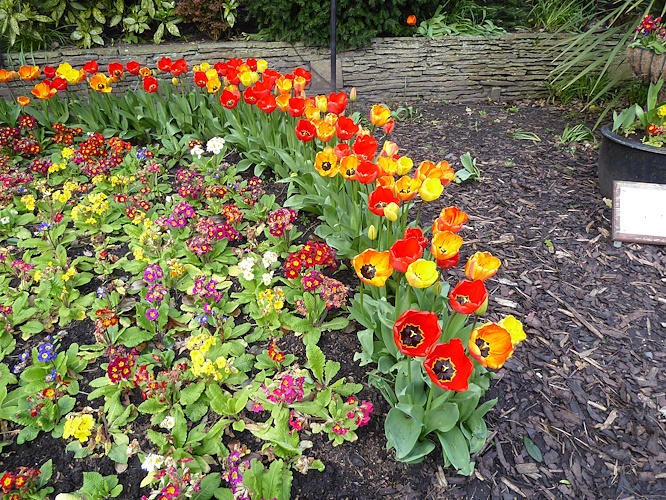
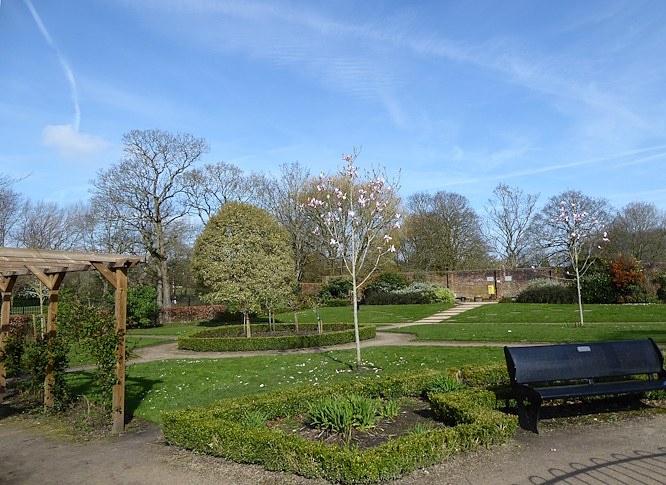
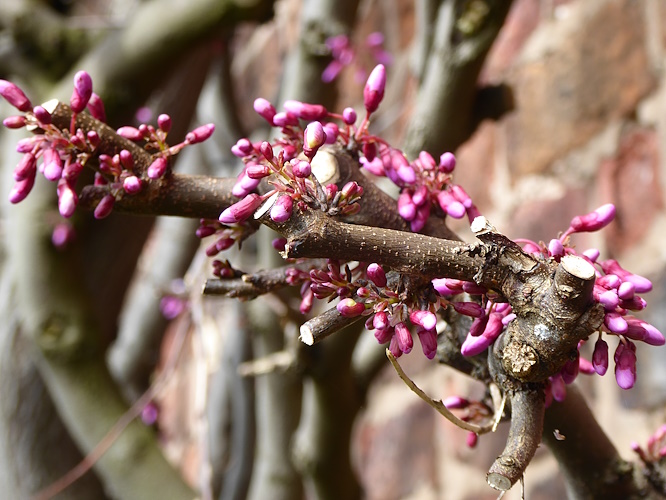
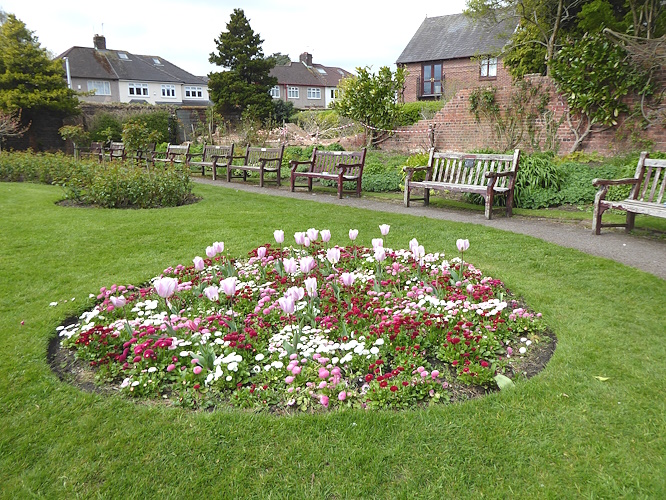
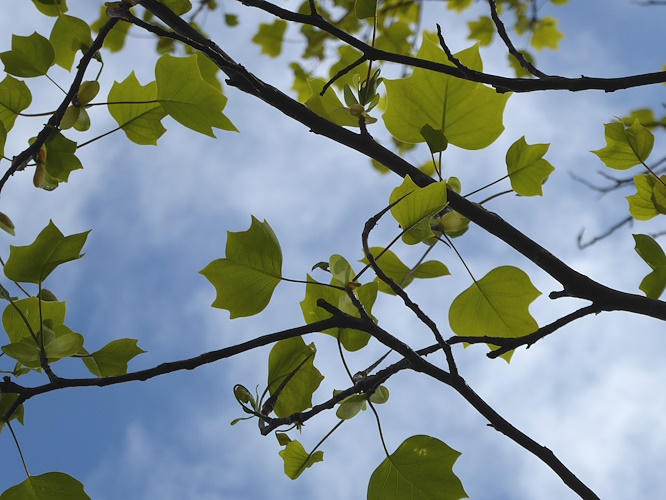
At the entrance to the walled garden the Judas Tree was bursting with red flower buds. Some of the ornamental flower beds were finished, and over in the corner a Tulip Tree was putting out its distinctive leaves.
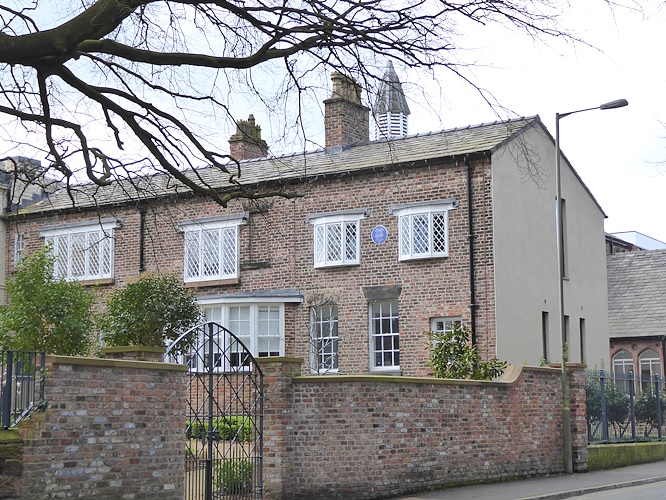
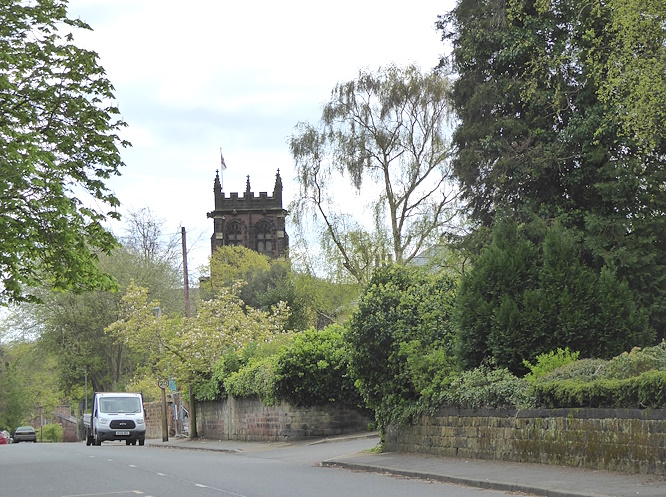
We strolled down Church Road, past St Peter’s Church, where John Lennon was (briefly) a choirboy. There were no Beatles tourists in sight today.
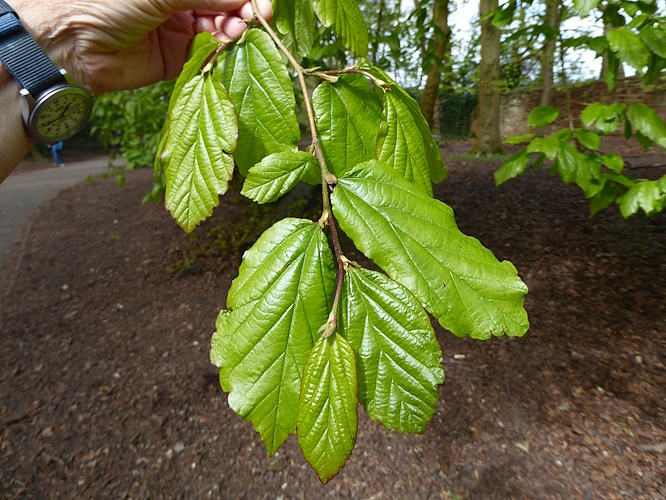
After a stop in the big Tesco, we stuck our noses into the northern fields of Woolton Woods, but not the woods proper. In a shady spot was a Persian Ironwood tree, unfurling its new leaves.
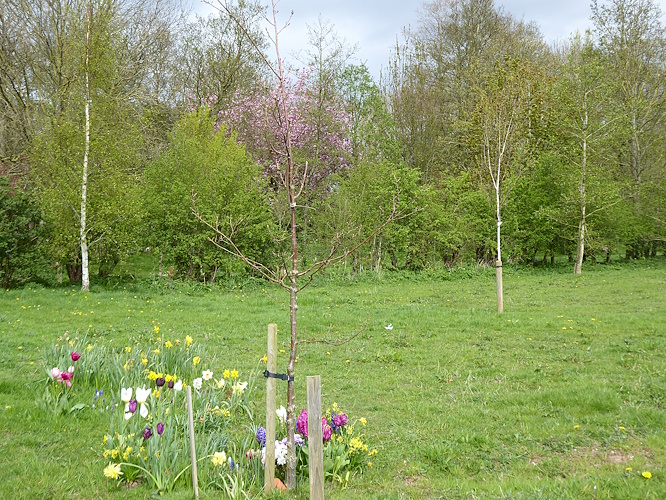
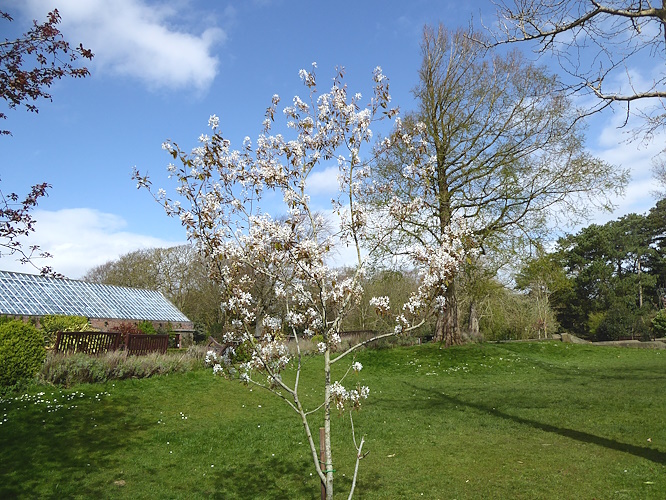
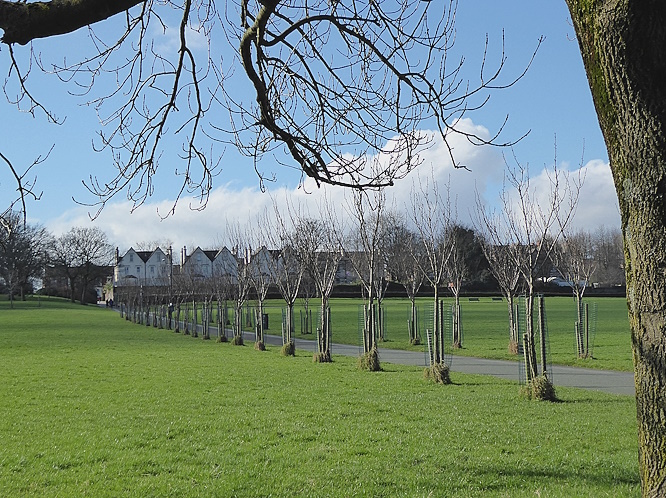
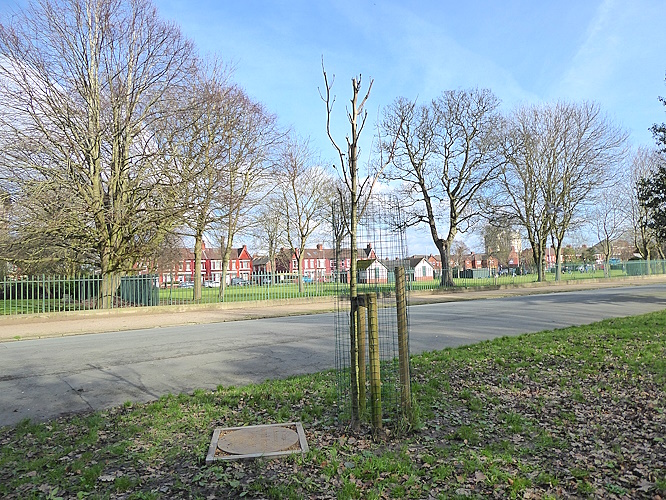
Over beyond the mature trees lining the path were some young trees in planting cages. And they had labels, which always attracts our attention. They were called Ulmus lutece, and we eventually found eight of them dotted around the fields.
They are part of a huge experiment going on all over Europe, to breed new Elms to replace the mature ones destroyed by Dutch Elm Disease in the 1970s, an estimated 60 million in Britain alone. This new clone, sometimes called ‘Nanguen’ “has a complex parentage with Ulmus minor, galbra, Exoniensis and wallichiana all present in its genetic makeup.” It has been planted extensively in Paris, and rated 5 out of 5 on Dutch field tests. This variety, together with the one called Lobel which we have spotted in Landican Cemetery, are ones to keep an eye on in years to come, in the hope they will live to become mature trees.
Public transport details: Bus 75 from Great Charlotte Street at 10.08, arriving Rose Brow / Seafarer’s Drive at 10.25. Returned from Woolton Village (Woolton Street / Allerton Road). We all got different buses, but I took the 75 at 2.11, arriving in the city centre at 2.45.
Anyone is welcome to come out with the Sunday Group. It is not strictly part of the MNA, although it has several overlapping members. We go out by public transport to local parks, woods and nature reserves all over Merseyside, and occasionally further afield. We are mostly pensioners, so the day is free on our bus passes, and we enjoy fresh air, a laugh and a joke, a slow amble in pleasant surroundings and sometimes we even look at the wildlife!
If you want to join a Sunday Group walk, pack lunch, a flask, waterproofs, binoculars if you have them, a waterproof pad to sit on if we have to have lunch on the grass or a wet bench (A garden kneeler? A newspaper in a plastic bag?), and wear stout shoes or walking boots. We are usually back in Liverpool City Centre by 4pm at the latest.
If you are interested in the wildlife of the north-west of England and would like to join the walks and coach trips run by the Merseyside Naturalists’ Association, see the main MNA website www.mnapage.info for details of our programme and how to join us.